Showing posts with label plant-based food. Show all posts

Friday, July 17, 2026

Everyone Says 'Plant-Based Eating' Is Over — The Data Says Otherwise

From foodandwine.com

By Eve Turow-Paul 

Between the MAHA movement and proteinmaxxing, it might seem like we’re eating less plants, but the data says otherwise 

In the middle of “MAHAspital,” a now-infamous Saturday Night Live skit, a doctor learns that a patient on life support is vegan. He pulls the plug. As she flatlines, the doctor shrugs and says, “Nothing we could do.” Cue the laugh track. This 10-second clip sums up the current attitude toward plant-based eating. Just a few years ago, people were lining up around the block to try KFC’s Beyond Fried Chicken, and the term “plant-based” was inescapable.

Now, it seems like everyone has a cousin who used to be vegan but can’t help but eat meat again, and the number of Americans who identify strictly as vegetarian and vegan is the lowest since Gallup began tracking it. Google searches for “protein” — a term most often associated with meat in the American psyche, according to an IFIC assessment — hit an all-time high in the spring of this year. Meanwhile, the USDA released an inverted food pyramid placing meat and full-fat dairy at the top, and a “boy kibble” trend encouraged people to eat sautéed ground beef with rice three times a day on TikTok. 

You’d be forgiven for thinking that plant-based eating is dead, and that all your friends, family, and favourite influencers are tossing T-bones and half-and-half into their shopping carts. The thing is, you’d probably be wrong.

                                                                                         Credit:  Anastasiya Mihailovna / Getty Images

Protein is everything, meat isn’t

I have been tracking food trends for the better part of the last 15 years, most recently as the founder and executive director of BITE: Building Impact Through Eaters. Over time, it has become harder, not easier, to get a sense of what Americans are actually eating. Most social media algorithms are no longer built to show us what our friends are posting. Instead, we get fed posts by those whose opinions garner the most eyeballs and “likes,” which tend to be the most extreme. Right now, that means raw liver and ground beef breakfasts.

And if you just look at dollars, it indeed looks like beef has taken over American diets, but the data is somewhat misleading: Beef is much more expensive now than it was a year ago. In actual volume, pounds of fresh beef sold rose just over 4% in 2025. Is that significant? For sure. Is it transformational? Nope. For comparison, the volume of peaches sold was up 23.5%, and organic produce — which includes both fruits and vegetables — grew 5% in volume in 2025.

Earlier this year, to explore some of these disparities, BITE looked into the protein trend. We analysed social media influencers and the topics they write about, and what we saw was pretty striking. People are preoccupied with protein, not necessarily meat. In fact, we saw that the vast majority of Americans didn’t have strong feelings about getting their protein from meat versus plants; they’re open to it all. They might think of meat first, but when presented with other solutions to hit their protein goal — spirulina! moringa! chickpeas! — they’re all ears. Well, almost.

Less fake meat, more beans

Alternative meat products, like Beyond and Impossible, have very clearly fallen out of favour with the American public. Beyond Meat’s revenue has been sliding for four straight years, down nearly 40% from its 2021 peak, and its stock spent most of last year trading for less than a drugstore candy bar.

In the last three years, the Make America Healthy Again (MAHA) movement has put “ultraprocessed foods” — or UPFs — into mainstream vocabulary. It is a term that many now associate with the meat alternatives that ferment, extrude, and mix plant ingredients to form an end product that convincingly mimics meat but is cooked up in a lab.

But despite the decline in alt-meat sales, the broader “plant protein” segment is actually expanding. 


            The data shows that Americans are eating fewer plant-based burgers and more tofu.   bhofack2 / Getty Images

Sales of plant-based creamers and yogurt continue to climb, according to the Good Food Institute, and the category with the largest gains is a completely unexpected one: tofu. Sales of unseasoned plain tofu grew by a whopping 10% in 2024, notes the Plant Based Foods Association.

Then, of course, there are actual plants. The 2025 Plant-Forward Opportunity Report, run by food service market research firm Datassential with contributions from partners including BITE, found that far more Americans planned to order more meals with beans, lentils, and/or legumes than with plant-based meat alternatives.

“Plant-based 1.0 failed, in my opinion, because it was too engineered and anonymous,” says Kevin Ryan, CEO of Malachite Strategy & Research. “Plant-based 2.0 is about making the plant the recognizable trust element.” In other words, people will just take the plants as they are. 

I would agree, and have another theory to go alongside it. 

Gen Z is rejecting labels

The plant-based movement was led by the millennial generation, the generation I belong to, and whose food habits I’ve written about extensively. Our age group served as guinea pigs for the digital age. Encouraged to build countless online profiles, we grew up in an era of identity labels, often attached to our food choices. It became commonplace to read someone’s profile and see something along the lines of, “I’m Trevor, a Paleo rock-climber from Denver,” or, “I’m Suzanne, a vegan bookstore owner from Ojai.”

We categorized ourselves with endless virtue signals performed through posts, profile descriptions, and yes, our food. The 2010s were the heyday of avocado toast, kale salads, and cronuts, and each post alerted followers to something about us: I’m trendy, I’m wealthy, I’m creative.

In the last decade, many studies have documented that anxiety and depression have worsened, both among millennials and Gen Z. Groceries have become more expensive, housing more elusive, the political climate more ominous, and the atmospheric climate less predictable. And many have become too burnt out to continue the performance.

Now, Gen Z is rejecting labels, be it around politics, gender, or diet. But the rejection of the “plant-based” labels does not equate to the rejection of plants. People just aren’t willing to keep boxing themselves in. 

Shakshuka’s popularity on menus shows an interest in meat-free mains that don’t necessarily market themselves as plant-based.   rudisill / Getty Images

Vegetables are no longer on the side. The most significant shift in plant-rich eating is “the rejection of the idea that you have to give anything up,” says Huy Do, a trendologist at Datassential. People are done with sacrifice; they want something that ticks all the boxes — something that’s affordable, healthy, indulgent, and comforting all at once, and that comes without an identity to perform. This may be why plant-based dairy has escaped the alt-meat downfall; drinking soy or oat milks has never meant you had to don the vegan hat.

The latest data — and menus — reflect this rejection of traditional labels. 

In the yet-to-be-released 2026 Plant-Forward Opportunity Report, Datassential and collaborators found that nearly 60% of Americans are interested in trying more dishes in which whole plant proteins play a bigger role than meat; almost the same number are open to reducing how much meat they eat in some meals, even if not all. The percent of Americans looking to “order more naturally plant-based dishes (chana masala, falafel, etc.)” is up 9 points as well from 2024. Dishes like shakshuka, esquites, and gobi manchurian (a fried cauliflower appetizer) are popping up on menus across the country in response to this demand for plant-rich dishes.

Putting the emphasis on plant proteins represents a significant evolution in food culture — a departure from the haute cuisine movement of French cooking that placed beef, chicken, and fish at the centre of the plate and labelled vegetables as “accompaniments.”

Ironically, the shift away from absolutist labels “creates a more hospitable environment for genuinely plant-rich eating than the sacrifice-and-substitution model ever did,” says Do. According to BITE’s own research, the shift toward eating more whole foods is happening among people who would never call themselves “plant-based”: carnivores, keto-dieters, and MAHA advocates alike.  

Which brings us back to that doctor pulling the plug. The labels that used to come with plant-based eating are — without question — subsiding. That’s the version of plant-based that actually died. What’s alive and well is dal on a Tuesday because it sounds good, not because it says anything about you. It’s a tofu scramble because you want to amp up your morning protein and fibre intake. It’s beans because beans are $4 a pound, and you want to make something your nana used to feed you. The data backs this up again and again: People aren’t done with plants. They’re done being asked to wave a flag of identity politics just to be allowed to eat them.

https://www.foodandwine.com/is-plant-based-dead-12019678
Wednesday, July 1, 2026

Half of Young Indians Open to Veganism, but Lack of Information Holds Them Back, Faunalytics Finds

From vegconomist.com

A lack of practical information about plant-based eating is a bigger obstacle to veganism among young Indians than cultural attachment to dairy, according to new research from animal advocacy research non-profit Faunalytics.

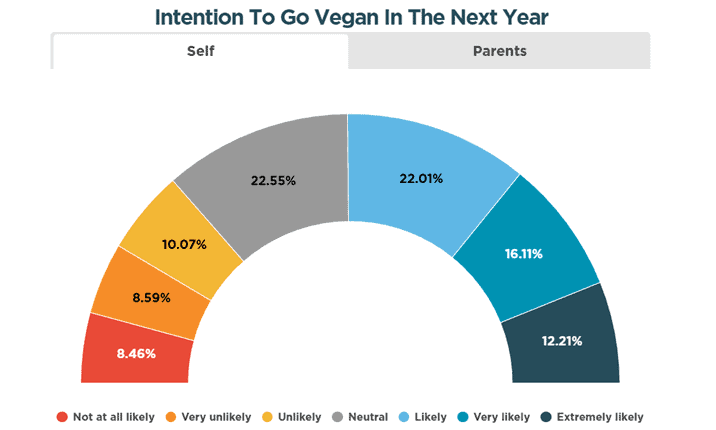
The study, titled “The Multi-Generational Kitchen: How To Market Plant-Based Eating To Indian Gen Z Households,” surveyed 801 adults aged 18 to 28 who live with their parents. It found that 58% of respondents already identify as some form of meat-reducer, including vegans, vegetarians, pescetarians, and reducetarians, against 42% who identify as omnivores. Among non-vegan respondents, half said they were likely to adopt a vegan diet within the next year, and 53% believed their parents were likely to do the same.

stock indians with food

Image: Thirdman on Pexels

Five barriers, one dominant theme

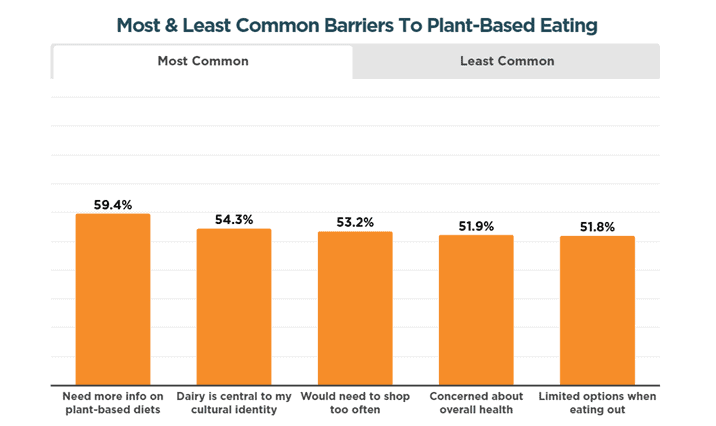
Needing more information about plant-based diets was the most commonly cited barrier, named by 59% of respondents. It outranked viewing dairy as part of cultural identity (54%), the inconvenience of more frequent grocery shopping (53%), personal health concerns (52%), and a shortage of dining-out options (52%). Only 37% said they worried that going vegan would be seen as abandoning Indian culture for a Western lifestyle, a result the researchers say runs against the assumption that cultural resistance is the primary obstacle to plant-based adoption in the country.

Faunalytics india gen z
© Faunalytics

Three consumer segments

Respondents were grouped into three categories. Indifferent consumers, the largest segment at 46%, showed the least motivation and the lowest household influence over food decisions. Constrained consumers (33%) were motivated to change but faced the most practical barriers. Game-changers (22%) were the most receptive to veganism overall, skewing female, older, more educated, and higher-income.

Mothers still run the kitchen

While 40% of respondents said they were primarily responsible for grocery shopping, mothers remained the main decision-makers for cooking (57%) and meal planning (39%). Household friction over food choices appeared limited: 59% said it was easy to discuss diet with family, and only 26% reported frequent disagreements.

Faunalytics
© Faunalytics

Market implications

Faunalytics found that around half of respondents already consume plant-based dairy alternatives like ghee, yogurt, milk, and cheese on a regular or occasional basis, despite dairy ranking as the second most common barrier to plant-based eating overall. Based on that gap, the organization recommends that companies market dairy alternatives as a form of “traditional” protein rather than as “dairy-free,” paired with imagery of multi-generational families using plant-based alternatives in familiar dishes. It also points to health and fitness influencers as carrying more sway over this group’s dietary habits than other categories of public figures.

The findings add to a growing body of data on Indian attitudes toward plant-based eating, a market Faunalytics flagged as critically underrepresented in global veganism datasets in an April report.

Dr. Andrea Polanco, the study’s lead author and a research scientist at Faunalytics, stated, “These numbers signal a meaningful shift in how young Indians are thinking about food. Gen Z in India is a huge demographic, and our data suggests they’re far more open to plant-based eating than conventional wisdom might assume, but they need better information and practical tools to get there.”

https://vegconomist.com/studies-numbers/half-young-indians-open-veganism-lack-information-holds-them-back-faunalytics-finds/ 

Saturday, June 27, 2026

What a plant-based food expert eats for protein, calcium and more

From washingtonpost.com

Nichole Dandrea-Russert explains how to get essential nutrients from plants alone 

Nichole Dandrea-Russert is on a mission to get people to eat more plants.

As a registered dietitian who eats a strictly plant-based diet, she encourages people who want to eat a healthier diet to practice what she calls layering. Instead of eliminating entire food groups and overhauling your diet overnight, start by adding grains, vegetables, beans, seeds, herbs and other colourful, vibrant plants to the meals that you already enjoy. Eventually, those foods will start to crowd out the less nutritious foods from your diet.

Dandrea-Russert said that people who take her advice and add more plants to their meals usually tell her that they notice three things.

“One is that they have more energy,” she said. “Two is that they feel lighter, and that’s probably because they’re eating more fibre, which is filling them up and causing them to eat fewer calories. And the third thing they tell me is that they’re sleeping better. And those are just from simple additions — not from taking any foods away.”

Dandrea-Russert has written several books on plant-based eating, including “The Fiber Effect,” which teaches people how to manage their weight, improve their health and lower their risk of chronic diseases by following weekly meal plans filled with fibre-rich whole foods.

Her latest book, “Powered by Plants,” which she co-authored with Ocean Robbins, shows people how they can get protein, omega-3 fats, calcium and other essential nutrients from plants. It includes dozens of tasty and convenient plant-based recipes, as well as detailed guides on how to cook things like grains, beans and lentils from scratch.

In addition to writing books and developing recipes, Dandrea-Russert runs a clinical nutrition practice where she helps clients build sustainable diet and lifestyle habits through plant-based nutrition, exercise and mindfulness. She also runs a wellness blog called Purely Planted and teaches courses on plant-based eating.

                                                 (iStock)

We wanted to learn what a registered dietitian who follows a strictly plant-based diet eats in a typical day. So, we caught up with Dandrea-Russert to find out what her meals are like, why she avoids using the term “vegan” and why she recommends eating dark chocolate on a regular basis.

This interview has been edited for length and clarity.

You prefer using the term plant-based over vegan. Why is that?

The most important thing for me personally and professionally is for people to add more plant foods to their plates for their health, for the planet and for animals. The term vegan can feel very polarizing to some, and my goal is to be inclusive. I have clients who are not even close to being vegan, and that’s fine. But I know that they need to add more fibre to their plate for health reasons — whether it’s high cholesterol or hormonal dysregulation or sleep disruptions.

When did you become a plant-based dietitian, and why?

For the first 15 years of my career, I worked in a clinical setting, mostly in a neonatal intensive care unit in a hospital. Then I started a chocolate company. I love dark chocolate and I wanted to make an even healthier version. So, I started making plant-based dark chocolate that had whole food ingredients such as blueberries, walnuts, flax, green tea, turmeric and other spices. Because the chocolates were all plant-based or vegan, I started partnering with animal welfare organizations and donating chocolate to their fundraising events. At one of those events, in 2013, they showed a video of a dairy factory farm. I was consuming a lot of dairy foods at the time and was devastated with what I had been supporting. And so, I proclaimed to my husband, “I’m going vegan, are you on board?”

Was it difficult going fully plant-based?

When I was a student in the dietetics program, I didn’t have even an hour of instruction on how to eat vegan. I had questions about whether I could do this in a sustainable way for myself and could I promote this in a healthy way for my community and my clients.

My husband agreed to try it with me, and we were about five days into eating pasta every night when he said, “If you don’t figure out another way to do this, I don’t think I can last much longer.”

So, the first thing that I did was grab a highly rated plant-based cookbook that became my lifeline because it taught me the framework for how to create nourishing, delicious plant-based meals. It’s called “Isa Does It,” by Isa Chandra Moskowitz. It’s still one of my go-to cookbooks today.

Are there certain nutrients that are lacking in a plant-based diet that you have to be mindful about?

When people add more plant-based foods to their plate they’re getting so many things that they weren’t getting before if they were following the standard American diet or a more carnivorous way of eating. So, when people start adding more plants to their plate, they’re getting more fibre and phytochemicals and certain vitamins and minerals that are more abundant in plants.

Vitamin B12 is the one nutrient that is most difficult to get if you eat an exclusively plant-based diet. There are some foods that are fortified with B12, like nutritional yeast and some plant-based milks. But it’s not always enough, unless you’re getting several servings a day. So, I would suggest that someone who is exclusively plant-based start a B12 supplement to be safe. It’s easy, it’s affordable for most people, and it can prevent a deficiency from occurring later on.

                          (iStock)

What do you typically eat for breakfast?

For breakfast I usually eat a loaded avocado toast. When I say loaded, I mean you can’t see the bread or the avocado once it’s done. I use a slice of whole-grain sourdough and avocado. Then I pile on leafy greens, pickled red onions, and some radish. I add a couple tablespoons of hemp seeds for protein, and a tablespoon of flax meal for the omega-3 fats.

                              (iStock)

What’s a typical lunch for you?

I usually have leftover grains and either lentils or chickpeas in the fridge. I always try to add at least three vegetables to my plate. It might be mushrooms, broccoli and peppers. I’ll heat the veggies up in a pan with a little oil, and I’ll add spices like cumin seeds, mustard seeds or fennel.

What’s your favourite treat or dessert?

I eat chocolate daily. I love it, that’s why I started a chocolate company. When I was taste-testing chocolate every day through my company for 10 years I thought I would get tired of it. But I didn’t. To this day, I like to end every meal with a little square of dark chocolate. I even have a square or two of dark chocolate after breakfast.

There are definitely nutritional benefits to a good quality dark chocolate. It’s high in antioxidants. It has prebiotic fibre, which is good for your gut microbiome. It’s high in magnesium, which is great for sleep and mood. I recommend eating good quality dark chocolate that’s 70 percent cocoa or more. And look for Fair Trade or ethical chocolate where the chocolate maker supports their farmers and their well-being and compensates them fairly.

What do you typically eat for dinner?

Dinner varies. My husband eats plant-based at home but he’s not exclusively plant-based, and our flavour and texture preferences are very different. So, when we eat at home, we try to do meals where we can each choose our own things. The common meals that we both like and agree upon are tacos, pasta and grain bowls. And we do stir-fries quite a bit. Stir-fries are easy because we both love tofu. We can throw it into a wok with veggies and then serve it on top of brown rice or Udon noodles with either a miso ginger sauce or a tamari-based sauce. I cook during the week. He cooks during the weekends.

The biggest thing I try to do with every meal for both of us is to make sure that it’s colourful, protein-rich and fibre-rich.

What advice do you have for people who want to eat more of a plant-based diet?

Shift your mindset from one of restriction to one of abundance. Every time you eat, think to yourself: “What colourful plants can I add to this meal?”

That’s No. 1 because it’s easy for people to identify which plant foods they already know and love. So, start there. And then once you start feeling better from eating more plant-based foods, you’ll naturally start to choose more and more.

https://www.washingtonpost.com/wellness/2026/06/25/what-plant-based-dietitian-eats-day/

Sunday, June 21, 2026

UK: Inside Bath's underground vegan eatery where the 'meat' tasted just like the real deal

From somersetlive.co.uk 

You could walk through central Bath a hundred times and never notice it's there. But in the basement of Chapel Arts Centre is the most happening vegan hangout spot in Somerset.


My childhood best friend is a vegan. So when we arranged to meet up in Bath, I figured the steakhouse was out. Fish and chips probably wouldn't do either. And KFC could definitely strike the wrong chord.

Thankfully, there's Plant. Eat. Licious, hereby referred to as PAL. They've set up shop in the basement of Chapel Arts Centre, but don't be fooled: there's nothing dark or dingy about this subterranean gem.

                                                                                        (Image: Phoebe Hobbs)

As you descend the steps and go inside, you'll be greeted with the lushest, greenest hang out spot in Bath, the kind that makes a writer want to break out a Dulux colour chart to count all the shades on display.

PAL is adorned with hanging plant pots, mint coloured paint and a whole wall of verdant synthetic grass. Doubling up as a cafe and restaurant, you can order pancakes in the morning, afternoon tea at lunchtime (strictly pre-booked), and a cheeky glass of wine in the evening.

Articles about veganism tends to attract a lot of the same arguments, so let's get one thing straight: I'm a food critic, not an ethicist. I'm not here to litigate the moral, environmental, or religious implications of this or that diet.

I go to cafes to enjoy good grub and good company. If a plant-based cafe can provide that, then it's fine by me.

First, I kicked things off with a flat white paired with almond milk (£3.50). The milk substitute introduced sweet, nutty tasting notes to my usual coffee order and went down a treat.

On to lunch. I ordered a 'lamb' Kofka with pitta, golden fries, salad, and vegan tzatziki dip (£13.95). Believe it or not, the meat-free lamb meatballs tasted almost exactly like the real deal! Frankly, I was almost suspicious.

The only thing that gave the game away was a subtle mushroomy aftertaste betraying its true ingredients. But the meat-free meatballs were every bit as succulent as their counterparts. Meanwhile, you can never go wrong with pitta.

And whatever they used as a substitute for yoghurt in their tzatziki, I couldn't tell you a single difference in taste or texture.

What's really wonderful about the menu is that it allows for more people to enjoy a good old fashioned slap-up meal, not less. And I don't just mean vegans.

A plant-based menu means every dish is safe for lactose-intolerant people. Similarly, every dish is safe for people with an egg or seafood allergy. A plant-based menu also means the food served here is significantly more likely to be Halal or Kosher.

You're never going to have a eatery that's perfectly suited to everyone, but perhaps PAL comes closest as far as Bath goes. You don't need to be a vegan to have a lovely time here, you just need an open mind.

Plant. Eat. Licious. is open seven days a week.

https://www.somersetlive.co.uk/whats-on/inside-baths-underground-vegan-eatery-11014803

Thursday, June 4, 2026

Adventures in ‘bad’ veganism: The ups and downs of a plant-based lifestyle

From eccunion.com/opinion 

By Heather Austin

became a vegan at the beginning of summer in 2019.

Media including the 2011 film “Forks Over Knives” and 2015 book “How Not to Die” inspired my desire to lose weight and reduce my chances of cancer.

However, I struggle to be consistent in meeting my goals.

I have been making unhealthy or “bad” vegan choices since I began attending El Camino College in fall 2025, and I can no longer afford the ingredients that I initially bought when I became vegan.

I don’t have time to shop at different stores to get the lowest food prices. Before attending El Camino, I had eliminated bread and peanut butter from my diet.

My mushroom pastas turned to plain pastas with only tomatoes and seasonings quickly, especially with the closing of the 99 Cents Only Stores.

Healthy and economical vegan food options can seem about as common as vegetarians and vegans.

Roughly 6% of the U.S. population is vegetarian and about 4% is vegan, according to Statista.

The research mentions that individuals with these diets desire a healthier lifestyle, a choice more prevalent among younger consumers.

After watching “Forks Over Knives” in 2019, I lost about 10 pounds in two months by cutting meat and oil out of my diet.

Back then, I ate pasta, beans and rice, cabbage soup, and when I had time, steamed vegetables.

I used mushrooms in my pasta and drank lemon tea regularly. I read labels, avoided foods with unrecognizable ingredients, and prioritized organic foods.

I was happy with the initial weight loss, but another benefit was an improved immune system.

As a carnivore, I was frequently sick and was not keeping track of the impact that my food choices had on my health. Common colds on a carnivorous diet for me lasted up to two or three months.

I did not get sick until after Thanksgiving in 2020 with what I thought was the COVID-19 virus.

I never got tested for it, and I never went to the hospital. I treated the condition on my own with Chinese skullcap tea, which I learned about from Stephen Buhner’s 2013 book, “Herbal Antivirals.”

Each time that I got sick with what I thought was coronavirus, the symptoms became milder and milder, like a common cold.

I lost nearly 60 pounds over the course of a year during the lockdowns.

I can testify to the benefits of a vegan diet and herbal medicine, but I am not a perfect vegan. I am inconsistent in my vegan food choices due to finances, time and boredom.

                                                                                                  Illustration by Christol Nguyen

I am like many Americans, struggling to stretch a dollar for food and other necessities in an inflationary environment. 

During the fall 2025 semester, when food prices went up, I had to go back to peanut butter sandwiches to survive. This is a vegan choice; it’s just not a good one.

During the same semester, I began going to El Camino’s Warrior Pantry for more options.

I started to get bored with veganism. I used to eat cabbage soup a few days in a row. Sometimes I might cook pasta or beans and rice before rotating back into cabbage soup.

I watched my family eat cookies and cakes, while I hadn’t experienced a birthday cake for several years now.

That’s when I discovered vegan baking.

Through this new venture, I’ve baked vegan zucchini muffins, banana muffins, chocolate chip cookies and applesauce cake.

I used agave as a sweetener before prices went up and then I turned to processed sugar.

With all of my unhealthy vegan choices, I gained the weight right back.

El Camino nutrition professor Mary Lyons, a registered dietitian who has a master’s in nutrition science with an emphasis in food science from California State University, Long Beach, offered me some advice for getting back on track with my lifestyle and health goals.

Lyons provided many tips, including avoiding junk foods, candy, sodas and sweetened plant-based milks by loading up on fruits and vegetables instead.

After speaking to Lyons, I realized that our conversation was not enough.

The tips she gave me for this article is enough to get started on the path to eating well. I have looked at the nutritional science classes and I have always been curious.

Now, I really want to enrol in nutrition science in the future, so I can learn how to be a healthier vegan.

Plant-based nutrition tips
Professor and registered dietitian Mary Lyons offered tips on how people on plant-based diets can make healthier choices within their diet.
Lyons teaches nutrition science at El Camino College and California State University, Long Beach.
“You can do omnivore very well. You can do omnivore very poorly. You can do vegan well. You can do vegan very poorly,” Lyons said.
1. Avoid unhealthy food choices. Vegan junk food such as processed carbohydrates, potato chips, french fries, candies, sweetened beverages, sweetened dairy substitutes, sweetened almond or coconut milk, high fructose corn syrup, sweetened fruit juice, fake meat substitutes and soda are common culprits in plant-food diets.
2. Choose whole food options. Entire fruits, vegetables, fungi, yeast, nuts, seeds, legumes and grains or meals made from these simple ingredients are better than overly processed versions. Some items worth including in a diet are veggie burgers made of mushrooms, unsweetened dairy alternatives, olive oil, avocado oil, coconut oil, dark chocolate, coffee, tea, quinoa, buckwheat, amaranth, edamame and tempeh.
3. Buy frozen produce. Fruits and vegetables from the freezer section help reduce waste, save money and hold more nutritional value. “It’s picked at the peak of ripeness … It’s achieved optimal nutritional value, and then it gets flash frozen and it keeps its nutritional value, so when you’re ready to use it, it didn’t get lost in the freezing process,” Lyons said.
4. Batch cook healthy dishes. Prepare food on days off, then freeze some and keep the rest available in the refrigerator to grab for a quick meal.
5. Get routine check-ups. Make annual health appointments with a doctor. Bloodwork helps assess one’s vitamin levels such as B12, vitamin D and iron. Don’t take iron supplements without a doctor’s recommendation.
6. Consult guides. Check out the new food pyramid and nutritional guidelines for Americans at RealFood.gov.
7. Load up on fruits and vegetables. They contain fibre and help people feel full, which can help with weight loss. They feed the gut microbiome that helps overall mental and physical health.
8. Choose options with vitamins and minerals. For unsweetened plant-based milk substitutes, choose ones fortified with B12, iron and vitamin D.
9. Pair plant foods according to mutual supplementation. “Mutual supplementation is something that helps you achieve essential amino acids by pairing two plant-based foods together,” Lyons said. Examples include beans and rice or hummus and pita. “By pairing certain plant-based foods together, you can get all 9 essential amino acid needs met,” she said.
10. Use time-saving recipes. Find recipes based upon time to prepare on TheStingyVegan.com.
11. Look for recipes from other dietary approaches. Find recipes for the Plant-Based Whole30 Plan at Whole30.com. “I think the more variety you can add to a vegan diet, the better, because then you won’t get bored,” Lyons said.
12. Stock your pantry. “You have to build your kitchen,” Lyons said. Pantries should include spices such as curry powder, cumin, garlic powder, chili and cayenne pepper. Refrigerators can store salsa, hot sauce and sweet chili.
13. Go to farmers markets. Find nearby markets online.
14. Use salad bars. The salad bars at places like Whole Foods can help save money and eliminate waste.
15. Create a personal menu. Plan five to 10 recipes for breakfast, lunch and dinner. Creating a menu helps build a kitchen and a grocery list.
16. Explore different cuisines. Nearby international, cultural restaurants for plant-based foods with a lot of flavour such as Thai, Vietnamese, Mexican or Indian restaurants.
17. Log food intake for at least three days. This helps people assess whether their eating habits are healthy or not. Lyons likes the Cronometer app for monitoring a diet, but any logging method can work.
18. Get Omega-3 fatty acids. Consume flax seeds, chia seeds or hemp seeds to increase Omega-3 fatty acids. Algae-based foods sourced from the ocean are another source.

https://eccunion.com/opinion/2026/06/03/adventures-in-bad-veganism-the-ups-and-downs-of-a-plant-based-lifestyle/