Showing posts with label opinion. Show all posts

Saturday, September 12, 2026

Opinion: We should all be a little more vegan

From dailycal.org

By Janzy Paraiso

I grew up eating animals, yet my heart disintegrates every time a dog dies. My family wasn’t big on questioning where our food came from, but as an adult, I’ve come to educate myself on the connection between factory farms and the oppression of nonhuman animals. And yet, since I eventually chose to embrace veganism, my decision has resulted in an awkward interaction or two.

Considering animal agriculture’s impact on the environment and the amount of suffering it produces, it’s surprising how much stigmatization veganism receives. As a vegan, I’m habitually met with anti-vegan rhetoric in online discourse, characterizing vegans as condescending, shoving their “superior” lifestyle down others’ throats, making everyone else feel guilty.

However, veganism is a boycott like any other. Sure, we can toss around the “no ethical consumption under capitalism” phrase. But it’s farcical to deny that there are more and less ethical choices, and subsequently, progressives should veer toward more ethical choices when possible, while pushing for structural change.

We are empathetic progressives willing to challenge unjust systems. We don’t tell beauty influencers touting cruelty-free products to shove it; we look for the Leaping Bunny emblem the next time we buy a cleanser. We don’t tell people condemning fast fashion to eat s---; we brainstorm how we can reduce our dependence on it. We can shift our outlook about veganism in the exact same way: it’s more about a communal push toward compassion than some kind of freakish fad diet.

Almost everyone loves animals and would never intentionally hurt one. So we pretend the meat on our plates has no connection to the mass slaughter of animals — 80 billion per year — needed to meet global demand. This has a consequence psychologists call meat-related cognitive dissonance, in which consumers dissociate meat from animals.

In 2023, Oxford University surveyed 55,000 people and found that “even the least sustainable vegan diet was still more environmentally friendly than the most sustainable meat eater’s diet.” Still, findings like these are largely ignored by politicians and most of the people in my life, while social media discourse situates veganism within the realm of restriction — a practice restricted to health gurus and white people.

Like other boycotts, veganism is not perfect. Since when does a movement need to be perfect to participate? We don’t need perfection; we need steps in the right direction. We need to shift public opinion. Veganism is aligning everyday choices to stand against exploitation — a similarity with every other progressive movement.

Perhaps the failure to meaningfully engage with veganism has to do with avoidance rather than simple opposition. Around the time that everyone was watching vegan documentaries, I decidedly evaded them. I knew that if I saw one, I’d have to deal with the disturbing guilt it would provoke. I knew that intellectually, it would be hard to manage — I’d be faced with my own dissonance, coercing myself to make a choice that would be deeply challenging and disorienting in our meat-dependent society.

But what if discomfort is the point? The needle can only be moved if we convince a large portion of our society to make the better, more environmentally friendly choice more often. To reach those people, their beliefs must be challenged, and discomfort is one way to achieve that.

I remember my fifteen-year-old self ridiculing a girl in my church youth group for being vegetarian. “Kill the cow,” I taunted her. “Give me my cheeseburger!” Aside from being far less gracious, I wasn’t capable of embodying empathy, both for the girl in my youth group or the animals she elected not to consume.

So if veganism is a form of matching consumer choices with values, why is it so stigmatized? I’m not used to speaking that blatantly about the way I eat, yet it manifests anytime I’m eating around others. When people learn about my food choices, there are a few common responses. One is defensiveness. Another is an anecdote about how they used to be vegan but can’t anymore for health reasons. The most popular is a list of all the issues with veganism. Suspiciously, none of the responses seriously engage with the exploitation the animals face.

In 2026, why are we shaming vegans for protesting against an industry that farms living beings like crops? I’m not going to tell you step-by-step how to be more vegan when you have the entire internet available to you. I’m asking you to consider what you consume and discover what difference you can make.

I’ve yet to hear a halfway decent argument for justifying the systematic exploitation of animals. It’s time for the political left to turn and face it.

https://www.dailycal.org/opinion/the_soapbox/we-should-all-be-a-little-more-vegan/article_c57eba5f-e9a5-4f23-b52c-fee24f306056.html 

Saturday, July 11, 2026

Whatever happened to having a think? The rise of AI veganism

From thejournal.ie

By Emer McLysaght

I SAW A TikTok comment this week that stopped me in my tracks.

‘Not using ChatGPT is a new form of veganism.’

I was having one of my regular fretting sessions about AI, which tend to swing wildly between a) concern over how dependent some of my friends and acquaintances seem to have become on using AI chatbots and generative AI plus the general doom warnings about how the human race is cooked and b) fretting about getting left behind if I continue to reject engaging with ChatGPT, Claude etc.

I can’t help but remember when the concept of the internet was first introduced to me in my teens and I decided immediately that it sounded too vast and scary for me to ever get on board with.

My Encarta CD-Rom held everything I could possibly ever need to know, thank you very much.

The very idea that all of the world’s information was out there in a nebulous cloud that I might never find the edge of was too overwhelming and I vowed that the internet would never be for me. Furthermore, I was convinced that so much knowledge and power would be the end of us all. And look at me now, truly one of the world wide web’s most committed citizens.

I couldn’t work out if the veganism comment was supposed to be complimentary or derogatory. Was it meant as a dig at performative moral superiority or as a salute to those who care about the environmental and ethical impacts of their behaviour?

My confusion was a pretty spot-on reflection of my complicated feelings around AI use and its positive and negative bearings on humanity going forward.

Nothing gives me the gawks quicker than someone firing up ChatGPT to ask it an inane question or to feed it a picture of their children for manipulation. I feel fairly solid in my assertion that overreliance on chatbots is something that nobody needs.

When I’m in a conversation with somebody I don’t need Claude or Gemini brought in as an unwelcome third wheel, decimating creativity and critical thinking right before my eyes.

Also, as a writer whose work has appeared in databases of content used to train AI without my consent, I am fundamentally against encouraging passive and flippant use of a technology that wants to reduce human labour and creativity into a scraped pile of slop. Does this make me an AI vegan?

AI veganism isn’t a new concept. It’s largely a buzz term used to categorise those who are anti-AI and committed to abstaining. Last year The Conversation published a piece about “AI vegans” and the reasons behind AI hesitance and avoidance, drawing comparisons to the driving forces behind choosing to go vegan – ethics, environment and personal wellness.

The vegans of Reddit are not thrilled with the comparison, pointing out that farming animals for food is more destructive than AI, and debating if you can be a traditional vegan but still use AI.

Ultimately, I’m wondering if there is a level of AI use that’s considered ‘okay’? Progress is generally considered as a positive for the human race, until it’s not. Until scientific discoveries are used to build weapons. Until medical breakthroughs are monetised beyond reach. Every industry, from healthcare to security to manufacturing has examples where the application of AI is viewed as a positive.

What about everyday use on personal devices though? We seem obsessed with streamlining everything, removing any friction in our lives and using technology to give us more time back to… what? Spend more time talking to ChatGPT? Going on the holidays that Gemini planned for us so we can take a picture for Instagram and move on to the next location?

The rapidity with which AI use has been embraced and incorporated into everyday life gives me the willies. And truly, whatever happened to simply having a think?

But what do I know? I’m just the girl who once thought the internet would ruin us all.

https://www.thejournal.ie/ai-veganism-nobody-needs-this-7097232-Jul2026/

Thursday, June 4, 2026

Adventures in ‘bad’ veganism: The ups and downs of a plant-based lifestyle

From eccunion.com/opinion 

By Heather Austin

I became a vegan at the beginning of summer in 2019.

Media including the 2011 film “Forks Over Knives” and 2015 book “How Not to Die” inspired my desire to lose weight and reduce my chances of cancer.

However, I struggle to be consistent in meeting my goals.

I have been making unhealthy or “bad” vegan choices since I began attending El Camino College in fall 2025, and I can no longer afford the ingredients that I initially bought when I became vegan.

I don’t have time to shop at different stores to get the lowest food prices. Before attending El Camino, I had eliminated bread and peanut butter from my diet.

My mushroom pastas turned to plain pastas with only tomatoes and seasonings quickly, especially with the closing of the 99 Cents Only Stores.

Healthy and economical vegan food options can seem about as common as vegetarians and vegans.

Roughly 6% of the U.S. population is vegetarian and about 4% is vegan, according to Statista.

The research mentions that individuals with these diets desire a healthier lifestyle, a choice more prevalent among younger consumers.

After watching “Forks Over Knives” in 2019, I lost about 10 pounds in two months by cutting meat and oil out of my diet.

Back then, I ate pasta, beans and rice, cabbage soup, and when I had time, steamed vegetables.

I used mushrooms in my pasta and drank lemon tea regularly. I read labels, avoided foods with unrecognizable ingredients, and prioritized organic foods.

I was happy with the initial weight loss, but another benefit was an improved immune system.

As a carnivore, I was frequently sick and was not keeping track of the impact that my food choices had on my health. Common colds on a carnivorous diet for me lasted up to two or three months.

I did not get sick until after Thanksgiving in 2020 with what I thought was the COVID-19 virus.

I never got tested for it, and I never went to the hospital. I treated the condition on my own with Chinese skullcap tea, which I learned about from Stephen Buhner’s 2013 book, “Herbal Antivirals.”

Each time that I got sick with what I thought was coronavirus, the symptoms became milder and milder, like a common cold.

I lost nearly 60 pounds over the course of a year during the lockdowns.

I can testify to the benefits of a vegan diet and herbal medicine, but I am not a perfect vegan. I am inconsistent in my vegan food choices due to finances, time and boredom.

                                                                                                  Illustration by Christol Nguyen

I am like many Americans, struggling to stretch a dollar for food and other necessities in an inflationary environment. 

During the fall 2025 semester, when food prices went up, I had to go back to peanut butter sandwiches to survive. This is a vegan choice; it’s just not a good one.

During the same semester, I began going to El Camino’s Warrior Pantry for more options.

I started to get bored with veganism. I used to eat cabbage soup a few days in a row. Sometimes I might cook pasta or beans and rice before rotating back into cabbage soup.

I watched my family eat cookies and cakes, while I hadn’t experienced a birthday cake for several years now.

That’s when I discovered vegan baking.

Through this new venture, I’ve baked vegan zucchini muffins, banana muffins, chocolate chip cookies and applesauce cake.

I used agave as a sweetener before prices went up and then I turned to processed sugar.

With all of my unhealthy vegan choices, I gained the weight right back.

El Camino nutrition professor Mary Lyons, a registered dietitian who has a master’s in nutrition science with an emphasis in food science from California State University, Long Beach, offered me some advice for getting back on track with my lifestyle and health goals.

Lyons provided many tips, including avoiding junk foods, candy, sodas and sweetened plant-based milks by loading up on fruits and vegetables instead.

After speaking to Lyons, I realized that our conversation was not enough.

The tips she gave me for this article is enough to get started on the path to eating well. I have looked at the nutritional science classes and I have always been curious.

Now, I really want to enrol in nutrition science in the future, so I can learn how to be a healthier vegan.

Plant-based nutrition tips
Professor and registered dietitian Mary Lyons offered tips on how people on plant-based diets can make healthier choices within their diet.
Lyons teaches nutrition science at El Camino College and California State University, Long Beach.
“You can do omnivore very well. You can do omnivore very poorly. You can do vegan well. You can do vegan very poorly,” Lyons said.
1. Avoid unhealthy food choices. Vegan junk food such as processed carbohydrates, potato chips, french fries, candies, sweetened beverages, sweetened dairy substitutes, sweetened almond or coconut milk, high fructose corn syrup, sweetened fruit juice, fake meat substitutes and soda are common culprits in plant-food diets.
2. Choose whole food options. Entire fruits, vegetables, fungi, yeast, nuts, seeds, legumes and grains or meals made from these simple ingredients are better than overly processed versions. Some items worth including in a diet are veggie burgers made of mushrooms, unsweetened dairy alternatives, olive oil, avocado oil, coconut oil, dark chocolate, coffee, tea, quinoa, buckwheat, amaranth, edamame and tempeh.
3. Buy frozen produce. Fruits and vegetables from the freezer section help reduce waste, save money and hold more nutritional value. “It’s picked at the peak of ripeness … It’s achieved optimal nutritional value, and then it gets flash frozen and it keeps its nutritional value, so when you’re ready to use it, it didn’t get lost in the freezing process,” Lyons said.
4. Batch cook healthy dishes. Prepare food on days off, then freeze some and keep the rest available in the refrigerator to grab for a quick meal.
5. Get routine check-ups. Make annual health appointments with a doctor. Bloodwork helps assess one’s vitamin levels such as B12, vitamin D and iron. Don’t take iron supplements without a doctor’s recommendation.
6. Consult guides. Check out the new food pyramid and nutritional guidelines for Americans at RealFood.gov.
7. Load up on fruits and vegetables. They contain fibre and help people feel full, which can help with weight loss. They feed the gut microbiome that helps overall mental and physical health.
8. Choose options with vitamins and minerals. For unsweetened plant-based milk substitutes, choose ones fortified with B12, iron and vitamin D.
9. Pair plant foods according to mutual supplementation. “Mutual supplementation is something that helps you achieve essential amino acids by pairing two plant-based foods together,” Lyons said. Examples include beans and rice or hummus and pita. “By pairing certain plant-based foods together, you can get all 9 essential amino acid needs met,” she said.
10. Use time-saving recipes. Find recipes based upon time to prepare on TheStingyVegan.com.
11. Look for recipes from other dietary approaches. Find recipes for the Plant-Based Whole30 Plan at Whole30.com. “I think the more variety you can add to a vegan diet, the better, because then you won’t get bored,” Lyons said.
12. Stock your pantry. “You have to build your kitchen,” Lyons said. Pantries should include spices such as curry powder, cumin, garlic powder, chili and cayenne pepper. Refrigerators can store salsa, hot sauce and sweet chili.
13. Go to farmers markets. Find nearby markets online.
14. Use salad bars. The salad bars at places like Whole Foods can help save money and eliminate waste.
15. Create a personal menu. Plan five to 10 recipes for breakfast, lunch and dinner. Creating a menu helps build a kitchen and a grocery list.
16. Explore different cuisines. Nearby international, cultural restaurants for plant-based foods with a lot of flavour such as Thai, Vietnamese, Mexican or Indian restaurants.
17. Log food intake for at least three days. This helps people assess whether their eating habits are healthy or not. Lyons likes the Cronometer app for monitoring a diet, but any logging method can work.
18. Get Omega-3 fatty acids. Consume flax seeds, chia seeds or hemp seeds to increase Omega-3 fatty acids. Algae-based foods sourced from the ocean are another source.

https://eccunion.com/opinion/2026/06/03/adventures-in-bad-veganism-the-ups-and-downs-of-a-plant-based-lifestyle/ 

Wednesday, May 13, 2026

Is veganism a privilege?

From dazeddigital.com

Billie Eilish’s take on meat eaters not being animal lovers has divided the internet and sparked a conversation on meat, classism and racism – young vegans and non-vegans alike weigh in


“Eating meat is inherently wrong”. That’s the hill Billie Eilish recently said she’d die on last month in an interview with ELLE. She went on: “Two things can not coincide: ‘I love all animals so much’ and ‘I eat meat’. You just can’t do both.” Those two sentences were enough to send the internet into a frenzy of vegan discourse. There are those who believe that it is a privileged perspective – a tale of white veganism – and that many people can’t be vegan because of financial or health-related reasons. Some have called veganism anti-indigenous or racist, considering that there are people across cultures who rely on and respect the animals they kill. In reaction to those upset by her views, Eilish recently shared videos on her story of animals suffering in the food industry. “Stay fucking mad at me… I really don’t give a goddamn fuck.” 

Veganism has always been a divisive topic – I know this because I am vegan. But, before non-vegans stop reading, I’m going to preface this by saying that I think Eilish’s hot take lacks nuance. We live in a culture that tells us what animals we should care about (usually because they are cute and easy to domesticate), without any guardrails in place to protect all sentient life. But whether or not people are “animal lovers” or not aside, I’m more interested in whether it’s possible to openly critique the factory farming industry today, without just blaming everyone who eats meat individually. It feels like an especially important conversation in the US right now: Just this year, for example, the Trump administration has backed proposals by the USDA to increase the speed of assembly lines in the pork and poultry industries (from slaughtering 140 birds per minute to 175). 

Factory farming is an environmental issue, and the proposed changes to federal rules happening in America right now would double down on an already polluting food system, increasing the amount of waste discharged into local ecosystems. But it’s also a matter of workers’ rights: slaughterhouses rely heavily on rural workers who are disproportionately immigrants, refugees and people of colour who often suffer physical injuries and illnesses because of the conditions. For this reason, throughout the recent iteration of online discourse around veganism, people have also been sharing their thoughts on how factory farming intersects with environmental racism, workers’ rights and even women’s rights. “Y’all’s hatred of vegans and vegetarians is rooted in sexism,” said one creator, Paris Mwendwa, on TikTok. 

In a time where it’s hotly contested to speak out against factory farming – as a shift towards conservatism in American culture encourages people to eat more meat – we asked young people (plant-based and meat eaters alike) for their take on the current state of veganism. 

KAREN, 27, US, NOT VEGAN

“Billie’s comment came from a place of privilege. It was like when Kim Kardashian said people needed to stop being lazy and work. The controversy of it all is that it centres whiteness, as if it were the default. Many BIPOC communities live in food deserts where vegan options may not be available. If they are available, they’re priced higher than meat products. For example, I live in Chicago. The city is so big, and there are a million grocery stores, yet vegan products are still not accessible to all people because of how expensive they are. Shopping at a Trader Joe’s is a luxury to me.”


ANNALEESAH GARCIA-PIÑA, 25, TEXAS, US, VEGAN

“Before I went vegan, I felt uncomfortable when veganism was brought up. I get it. Food is more a part of who we are than we care to admit, so it feels like being attacked, but it’s bigger than just me or you. It is interesting how veganism has always been seen as a white or privileged lifestyle, though it was originally built by low-income communities. I find it weird when people who aren’t indigenous speak on behalf of us and think we can’t be educated enough to be vegan or make our own lifestyle choices. I know plenty of Indigenous vegans who were happy Billie started this conversation.”

YAPARONI, 24, SOUTH KOREA, NOT VEGAN

“I don’t agree with the notion that eating meat is inherently wrong, but I don’t think you can say you love all animals while you consume meat and animal products. It’s fascinating because I feel like years prior, millennials’ rebuttal against veganism was much more direct. Most people acknowledged the unethical practices of the meat industry, but they simply liked eating meat, so they wanted to keep doing it. But it seems my generation is trying to find a moral justification for eating meat to refute the ideology of veganism, when there are plenty of cultures around the world that have various vegan and vegetarian options.”

ANGEL KUTENGULE, 22, BRIGHTON, UK, VEGAN

“As a Black woman who originates from one of the poorest countries in the world, Malawi, the idea that veganism is racist and anti-indigenous is honestly laughable to me. Animal agriculture is the leading driver of climate change, which will disproportionately affect the global south and Indigenous communities more. Because meat is so expensive, it’s frankly offensive to assert that that lifestyle, or those similar to it, come from privilege. The transition to veganism for me came partially as a financial decision.”

ADISA, US, NOT VEGAN

“Veganism is unpopular, and its practitioners even more so. Most vegans are of this white, middle, or upper-middle-class family background, and convey their message poorly to the average person. The position that simply consuming animal products is immoral is untenable. POC have less money and mental bandwidth due to socioeconomic struggles to rework their entire diet and shift to a vegan diet they’ll actually stick to. Even on the cultural point, are POC supposed to forego their entire cultural dishes to eat like livestock? The issue isn’t eating meat, it’s the immoral practices caused by capitalism and the primary motivator being capital, not the well-being of animals.”

LILY HIĘ»ILANI OKIMURA, 28, HONOLULU, HAWAI’I, VEGAN

“People are still heavily misguided on veganism and think it’s just a diet, or that it was invented by white people who go to Whole Foods and do pilates on the weekends. They don’t understand it’s a movement that seeks to exclude all forms of animal exploitation and cruelty, as far as is possible and practicable. The thing that keeps getting missed is that this was never a debate about Indigenous hunting practices. This is an argument that non-Indigenous people especially love to make to avoid accountability for their participation in industrial animal agriculture. If you have the means to, you should absolutely be reducing your meat and dairy intake.”

https://www.dazeddigital.com/life-culture/article/70244/1/young-people-feel-veganism-privilege-billie-eilish-meat-animals

Sunday, April 26, 2026

Opinion: The ‘Vegan’ Label is Losing Power – That’s A Good Thing for Plant-Based Foods

From greenqueen.com.hk

Annamari Jukkola, co-founder and CEO of Finnish dairy-free company Mö Foods, explains why the plant-based movement must embrace the “post-vegan” era

For more than a decade, ‘vegan’ was one of the most potent words in food. 

It signalled conscience, urgency and a deliberate break from industrial animal agriculture. For a time, commercial growth followed that moral energy. But in recent years, retail sales of plant-based meat have declined in several major markets.

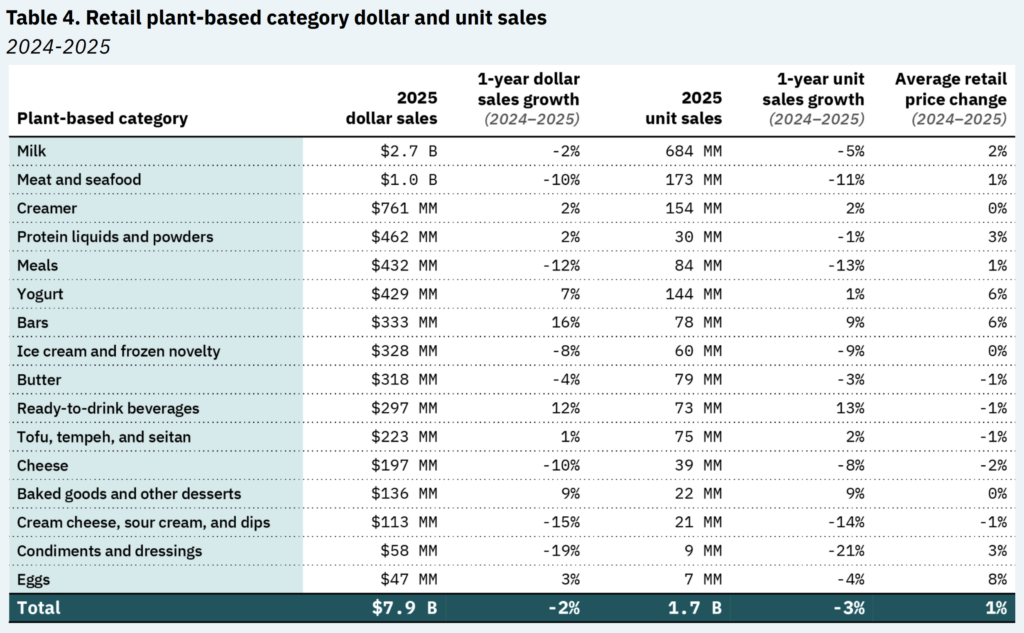
In the US, dollar sales fell again in 2025, with unit sales down by more than 10%, and parts of Europe have seen similar softening in volumes. Concern about climate change and animal welfare has not evaporated. What has changed is the context in which food choices are made.

Households are under pressure. Food inflation has lingered, energy bills remain high, and wages have struggled to keep pace. When the weekly shop becomes a calculation rather than an expression of values, shoppers trade down. Premium-priced products are often the first to go,  particularly when they are seen as optional. And much of the plant-based category is still treated that way: placed in separate sections, framed in contrast to the “real thing”, positioned as a substitute rather than an everyday staple.

I say this as someone who grew up on a traditional dairy farm in Finland, where food was our way of life. Movements may begin with identity, but I learned early that anything that endures does so because it works. The foods people grow up with carry weight. They are familiar, trusted, and woven into routine. No one abandons them lightly.

                                                                                                          Courtesy: Mö Foods

If you want people to change what they eat, the alternative cannot simply be different – it has to be at least as good, and ideally better. That’s why the plant-based food movement must embrace the “post-vegan” era: not the abandonment of ethics, but the normalisation of plant-based food. 

The flexitarian majority

The first wave of plant-based innovation was fuelled by urgency and investor optimism. Some products were rushed to market; others promised more than they delivered. Many were marketed primarily under ‘vegan’ or ‘vegetarian’ labels: terms that signalled good intent, but gradually became associated with products that were more expensive, less satisfying, or inconsistent in quality. 

Some shoppers felt misled; others drifted back to familiar habits. Those who continued buying most consistently were the ones whose identities already aligned with the label: vegetarians and vegans.

The issue is simple: there just aren’t that many vegans. Fewer than 1% of the world’s population identifies as vegan. Even when vegetarians are included, the group remains relatively small in most Western markets.

Far larger numbers – over 40%, by some estimates – describe themselves as flexitarian: actively reducing their meat consumption without abandoning it entirely. If the goal is to reduce emissions, land use, and animal suffering, scale matters more than purity. Small shifts adopted by millions outweigh total exclusion practised by thousands.

This is an approach that meets consumers where they are and lowers the barrier to participation, with the objective not to win an identity, but to shift behaviour, repeatedly and at a global scale.

The shift from identity to impact

plant based meat sales
Courtesy: GFI

Every product that moves from the margins to the mainstream faces the same test. Early adopters will tolerate inconvenience because they believe in the mission. Most consumers will not. For broad adoption, the alternative must stand on its own and fit easily into daily life.

We have seen this pattern elsewhere. Renewable energy expanded when it became cheaper. Electric vehicles gained ground when range improved, and costs fell. Organic produce grew when availability widened, and quality stabilised.

Plant-based food is already showing signs of this transition. While plant-based meat has softened in some markets, plant-based milk continues to hold a significant market share, accounting for well over 10% of total retail milk sales in the US, and higher in parts of Europe. Where functionality is reliable, familiarity is high, and price gaps have narrowed, adoption has stabilised.

But performance alone is not enough. The real question is who these products are designed for.  If plant-based food is to move beyond the margins, performance must be defined in everyday terms.

The discipline of the mainstream

                                  Courtesy: Hellmans/Follow Your Heart/Naturli/Quorn/Magnum | Graphic by Green Queen


Most grocery decisions are made in a moment. Shoppers spend little more than 10 or 15 seconds choosing a product on the shelf. In that brief window, familiarity outweighs ideology.

 It begins with price. In an era of rising food costs, few households can treat sustainability as a premium add-on. It continues with taste and functionality. On the farm where I grew up in western Finland, customers noticed the small things: texture, consistency, whether a product behaved the same way every time. If it didn’t, they went elsewhere.

These are not superficial concerns, but the basic conditions of repeat purchase. Cheese must melt. Milk must foam. A meat alternative must hold its own at the dinner table.

Performance must also include transparency. Environmental claims can no longer rely on branding alone. As climate literacy increases, consumers expect evidence on emissions, land use, and supply chains. If plant-based food genuinely reduces environmental harm, that advantage should be measurable.

None of this guarantees success. Some brands will not survive this phase. Investment has already tightened, and in parts of Europe, public support continues to favour established agricultural systems. But industries mature through correction, and those that endure become stronger.

When plant-based stops being oppositional

For years, plant-based food defined itself in opposition to meat and dairy. That framing was necessary at the beginning. But opposition is not transformation. Real impact comes from scale, and, perhaps ironically, scale happens when a product becomes unremarkable, when it blends into weekly shopping lists without fanfare.

The future of plant-based food will not be decided by labels, but by small, ordinary substitutions: an oat-based chèvre paired with a glass of wine, a milk that rounds out a morning coffee, a meat alternative folded into a weeknight pasta. When those choices feel natural rather than ideological, change stops being a statement and becomes a habit.

That is how movements grow up.

https://www.greenqueen.com.hk/vegan-vs-plant-based-labelling-brands-mo-foods/ 

Monday, April 20, 2026

Going vegan isn't a sacrifice

From vegoutmag.com 

By Jordan Cooper

When the discomfort of eating against your values becomes harder to swallow than your grandmother's tears at Thanksgiving, you'll understand why 8 years later, I still don't miss cheese 

Picture yourself at a dinner party, explaining for the hundredth time why you're passing on the cheese plate. The host looks disappointed. Someone makes a protein joke. Another guest launches into a story about their cousin who "tried that" but got sick.

Now imagine a different scenario. You're sitting at that same table, but this time, reaching for the cheese feels like wearing a shirt that's three sizes too small. It just doesn't fit anymore.

That second feeling? That's not sacrifice. That's alignment.


The myth of the heroic sacrifice

We've built this narrative around veganism that it's about giving things up. About willpower. About denying yourself pleasure for some greater good.

But what if we've been looking at it backwards?

Eight years ago, I watched a documentary on a random Tuesday night. Nothing special about the evening. I'd ordered Thai food, opened my laptop, and clicked play. Two hours later, something had shifted. Not because I'd suddenly developed superhuman willpower, but because I couldn't unsee what I'd seen.

The discomfort of knowing was suddenly bigger than the discomfort of changing.

Think about other changes in your life. Did you leave a toxic job because you're heroically self-sacrificing? Or because staying finally became more painful than the uncertainty of leaving?

When your grandmother cries at Thanksgiving

Change isn't comfortable. Let me be clear about that.

My first Thanksgiving as a vegan, my grandmother actually cried. She'd made her famous stuffing, the recipe passed down through generations, and I was sitting there with my sad portion of green beans and cranberry sauce. "You're rejecting our family," she said through tears.

That moment? That was uncomfortable.

But here's what I've learned from behavioural psychology research: we don't change when change becomes easy. We change when NOT changing becomes harder than changing.

Before going vegan, every meal had become a small betrayal. I'd know where my food came from. I'd understand the systems I was supporting. And I'd eat it anyway, feeling that tiny twist in my stomach that wasn't about digestion.

The evangelist trap

Want to know something embarrassing? I spent three years being that vegan. The one who couldn't shut up about it. The one who'd turn every conversation into a lecture about factory farming.

You know what happened? Nothing. Well, worse than nothing. I pushed people away. Made veganism seem like this exclusive club for the morally superior. My friend Sarah stopped inviting me to restaurants. My partner (yes, the one who still orders pepperoni pizza with ranch) started eating more meat just to spite me. The more I preached, the more resistance I created. Then I stopped. Completely. Six months later, my friend Marcus went vegetarian. Not because of anything I'd said during my preaching years, but because I'd finally shut up long enough for him to reach his own tipping point. That was the lesson that finally landed: people don't change on someone else's timeline.

Living with contradictions

My partner of five years isn't vegan. Every Friday, the smell of pepperoni pizza fills our apartment. There's ranch dressing in our fridge. Actual cheese, not the cashew kind.

Does this make me a failed vegan? A hypocrite?

Or does it make me someone who understands that we all have different tipping points?

The psychology of change isn't about perfection. It's about finding what researchers call your "personal threshold" – that point where your current behaviour becomes more uncomfortable than the alternative.

For me, that threshold was crossed eight years ago. For my partner, maybe it never will be. And that's okay.

The comfort zone paradox

Here's what nobody tells you about comfort zones: staying in them eventually becomes uncomfortable too.

You ever notice how people describe their pre-vegan days? "I always felt weird about eating meat, but..." or "I knew something was off, but..."

That "but" is doing a lot of heavy lifting. It's carrying all the social pressure, the convenience, the habit, the fear of being different.

Going vegan isn't about suddenly becoming strong enough to overcome all that. It's about reaching a point where carrying that "but" becomes heavier than just putting it down.

Think about it like this: You don't leave a bad relationship when you become brave. You leave when staying requires more courage than leaving.

Why willpower is overrated

The whole "veganism requires such willpower" thing? It's mostly said by people who haven't hit their tipping point yet.

Once you cross that threshold, choosing plant-based options isn't about willpower any more than choosing not to wear clothes that don't fit is about willpower. It just feels wrong.

Sure, there's an adjustment period. You have to learn new recipes, find new restaurants, navigate social situations differently. But that's logistics, not sacrifice.

When people ask me if I miss cheese, they're asking the wrong question. It's like asking if I miss my old apartment with the broken heating and the upstairs neighbour who played drums at 3am. Do I have fond memories? Sure. Would I move back? Not a chance.

The social pressure myth

"But what about social situations?"

Look, I get it. Being the only vegan at the barbecue isn't always fun. But you know what else isn't fun? That feeling when you're eating something that conflicts with your values, surrounded by people who don't get why it bothers you.

One discomfort is temporary and external. The other follows you home.

Besides, social dynamics are changing. Five years ago, I had to explain what oat milk was. Now my local coffee shop has four different plant milk options and the barista doesn't even blink when I order one.

Finding your tipping point

Maybe you're reading this and thinking, "This all sounds great, but I'm not there yet."

That's perfectly valid. Maybe you never will be, and that's valid too.

But if you're feeling that tension, that slight discomfort every time you eat, ask yourself: which discomfort is growing and which is shrinking?

Because here's what I've observed: once you start noticing that misalignment between your values and your actions, it tends to grow. Not because someone's preaching at you, but because awareness has a way of expanding.

You can try to unsee what you've seen, unfeel what you've felt, but it's like trying to forget the ending of a movie. Once you know, you know.

Wrapping up

Going vegan isn't about becoming a different person. It's about stopping the exhausting work of being someone you're not.

It's not about sacrifice. It's about that moment when maintaining the status quo requires more effort than changing it.

For me, that moment came eight years ago, watching a documentary on an ordinary Tuesday. For Marcus, it came six months after I stopped talking about it. For you? Only you can know.

But if you're feeling that discomfort, that growing awareness that your actions and values aren't aligned, pay attention to it. Not because you should go vegan, but because that discomfort is telling you something important about who you're becoming.

The question isn't whether you're strong enough to change. It's whether you're tired enough of not changing.

And when that scale tips? Well, that's when you realize it was never about sacrifice at all.

https://vegoutmag.com/lifestyle/g-going-vegan-isnt-a-sacrifice-its-what-happens-when-the-discomfort-of-acting-against-your-values-finally-outweighs-the-discomfort-of-changing/