Showing posts with label French cuisine. Show all posts

Sunday, April 19, 2026

10 classic French patisserie recipes made entirely vegan, and impossible to tell the difference

From eluxemagazine.com

You know what’s funny? The most traditional French pastry chefs would probably faint at the thought of vegan croissants, yet some of the best pastries I’ve tasted recently contained zero butter, eggs, or cream.

I discovered this during a recent trip to Paris, where I stumbled into a small patisserie near Montmartre. The owner, a third-generation baker, had started experimenting with plant-based versions after his daughter developed severe allergies. Watching customers unable to distinguish between his classic and vegan offerings was like watching people discover they’d been speaking in prose their whole lives without knowing it.


1. The perfect croissant that breaks all the rules

Let me tell you about croissants that shatter into a thousand buttery flakes without containing a single gram of dairy. The secret lies in using high-quality vegan butter with at least 82% fat content. Keep everything arctic cold, work faster than you think necessary, and trust the process.

For that golden shine, mix plant milk with a splash of apple cider vinegar instead of egg wash. The lamination follows the exact same rhythm as traditional croissants: fold, roll, chill, repeat. You’ll create 81 delicate layers that crack and flutter exactly as they should. I’ve served these to French friends who grew up in Lyon, and they had no idea.

2. Pain au chocolat worth waking up for

Using that same croissant dough, you can create pain au chocolat that would make any Parisian café proud. Wrap two batons of quality dark chocolate (most dark chocolate is naturally vegan anyway) in the dough before the final proof.

Brush with maple syrup mixed with plant milk for that bakery-window shine. When you bite through, the chocolate melts into perfect rivers while the pastry maintains its honeycomb structure. The contrast between crisp exterior and soft, chocolatey interior remains absolutely intact.

3. Crème brûlée that cracks just right

Who says you need cream for crème brûlée? Silken tofu blended with cashew cream creates a custard so silky, you’ll question everything you thought you knew about desserts. A pinch of turmeric gives that classic pale gold colour, while real vanilla bean provides the authentic flavour that makes this dessert legendary.

Set it with agar powder and add cornstarch for that signature wobble when you tap the ramekin. The sugar topping caramelizes exactly the same way, creating that satisfying crack when you tap it with a spoon. Use a kitchen torch and watch the magic happen.

4. Madeleines that would make Proust weep

Remember reading about Proust’s madeleines in literature class? These shell-shaped beauties trigger memories just as powerfully when made vegan. Aquafaba (that liquid from canned chickpeas you usually throw away) whips into peaks that rival any meringue.

Combine with almond flour, all-purpose flour, and a touch of baking powder. Add lemon zest and vanilla extract for that classic flavour that transports you straight to a French grandmother’s kitchen. The signature hump forms naturally during baking, just like it should. Brush your moulds with vegan butter and dust with flour, and they’ll pop out perfectly every time.

5. Éclairs that defy expectations

Choux pastry without eggs sounds impossible, right? Wrong. Aquafaba strikes again, combined with plant milk, vegan butter, and flour to create shells that puff up golden and hollow. Pipe them long and straight, bake until they’re sturdy enough to hold their filling.

Fill with vanilla custard made from coconut cream thickened with cornstarch. The chocolate glaze uses dark chocolate melted with coconut oil for that perfect sheen. The shells stay crisp, the filling stays creamy, and nobody questions what’s missing.

6. Tarte Tatin that caramelizes dreams

This upside-down apple tart becomes even more incredible when you realize how simple the swap is. The pâte brisée uses vegan butter cut into flour, bound with ice water. Same technique, same flaky result.

Caramelize sugar directly in your cast iron pan until it’s amber perfection. Arrange apple slices in overlapping circles, cover with pastry, and bake. The inversion moment reveals glossy caramelized fruit that could grace any Michelin-starred menu. Serve warm with coconut whipped cream and watch sceptics become believers.

7. Macarons with perfect feet

These temperamental cookies become slightly less intimidating when you use aquafaba. Reduce it by half through simmering, then whip to stiff peaks with cream of tartar. The macaronage technique remains crucial: fold in almond flour and powdered sugar until the batter flows like lava.

Pipe uniform circles, tap the tray to release bubbles, let them rest until they develop a skin, then bake. They’ll develop proper feet and smooth, shiny tops. Fill with ganache made from dark chocolate and coconut cream. The texture rivals any traditional macaron from Ladurée.

8. Mille-feuille in a thousand perfect layers

Whether you make your own puff pastry with vegan butter or buy it ready-made, the technique stays consistent. Bake between two sheet pans for ruler-straight layers. The pastry cream uses cornstarch, plant milk, and vanilla to achieve that perfect consistency.

Layer with fresh raspberries or strawberries for brightness. Top with fondant made from powdered sugar and plant milk, then create chocolate feathering with a toothpick. Each forkful delivers the perfect ratio of crisp pastry to smooth cream.

9. Profiteroles that melt hearts

Same choux pastry as éclairs, just piped smaller and rounder. Bake until they’re golden spheres with hollow centres. Cool completely, then slice horizontally and fill with premium dairy-free vanilla ice cream.

Drizzle with warm chocolate sauce made from dark chocolate and coconut cream. Serve immediately while the ice cream is firm and the sauce is warm. The temperature contrast and textural variety make these absolutely irresistible.

10. Opera cake that sings

This showstopper proves vegan baking can handle complexity. Joconde sponge made with aquafaba and almond flour creates delicate, flexible layers. Soak each with coffee syrup for moisture and flavour.

Alternate chocolate ganache (coconut cream and dark chocolate) with coffee buttercream (vegan butter whipped with espresso). The final chocolate glaze creates a mirror finish worthy of any patisserie window. Each bite delivers coffee and chocolate in perfect harmony.

Final thoughts

After years of helping people navigate change and transformation, I’ve learned that the most profound shifts often come from questioning assumptions we never knew we had. These recipes prove that excellence doesn’t require traditional ingredients, just understanding, technique, and quality substitutes.

The best part? You can serve these to anyone, regardless of dietary restrictions, and watch their faces light up with pure enjoyment. No disclaimers needed, no apologies required. Just beautiful pastries that happen to be vegan.

Try one recipe this weekend. Start with croissants if you’re ambitious, or madeleines if you want something quicker. Once you experience that moment when plant-based butter creates the same magical flakiness as dairy, you’ll understand why this isn’t about restriction or compromise. It’s about possibility.

https://eluxemagazine.com/recipes/l-bt-10-classic-french-patisserie-recipes-made-entirely-vegan-and-impossible-to-tell-the-difference/ 

Saturday, April 18, 2026

French Plant-Based Meat Leader La Vie Enters Tofu Category After Green-Tinted Rebrand

From greenqueen.com.hk

By Anay Mridul

Paris-based La Vie, one of Europe’s fastest-growing plant-based brands, has expanded beyond meat alternatives with a line of tofu products, days after refreshing its visual identity from pink to green.

The era of plant-based meat brands entering the whole-food category is still thriving, with France’s La Vie the latest to hop on the bandwagon.

The Parisian start-up, which first made its name with vegan bacon and wacky marketing, is now one of the leading plant-based meat companies in Europe, growing faster than most competitors.

To accelerate its progress even further, La Vie is leaning into the demand for less processed, cleaner-label protein options in Europe with the launch of three tofu products, days after it decided to add more green to its pink packaging and brand identity.

“At La Vie, we see tofu as a massive white space: a product with incredible potential, but that hasn’t yet been made desirable for mainstream consumers. Our role is to change that by bringing back what really drives food choices: taste, simplicity and pleasure,” co-founder and CEO Nicolas Schweitzer tells Green Queen.

“We believe it’s still the very beginning of the tofu market in Europe, especially in France. Today, tofu is largely misunderstood, with 95% of French people perceiving it as bland or boring. For us, that’s exactly where the opportunity lies,” he adds.

La Vie targets Europe’s clean-label demand

                                                                                                        Courtesy: La Vie

Staying true to its flavour-first approach, none of La Vie’s tofu products is unflavoured. À Cuisiner is a tofu block smoked over beechwood and seasoned with soy sauce, which the company hopes will change people’s minds about the ingredient. It contains 17g of protein per 100g and can be used in salads, bowls, pasta and more.

The smoked tofu also appears in the À Poèler product, comprising teriyaki-glazed cubes ideal for Asian dishes and featuring 15g of protein per 100g serving.

Finally, La Vie has launched “ultra-crispy” tofu nuggets coated with corn flakes to give French consumers a new take on a familiar format. These contain 13g of protein per 100g and can be prepared in the air fryer, with La Vie positioning them as a vegan base for “Hot Ones-style challenges”.

All the tofu products are preservative-free and made using French soybeans, and La Vie is marketing them as “100% natural” to tap into Europe’s demand for minimally processed foods. Polling shows that 65% of Europeans are concerned about the health impact of ultra-processed foods, with 54% avoiding plant-based meats because they’re ultra-processed.

Meanwhile, half of Europeans prefer a natural or clean-label approach to healthy eating, and two in three reconsider their purchases based on ingredient lists.

The company’s marketing studies have shown that its all-pink branding doesn’t make it “sufficiently identifiable” as a plant-based brand, and adding green to the mix boosts the ‘natural’ perception of its products by nearly 17% among its target consumers. This is what led it to refresh its visual identity.

La Vie says tofu remains a niche ingredient largely confined to France’s organic sector, and these products aren’t performing well in the country, despite booming in Europe. This is due to a perception of it as bland and difficult to prepare, and to a lack of a standout brand.

“Marketing efforts haven’t been thorough enough in this market. The tofu nuggets, for example, will allow people to discover this protein in a delicious form, suitable for snacking, appetisers, or quick meals,” says Romain Jolivet, La Vie’s marketing director.

La Vie looks to replicate 2025 success with 50% revenue growth

                                                                                                  Courtesy: La Vie


The tofu launches come weeks after the French government updated its dietary guidelines to recommend limiting meat and increasing plant-based protein consumption.

France has already invested €11.7M in 10 projects to expand domestic plant protein production, as part of the agriculture ministry’s National Strategy for Plant Proteins. It aligns with the 35% of French residents who rate legumes and pulses among the richest sources of protein and the two-thirds who eat foods like beans, grains, lentils and wheat weekly.

In fact, meat consumption has been steadily declining in France over the last two decades, and one survey revealed that 53% of its citizens have cut back on meat in the last three years alone. At the same time, sales of plant-based food grew by 9% in 2024 to reach €537M, making it the third-largest market for these products in Europe. Chilled meat alternatives recorded a 15.5% growth.

La Vie has played a major role here. “We reached €30M in revenue in 2025, with over 50% year-on-year growth,” reveals Schweitzer. “And we’re planning to sustain that momentum with another +50% growth this year.”

He confirms that the company is in discussions with several major foodservice players to roll out the tofu line: “What we’re seeing is a growing interest from partners who want to expand their plant-based offering beyond meat alternatives, and tofu is becoming a very relevant option for that.”

La Vie is the latest plant-based meat brand to diversify beyond meat mimics in Europe. Over the last year, This has launched its Super Superfood and chickpea tofu lines, Oh So Wholesome has rolled out Veg’chop, Juicy Marbles has introduced its Umami Burger, and Symplicity Foods has brought its fermented-vegetable-based meats to supermarkets.

“We’re seeing a natural evolution of the category. Meat alternatives helped introduce plant-based eating to a wide audience, but consumers are now looking for more diversity and simpler products,” says Schweitzer.

“Whole-food options like tofu open a new entry point: they’re versatile, easy to integrate into everyday cooking, and help break the ‘ultra-processed’ perception barrier. It’s not a shift away from meat alternatives, but an expansion of the plant-based ecosystem.”

https://www.greenqueen.com.hk/la-vie-france-tofu-plant-based-meat-nuggets-rebrand/

Saturday, April 4, 2026

This Vegan Easter Brioche Will Steal The Show At Your Brunch

From plantbasednews.org

Your guests may not believe you made it yourself 

If you really want to impress your Easter brunch guests this year, skip the usual pastries and bring out this stunning vegan Easter brioche instead. Golden, braided, and designed to double as a centrepiece, it looks every bit as indulgent as the classic, yet it’s completely plant-based. Even better, thanks to a clever technique conceived by its creator, Lionel Roudaut, it delivers that soft, fluffy, slightly stretchy crumb you expect from a traditional brioche, with a surprisingly simple method that doesn’t require a single egg.

Roudaut, known for his YouTube channel My Vegan Provence, is a passionate French cook and world traveller who reimagines regional dishes using plant-based ingredients. Drawing inspiration from Provence, Roudaut focuses on preserving tradition while making it accessible for vegan kitchens. In one recent video, he shares how to make a vegan Easter brioche inspired by a classic from Nice, complete with orange blossom, pearl sugar, and chocolate eggs.

A traditional brioche, reworked

             This golden, braided brioche is inspired by the classic Easter breads of Nice - Media Credit: YouTube / My Vegan Provence

Brioche is deeply rooted in French baking. It is known for its richness, which comes from large amounts of eggs and butter. That’s what gives it its soft crumb and slightly stretchy texture.

Roudaut keeps that tradition in mind but flips the ingredients. “I will replace the eggs in the recipe by [using] this ingredient, a potato,” he says. “A simple potato, and it works.”

Instead of relying on eggs for structure and softness, he uses cooked potatoes blended into the dough. The result is surprisingly close to the original. “The crumb is moist, it’s stringy, it just tastes like a real brioche,” he adds. “This is just incredible.”

The vegan Easter brioche still includes vegan butter for richness, but the potato does the heavy lifting when it comes to texture.

Building flavour from the start

The process begins with activating the yeast in plant-based milk, a standard step in enriched doughs. From there, Roudaut layers in flavour early, zesting lemon directly into the bowl and adding orange blossom water for a floral, slightly sweet aroma that defines this regional bake.

He then blends the cooked potato with the yeast mixture until smooth. This step is key. The potato must be fully creamy, with no graininess, so it integrates seamlessly into the dough.

Once flour, sugar, and salt are added, the dough starts to form. It is kneaded to develop elasticity, which is essential for trapping air and creating that light, airy texture associated with brioche.

The role of fat and structure

In traditional brioche, butter is gradually incorporated into the dough. The same principle applies here, but with vegan butter.

Roudaut notes that the dough initially resists the fat. “The dough is elastic and is going to resist the incorporation of fat,” he explains. But with continued mixing, the butter is absorbed, and the dough becomes smooth and pliable.

This stage is crucial for achieving the right structure. The dough should stretch easily and hold together, a sign that the gluten has developed properly.

After kneading, the dough is left to rise until it doubles in size. Roudaut then takes things further by chilling it overnight.

“The flavours and the texture of the dough are going to improve drastically with the night spent in the cold,” he says. “Yeast and bacteria are going to develop slowly and create wonderful aromas.”

This slow fermentation not only deepens flavour but also improves the final crumb, making the vegan Easter brioche more complex and bakery-like.

Shaping a symbolic Easter centrepiece


YouTube / My Vegan Provence                     Roudaut carefully braids three strands of dough, creating the classic crown shape that symbolizes the Trinity

The next day, the dough is divided and shaped into three strands. These are braided together, a traditional technique that carries symbolic meaning.

“The reason why you have three braids is to represent the Trinity,” Roudaut explains.

The braid is then formed into a crown, placed on a baking tray, and left to rise again. To help with this final rise, he adds a bowl of boiling water to the oven to create a warm, humid environment.

Before baking, the brioche is glazed with plant milk and sugar for shine, then topped with pearl sugar. Once baked, it turns golden brown and fragrant.

Finishing touches and serving

After cooling, the final decorative step brings everything together. Chocolate eggs are gently melted and fixed onto the surface, turning the brioche into a festive centrepiece.

The result is a vegan Easter brioche that looks traditional but is entirely plant-based. It is soft, aromatic, and slightly sweet, with that signature pull-apart texture.

For anyone navigating Easter with mixed dietary preferences, this recipe offers a way to keep tradition alive without compromise.

For more of Roudaut’s French and Provençal vegan recipes, visit My Vegan Provence YouTube channel.

https://plantbasednews.org/lifestyle/food/vegan-easter-brioche-steals-the-show/

Tuesday, August 5, 2025

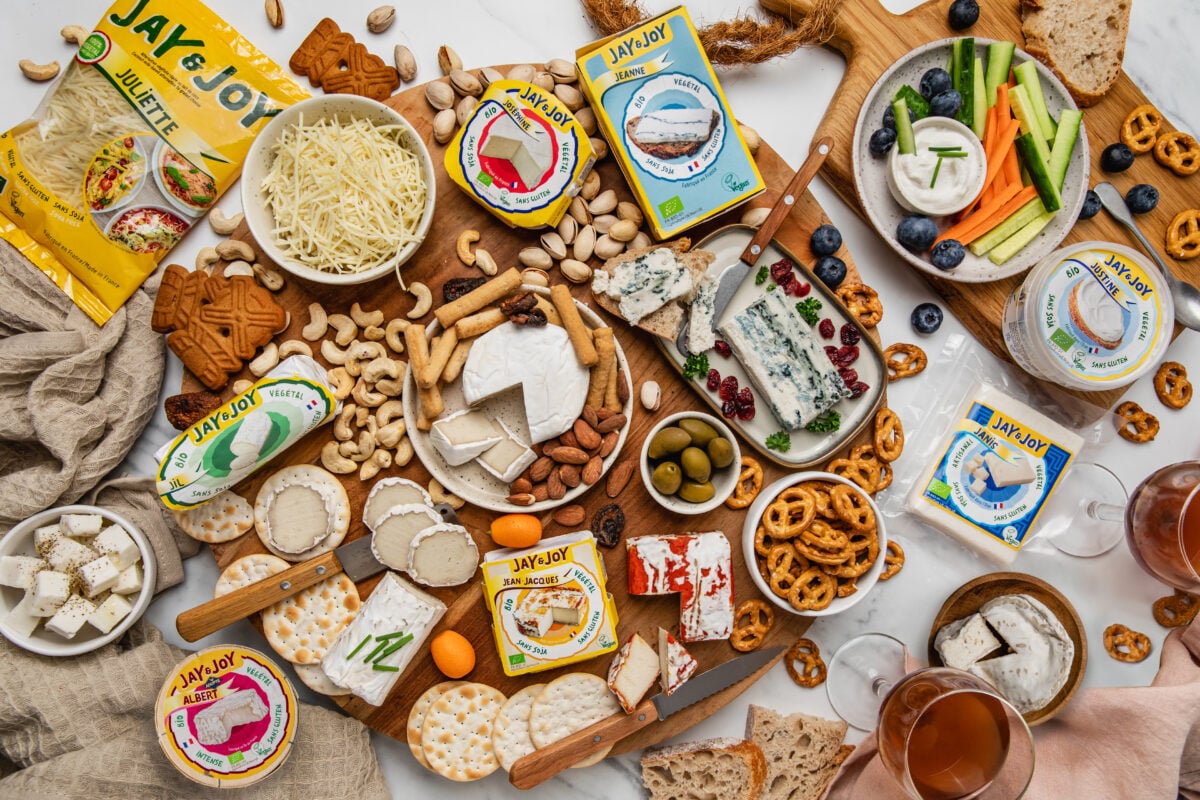
French Vegan Cheese Brand Launches Camembert In The UK

From plantbasednews.org

French vegan creamery Jay & Joy uses traditional cheesemaking techniques to make its camembert 

Jay & Joy is launching “Albert,” its vegan camembert product, in the UK.

The French vegan cheese company draws on traditional cheesemaking techniques to make vegan camembert from cashew nuts and soy. According to Jay & Joy, Albert features a melting centre, smooth texture, and delicately bloomed rind, making it soft, white, and mild.

                     Jay & Joy's vegan camembert combines fermented cashews with soy - Media Credit: Alice Pagès / Jay & Joy

Just like traditional camembert, Jay & Joy’s vegan cheese develops with time, shifting from a “creamy mildness” to more pronounced and complex flavours. Customers can bake the camembert whole or eat it as-is, as part of a cheese board or alongside freshly baked bread.

“Rich and indulgent, Albert is crafted with just a handful of ingredients and a method rooted in traditional French cheesemaking,” said Jay & Joy CEO César Augier. “We’re not solely catering to British consumers who buy organic products; we invite all cheese enthusiasts, even those yet to try plant-based alternatives, to discover Albert for themselves.”

In February of this year, the company completed a €2 million funding round and acquired Les Nouveaux Affineurs, a competing plant-based cheese brand. With the acquisition, Jay & Joy grew its production capacity, allowing for further European market expansion.

In France, the full Jay & Joy range includes a vegan Roquefort, or blue cheese; a “goat” cheese log with flowered crust; a brie-style soft cheese; and a savoury, garlicky Maroilles.

For the first time, Jay & Joy’s vegan camembert is available from a selection of online retailers and independent stores in the UK, including organic food delivery company Abel & Cole. Albert has an RRP of £5.80 per 100g wheel, and has a 30-day shelf life at 2 to 4°C.

Vegan creameries and artisanal ch*ese

Photo shows the full range of Jay & Joy vegan cheeses
Alice Pagès / Jay & JoyJay & Joy’s full range also includes goat-style vegan cheese, blue cheese, brie, and Maroilles

Jay & Joy says that it is the first all-vegetarian creamery in France, but it is not the only company combining traditional cheesemaking techniques with plant-based ingredients.

Large brands like Miyoko’s Creamery in the US and La Fauxmagerie in the UK are also producing artisan plant-based products, while up-and-coming operations such as I Am Nut OK, Tyne Chease, and Kinda Ch*ese Co are proving popular with customers.

Experts expect the global vegan cheese market to reach $7.10 billion by the end of the decade, which is nearly 300 percent of its worth in 2021, according to Grand View Research.

https://plantbasednews.org/lifestyle/food/jay-joy-launches-vegan-camembert-uk/

Monday, March 24, 2025

From Paris to the West Village: Delice & Sarrasin Is NYC’s Best Vegan Brunch Spot

From stupiddope.com

French cuisine is known for its depth, richness, and tradition—but what happens when you remove all animal products and reimagine every dish from the ground up? At Delice & Sarrasin, a cozy, family-run restaurant tucked into the West Village, the answer is deliciously clear. This all-vegan French kitchen has managed to bring the elegance of Parisian dining to Manhattan without a drop of cream, butter, or meat. And for brunch seekers and plant-based food lovers, it’s quickly becoming one of the city’s most sought-after tables.


An Intimate Slice of Paris in Manhattan

Located at 178 West Houston Street (entrance on Bedford), Delice & Sarrasin is a rare gem in New York’s bustling culinary scene. The space is intimate and warm, reminiscent of a small café you’d stumble upon in the Marais district of Paris. While the ambiance hints at tradition, the menu boldly pushes boundaries, offering French classics made entirely from plant-based ingredients. It’s not just a novelty—it’s a masterclass in technique and creativity.


A Menu Built on Legacy and Innovation

The team behind Delice & Sarrasin doesn’t believe in shortcuts. Each item on the menu reflects thoughtful preparation and deep knowledge of French gastronomy. Chef Yvette Caron, who trained at Le Garenne in the South of France, leads the kitchen with a meticulous hand and a reverence for culinary history. Her experience allows her to deconstruct iconic French recipes and rebuild them with ingredients that are fully vegan, gluten-free, soy-free, and nut-free wherever possible.

Signature dishes include a deeply flavorful Vegan Coq au Vin, slow-simmered in red wine with earthy herbs and vegetables. The Boeuf Bourguignon impresses with a bold texture and complexity that pays tribute to the original, while offering a compassionate alternative. For a zesty yet savory bite, the Vegan Duck à l’Orange pairs sweet citrus notes with hearty protein made from pea-based alternatives.

But brunch at Delice & Sarrasin isn’t complete without a dive into their Sweet and Savoury Crêpes. Made without eggs or dairy, these ultra-thin pancakes are filled with combinations like roasted bananas and chocolate, sautéed mushrooms with creamy “cheese,” and more. Whether you’re after something sweet or savoury, their crêpe offerings are a highlight worth savouring.

Ingredient-Driven, Compassionate Cuisine

The meat substitutes at Delice & Sarrasin aren’t mass-produced mock meats—they’re carefully constructed from high-quality ingredients like pea protein, seasoned with house-blended spices and prepared to capture the bite and texture of the originals. The result is a plate that feels satisfying in every sense: ethically, nutritionally, and gastronomically.

Unlike many restaurants that rely on heavily processed products to fill the plant-based gap, Delice & Sarrasin uses restraint and balance. Their commitment to clean ingredients allows the natural flavors to shine through, creating dishes that feel indulgent but remain wholesome.

A Chef’s Vision, Executed With Care

Chef Yvette Caron has shaped Delice & Sarrasin with a steady hand and visionary palate. Drawing on her training and heritage, she infuses each dish with a distinct French sensibility—one that values time, technique, and taste. Her leadership has not only guided the kitchen but has helped transform the space into a destination for locals, tourists, and vegans searching for a truly refined dining experience.

Her influence is present in every layer of a dish: the crisp of a pan-seared protein, the velvety reduction sauces, the balanced use of aromatics. While some may underestimate what a vegan kitchen can do, Yvette’s plates speak volumes.

More Than Just Dinner: Brunch That Impresses

Delice & Sarrasin may be celebrated for its elegant dinners, but their Sunday brunch is where the kitchen truly comes alive. Dishes are lighter, yet equally thoughtful. The crêpes flow freely, paired with fresh juices, coffee, and pastries that don’t sacrifice flavor for philosophy. For those looking to brunch with intention—whether plant-based or simply curious—this is the place.

Given the limited seating and growing popularity, securing a brunch reservation is encouraged. The restaurant’s weekend traffic often includes regulars who return for the consistency, the quality, and the quiet beauty of the space.


Make a Reservation

Dining at Delice & Sarrasin is more than a meal—it’s a story of family, passion, and the power of reimagining tradition through a modern lens. The kitchen’s dedication to thoughtful sourcing and traditional technique ensures that guests experience the best of French cuisine without compromise.

To reserve a table for brunch, lunch, or dinner, or to learn more about the menu, visit the official website: https://delicesarrasin.com

Delivery is also available throughout Manhattan via their online ordering platform: https://order.online/store/delice-and-sarrasin-new-york-243724

Whether you’re seeking a quiet Sunday brunch, a plant-based date night, or simply a new way to experience French cuisine, Delice & Sarrasin invites you to discover what’s possible when tradition meets compassion. The West Village might be a long way from Paris—but with every bite, you just might forget that.

Delice & Sarrasin
178 West Houston Street (Entrance on Bedford), New York, NY 10014
Phone: +1 212-243-7200
Reservations: delicesarrasin.com

https://stupiddope.com/2025/03/from-paris-to-the-west-village-delice-sarrasin-is-nycs-best-vegan-brunch-spot/