Showing posts with label calories. Show all posts

Saturday, July 19, 2025

If you're a vegan but still tired, you're probably doing these 7 things wrong

From vegoutmag.com

By Jordan Cooper

Tired all the time on plants? It might be your calories, your iron, or the way you ghost your pillow 

Crafting a plant-powered menu is one thing; turning that menu into all-day energy is another.

I’ve met plenty of vegans (myself included) who checked every ethical box yet still felt like an extra on The Walking Dead.

If that’s you, chances are you’re tripping over one—or several—of the seven missteps below.

Let’s fix them.


1. Under-eating calories

“Many new vegans find themselves constantly snacking or feeling fatigued… you’re just not eating enough calories or protein or fat or some combination thereof,” notes dietitian Sapna Vora in an interview with Plant Based News.

Plant foods are champions of nutrient density but lightweights in calorie density. Swapping a chicken-and-rice bowl (600 kcal) for a kale-and-quinoa bowl (350 kcal) looks heroic on Instagram—until your blood sugar free-falls by 3 p.m.

My own wake-up call came during a photo-shoot week in Portland. I stuffed myself with smoothie bowls, felt “full,” then spent the afternoons yawning behind the lens.

A calorie tracker revealed I’d been undershooting my needs by 600 kcal a day. Once I added an extra scoop of peanut butter and a fistful of walnuts, the slump vanished.

Quick fix:

  • Anchor every meal with a calorie-dense core: oats + nut butter at breakfast, hummus + whole-grain pita at lunch, or tofu curry with coconut milk at dinner.

  • Don’t fear healthy fats; one tablespoon of olive oil adds 120 effortless calories.

2. Skipping vitamin B12

The Vegan Society puts it bluntly: “To get the full benefit of a vegan diet, vegans should either eat fortified foods two or three times a day or take a B12 supplement.”

B12 keeps your red-blood-cell factory humming; stall that assembly line and oxygen delivery plummets—hello, chronic fatigue. Because plants don’t make B12, relying on kombucha “trace amounts” is like banking on rainfall to fill your swimming pool.

Quick fix:

  • Pick one: 2–3 servings of B12-fortified foods daily or a 250–500 µg chewable supplement several times a week.

  • Check labels: some plant milks contain as little as 0.4 µg per cup—far below the 2.4 µg RDA.

3. Overlooking iron

Harvard’s Nutrition Source reminds us that iron-deficiency anaemia is “the most common nutritional deficiency worldwide, causing extreme fatigue and light-headedness.”

Non-heme iron (the plant kind) absorbs at roughly 10 % the rate of heme iron. Translation: that heroic spinach salad needs a strategy. I learned this the hard way after a routine blood panel flagged low ferritin.

A squeeze of lemon over my lentils and a daily Brazil-nut-and-raisin trail mix nudged levels back into range within three months.

Quick fix:

  • Pair iron-rich beans, lentils, or tofu with vitamin C sidekicks—citrus, bell peppers, strawberries.

  • Keep coffee and tea an hour away from iron-focused meals; tannins block absorption.

  • Consider a gentle iron bisglycinate supplement if bloodwork—and your doctor—say you need it.

4. Living on processed carbs

Vegan convenience foods rescue road-trips but sabotage steady energy. On a recent Japan swing, I subsisted on konbini (convenience-store) white-bread sandwiches and soy lattes.

Delicious? Absolutely. Sustaining? Not so much. By day three my brain felt like mushy edamame.

Ultra-processed carbs spike glucose, trigger insulin crashes, and leave you hunting for the next wrapper. Whole-grain, fibre-rich staples release energy slowly and deliver minerals the body converts into ATP (think quinoa’s magnesium).

Quick fix:

  • Build a “half-plate” habit: fill 50 % of your plate with vegetables or fruit before adding starches.

  • Swap refined grains for intact ones—bulgur instead of couscous, steel-cut oats instead of instant.

  • Batch-cook beans; they’re the slow-burn logs in your metabolic fireplace.

5. Forgetting omega-3s

I’ve mentioned this before, but brain fog often masquerades as tiredness. Short-chain ALA (from flax or chia) must convert to long-chain DHA/EPA—an inefficient process. Low DHA can dull mental sharpness and deepen perceived fatigue.

Quick fix:

  • Grind two tablespoons of flaxseed daily and sprinkle it over breakfast.

  • Consider an algae-derived DHA/EPA supplement (250–500 mg combined) a few times a week.

  • Balance your omega-6 intake by moderating sunflower, corn, and soy oils.

6. Burning the candle late

Diet isn’t the only drain. During a recent album review marathon (music blogging roots die hard) I stretched editing sessions past midnight. Even with immaculate macros, five-hour sleep windows trashed my energy.

Chronic sleep debt disrupts hunger hormones, pushing you toward sugary fixes, and tanks mitochondrial efficiency—the body’s battery pack.

Quick fix:

  • Guard a non-negotiable eight-hour sleep window—yes, even during Stranger Things binges.

  • Dim screens 90 minutes before bed; blue light delays melatonin.

  • Trial magnesium glycinate (200–400 mg) if muscle tension keeps you wired.

7. Flying blind on data

Guesswork is a poor coach. Without periodic check-ins—blood tests, food logs, even a basic mood tracker—you’re steering blindfolded. I book a comprehensive panel every six months; seeing my B12 or ferritin trendlines keeps me accountable and calm.

Quick fix:

  • Schedule an annual (or biannual) panel covering B12, ferritin, vitamin D, thyroid panel, and omega-3 index.

  • Use a simple app to log meals for a week each quarter; patterns (good and bad) jump out fast.

  • Treat supplements as—wait for it—supplements, not excuses for a sugar-fuelled diet.

The takeaway

Fatigue isn’t inevitable on a vegan path; it’s a sign something’s out of tune.

Feed your calories, respect your micronutrients, curb the ultra-processed creep, and honour sleep.

Tweak these seven levers and that perpetual yawn can become the steady hum of plant-powered momentum.

https://vegoutmag.com/food-and-drink/a-if-youre-a-vegan-but-still-tired-youre-probably-doing-these-7-things-wrong/

Wednesday, February 2, 2022

How to build muscle on a vegan diet

From patient.info

With 3.25% of adults aged over 15 years now following plant-based diets, veganism in Great Britain is on the rise. There are growing numbers of people interested in making 'vegan gains' - building muscle on a vegan diet. With careful planning, it is possible to maximise muscle growth on a plant-based diet

Three rules for muscle building

Whether you consume a plant or animal-based diet, if your goal is to build muscle there are three key things that you need to do:

  1. Establish a regular strength-training routine.
  2. Eat a healthy and well-balanced diet. 
  3. Ensure you consume the optimum amount of protein for muscle repair and growth.

"The most important factor when trying to build muscle is progressive overload during your workouts," says Rachel Ball, registered British Dietetic Association (BDA) freelance dietitian. "Each session, try for a heavier weight, more repetitions or better form."

To support this progression in your workouts you need a diet that is high in protein and also rich in a range of nutrients and other food groups that can support strength training.

A vegan muscle-building diet

While veganism has its own dietary challenges for strength training, vegan muscle building is possible. Research shows that both strategic food management and food supplementation are effective in supporting athletes and others who engage in intense strength training and have a vegan diet.

Reema Patel, dietitian at Dietitian Fit says: "For someone who follows a vegan diet, it can take careful planning to ensure your diet contains the required intake of protein, calories and nutrients to optimise health and muscle growth. Eating well, combined with regular muscle-strengthening exercise, will help to build muscle over time."

Vegan sources of protein

It's a common misconception that only animal-based products can provide the protein needed for muscle gain. Protein contains essential amino acids that are needed to repair and increase muscle mass - a process called muscle protein synthesis (MPS).

"To help maximise muscle growth, protein intake needs to be higher than average at around 1.6-2 grams of protein per kilogram of body weight," Patel advises.

"Concentrating on consuming a variety of high protein plant foods is important, as some plant proteins do not contain all the essential amino acids and are not as well absorbed as animal proteins.

"Plant-based proteins that contain all the essential amino acids are sometimes called 'complete proteins'. These include tofu, tempeh, seitan, edamame/soya beans, quinoa, and chia seeds. Other plant foods such as beans, legumes and grains also contain protein, though they will need to be eaten as a part of a varied diet to obtain all the essential amino acids the body cannot produce itself."

Common vegan protein sources

  • Beans, like black beans, kidney beans, and green beans.
  • Seeds, like hemp seeds, pumpkin seeds, and chia seeds.
  • Nuts, like almonds, pine nuts, and peanuts.
  • Lentils.
  • Tofu.
  • Soy milk.
  • Quinoa.
  • Artichokes.
  • Green peas.
  • Oatmeal.
  • Edamame.
  • Hemp milk.
  • Black-eyed peas.
  • Spinach.
  • Asparagus.
  • Broccoli.
  • Chickpeas.

Vegan protein powder can also help you to reach your protein requirements. If you want to maximise muscle growth, you may want to consider the pros and cons of protein supplementation to support your vegan gains.

Vegan sources of carbs

Carbohydrates (or 'carbs') are a primary source of energy in your diet. They are partially converted to glycogen, a form of energy that's stored in muscles. According to Ball, this makes carbs really important, providing essential fuel for your workouts.

Simple carbs are great before a workout because they're digested quickly which makes them a fast-working source of energy: "Before a workout, choose easily digested carbohydrates such as fruit, smoothies or cereal bars. Anything too high in fibre or fat before exercise might cause pain, poor performance or diarrhoea," advises Ball.

Experts also recommend consuming carbs straight after high-intensity exercise. This helps to replenish depleted glycogen stores needed for muscle repair and recovery. In addition, it helps prevent gluconeogenesis (the process by which the body turns to protein stores for energy that could otherwise be used in MPS to build muscle).

Not having enough carbs can also cause protein loss because carb restriction leads to an increase in the amount of nitrogen being excreted by the body. Nitrogen is a component of amino acids - the essential substances for MPS.

Common carbohydrates

  • Whole fruits, like apples, peaches, and clementines.
  • Beans, including black beans, kidney beans, and butter beans.
  • Squash.
  • Sweet potatoes.
  • Whole corn.
  • Lentils.
  • Quinoa.
  • Oats.
  • Brown rice.
  • Whole wheat pasta.
  • Whole grain bread.
  • Vegan sources of dietary fat

    Dietary fats are your body's other main source of energy. Fats have a bad reputation when it comes to your health and body composition, but consuming unsaturated rather than saturated fats can not only help when vegan muscle building but can also aid vitamin absorption.

    Both mono-unsaturated and polyunsaturated fats, known as the 'good' fats, aid muscle movement and growth. They increase levels of HDL, the 'good' cholesterol, which in turn may lead to greater growth hormone production and more amino acids for MPS.

    Furthermore, while saturated fats may raise 'bad' cholesterol and increase the risk of heart problems such as heart disease, polyunsaturated fats are broken down into omega-3 fatty acids which can actually benefit heart health.

    Good vegan sources of unsaturated fats

    • Seeds, like hemp seeds, chia seeds, and brazil nuts.
    • Nuts, such as almonds, peanuts, and walnuts.
    • Oil, including rape seed oil, sunflower oil, and olive oil.
    • Avocados.

    Calorie surplus

    Ball also recommends making sure that you are eating sufficient calories. If you intend to build a lot of muscle then creating a calorie surplus (consuming more than you burn) provides your body with the extra energy it needs for strength training. 

    This particular method of muscle building is commonly referred to as bulking. You should be careful that you only increase your calorie intake enough to build muscle but not unnecessary body fat: this can be a fine balance.

    Experts recommend consuming 10-20% above your daily weight maintenance calorie needs for an average weight gain of 0.25-0.5% of your body weight per week. However, it's important to note that most research on this has focused on bodybuilders. As such, unless you are strength training to an athletic level, caution is advised.

    Vegan muscle building may require a little more planning when it comes to bulking, as plant-based foods are typically lower in calories than animal-based foods. That said, there are still several high-calorie vegan foods.

    Common high-calorie vegan foods

    • Nuts, like almonds, peanuts, and walnuts.
    • Nut butter, such as peanut butter.
    • Dried fruit, including prunes, dried apricots, and dried mango.
    • Avocado.
    • Quinoa.
    • Tahini.
    • Olive oil.
    • Legumes.
    • Sweet potatoes.

    Other dietary supplements

    Vegan diets are lacking in both creatine and carnosine which also aid muscle growth. As a result, you might want to consider taking supplements to support your vegan gains. 

    Creatine is made from amino acids, and it is used to make a molecule called adenosine triphosphate (ATP). This substance is your body's main source of energy for muscle contractions. Creatine also helps you to build muscle in other ways. 

    Carnosine is also made by your body's amino acids. It can increase muscle strength and endurance by helping to manage the pH of your muscle cells. The two amino acids involved in carnosine production are called histidine and beta-alanine, and there is some evidence that taking beta-alanine supplements can benefit body composition, including lean muscle mass. 

Wednesday, December 1, 2021

Vegan foods lower in calories than meat equivalents but many miss the mark on salt, study finds

From walesonline.co.uk

Despite their high sodium content, many meat-free alternatives are generally lower in saturated fat 

Plant-based burgers and other alternative foods have a significantly higher salt content than their meat equivalents, according to a study.

Scientists found that more than three quarters of the meat-free items analysed failed to meet the government’s salt reduction target of 1.19g per 100g.

Staff at Queen Mary University also found that vegan and veggie alternatives had fewer calories, less saturated fat, and more fibre than the meat versions.

Despite this, the salt content was higher than in meat products in five out of six categories.

Among the worst offenders were M&S’s No Chicken Kiev from its Plant Kitchen range which had nearly 2g of salt per 100g and What the Cluck chicken pieces from The Vegetarian Butcher which had 1.7g.

https://www.walesonline.co.uk/news/uk-news/vegan-foods-lower-calories-meat-22311676

Wednesday, July 21, 2021

Want to Lose Weight On a Vegan Diet? It Can Be Complicated, So Nutritionists Recommend These Tips 

From parade.com

If you’re already a vegan or interested in becoming one, you’re likely already relatively focused on maintaining a healthy lifestyle.

So if you want to lose weight, you’re probably a little concerned that doing so on a vegan diet might be tough, especially from a nutrition standpoint. While it’s true that eating a plant-based diet might make weight loss a little more challenging, with some solid planning and the right information, you can do it—and come back healthier than ever before. Here’s how to go about it..

Just because something is vegan doesn’t mean it’s healthy

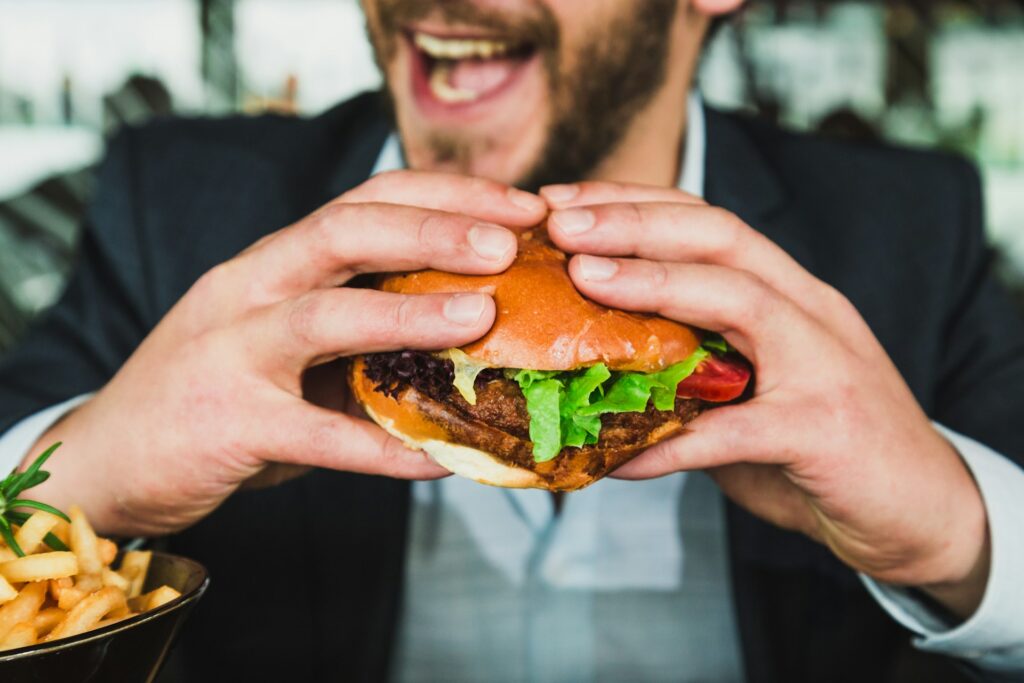
Whether you’re already a vegan or wondering how to become one, it’s key to understand some dos and don’ts. First of all, don’t rely too much on processed vegan food. According to the Cleveland Clinic, eating a veggie burger from a restaurant often means you’re consuming the same amount of fat and calories you’d eat in a beef burger. And you probably already know that french fries and onion rings are technically vegan, but eating too many of them will certainly going to derail your health goals.

Also, packaged products—even if they’ve vegan—tend to be more processed and contain excess sugar and salt, so if you’re looking to lose weight on a vegan diet, it’s best to try to avoid them.

Concentrate on balancing your plate

Sharon Palmer, MSFS, RDN, and author of California Vegan tells Parade that balance is key. “You need to make sure you are balancing your plate with the major food groups at each meal,” she says. “This means focusing on plant proteins like tofu, beans, lentils, and nuts. Then, add whole grains like oats, quinoa and brown rice.”

Pile on the vegetables next, and add some healthy fat. “Olives, avocado, extra virgin olive oil, nuts, and seeds are good choices. Have fruit for dessert. You don’t need a huge serving of each of these foods, but you should at least get one serving of each, and more servings of veg, which will be naturally very low in calories.”

Don’t limit fats too much

It may seem counterproductive because you might think including fats in your meals could slow your progress, but fats play an important role in your nutrition needs. “Include some healthy fats such as avocado or extra virgin olive oil to help aid in the absorption of fat-soluble nutrients,” says Christine M. Palumbo, RDN, FAND, Nutrition consultant. “You’re more likely to get the nutrients you need.”

Avoid major calorie-cutting

You don’t want to avoid reducing calorie intake too drastically, according to Palmer. “If you do, your body will learn to adapt to lower energy needs in response,” she says. “Meet your nutrient needs, and don’t search for dramatic, rapid weight loss. Slower, sustainable weight loss is desirable and attainable.”

If you hit a plateau, trace your steps back and see if grazing a little too much—like that mid-afternoon spoonful of peanut butter that you enjoy in the mid-morning now as well—might be adding calories you aren’t mindful of into the mix.

Pay attention to your hunger pangs

If you feel hungry, try drinking some water first. If your body is still telling you it needs a snack a few minutes later, take time to refuel with some high-quality protein, like nuts. “If you skip protein or any other key nutrient, you could end up feeling hungry all the time and eating more than you mean to,” says Brissette.

Check your nutrient intake

Because you don’t consume any animal-based products as a vegan, it’s important to keep tabs on the intake of certain nutrients. Not only are nutrients important to your overall health, but not getting enough of the vitamins and minerals you need could make ou hungrier. According to the Cleveland Clinic, some of these nutrients include:

Vitamin D

You can get this by drinking fortified rice or soy milk, or talk to your doctor about taking a daily 600 IU supplement.

Calcium

Plant foods and almond milk can be good sources.

B-12

“You can’t get enough vitamin B-12 from a 100% plant-based diet, so make sure you’re including a source of vitamin B12 such as fortified foods like plant-based milk, or take a supplement,” says Brissette. “If you aren’t sure you’re getting all the nutrients you need, meet with a registered dietitian to get personalized advice.”

Make variety your best friend

Because you can eat pretty much-unlimited amounts of veggies whenever you want to, taste the rainbow. “Pile your plate high with different colors of non-starchy vegetables, such as eggplant, kale, lettuce, zucchini, mushrooms and tomatoes,” says Brissette. “You’ll be packing in the nutrients.” Plus, you’ll be enjoying new foods you may not have eaten much of previously.

Be kind to yourself

Losing weight as a vegan is a great goal to pursue, but it can be a little complex to get the hang of. If it takes a bit for the number on the scale to budge, try not to worry.

“Kick up your physical activity to boost your metabolism, and be kind to yourself,” says Palumbo. “Find yourself a few favourite vegan snacks, and factor them into your eating plan. Don’t deprive yourself of deliciousness, and take one day at a time.”

https://parade.com/1238241/lisamulcahy/vegan-weight-loss/

Friday, January 10, 2020

From McDonald's to Greggs: The amount of calories and sugar in vegan fast food might shock you

From manchestereveningnews.co.uk

With Veganuary in full swing, more Brits than ever are looking to replace their favourite meat and dairy products with items containing no animal produce.
In a bid to help people do this, the high-street's favourite fast food chains have been ramping up their vegan offerings.

From McDonald's and KFC, to Greggs, Burger King and Subway, restaurants across the board have come up with meat and dairy-free alternatives of shoppers' favourite dishes.

But a new study suggests that the vegan versions of popular menu items could actually be worse for you, with many containing more calories, salt, sugar and fat than their non-vegan counterparts.
Content agency JBH looked into the calories, fat, salt and sugar content in the vegan fast food offerings from a load of the nation's chains, and the results are proof that a vegan diet isn't always as healthy as people may think.

                                                                         (Image: Subway)

Topping the list for salt was Subway's 6" Meatless Marinara, which contains a whopping 19.3g of sugar and 3.5g of salt. Its non-vegan counterpart, the Meatball Marinara, contains less, with 13.5g of sugar and 1.9g of salt - so if you're looking to keep these factors low, that's the better option (if you're a meat eater, of course).
Pret's Very Berry Croissant also found itself at the top of the list for sugar, containing 21.9g (or 5 teaspoons) of sugar.

The best vegan option in terms of salt and sugar is McDonald's veggie dippers, which contain just 1.1g of salt and 2.3g of sugar per serving.

Here's how all of the brands' vegan offerings compared with their non-vegan counterparts:

McDonald's

Veggie Dippers: Calories (321), Fat (13g), Salt (1.1g), Sugar (2.3g), Sugar in tsp (1)
Chicken Nuggets: Calories (259), Fat (13g), Salt (0.51g), Sugar (0.6g), Sugar in tsp (0)

Burger King

Vegan Rebel Whopper: Calories (596), Fat (33g), Salt (2.8g), Sugar (12g), Sugar in tsp (3)
Whopper: Calories (627), Fat (34g), Salt (2.2g), Sugar (12g), Sugar in tsp (3)

KFC

Vegan Burger: Calories (450), Fat (18.99g), Salt (2.91g), Sugar (5.96g), Sugar in tsp (1)
Fillet Burger: Calories (450), Fat (18.99g), Salt (2.91g), Sugar (5.96g), Sugar in tsp (1)

Subway

Meatless Marinara: Calories (558), Fat (12.3g), Salt (3.6g), Sugar (19.3g), Sugar in tsp (5)
Meatball Marinara: Calories (438), Fat (16.2g), Salt (1.9g), Sugar (13.5g), Sugar in tsp (3)

Costa

Vegan Ham and Cheeze Toastie: Calories (352), Fat (8.9g), Salt (2g), Sugar (2.9g), Sugar in tsp (1)
Ham and Cheese Toastie: Calories (307), Fat (8g), Salt (1.7g), Sugar (5.9g), Sugar in tsp (1)


Greggs

Vegan Steak Bake: Calories (380), Fat (24g), Salt (1.8g), Sugar (1g), Sugar in tsp (0)
Steak Bake: Calories (408), Fat (26g), Salt (1.4g), Sugar (0g), Sugar in tsp (0)


Pret

Very Berry Croissant: Calories (299), Fat (12.2g), Salt (0.6g), Sugar (219g), Sugar in tsp (5)
Croissant: Calories (291), Fat (16.8g), Salt (0.7g), Sugar (4.5g), Sugar in tsp (1)

It is important to remember that these are fast food items, so they were never going to be the healthiest products in the world.
However, the point is, many people often think that vegan food will at least be a little bit healthier than its non-vegan counterparts in terms of calories, fat, salt and sugar, but sometimes it can prove worse for you. Everything can be enjoyed in moderation!

https://www.manchestereveningnews.co.uk/news/uk-news/calories-vegan-mcdonalds-greggs-subway-17536600

Tuesday, November 19, 2019

Why Should I Go Vegan?

From refinery29.com

It seems like anyone and everyone is trying to go vegan nowadays. Your fave celebs, your best friend, your colleague, and even your next-door neighbours. In 2005, there were 2 million self-identifying vegans in the US, but today, that number has more than tripled to 6.5 million today. People turn to the vegan lifestyle due to health and nutrition reasons, as a response to animal cruelty, and even in a push to save our environment from the affects of the animal farming industry. But should you give up meat, eggs, dairy, and possibly honey, in an attempt to join the crowd? The answer is actually a lot more simple than you'd think.

                                                    Photographed by Ted Cavanaugh

“Eating more plants is always good!” says Mascha Davis MPH, RDN and founder of NomadistaNutrition.com. “Adding more fruits, veggies, legumes, and whole grains to your diet will benefit your health… However, there are nutrients in some animal foods that are essential and hard to get without any animal products.”

Getting enough essential nutrients and the right amount of calories is a significant part of keeping up a healthy diet and lifestyle — so much so that if you can’t find a way to sustain this part of your diet, going vegan might not be the right move for you.

“Being vegan does not always equal eating healthy,” Davis adds. “There are plenty of highly processed vegan foods on the market. Vegan cheeses, meats, and even some plant-based milks can be high in saturated fat, sugar, and chemical additives… If you are eating vegan cookies, ice cream, and burgers, your diet will not necessarily be healthier.”

Although veganism might sound like the healthier and trendier option, if you're not willing to put in the time, energy, and effort into doing it right, it might not be worth it health wise.
“No studies have shown that vegan (or other vegetarian eating patterns) improve health or athletic performance compared to healthful omnivorous eating patterns,” says Tanya M. Halliday PhD, RD and an assistant professor at the University of Utah says. “Importantly though, they do not appear to decrease health or performance either.”

If your draw to veganism is based more on sustainability and animal ethics than health reasons, then that's a better reason to go vegan, adds Halliday.

Choosing mostly plant-based food is also a great way to reduce your carbon footprint, and according to a study done by researchers at the University of Oxford, not eating meat and dairy products can reduce yours by up to 73%.

In the end, if going vegan is something you really want to do, go for it. But, it’s not really necessary if you're not 100% passionate about it. Davis recommends following an eating pattern that suits you — you can be healthy and still eat animal products, after all.