The homemade versions of these two classic condiments are healthier, more affordable, and sustainable
Ketchup and mustard are the ultimate duo found in just about every fridge. But while most of us reach for the store-bought squeeze bottles, it turns out that healthier versions of these condiments can be made at home in minutes with a fresher taste and far less waste.
That’s exactly what vegan cheese pioneer and cookbook author Miyoko Schinner sets out to prove. Through her YouTube channel, ‘The Vegan Good Life with Miyoko,’ she often shares simple recipes that swap packaged staples for simple, homemade versions. In a recent video, Schinner shows viewers how to make traditional ketchup in just 30 seconds and a tangy yellow mustard in under 10 minutes.
“These are recipes from The Homemade Vegan Pantry, and they come together literally in either seconds or minutes,” she says, adding, “They’re so much cheaper to make, you’re not buying all those plastic bottles.”
Making the ketchup
Media Credit: YouTube/The Vegan Good Life With Miyoko
For Schinner, ketchup is all about harmony. She starts with canned tomato paste as the base, then layers in sugar, vinegar, and salt. “Ketchup is sort of a balance of sweet and acidic and salty,” she says while stirring the mixture together. She notes that anyone looking to avoid sugar can swap it with maple syrup or even monk fruit.
Schinner stresses the importance of adding liquid gradually to avoid lumps, before thinning the mix with water until it reaches that familiar smooth consistency. Once ready, it goes into a squeeze bottle for easy use.
The recipe is also highly customizable. “You can add some smoked paprika to it, make it a little bit smoky. You could add garlic to it, you could add some truffle oil and have truffle ketchup,” Schinner says.
Her granddaughter, a devoted ketchup fan, is a key taste-tester. “My four-year-old granddaughter loves ketchup…I made my own, and I put it in the squeeze bottle here and served it up, and she never knew the difference. Finally, her mom told her, and she said, ‘Grandma, your ketchup is good.’”
Cooking the mustard
YouTube/The Vegan Good Life With MiyokoCooking the mixture mellows out the strong mustard flavour, Schinner explains
The second recipe takes slightly longer, but still only about 10 minutes from start to finish. Schinner mixes white distilled vinegar, water, and apple cider vinegar with mustard powder, turmeric or paprika for colour, garlic powder, and a pinch of cornstarch for texture.
She then transfers the mixture to the stove. “We’re going to cook this for about 8 to 10 minutes until it’s nice and thick and put it in a squeeze bottle,” she explains. Cooking, she adds, mellows out the sharp bite of the mustard while letting the spices blend.
As it cools, the mustard thickens further, creating the perfect condiment for hot dogs, burgers, or sandwiches. Schinner notes that the type of mustard powder can affect the texture, with some varieties giving a more stone-ground finish. “It’s created more of a stone-ground mustard texture, not as smooth. I think it tastes really good,” she says.
By the end of the video, Schinner has two squeeze bottles ready to go: homemade ketchup and mustard, just as you’d find at a ballpark, but fresher, cheaper, and minus the disposable plastic. “That’s done. Okay, ketchup and mustard – the perfect topping for any ballpark hot dog or even your own homemade sausage,” she says.
With these recipes, you can put together the most basic condiments at home in minutes. For anyone looking to cut down on store-bought products and embrace DIY vegan cooking, this duo is the perfect place to start.
Find more of Schinner’s healthy plant-based recipes on her YouTube channel.
Vegan mayo sales are surging worldwide as health and sustainability drive demand. Could condiments be the future of plant-based growth?
Plant-based meat might be struggling right now, but the global vegan mayonnaise market is looking promising, according to a new report from Future Market Insights. The analysis projects the industry’s value could nearly double over the next decade, reaching $9.1 billion by 2035.
There are several key reasons behind this growth. More consumers are choosing plant-based foods for sustainable and ethical reasons, but health is also a major motivator.
Vegan mayonnaise is often seen as a healthier alternative, since it is lower in fat and cholesterol than traditional, egg-based versions. For example, one tablespoon of Hellmann’s Real Mayonnaise contains 8 percent of the recommended daily saturated fat intake, while its Plant Based Mayo Spread contains just 3 percent.
Vegenaise
As well as Hellmann’s, other brands offering popular egg-free mayonnaise options include Follow Your Heart, Eat Just, Chosen Foods, and Sir Kensington’s. For even more vegan mayo options, check out our guide here.
The report notes particularly strong demand in Japan, but sales are also rising across Europe, the UK, and the US. “The growth is further bolstered by supportive government initiatives and consumer advocacy promoting sustainable food production and animal welfare,” the firm notes. “Regulations encouraging plant-based food adoption and health guidelines for reduced fat and cholesterol intake are collectively driving innovation and expansion across the globe.”
A similar trend is emerging in the dairy alternatives market. According to the IMARC Group, the vegan yogurt market is expected to surpass $12.2 billion by 2033, while Grand View Research projects the plant-based milk market could reach more than $32.3 billion by 2030.
So, why is plant-based meat struggling?
By contrast, the plant-based meat sector is facing headwinds. Shares in Beyond Meat, one of the category’s leading brands, have fallen by 37 percent. Rising costs and consumer hesitancy around ultra-processed foods remain major obstacles.
“There is a market for fake meat, but consumers are broadly sceptical of the category as it is not seen as particularly natural and is viewed as being highly processed,” Neil Saunders, managing director at GlobalData, told The Daily Mail. “This means demand is sluggish and that, along with competition, has weighed down on Beyond Meat’s performance and valuation.”
Beyond Meat
Plant-based mayo, on the other hand, while also processed, carries a stronger health halo. It is also rarely the centrepiece of a meal, and is usually spread or mixed with other ingredients, likely making it an easier swap. Condiments also lack the deep cultural and emotional ties of meat, which may make them simpler to replace for many individuals.
Still, there is hope for plant-based meat. Brands are adapting to consumer concerns through innovation. Beyond Meat has rebranded as “Beyond,” while British brand This is launching more whole-food products made with mushrooms and tofu. Speaking of tofu, IMARC Group predicts the tofu category alone could surpass $4.4 billion by 2033.
“As plant-based meat technologies improve, there is no reason the category cannot grow in the future,” Jerry Thomas, the CEO of Decision Analyst, also told The Daily Mail. “The category still has long-term potential.”
Heinz said it’s “rewriting the rules” of tomato ketchup
Heinz has announced the launch of a brand-new tomato ketchup with no added sugar or salt in the UK.
Tomato Ketchup Zero features 35 percent more tomato than the original product and was created in response to demand for “healthier” options in the country. According to Heinz, 50,000 Brits cited healthier choices with less sugar and salt as their top priority when it comes to choosing food. In a taste test conducted by the brand, nine out of 10 participants said that the new ketchup “delivers on the iconic quality they expect.”
“Consumers expect ‘Zero’ products to fall flat on flavour – because ‘Zero’ often means ‘less,’” said Alexandra Bayet, head of innovation for Tomato Ketchup, Europe, in a statement sent to Plant Based News. “We wanted to turn that on its head and create a ketchup that’s all about more of what you love, even with fewer ingredients.”
The new Ketchup contains less sugar and more tomato - Media Credit: Heinz
Heinz Tomato Ketchup
Heinz Tomato Ketchup, operated by The Kraft Heinz Company, is the most recognizable tomato ketchup brand in the world, with around 1,000 bottles sold every minute.
In the UK, where the new product is being released, an estimated 12.7 million people consume Heinz Tomato Ketchup. Both the original ketchup and the new “Zero” variety are suitable for vegans.
Heinz Tomato Ketchup Zero is available now at Sainsbury’s stores nationwide. It will be available in all major retailers from July, with an RRP of £3.39.
Soy sauce can have a remarkable and variable depth of flavour, making it an ideal everyday seasoning
Soy sauce is a rich, dark, liquid condiment made from fermented soybeans. It’s versatile, popular, and has been linked to several potential health benefits. But is soy sauce vegan? Here’s everything you need to know about this ancient seasoning.
Soy sauce has a salty, umami flavour and a fruity, alcoholic aroma. It holds an important place in East and Southeast Asian culinary history and has a growing international consumer base that values its flavour, versatility, and other unique qualities.
Traditional soy sauce is made by fermenting soybeans with wheat, salt, and water. While it originates in Ancient China, it quickly became a culturally significant ingredient in Korean, Malaysian, Indonesian, and Japanese cuisines, in particular.
Soy sauce remains the single most popular condiment in Japan, where varieties tend to have a slightly sweet underlying flavour. Soy sauce is one of Japan’s “five core seasonings,” and despite falling national consumption, the average Japanese citizen consumed six litres in 2018.
The Asia-Pacific region still dominates the soy sauce market, but international consumer interest has grown considerably. According to Spherical Insights, the global market was valued at USD $48.1 billion in 2022, and is expected to reach $83.8 billion by 2032.
Particular growth is expected in North America over the coming years, and 65 percent of American households now keep soy sauce in their pantry. Around 2.21 million Americans reported consuming four or more bottles, cans, or jars of soy sauce in 2020.
Is soy sauce vegan?
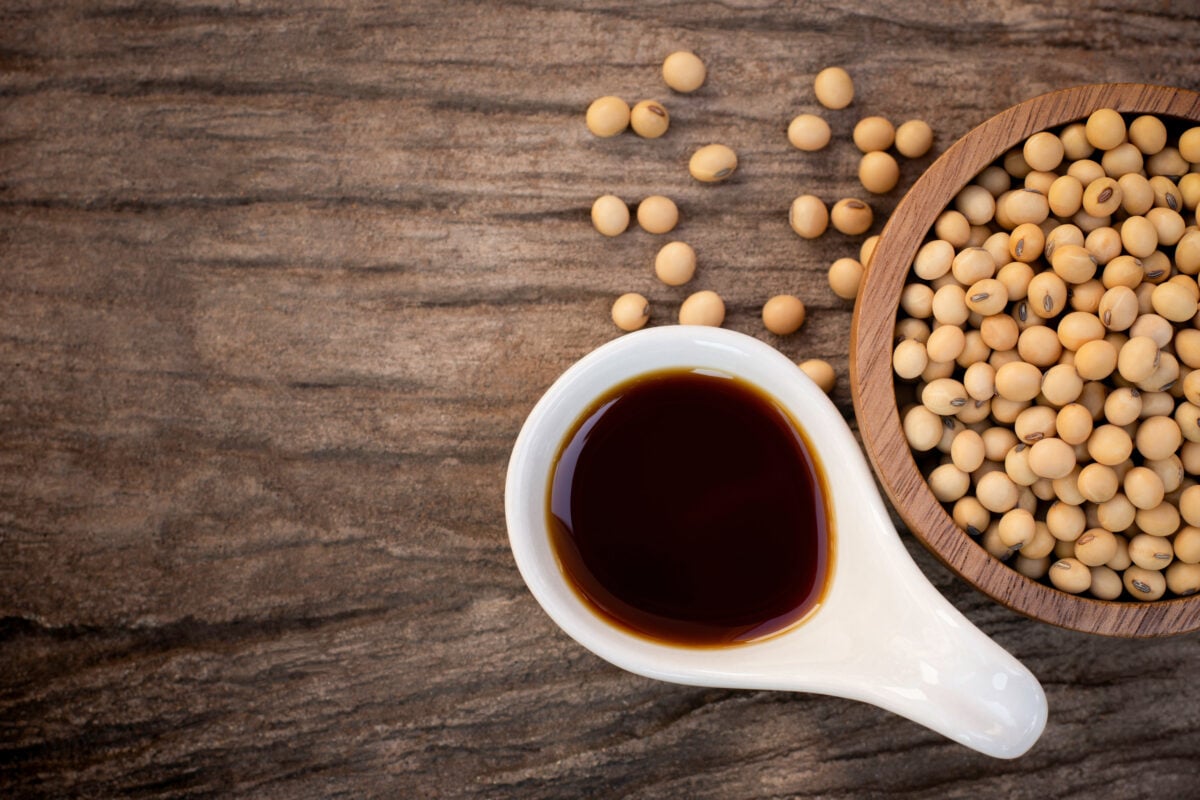
Adobe StockTraditional soy sauce is made with fermented soy beans, salt, water, and wheat
In China and Japan, soy sauce originated as a combination of salt with fish or meat paste, but the animal-derived ingredients were eventually replaced entirely with soy beans. This veganizing process is notably linked to Buddhist monks, who promoted vegetarianism and many of the other soy-based foods – such as tofu or miso – that later became key parts of the region’s various national cuisines.
Traditionally, soy sauce includes just the four core ingredients – soybeans, salt, wheat, and water – making it suitable for vegans. While there are a variety of different ways of making soy sauce, the majority use plant-based ingredients and processes.
While many varieties of soy sauce are still fermented in the traditional way, some modern, commercial versions are produced using chemical hydrolysis, and may include additional ingredients for colouring, flavour, texture, and to extend the seasoning’s overall shelf life.
Some varieties – particularly the cheaper, mass-produced, hydrolyzed kind – can be particularly vulnerable to cross-contamination, and might also include non-vegan additives. For example, common flavour enhancers such as disodium inosinate can be derived either from fermented plant-based ingredients or extracted from meat and fish products.
Specialty flavours may also combine soy sauce with fish sauce, or other animal-derived seasoning, within the same product. As always, it’s worth checking the ingredients on any item before you buy it, either manually – referencing something like Vegan Easy’s food additives list – or with an automatic platform like Double Check Vegan. (Check out some useful fish sauce substitutes here.)
How healthy is soy sauce?
Most varieties of soy sauce are high in salt, which means they are typically high in sodium, and this means that people who are attempting to lower their intake should consume soy sauce mindfully. However, since soy sauce is far lower in sodium than a typical table salt, it can also make a useful substitute seasoning for folks who are looking for flavourful alternatives.
Sodium is an essential nutrient that supports healthy nerves, muscles, cells, and plasma. Humans cannot survive without consuming sodium, and following a diet with too little can be extremely harmful. However, a deficiency is fairly unlikely for most healthy people.
In contrast, many people consume too much sodium, which can also be very harmful. On average, Americans consume over 3,300 mg of sodium per day, which is far higher than the American Heart Association’s “ideal limit” of 1,500 mg and its upper limit of 2,300 mg.
According to Healthline, one tablespoon of soy sauce contributes 38 percent of the current RDA for sodium, while the same amount of salt contributes nearly 300 percent. Soy sauce comes with other potential benefits, too, particularly when brewed naturally using fermentation.
Soy sauce consumption has been linked to a healthy gut and immune system, while certain fermented, low-salt varieties may support a reduction in blood pressure. It may also aid digestion, provide a source of antioxidants, and have certain anticancer properties. However, existing human studies are too small to indicate how healthful soy sauce is in a typical diet.
Different types of soy sauce
When trying to find the best vegan soy sauce, it’s worth trying different varieties to compare flavours, nutrient density, and other factors, depending on the dish, recipe, or profile you have in mind. The major overarching categories for soy sauce include light, dark, double fermented, sweet, and tamari, the latter of which is often gluten-free.
Several of the widely available tamari brands in the UK are also organic, and tamari features a darker colour and thicker consistency than other varieties of soy sauce. Tamari has been described as the “original” Japanese soy sauce, or shōyu, and is primarily produced in the Chūbu region. Important note: Some tamari contains reduced wheat rather than no wheat.
Double-fermented varieties typically have a stronger and more umami-focused flavour than others, making them ideal for dipping sauces. They are sometimes made by substituting light soy sauce from a previous batch in place of water and salt, creating additional complexity.
Sweet soy sauce is Indonesian in origin, and combines traditional ingredients with palm sugar or jaggery, along with spices such as cinnamon, coriander, and star anise. The result is a black, syrupy, sweet-and-salty sauce ideal for dipping, drizzling over fried tofu, or making satay with.
Adding sugar or molasses can also aid the production of dark soy sauce, as can double-fermentation, or simply a longer ageing period. Dark soy sauce is thicker with a slightly sweet undertone, while light varieties are thinner, with a salty, aromatic final product.
Where to buy vegan soy sauce
You can find soy sauce almost anywhere in the US and the UK, from major supermarkets and grocery chains to specialist food stores and online retailers. Chains such as Sainsbury’s in the UK and Kroger’s in the US even stock their own private-label versions – albeit with mixed reviews – while international supermarkets can carry dozens of different varieties and flavours.
Here are some of the most common vegan soy sauce brands.
Kikkoman
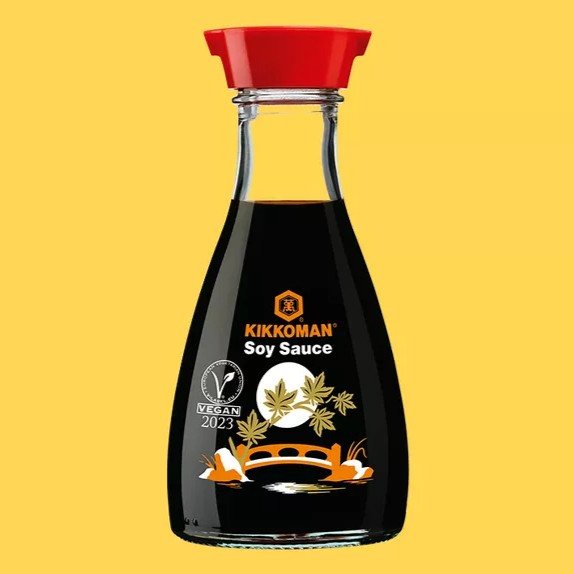
KikkomanThe Kikkoman brand was founded 422 years ago
Kikkoman is the world’s largest producer of soy sauce and was founded over 400 years ago in 1603. The Japanese company makes a huge variety of different soy sauces, including organic, gluten-free, and premium versions, as well as its original traditionally-brewed option. Kikkoman sauces come with a slightly higher price tag than private label options without breaking the bank, and are widely available in the US and the UK.
Lee Kum Lee
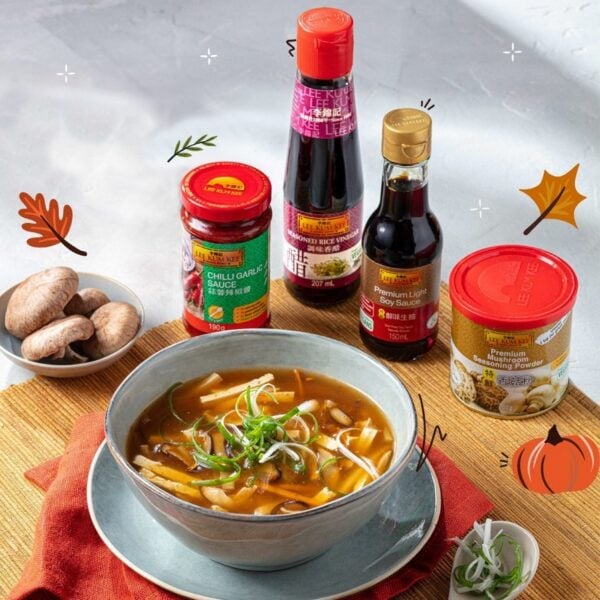
Lee Kum Lee / InstagramLee Kum Lee produces pantry staples like chilli-garlic blends and rice vinegar in addition to soy sauce
Hong Kong-based Lee Kum Lee makes a huge variety of different sauces and was founded in 1888. It is also one of the most widely available brands, particularly for soy sauces, and the range includes premium light, dark, sweet, oriental, and hot chili flavours. In the UK, Lee Kum Lee is carried by many mainstream and international supermarkets alike.
Clearspring
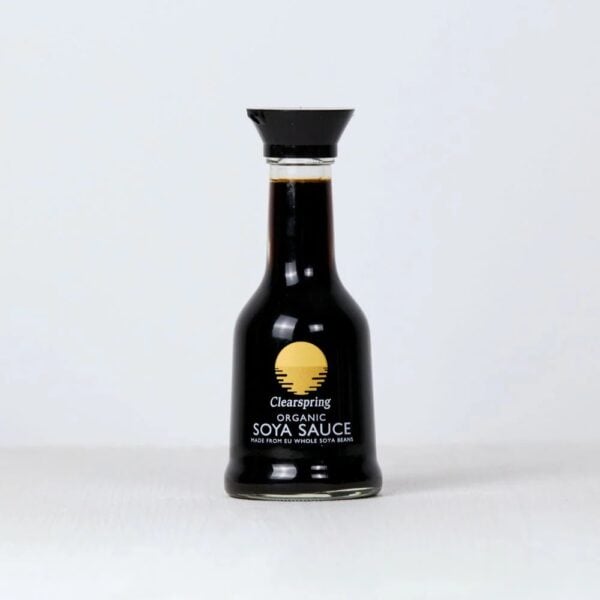
ClearspringIn the UK, soy sauce is sometimes called “soya” sauce
Clearspring makes several soy sauces, including an organic tamari that the brand describes as “double strength” for a “smoother and more balanced flavour.” The company also produces shōyu soy sauce, organic soy sauce, and other varieties made using traditional fermentation. Clearspring products are available from several digital wholefoods platforms and Ocado.
San-J
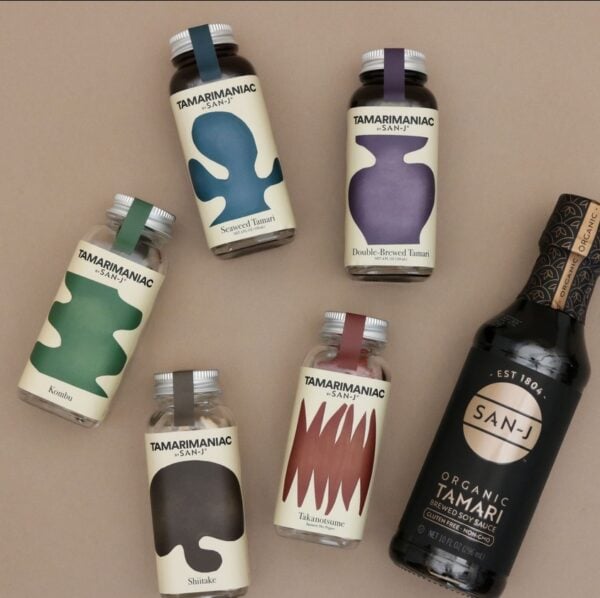
San-J / InstagramSan-J’s tamari is gluten-free and organic
San-J makes its gluten-free, non-GMO tamari with 100 percent soybeans, which the company says makes for “a noticeably richer and bolder taste” with 30 percent more umami than its competitors. It’s available online in the UK and more widely in the US.
Amoy
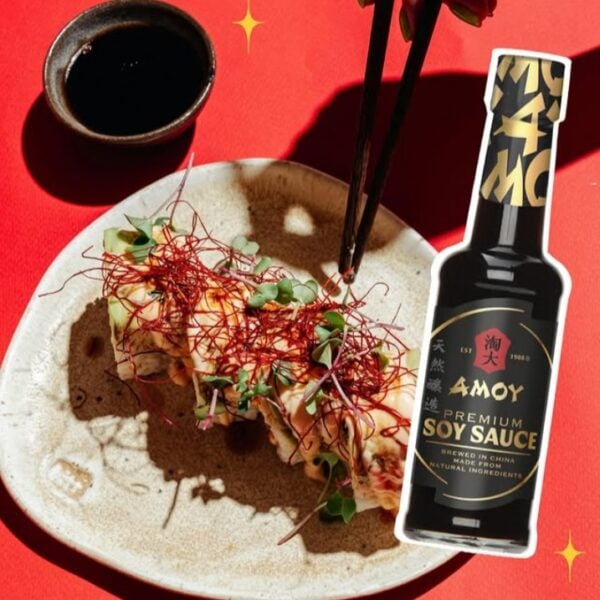
Amoy / InstagramAmoy’s “Premium” soy sauce is brewed using fermentation
Amoy is one of the more commonplace soy sauce brands in UK supermarkets, and its full range includes light, dark, and “premium” varieties, the latter of which is brewed using traditional fermentation techniques. The brand’s products are available online in the US.