Showing posts with label almond milk. Show all posts

Friday, April 10, 2026

Which plant 'milk' is best? A clear guide

From bbc.co.uk/food

Whether you have a dairy intolerance, want to cut back on animal products or just prefer the taste, there are plenty of alternatives to dairy milk to choose from.

But how do they compare when it comes to flavour, nutrition and environmental impact?

That's tricky to answer, says Day Radley, external, chef and founder of The Vegan Chef School. "There can be a big difference between brands, even when they use the same base ingredient."

Still, there's lots to consider and to read on their labels. Here's what to consider when you're next in the supermarket.

                                                                                                                   Getty Images

Quick answer: which plant 'milk' is best?

  • Best for protein: Soya or pea

  • Best for coffee: Oat

  • Best for lowest climate impact: Soya, oat or pea

  • Lowest calories: Almond

  • Avoid for under-5s: Rice

What do you use plant 'milk' for?

Plant 'milks' can replace dairy in most recipes and hot drinks, although nut 'milks' may thicken sauces more quickly.

What to check on the label

Dairy milk is a good source of calcium and protein, so registered nutritionist Charlotte Radcliffe, external says to look out for plant-based 'milks' fortified with calcium, vitamin B12 and iodine "to ensure you're getting enough of these important nutrients".

But watch out for organic options – "by law, organic milk alternatives cannot be fortified."

Radcliffe says that long-life and chilled plant-based 'milks' are nutritionally similar, and to choose unsweetened versions.

"If you're looking for a plant-based milk alternative with similar nutritional values to cow's milk, soya and pea drinks are my recommended go-tos," she says.

                  Banana cocoa crunch overnight oats  This recipe for overnight oats uses soya 'milk'  BBC Food

Are plant-based 'milks' ultra-processed foods?

"While over 90% of plant-based 'milks' would be considered ultra-processed because they're created from food components and substances (flavours, stabilisers or preservatives) not used in normal cooking, this isn't actually a problem," says professor Janet Cade, external, from the University of Leeds' school of food science and nutrition.

These additions mean the 'milks' last longer and have a similar mouthfeel to cow's milk.

Which plant 'milk' is best for the environment?

"On a climate change basis, I'd say any plant 'milk' is better than cow's milk," says the University of York's professor Sarah Bridle, external, author of Food and Climate Change.

Environmental impact varies by farming system, transport and processing methods.

2022 study on the environmental impact of foods, external estimated that cow's milk produced 3.7kg of greenhouse gas emissions per litre of milk, compared to 0.98kg for soya 'milk', 0.66kg for almond 'milk' and 0.45kg for oat 'milk'.

Soya 'milk'

Nutritionally, this neutral-tasting 'milk' is the best swap for cow's milk because it has a similar amount of protein, according to Radcliffe.

"It's low in saturated fats and a source of healthy unsaturated fats."

While soya beans do have a bad reputation for driving deforestation in the Amazon, it's reported that 77% of soya grown globally is for animal feed, and only 7% is used for human food products (such as tofu and 'milk').

Oat 'milk'

"Oat 'milk' is very creamy, so it works very well in hot drinks like coffee," says Radley.

Oat 'milk' is low in protein and often higher in energy (calories) than other alternatives, Radcliffe says. It also contains more 'free sugars', external that are created by starch when the oats are broken down, which the NHS advises us to limit, external.

Oat 'milk' has a much lower environmental impact, external on land, water and greenhouse gases than cow's milk.

Almond 'milk'

The flavour of almond 'milk' is nutty but the strength can vary depending on the percentage of nuts it contains.

It's low in calories, saturated fats and protein, says Radcliffe.


                          Mushroom and ale pie   Almond 'milk' is used in the pastry for this rich pie  BBC Food

While almonds have low greenhouse gas emissions, they can require a lot of water, external to grow compared to other nuts.

Rice 'milk'

"Rice 'milk' can be very sweet and thin," says Radley.

It doesn't score highly nutritionally, either. Low in saturated fats and protein, it's often higher in calories and free sugars than other alternatives.

"Rice drinks are also not recommended for children under the age of five due to their arsenic content, external," she explains. "Arsenic is naturally present in our environment and can inadvertently be absorbed into crops – rice has been shown to absorb more than other cereal crops."

Rice 'milk' has higher greenhouse gas emissions than soya, almond and oat, and is another thirsty crop, external.

Pea 'milk'

Pea 'milk' is made with protein sourced from yellow split peas and has a creamy, mildly sweet taste.

"Pea 'milk' has comparative amounts of protein to cow's milk and is low in saturated fats, so this is a good option for anyone who is allergic to soya and wants to avoid dairy," says Radcliffe.

It has one of the lightest environmental footprints, external, with one of the lowest greenhouse gas emissions and low water requirements.

https://www.bbc.co.uk/food/articles/cwy9zlxjywgo

Friday, March 13, 2026

Oat Milk Is Winning the $13 Billion War Over Your Morning Coffee

From vegnews.com 

Plant-based demand is helping the coffee creamer industry skyrocket, with the global market projected to approach $13 billion by 2035

It's been more than 75 years since the first coffee creamer hit store shelves, and it’s still a staple in many people’s daily coffee routine. But lately, the category has been experiencing serious growth—largely driven by rising demand for plant-based options.

In fact, according to a report from Future Market Insights (FMI), the global market could reach nearly $13 billion by 2035. For context, it was valued at nearly $6 billion in 2025. The market research platform says growing demand for plant-based foods and functional nutrition are two key factors driving the creamer market’s growth.

“This evolution is spearheaded by a rejection of traditional dairy in favour of oat, almond, and coconut bases, alongside the integration of ‘superfood’ ingredients like MCT oil, collagen, and adaptogens,” reads a press release.

North America is one of the biggest markets for vegan creamers, which isn’t surprising considering Americans have long been fans of adding creamer to their coffee. In fact, a 2024 survey from Drive Research found that 77 percent of Americans add either milk or creamer to their coffee.

The study also observed that interest in vegan creamers is rising. Preferences for oat milk, for example, have grown by 90 percent since the platform’s previous survey in 2022, while preferences for almond milk have increased by 71 percent.

                                                                                          Grandbrother's Images | Canva

Young coffee drinkers and café culture reshape the creamer market

However, according to FMI, India is currently leading the market for non-dairy creamers. This is largely because the country is seeing surging coffee demand among younger generations. China, too, is experiencing a boom in the dairy-free creamer market.

Senior analysts at the research firm note that cafĂ© culture is also helping drive global growth. As coffee chains get more creative, consumers want to recreate those drinks at home. Recently, for example, Starbucks announced a new spring menu with several veganizable options, including a Toasted Coconut Cream Cold Brew and an Iced Ube Coconut Macchiato.

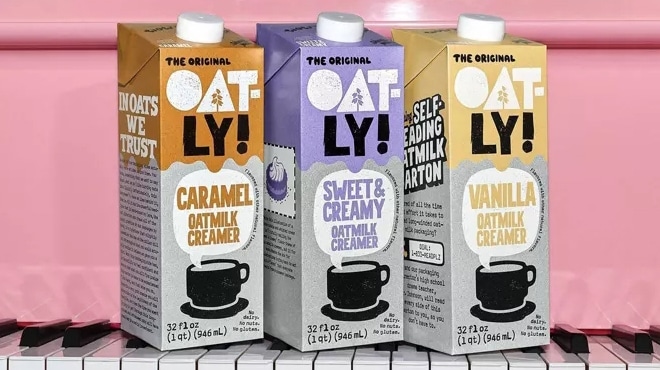
Dairy-free brands have also spotted the trend and are consistently launching new creamers. In 2025, for example, Oatly rebranded its creamers with new carton packaging.

Oatly-Oatmilk-CreamersOatly

“Oatly Oatmilk Creamers are designed for people who are looking for a sweeter, bolder, and more indulgent coffee experience, especially at-home—whether they’re adding a dash into a French press, pour-over, or really any type of coffee,” Malia Killings, creative director and design director at Oatly North America, told VegNews at the time. 

Echoing FMI’s findings, she added: “We’re seeing demand for personalized coffee experiences grow, especially among the next generation of coffee drinkers who prefer a wide array of unique flavour options. Oatly’s Oatmilk Creamers offer those consumers endless possibilities for crafting customized coffee creations.”

Want to get in on the dairy-free creamer hype? Find some of our top picks here.

https://vegnews.com/vegan-creamer-market-boom

Sunday, August 24, 2025

I tested 6 plant-based milks in my coffee — here’s the one that tasted best

From vegoutmag.com

By Nato Lagidze

What if your milk choice says more about your mood than your menu? 

I’ve always taken coffee seriously.

Not in the rigid, measuring-scale kind of way — but more like a morning ritual that knows me better than I know myself.

Coffee is my first emotional checkpoint of the day. The moment everything else pauses so I can figure out what kind of human I’m becoming that morning. Literally. 

So when I decided to quit dairy (for health, ethics, curiosity—let’s call it a blend), I didn’t just grab the nearest plant milk and move on.

I turned it into an experiment. A real one.

Six different milks. Same dark roast. Same mug (this was the hardest part, I like variety). Same stirring rhythm. Six variations of what it means to feel slightly more or slightly less alive at 9 a.m.

And if you’ve ever tried sourcing non-dairy milk in Georgia, you know it’s a mission. These milks aren’t lining every supermarket fridge. They're like elusive characters — some show up only during obscure discount weeks, others exist only in specialty stores where everything is 2.5x your grocery budget.

So I waited for sales. Hunted them like seasonal fruit. And treated each new bottle like a rare research subject.

Here’s what I discovered — not just about taste, but about identity, memory, and how even a splash of milk can reveal who we are that day.


1) Oat milk: the emotionally intelligent frontrunner

This one almost won.

Oat milk is beloved for a reason. It’s creamy, nutty-sweet, and behaves well in heat. The barista versions foam beautifully, turning espresso into velvet.

For me, oat milk was a revelation — especially in matcha. I mean, matcha and oat milk are basically soulmates. But in coffee?

That’s more complicated. It depends on a lot: how acidic the roast is, your mood, whether you’re drinking it hot or iced, whether the oat brand is trying too hard or just right.

Still, oat milk is the one I came back to the most. It felt… emotionally regulated.

It doesn’t dominate. It doesn’t disappear. It just softens the edges.

But I’ll admit—there were moments it felt too soft. Too comforting. Like I needed something sharper, cleaner. Which brings me to...

2) Almond milk: the perfectionist with commitment issues

Ah, almond milk. My long-time love-hate relationship.

Some days, it’s flawless. Light, elegant, crisp. Other days? It curdles, tastes like dust, and ruins everything.

There is no middle ground with almond milk. It’s either quietly stunning or passive-aggressively awful.

When it’s good, almond milk brings this clean brightness that’s refreshing, especially in iced coffee. But in hot brews, it's unpredictable. Some brands are a disaster. Others are near divine.

I’ve had mornings where it elevated my entire being—and others where I questioned all my life choices.

Still, I can’t fully quit it.

It’s like that one emotionally unavailable person you know isn’t good for you… but when they’re good, they’re unforgettable.

3) Soy milk: the steady overachiever

Soy milk feels like the eldest child of the plant milk family. It’s been around the longest, has the most degrees, and probably has a spreadsheet for its morning routine.

In coffee, it’s stable.

Slightly nutty, dense enough to give body, and doesn't try to seduce you with sweetness. It’s the dependable one for most vegans. The milk you choose when you need to get your life together.

Not my thing, though.

I reached for soy on days when I felt scattered or overstimulated. It anchored me. It wasn’t flashy, but it was there. Solid. Uncomplicated. Like someone who texts back within five minutes and never uses read receipts.

Would I use it every day? Maybe not. But when the world felt too much, soy milk brought a kind of emotional grounding I didn’t know I needed.

4) Rice milk: the kindhearted ghost

Rice milk didn’t try to impress me. It just quietly showed up, did its job, and disappeared again.

It’s watery, yes. A bit too sweet for my taste. But there’s something soft about it. It reminded me of school mornings and warm cereal porridge and how my dad used to make me tea the first thing in the morning.

It didn’t add much body to the coffee. Honestly, it thinned it out.

But emotionally?

It made the whole cup feel… gentle. Like nothing bad could happen while drinking it.

I wouldn’t call it a go-to, but there’s a place for rice milk. For the mornings when you don’t need stimulation — you need comfort. A soft landing.

Still, it can't compete with oat milk for coffee. That's for sure. 

5) Coconut milk: the dramatic artist

Coconut milk doesn’t play nice. It takes over.

The moment I poured it in, I felt like I was on vacation in a place I couldn’t afford. It’s creamy, intense, and has this unmistakable flavour that doesn’t blend—it dominates.

Some mornings, that’s exactly what I wanted. Something bold. Something weird. Something that made my coffee feel like a story.

But most days?

It was too much. I couldn’t figure out who was in charge—me or the milk.

Coconut milk is the kind of person you fall hard for and then realize you can’t live with because they alphabetize their vinyl collection and cry during pasta commercials. Well, sometimes I'm that person myself, but still.

Beautiful chaos. Great in small doses.

6) Hazelnut milk: the unexpected poet

I didn’t expect to like hazelnut milk. Honestly, I expected artificial sweetness and fake Nutella energy.

But it surprised me.

There was a warmth to it. A roasted, slightly melancholic depth that turned my coffee into a reflective space. It felt like autumn. Like long walks. Like rereading an old book and seeing something new.

I wouldn’t use it every day—it’s too moody for that. But on rainy mornings or when I was in a dreamy headspace, hazelnut milk met me exactly where I was.

It was like having a cup of coffee with someone who doesn’t say much, but when they do, it hits somewhere soft.

What this taught me (besides how to time supermarket discounts)

Beyond the flavour notes and foam tests, what I really learned is that we treat coffee like identity.

The milk you use, the way you drink it, the brands you reach for when no one’s watching — these are tiny rituals of self-recognition. And in a culture that’s constantly rushing, that recognition matters.

Each milk brought out something different in me. Not just on the tongue, but in the body, the breath, the mood. Some mornings, I needed boldness. Others, I needed familiarity. And sometimes, I just needed to laugh at how dramatic a cup of coconut milk could be.

And yes, this was all born out of a little nutrition experiment, a little boredom, and a lot of waiting for discount tags at Georgian health stores.

But it became more than that.

It became a way to check in with myself. To notice what I needed. To realize that even in something as ordinary as milk, there is room for play, for emotion, for texture.

Final thoughts

I don’t believe in “the best” plant-based milk. I believe in the right milk for that morning, that mood, that moment in your life.

Oat milk made me feel stable. Almond made me feel specific. Soy made me feel grounded. Rice made me feel held. Coconut made me feel chaotic (in a good way). Hazelnut made me feel poetic.

And maybe that’s the whole point.

The way we experience flavor is never just physical. It’s emotional. Psychological. Sometimes even existential. Milk is not just milk. It’s memory. It’s longing. It’s a way of saying: “This is who I am right now.”

So try them all. Wait for the discounts. Froth them with intention. Drink slowly.

And listen to what your coffee is trying to tell you.

https://vegoutmag.com/food-and-drink/n-i-tested-6-plant-based-milks-in-my-coffee-heres-the-one-that-tasted-best/