Showing posts with label Hong Kong. Show all posts

Sunday, October 13, 2024

88 Hong Kong dishes and snacks made vegan in new cookbook, from dim sum to ‘egg’ tarts

From scmp.com

Christine Wong talks about making vegan versions of traditional dishes and snacks in her new cookbook The Vibrant Hong Kong Table 

There is no denying that Hongkongers love their meat. The city has the fourth highest meat consumption per capita in the world, at 123kg per year, according to the latest statistics from the World Population Review, including one of the highest per capita figures for pork consumption, at 53kg per year.

To many, it is simply not a meal without some variety of animal flesh on the table. Vegetarians can consider themselves lucky to find anything more than a small handful of suitable options on a restaurant menu, vegans even more so.

Enter Christine Wong Mei-yue and her audaciously ambitious new title The Vibrant Hong Kong Table – a heartfelt homage to Hong Kong masquerading as a cookbook, which reimagines 88 local specialities using strictly vegan ingredients.

“There are a lot of Chinese vegetarian cookbooks out there, but none that try to recreate the dishes exactly like I have,” the 56-year-old foodie says.

Christine Wong stands next to a fruit and vegetable stall in Central, Hong Kong. Photo: Sun Yeung

Best known to her 100,000 Instagram followers as the plant-based chef and sustainability advocate behind @conscious_cooking, New York-based Wong is currently in Hong Kong for a series of promotional events between October 13 and 17.

The cookbook project grew from a profound sense of nostalgia; Wong still calls Hong Kong home despite having been living in New York for more than two decades.

“Distance makes the heart grow fonder, as they say. Most Hong Kong people in the States have lots of nostalgia, and the things we miss about Hong Kong, any time we talk about Hong Kong, it’s about the food,” she says.

“We’re all feeling a lot of Hong Kong nostalgia right now – from the neon signs to the Jumbo Floating Restaurant, it feels like everything is disappearing – so I decided to capture something, for the next generation, before it’s too late.”

The book is split into four sections, celebrating the various occasions and times of the day that Hongkongers congregate and bond over a bite. They comprise breakfast and dim sum; cha chaan teng and “lunchbox favourites”; family-style dinners, from festival foods to dai pai dongs; and sweets, snacks and siu yeh (late-night snacks).
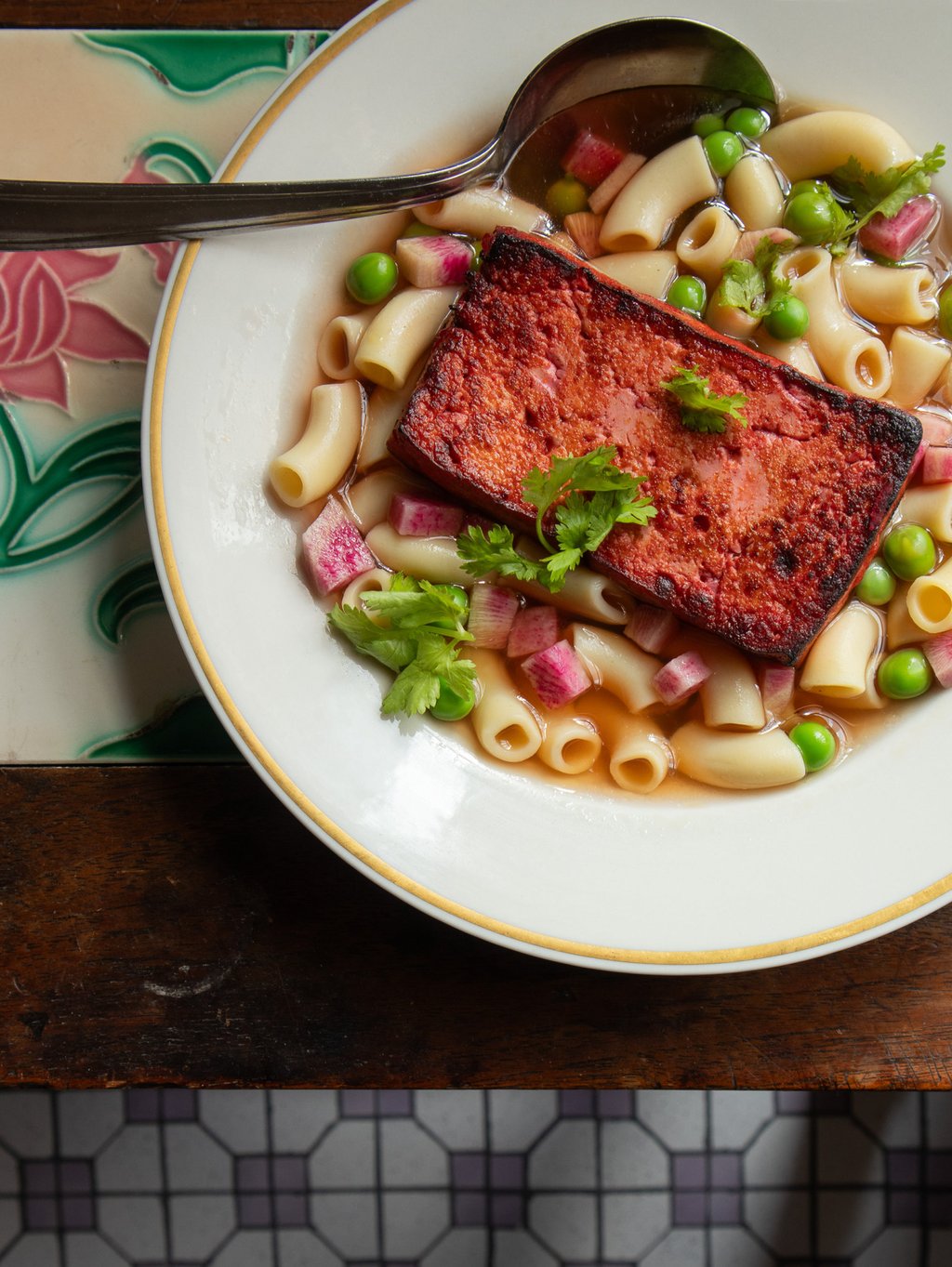
One of Wong’s most arduous inventions is her take on Spam, which is actually tofu marinated in beetroot. Photo: Christine Wong

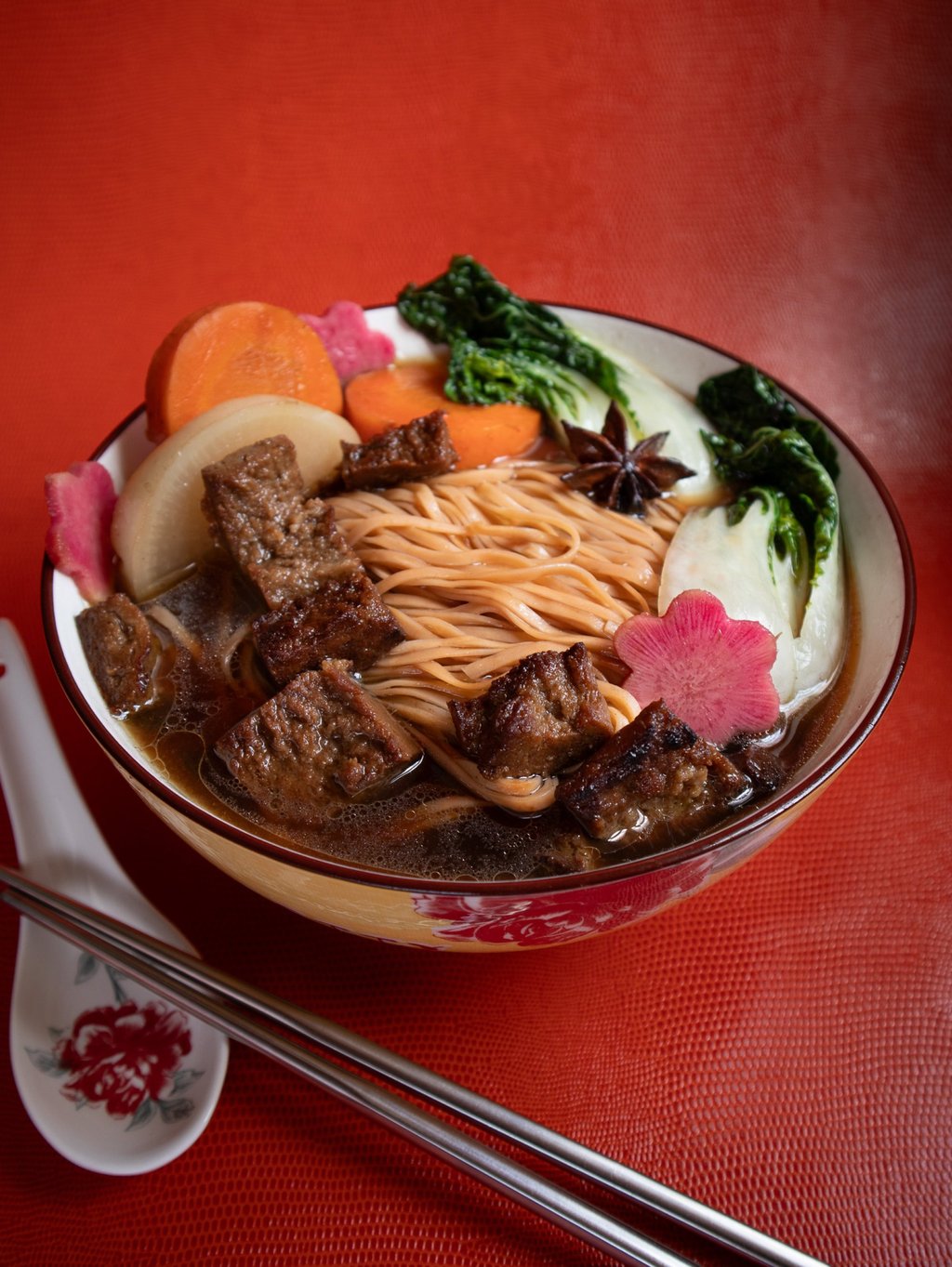
Present are ambitious vegan appropriations of all the classics, including “beef brisket” noodles (made from jackfruit), salt and pepper “squid” (actually konnyaku yam cake and artichoke heart) and Swiss-style “chicken” wings (made from mushrooms).

It also includes personal mementos, such as “Grandma’s Hong Kong Curry”, inspired by the staple that Wong’s por por (maternal grandmother) would serve on childhood visits.

Many more of these dishes were crowdsourced: when Wong asked members of the “I grew up in Hong Kong in the 1970s/80s” Facebook group for inspiration, she received over 300 responses.

“That post just blew up, and I took a lot of those suggestions,” says Wong, who was also helped by an army of 30 recipe testers recruited on social media from around the globe.

“There’s something about Hong Kong that really touches people’s hearts, whether you live there for just one year or your whole life, and this book really appeals to all those people that had to move or emigrated.”
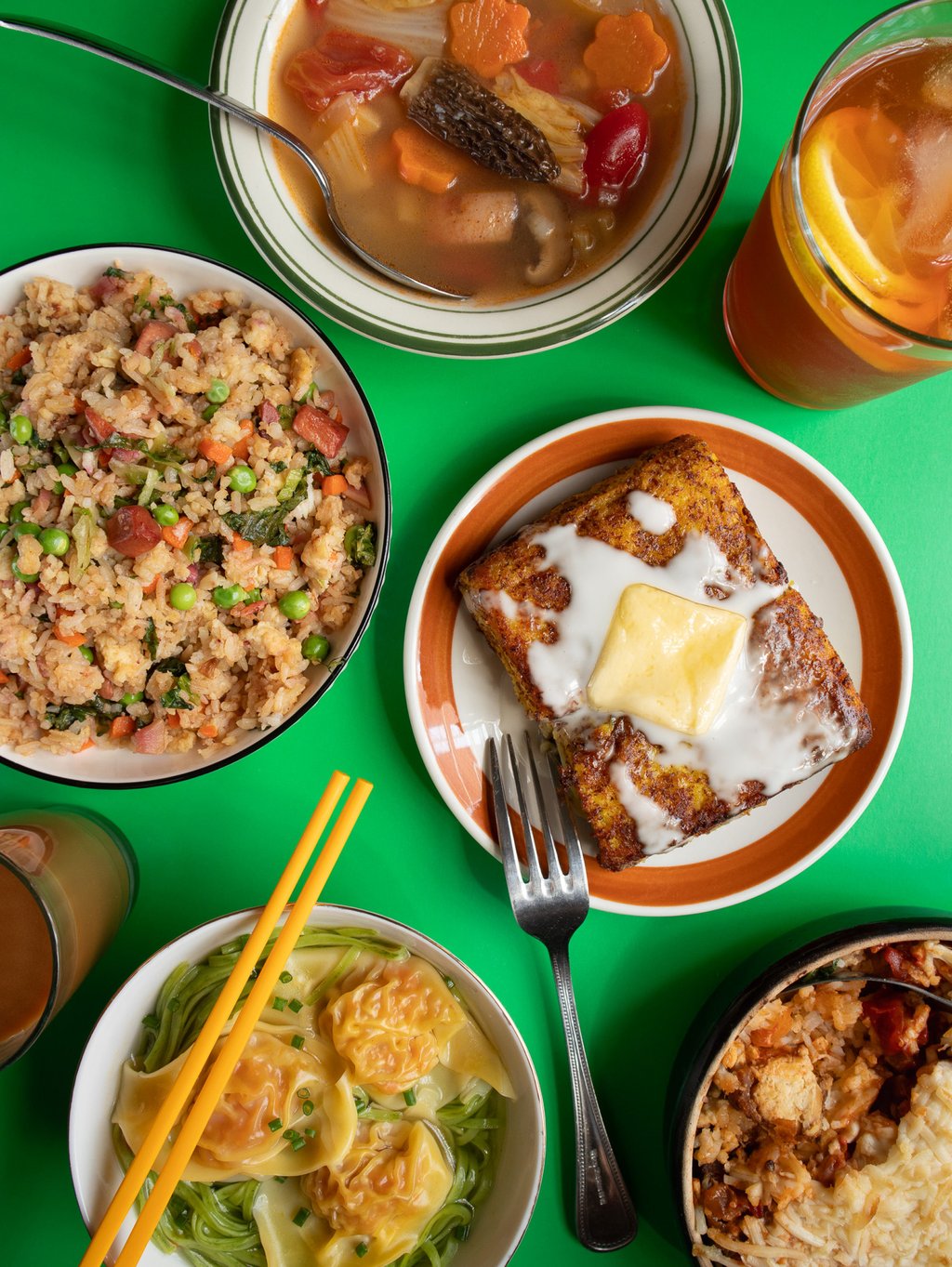
Veganised versions of cha chaan teng dishes. Photo: Christine Wong
Wong’s beef brisket noodles are made from jackfruit. Photo: Christine Wong

Among Wong’s most arduous inventions is her approximation of spam, which requires marinating tofu in beetroot to get the appropriately artificial shade of pink, while her elaborate Chinese sausage is constructed by squeezing wheat gluten into Vietnamese spring roll wrappers.

Meanwhile, a key hack for brewing broths is using coconut oil in place of meat fats – essential, Wong says, for conjuring that sated, full-bellied feeling that only a hearty bowl of soup noodles can bring.

The most difficult dish to fake? “Fish balls!” she declares, without pausing for thought. “It’s very hard to get that bouncy, ripe texture.” In the end she combined potato, various flours, wheat starch and tofu to get the desired springiness.

“A lot of it is for the looks – we eat with our eyes first,” she says. “When people look at the pictures, they don’t necessarily even know it’s vegan.”
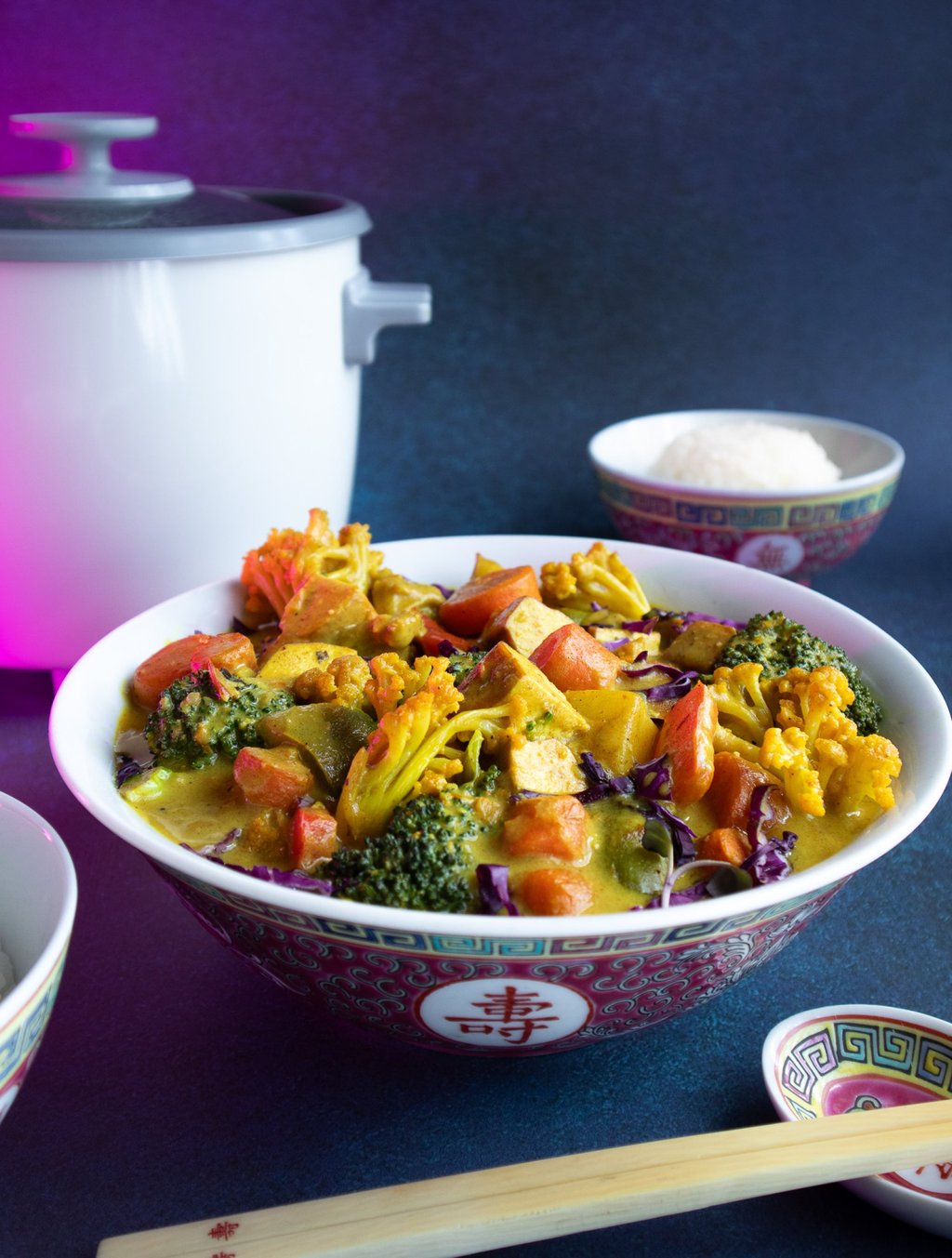
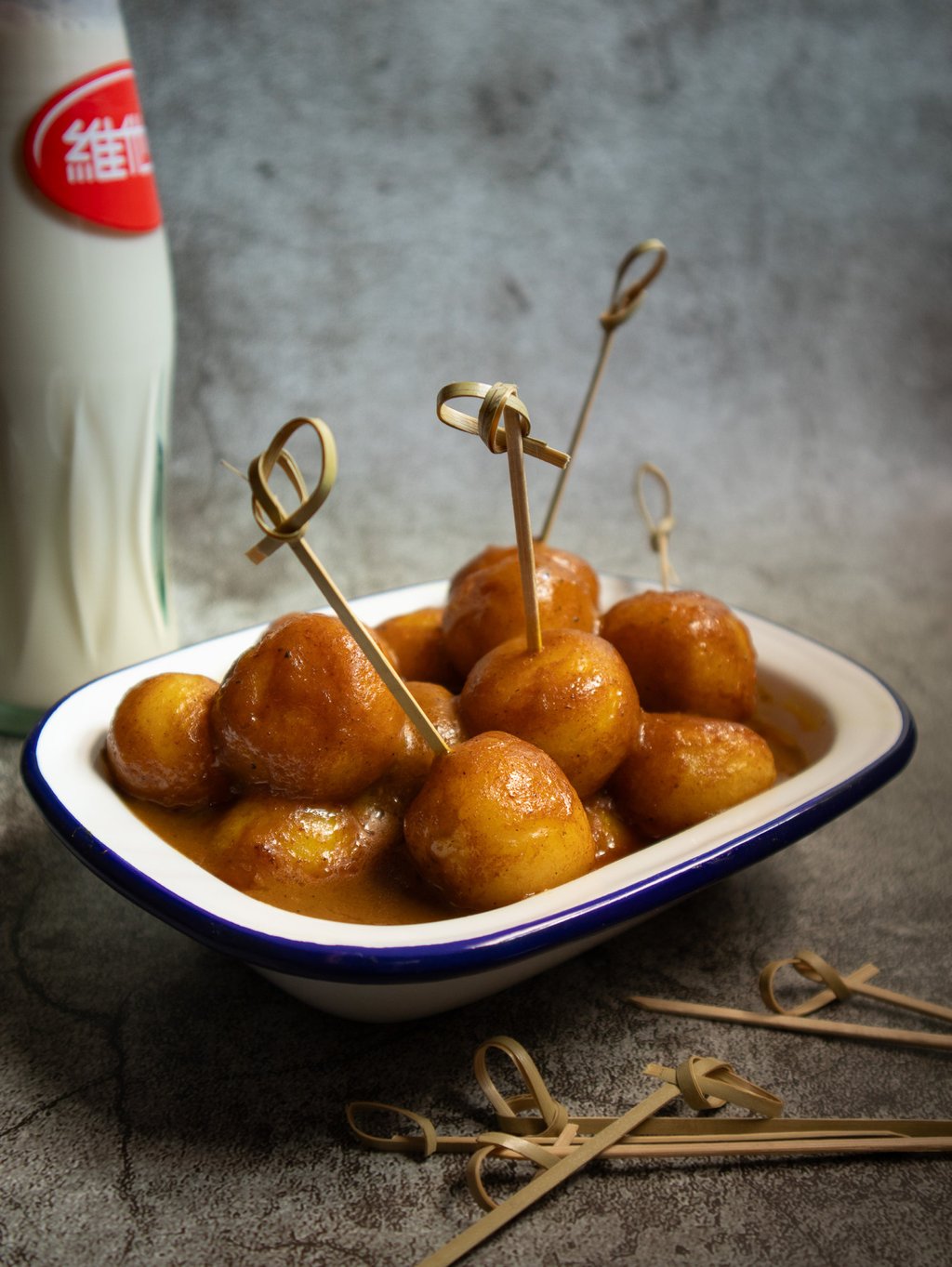
“Grandma’s Hong Kong Curry” is a recipe inspired by Wong’s maternal grandmother. Photo: Christine Wong
Wong says the most difficult recipe to get right was vegan fish balls. Photo: Christine Wong

The big question then: are carnivorous Hongkongers ready for such radical recipe reinventions?

“I don’t know if Hong Kong – or if the whole world – is ready for it, but it’s worth a try,” says Wong, who is also a certified health coach. “A plant-based diet can be tasty, nutritious and healthy, and good for the environment at the same time. And it’s cheaper. That’s a lot of wins – so why not try it?

“If we are going to feed the population in future we need to embrace plant-based food.”

However sacrilegious some traditionalists may find Wong’s approach, it is undeniable her book is rooted in a deep love for Hong Kong’s heritage, culinary and otherwise.

But in fact the idea was sparked as a spirit-raising rebuttal to the widespread discrimination that Asians in America faced during the early stages of the pandemic.

“It began because of Asian hate,” she says. “[During Covid] there were a lot of atrocities in Asian communities – for two weeks I was scared to go out of my house. It wasn’t limited to good neighbourhoods and bad neighbourhoods, daytime and night time – even during the day I was terrified to leave the house.”
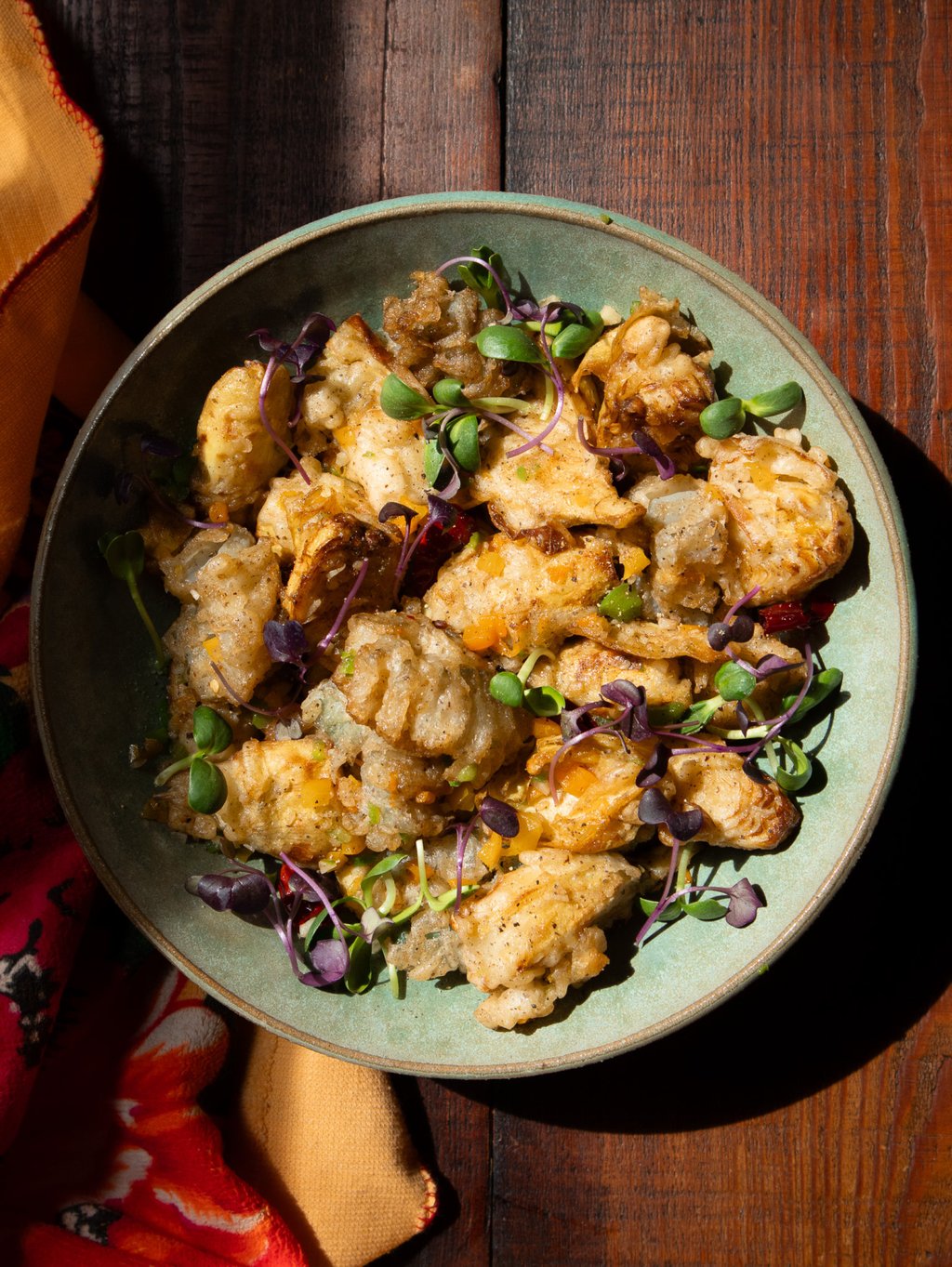
Salt and pepper “squid” is actually made with chewy konnyaku yam cake and artichoke hearts. Photo: Christine Wong

Wong, an active member of New York’s Asian American and Pacific Islander (AAPI) community, was motivated into action, sharing positive instruction in self-defence and self-care, hosting virtual dumpling-making workshops, and hand-making more than 500 reusable cloth face masks.

“Because I had such a large platform with Instagram, I decided I needed to do something,” she says. “Not just for myself but for the community. I helped a lot of people through that time.

“The experience made me want to know more about my family, where I come from; to celebrate being Asian and celebrate Hong Kong especially.”

The Vibrant Hong Kong Table is available at Bookazine and G.O.D stores in Hong Kong, as well as online.

For more information on Christine Wong’s events in Hong Kong, visit the Conscious Cooking website.

https://www.scmp.com/lifestyle/food-drink/article/3281968/88-hong-kong-dishes-and-snacks-made-vegan-new-cookbook-dim-sum-egg-tarts

Thursday, May 9, 2024

Inside Hong Kong’s growing appetite for veganism

From monigroup.com

Local millennials’ values, social media buzz and food scandals all contribute

Veganism is rapidly growing globally and Hong Kong is no exception, its local advocates claim, as dabbling in or adopting the plant-based lifestyle gains popularity.

In the United States, six per cent of the population, or roughly 20 million people, now identify as vegan. The figure represents a 500 per cent surge since 2014, according to a report by research company Global Data.

In contrast, Hong Kong residents in 2015 consumed the highest amount of meat and seafood in the world, at 140kg per capita, a study by global market research company Euromonitor found. Yet in the five years from 2015 to 2020, China’s vegan market is expected to rise by more than 17 per cent – marking the fastest growth rate internationally in that period and offering proof the trend has filtered into the region in recent years.

Millennials in the city are using social media to spread awareness of the lifestyle, local advocates say. And in light of food scandals and a cultural background rooted in Buddhist vegetarianism, many are finding that moving from a Chinese to a plant-based diet is hardly drastic.

What might have started off as a diet closely bound to animal-rights movements is now a lifestyle associated with good health and environmental sustainability, these advocates add. Although celebrities such as Titanic director James Cameron, American billionaire Bill Gates, and 12-time grand slam tennis champion Novak Djokovic all promote veganism, the Hong Kong rise is strongly led by millennials.

Sonalie Figueiras, founder of local health and wellness website Green Queen, described the young adults as “driving the plant-based and vegan movement”.

“They are extremely digitally connected,” she said. “They are looking for meaning in their purchases.”

“The more you start asking questions about what is in your food, the less you want to eat processed food and, frankly, factory-farmed meat and seafood.”

vegetables-hk

One study predicted China’s vegan market to grow by more than 17 per cent from 2015 to 2020.

Most views on Figueiras’ website now relate to veganism or vegetarianism in Hong Kong, such as where to eat, drink or buy products. However, three years ago, people on the site focused instead on gluten-free products, she said.

Millennials’ avid use of social media accelerated the change in the city, according to Peggy Chan, founder and head chef of health food restaurant Grassroots Pantry.

“Social media causes a huge buzz,” she said. Chan described seeing customers at her restaurant taking pictures to post on sites like Instagram, thereby spreading the word about sustainable vegetarian meals.

Figueiras claimed their interest stemmed from pioneers in the community such as Chan who educate millennials “to understand that the biggest impact they can have on the planet is to eat less meat”.

peggy-chan-grassroot-pantry

Peggy Chan is also head chef of grass roots Pantry

One pioneer is David Yeung, who in 2012 founded Green Monday, a social start-up tackling climate change and food insecurity. He introduced “meat-free Mondays” to Hong Kong to educate the public about the ease of giving it up one day per week to reduce carbon footprints and improve health.

Since the launch, restaurant group Pizza Express has seen double-digit growth in its vegetarian menu sales on Mondays, and, according to Bloomberg, Hong Kong now has close to 250 vegetarian restaurants compared with just 130 in 2013.

In 2015, Yeung launched sister organisation Green Common, billed as the world’s first plant-based retail store. It now operates in six locations locally.

The city’s demand for plant-based options has caught global attention. Sandwich chain Pret a Mangerchose Hong Kong to open its first Veggie Pret outside Britain, its home country, and saw record sales for three consecutive weeks thereafter. Bill Gates-backed Beyond Meat burger, billed as the world’s first patty to be fully plant-based, also chose the city to launch internationally, after its US debut, and sales have so far more than doubled projections.

But the flourishing market is not merely a matter of savvy social media, Chan argued.

Vegetarianism is rooted in Chinese Buddhism and tied to a belief in reincarnation. For this reason, making a transition to veganism from a diet heavy in vegetables, grain and tofu is less of a leap than going from a Western diet comprising meat and dairy. It was the West, she said, that had for a long time been deemed a role model in food production and introduced higher meat consumption to Asia.

It’s not necessary to eat these things traditionally everyone thought you needed to eat and drink to be healthy - Emily Sim, Veg Parents Hong Kong

Now, as authorities such as the World Health Organisation trace health problems to processed meats such as bacon and ham to cancer, Western countries are turning to organic “clean eating”.

Hong Kong Practising Dietitians Union chairman Sally Poon Shi-po said she had seen a rise in the number of vegans and claimed that eating a plant-based diet could lower the risk of certain cancers. Poon added that evidence showed vegans typically had a lower body mass index than those who were not vegans, as well as a decreased risk of type 2 diabetes.

Only now, Chan said, did people better realise “where food is actually coming from and how it has been processed, and what kind of illnesses actually correlate” to what they eat.

Food scandals such as this month’s due to factory farming contamination also contributed to veganism’s local popularity.

Emily Sim, who runs a Facebook group called Veg Parents Hong Kong, said people were starting to understand that “it’s not necessary to eat these things traditionally everyone thought you needed to eat and drink to be healthy”.

A Buddhism-based understanding of vegetarian food had existed in Hong Kong foryears, she noted, and it was a more mainstream, less religiously connected veganism taking hold in the city.

Sim, who is raising her son a vegan, said a stronger demand for vegan options had prompted greater eating choices locally, making it an accessible and not necessarily expensive diet.

“There is a perception, which makes me sad, that it is not easy to be a vegan here, but I really think you would be surprised,” she added. “If you use the resources you can absolutely do it. You will see there are so many [vegan restaurants] all over the city and a lot more restaurants than before have vegetarian or vegan menus.”

The Paleolithic Era

Also known as the Caveman Diet or the Stone Age Diet, the Paleo diet from thousands of years ago consists mainly of meat, seafood, eggs, fruits, vegetables, nuts and seeds. It varied depending on differences in geography, season and accessibility, as hunter-gatherer humans found what they could in their surroundings and survived on it. Their diet produced strong, dense bones and low disease levels.

Although Paleolithic peoples did process some of their food, this was done through simple methods of pounding, grinding, roasting and baking.

In recent years some people have adopted the Paleo diet to imitate the eating habits of their ancestors who shaped our current genetics, thinking it is how our bodies are meant to be fed and therefore will positively influence current health and well-being.

The Neolithic Era

This era is also known as the agricultural revolution, around 10,000BC, where wild grasses and cereals began to flourish and some large game species became extinct as a result of intensive hunting and the disappearance of their habitat when the Ice Age ended.

There was an increased reliance on domesticated food – grains, dairy products and legumesbecame staples, as well as an increased consumption of fermented food and drinks.

This diet was higher in carbohydrates, dairy fats, alcohol and milk sugars, which is thought to have added to the rise of dental health problems and iron deficiency anaemia.

Skeletal remains show average human heights decreased by four inches from the late Paleolithic era to the early Neolithic era, brought about by the changes in nutrition.

The Industrial Revolution

Starting some 250 years ago, there was an increased reliance on industry-produced, sometimes mass-produced foods, thus increasing people’s consumption of refined grains, fatty domesticated meats, refined vegetable oils and alcohol.

The modern diet is higher in carbohydrates, alcohol, saturated fats and salt, and lower in fibre and protein, increasing the risks of cancer, heart disease, obesity and other chronic health conditions.

In more recent decades, the modern era has seen an increased reliance on fast food.

Today

The modern diet in more developed countries remains similar to that of the industrial revolution – a reliance on mass-produced food. However more recently there has been an increased consciousness of the effect of our diet on health, the ethical treatment of animals and sustainability of the environment, sparking the rise of diets such as pescatarianism, vegetarianism, veganism, fruitarianism, the eating of raw foods and “clean eating”.

https://www.monigroup.com/article/inside-hong-kongs-growing-appetite-veganism 

Thursday, April 25, 2024

Starbucks Hong Kong introduces UNLIMEAT's vegan pork wrap

From globaldata.com

UNLIMEAT, a South Korean plant-based meat producer, has partnered with Starbucks Hong Kong to launch the UNLIMEAT Pulled Pork Wrap, a fully plant-based meal option

The wrap features UNLIMEAT's vegan pulled pork, complemented by fresh vegetables, including carrot, red cabbage, and lettuce.

Starbucks has been actively incorporating plant-based items into its offerings, aligning with the 'value consumption' movement that is gaining traction globally.

UNLIMEAT CEO Keumchae Min said: “We have been dreaming of launching something at Starbucks ever since we launched our first products in Hong Kong.

“Our pulled pork has been our most popular product in the United States, so we're so excited to introduce the product to Hong Kong people through Starbucks. It is especially meaningful for us that we were able to launch a menu item that contained the name of our product.”


Last month, the coffee chain certified 6,091 Greener Stores, nearly doubling the count since March 2023.

The progress is a significant leap towards Starbucks' goal of establishing 10,000 Greener Stores by next year.

It is in line with its strategy to reduce carbon emissions, water usage, and landfill waste by half come 2030.

UNLIMEAT's foray into the Hong Kong market began in 2020, and since then, the brand has broadened its reach by forming partnerships with Chinese restaurants.

Establishments such as Mott 32, Crystal Jade, and Trust Congee King have incorporated UNLIMEAT's plant-based products into their menus.

Celebrating Earth Day in 2022, IKEA Hong Kong introduced an alternative meat menu featuring UNLIMEAT, and Seven Eleven also launched two Korean BBQ items made with UNLIMEAT's signature product.

Beyond Hong Kong, UNLIMEAT's presence extends to mainland China, where its products are served in 450 Sukiya restaurants. The plant-based meat producer made its debut in the US in 2022 and expanded to 1,500 Albertsons locations.

https://www.globaldata.com/newsletter/details/starbucks-hong-kong-introduces-unlimeat-s-vegan-pork-wrap_80330/?newsletterdate=2024-04-24&hubspotcategory=gd-foodservice-prospects-daily&utm_source=ns_website&utm_content=other_daily_news_articles&utm_medium=top_navigation&utm_campaign=type2_foodservice

Friday, April 12, 2024

Best vegan dishes in Hong Kong

From discoverhongkong.com

Eating meat-free meals in Hong Kong gets easier every year, with more and more plant-based, vegan and vegan-friendly restaurants opening up — as well as more restaurants offering vegan menus and dishes. While not all of the restaurants listed here are vegan or vegetarian, all of these delectable dishes are 100 per cent vegan.

Here’s where to go to find the best vegan dishes in Hong Kong:

VEDA: aloo gobi


VEDA at Ovolo Central is Hong Kong’s first vegetarian flagship restaurant presented by an international hotel group. The plant-based restaurant offers many vegan and gluten-free options, our favourite of which is the aloo gobi  a unique take on the curry dish made with baked cauliflower, crispy cumin seeds, roasted potatoes and crunchy nuts.


TokyoLima: tacu tacu


While Nikkei (Japanese Peruvian fusion cuisine) restaurant TokyoLima is not vegan or vegetarian, they do offer an extensive selection of veggie dishes as well as a full vegan menu that can be arranged on request. Their tacu tacu, traditional fried Peruvian rice with delicious grilled vegetables, will have you scooping up every last bit.


Miss Lee: floating boat


Miss Lee sets itself apart from other Chinese vegetarian restaurants by using only natural ingredients — not a single fake meat in sight! One dish that stands out on their menu full of vegetarian and vegan delights is the floating boat. This vegan take on a Thai lettuce wrap is made with chopped bean curd, preserved vegetables, Thai spices and lime — and it somehow manages to taste exactly like the traditional meat version!


Soil to Soul: braised tomato and eggplant


Soil to Soul is the first of its kind in Hong Kong, serving up fine dining, modern Korean temple food that adheres to Buddha-Dharma teachings, avoiding five pungent ingredients believed to distract the mind with impure thoughts: garlic, spring onion, leek, chive and onion. The menu is eco-friendly and predominantly vegan, with only a few dishes using honey and yogurt. Their braised tomato and eggplant is a simple yet gorgeous dish, served with the restaurant’s signature fermented soy sauce and full of umami flavour.


Big Dill: return of the mac


Who says that junk food can’t be vegan?Big Dill serves indulgent dishes that are good for the planet and guilt-free. All dishes are 100 per cent vegan and their burgers, fries and hot dogs are particularly popular. However, the return of the mac is probably our favourite item on the menu. Made with truffle and dairy-free cheese, this dish is just as creamy and delicious as its cheesy counterpart.


Treehouse: margherita sourdough pizza


Plant-based, high-tech spot Treehouse has a menu full of casual, flavourful eats made with completely natural ingredients. Known for their salads and flatbreads, they’ve recently added pizzas to their extensive menu. The margherita sourdough pizza has a light and crispy sourdough base topped with San Marzano tomato, basil, house-made vegan cheese and a cheesy blend sprinkled with herbs.


Beef & Liberty: falafel burger


Don’t let the beefy name deter you, Beef & Liberty actually has one of the best plant-based menus in the city thanks to their sustainable Leaves & Liberty initiative which highlights greener, healthier and more sustainable menu items. While all of their burgers can be made vegan with an Impossible patty, vegan cheese and vegan bun, our favourite plant-based burger option is the falafel burger made with their house falafel, sriracha mayonnaise, rocket, tomato and parsley salsa on a vegan bun. Best served with sweet potato or Impossible chilli cheese fries!


https://www.discoverhongkong.com/uk/explore/dining/best-vegan-dishes-in-hong-kong.html