Showing posts with label China. Show all posts

Tuesday, January 13, 2026

This Chinese-Vietnamese plant-based influencer makes even haters love tofu

From scmp.com 

Wendy the Food Scientist is on a mission to make plant-based eating simple, healthy and satisfying – no ultra-processed ‘fake meat’ required

January used to be about detoxes and gym sign-ups. Now, for millions, it is about giving up meat, eggs and dairy – at least for a while, as more people taste-test the vegan lifestyle.

A study last year by YouGov and non-profit organisation Veganuary – both based in the United Kingdom – found that 25.8 million people worldwide took part in the month-long challenge to avoid animal products in January 2025, even if they did not hold out for the whole month.

Since its launch in the UK in 2014, the Veganuary movement has spread globally, with official campaigns in 20 countries, including Australia, Brazil, Canada, Germany, India, Malaysia, Peru, Singapore and the United States.

Last year saw the first Chinese equivalent of Veganuary, albeit held in March, following Lunar New Year. According to the World Population Review, an independent platform focused on demographics, mainland China is the world’s largest meat consumer, with consumption reaching 102.9 million tonnes in 2022, nearly five times the 21.3 million tonnes eaten in second-place Brazil.

Hong Kong is also a meat-lovers’ Mecca, with the average Hongkonger consuming 123kg (271lbs) of meat in 2022, the fourth-highest per capita intake globally.

According to a survey by Veganuary, in 2025 nearly half of the participants cited animal welfare as their main motivation, followed by health and the environment.

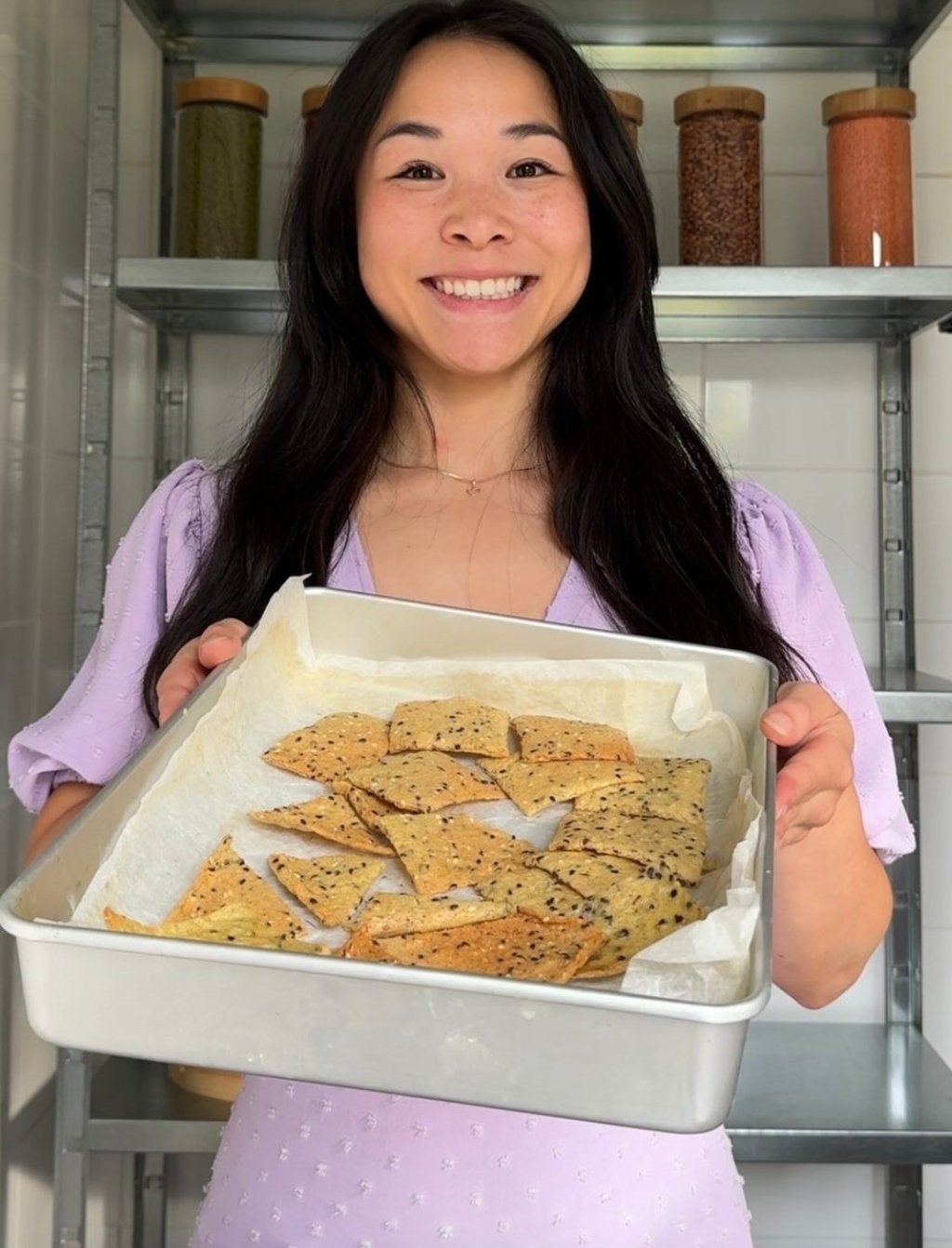
Luong holds a pan of crispy lentil crackers that are simple to make. Photo: Instagram/wendythefoodscientist

If they knew how to cook delicious plant-based food, even more people might be inclined to adopt a vegan lifestyle, food scientist and author Wendy Luong believes.

This belief prompted the Netherlands-based long-time vegan, known as Wendy the Food Scientist, to share her tips and tricks on social media. She has since attracted a huge audience, with more than 400,000 followers on Instagram alone.

“The messages I get from people make me so happy: ‘I finally love tofu!’ they say,” says the 27-year-old, referring to her viral video showing her boiling tofu in salted water. “People who thought tofu was bland finally understand how to cook it deliciously.”

In August 2024, she began posting videos of her cooking techniques on Instagram, Facebook, YouTube and TikTok. Last November, she published her nearly 300-page cookbook, Tofu Mastery.

Her mission is to teach people the technical side of cooking vegan dishes from scratch, especially plant-based staples such as tofu (made from soy milk, coagulated with lemon juice, then pressed), seitan (made from vital wheat gluten, considered a “vegan chicken” substitute) and fermented foods.

“Once someone understands that making a healthy meal can take less than 30 minutes, it becomes easier to choose that,” she says.

                                                                                                  Photo: Wendy Luong

With growing awareness of ultra-processed foods and the harm they can cause, people are increasingly open to cooking from scratch.

Many vegan convenience options, however, come in the form of ultra-processed nuggets and packaged meat alternatives, which are also unhealthy.

“We live in a time where convenience is sought,” Luong says. “Not everyone has time to cook from scratch, but I’m seeing a shift. As people learn more about home cooking, they understand how simple it can be.

“The key is that the shift comes through understanding, not through guilt or preaching. I never tell people what to eat. I show them what I eat and how I make it.”

Luong became a vegetarian in college; she attended Wageningen University & Research in the Netherlands, where she earned a master’s degree in food technology.

As she learned the science behind food, which she infused with the roots from her Asian upbringing, she would experiment with tofu and seitan in various ways.

“At some point I ate so much plant-based [food] that I decided to go all in” and become vegan, she says.

Her friends were her guinea pigs. Many had never tried vegan food and gave rave reviews of her cooking, encouraging her to share her recipes on social media, which is how Wendy the Food Scientist was born.

Growing up in the Netherlands with Chinese-Vietnamese parents, Luong developed a fascination with food almost as soon as she could walk. Like most immigrants, her parents worked tirelessly; her father was a chef in a local Chinese restaurant, and the only evening they could have dinner together as a family was on Monday, his day off.

“On Mondays, my parents would cook something more elaborate and special,” she says. “I’d come home from school and help them in the kitchen. Even as a toddler, I was there watching, learning, absorbing how food was made with intention and care.

“Those Monday kitchen moments are where my love for cooking was born. It wasn’t just about making food. It was about time together, about recreating home, about showing love through cooking.”

They bought staple ingredients at the Chinese toko, a speciality shop, but when something was unavailable, her parents adapted.

“That taught me something crucial: cooking isn’t about having perfect ingredients. It’s about understanding principles and being resourceful,” she says. “That resourcefulness is actually what I try to pass on now. It’s not ‘follow this recipe blindly’. It’s ‘understand this technique, and you can adapt it to what you have.’”

How to get enough protein as a vegan is a common question.

Luong points to her home-made firm tofu and seitan, which offer about 17 grams and 30 grams of protein per 100 grams, respectively, making them an effective way to reach typical daily protein goals of 0.8 grams per kilogram of body weight.

“I grew up with tofu because it’s part of my culture, but what fascinated me is that once you understand the technique, the possibilities are endless,” she says. “You can make hundreds of different tofu dishes just by varying the technique, seasoning and preparation, using food science to transform tofu into doughs, meat-like textures and elegant desserts.”

Her most compelling advice? Take “small steps, learn the basics and cook one dish at a time”.

“The biggest fear I hear is: ‘I will not be able to sustain this diet,’” she says.

People are afraid of failing and worry too much before committing to a diet or lifestyle change, but it is not about perfection.

“If you try, and you eat plant-based 80 per cent of the time, we’re all better off,” she says.

Luong insists she is not reinventing the wheel, but opening people’s eyes to 2,000 years of healthy food production.

“This knowledge has been forgotten in the West,” she says. “When people make these, they understand this isn’t a new trend. It has been around and it works!”

Vegan chocolate mousse recipe

Those who think vegan is “difficult” may want to try this two-ingredient recipe from Luong’s cookbook, Tofu Mastery.

2 parts silken tofu (400g/14oz)

1 part (200g/7oz) melted chocolate*

Blend together until smooth and slightly airy.

Refrigerate until set, and enjoy.

*For a vegan dessert, use chocolate that does not contain milk products. Most high-cocoa dark chocolate, rated 50 per cent or higher, does not. Check the label.

https://www.scmp.com/lifestyle/health-wellness/article/3339367/chinese-vietnamese-plant-based-influencer-makes-even-haters-love-tofu?module=perpetual_scroll_0&pgtype=article

Monday, December 8, 2025

Why China’s consumers found the hype around plant-based meat hard to swallow

From scmp.com

By Luna Sunin Beijing

The closure of Beyond Meat’s China business, despite heavy financing and marketing, underscores challenges that scuppered many vegan meat firms 

Only a few years ago, the notion that Beyond Meat – the former poster child of the plant-based meat industry – would shut down its operations in China seemed unthinkable. At the height of the brand’s popularity, its label could be found adorning heavily promoted products at restaurants and grocery stores across major cities.

Many observers speculated that the alternative meat company and others like it had found the next great success story in the country’s rapidly evolving consumer market.

But barely three years after launching its direct-to-consumer channels in 2022, Beyond Meat announced in February that it would suspend its China business. Its online stores were closed last month, and it has laid off most of its employees and halted production at its factory in Jiaxing, Zhejiang province, according to media reports.

The American company, which received backing from Microsoft co-founder Bill Gates and a host of celebrity investors in its early years, entered China to great fanfare in 2020, sealing partnerships with Starbucks, KFC, Pizza Hut and retailers such as Sam’s Club and Costco.

Its plant-based meat – made from ingredients like soy, peas or wheat and mimicking the taste, texture and appearance of animal flesh – was, for a time, ubiquitous. But the craze ultimately proved to be short-lived.

Gu Shuyu, from the Tractus Asia management consultancy, said China’s vegan meat bust was ultimately not an issue of price, taste or technology; the product, he contended, never had a real, sustainable use case.


Many Chinese plant-based meat brands and products that were buoyed by early hype have faltered, including Hey Maet, a start-up based in Shanghai that shut down in 2023.

Along the way, plant-based meat offerings from major food companies have quietly vanished from store shelves.

"Concerns over nutrition and food safety ... make it difficult for plant-based products to sustain repeat purchases" - Zhu Danpeng, Guangdong Food Safety Promotion Association

“Chinese consumers do not feel meat needs to be replaced,” Gu said. “As a result, plant-based meat does not solve scarcity, safety or ethical concerns; instead, it functions more like a ‘curiosity product’ – high willingness to try, but extremely low repurchase.

“More critically, it struggles to fit into Chinese cooking culture: it performs poorly in stir-frying, braising, stewing and other everyday techniques. This keeps it detached from home kitchens and daily meals, limiting its usage to gyms, cafes, convenience stores and other highly functional niches.”

Scores of plant-based meat start-ups emerged in China between 2019 and 2020 as traditional food firms began rolling out vegan products. Capital poured into the sector.

Several rounds of funding saw emerging brands such as PaoDing ZaoRou and GuRou secure tens of millions of yuan, with another brand, Starfield, attracting over 100 million yuan (US$14.1 million).

But consumers were less enthusiastic. Beyond Meat’s products were more expensive than those of domestic plant-based meat brands, and in some cases cost more than fresh beef. Meanwhile, many diners complained that plant-based meat fell short of traditional fare in terms of texture.

The result was a wave of disappointing launches and a lack of repeat business.

Several brands rushed to market before their formulations were fully mature, burning cash on marketing instead of building the technology needed to win local palates, said food industry analyst Zhu Danpeng, vice-president of the Guangdong Food Safety Promotion Association.

“Concerns over nutrition and food safety, combined with a texture that still falls short of real meat, make it difficult for plant-based products to sustain repeat purchases,” Zhu said.

Beyond Meat has struggled for years, with its global revenues falling from US$419 million in 2022 to US$326 million in 2024 – and cumulative losses reaching US$864 million.

In the first three quarters of this year, revenue fell nearly 15 per cent year on year to US$214 million, while net losses widened by 68 per cent year on year to US$193 million.

Its share price, which peaked at more than US$239 in July 2019, was just US$1.29 on Tuesday.

Analysts said a mismatch between American and Chinese consumer motivations further complicated the market. While American buyers tended to emphasise sustainability, animal welfare or personal health, Chinese consumers cared most about taste and culinary compatibility.

But some observers cautioned against reading the collapse of Beyond Meat as the death of the entire product category in China, saying that standard-setting, consumer education and more research and development could eventually reshape the sector’s trajectory.

“The companies with a real future will be those that not only solve taste, cost and cooking compatibility, but also create clear use cases, drive repeat purchases and build strong brand equity – all through localised innovation,” Gu said.

She added that success in China’s plant-based meat market would require products adapted to local cooking styles and eating habits, naming their use in stir-frying, hotpot and dumpling fillings as examples.

https://www.scmp.com/economy/china-economy/article/3335365/why-chinas-consumers-found-hype-around-plant-based-meat-hard-swallow

Friday, June 13, 2025

Meet the Team Behind the Campaign That Helps Chinese People Go Vegan

From greenqueen.com.hk

When it comes to plant-based diets, the V-March campaign says Chinese consumers are motivated primarily by health and food trends

                                                                                Courtesy: China Vegan Society


With China’s protein consumption surpassing that of the US, and a majority of it coming from plants, the potential for a Veganuary-style campaign has never been riper. With its inaugural drive done in March of this year, the China Vegan Society talks to Green Queen about the potential for a plant-based diet shift in its home country.

According to a 2024 survey, when Chinese consumers are informed of the benefits of a vegan diet, 98% say they’ll eat more of these foods. Meanwhile, nearly a dozen hotels have introduced plant-based protein policies in the country, and the government has been promoting alternative proteins as well.

It’s what spurred the folks at China Vegan Society (CVS) to launch Mangchun Sanyue (Vegan Spring March, or V-March), a 31-day challenge to get people to eat exclusively plant-based. The initiative chose March because the Lunar New Year falls between late January and early February, making it an unsuitable period to ask people to initiate lifestyle changes.

Over 70 restaurants and brands participated, including Oatly, Island Resorts Hotel, and Impact Hub Chongqing. It reached seven million people on social media, with over 70,000 engaging with related content and hundreds joining its official chat groups.

A small survey by the organisation found that a majority of the participants (77%) were women, and 58% maintained their diet throughout the month. Over half said they intend to stay vegan after V-March, while 22% planned to reduce their intake of animal products.

At the end of the month, CVS collaborated with plant-based organisation Veg Planet to announce the annual China Vegan Day, which will be inaugurated in 2026 and take place on the Spring Equinox each year (usually sometime during March).

“V-March attracted participants from across the country who were motivated to shift towards a plant-based diet for health, ethical, and environmental reasons,” Jian Yi, founder and CEO of CVS, tells Green Queen. “Overall, within our V-March participant groups, we saw people joining and completing the challenge with a very positive attitude.”

We spoke to him about the motivations behind the campaign, the plant-based landscape in China, and what’s next for V-March.

This interview has been edited for clarity and concision.

Green Queen: Why did you decide to launch V-March, and how was it received?

Jian Yi: While there is a successful Veganuary campaign in the west, we noticed a lack of large-scale public initiatives in Mainland China to help people transition to a vegan lifestyle. There was no campaign that offered practical guidance, education, simple recipes, or community support – all of which are crucial for making sustainable lifestyle changes.

That’s exactly why we launched V-March – a campaign inspired by Veganuary and designed to motivate and support people in shifting to a plant-based diet and learning more about veganism. The aim is not only to raise awareness but also to help participants implement vegan principles in their everyday lives.

In its very first year, V-March reached approximately seven million people across China, sparking widespread awareness of conscious food choices and inspiring action toward a more sustainable lifestyle.

Out of those seven million people exposed to V-March content, more than 70,000 actively engaged through comments, shares, and online discussions – expressing interest, support, and enthusiasm for the month-long vegan challenge.

During the campaign, 330 participants joined the official V-March WeChat and RedNote groups, engaging in daily conversations and sharing their meals, personal reflections, and victories in adopting a plant-based lifestyle. In addition, 287 users checked in daily using the China Vegan Society WeChat Mini Program to document their journey.

china plant based
Courtesy: China Vegan Society

GQ: What is the word for vegan in Chinese? Who chose it?

JY: Like many other languages, the Chinese language did not have a native word to match the English words ‘vegan’ or ‘veganism’. In Chinese, the term most commonly used for ‘plant-based’ is ç´  (sĂą), but it is traditionally limited to food and doesn’t fully reflect the broader vegan lifestyle. It can also refer to vegetarianism or other plant-forward diets, and sometimes carries connotations of blandness or dullness.

To avoid these stereotypes and create a more inclusive and meaningful identity, the Good Food Fund, a Chinese food systems transformation non-profit I founded, launched a national contest inviting people to recommend one native Chinese character to represent ‘vegan’ or ‘veganism’.

More than 10,000 people participated in the contest, and the winning entry was the obsolete traditional character 茻 (mǎng). This character, made up of four grass radicals, symbolises lush growth, thriving nature, and abundance of life, perfectly aligning with the values of a vegan, sustainable lifestyle.

When CVS was founded in 2021, we used 茻 in our official name and started to promote its use nationally. We also conducted a survey, which showed that the top associations with 茻 were sustainable lifestyle, healthy living, and plant-based diet.

GQ: How big is the awareness around vegan diets in China? Do most people know the term?

JY: Awareness of vegan diets in China is growing, especially in first- and second-tier cities and among younger generations. However, it remains relatively niche compared to Western countries.

The terms 纯植物饮食 (plant-based diet) or 严格素食 (strictly vegetarian) are not widely recognized by the general public. Most people are more familiar with 素食 (sùshí), often linked with Buddhism and vegetarianism.

In cities like Shanghai, Beijing and Shenzhen, awareness is increasing rapidly thanks to influencers promoting the plant-based lifestyle, the rise of plant-based restaurants and cafés, international trends entering the Chinese market, and health and environmental concerns among Gen Z and millennials.

China’s 2016 dietary guidelines recommending a 50% reduction in meat consumption helped spark national conversations. However, challenges remain, such as limited vegan labelling, a lack of understanding about what veganism entails, and confusion in restaurants.

In summary, while veganism is still a niche movement in China, it’s growing steadily in urban, educated, and youth-driven communities.

china vegan
Courtesy: China Vegan Society

GQ: How many vegans are there in China, and how many vegetarians? Has there been any change in the last few years?

JY: Precise data on vegans is scarce, but a Statista report suggests that about 4% of the population follows a vegetarian diet. That translates to approximately 56 to 70 million people in China.

While it’s unclear how many are strictly vegan, there’s a clear upward trend when it comes to interest in plant-based eating, particularly among urban consumers.

GQ: What are the demographics of vegans in China?

JY: According to the first China vegan lifestyle market survey by CVS, 55% are female and 45% are male. Of these, 41% are from first-tier cities, 41% from second-tier, and 18% from third-tier cities.

People living in first and second-tier cities tend to have better access to plant-based options, higher education, and more awareness about health and environmental issues.

Among V-March participants, 77% were female, 19% male, 2% non-binary, and 2% preferred not to disclose their gender. Plus, 77% had a Bachelor’s degree, 15% a college diploma, and 9% a Master’s degree.

GQ: What are the most popular vegan brands and products in China?

JY: China has a long-standing tradition of plant-based eating. Products like tofu, soy milk, and mock meats are widely consumed, even if not explicitly labelled as vegan.

Popular vegan brands include Oatly, a top advocate for vegan lifestyles, widely available and enjoyed by both vegans and non-vegans; Vitasoy, a familiar plant milk brand; and local vegan restaurants like QingChun Perma, Vege Tiger, and Su Man Xiang, known for affordable and delicious plant-based meals.

However, many packaged snacks or imported foods aren’t recognised as vegan due to a lack of clear labelling or consumer awareness.

GQ: It seems like plant-based meat startups have not been very successful in China. Can you share your thoughts on this?

JY: There are several reasons [why this is the case].

Health concerns: Traditional Chinese mock meats and tofu are made from simple ingredients like soy, without the added oils or salt often found in western-style plant meats. Many consumers prefer these cleaner, more natural options.

Pricing: Tofu and traditional alternatives are cheap, widely available, and sold in bulk. Plant-based meats are often significantly more expensive.

Cultural fit and marketing: Plant-based meats are usually presented in Western formats (for example, patties and meatballs), which don’t align with Chinese cooking habits. Meanwhile, traditional alternatives integrate seamlessly into local cuisine.

Surveys suggest that most Chinese consumers choose plant-based diets for health reasons, but many perceive plant-based meats as less healthy than animal products or traditional tofu-based alternatives. Plant-based meat brands need better cultural adaptation, pricing strategies, and public education.

GQ: What are people’s biggest motivators towards reducing animal proteins/eating more plant-based?

JY: Our market survey shows that 36% of consumers chose plant-based diets for health reasons, 22% were influenced by trendiness, and 21% followed religious beliefs.

The V-March survey, meanwhile, found that 23.5% participated for health reasons, 18% for ethical reasons, and 17% for environmental reasons.

china vegan survey
Courtesy: China Vegan Society

GQ: Is there strong awareness about reducing meat consumption to reduce greenhouse gas emissions?

JY: While specific data is limited, there’s a visible rise in environmental awareness, especially among the younger generation. We’re seeing more content on social media about sustainable living, often including plant-based themes.

In our V-March campaign survey, 17% of participants said they tried plant-based eating for the environment, and 13% said they learned more about food’s environmental impact during the campaign.

GQ: How is Veganuary involved (if at all)? Are you working with any other organisations too?

JY: Veganuary was a major inspiration for V-March. The Veganuary team generously shared resources with us, including starter tips and recipes, and promoted our campaign launch on their Instagram page, helping us gain international exposure.

We didn’t collaborate with international organisations this time, but we worked with several local brands and groups, who supported us by sponsoring gifts for participants.

GQ: What celebrities and influencers are linked to vegan diets in China? Are you working with any of them?

JY: For this year’s V-March, we invited actor Huang Junpeng, who kindly shared our poster and quote on his platform.

Other known vegan celebrities in China include actress Zhang Jingchu, actress Pan Shiqi, actress Tian Yuan, and singer Long Kuan. We hope to collaborate with more public figures in future campaigns.

v march china
Courtesy: China Vegan Society

GQ: What is your hope for next year’s campaign?

JY: We aim to professionalise the campaign further, offering participants an even better experience with more practical tips, easy recipes, and accessible guidance.

We also want to simplify the process of joining the challenge by making it sound less intimidating, while still encouraging commitment and rewarding progress.

Most importantly, we want to reach more people, grow our impact, and help make V-March a new post-CNY tradition in China. It’s the perfect time for people to try a lighter diet, explore the benefits of plant-based living, and connect with a like-minded community. We hope to create a strong, supportive movement rooted in compassion, health, and sustainability.

https://www.greenqueen.com.hk/china-vegan-society-v-march-veganuary/