Showing posts with label Portugal. Show all posts

Sunday, February 15, 2026

8 countries where plant-based travellers are treated better than anywhere else

From vegoutmag.com

By Avery White

From temple cuisine in Taiwan to innovative dining scenes in Germany, these destinations make vegan travel feel less like a challenge and more like a celebration 

When I left my finance career and started travelling more intentionally, I quickly learned that being vegan on the road could feel like a constant negotiation.

Explaining dietary restrictions in broken phrases, scanning menus for hidden dairy, watching fellow travellers dig into local specialties while I picked at a sad side salad. But then I discovered something that changed everything: some countries don't just accommodate plant-based eaters, they genuinely welcome us.

These eight destinations have transformed how I think about vegan travel.

Whether through deep-rooted cultural traditions, progressive food movements, or simply an abundance of naturally plant-based cuisine, they've shown me that eating well while exploring the world isn't just possible. It can be one of the best parts of the journey.

1. Taiwan: Where Buddhist traditions meet modern innovation

Taiwan might be the most underrated vegan destination on the planet.

With a strong Buddhist influence and a cultural respect for vegetarianism that spans generations, you'll find dedicated plant-based restaurants on nearly every block in cities like Taipei and Kaohsiung. The phrase "wo chi su" (I eat vegetarian) is widely understood and respected.

What sets Taiwan apart is the sophistication of its vegan cuisine. We're talking about mock meat preparations that have been perfected over decades, night market stalls with clearly labelled vegetarian options, and temple food that rivals fine dining.

Have you ever had a bowl of perfectly spiced dan dan noodles made entirely from plants? Taiwan delivers.

2. Germany: Europe's plant-based powerhouse

Germany has quietly become one of the most vegan-friendly countries in Europe. Berlin, in particular, has earned its reputation as a plant-based paradise, with more vegan restaurants per capita than almost any other city in the world. But the movement extends far beyond the capital.

What I appreciate about Germany is the practicality of it all. Supermarkets stock extensive vegan sections, restaurants clearly mark menu items, and even traditional beer halls are adapting their menus.

The country's strong environmental consciousness has accelerated this shift, making plant-based eating feel less like a niche choice and more like a mainstream option.

3. Israel: Mediterranean flavours, naturally plant-forward

Israel's culinary landscape is inherently welcoming to vegans. With an estimated five percent of the population identifying as vegan, the country has embraced plant-based eating with remarkable enthusiasm. Tel Aviv, in particular, has become a global destination for vegan food lovers.

The beauty of Israeli cuisine lies in its naturally plant-based foundations. Hummus, falafel, shakshuka (easily made vegan), fresh salads bursting with herbs, and warm pita bread form the backbone of daily eating. You're not asking for substitutions here. You're simply enjoying the food as it was meant to be eaten.

4. India: A vegetarian heritage spanning millennia

India offers something no other country can: a vegetarian tradition so deeply woven into the cultural fabric that plant-based eating feels completely normal. Entire regions, particularly in the south and west, have cuisines that are predominantly vegetarian, with vegan options abundant once you navigate dairy.

The key phrase to learn is "no ghee, no paneer, no curd." Once you've communicated this, a world of incredible flavours opens up. Dosas, idlis, vegetable curries, dal in countless variations, and street food that will make you question why you ever thought vegan travel was difficult.

What other country offers this kind of depth and variety in its plant-based traditions?

5. Thailand: Street food heaven with vegan roots

Thailand's Buddhist heritage means that vegetarian eating, called "jay" or "mang sa wirat," is a familiar concept throughout the country. During the annual Vegetarian Festival, entire cities transform their menus, but even outside this period, finding plant-based food is remarkably straightforward.

The challenge in Thailand is often fish sauce and oyster sauce, which appear in many dishes.

But once you learn to ask for "jay" food or seek out the yellow flags marking vegetarian vendors, you'll discover a cuisine that celebrates vegetables, tofu, and bold flavours. Pad thai without fish sauce, green curry with coconut milk, mango sticky rice. Thailand proves that vegan food can be vibrant and satisfying.

6. United Kingdom: A quiet revolution in plant-based dining

The UK has undergone a remarkable transformation in recent years. What was once a land of meat pies and fish and chips has become a leader in plant-based innovation. London now boasts some of the world's most creative vegan restaurants, and even small towns offer dedicated options.

Supermarket chains have invested heavily in vegan product lines, making self-catering simple. Pubs serve plant-based Sunday roasts. High street chains offer clearly labelled vegan menus. The shift has been so significant that the UK now ranks among the top countries globally for vegan product launches.

For a country not traditionally associated with vegetable-forward cuisine, this evolution feels genuinely exciting.

7. Singapore: Where food culture embraces everyone

Singapore's hawker centres, those legendary open-air food courts, might seem intimidating for vegan travellers at first glance. But this tiny nation's diverse population means that vegetarian Chinese, Indian, and Malay cuisines are all represented and readily available.

The city-state has also embraced modern plant-based eating with enthusiasm. You'll find everything from traditional Buddhist vegetarian stalls to cutting-edge restaurants serving lab-grown proteins.

Singapore's food-obsessed culture means that even vegan options are held to high standards. Nobody here is content with mediocre food, regardless of dietary preference.

8. Portugal: The Mediterranean's emerging vegan star

Portugal might surprise you. This country, known for its seafood and meat-heavy traditional dishes, has developed a thriving vegan scene, particularly in Lisbon and Porto. The transformation has been rapid and genuine, driven by both local demand and the country's large expat community.

What makes Portugal special is the quality of its produce. Fresh vegetables, olive oil, crusty bread, and incredible wine create a foundation for satisfying plant-based meals. Many traditional dishes, like açorda (bread soup) and various bean stews, adapt beautifully to vegan versions.

The warmth of Portuguese hospitality extends to accommodating dietary needs with grace.

Final thoughts

Travel has a way of expanding how we see the world, and food is often at the centre of that expansion. These eight countries have taught me that being vegan doesn't mean missing out on cultural experiences. It means discovering new ones.

The next time you're planning a trip, consider choosing a destination where your dietary choices are celebrated rather than merely tolerated. You might find, as I have, that some of the most memorable meals happen when you're not fighting for accommodation but simply enjoying what's already there.

Where will your next plant-based adventure take you?

https://vegoutmag.com/travel/s-st-8-countries-where-plant-based-travelers-are-treated-better-than-anywhere-else/

Tuesday, January 6, 2026

The best countries for vegans have been revealed – and the winner might surprise you

From  veganfoodandliving.com

New research has uncovered the best countries for vegans as plant-based living is outperforming climate change in global interest


Forget the outdated notion that plant-based travel means settling for a plate of chips and a side salad. A landmark global report released by The Vegan Society has revealed the best countries for vegans, effectively mapping the future of compassionate living.

The comprehensive Veganism Around the World report suggests that whether you are looking for a bustling night market in East Asia or a chic bistro in Europe, options are exploding globally. In fact, if you are looking to dodge a steak-heavy menu, you might find paradise in some unexpected corners of the globe. The data reveals a significant cultural shift is well underway, with “veganism” now consistently outperforming “climate change” in global search interest.

Global leaders in plant-based dining

When it comes to the sheer ease of finding a meal, New Zealand has taken the crown as the most vegan-friendly destination per capita, with approximately 345 vegan-friendly dining options per million people.

Not far behind in the innovation stakes is Taiwan, which leads the world for the highest density of fully vegan restaurants, with 14.8 dedicated vegan spots per million residents. Meanwhile, Iceland has emerged as Europe’s star performer; despite its rugged reputation, a staggering 43% of its restaurants now offer at least one plant-based dish.

Best countries for vegans: Report highlights

The Vegan Society’s data highlights where plant-based lifestyles are most established and where dining accessibility is highest. From high rates of dietary identification to the density of dedicated eateries, these are the countries are leading the way in compassionate consumption.

India holds the top spot for highest rate of veganism. Graphic © The Vegan Society

India holds the top spot for highest rate of veganism. Graphic © The Vegan Society


Top 10 for vegan dining options (per million people):

  • New Zealand (344.81)
  • Australia (309.89)
  • United Kingdom (302.93)
  • Cyprus (281.72)
  • Austria (280.10)
  • Switzerland (275.94)
  • Portugal (259.28)
  • Ireland (228.22)
  • The Netherlands (218.85)
  • Greece (218.12)

Top 10 for dedicated vegan restaurants (per million people):

  • Taiwan (14.8)
  • Portugal (13.7)
  • Singapore (11.8)
  • Jamaica (11.3)
  • Estonia (8.8)
  • Austria (8.3)
  • Puerto Rico (8.1)
  • Vietnam (7.9)
  • The Netherlands (7.7)
  • Canada (7.3)

The USA holds the top spot for the most dedicated vegan restaurants, with 1,717 eateries. However, when looking at vegan restaurants per million people, it ranks much lower at number 29.

In terms of vegan dining options, the USA also holds the top spot, with a staggering 47,845 restaurants offering at least one plant-based dish. The UK is in second place, with over 20,000 vegan options.

When travelling to some countries, it's easy to get vegan meals on the ground and in the air. Photo © Travelanza/Adobe Stock

Innovation and the future of food

It isn’t just about where you can eat today, but who is building the food systems of tomorrow. Per capita, Singapore is currently the world’s leader for plant-based and fermentation innovation, followed closely by Israel and the Netherlands. These hubs are attracting ‘alternative protein’ companies at a record rate, blending high-tech engineering with a supportive business environment.

Leading hubs for alternative protein companies (per million people):

  • Singapore: 7.44
  • Israel: 6.66
  • The Netherlands: 5.03
  • Denmark: 4.20

Interestingly, consumer appetite for these innovations is strongest in Asia. Additionally, consumers in India and China are reportedly twice as likely as those in the US to purchase plant-based meat.

Claire Ogley, Head of Campaigns, Policy and Research at The Vegan Society, noted that the report is the “first comprehensive investigation” of its kind. She stated that the data shows veganism is “no longer a niche movement” but is gaining significant cross-cultural traction.

“It’s also promising to see that despite stereotypes, people’s feelings towards veganism are mostly neutral, and actually lean positive in many cases,” she added.

https://www.veganfoodandliving.com/news/best-countries-for-vegans-revealed/

Tuesday, September 30, 2025

These 10 countries are becoming go-to spots for vegan travellers (skipping the U.S.)

From vegoutmag.com

By Maya Flores

Ten rising destinations are quietly becoming vegan havens—none in the U.S. 

Two things nudged me to rewrite my travel list this year.

First, London just watched a fully vegan restaurant pick up a Michelin star—proof that plant-based meals aren’t a sideshow anymore; they’re headliners.

Second, I keep seeing city and national policies move from “nice idea” to measurable targets: meat consumption falling, supermarket goals for protein “splits,” and even laws that guarantee a vegetarian plate in public canteens.

Put together, that’s not a vibe—it’s infrastructure. It also explains why my last few trips felt easier: fewer “Can you make this without…?” conversations and more default options that were already vegan-friendly.

Below, ten countries (outside the U.S.) where the story isn’t just buzzy restaurants—it’s data, decisions, and festivals that stack the odds in your favour.


United Kingdom: a Michelin star and a mainstream moment

If you’ve ever tried to explain vegan travel to a sceptical aunt, “a starred vegan tasting menu in central London” ends the debate.

The UK’s scene isn’t new, but that Michelin nod confirms it’s mature—and resilient.

In practical terms, it means chefs are building entire menus that don’t treat vegan eaters as exceptions, and suppliers are keeping up.

For travellers, London and several regional hubs (Glasgow, Manchester, Brighton) make it easy to do breakfast-to-late-night without hunting.

If you want a sanity check on where to book, HappyCow’s annual city rankings continue to put London near the top globally; 2024’s list had London and Berlin leading the pack.

The big picture: the UK is no longer “accommodating” vegan travellers—it’s competing for them. 

Germany: record-low meat consumption, record-high confidence

Berlin has long felt like a vegan home base.

What’s new is the national data behind the vibe. Germany’s Federal Information Centre for Agriculture reports meat consumption fell to 51.6 kg per person in 2023 — the lowest since the early 1990s, continuing a long-term decline.

That drop shows up in supermarket shelves, street food, and festival line-ups, making it easier to travel between cities without reverting to fries and bread.

For visitors, it means the “default lunch” in places like Berlin, Hamburg, or Munich is as likely to be a hearty plant bowl as a schnitzel.

Translation: fewer compromises, more routine.

Netherlands: the protein transition is policy, not a trend

You’ll feel it at breakfast buffets and in Albert Heijn aisles: the Dutch aren’t just flirting with plant-based—they’ve set targets.

The Netherlands aims for a 50:50 plant-to-animal protein intake by 2030, with watchdogs and universities tracking progress.

Amsterdam went further, endorsing the Plant-Based Treaty and setting a city diet goal of 60% plant-based by 2030 — and local business groups now showcase “protein transition” companies as part of the city’s identity.

What that means for travellers: steady, affordable options across price points, from canal-side cafés to office-district lunch spots. 

Denmark: a national action plan for plant-based foods

Denmark became the first country to publish a National Action Plan for Plant-Based Foods, directing funds, research, and procurement toward greener plates.

This is nerdy policy with very practical consequences: more plant-based items in public kitchens, clearer labelling, and incentives for innovation that spill into restaurants you’ll actually eat at.

Copenhagen already punches above its weight for sustainable dining; the action plan widens that net to school canteens, hospitals, and everyday supermarkets you’ll visit as a traveller stocking up. 

Portugal: vegetarian options by law in public canteens

Years before “UPF” entered dinner-table chatter, Portugal mandated a vegetarian option in all public canteens — schools, hospitals, universities, even prisons.

It’s a simple policy with traveller-friendly ripple effects: trained kitchens, normalized plant-based plates, and broader ingredient pipelines.

In Lisbon and Porto, you’ll still eat your weight in caldo verde and pasteis-adjacent treats, but you’ll see more veggie mains in mom-and-pop places than you did a decade ago because the public sector helped normalize the demand.

Spain: Barcelona built a food strategy through 2030

Spain isn’t stereotypically “vegan,” yet Barcelona turned its year as World Sustainable Food Capital into a permanent Healthy and Sustainable Food Strategy 2030.

That civic scaffolding — 265 initiatives across nine goals — touches everything from public procurement to food-waste reduction.

For travellers, it’s a tailwind: more seasonal veg on menus, more market vendors thinking plant-first, and festivals that nudge eaters toward lower-impact choices.

If your itinerary is tapas-heavy, you’ll still find patatas bravas and pan con tomate — but it’s easier than ever to make the whole day plant-based without combing through niche blogs.

Israel: high vegan share, deep everyday availability

Whatever you call Tel Aviv—“vegan capital,” “veganista playground”—the everyday proof is simpler: a high percentage of Israelis identify as vegan, with longstanding estimates around 5%.

That culture shows up as default dairy-free breakfasts, falafel that needs no edits, and menus where “vegan” isn’t a footnote.

For travellers, the win is friction-less dining in mainstream spots, not just dedicated vegan cafés. (As with any destination, check advisories; conditions can change).

India: a national vegan logo brings clarity

India’s deep vegetarian traditions make it friendly territory, but dairy can surprise strict vegans.

A quiet game-changer arrived when India’s food regulator finalized the Vegan Foods Regulations, including an official vegan logo.

As more packaged foods and restaurant items adopt the mark, it’s easier to shop stations, supermarkets, and airports without decoding long ingredient lists.

Add to that the breadth of naturally plant-based regional cuisines (Idli-sambar breakfasts! Chole with bhatura, minus ghee!) and you can string together full travel days with very little friction.

Thailand: a country that turns vegan for nine days

If you’ve seen the yellow-and-red เจ (jay) flags in Thailand, you already know the signal: for the Nine Emperor Gods / Vegetarian Festival, cities and towns flood with stalls serving “pure” meat-free food.

Even outside festival weeks, that shared vocabulary (“gin jay?”) makes street-food ordering easier—especially in Bangkok, Phuket, and Chiang Mai.

The festival isn’t exactly Western veganism—there are additional purity rules like avoiding garlic and onions—but the practical result for travellers is a huge, delicious inventory of plant-based dishes you can point to and eat.

Taiwan: one of the world’s largest vegetarian populations

Taiwan quietly makes plant-based travel feel effortless: Buddhist and temple cuisines, thousands of vegetarian restaurants, and a population where about 13% identify as vegetarian.

Convenience stores label veggie items clearly; night markets have entire rows of plant-based snacks; and Taipei routinely appears on vegan-friendly city lists.

For travellers, the upside is consistency—no need to hope a single neighbourhood has options.

Every district does.

Final words

If you’re tired of spending half your trip Googling “vegan options near me,” choose destinations where the systems already lean plant-first.

Your future self will thank you at 8 p.m., when dinner is not a scavenger hunt but a stroll.

And if you want the big-picture payoff: these places aren’t just kinder to your itinerary — they’re testing the food policies and business models the rest of the world might copy next.

That means every great meal is also a preview of where travel—and dinner—are headed.

https://vegoutmag.com/travel/n-these-10-countries-are-becoming-go-to-spots-for-vegan-travelers-skipping-the-u-s/

Tuesday, August 26, 2025

Bettaf!sh Launches Vegan Tuna With Continente Food Lab in Portugal

From vegconomist.com

Berlin-based food start-up BettaF!sh has introduced a new plant-based canned tuna alternative, TU-NAH, to Portugal’s seafood market. The product, made from European seaweed, fava beans, and peas, will be available at 12 high-traffic Continente stores across the country.

                                                                                                        ©BettaF!sh

Portugal’s love for seafood

Portugal, known for its high seafood consumption—averaging more than 10 kg per person annually—presents a significant market for alternatives to traditional fish products. The country generates over €1.2 billion in seafood revenue each year (Statista, 2025), underscoring both its strong culinary tradition and the demand for more sustainable options.

Deniz Ficicioglu, CEO and Founder of BettaF!sh, noted, “Portugal’s deep love for seafood inspired us to introduce BettaF!sh TU-NAH here – as a celebration of ocean flavour, not ocean depletion.” The product is designed to replicate the taste and texture of traditional tuna while offering a sustainable alternative. TU-NAH is free from soy and wheat, and contains no methylcellulose, making it suitable for a variety of dietary needs.

TU-NAH’s composition includes seaweed, fava beans, and pea protein, providing a high-fibre and protein-rich option. The product is marketed as ready to eat straight from the can, ideal for sandwiches, wraps, salads, or traditional Portuguese dishes like Salada de Atum.

The product will be available at Continente locations in cities such as Matosinhos, Amadora, and Lisbon’s Vasco da Gama and Colombo shopping centres. Continente, Portugal’s largest retailer with a history spanning 40 years, has been actively expanding its food offerings to include more sustainable products.

Seaweed-based approach

                          ©BettaF!sh

                                    
BettaF!sh, which is also involved in developing seaweed-based ingredients for the wider food industry, is supported by investors focused on climate and sustainable food initiatives, including Pale Blue Dot, Astanor, and Mudcake, among others. The company is also involved in the EU-funded FunSea project, which aims to further advance research into plant-based seafood products.

Marlos Silva, R&D and Innovation Director at MC Sonae, which oversees Continente, explained, “The numbers reflect both a rich culinary tradition and the urgent need for sustainable alternatives. That’s where BettaF!sh steps in. We especially appreciate their innovative seaweed-based approach to rethinking seafood from the ground up.”


https://vegconomist.com/products-launches/bettafsh-launches-vegan-tuna-continente-food-lab-portugal/

Tuesday, June 17, 2025

Portugal: No Meat Needed

From theportugalnews.com/news

Pescatarian party? Vegetarian feast or vegan celebration? Not just for ‘meatless days’, these restaurants put the party in green goodness and delicacies from the blue sea!  

It’s hard to argue against eating less or even no meat these days, climate change seemingly the obvious and most pressing matter. (The meat and dairy industries being major contributors to greenhouse gas emissions, deforestation, and water pollution.) Nonetheless, areas like your health and animal welfare are also well worth considering before putting meat on your fork. But despite an array of delicious options, some people still insist that a meal without meat is missing something or is not suitable for special occasions — the excuses are many. But these restaurants are here to prove them very wrong. Join us on a visit to some of the most interesting and exciting restaurants in Porto and Lisbon — a part of a growing array of restaurants in Portugal that do not serve meat.

The opulent pescatarian: Nunes Real Marisqueira

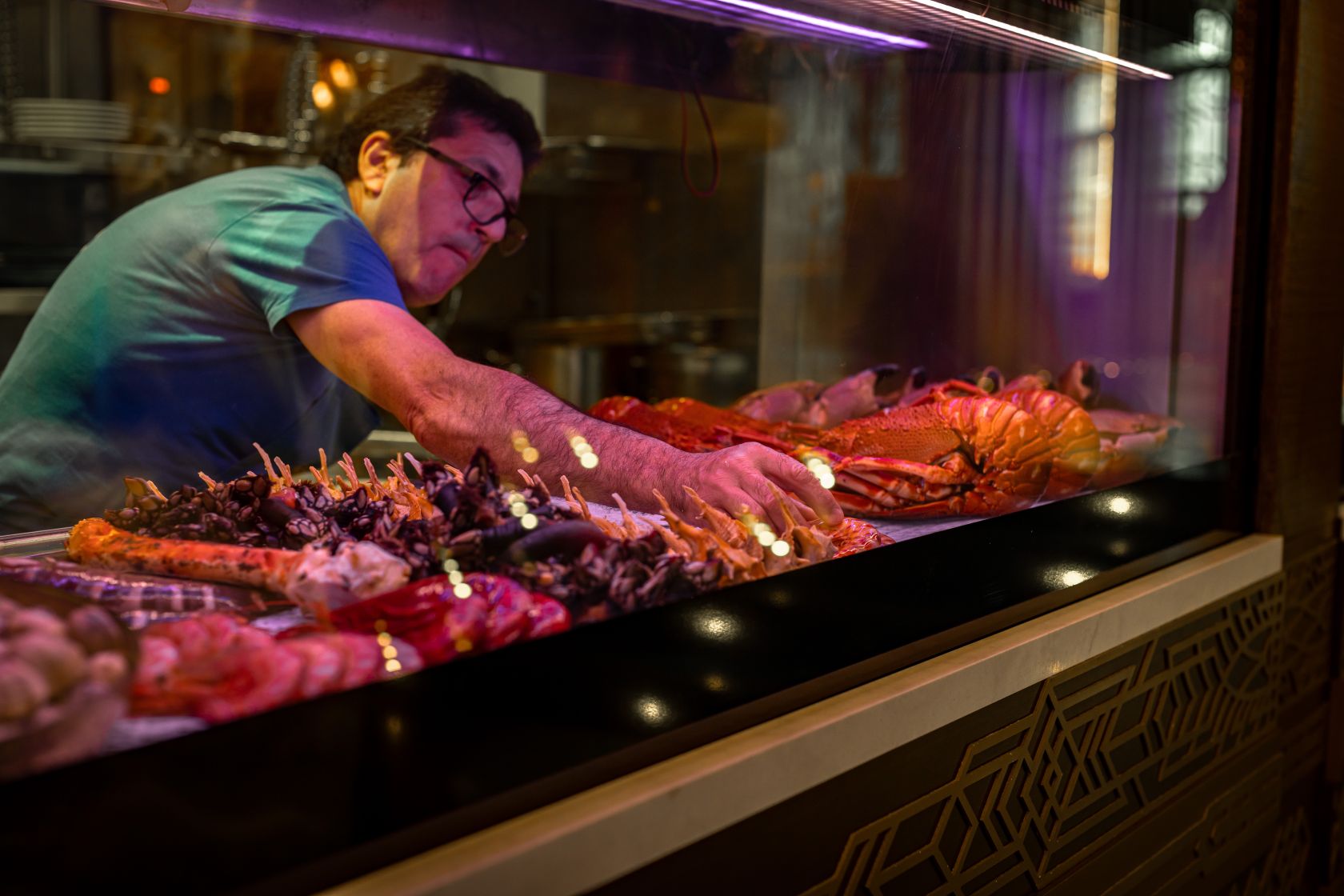
When it comes to eating the amazing fish and seafood of the Atlantic, Portugal is one of the absolute best places for it, and a growing focus on local and sustainable fishing is gaining (sea)terrain. But you don’t have to be a pescatarian to be impressed by the grandiose feast that awaits you at Nunes Real Marisqueira. Entering this seafood restaurant is like diving into a Great Gatsby movie set under the sea. As one of the best and most luxurious places to have fish and seafood in Portugal, this is definitely a place for that special night out — and you might even spot a celebrity or two at the next table. From the open kitchen to the bar, terrace or private dining room, you will find a spot for all occasions.

Credits: Supplied Image; Author: Karina Janø;

The restaurant relies on its year-long relationship with its suppliers. As the owners, Miguel and Vanda Nunes, explain: “We only serve what the sea is able to give and only if it’s good. There is always an enormous respect for the sea, for the sustainability of the oceans and for everything it gives us. And for each preparation, we select the best technique: oven-roasted, steamed, charcoal, deep-fried, stir-fried, brine, or simply raw.”

Credits: Supplied Image; Author: Karina Janø;

The restaurant was founded in Belém, Lisbon, by the Nunes family more than 20 years ago, and moved to the new, colourful, art deco locales nearby in 2023. From its humble beginnings, the marisqueira has kept the reputation of serving the most exquisite, freshest Portuguese seafood, daily handpicked from nearby waters. The end result is both classic dishes like bisques, soups and rice and contemporary twists like the Blue Lobster Hot Dog.

Credits: Supplied Image; Author: Karina Janø;

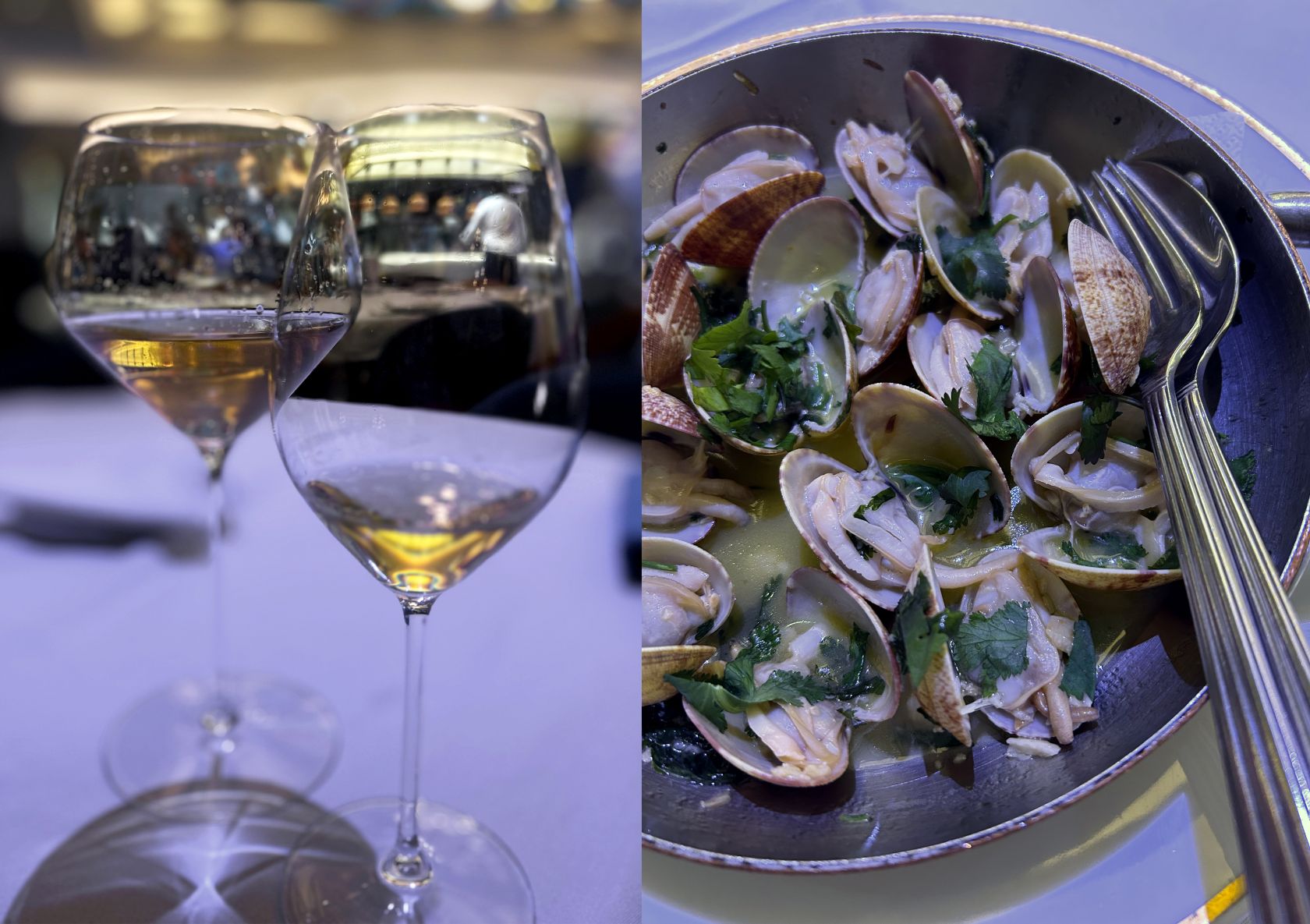
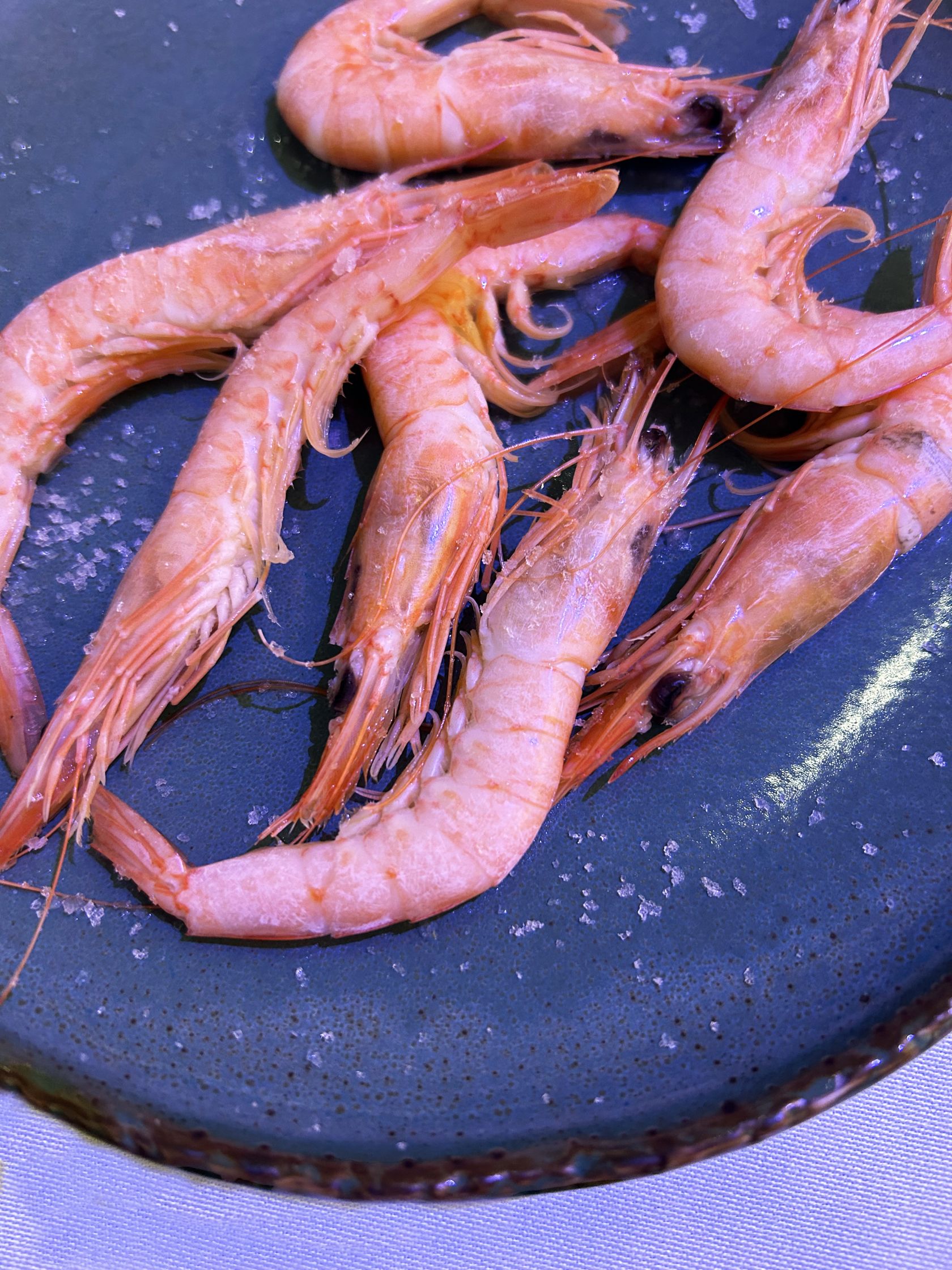
This evening, a feast of oysters and sea urchins with caviar and small peas, sashimi toro and shrimps from the Algarve, followed by À Bulhão Pato-clams and a Basque lobster dish gracefully parades across the white tablecloth, accompanied by wines carefully selected by the sommelier. It is indeed a dinner that reflects taste, quality and sophistication.

Credits: Supplied Image; Author: Karina Janø;

nunesmarisqueira.pt

The refined (semi) vegetarian: tia tia

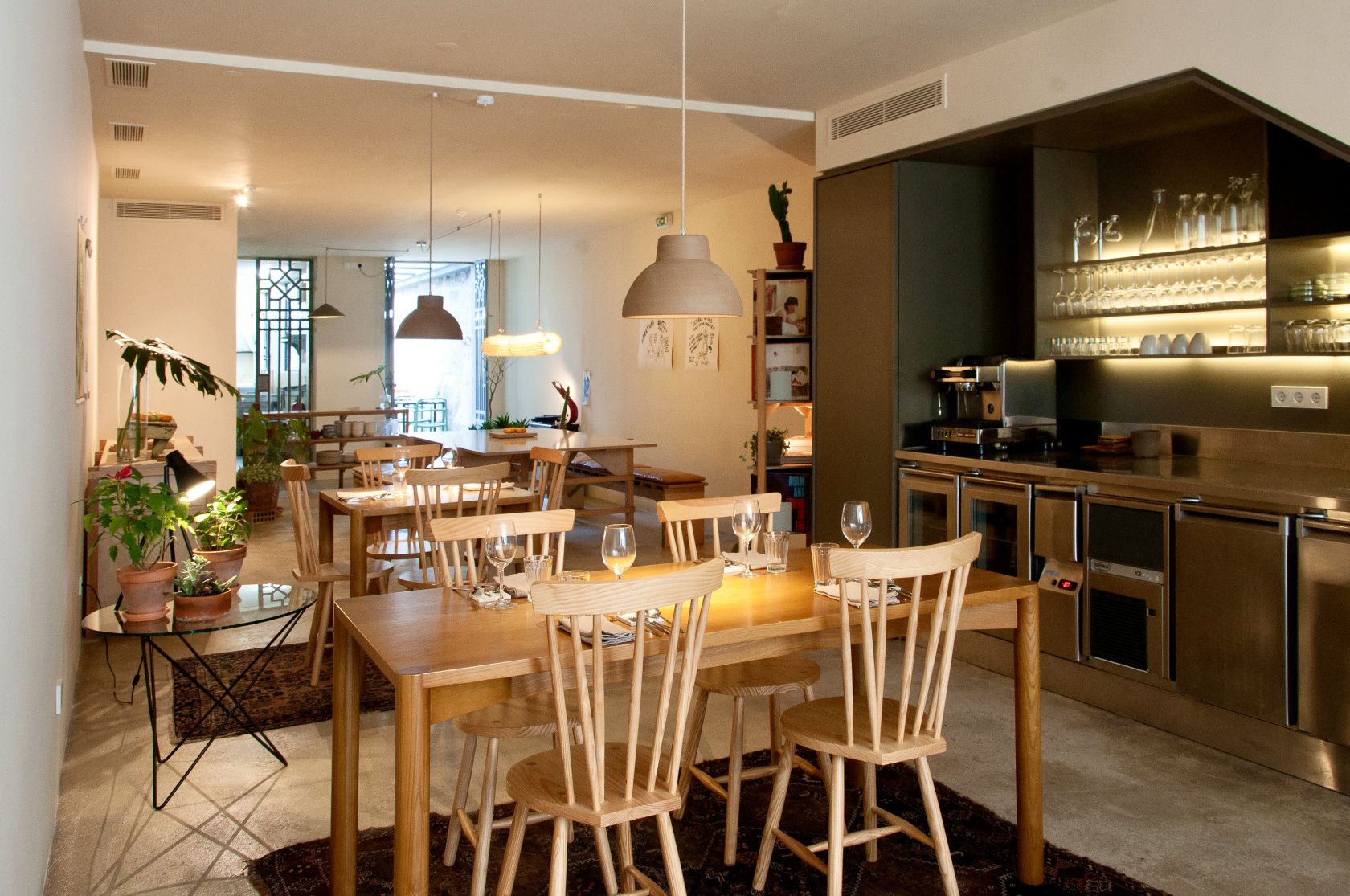
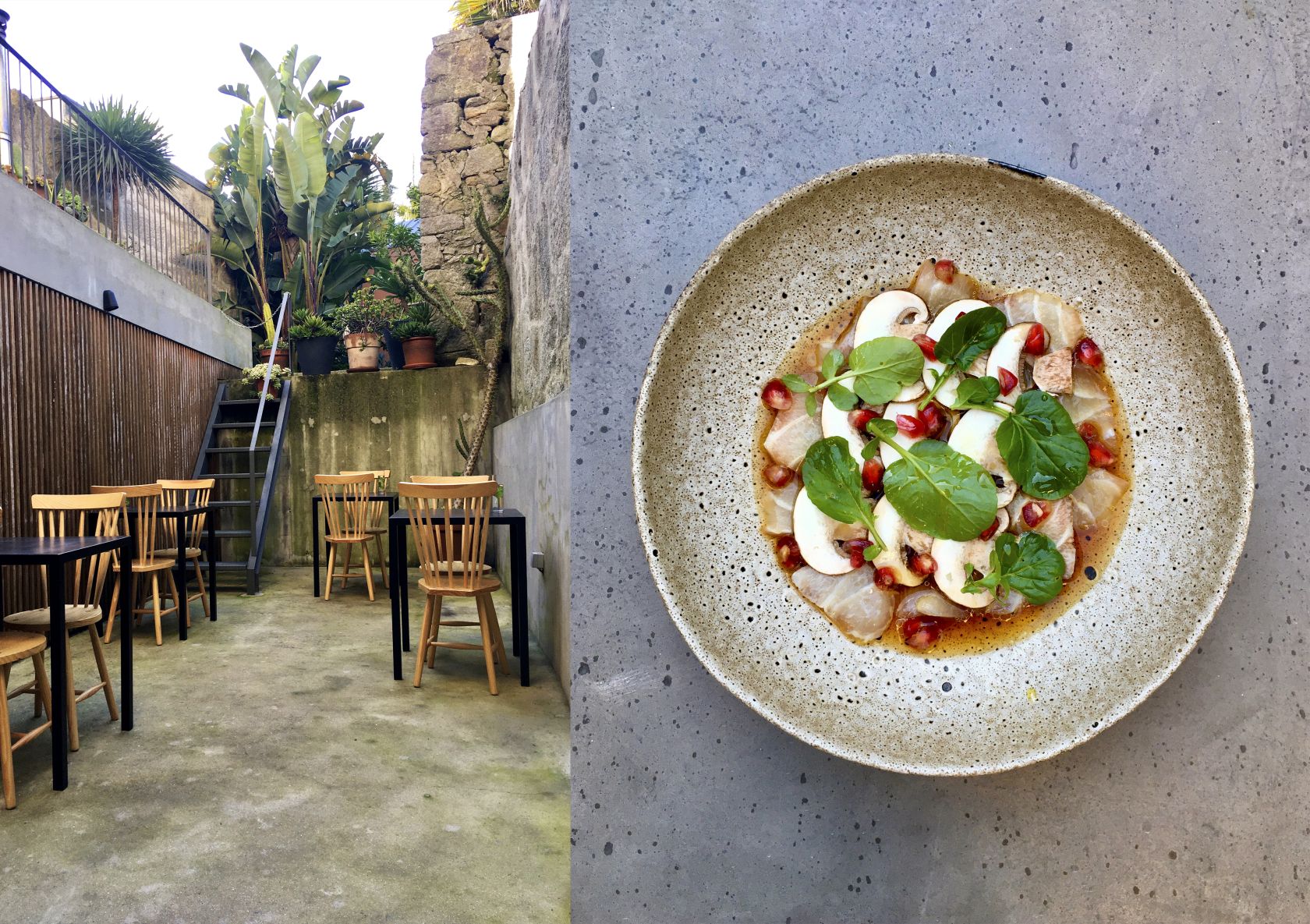
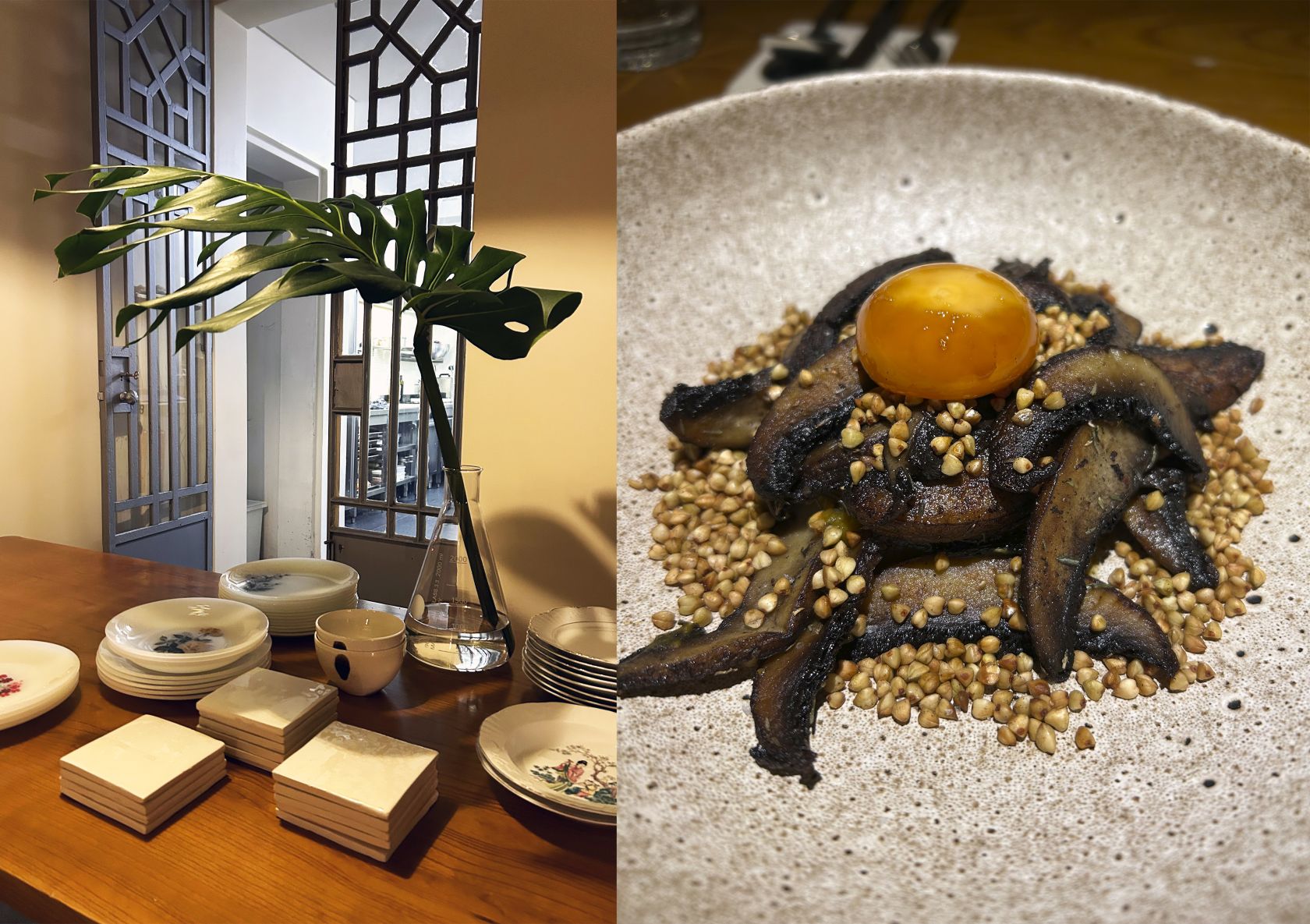
Owned by two creative minds, the artful background of both chef Tiago Feio and front of house Cátia Roldão flows seamlessly onto the vintage plates at this little gem in the heart of Porto. Opened in late 2021, tia tia was one of the first to promote natural wines in Porto, now an unmissable trend in most major cities. In this welcoming and relaxed atmosphere, art is displayed on the walls and guests are encouraged to choose what music they would like to listen to from the 500-piece vinyl record collection. It almost feels like visiting your creative friends’ cool minimalist flat — if those friends just happen to have an exquisite wine selection, private chef and garden patio.

Credits: Supplied Image; Author: Karina Janø;

Sourcing their produce from the local Bolhão Market, the contemporary and seasonal Portuguese menu is vegetarian with an addition of two fish options. Dishes are ideal for sharing and the menu changes daily. I often judge a restaurant by their bread/butter/oil combo, entering the table before the fun begins, and this sourdough bread perfectly soaks up all the drops of golden olive oil from the leaf-shaped bowl in front of us. The flavour is delightful and sets the tone for what is to come: The colourful and pretty dishes that land on the table are as tasty and light as the visual pleasure derived from them.

Credits: Supplied Image; Author: Karina Janø;

We feast on a symphony of carrot, pear, hibiscus and granola, dive into a construction of mushrooms, hokkaido and shoyozuke yolk and savour the softest small pieces of the catch of the day with cashew and sage. The vegetables definitely take centre stage and at no point am I missing meat. On the contrary, I am in awe of just how delicious and tasteful vegetables can be. Small bites of crunchy and soft, sour and salty, it all comes together and ends in the sweet finale: fermented banana with San Jorge cheese. Even the most stubborn insisters of “a good meal needs meat” will lose their case here.

Credits: Supplied Image; Author: Karina Janø;

instagram.com/tiatia.porto

The vegan extraordinaire: O Gambuzino

Meaning ‘the little skunk’, O Gambuzino in central Lisbon has become the vegan talk of the town. Being 100% plant-based, this place is all about the potential of plants and a respectful attitude towards animals, our bodies and the environment. Sustainable and harm-free, sourcing locally and rescued produce, this place aims to leave a carbon footprint as tiny as possible.

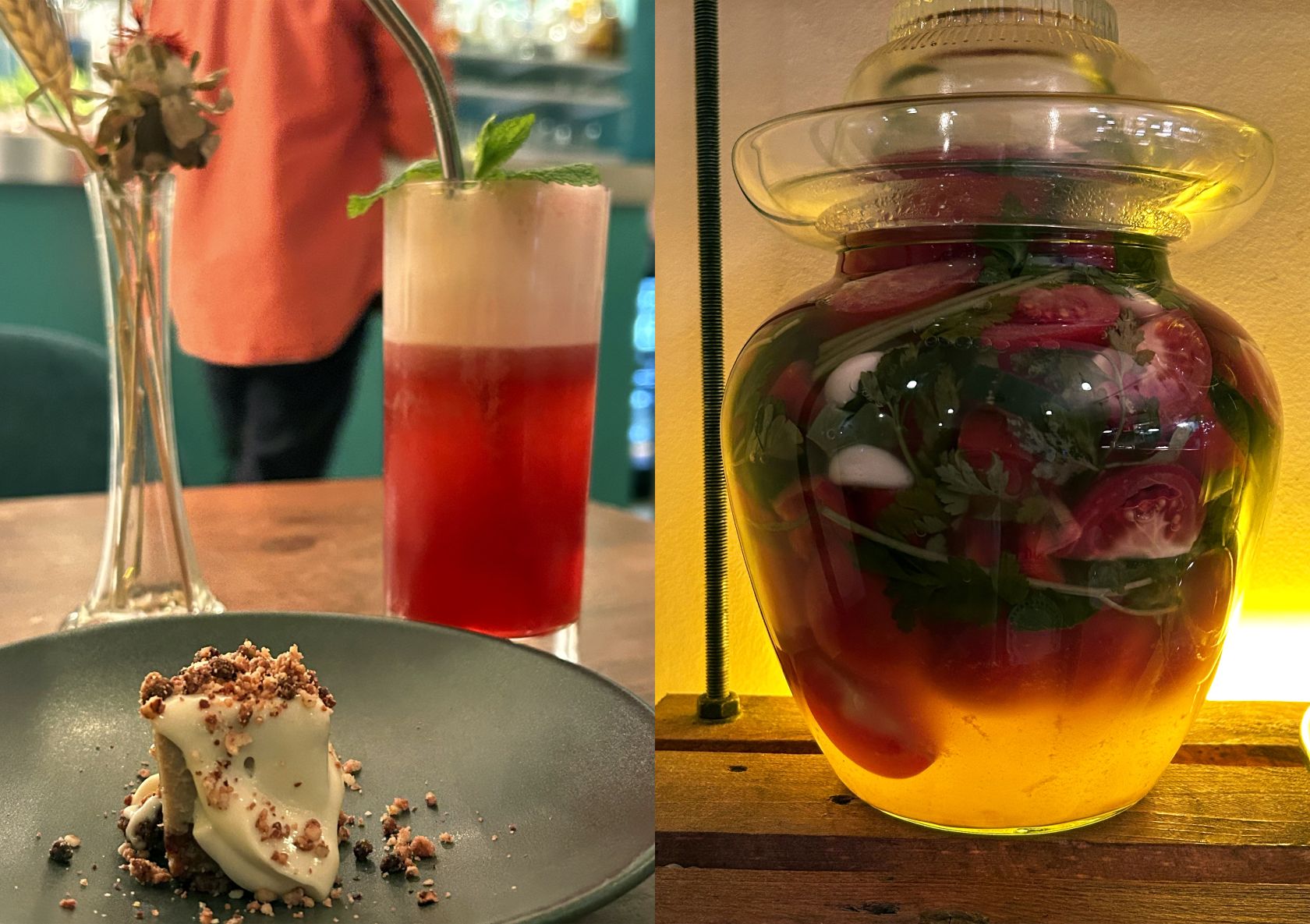
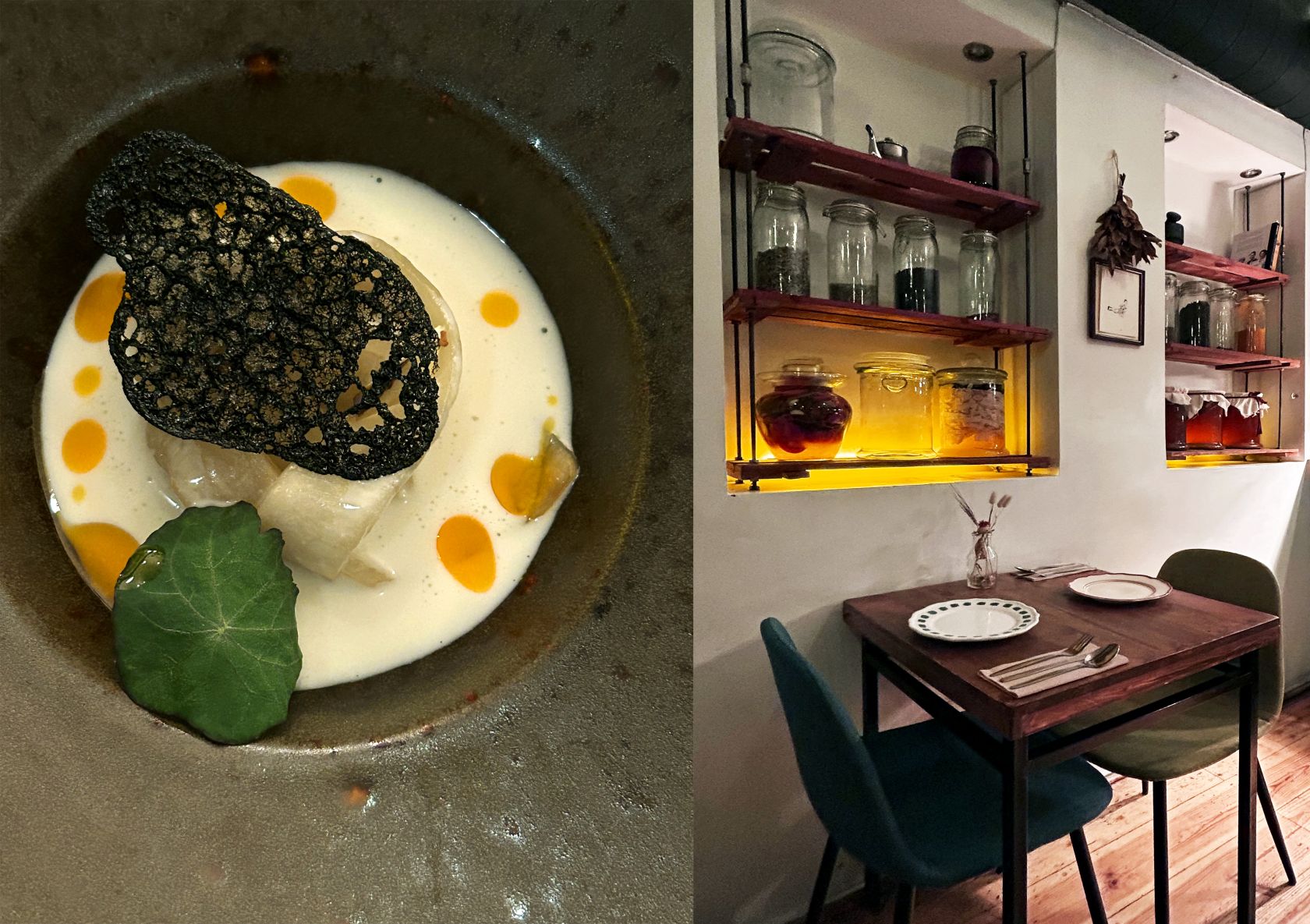
Believing in ‘more taste and less waste’, at O Gambuzino everything is made in-house, including pickles, preserves, dips, marinades and ferments. In the open kitchen, the laser-focused chefs blend traditional and contemporary techniques next to a small bar serving up lovely cocktails and mocktails. In this friendly, relaxed atmosphere, jars of fermenting veggies and hip copper cups find their place with the colourful interior.

Credits: Supplied Image; Author: Karina Janø;

Head chef Vasco Snelling and partner Monica Snelling opened the restaurant in 2018 after craving access to unique vegetarian and vegan food at an affordable price, which they struggled to find in Lisbon. After the success of O Gambuzino, they added the new place ‘Burger Clube’ with entirely plant-based, homemade burgers in 2024.

Credits: Supplied Image; Author: Karina Janø;

We try the new 12-course tasting menu, which is heavily influenced by fermentation and lets you try some vegan classics and non-classics in an inventive way (at a very fair price of 35 euros). The question with vegan food is always: Are we going to make it look like fish and meat, or just let it look like what it is? O Gambuzino does both, and the small dishes are both very creatively done and with great variation. It starts with fun and spicy finger food and gets more refined as we go. But this is not just about getting your five greens a day. I feel exposed to a different spectrum of flavours than usual, which is refreshing. Even the accompanying mocktails, Thirsty Mule and the Hibiscus Fizz with its rose water, hits different. Some dishes stand out, like the oyster mushroom “taco”, the fermented gazpacho with little bread and veggie bowls, the broad bean falafels with apricot and sesame conserve and the soy croquettes with tomato foam. The white bean tempeh hugs all the flavours, sweet, umami, salty, sour. I walk away very full and intrigued that it is possible to make a tasting menu like that only using plants. Restaurants like these are challenging the old ways in the most thoughtful and caring way: vegan is so much more than soy and beans, it’s the future.

ogambuzino.com

https://www.theportugalnews.com/news/2025-06-15/no-meat-needed/98544