Showing posts with label international. Show all posts

Tuesday, January 6, 2026

The best countries for vegans have been revealed – and the winner might surprise you

From  veganfoodandliving.com

New research has uncovered the best countries for vegans as plant-based living is outperforming climate change in global interest


Forget the outdated notion that plant-based travel means settling for a plate of chips and a side salad. A landmark global report released by The Vegan Society has revealed the best countries for vegans, effectively mapping the future of compassionate living.

The comprehensive Veganism Around the World report suggests that whether you are looking for a bustling night market in East Asia or a chic bistro in Europe, options are exploding globally. In fact, if you are looking to dodge a steak-heavy menu, you might find paradise in some unexpected corners of the globe. The data reveals a significant cultural shift is well underway, with “veganism” now consistently outperforming “climate change” in global search interest.

Global leaders in plant-based dining

When it comes to the sheer ease of finding a meal, New Zealand has taken the crown as the most vegan-friendly destination per capita, with approximately 345 vegan-friendly dining options per million people.

Not far behind in the innovation stakes is Taiwan, which leads the world for the highest density of fully vegan restaurants, with 14.8 dedicated vegan spots per million residents. Meanwhile, Iceland has emerged as Europe’s star performer; despite its rugged reputation, a staggering 43% of its restaurants now offer at least one plant-based dish.

Best countries for vegans: Report highlights

The Vegan Society’s data highlights where plant-based lifestyles are most established and where dining accessibility is highest. From high rates of dietary identification to the density of dedicated eateries, these are the countries are leading the way in compassionate consumption.

India holds the top spot for highest rate of veganism. Graphic © The Vegan Society

India holds the top spot for highest rate of veganism. Graphic © The Vegan Society


Top 10 for vegan dining options (per million people):

  • New Zealand (344.81)
  • Australia (309.89)
  • United Kingdom (302.93)
  • Cyprus (281.72)
  • Austria (280.10)
  • Switzerland (275.94)
  • Portugal (259.28)
  • Ireland (228.22)
  • The Netherlands (218.85)
  • Greece (218.12)

Top 10 for dedicated vegan restaurants (per million people):

  • Taiwan (14.8)
  • Portugal (13.7)
  • Singapore (11.8)
  • Jamaica (11.3)
  • Estonia (8.8)
  • Austria (8.3)
  • Puerto Rico (8.1)
  • Vietnam (7.9)
  • The Netherlands (7.7)
  • Canada (7.3)

The USA holds the top spot for the most dedicated vegan restaurants, with 1,717 eateries. However, when looking at vegan restaurants per million people, it ranks much lower at number 29.

In terms of vegan dining options, the USA also holds the top spot, with a staggering 47,845 restaurants offering at least one plant-based dish. The UK is in second place, with over 20,000 vegan options.

When travelling to some countries, it's easy to get vegan meals on the ground and in the air. Photo © Travelanza/Adobe Stock

Innovation and the future of food

It isn’t just about where you can eat today, but who is building the food systems of tomorrow. Per capita, Singapore is currently the world’s leader for plant-based and fermentation innovation, followed closely by Israel and the Netherlands. These hubs are attracting ‘alternative protein’ companies at a record rate, blending high-tech engineering with a supportive business environment.

Leading hubs for alternative protein companies (per million people):

  • Singapore: 7.44
  • Israel: 6.66
  • The Netherlands: 5.03
  • Denmark: 4.20

Interestingly, consumer appetite for these innovations is strongest in Asia. Additionally, consumers in India and China are reportedly twice as likely as those in the US to purchase plant-based meat.

Claire Ogley, Head of Campaigns, Policy and Research at The Vegan Society, noted that the report is the “first comprehensive investigation” of its kind. She stated that the data shows veganism is “no longer a niche movement” but is gaining significant cross-cultural traction.

“It’s also promising to see that despite stereotypes, people’s feelings towards veganism are mostly neutral, and actually lean positive in many cases,” she added.

https://www.veganfoodandliving.com/news/best-countries-for-vegans-revealed/

Tuesday, November 18, 2025

9 vegan national delicacies that test your courage and your palate

From vegoutmag.com

By Jordan Cooper

Think vegan food is all salads and smoothies? These 9 national delicacies might change your mind and test your taste buds at the same time 

There’s something humbling about sitting in front of a dish that generations of people have eaten, loved, and debated over at family tables.

And then realizing you are not totally sure if you're brave enough to try it.

If you have been vegan for a while, you probably know the joy of discovering unexpectedly plant based gems in different food cultures.

But you also know that not all national delicacies fall neatly into the familiar flavours category.

Some dishes push back. Some make you question your assumptions. Some make you sweat before the chilli even hits your tongue.

Here are nine vegan national delicacies that test both your courage and your palate.

Let’s get into it.


1) Korea’s hongeo without the fish

If you have heard of hongeo, you already know the reputation. It is a fermented skate dish famous for its ammonia heavy smell. The original version is not vegan, of course.

But Korean temples have long made plant based fermented foods that carry the same intense aroma profile.

Some versions of fermented radish, kimchi, and jeotgal style dishes are made entirely from plants yet still deliver that eye watering punch.

The first time I tried a temple style fermented radish that mirrored the strength of hongeo, I had to mentally prepare myself.

The smell hits before the flavour does. If you have ever opened a jar of kimchi that has lived in the back of the fridge a little too long, imagine something even stronger.

But once you get past the initial shock, the depth is wild.

It is sharp, funky, almost blue cheese like. It makes you think about how cultures evolve entirely different relationships with fermentation.

It is not for beginners, but it is an unforgettable experience.

2) Iceland’s fermented veggie version of hákarl

The traditional version of hákarl is fermented shark, which is as intense as it sounds. Definitely not vegan.

But Iceland has a deep fermentation culture, and vegan chefs have started creating plant based alternatives inspired by that tradition.

Some use root vegetables or kelp to mimic the striking aroma and deep umami of the original.

When I visited Iceland a few years ago, I learned something that stayed with me. Traditional foods often exist because of necessity rather than preference.

People fermented what they had in order to survive. So when I tried a vegan hákarl style celeriac, I appreciated it through that lens.

Is it bold? Yes.

Does it challenge your palate? Absolutely.

Is it worth the experience? Without question.

3) Japan’s natto

If you grew up outside Japan, natto might be one of the most surprising foods you ever encounter. Sticky, stringy, and with a smell that hints at gym socks left in a hot car, it is not exactly beginner tofu.

But it is one of the most nutrient dense plant foods you can eat, packed with probiotics, vitamin K2, and protein.

Once you settle into the flavour, you understand why it is a breakfast staple for so many.

The first time I tried natto, I was in a Tokyo convenience store at 7 a.m. A local friend insisted that I needed the full experience.

I struggled through those first bites, but the second attempt, with rice, mustard, and soy sauce, changed everything.

It is earthy, savoury, and oddly comforting once your brain adapts.

4) India’s bitter gourd dishes

India is a paradise for plant based eaters. But bitter gourd, also known as karela, deserves a category of its own. This vegetable makes you question whether your taste buds are malfunctioning.

Karela is intensely bitter. Not arugula bitter. Not dark chocolate bitter. True full force bitterness that lingers at the back of your tongue.

But Indian home cooks know how to balance flavours better than almost anyone. Stuffed, stir fried, curried, or cooked with jaggery, karela becomes layered and intriguing.

I once cooked karela with a friend in Mumbai who joked that if I could handle it, I could handle anything in life. He had a point.

5) China’s stinky tofu


People love to talk about durian as the smelliest food on the planet, but stinky tofu easily gives it competition.

This fermented tofu has a very pronounced smell. If you walk past a street stall selling it in Taiwan or China, you will smell it long before you see it.

The surprising part is that the flavour is much milder than the aroma.

Salty, savoury, rich, and sometimes crispy on the outside if it is fried. It is proof that tofu can be just as hardcore as any meat based delicacy.

When I lived near a Taiwanese market in Los Angeles, the smell of stinky tofu was unavoidable.

I never thought I would get used to it, but eventually it became familiar. Almost comforting, in a funny way.

It is a test, but a rewarding one.

6) Ethiopia’s injera and fermented flavours

Injera itself is delicious, tangy, and naturally vegan when made with teff. The challenge for some people is the intensity of the fermentation.

Some batches are mild. Others taste like a sourdough starter that decided to pursue enlightenment.

Pair it with boldly spiced wats and stews and you get a flavour profile that hits hard and stays memorable.

What I love most about injera is how it teaches you to appreciate texture. It is spongy, stretchy, and soft in a way that breaks the Western bread rule book of crisp or fluffy.

It is also communal food, which changes the entire experience.

7) The Philippines’ fermented coconut dishes

Filipino food does not get enough attention in vegan circles.

But the Philippines has a strong tradition of fermenting vegetables and coconut. Dishes like burong mustasa and burong labanos bring a tangy, aged funk that even some locals describe as acquired.

The fermented coconut variations fascinated me the most.

Coconut is usually linked to sweetness and tropical smoothness, so tasting a version that leans sour, savoury, and almost cheesy completely shifts your expectations.

It is a reminder that ingredients are not fixed. They can surprise you depending on the technique you use.

8) Thailand’s durian, the king of fruits

Durian is famous for dividing people.

Its smell has been compared to custard mixed with garlic or rotting onions on a hot day. Not exactly enticing.

But underneath the smell is a fruit that tastes like silky, rich, sweet custard. It is completely plant based and unlike anything else you will ever try.

If there is one national delicacy on this list that I think everyone should try, it is durian. Loving it or hating it tells you something about yourself.

Do you follow curiosity or caution?

Do you trust your senses or challenge them?

Do you let other people’s reactions guide your own?

Travel has taught me that unfamiliar foods often act as metaphors. Durian might be the perfect example.

9) Mexico’s huitlacoche

Huitlacoche is a fungus that grows on corn kernels. In the United States, many farmers treat it as a crop disease. In Mexico, it is a treasured delicacy.

Its appearance is a bit alien, with swollen, grayish kernels. But the flavor is incredible. Smoky, earthy, slightly sweet, and similar to truffles.

The courage test here is mostly visual. If you can get past how it looks, you will find one of the most interesting plant based ingredients on earth.

I tried huitlacoche quesadillas in Mexico City years ago, and the memory still comes to mind whenever I think about culinary humility.

Sometimes the strangest looking ingredients turn out to be the most rewarding.

Final thoughts

Trying national delicacies, especially the strong, funky, or challenging ones, is not only about food. It is about curiosity. It is about stepping into someone else’s story with respect.

And it is about learning to trust your palate enough to stretch it.

If one of these dishes intimidates you a little, that is a sign you should probably try it. That is where the growth happens.

https://vegoutmag.com/food-and-drink/n-t-9-vegan-national-delicacies-that-test-your-courage-and-your-palate/

Tuesday, March 4, 2025

10 vegan dishes from around the world that everyone should try at least once

From msn.com/en-ca

By Colman Andrews

About 88 million people worldwide practice a vegan diet, according to the World Animal Foundation, 13 million of whom live in the United States.

People abstain from meat and all other animal-derived products for various reasons, including religion, animal welfare, health, or the environment.

Showcasing a variety of plant-based fare, VNutrition explored global culinary traditions to outline 10 popular vegan dishes from around the world.


Traditional cuisines of countries such as Indonesia, Ethiopia, Israel, and India—where at least 1 in 10 people (11%) are vegan—include vast repertoires of plant-based dishes that highlight flavours and textures of locally available fruit and vegetables enhanced with spices and other nonanimal ingredients.

Even in places less known for meat-free fare, there are plenty of options: Mexico serves up guacamole and nopales (cactus paddle) tacos, mochi and soba or udon noodles are deliciously common in Japan, and Italy offers a range of pasta- and plant-based cuisine. Elsewhere, soy-based foods like tofu and tempeh have long substituted meat and cheese: Chinese Buddhists developed a range of savoury "mock meats" in the 10th century.

For those who've yet to experience the limitless palates of a vegan diet, it might be noted that Eleven Madison Park in Manhattan—one of only four restaurants in New York City to boast a coveted three Michelin stars—has served a plant-based menu exclusively since 2021.

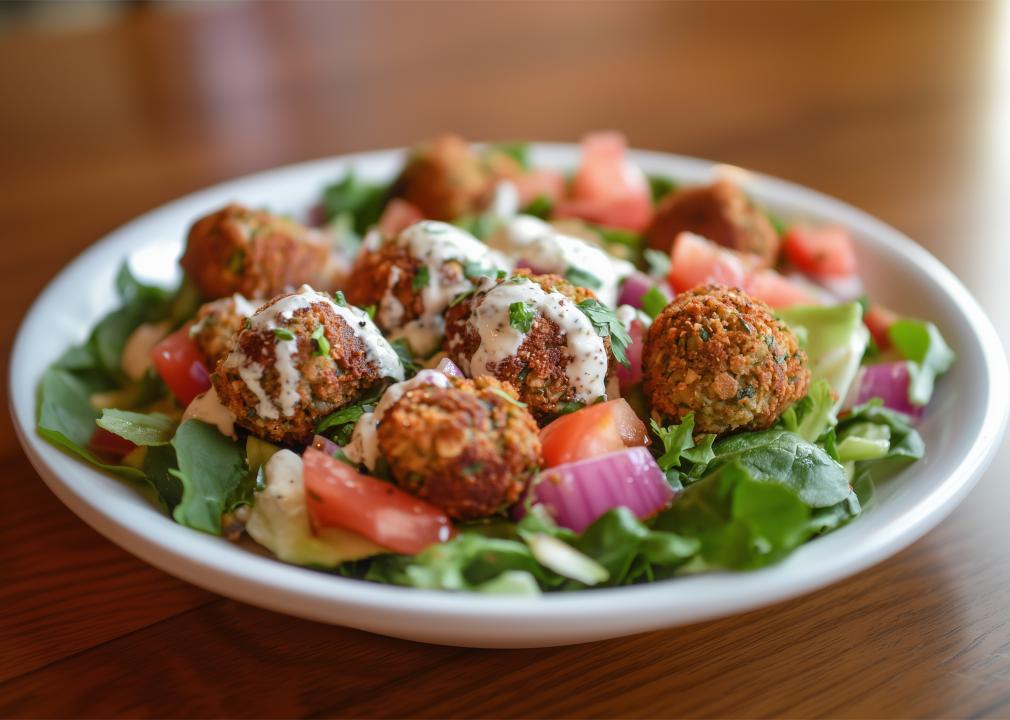
Falafel

Falafel is a croquette made with ground chickpeas mixed with minced garlic, parsley, scallions, and spices, then formed into balls or patties before being deep-fried. It's eaten, usually as a sandwich in pita bread, throughout the Middle East and beyond. 

The Egyptians call it ta'miyya and make it with fava beans instead of chickpeas. 

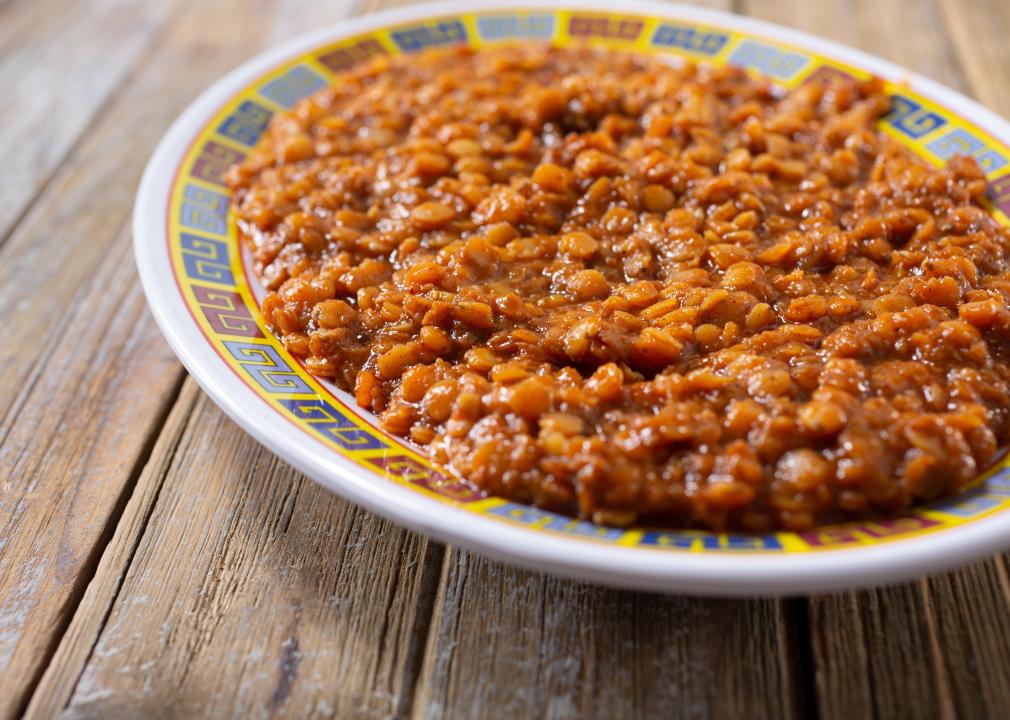
Misir wot

Ethiopia's cuisine is wonderfully rich with vegetable specialties.

Misir wot—"wot" means "stew"—is a hearty dish of red lentils and long-cooked onions. Complex flavours come from berbere, a wonderfully all-purpose spice mix of a dozen or more ingredients, including cayenne, ginger, turmeric, and cinnamon.

Like most Ethiopian food, misir wot is traditionally eaten without utensils and with the help of a piece of crĂŞpelike bread called injera.

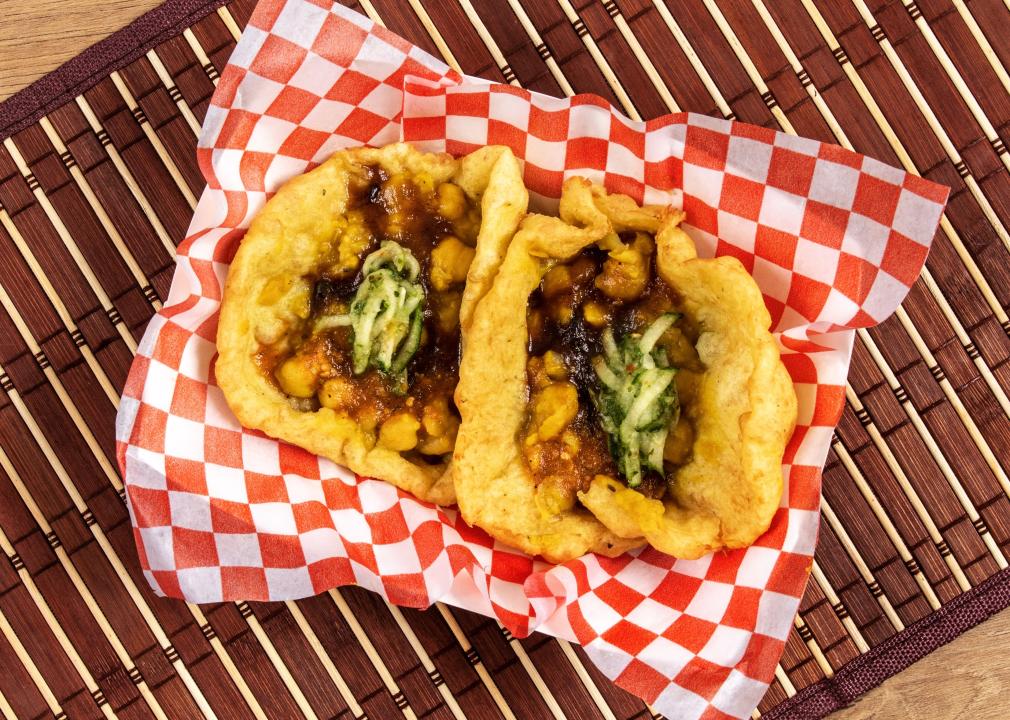
Trinidadian doubles

Doubles are a quintessential street food in Trinidad and Tobago. The dish, usually eaten for breakfast or after a night on the town, was invented in the 1930s by two married plantation workers who—like as much as 40% of the islands' population today—were of Indian origin.

The recipe calls for two rounds of fried flatbread, called bara, topped with curried chickpeas and finished with green mango pickles and a sauce made from Scotch bonnet peppers or tart tamarind. The simple ingredients provide a powerful evocation of home for emigrés from those islands living elsewhere.

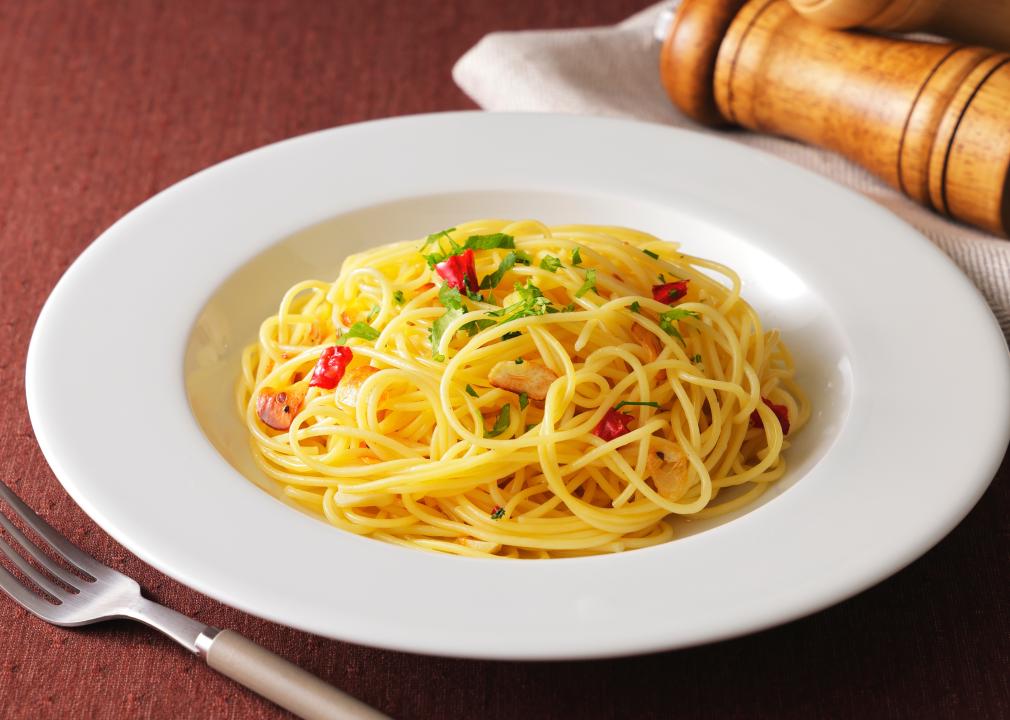
Spaghetti aglio e olio

Pasta sauces can be complex and often involve some form of meat or seafood. Not so for spaghetti aglio e olio, an elegantly simple dish requiring just three key staples of the Italian kitchen: pasta, garlic, and olive oil. The meal can be dressed up with a pinch of chili flakes.

Believed to hail from Naples, spaghetti aglio e olio is a prime example of cucina povera, or poor cuisine—a term referring to its lack of luxury ingredients, certainly not its paucity of flavour.

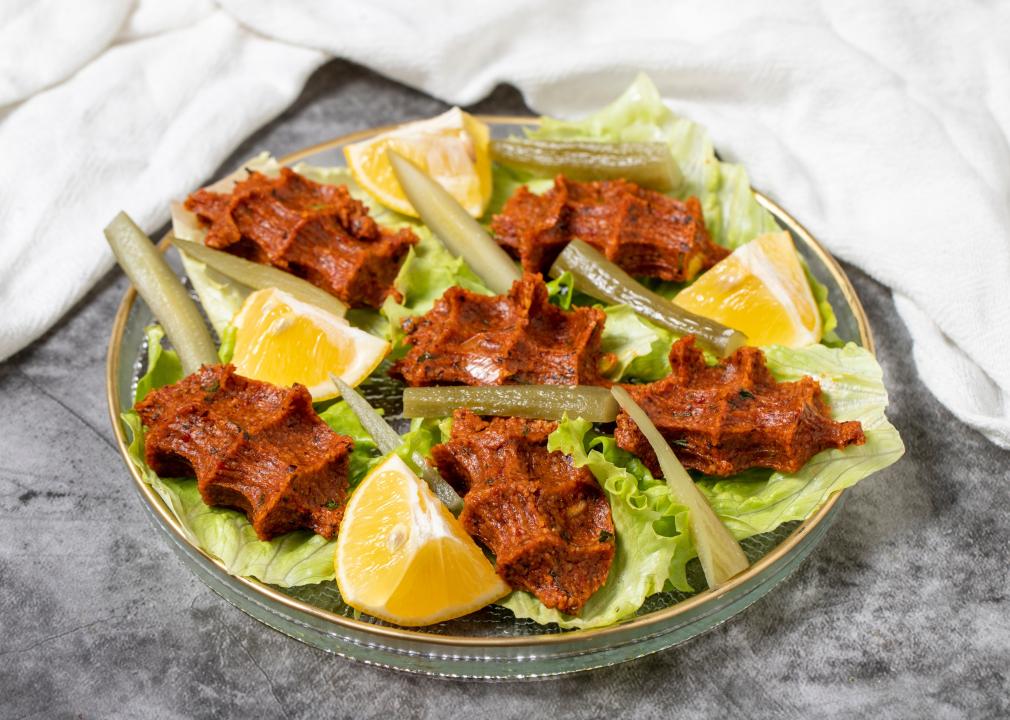
Cig kofte

Çiğ köfte, or "raw meatball," is a specialty of southeastern Türkiye. The dish was originally a kind of steak tartare made with raw lamb or beef mixed with bulgur wheat, spices (including the ground chile called urfa biber), and other ingredients, pomegranate molasses drizzled over top. So what's it doing on a list of vegan meals?


Turkish health officials banned that kind of çiğ köfte in 2008 for food safety reasons. Without missing a beat, sellers swiftly developed a meatless version wrapped in a piece of tortilla like flatbread, with nuts sometimes substituted for meat. Today, it is sold in that form all over the country.

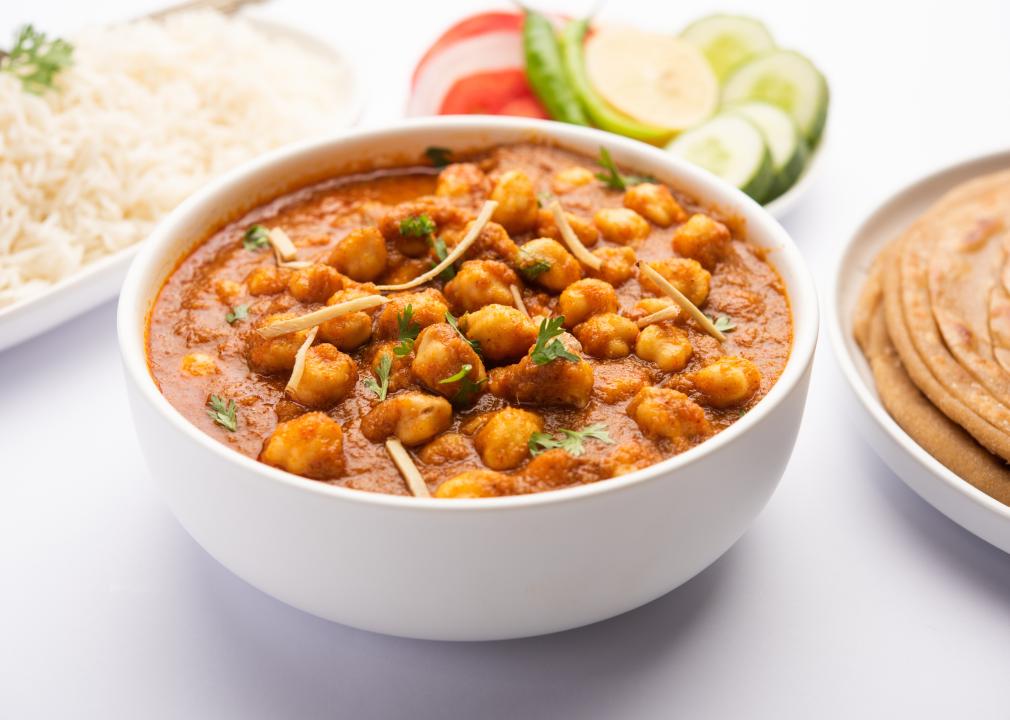
Channa masala

Channa (or chana) is the Hindi word for chickpea, and masalas are blends of dried spices vital to Indian cuisine. Channa masala, then, is a kind of chickpea curry, originally concocted in Northern India.

The dish is built on a base of caramelized onions and includes tomatoes and a healthy measure of garlic. Kulcha, naan, or some other Indian bread is considered an essential accompaniment—though for a vegan diet, make sure the bread is made without the traditional yogurt.

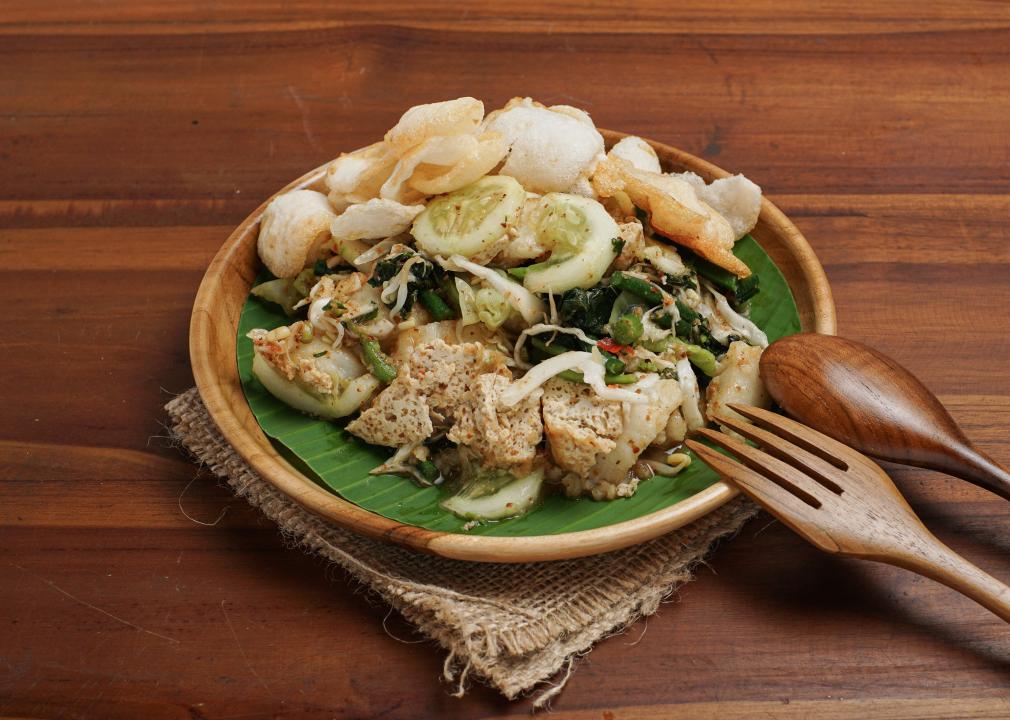
Lotek

Indonesians love their vegetable salads, made with raw or cooked ingredients (sometimes both) and almost always flavoured with peanut sauce.


West Java's take, lotek, is a prime example of the Indonesian province's Sundanese cuisine, which combines sweet and sour flavours with spice and salt. Lotek is made solely with steamed or lightly boiled vegetables including spinach, cabbage, and bean sprouts. Ingredients are tossed in a bright peanut sauce flavoured with kencur (galangal, a ginger relative) and often served alongside tofu, tempeh, or rice.

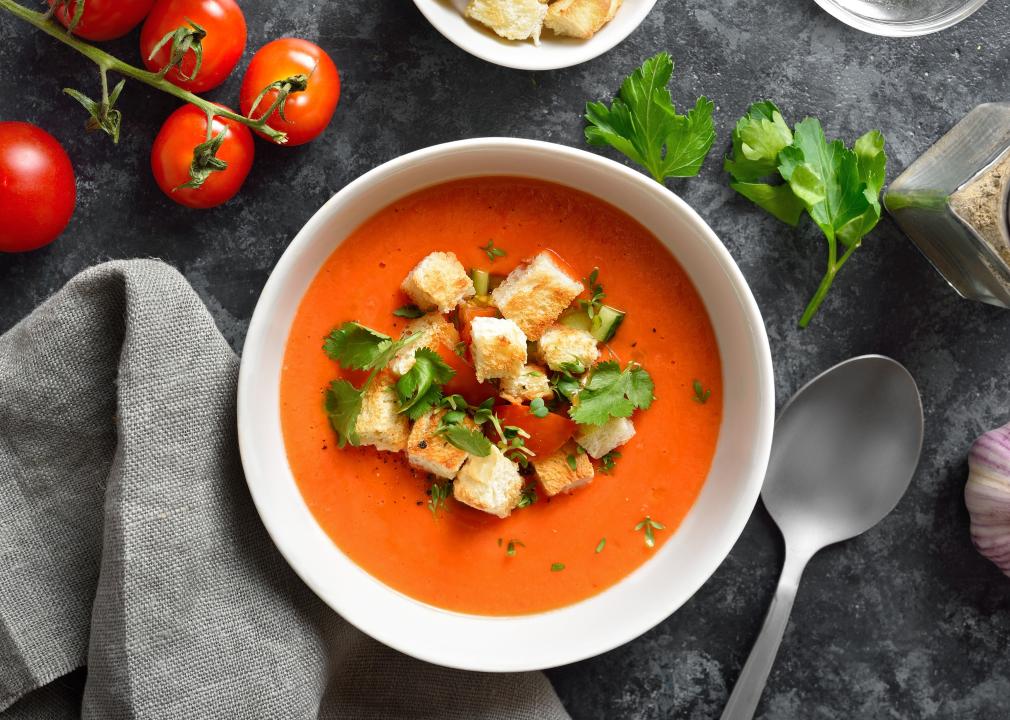
Gazpacho

Among Spain's most famous dishes, gazpacho is a cold soup of puréed tomatoes, sweet pepper, cucumber, garlic, and onion, seasoned with olive oil and vinegar.

In the region of Andalusia, gazpacho's birthplace, the soup is often drunk slightly chilled from a glass; however, it can also be served in a bowl, garnished with finely chopped bits of the vegetables that go into it. Traditional recipes include bread, though this may easily be omitted for those who are gluten-free or gluten-averse.

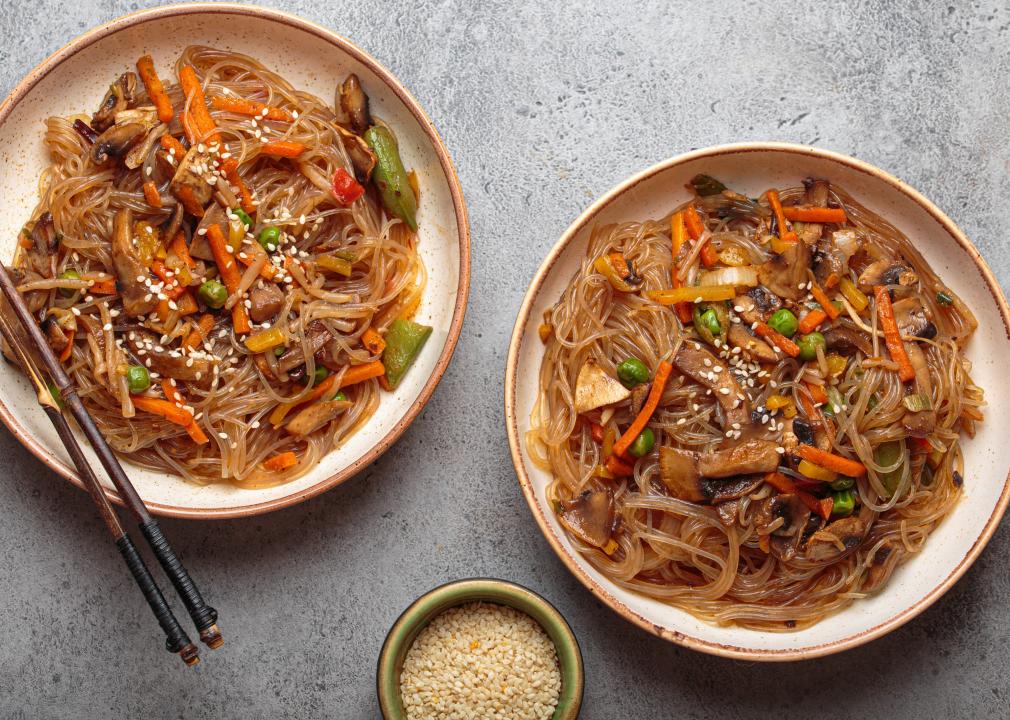
Vegetable japchae

One of Korea's best-loved dishes, japchae is a savoury mix of sautéed vegetables such as spinach, mushrooms, and carrots tossed with glass noodles made from sweet potato starch.

Tradition has it that the dish was invented by a chef for King Gwanghaegun in the 17th century. Japchae can be served as a main course or side and is a popular staple for holidays, anniversaries, and other special occasions. The dish is often made with thin-sliced beef or pork—but the all-vegetable version is every bit as satisfying.

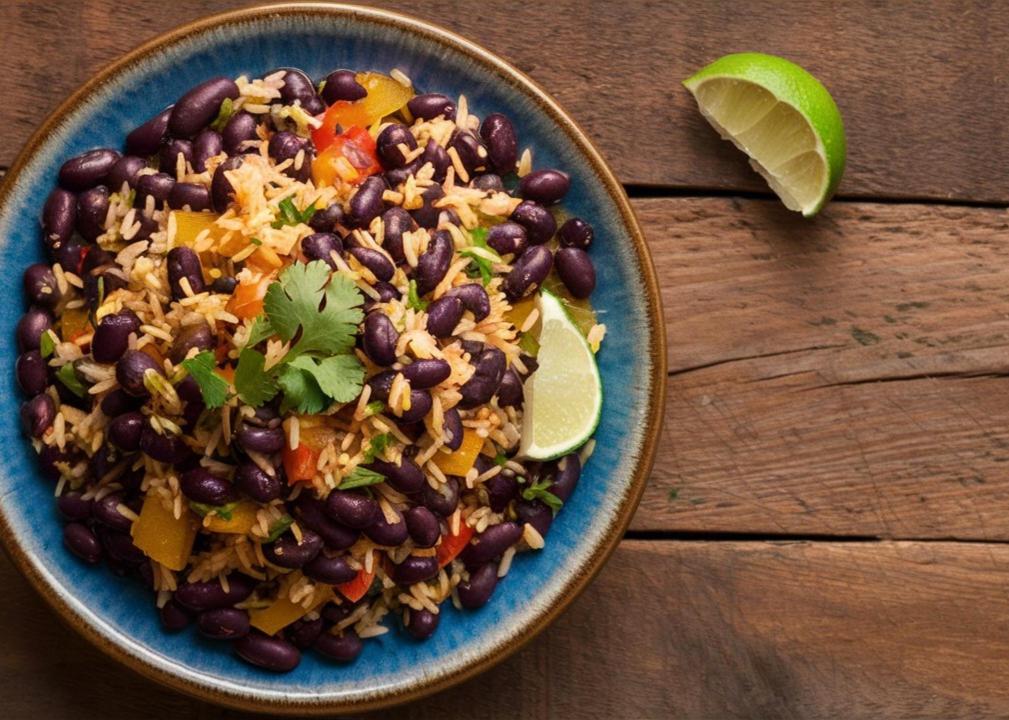
Gallo pinto

Gallo pinto means "spotted [or "painted"] rooster" in Spanish, but there's no poultry involved.

Considered the national dish of both Costa Rica and Nicaragua, it's a comfort-food classic of rice and beans (black beans in Costa Rica, red ones in Nicaragua) flavoured with peppers, cilantro, and various spices. The Costa Rican version takes on a special character thanks to the addition of Salsa Lizano, a condiment made with chiles or hot sauce and molasses. Gallo pinto is often eaten for breakfast, but it also finds a place at the table for any meal.

https://www.msn.com/en-ca/health/nutrition/10-vegan-dishes-from-around-the-world-that-everyone-should-try-at-least-once/ss-AA1A8RLR

Sunday, February 2, 2025

10 traditionally vegan meals from around the world

From amboynews.com

Showcasing various plant-based fare, VNutrition explored global culinary traditions to outline 10 meals traditionally prepared vegan

About 88 million people worldwide practice a vegan diet, according to the World Animal Foundation, 13 million of whom live in the United States.

People abstain from meat and all other animal-derived products for various reasons, including religion, animal welfare, health, or the environment.

Showcasing a variety of plant-based fare, VNutrition explored global culinary traditions to outline 10 popular vegan dishes from around the world.

Traditional cuisines of countries such as Indonesia, Ethiopia, Israel, and India—where at least 1 in 10 people (11%) are vegan—include vast repertoires of plant-based dishes that highlight flavours and textures of locally available fruit and vegetables enhanced with spices and other nonanimal ingredients.

Even in places less known for meat-free fare, there are plenty of options: Mexico serves up guacamole and nopales (cactus paddle) tacos, mochi and soba or udon noodles are deliciously common in Japan, and Italy offers a range of pasta- and plant-based cuisine. Elsewhere, soy-based foods like tofu and tempeh have long substituted meat and cheese: Chinese Buddhists developed a range of savory "mock meats" in the 10th century.

For those who've yet to experience the limitless palates of a vegan diet, it might be noted that Eleven Madison Park in Manhattan—one of only four restaurants in New York City to boast a coveted three Michelin stars—has served a plant-based menu exclusively since 2021.


Falafel

Healthy Mediterranean falafel salad bowl.

Friendly Studios // Shutterstock

Falafel is a croquette made with ground chickpeas mixed with minced garlic, parsley, scallions, and spices, then formed into balls or patties before being deep-fried. It's eaten, usually as a sandwich in pita bread, throughout the Middle East and beyond. The Egyptians call it ta'miyya and make it with fava beans instead of chickpeas.


Misir wot

A view of a plate of misir wot.

The Image Party // Shutterstock

Ethiopia's cuisine is wonderfully rich with vegetable specialties.

Misir wot—"wot" means "stew"—is a hearty dish of red lentils and long-cooked onions. Complex flavours come from berbere, a wonderfully all-purpose spice mix of a dozen or more ingredients, including cayenne, ginger, turmeric, and cinnamon.

Like most Ethiopian food, misir wot is traditionally eaten without utensils and with the help of a piece of crĂŞpelike bread called injera.


Trinidadian doubles

A snack of curry chick peas in bara fried dough.

sockagphoto // Shutterstock

Doubles are a quintessential street food in Trinidad and Tobago. The dish, usually eaten for breakfast or after a night on the town, was invented in the 1930s by two married plantation workers who—like as much as 40% of the islands' population today—were of Indian origin.

The recipe calls for two rounds of fried flatbread, called bara, topped with curried chickpeas and finished with green mango pickles and a sauce made from Scotch bonnet peppers or tart tamarind. The simple ingredients provide a powerful evocation of home for emigrés from those islands living elsewhere.


Spaghetti aglio e olio

Japanese spaghetti aglio e olio in a bowl.

Nishihama // Shutterstock

Pasta sauces can be complex and often involve some form of meat or seafood. Not so for spaghetti aglio e olio, an elegantly simple dish requiring just three key staples of the Italian kitchen: pasta, garlic, and olive oil. The meal can be dressed up with a pinch of chili flakes.

Believed to hail from Naples, spaghetti aglio e olio is a prime example of cucina povera, or poor cuisine—a term referring to its lack of luxury ingredients, certainly not its paucity of flavour.


Cig kofte

Cig kofte on dark background.

Enez Selvi // Shutterstock

Çiğ köfte, or "raw meatball," is a specialty of southeastern Türkiye. The dish was originally a kind of steak tartare made with raw lamb or beef mixed with bulgur wheat, spices (including the ground chile called urfa biber), and other ingredients, pomegranate molasses drizzled over top. So what's it doing on a list of vegan meals?

Turkish health officials banned that kind of çiğ köfte in 2008 for food safety reasons. Without missing a beat, sellers swiftly developed a meatless version wrapped in a piece of tortilla like flatbread, with nuts sometimes substituted for meat. Today, it is sold in that form all over the country.


Channa masala

Tomatoes and cumin served with Laccha Paratha or roti.

StockImageFactory.com // Shutterstock

Channa (or chana) is the Hindi word for chickpea, and masalas are blends of dried spices vital to Indian cuisine. Channa masala, then, is a kind of chickpea curry, originally concocted in Northern India.

The dish is built on a base of caramelized onions and includes tomatoes and a healthy measure of garlic. Kulcha, naan, or some other Indian bread is considered an essential accompaniment—though for a vegan diet, make sure the bread is made without the traditional yogurt.


Lotek

Side view of lotek food.

Arif Budi C // Shutterstock

Indonesians love their vegetable salads, made with raw or cooked ingredients (sometimes both) and almost always flavoured with peanut sauce.

West Java's take, lotek, is a prime example of the Indonesian province's Sundanese cuisine, which combines sweet and sour flavours with spice and salt. Lotek is made solely with steamed or lightly boiled vegetables including spinach, cabbage, and bean sprouts. Ingredients are tossed in a bright peanut sauce flavoured with kencur (galangal, a ginger relative) and often served alongside tofu, tempeh, or rice.


Gazpacho

Gazpacho soup in bowl over dark stone background.

Tatiana Volgutova // Shutterstock

Among Spain's most famous dishes, gazpacho is a cold soup of puréed tomatoes, sweet pepper, cucumber, garlic, and onion, seasoned with olive oil and vinegar.

In the region of Andalusia, gazpacho's birthplace, the soup is often drunk slightly chilled from a glass; however, it can also be served in a bowl, garnished with finely chopped bits of the vegetables that go into it. Traditional recipes include bread, though this may easily be omitted for those who are gluten-free or gluten-averse.


Vegetable japchae

Two bowls of japchae, korean glass noodles stir fry.

Elena Eryomenko // Shutterstock

One of Korea's best-loved dishes, japchae is a savoury mix of sautéed vegetables such as spinach, mushrooms, and carrots tossed with glass noodles made from sweet potato starch.

Tradition has it that the dish was invented by a chef for King Gwanghaegun in the 17th century. Japchae can be served as a main course or side and is a popular staple for holidays, anniversaries, and other special occasions. The dish is often made with thin-sliced beef or pork—but the all-vegetable version is every bit as satisfying.


Gallo pinto

Traditional Costa Rican dish with rice and black beans cooked together.

SYED IBAD RM // Shutterstock

Gallo pinto means "spotted [or "painted"] rooster" in Spanish, but there's no poultry involved.

Considered the national dish of both Costa Rica and Nicaragua, it's a comfort-food classic of rice and beans (black beans in Costa Rica, red ones in Nicaragua) flavoured with peppers, cilantro, and various spices. The Costa Rican version takes on a special character thanks to the addition of Salsa Lizano, a condiment made with chiles or hot sauce and molasses. Gallo pinto is often eaten for breakfast, but it also finds a place at the table for any meal.

Story editing by Nicole Caldwell. Additional editing by Kelly Glass. Copy editing by Paris Close. Photo selection by Clarese Moller.

 https://amboynews.com/premium/stacker/stories/10-traditionally-vegan-meals-from-around-the-world,82087?