Showing posts with label investment. Show all posts

Friday, May 8, 2026

Future Food Quick Bites: Beyond Meat x Taco Bell, Crowdfunding Galore & Marigold Protein

From greenqueen.com.hk

By Anay Mridul

New products and launches

Fast-food giant Taco Bell has teased a new partnership with vegan giant Beyond Meat to create a new plant-based protein that will be tested within this year. The chain said it chose the latter due to its track record of attracting young consumers. They previously tested a meat-free carne asada steak quesadilla and tacos offered at price parity.

Courtesy: Beyond Meat

US vitamins brand Perelel has launched Daily Resilience Complex, a new daily supplement featuring TurtleTree‘s precision-fermented lactoferrin ingredient, LF+. It isn’t vegan, however, since the powder also contains bovine collagen.

In time for grilling season, whole-food brand Actual Veggies has rolled out a 10-pack of its vegan black bean burger at most Costco locations across the US.

Likewise, whole-cut plant-based meat pioneer Chunk Foods has gained a listing at Whole Foods Market across the Northeast for its steak filet, pulled steak and a new Moroccan Cubes SKU with 19g of protein.

Speaking of vegan steak, Dutch start-up Rival Foods‘s clean-label alternative has landed in its home country. The pulled beef is available in 2kg packs for foodservice operators on InstockMarket, and contains 31g of protein per 100g.

Courtesy: Jay&Joy

Weeks after securing $2.3M in fresh funding, French vegan cheesemaker Jay&Joy has expanded its footprint through a listing at 400 new points of sale at German organic retailer Denns BioMarkt.

Fellow French company La Vie‘s plant-based ham, sandwiches and snacks are now being stocked at 180 TotalEnergies service stations across the country.

In more good news for France’s plant-based shoppers, a new fully vegan grocery store, Herbivores, has opened on Lyon’s Rue Pasteur street.

Singaporean bean-free start-up Prefer has brought its coffee alternative to Japan, launching an iced black coffee using its PreferRoast ingredient in collaboration with Tokyu Land, a member of local conglomerate Tokyu Group.

And in the UK, Shicken Foods has launched plant-based kofta kebabs into Costco stores. They feature 21g of protein per serving and are high in fibre.

Company and finance updates

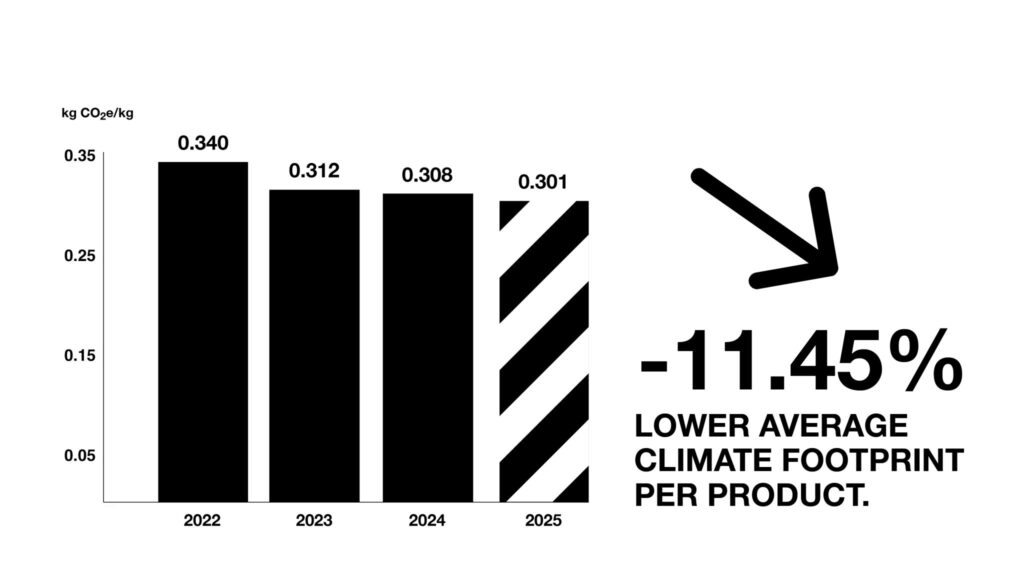
Swedish pea milk start-up Sproud has achieved its lowest-ever average carbon footprint, reducing its emissions by 11.45% to reach 0.301kg of CO2e per litre of product. Moreover, annual sales hit a new record, growing by 28% to reach 74.9 million kronor ($8.1M), with volumes up by 33%.
sproud sales
Courtesy: Sproud

Californian cultivated seafood start-up Finless Foods has opened a crowdfunding campaign on Republic, with a goal of securing $75,000. It has already entered the pre-market consultation process with the US Food and Drug Administration for its cultivated tuna, with approval expected in 2027.

Weeks after receiving $700,000 in seed funding, Danish mycelium meat maker Tempty Foods has kicked off a crowd investment round on Republic. It has already landed nearly all of its €355,000 ($415,000) target.

Courtesy: Tempty Foods

In more investment news, British eco material player Ponda has also launched a crowdfunding effort on Republic with the aim of raising €230,000 ($270,000) to build out its capacity and expand production of BioPuff, a bulrush-based alternative to goose down and polyester fibres.

Speaking of eco materials, Australia’s Uluu has moved into a new industrial facility in Henderson, Western Australia, which will allow it to scale up production of its seaweed-derived bioplastics. This follows a $10.5M investment round in November.

US industrial biotech start-up Fermeate has raised $2M in seed funding to advance its optogenetic control tech for precision-fermented products and accelerate price parity for them.

Belgian beanless coffee start-up Koppie has reached a major milestone in its scale-up efforts, producing 12 tonnes of its fermentation-derived alternative.

Climate advocacy group Madre Brava has closed its Thailand programme, according to its former director.

Policy, research and awards

Dutch start-up NoPalm Ingredients – which makes palm oil alternatives from food waste, yeast and fermentation – has been named as one of the four finalists of the 2026 Food Planet Prize.

Catering giant Sodexo has become the first employee restaurant chain in Poland to monitor the share of plant-based proteins on offer, with analysis using the Protein Tracker tool revealing that 30% of its 2024-25 protein portfolio was sourced from plants.

Two new studies by the Physicians Committee for Responsible Medicine show that low-fat plant-based diets cut greenhouse gas emissions by 55-57% and cumulative energy demand by 44-55%.
marigold protein
Courtesy: ACS Food Science & Technology

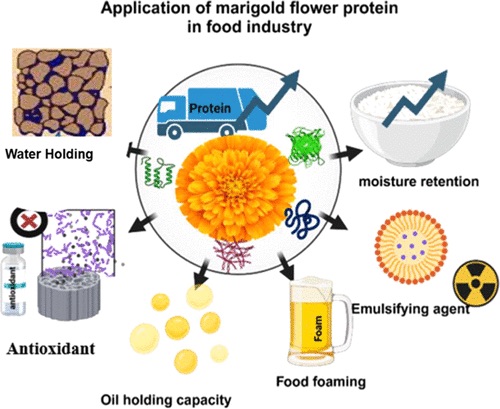
study led by scientists at the University of Georgia suggests that dried marigold flowers – 40% of which end up wasted – show potential as a sustainable plant protein source, exhibiting high levels of glutamic and aspartic acids, greater heat stability than peas and chickpeas, and excellent emulsifying capacity.

Researchers at the University of Warwick have published the results of their meta-analysis of clinical trials involving 541 participants, finding that plant-based eaters were associated with significantly lower levels of C-reactive protein – a widely used marker of systemic inflammation – than omnivores.
veganuary success
Courtesy: Veganuary

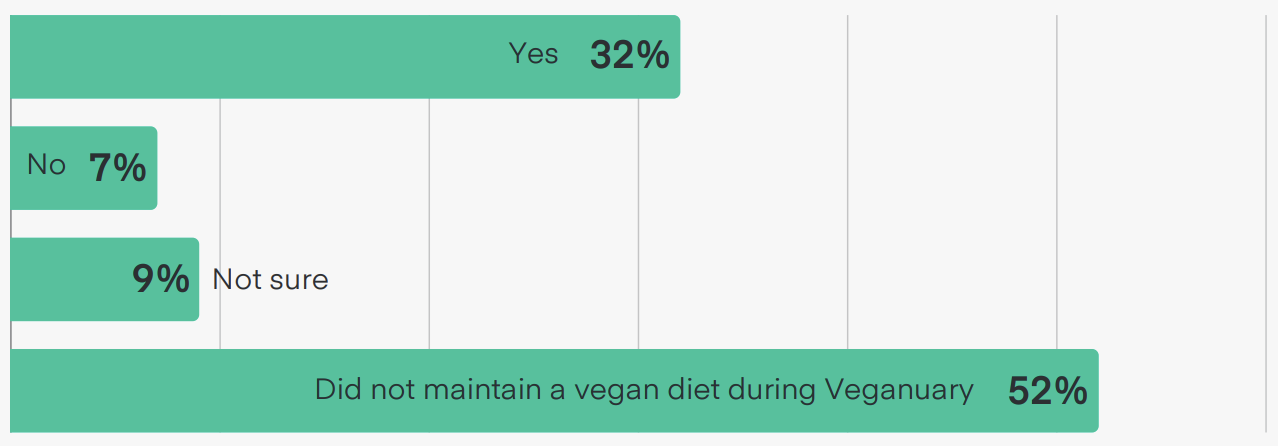
Finally, in Veganuary‘s 2026 participant survey, a third (32%) of those who weren’t vegan before said they planned to continue following a plant-based diet after the monthlong campaign, while 79% intended to halve their intake of animal products.

https://www.greenqueen.com.hk/future-food-quick-bites-beyond-meat-taco-bell-crowdfunding-marigold-protein/

Friday, July 21, 2023

Vegan investments: Are you putting your money where your mouth is?

From veganfoodandliving.com

You may have noticed that celebrities are falling over themselves to invest in vegan businesses. Lewis Hamilton in Neat Burger, Leonardo DiCaprio in LØCI, Woody Harrelson in Wicked Kitchen, Robert Downey Jr. in Chunk Foods, and Anne Hathaway in The Every Co.

What does this celebrity vegan investment frenzy tell us? First, that a vegan lifestyle has become “cool”. That’s great, the more people think it’s cool, the more it will be copied. And second, that there is money to be made by investing in vegan businesses.

Don’t underestimate how important this is. The profitability of veganism is a massive factor in it becoming mainstream, and vegans should understand that their own investments play an important role in either supporting veganism, or in supporting companies and industries that directly inflict cruelty on animals and damage to the environment.

We are nearly all investors, whether we realise it or not. If you think that investing has got nothing to do with you, you’re probably mistaken. Some of us invest a little of our savings every month in an ISA or a self-invested personal pension (SIPP). Nearly all of us will have a pension through our current or former workplaces.

The big question is: do you know what your ISA, SIPP, or pension is invested in?

First, you need to understand how your money is invested.

Have a look at your pension, ISA, or SIPP statement (you do look at your pension statement, don’t you?). You will likely see that your money is invested in funds, with often unfamiliar names like AXA Wealth Jupiter UK Growth, MetLIFe Managed Defensive Portfolio, or Invesco Perpetual Distribution. These funds handle £billions worth of investments, but their names give you no clue as to where those £billions are going. 

Behind the fund

You probably carefully avoid giving your consumer pound to companies like L’Oreal and Procter & Gamble, which allow animal testing in countries that require it by law, and you presumably never buy meat or dairy.

But what you would spend on shampoo, floor cleaner, or animal products is a drop in the ocean compared with your pension pot.

If you have a workplace pension, or invest your own money in funds via investment platforms such as Hargreaves Lansdown, Nutmeg, or AJ Bell, you are probably investing in some or all of these companies.

And these household names are just the tip of the iceberg. For all you know, some of your pension could be invested in a huge, incognito livestock breeding company that you’ve never heard of.

Don’t beat yourself up, these companies are so big they are not easy to avoid when investing. And your pension has been invested in them because they make money. But equally, don’t bury your head in the sand.

Make a difference through your workplace pension

Once you’ve identified the investment funds your pension invests in, a quick internet search will show you what companies those funds are supporting. Dig a little more to find out what those companies do.

You can take a broad view that any company not directly connected with animal exploitation is good enough for you. That’s your decision. But if that’s not good enough, and you want to try and effect real change, you can influence how your pension is invested.

Pension funds are run by trustees and the duty of these trustees is to have their members’ best interests at heart. Write to your pension trustees and ask if they offer animal-friendly investments. If they don’t, demand – perhaps along with like-minded colleagues – that they do. They are working on your behalf, so make sure they are really working for you.

A landmark legal ruling in 2020 deemed ethical veganism a philosophical belief, which means everyone should have the right to a vegan-friendly pension. A good employer will want to help you get a vegan pension. 

In search of vegan investment funds

As well as a workplace pension, you may have a SIPP, and perhaps an ISA. The same principles apply to these investments – you need to find out where your money is going, and move it to a new investment fund if you don’t like the answer.

Investment funds are managed by companies such as Fidelity or Aviva who charge us a fee for choosing companies that are likely to make us money. We pay them 1% a year to make us 5% or 10% a year. Unfortunately, there are no funds in the UK that invest exclusively in vegan-friendly companies.

The closest thing we have is the Rize Sustainable Future of Food Ucits ETF, which invests in companies that benefit from a transition towards “more sustainable food and production systems”. While that doesn’t guarantee the companies it invests in will be vegan, as of 30 June 2023, 15% of the fund was invested in plant-based and organic foods.

Meanwhile, the VanEck Sustainable Future of Food Ucits ETF invests in companies offering products and services related to meat and dairy alternatives, organic foods, food flavours, or agriculture technologies.

And Nest’s Ethical Fund avoids companies that test cosmetics on animals and will only invest in companies that meet animal welfare codes of practice.

Unfortunately, there are no funds in the UK that invest exclusively in vegan-friendly companies. Photo © Vitalii Vodolazskyi via Adobe Stock

Unfortunately, there are no funds in the UK that invest exclusively in vegan-friendly companies. Photo © Vitalii Vodolazskyi via Adobe Stock


Ethical investments are the next best thing

In the absence of purely vegan funds, the next best thing are ethical funds that screen out exposure to a wide range of unacceptable issues, including animal testing.

Funds that align with vegan values include iShares Global Clean EnergyInvesco Global Water PortfolioiShares US Utilities Index, and Invesco WilderHill Clean EnergyJanus Henderson Global Sustainable Equity Fund and the Aegon Ethical Equity Fund invest in companies contributing to positive environmental or social change.

These are all equity funds, which means your money will be invested in the shares of ethical companies. For more cautious investors there are bond funds, such as the Aegon Ethical Corporate Bond, which commits to “no factory farming and no retailing of meat and dairy”.

You can also invest in so-called green bonds, which give a set level of return, usually quite low to match the low level of risk. These are issued by companies looking, for example, to power their steel mills using renewable hydrogen rather than coal, or wanting to switch to disposable plastic packaging. They need our cash to make the transition and will pay interest on the money you lend them.

Lastly, NS&I’s Green Savings Bonds help finance green projects that protect the environment, the countryside, and areas of natural beauty in the UK. Currently, returns on these bonds are 4.2% for a fixed term of three years.

Direct investing?

If you have a large appetite for risk, some spare money, and you want to support individual vegan businesses that might effect real change, you could invest directly in vegan companies.

Veganism is a serious investment opportunity. According to data from Allied Market Research, the global vegan food market will grow to $36.3 billion by 2030, comfortably outpacing the overall food industry. ig.com has produced a list of the best vegan stocks and assets to watch:

There is, however, a catch with investing in individual companies: even experienced, savvy investors often back the wrong companies. It takes time and patience and a lot of nous to assess the underlying value of a company, and few of us are up to the task.

Another left-field option is to invest in vegan companies through crowdsourcing platforms such as Seedrs and Crowdcube. Be aware, however, that these are start-up companies and you may lose your investment.

Your money is power

Making informed choices when you go shopping is great. The more that vegans visibly reject unethical companies and embrace vegan-friendly business, the more animals we protect. But how you invest your money is just as important. Your investments give you power over companies and industries. Make sure you use it.

This article is not financial advice, and all investments come with an element of risk. The companies and funds mentioned in this article are a small sample and do not represent recommendations. You should do your own research and determine your appetite for risk.

https://www.veganfoodandliving.com/features/ethical-vegan-investments/