Showing posts with label Greece. Show all posts

Sunday, April 12, 2026

Eating green: Vegan and vegetarian food in Athens

From redandblack.com

Big City Bread Cafe

With a cozy dining room and shaded patio, Big City Bread has a huge selection of veggie options. The brunch menu includes quiche, omelettes, french toast and a tofu vegetable saute. For lunch or dinner, try a veggie burger or black bean sandwich.

Cali-N-Tito’s

Both Cali-N-Tito’s locations offer vegetarian versions of most of their mains, like veggie cubanos, burritos, tacos and quesadillas. Favorites include the veggie tamales and empanadas with a side of tostones or maduros.

Jinya Ramen BAR

A ramen chain with a menu ranging from noodle dishes to mini tacos, JINYA has a solid selection of plant-based menu items. The Flying Vegan Harvest includes Impossible meat and tofu in a vegan miso broth, while the Spicy Creamy Vegan comes with tofu and chili oil in a vegetable broth. Both are packed with veggies too.

Maepole

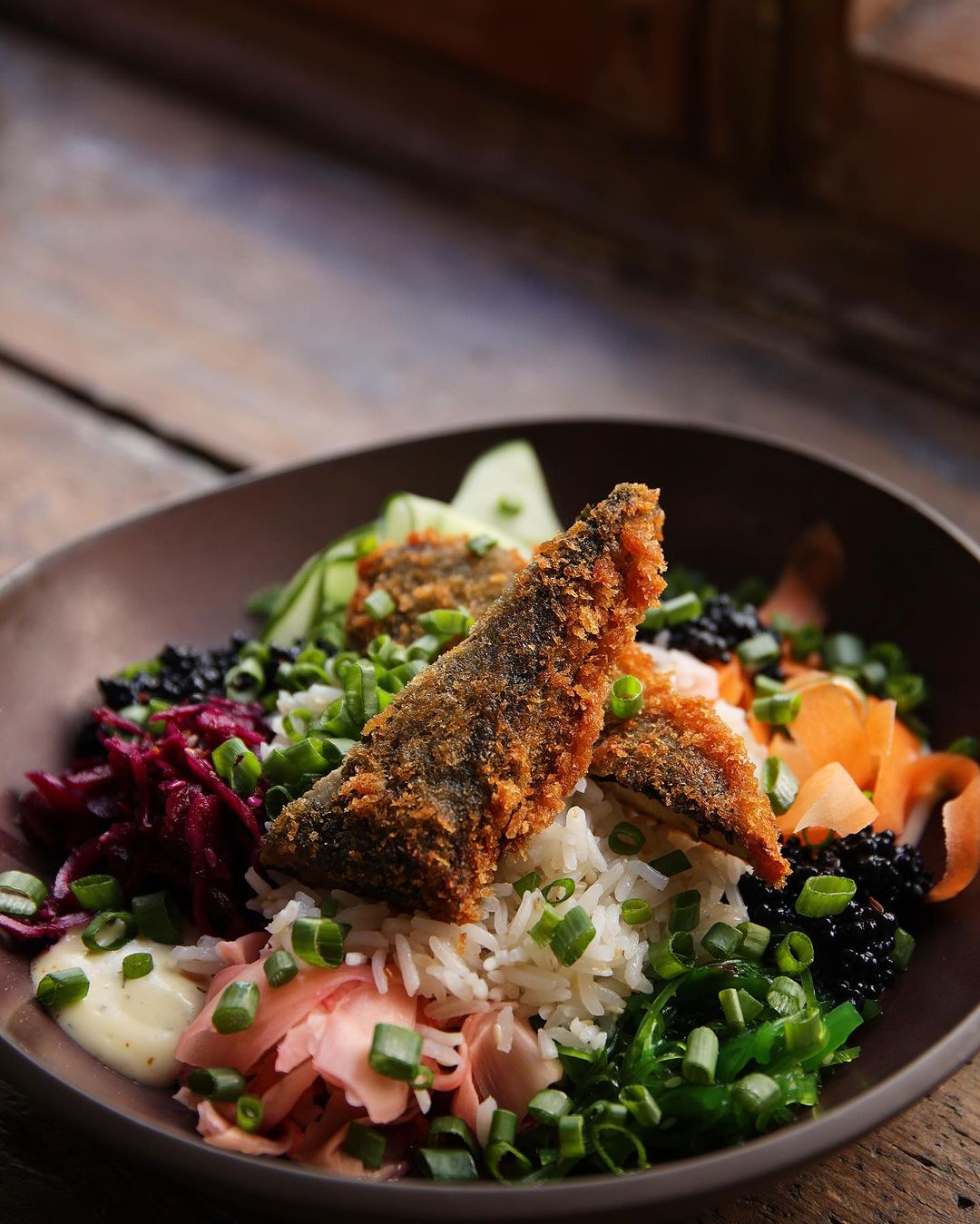
The crown jewel of Athens’ ever-growing roster of customizable bowl restaurants, Maepole offers an almost entirely vegetarian menu. Start with a base like sweet potato or seasoned quinoa, then add sides like mac and cheese and roasted vegetables. Top it with sauce and tofu, which is marinated in tamari and tossed in nutritional yeast to create a savoury, smoky flavour.

                                                              Maepole on March 7, 2026. (Photo/Caroline Newbern)

Mannaweenta

Praised as one of the best international restaurants in town, this Ethiopian and Eritrean spot serves vegan plates that come with atakilt alicha (seasoned carrots, cabbage, onions, tomatoes and potatoes), ater alicha (yellow split pea soup with onions, fresh tomatoes and jalapeno peppers) and okra wot (okra stew). Mannaweenta also serves lentil soup, injera and vegan cookies.

Taste of India

This East Side restaurant offers over a dozen vegan and vegetarian entrees, appetizers and sides. Try vegetable samosas or pakoras, curry with veggies or tofu, or plant-based specialties like amritsari chana, stewed Punjabi-style chickpeas cooked in tomato sauce. Taste of India also has an entirely vegan menu available upon request. 

Taqueria Tsunami

This Latin Asian fusion restaurant serves vegetarian tacos, bowls and small plates. Start with Korean fried cauliflower, avocado cilantro egg rolls or fried yucca, then try the Far East Bowl, South of the Border Bowl or a selection of their three meat-free tacos. 

White Tiger

This barbecue restaurant with locations in Boulevard and Watkinsville caters to the vegetarian crowd with mains like a grilled tofu sandwich, portabella cheeseburger and grilled pimento cheese. The Tofu Q Sandwich is a favourite, featuring grilled tofu, coleslaw, red barbecue sauce and field greens. You can customize it with an egg or pimento cheese, make it vegan or add sides like mac and cheese, a cup of soup or banana pudding.

https://www.redandblack.com/guides/eating-green-vegan-and-vegetarian-food-in-athens/article_abc90ee0-15ba-4d36-a6fa-7d8d256e7921.html

Thursday, February 26, 2026

Veganism in Greece: What’s it really like during ‘nistia’?

From ekathimerini.com

By 

As Lent approaches, we explore Greece’s surprisingly rich plant-based cuisine – and what it’s really like going animal-product free for 40 days 

Mention “vegan food” and “Greece” in the same sentence, and you’ll often get a raised eyebrow. For many people abroad, Greek cuisine begins and ends with souvlaki, grilled lamb, and cheese in heroic quantities. When I first moved to Athens in 2010 as a card-carrying vegetarian, friends back home were genuinely concerned. “What are you going to eat?” they fretted, as if I were heading into some culinary wilderness where meat skewers roamed free and vegetables were rare sightings.

The reality, of course, is very different. I quickly discovered that Greece is one of the easiest places in Europe to eat well without meat. Even before you get to the myriad salads and vegetable meze, there are beans stewed in tomato sauce, lentil soups that feel like a bear hug in winter, trays of oven-roasted vegetables swimming in olive oil, “horta” (wild greens) braised and dressed with lemon, and a whole host of other meatless delights. Throw in the cheeses and the rich, creamy yogurts and, for a vegetarian at least, life is good. Really good.

But what about going fully animal product-free? What’s it really like to be vegan in Greece – not just as a visitor passing through a handful of hip neighbourhoods, but as someone trying to live, eat, and order off menus in restaurants and tavernas?

As Lent approaches and the fasting period known in Greek as “nistia” kicks in, it’s a good moment to look again at how veganism fits into Greek food culture. Because here’s the twist: for 40 days every year, Greece quietly turns into one of the most vegan-friendly places on the planet – without ever calling it that.

The secret vegan season: ‘Nistia’

If you’ve ever visited Greece in the run-up to Orthodox Easter, you may have noticed a curious thing on menus: dishes marked “nistisimo.” This label means they’re suitable for fasting. During the six-week period from Clean Monday to Easter, many Greeks avoid meat, dairy, and eggs. On Wednesdays and Fridays, even olive oil is off the table. What’s left is a naturally vegan cuisine rooted in beans, vegetables, and grains – dishes that have been part of everyday life for centuries.

In practice, this means that tavernas, bakeries, and home kitchens already know how to cook food that happens to be vegan. No one is reinventing the wheel. “Fasolada” (white bean soup) doesn’t suddenly become fashionable because someone put a leaf icon next to it on a menu. It’s just what people have always eaten when fasting. The same goes for “fakes” (lentil soup), “gigantes” (giant baked beans), “dolmadakia” (stuffed vine leaves) without meat, “briam” (vegetable casserole), and “fava” (a creamy purée of yellow split peas).

For anyone curious about trying a vegan diet, “nistia” is like a built-in safety net. You can walk into a perfectly ordinary neighbourhood taverna, ask what’s fasting-friendly – with the magic phrase “nistisimo einai?” – and be met with a list of dishes that are already tried, tested, and satisfying, including a whole category of naturally plant-based food called “ladera” (vegetables cooked in olive oil). These hearty dishes sit quietly on the menu, overshadowed by fancy grills and roasts, but once you start looking for them, they’re everywhere. No awkward substitutions, no eye-rolling from the kitchen. You’re just eating food that happens to fit the rules of the season.

Besides, eating this way changes how you order. Instead of a main and a couple of sides, you end up sharing a “pikilia” (assortment) of small dishes, dipping bread into sauces, discovering flavours you might otherwise skip in favour of something meaty. It’s a slower, more social, more Greek way of eating.

To learn more about the delicious vegan food options served throughout the year at just about every taverna in Greece, click here.

                          A vegan twist on a Greek classic: meat-free souvlaki, using jackfruit. [Shutterstock]


Not just a fad: Greece and the global vegan boom

This isn’t just anecdotal. According to recent findings by the UK-based Vegan Society, Greece ranks among the world’s top countries for vegan dining options per capita – 218.12 vegan dining options per million people, placing it tenth worldwide. That’s a pretty impressive statistic, especially when you consider that only two percent of Greeks identify as vegan and four percent as vegetarian – figures comparable to Germany, the UK, and the US.

You could argue that part of this is down to tourism. Visitors increasingly expect plant-based options, and restaurants have adapted. Another part of it is down to urban food culture, with vegan cafés and bakeries opening in Athens, Thessaloniki, and other cities. Drawing on 2025 data from restaurant platform HappyCow, Greece records 2,260 vegan dining listings, according to the Veganism Around the World 2025 report – on par with Sweden.

But the main reason comes from the fact that Greek cuisine already had a deep repertoire of animal product-free dishes long before anyone started using the word “vegan” – a term that was first coined in 1944 by animal-rights advocates Donald and Dorothy Watson, co-founders of The Vegan Society.

In other words, the country didn’t need to invent a new way of eating to accommodate the trend. It just had to dust off what was already there, and in some cases, repackage it for a new, more ethically conscious audience.

‘We’ll make you lamb’: Old assumptions die hard

Still, cultural habits die hard. There’s a wonderful line in the 2002 rom com “My Big Fat Greek Wedding” that captures the generational mindset perfectly. When the deliciously theatrical Greek Aunt Voula hears that the non-Greek fiancé Ian Miller “don’t eat meat” – cue shocked looks from the extended family – she beams: “That’s okay. I make lamb.”

If you’ve spent any time around older Greeks, you’ll recognize this logic. The idea of not eating meat can feel a bit … counterintuitive. Food is love here, and love is often expressed through generous portions of whatever the cook considers “proper” food. For many people of the Golden Generation – those who experienced extreme hardship and famine during World War II and its immediate aftermath – that still means meat on the table.

And yet, there’s a funny moment that often follows these conversations. You explain that you don’t eat animal products. Someone frowns, shakes their head, and says it must be impossible in Greece. Then, a few minutes later, they start listing what you can eat. “Fasolakia” (green beans). “Arakas” (green pea stew). “Spanakorizo” (spinach and rice). Okra in tomato sauce. Fried zucchini. “Imam Bayildi” (baked eggplants with tomato and olive oil. “Gemista” (stuffed vegetables – usually tomatoes and/or peppers) – without mince. At some point, it dawns on everyone in the room that they’ve been cooking vegan food their whole lives – they just never thought of it that way.

Not a new idea: Plant-based eating in ancient Greece

The idea that avoiding animal products is some modern import doesn’t hold up well when you scratch away at Greece’s ancient history. Long before the birth of Christianity, certain philosophical and religious groups promoted forms of veganism based on the grounds of social justice and ethics. The followers of the Greek mathematician and philosopher Pythagoras (c. 570-495 BC), for example, believed that eating animals was morally problematic, tied to ideas about the soul and reincarnation. The Pythagoreans also shunned the sacrifice of animals and the ritual offering of meat to the gods, believing it was unnecessary to inflict pain and suffering on another sentient being.

A similar group, the Orphics, who based their beliefs around the myth of Dionysus, also practiced dietary restrictions as part of a wider spiritual worldview. An ascetic sect based on the mythical poet Orpheus, whose views mirrored elements of Pythagoreanism, adhered to a strict vegetarian diet that even excluded broad beans, believing they contained the souls of the dead.

Of course, this doesn’t mean ancient Greeks were vegans in the modern sense. However, it does mean that debates about what humans should or shouldn’t eat are hardly new here. The tension between indulgence and restraint, between feasting and fasting, runs through Greek culture from antiquity to Orthodox Christianity and into the present day.

Seen in that light, today’s interest in veganism feels less like a radical break and more like another turn of a very old conversation.

Plant-based alternatives to meat, cheese, yogurt and milk are becoming increasingly available at Greek supermarkets. [Shutterstock]

Supermarkets have changed (a lot)

One area where things really have shifted in the last decade is the supermarket aisle. When I first arrived in Greece, finding anything labeled “vegan” felt like a small victory. Things like tahini, humus, pasta, and legumes in all their glorious forms were easy, of course, but anything resembling a plant-based alternative to cheese, yogurt, or milk was rare.

That’s no longer the case. Oat milk, almond milk, soy yogurt, vegan spreads, and items like tofu and soya burgers have become part of the mainstream grocery shop, especially in cities. Some of these products feel a bit imported in spirit – think meatless deli slices and substitute bacon (aka “facon”) – borrowing more from northern European food trends than Greek ones. Others are simply modern takes on ingredients that Greeks already love, like chickpeas, lentils, mushrooms, and sesame.

What’s interesting is how these newer products sit alongside the traditional fasting foods. A packet of vegan “feta” might catch your eye, but right next to it are a whole host of legumes that your yiayia would recognize instantly. One feels like a trend. The other feels like continuity.

Click here to find out more about the various ranges of vegan products in Greece.

Fresh fruits and vegetables galore. If you want to try veganism in Greece, even just for 40 days, you’re spoilt for choice. [Shutterstock]

So, is Greece a good place to be vegan?

The honest answer is yes – albeit with a small caveat. Greece isn’t uniformly vegan-friendly in the way that some northern European capitals now are. You won’t always find a dedicated plant-based menu in a mountain village, and you may still get the occasional confused look if you explain that you don’t eat cheese. But you will almost always find something good to eat, especially if you’re willing to meet the cuisine where it already is.

There’s something quietly refreshing about eating vegan food in a culture that doesn’t feel the need to label everything. During “nistia,” plant-based dishes aren’t marketed as lifestyle choices or moral statements. They’re just part of the rhythm of the year, deeply rooted in Greece’s Orthodox Christian heritage. You eat this way for a while, then you don’t. The food remains.

Maybe that’s the real lesson here. Veganism in Greece doesn’t have to be a conspicuous display of identity. It can simply be a way of eating that fits, comfortably, into traditions that are older than the word itself.

So, whether you’re vegan for life, for Lent, or just curious about trying something different at the taverna, Greece is a surprisingly easy place to do it well.

Kali Sarakosti.

https://www.ekathimerini.com/leisure/gastronomy/1296259/veganism-in-greece-whats-it-really-like-during-nistia/

Thursday, February 19, 2026

UK Unites Ireland, Switzerland, Australia, Canada, Netherlands, Austria, and More to Propel Greece Into the Global Spotlight as a Leading Vegan Dining Destination

From travelandtourworld.com 

The UK, along with Ireland, Switzerland, Australia, Canada, the Netherlands, Austria, and several other countries, has helped propel Greece into the global spotlight as a leading vegan dining destination. According to the 2025 “Veganism Around the World” report by The Vegan Society, Greece now ranks among the top 10 countries for vegan dining options per capita. This rise can be attributed to the increasing demand for plant-based options, fuelled by both local and international travellers seeking more sustainable and health-conscious dining experiences. Greece’s rich culinary heritage, combined with its growing selection of vegan restaurants and plant-based offerings, has allowed it to stand out on the global stage, reflecting a broader global movement towards more sustainable and ethical food choices. The country’s achievement highlights the success of global collaborations and shifting consumer preferences that have reshaped the world’s dining landscape.

Greece has earned a prominent position in the global vegan dining scene, ranking among the top 10 countries for vegan dining options per capita. According to the 2025 “Veganism Around the World” report by The Vegan Society, a UK-based educational organization, Greece stands out with a significant number of vegan dining choices relative to its population size. This places Greece as a competitive force in the global food and tourism landscape, reflecting the rising demand for plant-based options in the country.

The report, which analyses trends in veganism and plant-based lifestyles across the globe, draws on data from the widely used restaurant platform HappyCow. It evaluates countries based on the density of vegan restaurants, vegetarian establishments, and venues offering vegan options, measuring these figures in relation to population size. Greece, with 218.12 vegan dining options per million people, ranks tenth worldwide, demonstrating the country’s commitment to meeting the needs of plant-based diners. This impressive ranking highlights the growing availability of vegan dining experiences, a trend that is reshaping food cultures worldwide.

In global terms, New Zealand tops the list with 344.81 vegan dining options per million people, followed closely by Australia and the United Kingdom. These countries are at the forefront of the plant-based dining movement, offering a wealth of choices for vegans. Greece, with its rank in the top 10, is positioned alongside countries like Cyprus, Austria, Switzerland, Portugal, Ireland, and the Netherlands, which have also made significant strides in expanding vegan options within their borders.

Greece’s achievement in providing a substantial number of vegan dining choices is particularly noteworthy considering its size and population. The country boasts 2,260 vegan dining listings, an impressive figure that stands out within the context of its population. This number reflects a commitment to meeting the growing demand for plant-based options, positioning Greece as a key player in the global plant-based food scene. These vegan dining options are spread across a range of establishments, from fully vegan restaurants to vegetarian eateries and venues offering vegan alternatives on their menus, providing a diverse range of choices for those who follow a plant-based diet.

                                                                                                                 Image generated with Ai

One factor contributing to Greece’s success in this area is the country’s long-standing culinary tradition of plant-based dishes. Greek cuisine has long been characterized by an abundance of fruits, vegetables, legumes, and grains, which form the foundation of many traditional meals. This emphasis on fresh, local ingredients has made it easier for Greece to transition into the plant-based dining movement, as many of the core components of Greek cuisine already align with vegan dietary preferences. This makes the country an attractive destination for vegan travellers seeking authentic local experiences that cater to their dietary choices.

The rapid expansion of vegan dining options in Greece has been driven by increasing awareness of plant-based lifestyles, both locally and globally. As more people adopt veganism for health, ethical, and environmental reasons, there has been a corresponding rise in demand for vegan dining options. Greece has responded to this trend by expanding its vegan offerings, providing more choices for both locals and tourists. In urban centers like Athens, Thessaloniki, and Crete, the proliferation of vegan-friendly eateries has been particularly noticeable. This growth is not limited to traditional vegan restaurants but also includes mainstream dining venues that now offer vegan menus or have dedicated vegan sections to cater to a diverse clientele.

Interestingly, the rise in vegan dining options contrasts with relatively moderate levels of vegan identification among the Greek population. According to the report, only 2% of Greeks identify as vegan, while 4% are vegetarian. These figures are relatively low compared to other countries with strong vegan movements, such as Germany, the United Kingdom, and the United States. However, this moderate level of vegan identification does not seem to have hindered the country’s progress in developing a robust vegan dining scene. Instead, it reflects a broader shift in consumer preferences, where people may not necessarily identify as vegan but are increasingly seeking out plant-based options due to their health benefits or ethical considerations.

Globally, the United States leads in total vegan dining listings, with 47,845 options, followed by the United Kingdom, Germany, Australia, Spain, Italy, Canada, France, and the Netherlands. These countries have seen significant growth in vegan dining establishments, driven by both local demand and the increasing number of international travelers seeking plant-based options. The rise of veganism as a mainstream lifestyle choice has been fueled by growing awareness of the environmental impact of animal agriculture, as well as a greater emphasis on sustainable, health-conscious eating habits.

The global growth of vegan dining has also been influenced by the tourism sector. As more travelers seek out destinations that cater to plant-based diets, countries like Greece, which have embraced this trend, stand to benefit. The growing number of vegan dining options is not only meeting the needs of local residents but is also attracting international visitors who are looking for destinations with a wide range of plant-based food offerings. This has led to an increase in vegan-friendly tourism, with destinations like Greece offering vegan food tours, cooking classes, and other experiences designed to showcase the country’s plant-based culinary scene.

The UK, along with countries like Ireland, Switzerland, Australia, Canada, the Netherlands, and Austria, has helped elevate Greece into the global spotlight as a top vegan dining destination. This rise is driven by increasing demand for plant-based options and Greece’s expanding vegan-friendly culinary scene, making it a leader in global rankings.

Greece’s position among the top 10 countries for vegan dining options per capita is a testament to the country’s growing commitment to plant-based dining. With a solid number of vegan dining listings, a strong culinary tradition of plant-based ingredients, and an increasing demand for plant-based options, Greece has become a leading destination for vegan travellers. The country’s embrace of the vegan movement reflects broader global trends, as more people seek sustainable, ethical, and health-conscious food choices. As the demand for plant-based dining continues to rise, Greece is well-positioned to remain a key player in the global vegan food scene, offering a diverse array of dining options for both locals and visitors alike.

https://www.travelandtourworld.com/news/article/uk-unites-ireland-switzerland-australia-canada-netherlands-austria-and-more-to-propel-greece-into-the-global-spotlight-as-a-leading-vegan-dining-destination-in-the-top-ten/

Friday, December 5, 2025

HappyCow’s 2025 List Names Asante as the World’s Best Vegan Restaurant

From vegconomist.com

Barcelona’s Asante has been named the world’s top vegan restaurant in HappyCow’s 2025 Global Vegan Restaurant rankings. The list, which evaluates 81 vegan restaurants worldwide, is based on a detailed analysis of millions of user reviews. Asante, which holds the highest reliability score in the rankings, topped the list for its consistency and quality across a wide volume of feedback. 

Decentralization in vegan dining

The rankings reflect a broader trend of decentralization in the global vegan dining scene, with top-rated establishments appearing increasingly outside major cities. This shift is evident in cities such as Cardiff and Bristol in the UK, and Kyoto in Japan, where high-quality vegan restaurants are thriving in smaller communities. Athens, Greece, also emerged as a key player, hosting the highest concentration of top-rated vegan restaurants, further underscoring its growing reputation as a vegan hotspot.

Claudia Torres, the new owner of HappyCow, noted the importance of authentic user reviews in maintaining the platform’s credibility. “Authentic reviews are crucial as they provide genuine insights and confirm that vegan options are truly available. Our community plays an essential role in ensuring that these venues continue to meet high standards,” Torres stated.

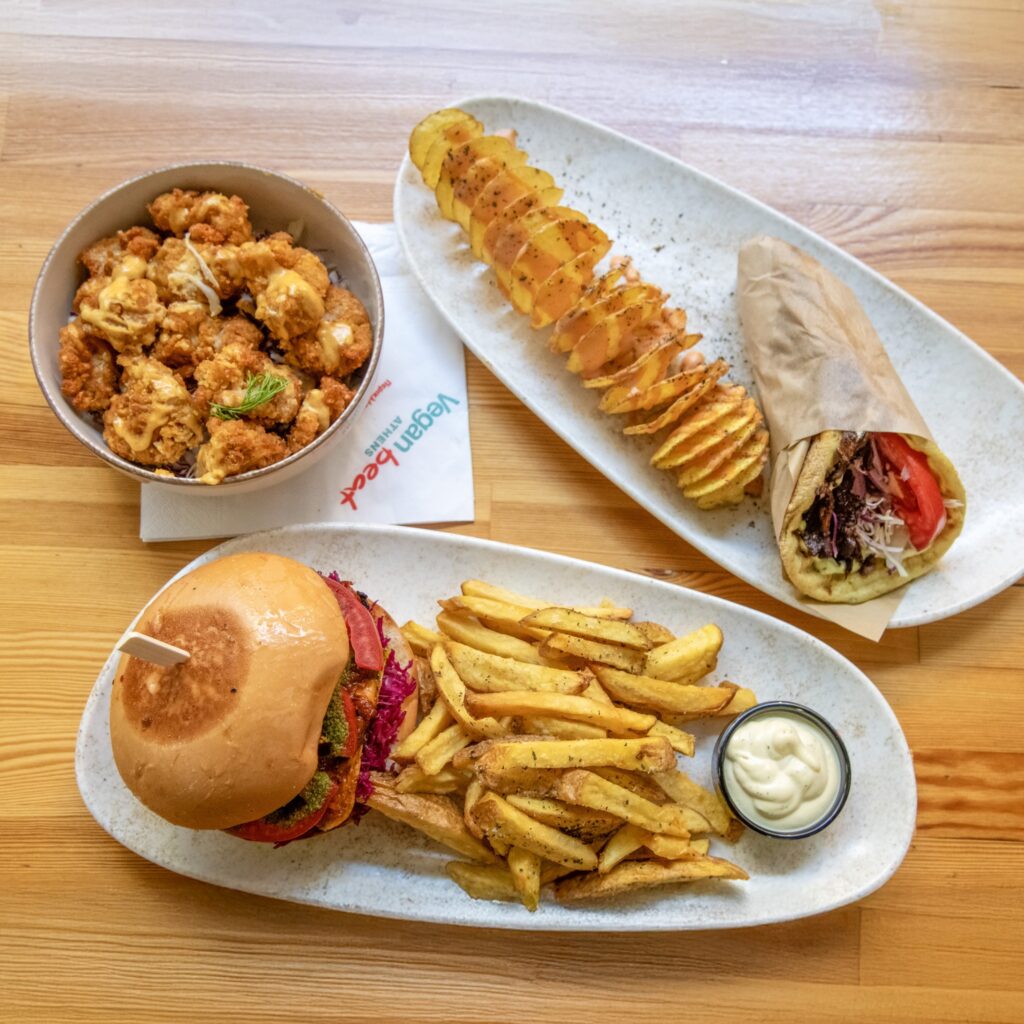
Vegan Beat
© Vegan Beat

The 2025 rankings were determined using a unique algorithm that takes into account the volume and consistency of reviews, as well as their recency. This method helps ensure that the list highlights not just newly popular spots but also those with long-term, reliable quality.

Athens rises as a vegan capital

The emergence of vegan dining hotspots in cities like Athens, which houses the most-reviewed restaurant on the list—Vegan Beat—indicates the growing global influence of plant-based cuisine. Vegan Beat, with over 1,000 reviews, exemplifies the city’s vibrant vegan scene. In total, Athens placed three restaurants in the top 81, solidifying its status as a centre of vegan excellence.

In terms of regional representation, the United States leads the list with 19 restaurants, followed by the UK with 11. However, a notable trend in the UK is the dominance of small towns like Cwmbran, Shrewsbury, and Wakefield, where high-quality vegan eateries are making an impact.

Saido
© Saido

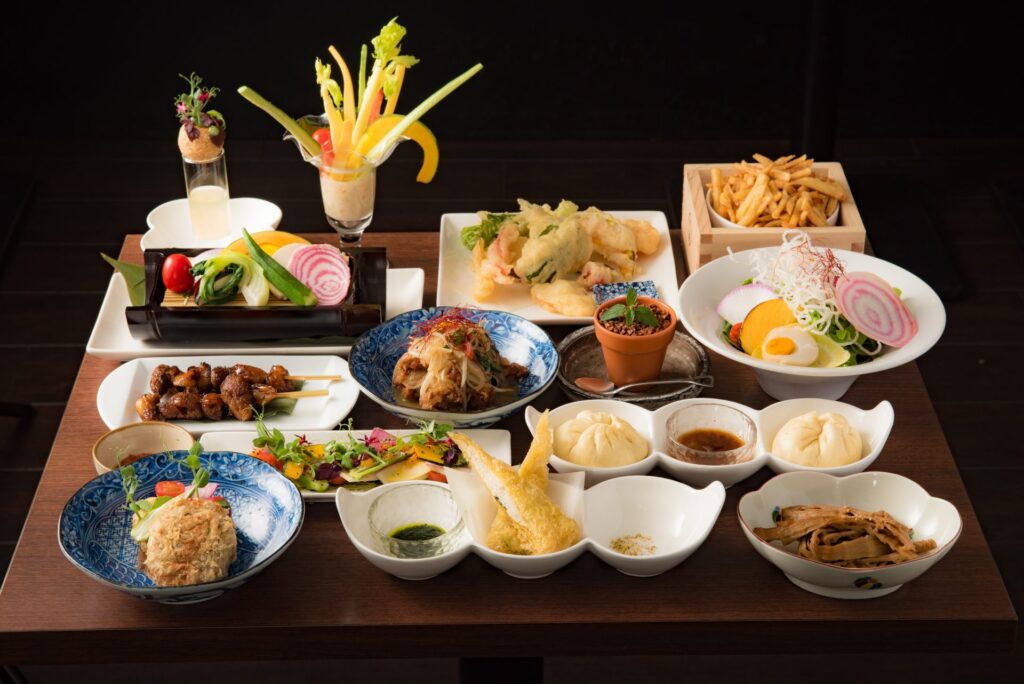
Restaurants in the list span a range of dining styles, from high-end Japanese vegan cuisine at Saido in Tokyo to casual street food at places like Hoi Banh My Chay in Vietnam. This diversity reflects the broadening appeal of vegan food, which is no longer confined to fine dining but increasingly seen in casual and fast-casual formats as well.

Expanding beyond restaurant listings

This year’s rankings are the first major announcement since HappyCow was acquired by Claudia Torres a few months ago. Under her leadership, the platform is undergoing a technological overhaul, with plans to expand its offerings beyond restaurant listings to include eco-hotels, organic stores, and other plant-based lifestyle resources.

The 2025 list also reveals the continuing global spread of vegan cuisine, with high-ranking venues in diverse countries, including Vietnam, Mexico, and Portugal. The growing prominence of vegan dining in unexpected locations suggests that the vegan movement is becoming more deeply integrated into the global culinary landscape.


https://vegconomist.com/gastronomy-food-service/food-service/happycows-2025-list-names-asante-worlds-best-vegan-restaurant/

Tuesday, May 27, 2025

‘I Stayed In A Plant-Based Hotel In Greece – Here’s What It Was Like’

From plantbasednews.org

If you're jetting off to Rhodes this summer, check out this fully plant-based hotel 

Nicole Whittle, the creator behind the Vegan Beauty Girl YouTube channel, recently stayed at Açai Boutique Hotel in Rhodes, Greece – a 100 percent plant-based hotel that just opened its doors for a soft launch. In her week-long visit, Whittle explored everything from the food and amenities to the hotel’s sustainability credentials and local activities.

Whittle stayed in the Flower Suite, which came with a kitchenette, sea view, smart TV, and a complimentary beach bag with towels. The bathroom was stocked with vegan toiletries and the entire hotel – down to the paint on the walls and the detergent used – is said to be cruelty-free.

Açai Boutique also uses solar panels, collects rainwater for cleaning and watering plants, and even repurposes coffee grounds from breakfast to nourish the trees. “It is one of those businesses just built with [sustainability] in mind,” she explains.

Nicole Whittle (known online as Vegan Beauty Girl) recently stayed in a fully vegan hotel in Rhodes - Media Credit: YouTube/Vegan Beauty Girl

Vegan food all day, every day

Whittle opted for the half-board package, which included breakfast and dinner. Breakfast featured a huge spread: juices, salads, fresh fruit, warm breads, almond and coconut milk, and even items like pancakes and sweet potatoes.

Dinner was à la carte and began with olive oil and bread, followed by salads, starters, mains, and dessert – all vegan, including the wine menu. She particularly loved the sundried tomato gnocchi and noted that the spinach served was “the best spinach she’s ever tasted.”

On one day, Whittle also opted for brunch, which is not included in the half-board plan but available from 11am to 2:30pm. She chose the tofu scramble, while her boyfriend went for the gyros wrap.

A cooking class added another layer to the experience. For around €40 per person, guests can learn how to prepare traditional Greek stuffed vegetables – and enjoy a wine tasting.

Activities and atmosphere

Stuffed vegetables as part of a cooking class in a Acai Boutique Hotel review by Nicole Whittle
YouTube/Vegan Beauty GirlHotel activities included a cooking class

The hotel offers morning yoga with a sea view, which Whittle found relaxing and well-paced. When the weather improved, she took a walk into Rhodes Old Town. Later, she tried water sports with Gabriel’s – an inflatable UFO ride that she described as “so much fun.”

While Açai Boutique doesn’t have a pool, it’s just a five-minute walk to the beach. Unlike its sister hotel, Goji (which does have a pool but doesn’t allow children), Açai is family-friendly – though currently geared toward kids over four, as it lacks high chairs and cribs. Whittle notes that sun loungers will soon be added to the rooftop, which is adult-only.

“The staff and the vibe [are] very nice,” she says, adding that “a lot of the staff are also vegan or vegetarian.” She notes that the food leans toward whole-food plant-based, with minimal use of mock meats, aside from a feta alternative – something she appreciated in Greece.

Whittle describes the hotel as a “very special experience,” adding: “I’ve really enjoyed the stay here, really loved it.” For vegan travellers looking for authenticity, attention to detail, and an eco-conscious stay, Açai Boutique appears to deliver on all fronts.

You can find more plant-based travel and lifestyle content on the Vegan Beauty Girl YouTube channel.

https://plantbasednews.org/lifestyle/travel/plant-based-hotel-greece/

Friday, October 6, 2023

Don’t Go to Europe Without Trying These 11 Vegan Restaurants

From vegnews.com

Europe is the ultimate vegan vacation destination, and these restaurants are the proof

Europe has so much to offer. If you know where to look, this continent is teeming with history, culture, nightlife, art, beautiful scenery, and, it turns out, lots of great vegan food, too. Whether you’re heading inland to cities like Berlin, Germany or you’re off to the coast to see Athens, Greece, there is plenty of delicious plant-based food waiting for you. Here, we’ve gathered just a handful of top picks to get you started, but it’s important to note this is just the tip of the iceberg when it comes to the European vegan scene. Get your stomachs ready, and let’s go. 

Is Europe vegan-friendly?

Much of European cuisine is meat- and cheese-heavy, there’s no denying it. But things are starting to change. In 2022, one study by French research company OpinionWay and the Good Food Institute found that meat consumption is falling across the continent. The researchers interviewed more than 4,000 adults across Italy, Spain, Germany, and France, and found that more than 50 percent had reduced their meat consumption in the last five years.

The findings built on a previous study, conducted in 2021, which was carried out by ProVeg International and Innova Market Insights. The research involved more than 7,500 participants from 10 European countries, including the UK, Poland, Spain, Italy, and Romania, and concluded that moving away from meat is Europe’s “new normal.”

Another study by the vegan restaurant directory Happy Cow suggests that these diet changes may be translating into the dining scene. In 2022, it revealed that the vegan restaurant count in Europe had jumped up 25 percent from 2019—from 2,600 to 3,400.

The best vegan restaurants in Europe

As mentioned above, there are literally thousands of restaurants across Europe, so when you’re booking a trip, we encourage you to do your own research, too. Not that you need us to tell you that—the vegan restaurant search is arguably the best part of getting ready for vacation. But to help you out with your quest for delicious animal-free food, we’ve listed some of the best places to check out if you’re heading to the continent soon. Warning: it *might* make you want to book extra transport so you can explore more places. Sorry, not sorry.

VegNews.veganrestuarantseurope.gauthiersohoGauthier Soho

1Gauthier Soho

London, United Kingdom

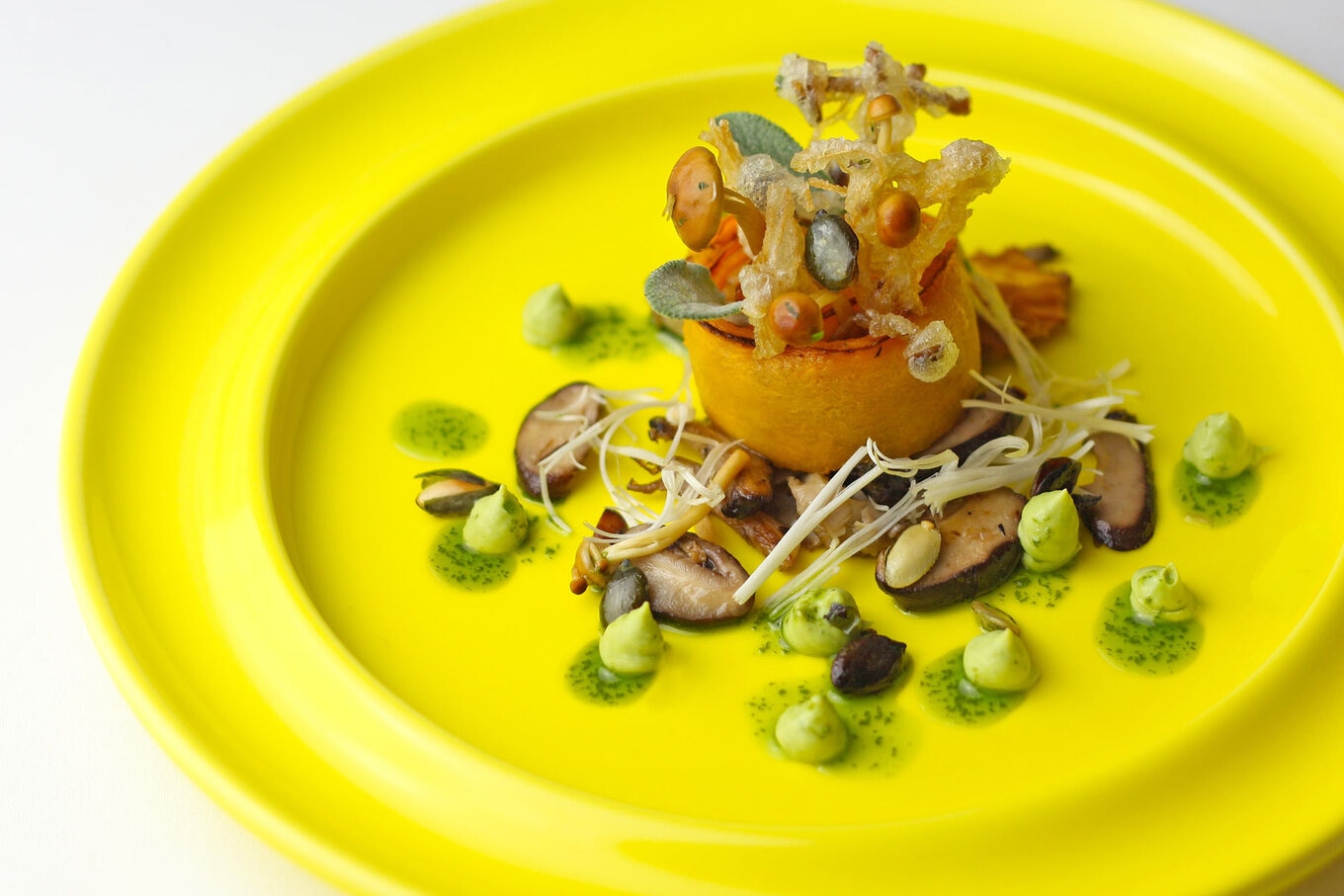
London has a thriving vegan scene (you can find more restaurant recommendations for the UK’s capital here!), but if you’re feeling fancy, Gauthier Soho is well worth your time and money. Run by Alexis Gauthier, this upmarket eatery hasn’t always been vegan, but in 2021 the Michelin-starred chef decided it was time to stop profiting from “selling dead animals,” and transformed his entire menu. The offering changes with the seasons, but at the time of writing, you can choose from options like Butternut Rose, Quinoa, Sage, and Sauteed Mushrooms in a Light Turmeric Sauce and Corn and Blackberries, Marinated Tempeh, Popcorn, and Corn Velouté.
CHECK IT OUT

VegNews.veganrestaurantseurope.luckyleekLucky Leek

2Lucky Leek

Berlin, Germany

You’re certainly not short of plant-based options in Berlin, Germany’s vibrant and unique capital city. But if you’re looking for an elevated, fine-dining experience, head to one of its most renowned plant-based restaurants, Lucky Leek. The eatery has even received a seal of approval from the Michelin Guide in the form of its Bib Gourmand award, which recognizes “good quality, good value cooking.”
CHECK IT OUT

VegNews.veganrestaurantseurope.lebotanisteLe Botaniste

3Le Botaniste

Ghent, Belgium

Like much of Europe, Belgium’s traditional dishes (beef stew, stewed eel, and so on) are not vegan-friendly. But at Le Botaniste, you can find some of the best organic, plant-based, and carbon-neutral cuisine this country has to offer. Located in Ghent, Belgium’s port city capital, the menu includes dishes inspired by places all over the globe, including Moroccan vegetable tagine, Italian pasta bolognese, and Japanese sushi rolls.
CHECK IT OUT

VegNews.veganrestaurantseuropeLe Potager de Charlotte

4Le Potager de Charlotte

Paris, France

A few years ago, you’d have struggled to find vegan food in Paris, France’s capital certainly loves butter, cheese, cream, and meat—you get the gist. But things are changing, and the vegan scene is starting to pick up (for more on this, check out our Paris guide here!). For proof of that, head to Le Potager de Charlotte, which offers fresh, organic, locally sourced vegan cuisine. It has two locations, in the 9th and 17th districts, and its offering includes dishes like sesame marinated tofu, roasted eggplant, and rigatoni with “ancient tomatoes.”
CHECK IT OUT

VegNews.veganrestauranteurope.romeowcatbistrotRomeow Cat Bistrot

5Romeow Cat Bistrot

Rome, Italy

You know how the saying goes. When in Rome… eat vegan food, especially if you’re close to Romeow Cat Bistrot. Because what’s better than eating delicious, vegan dishes and sipping on cruelty-free cocktails? Doing all of that, in Italy, with a cat sitting at your feet? Unbeatable.
CHECK IT OUT

VegNews.veganrestaurantseurope.veganfoodprojectVegan Food Project

626 Vegan Food Project

Lisbon, Portugal

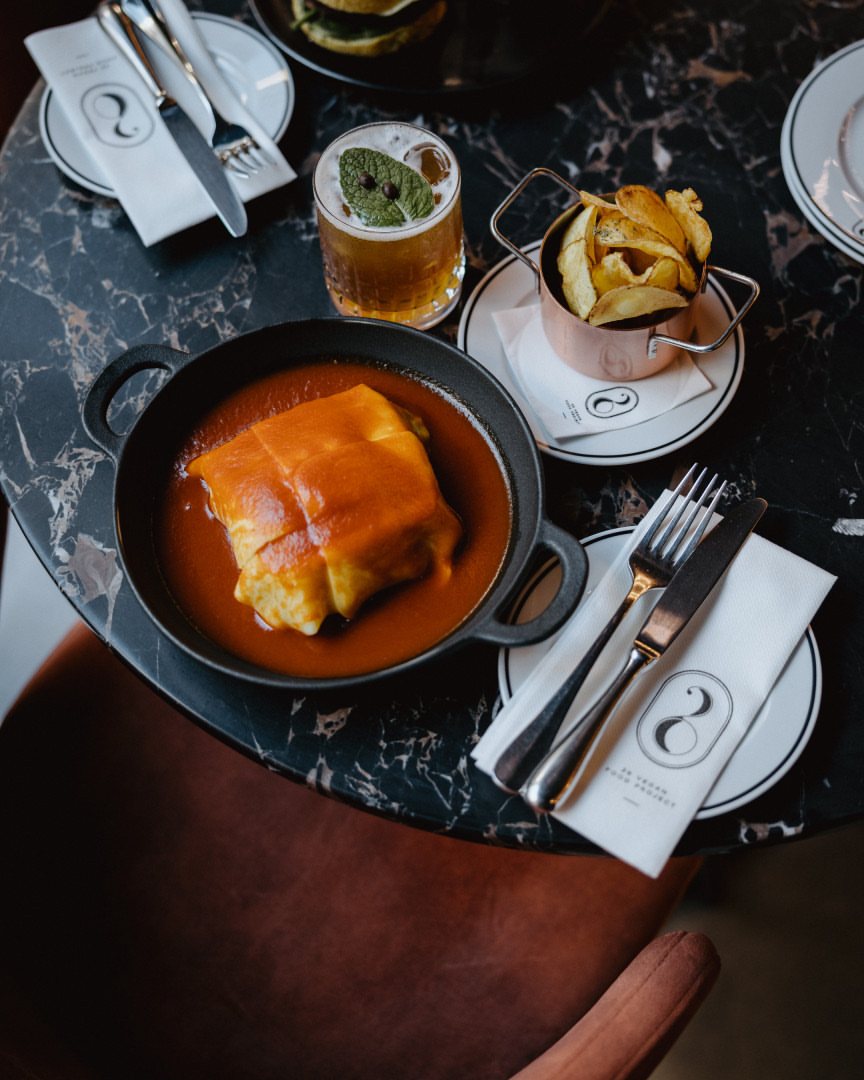
In 2022, Lisbon was identified as having major growth potential in terms of its vegan restaurant scene, so, if you find yourself in Portugal’s stunning capital, you won’t be short of options. One of the spots that needs to be on your must-try list is the 26 Vegan Food Project. The restaurant offers several takes on traditional Portuguese food, so you can sample the local cuisine without the animal products, it’s a win-win.
CHECK IT OUT

VegNews.veganrestaurantseurope.veganrestoranVegan Restoran V

7  Vegan Restoran V

Tallinn, Estonia

Estonia might not be at the top of your European must-see list, but it should be. As well as top-notch history, beaches, and nature, this country has a few fantastic vegan eateries, too. In the capital of Tallinn, for example, you’ll find options like smoked seitan chorizo, tofish, faux gras, and much, much more, at Vegan Restoran V.
CHECK IT OUT

VegNews.veganrestauranteurope.veganjunkfoodbarVegan Junk Food Bar

8Vegan Junk Food Bar

Amsterdam, Netherlands

Sometimes, you want something elegant, refined, and a little bit fancy. And other times, you want junk. If you’re in the latter mood, Amsterdam’s Vegan Junk Food Bar has you covered (it also has locations in Barcelona, Spain, Cologne, Germany, and Rotterdam, Netherlands, too, if you need more vegan junk food action). Choose from options like Loaded Freak Fries, juicy burgers, sharing nachos, indulgent desserts, and much more.
CHECK IT OUT


VegNews.veganrestauranteurope.krowarzywaKrowarzywa

9Krowarzywa

Krakow, Poland

The medieval city of Krakow in southern Poland isn’t short of history or beautiful architecture. And its vegan food offering is pretty good, too. After you’ve toured the Rynek Główny (Krakow’s picturesque main market square), head to Krowarzywa for some vegan burger goodness. Choose from patties made from a variety of vegan meats, including chicken, pastrami, fish, and meatballs, or treat yourself to a seitan kebab—either way, you won’t be disappointed. Krowarzywa is a small plant-based chain with several other locations across Poland. You’ll also find it in cities like Gdańsk, Warsaw, and Szczecin.
CHECK IT OUT

VegNews.veganrestauranteurope.thelalaThe Lala

10The Lala

Vienna, Austria

If you’re in Vienna from California and you’re missing home, head to The Lala for a slice of Californian goodness. Founded with a view to bringing a little bit of Los Angeles into Austria, the menu includes several nutritious and flavour-packed salads (including the Beach Body Booster), as well as dishes like the Hollywood Hills Fresh Roundies, which comes with tempeh, spinach, tomatoes, crispy chickpeas, hummus, and more.
CHECK IT OUT

VegNews.veganeuroperestaurants.veganbeatathensVegan Beat

11Vegan Beat

Athens, Greece

Athens has a thriving restaurant scene, sure. But some of the best food in the Greek capital can be found on its streets. And with Vegan Beat, you can experience the best of this cuisine all with totally plant-based ingredients. Choose from options like vegan gyros, lahmacun, burgers, and sweet banoffee pie.
CHECK IT OUT

https://vegnews.com/vegan-travel/europe-vegan-restaurants