Showing posts with label business trends. Show all posts

Monday, June 1, 2026

Vegan confectionery market set for global rise, led by chocolate innovations

From confectioneryproduction.com/news

A sustained period of growth for the global vegan confectionery sector has been projected by fresh research, which has asserted the $2 billion market is set to reach $3.4bn by 2032, writes Neill Barston.

The analysis, from Persistence Market Research, explored key markets in dairy-free chocolates, candies ands baked snacks segments, and found continued pattern of demand for products around the globe.

As its authors noted, the expansion, put at an above inflation CAGR of 7.9% has been driven by an increasing adoption of vegan diets, rising awareness of sustainability, and continuous innovation in dairy-free chocolates, candies, and baked treats.

Läderach has gained traction with its delivery of premium fresh vegan chocolate collection featuring cashew milk and coconut blossom sugar, which it has continued to build on recent years. Pic: Laderach

Chocolate accounts for some 45% of the category and continues to be a dominant force, with gummy ranges also enjoying popularity on an international level.

Notably, as a category, as Confectionery Production has reported in recent years, there has been greater prominence and acceptance of vegan, and vegetarian-based product ranges across the food sector, which has also been reflected in sweets and snacks markets.

As previously covered, the UK’s Plamil Foods, which is due to be represented at our World Confectionery Conference in London on 10 September, has remained a significant pioneer in the sector, offering confectionery manufacturers options for chocolate ranges that are made to vegan production standards that it has delivered with its own brands, as well as on a private label basis.

However, as the business highlighted, it has still remained the case that major supermarkets in Britain particularly, have yet to fully embrace the prospect for vegan ranges – with shopping aisles in many instances limited to small sections, or often given non-premium shelf areas.

Despite such factors, the market continues to experience steady growth, with Plamil introducing a World Vegan Chocolate Day, and a number of other brands springing up in the region, including Nomo, Vego, Ombar, Love Raw, as well as brands such as Hotel Chocolat and Laderach (main image) having  engaging in producing vegan-friendly options for chocolate fans.

Furthermore, the latest industry study on the market noted that confectionery offers consumers indulgent options with reduced cholesterol and improved ingredient transparency, aligning with modern dietary preferences.

Market dynamics reflect strong product launches, expanding retail presence, and growing investments by both established players and emerging brands.

The growing global shift toward plant-based diets is a primary driver of the vegan confectionery market. Consumers are increasingly adopting vegan or flexitarian lifestyles due to concerns about health, animal welfare, and environmental sustainability.

In addition, the study found that plant-based options have often been seen as a valuable option for those with specific dietary requirements, with the quality of these ranges having increased notably in recent years. The market study also noted a  rise in lifestyle-related disorders has further accelerated demand for clean-label and minimally processed foods.

As regards innovation within the sector, the research found that product formulation advances was having a transformative effect on the market across the world. This included the use of oat milk, and coconut derivatives to replicate the texture and flavour of traditional dairy-based sweets. 

The chocolate segment dominates the market, accounting for a substantial share due to high demand for vegan chocolate bars, truffles, and spreads. Companies are introducing premium and artisanal offerings with functional ingredients such as nuts, superfoods, and natural sweeteners to differentiate their portfolios.

Notably, the study found that product launches have accelerated across global markets, with major brands introducing plant-based versions of popular confectionery products. This wave of innovation is supported by increasing R&D investments aimed at enhancing shelf life, taste, and nutritional value.

Another key trend is the growth of organic vegan confectionery, driven by consumer preference for pesticide-free and ethically sourced ingredients. This segment is witnessing faster growth compared to conventional products, reflecting the broader clean-label movement.

https://www.confectioneryproduction.com/news/57961/vegan-confectionery-market-set-for-global-rise-led-by-chocolate-innovations/ 

Tuesday, May 19, 2026

Vegan Food Market Booms as Consumers Shift Toward Healthier and Sustainable Eating

From vocal.media

Rising health awareness, environmental concerns, and innovation in plant-based products are transforming the global vegan food industry

The global vegan food market is experiencing remarkable growth as consumers increasingly embrace healthier lifestyles, sustainable eating habits, and plant-based alternatives to traditional animal products. According to Renub Research, the vegan food market is expected to grow from US$ 19.98 billion in 2025 to US$ 43.86 billion by 2034, registering a compound annual growth rate (CAGR) of 9.13% between 2026 and 2034.

This rapid expansion reflects more than just a dietary trend. Vegan food is becoming part of a larger global movement focused on wellness, environmental responsibility, and ethical consumption. Consumers are paying closer attention to what they eat, how food is produced, and the impact food choices have on both personal health and the planet. As a result, plant-based products are moving from niche specialty items into mainstream supermarkets, restaurants, cafés, and convenience stores worldwide.

What was once associated only with strict vegan lifestyles is now attracting flexitarians, fitness-conscious consumers, environmentally aware shoppers, and people looking to reduce meat and dairy consumption without completely eliminating them. The result is a fast-evolving market fuelled by innovation, changing consumer attitudes, and expanding product availability.


Understanding the growing appeal of vegan food

Vegan food refers to products made entirely from plant-based ingredients without using any animal-derived components. Vegan diets exclude meat, fish, dairy products, eggs, and other ingredients sourced from animals. Instead, vegan food products rely on fruits, vegetables, grains, legumes, nuts, seeds, and plant-based alternatives such as soy milk, almond milk, oat milk, and meat substitutes.

Modern vegan food products are designed not only to provide nutritional value but also to mimic the taste, texture, and appearance of traditional meat and dairy products. Advances in food technology have significantly improved the quality of plant-based alternatives, making them more appealing to mainstream consumers.

The market’s popularity is strongly tied to growing awareness around health, climate change, sustainability, and animal welfare. Consumers are increasingly viewing plant-based diets as healthier and more environmentally responsible alternatives to animal-based foods. This shift is helping vegan food become one of the fastest-growing categories in the global food industry.

Health awareness is becoming a major growth driver

One of the strongest drivers behind the vegan food market is increasing consumer awareness regarding nutrition and preventive healthcare. More people are focusing on long-term wellness and adopting eating habits aimed at reducing the risk of chronic diseases such as obesity, heart disease, and high blood pressure.

Plant-based foods are widely perceived as healthier because they are rich in fiber, vitamins, antioxidants, and plant proteins while often containing lower levels of saturated fat and cholesterol compared to animal products. Health professionals and nutrition experts are also increasingly recommending plant-based diets as part of balanced and healthy lifestyles.

Fitness trends and wellness culture are further accelerating this transition. Consumers who may not identify as vegan are still choosing plant-based meals to support fitness goals, weight management, and overall well-being. The rise of social media health influencers, nutrition education, and wellness campaigns has also contributed to greater awareness around vegan food options.

Environmental awareness is often connected to these health-driven lifestyle changes. Renub Research notes that data from the United Kingdom’s Office for National Statistics showed that 86.5% of adults in Great Britain changed aspects of their lifestyle in response to environmental concerns. That shift highlights how sustainability and health awareness are increasingly influencing consumer food decisions simultaneously.

Sustainability concerns are reshaping food choices

Environmental sustainability has become one of the most powerful forces driving the vegan food industry. Many consumers are becoming increasingly aware of the environmental impact associated with meat and dairy production, including greenhouse gas emissions, water consumption, and land degradation.

Plant-based food products generally require fewer natural resources and produce lower environmental emissions compared to animal agriculture. As climate change discussions intensify globally, many consumers are adopting vegan or partially plant-based diets to reduce their environmental footprint.

Governments, environmental organizations, and advocacy groups are also encouraging sustainable food practices. This broader movement is helping vegan food transition from a lifestyle choice into a mainstream sustainability strategy.

The growing interest in sustainability is influencing even traditional meat companies. Renub Research highlights how Brazilian meat giant Marfrig launched a gourmet plant-based hamburger under its Revolution brand during 2024, signalling how major food companies are adapting to changing consumer demand.

Innovation is making vegan food more attractive

Continuous innovation in plant-based food technology is one of the biggest reasons the vegan market is expanding so rapidly. Companies are investing heavily in research and development to improve the taste, texture, nutritional profile, and overall quality of vegan products.

Today’s plant-based products go far beyond traditional tofu and soy-based foods. The market now includes vegan burgers, sausages, nuggets, cheese, yogurt, milk, desserts, egg substitutes, ready-to-eat meals, and protein snacks. Many of these products are designed to closely replicate traditional animal-based foods, making them more appealing to mainstream consumers.

Food manufacturers are also experimenting with a wide variety of ingredients such as peas, soy, almonds, oats, wheat, coconut, mushrooms, and cashews to improve flavour and nutritional balance. This diversification has helped vegan products attract not only vegans but also consumers who simply want to reduce animal product consumption.

Restaurants, supermarkets, cafés, and convenience stores are expanding plant-based offerings as consumer demand increases. In January 2025, plant-based meat brand Vivera expanded its Protein Bites range with new Tex-Mex and Garden Greens varieties, reflecting how companies continue innovating to capture consumer interest.

High costs remain a challenge for the industry

Despite strong growth momentum, the vegan food industry still faces several obstacles. One of the most significant challenges is the relatively high price of many plant-based products compared to traditional meat and dairy items.

Producing vegan meat substitutes and dairy alternatives often requires advanced food processing technologies, specialized ingredients, and extensive research and development. This can increase manufacturing costs and make products more expensive for consumers.

Price sensitivity is especially important in developing countries, where many consumers may view vegan products as premium or luxury items rather than everyday essentials. Companies will likely need to improve supply chains and achieve greater production scale to make plant-based foods more affordable and accessible globally.

Consumer awareness still varies across regions

Another challenge involves limited awareness of vegan diets in some parts of the world. In many regions, traditional diets remain heavily dependent on meat and dairy products, and consumers may not fully understand the nutritional or environmental benefits of plant-based alternatives.

Concerns around protein intake, taste preferences, and cultural food habits can also slow adoption. To overcome these barriers, food manufacturers and advocacy organizations are investing heavily in education campaigns, product marketing, and consumer engagement.

As awareness continues improving and product quality advances, vegan foods are expected to gain wider acceptance even in markets where adoption has historically been slower.

Vegan dairy alternatives are leading market growth

The vegan dairy segment is one of the fastest-growing categories within the plant-based food industry. Products such as almond milk, oat milk, soy milk, vegan cheese, dairy-free yogurt, and plant-based ice cream are becoming increasingly popular among both vegans and lactose-intolerant consumers.

Many vegan dairy alternatives are now formulated to closely match the taste and texture of traditional dairy while also offering nutritional benefits. The segment is benefiting from increased consumer awareness around dairy intolerance, cholesterol reduction, and sustainable food consumption.

Oat-based products, in particular, have gained strong popularity because of their creamy texture and perceived sustainability advantages. Oat milk has become one of the most successful plant-based dairy alternatives globally, especially in cafés and retail chains.

Vegan meat alternatives continue to expand

The vegan meat market has become one of the most dynamic areas within the food industry. Products made from soy, peas, mushrooms, wheat, and vegetable proteins are increasingly replicating the flavour and texture of traditional meat products.

Plant-based burgers, sausages, nuggets, and minced meat products are attracting consumers interested in healthier diets, sustainability, and animal welfare. The rise of flexitarian eating habits — where consumers reduce but do not completely eliminate meat — is further supporting demand for meat alternatives.

Advances in food science are improving product quality and nutritional content, helping vegan meat alternatives gain stronger acceptance among mainstream consumers.

Convenience stores and retailers are accelerating accessibility

The expansion of vegan food into convenience stores and mainstream retail channels is another important factor supporting market growth. Consumers increasingly want quick, convenient access to plant-based snacks, beverages, ready-to-eat meals, and packaged foods.

Retailers are responding by dedicating more shelf space to vegan products and partnering with food manufacturers to launch new plant-based offerings. This growing visibility is helping vegan food become part of everyday consumer shopping habits rather than a specialty niche.

As urbanization and busy lifestyles continue influencing eating habits, convenience-focused vegan products are expected to become even more important in the years ahead.

Regional markets show strong growth potential

The United States remains one of the most advanced vegan food markets globally. Strong innovation in food technology, rising health consciousness, and increasing environmental awareness are driving demand for plant-based products across the country. Companies continue launching new vegan products to meet evolving consumer preferences. Renub Research highlights Treeline Cheesemakers’ launch of vegan cottage cheese in the U.S. market during 2025 as one example of ongoing product innovation.

The United Kingdom is also witnessing significant growth in vegan food consumption. Environmental awareness, animal welfare concerns, and growing interest in flexitarian diets are driving demand. Campaigns such as Veganuary have become major cultural events, encouraging consumers to experiment with plant-based eating.

India’s vegan food market is growing steadily as awareness around lactose intolerance, healthy lifestyles, and plant-based nutrition increases. India’s strong vegetarian food culture provides a favourable foundation for vegan product adoption. Companies are developing innovative products using soy, oats, almonds, and coconut to meet rising demand.

Saudi Arabia is also emerging as a growing vegan food market, particularly among younger urban consumers interested in wellness and international food trends. Restaurants and cafés are gradually introducing vegan dishes, reflecting changing lifestyle preferences within the region.

Competition continues to intensify

The global vegan food industry includes several major food and ingredient companies competing across plant-based meat, dairy alternatives, beverages, snacks, and convenience foods. Companies highlighted in the Renub Research analysis include Beyond Meat Inc., Danone S.A., Archer Daniels Midland Company, Tofutti Brands, Vitasoy Australia Products, SunOpta, and Daiya Foods.

Competition is increasingly centred around taste, nutritional value, affordability, sustainability, and product innovation. Companies capable of delivering high-quality plant-based alternatives while maintaining competitive pricing are likely to dominate the next phase of market growth.

Final thoughts

The vegan food market is evolving from a niche lifestyle category into a mainstream global food movement. Rising awareness around health, environmental sustainability, and ethical food choices is reshaping consumer behaviour worldwide. At the same time, continuous innovation in plant-based food technology is making vegan products more accessible, appealing, and nutritionally competitive than ever before.

Although challenges such as high product costs and uneven consumer awareness remain, the long-term outlook for the vegan food industry remains highly positive. As more consumers embrace flexible eating habits and sustainable lifestyles, plant-based food products are expected to become an increasingly important part of the global food ecosystem.

https://vocal.media/futurism/vegan-food-market-booms-as-consumers-shift-toward-healthier-and-sustainable-eating 

Thursday, April 30, 2026

UK Supermarkets Could Earn Billions By Investing in Plant-Based Proteins, Shows Analysis

From greenqueen.com.hk

By Anay Mridul

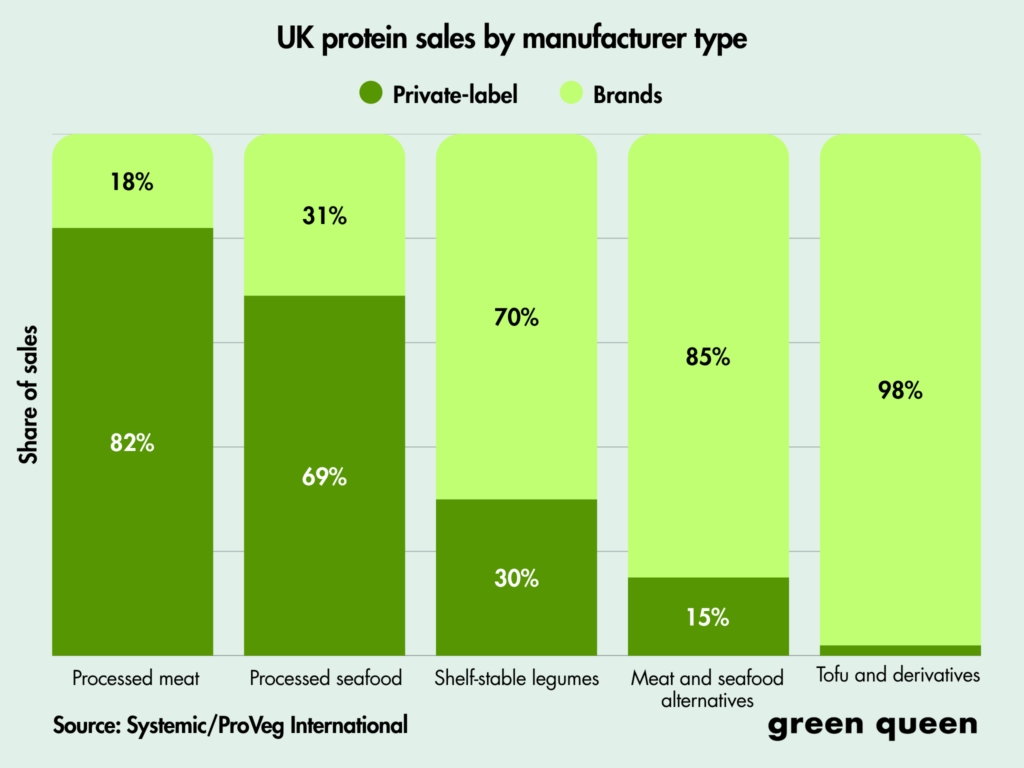
Private-label brands make up 82% of processed meat sales in the UK, but only 15% of plant-based alternatives – and retailers risk losing out on billions if they don’t promote protein diversification.

British supermarkets could stand to gain billions, make progress on their climate targets, and address the country’s fibre deficiency by championing plant-based proteins, shows a new report.

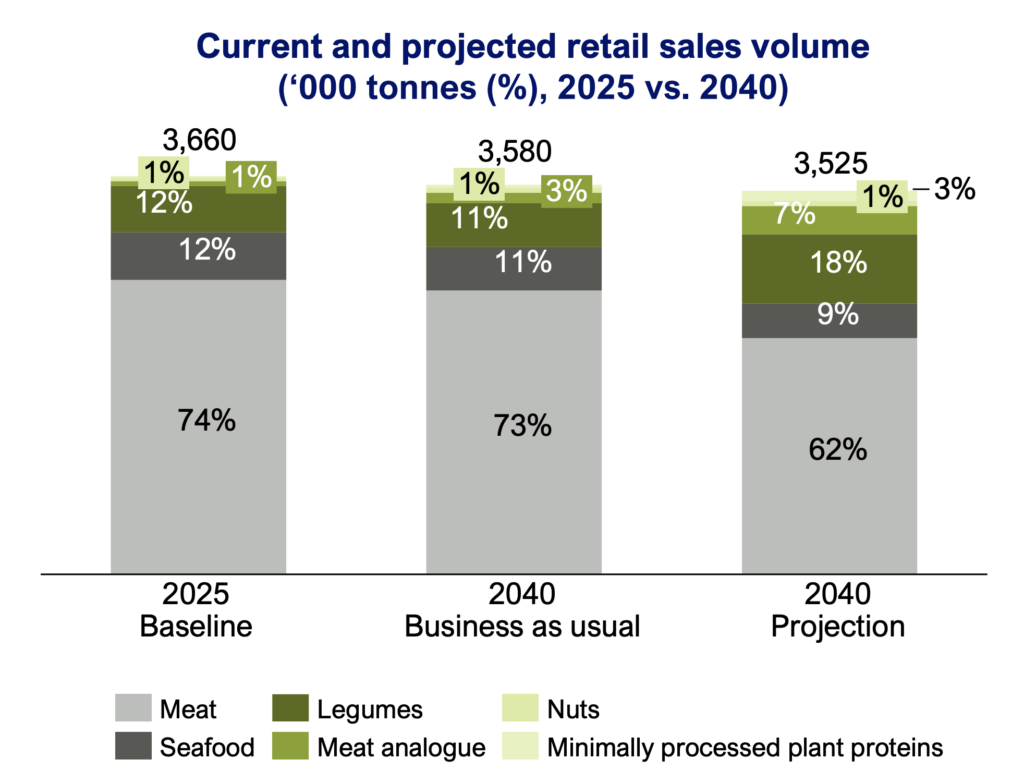
Analysis by Systemiq and ProVeg International reveals the share of protein sales from plant-based foods in the UK is set to double from 14% in 2025 to 29% in 2040.

The problem? Retailers are lagging. The research suggests that supermarkets’ own-label brands account for 85% of processed meat sales, but only 15% of plant-based meat and seafood sales, and just 2% of tofu and derivatives.

Closing this gap would give retailers direct control over pricing, margins, and category direction, which Systemiq says is the most effective way to capture the plant-based opportunity.

“The current protein model is exposed on cost, volatility, emissions and health. Are retailers ready to treat plant-based protein as a core business, rather than a peripheral experimentation?” Systemiq co-founder and managing director Jeremy Oppenheim wrote in a LinkedIn post.

private label plant based
Graphic by Green Queen

Plant-based meat sees sales hike and approaches price parity

Following the highs of 2020-21 and the subsequent correction, the UK’s plant-based category is now recovering and maturing. For instance, Lidl blasted past its target to increase alternative meat and dairy sales by 400% by 2025, recording a 694% hike since 2020. And Tesco reported that the sector was “back in growth”, with sales of vegan mince up by nearly 25% and whole-food proteins by 12%.

Even with whole-food options dominating the landscape, meat and seafood alternatives are performing well, with retail sales growing by 5% between 2024 and 2025.

The vegan market’s expected growth until 2040 will primarily be driven by both sets of proteins: meat analogues and legumes. The former are set to approach price parity with processed meat by 2028 (some products reached that mark last year), and private-label expansion represents the largest commercial opportunity here.

Legumes, meanwhile, are already cheaper and have the greatest growth potential in absolute volumes – although consumer uptake is constrained by limited awareness, underscoring the need for convenience formats and own-brand expansion.

Minimally processed proteins like tofu are cost-competitive with (or cheaper than) meat, too – though they remain underleveraged in-store. And the consumption of nuts remains five times below recommended levels, and their growth lies in positioning beyond snacking into daily cooking.

“Plant-based proteins cost less per kilogram, so revenue per unit is lower than the animal-based equivalent. However, they also carry higher and more stable margins than meat and seafood, strengthening overall profitability,” the report states.

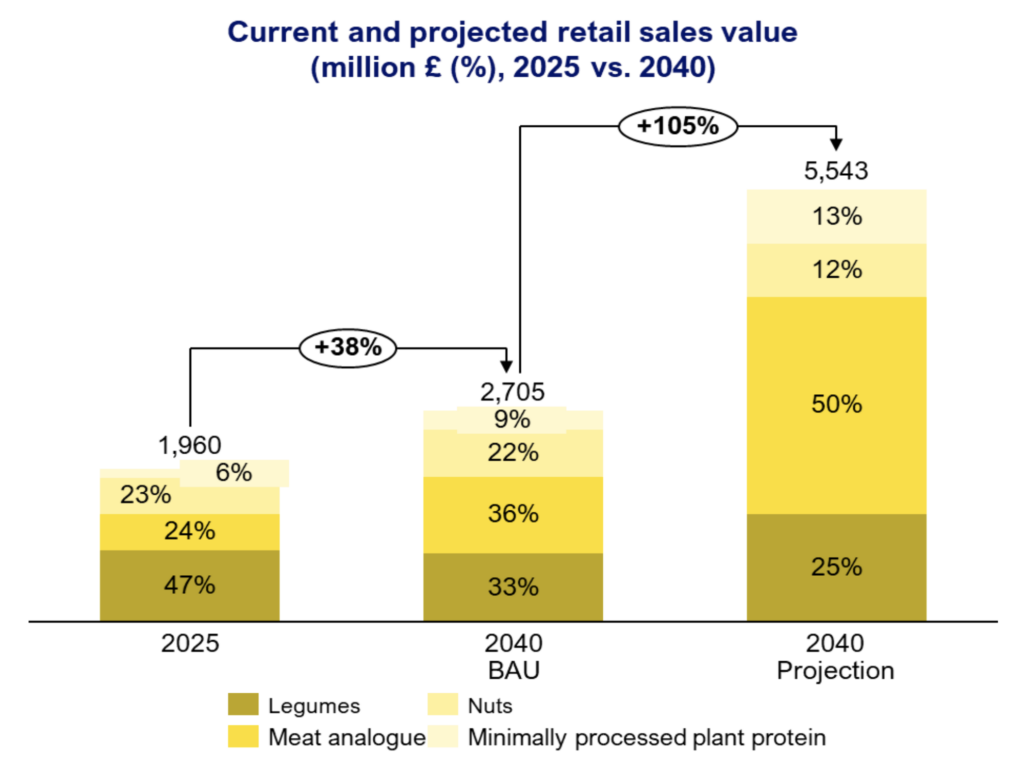
Under a business-as-usual scenario, plant-based food sales are forecast to grow by 38% over the next decade-and-a-half, totalling £2.7B. If supermarkets were to take charge on the protein diversification front, they could double this value, crossing £5.5B by 2040.

plant based meat sales
Courtesy: Systemiq

How retailers can seize the plant-based opportunity

The benefits of a plant-rich transition aren’t just financial. Systemiq’s analysis shows that protein diversification could reduce greenhouse gas emissions by 16%, land use by 14%, and water consumption by 13%, making it a key lever for retailers’ scope 3 emissions targets.

Moreover, this shift would drive a 71% intake in fibre compared to a business-as-usual scenario by 2040, closing around 11% of the UK’s current fibre gap, in addition to saving over £108M in associated public healthcare costs.

Systemic suggests that retailer action is the most directly controllable growth driver, underlining three key levers: increasing the share of private-label plant-based products, placing them alongside their animal-derived equivalents with clear value communication, and measuring ‘protein split’ sales to create a level playing field for vegan food.

Calls for protein diversification are growing across Europe – last week, 25 civil society groups urged supermarkets to measure, disclose, set targets and take action on the protein split, noting that 60% of their sales should come from plant-based sources.

uk supermarkets plant based
Courtesy: Systemiq

Systemiq is asking retailers in the UK to start measuring the ratio of plant-to-animal food sales using a recognised and shared methodology (as their counterparts in the Netherlands are doing), and implement ambitious individual and sector-wide actions to rebalance sales towards plant-rich consumption, in line with the Eat-Lancet Commission‘s Planetary Health Diet.

In fact, industry-wide collaboration reduces first-mover risk and builds shared infrastructure. So the report suggests sharing pre-competitive best practices, using industry platforms to coordinate sector-wide action that outlasts singular initiatives, and engaging the government jointly to support plant-based protein policies, such as updated dietary guidelines and tax and subsidy reforms.

“The commercial case for protein diversification is stronger than most British retailers currently recognise,” said Brian Shaw, senior director at Systemiq.

“We have heard from multiple British retailers that there is no climate action without protein diversification, and our analysis validates that. For retailers serious about reaching net zero, rebalancing their protein portfolio is one of the most powerful levers available.”

https://www.greenqueen.com.hk/uk-supermarkets-protein-diversification-plant-based-meat-sales-price-parity/ 

Saturday, April 11, 2026

Beyond Substitution, Everyday Products Drive 5% Growth of Europe’s Plant-Based Market

From greenqueen.com.hk

By Anay Mridul

Europe’s plant-based food market grew by 5% from 2024-25, reaching €16.3B in value as several products outpaced animal proteins – but it still makes up a fraction of the region’s food and drink sales.

Demand for plant-based food remained strong in Europe in 2025, driven by interest in everyday formats rather than just meat mimics.

Across the six largest markets in the region – the UK, Germany, Italy, Spain, France, and the Netherlands – the plant-based category reached €16.3b in value in 2025, up 5.1% from the year before, according to market research firm Circana.

Despite the hike, this sector accounts for just 2.4% of overall food and drink sales in Europe, indicating a gap between consumer interest and true market scale and significant headroom for growth.

“Plant-based food and drinks have reached a pivotal moment,” Ananda Roy, Circana’s senior VP of thought leadership and consumer goods advisor for Europe, said during a keynote address at the Plant FWD conference in Amsterdam (April 9).

“The foundations for growth are firmly in place, but the next phase will not be driven by hype or novelty. It will be driven by how effectively the industry delivers products that fit into everyday consumer behaviour,” he added.

                                                                                                         Courtesy: Omami

Flexitarians lead demand as GLP-1 drugs shift consumer habits

The momentum of the plant-based market is increasingly driven by products for everyday consumption rather than niche alternatives, according to Circana.

Nuts and seeds alone make up 45% of all value sales in the category, followed by dairy alternatives (21%) and ready meals (15%) – meat and seafood analogues represent just 4% of the market in these six countries.

That shift reflects how consumers are changing their behaviour to move away from substitution and towards integration into their daily diets. Circana noted that the demand is being driven by everyday shoppers, but not just historical plant-based consumers.

Flexitarians are the most important lever of growth. Only around 11% of Europeans follow a vegan or vegetarian diet, but the number of people who identify as flexitarian grew from 21% in 2022 to 31% in 2024.

The next phase of growth will be driven by consumers’ shifting expectations from their food, with health, nutrition and affordability among their top priorities.

People are looking for more than just a vegan burger now. They want meat alternatives that deliver benefits across protein consumption, energy, and gut health. At the same time, the boom in GLP-1 drugs is pushing people to eat smaller, more nutrient-dense meals.

Take the UK, for example: more than 1.5 million Brits now use a weight-loss medication, a share that nearly doubled between 2024 and 2025. And savvy food brands are already responding with formats that put protein and fibre at the centre.

Nielsen analysis shows that chilled plant-based food volume demand rose by just under 1% across UK supermarkets in 2025, rising to 1.7% in the final quarter. Tesco, the country’s largest retailer, ascribed the revival of this market to the heightening demand for “veg-led foods” rich in protein and fibre.

                                                                                                                      Courtesy: Tesco

Plant-based brands should prioritise affordability and functionality

Circana’s report reinforces Germany’s leadership in Europe’s plant-based market, where value sales rose by 7.2% and volumes by 4.2%. Spain saw value growth accelerate by 7.5% as well.

However, some countries didn’t perform as strongly. The UK, despite being the second-largest market at €4.5B, continued to stagnate, with volumes down 0.7% last year. It was one of the only countries in Europe to experience a volume decline in 2024, too.

This divergence outlines the importance of execution, pricing and relevance in driving category performance, according to Circana. In fact, closing the price gap between plant-based and animal proteins remains a top barrier.

Despite that chasm, vegan products are outperforming their animal-based counterparts in volume growth across key segments such as dairy and ready meals. Greater affordability for plant-based proteins will only unlock broader adoption.

Circana suggests the industry is at a critical inflection point, where future growth will depend on how well brands and retailers respond to changing consumer needs.

“With flexitarian consumers now leading demand, and growth becoming more uneven across markets, the plant-based category is entering a new, more competitive phase,” it said. “For retailers and manufacturers, the challenge is no longer about building awareness, but about turning interest into habit.”

It pinpointed several priorities for Europe’s plant-based food industry, including a focus on taste-led innovation to drive repeat purchases and better price competitiveness to expand mainstream adoption. Brands should also deliver credible nutritional and functional benefits, integrate ‘plant-based’ into core categories rather than isolate it, and expand beyond substitutes into broader alternatives that stand on their own.

“We are seeing a clear shift away from niche, imitation-led innovation towards more natural, functional and accessible products,” said Roy. “The winners will be those who can close the gap between taste, nutrition and price, and integrate plant-based seamlessly into everyday consumption occasions.”

https://www.greenqueen.com.hk/europe-plant-based-market-sales-growth-2025-circana/

Sunday, March 8, 2026

Tesco Reports Plant-Based Growth Led By Health-Conscious ‘Scratch Cooking’

From plantbasednews.org

A growing number of consumers are prioritising scratch-cooking and whole plant foods 

Tesco just reported plant-based food growth “for the first time in years.”

The British supermarket highlighted recent market data from Nielsen showing one percent growth for chilled plant-based foods over 12 months, and 1.7 percent growth in the 12 weeks leading up to the end of 2025.

Tesco said that its own shoppers are noticeably more selective and looking for health benefits in the plant-based foods that they purchase. The company linked Nielsen’s data on sector growth to this consumer shift to “veg-led” scratch cooking.

“We are beginning to see the green shoots of recovery across the UK’s plant-based food sector, as a growing number of shoppers place long-term health and wellbeing at the centre of their food choices,” Bethan Jones, a plant-based buyer at Tesco, said in a statement.  “Increasingly, the inclusion of vegetables and plant foods is being seen not as a passing preference, but as a fundamental part of how people expect to eat in the future.”

Tesco highlighted growing demand for high-protein ingredients like tofu, seitan, and tempeh, citing a 12 percent increase in sales over the last year. Meanwhile, demand for plant-based mince increased by nearly 25 percent, and demand for snack foods like falafel and mini sausages has grown by approximately five percent.

“Momentum is returning in a more grounded form,” Jones said. “A growing micro-trend focused on whole-food plant proteins – including beans, lentils, chickpeas, tofu and wholegrains – is helping to drive renewed sales, signalling a shift from short-term trend to lasting dietary change.”

‘Shoppers are looking for whole foods that are genuinely healthy’

Photo shows the plant-based aisle in a Tesco supermarket
Adobe StockAccording to Nielsen, chilled plant-based food sales increased by 1.7 percent in 12 weeks

Vegan food brand Gosh! welcomed the news, and reported its own six percent growth in its sales over the last 52 weeks. Gosh! makes falafel, burger patties, “bites,” and sausages from whole plant-based ingredients like beetroot and beans.

Caroline Hughes, the company’s marketing director, said, “As more people eat their way to happier, healthier lifestyles by adding more plants to their plates, it’s no surprise that more natural products are helping to reignite category growth.”

She added, “Shoppers are looking for whole foods that are genuinely healthy, with no hidden nasties, and that support their overall wellbeing.”

https://plantbasednews.org/lifestyle/food/tesco-plant-based-growth-health-conscious/

Wednesday, February 4, 2026

Vegan Beauty's Next Claim: How Beauty Outgrew the Label

From beautymatter.com

Key Takeaways:

"Vegan" was once a differentiating ethical claim. Now, it has become a baseline expectation within clean and premium beauty.

Search interest in “vegan beauty” is declining, but demand for plant-based and biotech alternatives to animal-derived ingredients is accelerating.

As vegan formulations become standard, brands must compete on efficacy, formulation sophistication, and ingredient transparency.

For much of the past decade, vegan beauty stood as one of the industry’s most visible ethical markers, and an emblem of conscious consumption that aligned with animal welfare, sustainability, and personal values. Today, however, the category has recalibrated. While vegan formulations remain widespread and commercially relevant to the point of successful investments, the "vegan" label itself is losing some of its power as a primary consumer hook. Instead, it is increasingly viewed as a baseline expectation within clean and premium beauty rather than a differentiating claim.

The rise of veganism over the past decade, catalyzed by movements like Veganuary, mainstream celebrity endorsement, and a surge in plant-based product innovation, laid the foundation for vegan beauty’s growth. Data from analysts at Spate, Credo Beauty, and Pattern suggest that vegan beauty has not disappeared, although its role within the broader beauty ecosystem has fundamentally shifted.

Has Vegan Beauty Lost Momentum or Simply Evolved?

The wider cultural conversation around veganism appears to be influencing how people engage with vegan products, both in food and beauty. According to new data from Spate’s Popularity Index (US, ending October 2025), interest in “vegan beauty” as an explicit trend is declining. “Interest in ‘vegan beauty’ continues to cool,” said Mathilde Riba, Beauty Insights Analyst at Spate, to BeautyMatter. She noted that the trend is down 32.4% year over year (YoY), driven largely by declining engagement on social platforms.

In the food world, this has also translated into measurable declines. For example, sales of meat alternatives in the UK dropped by around 21% in the year to June 2024, interest in search terms like “vegan diet” has tapered off since its late-2019 peak, and the share of people identifying as vegan has reportedly fallen significantly in markets including Europe and the US as consumers revert to more omnivorous diets. In beauty, adjacent values-led categories are experiencing similar pullbacks, with cruelty-free down 60.8% YoY, organic down 33.0% YoY, and sustainable beauty down 47.6% YoY according to data retrieved from Spate.

At first glance, these figures could suggest waning consumer concern for ethical beauty, but Riba cautioned against that interpretation. “While ‘vegan beauty’ as a labeled trend is losing momentum, the appetite for alternatives to animal-based ingredients is rising quickly,” she explained. In other words, consumers may be moving away from the banner but not from the values embedded within it.

This reframing is echoed at Credo Beauty, where vegan has increasingly been absorbed into the broader definition of clean. “We’re seeing fewer searches overall for vegan and adjacent claims on our digital site, which to me demonstrates that consumers are looking for more specific claims and that these broader claims are the baseline of what they’re prioritizing.” Vivi Posschelle, Associate Scientist at Credo Beauty, explained to BeautyMatter. In her view, “Vegan beauty, along with the other claims, have started to fall under the ‘clean’ umbrella for the consumer. It’s evolved into an expected attribute.”

This has led to the rise of questions of whether consumers still care. The answer may lie in how consumer behavior has matured. Rather than searching for ideological labels, shoppers are increasingly focused on performance, ingredients, and outcomes, assuming ethical standards are already in place.

Spate’s data illustrated this shift clearly. While animal-derived ingredients like polydeoxyribonucleotide (PDRN) (+763.0% YoY), beef tallow (+377.3% YoY), and collagen (+7.9% YoY) are surging in online conversations, vegan counterparts are also rising rapidly. Vegan PDRN is up 465.3% YoY, and vegan mucin has grown 136.4% YoY, signaling that even as animal-derived actives dominate attention, consumers are actively seeking high-performing alternatives.

“Consumers may not be prioritizing the vegan beauty banner,” Riba said, “but they are increasingly adopting plant-based and vegan-aligned actives as part of their skincare routines.” Ingredients like resveratrol (+367.9% YoY), curcumin (+168.5% YoY), and rice (+128.4% YoY) are further proof of how plant-based actives are reshaping the category without relying on explicit vegan positioning.

The Retail Reality: Vegan as a Given, Not a Differentiator

At Credo Beauty, where clean standards and ingredient transparency are central to the retailer’s identity, vegan formulations are often baked in by default. “The vegan label is secondary to our restricted substances compliance,” Posschelle explained. She highlighted that Credo’s standards include restrictions on animal-derived ingredients and strict transparency requirements, meaning that “many of our brands are inherently vegan, making it quite easy for anyone looking for vegan beauty to find a brand or product that aligns with their beliefs.”

Demographically, she noted that shoppers explicitly seeking vegan beauty often align with veganism as a lifestyle. “Based on my in-store experience, many consumers searching for vegan beauty tend to be those who are also vegan in their diet and lifestyle,” she said. For the broader customer base, however, vegan status is assumed rather than interrogated. This shift places pressure on brands that once relied heavily on vegan claims for differentiation.

This also poses questions on whether or not vegan formulations could compete with performance. From a scientific perspective, the answer is nuanced. While innovation has expanded the possibilities of vegan beauty, certain formulation challenges persist.

There are several [ingredients that are hard to replace], but the first ingredient that comes to mind is carmine,” Posschelle said. The insect-derived pigment is prized in color cosmetics for its vibrancy. “Vegan/synthetic alternatives are functional but don’t always provide the same color payoff and richness that carmine does,” she explained, which can impact the sensory and aesthetic experience.

Similar trade-offs exist with beeswax and other animal-derived functional ingredients. “At times, there are trade-offs to formulate vegan products, such as desired texture, color, and performance,” Posschelle continued. Importantly, she emphasized that safety is not inherently superior in vegan formulations. “It’s important that both synthetic or animal-derived ingredients are assessed for both human health and the environment before being used in a product.”

That said, biotech innovation is rapidly narrowing these gaps. Posschelle pointed to “a shift industry-wide toward biotech ingredients and formulations that prioritize reducing the impact and reliance on agricultural commodities and animal-derived ingredients,” driven by consumer demand for “high performance products that have strong sustainable and ethical supply chains.”

Marketplace Performance Tells a Different Story

While cultural buzz around vegan beauty may be cooling, commercial performance, particularly in e-commerce, remains strong. According to Pattern, a global e-commerce accelerator and marketplace performance company, vegan beauty has generated $668 million in trailing twelve months sales on Amazon, growing 16% YoY, just slightly behind the broader beauty category’s 18% YoY growth. “We are seeing steady growth YoY within vegan beauty and don’t anticipate that to slow down any time soon,” Cali Johnson, Category Lead at Pattern, told BeautyMatter.

Skincare is leading the category, with the fastest-growing vegan subcategories including eye masks, eye treatment balms, facial skincare sets, and body oils. Johnson attributed this momentum to social media-driven discovery and ingredient literacy. “Shoppers are actively seeking familiar, understandable ingredients, especially for sensitive areas like the eyes,” she said, adding that consumers are increasingly aware of, and avoiding, ingredients they perceive as harmful.

Interestingly, pricing has remained stable. Pattern’s analysis showed just a 0.2% pricing increase YoY among the top-selling vegan beauty brands on Amazon, suggesting that vegan positioning no longer commands a meaningful premium on its own.

Data suggests that vegan beauty has not declined so much. It once functioned as a loud, values-driven differentiator but has quietly become part of the industry’s infrastructure, particularly within clean, premium, and prestige beauty. Vegan is no longer a signal of niche ethics, as it is now increasingly assumed, embedded in formulation choices, sourcing strategies, and retailer standards.

Ultimately, vegan beauty’s next chapter is less about visibility and more about integration. The industry is no longer asking whether beauty should be vegan but how vegan formulations can be better, more advanced, and more competitive. In that sense, vegan beauty has not lost cultural relevance; it has only matured. And in a market increasingly defined by sophistication rather than slogans, that may be its most enduring impact.

https://beautymatter.com/articles/vegan-beautys-next-claim-how-beauty-outgrew-the-label