Showing posts with label Plant-based dishes. Show all posts

Friday, January 30, 2026

Is a Plant-Based Diet the Secret to Beating Inflammatory Diseases?

From veganuary.com

Chronic inflammation plays a central role in some of the most serious diseases we face, including rheumatoid arthritis, cancer, heart disease, diabetes, asthma and Alzheimer’s.

But many people are finding that the solution to their inflammatory conditions can be found, not in pills and jabs, but in the fruits and veggies on the end of their forks.

Here, we meet some of the people who switched to a plant-based diet and find out how taking part in Veganuary eased their symptoms and changed their lives.

Plant-Based Diet and Eczema

Lucy Schofield, 31 from London used to call herself an “itchy girl”. She suffered with regular eczema flare-ups in her elbow creases and on the back of legs, and even around her eyes when she was under a lot of pressure.

“That was definitely the worst thing – so sore and difficult to hide.” Her sleep inevitably suffered as a result and it inevitably affected her wellbeing and mood. “When George and I first got together, “ she told us, “if we held hands, I’d be worried that he’d think my palms were like lizard skin!”

After staying with her mum who was vegan during a Covid lockdown and learning more about the issues in the dairy industry and how to cook tasty food, Lucy decided to give veganism a try for herself.

She took part in Veganuary 2021. And the unexpected happened… About three weeks into Veganuary, Lucy’s eczema cleared up entirely and she hasn’t suffered with it since.

Research conducted by California Northstate University on inflammatory skin diseases may provide some explanation as to how this occurred. It concluded: “Our findings demonstrate that plant-based foods may improve inflammatory skin diseases by supporting the gut microbiome, exerting anti-inflammatory effects, providing barrier support, and improving glycaemic control.”

And Lucy is not alone.

Plant-Based Diet and Joint Pain

Roz Cant, 44, from Newcastle Upon Tyne had been suffering from debilitating joint pain for a long time. “I was in pain down the right side of my body in my hip, back, knee, wrist and toe joints which got progressively worse over several years,” she told us.

“I had been to the doctors and physio on many occasions and they were not able to offer me any solutions other than exercise and taking painkillers which weren’t helping at that time. I was in pain all the time.”

Roz went online searching for answers and she found out that animal products can cause inflammation.

“I was already vegetarian and decided to cut dairy and eggs out of my diet and to take part in Veganuary.” That was in 2022 and it turned out to be a life-changing one.

“After a few months, I noticed my pain had begun to decrease,” says Roz. “After six months it was at a level where it no longer impacted my daily life and after a year my pain was gone. The terrible impact that dairy and eggs have on the lives of so many animals and the positive personal benefits I have seen mean I will be vegan for life.”

A Plant-Based Diet and Arthritis

Sue Makin, 73 from Chester had been suffering arthritis in her hands for some time. As a keen gardener and painter, this was particularly distressing.

“I had to accept that my hands would always be painful, stiff and swollen-jointed. That I’d have difficulty with my grip and keep dropping things. That holding an artist’s paintbrush or doing heavy gardening would be a much-loved thing of the past.”

That was back in 2017 but when her son went vegan and urged her to watch the same documentaries that had inspired him, she did. And she became vegan too.

“After about three weeks on a vegan diet something became very obvious. All of this was reversing rapidly. Pain had gone from my hands and their strength and flexibility were markedly improved. I’ve been able to return to long hours painting or gardening without pain. I am convinced this is due to the removal of the inflammation caused by dairy products.”

Once again, science backs Sue’s and Roz’s experiences.

A 2019 review of the existing studies concluded: “Several studies have shown that joint pain and other RA [rheumatoid arthritis] symptoms may be modified by dietary factors. Excessive body weight and diets that include animal products (e.g., dairy, red meat) exacerbate the RA symptoms likely due to their pro-inflammatory effects. In contrast, diets rich in vegetables, fruits, and fibre are associated with lower BMI, have anti-inflammatory properties and help reduce pain and inflammation in these patients. Studies have shown that dietary fiber found in these plant-based foods can improve the gut bacteria composition and increase the bacterial diversity in RA patients, potentially reducing inflammation and joint pain.”

Plant-Based Diet and Type 2 Diabetes

Research over the last decade or so is increasingly indicating that type 2 diabetes should be seen as an inflammatory condition. And we have long known that eating a plant-based diet can reduce the risk of type 2 diabetes.

Thankfully, for Andrea Kennard, 62, from Kent, she found her way to Veganuary as a prediabetic and before the disease had done its worst. Andrea took part in Veganuary 2025 and has had an extraordinary experience.

“I’ve gone all whole food now and cook from scratch,” she tells us. “I’ve lost over 6 stone, going from a size 22 to a 10, I no longer have a nap during the day, my bloods are the best results they have ever been, I’ve so much more energy now and do not need all my medication.”

It’s a very happy outcome for Andrea but she found another benefit too. “To top it all, I’m not eating any beautiful animals,” she says. “I just wish I’d done it years ago and not waited.”

A Plant-Based Diet and Asthma

Michelle Mead, 55, Devon, developed asthma when she was just five years old and it has had a profound effect on her whole life.

“It impacts everything, from being able to walk to not even being able to talk in full sentences. It causes coughing and exhaustion although you aren’t able to sleep as you can’t breathe, and having an attack is very frightening.”

Like Roz, Michelle conducted her own research and found studies that indicated a plant-based diet can help with allergies.

“So when I saw Veganuary advertised on social media I decided to give it a try.” And that was the beginning of a very positive change. “Within a couple of weeks I noticed an improvement in my breathing,” Michelle told us. “Within a couple of months, I could reduce my asthma medication and the bruising it had been causing stopped completely. Since then, I have had no further asthma attacks.”

A Plant-Based Diet and Lupus

Kim Washam, 51, from New Jersey took part in Veganuary 2019 and has never looked back. She took part in the hope that a change in diet would provide some relief from the different autoimmune diseases she had developed, as well as the drugs she was given to combat them.

“I was taking medications to treat lupus and rheumatoid arthritis,” she told us, “but I wasn’t happy with the potential side effects of those medications. I didn’t want to be on these meds any longer, so I started my vegan journey and have been feeling great ever since! I am no longer on any medications! Veganuary was a huge influence on my decision to go vegan and I will be forever thankful!”

These powerful, life-changing stories are more than anecdotal. In recent years, study after study has demonstrated the healing power of a plant-based diet and provide insights into why eating whole foods like fruits, veg, grains, berries, nuts and seeds is the key to beating inflammatory conditions.

In 2019, a systematic review by the Max Planck Institute for Human Cognitive and Brain Sciences concluded: “there is an overall robust support for beneficial effects of a plant-based diet on metabolic measures in health and disease… The reason for lower systemic inflammation in plant-based dieters could be due to the abundance of anti-inflammatory molecule intake and/or avoidance of proinflammatory animal-derived molecules.”

A Doctor’s Advice

GP and nutritionist Dr Gemma Newman both eats and promotes a whole food plant-based diet and she explains why.

“A colourful, whole-food plant-based diet naturally helps calm inflammation — the root of many chronic pain conditions. Foods rich in antioxidants and omega-3s like berries, leafy greens, flaxseeds and walnuts, can support the body’s natural healing pathways. Try building meals around lentil stews, veggie curries, or grain bowls packed with vibrant veg and herbs. Eating this way nourishes you from the inside out — soothing inflammation while supporting energy and recovery.”

So, whether you are suffering from asthma or eczema, arthritis or endometriosis, you may see significant improvement by removing inflammatory animal-based foods from your diet and replacing them with plenty of anti-inflammatory plant-based foods.

But just something to note: it is a healthy plant-based diet that has all the magic. An unhealthy diet based around processed foods, and high-fat, sugar and salt, even if it is vegan, may actually make things worse.

https://veganuary.com/plant-based-diet-inflammatory-diseases/

Tuesday, September 2, 2025

7 vegan dishes that convert even the most sceptical meat-eaters

From vegoutmag.com

By Adam Kelton

These plant-based dishes don’t just pass the taste test—they might actually change the way you think about vegan food 

Let’s get something out of the way: I’m not vegan.

I’ve cooked my fair share of steak au poivre, cleaned the bones of Korean fried chicken, and whispered sweet nothings to a prosciutto-wrapped sea bass.

But I’ve also spent enough time around kitchens—and food lovers—to know when something is objectively good. Regardless of labels.

And vegan food? When it’s done right, it’s not just “good for what it is.” It’s good, period.

That’s why I’ve pulled together seven plant-based dishes that don’t just pass the sniff test with meat-eaters—they’ve made full-blown converts out of them.

These aren’t limp salads or grain bowls trying to be “healthy.” These are indulgent, flavourful, filling dishes that make you forget you’re not eating meat in the first place.


1. Mushroom bourguignon

Ever had a good beef bourguignon? Deep, rich, silky, red wine-forward?

This version keeps everything you love—the slow-simmered aromatics, the red wine reduction, the melt-in-your-mouth texture—and swaps the beef for thick-cut mushrooms. I’m talking shiitakes, creminis, maybe some king oysters if you’re feeling fancy.

Once they’ve browned and stewed down with garlic, thyme, carrots, and wine, they take on a texture and flavour that’s borderline meaty.

I served this to a couple of old F&B buddies who used to scoff at anything vegan. Not only did they go back for seconds—they asked for the recipe.

The trick? Don’t hold back on the wine or the umami. Add miso paste or tamari if you need a little more depth. It’s not about mimicking meat—it’s about delivering flavour on its own terms.

2. Jackfruit tacos al pastor

This one surprised even me.

Jackfruit has been hyped as a meat substitute for a while, but most versions I’d had were bland and stringy. Then I tried it marinated in a traditional al pastor sauce—pineapple, guajillo chiles, garlic, vinegar—and grilled until crispy on the edges.

Game. Changer.

It gets that same savoury-sweet tang you expect from pork al pastor, and when you pile it into warm corn tortillas with onions, cilantro, and a squeeze of lime? It’s everything you want from street food.

A few carnivore friends of mine didn’t even realize it was vegan until halfway through the meal. That’s how convincing it is when you get the seasoning and texture right.

Bonus points if you char the edges just a bit—it adds that “off the spit” illusion.

3. Lentil-walnut Bolognese

Bolognese sauce is sacred ground. I get it.

But lentils? When you simmer them down with crushed tomatoes, red wine, and toasted walnuts, you get a version that brings the same depth and satisfaction—without pretending to be meat.

The toasted walnuts are key here. They add this fatty richness and subtle crunch that mimics the complexity of traditional ragù.

I tried this version while doing a short stint consulting for a high-end vegan restaurant. They were serving it over house-made pappardelle with a sprinkle of vegan parm and crispy basil.

I watched guests clean their plates like it was the real deal. No one was asking where the beef went.

As Harold McGee has explained, “Our sense of smell allows us to make much finer discriminations,” highlighting how aroma—alongside taste and texture—plays a critical role in how we experience and enjoy food. This dish checks all the boxes.

4. Crispy tofu banh mi

If tofu still gives you cafeteria flashbacks, you haven’t had it crispy, caramelized, and tucked inside a banh mi.

Picture this: tofu slices marinated in soy, maple syrup, and garlic, seared until golden and slightly sticky. Then layered into a crusty baguette with pickled daikon, cucumber, jalapeños, cilantro, and a slick of vegan mayo or pâté.

It’s crunchy, spicy, sweet, and refreshing all at once. Basically, it slaps.

Tofu’s biggest crime is being underseasoned. But once you get it right, it becomes a flavour sponge in the best way possible.

I made these for a housewarming party where half the guests were Vietnamese aunties and the other half were Texas BBQ guys. No leftovers. Enough said.

5. Cashew mac and cheese

Mac and cheese is a comfort classic. But the vegan versions? Often hit or miss.

Until I tried this one that used soaked cashews, nutritional yeast, roasted garlic, and a touch of lemon blended into a creamy, silky, cheese-adjacent sauce.

Then it’s tossed with elbow pasta, baked until bubbly, and topped with toasted breadcrumbs. And the best part? It doesn’t just try to copy cheese—it offers a new kind of creamy satisfaction.

As some plant-based chefs and nutrition experts have observed, cashews’ blend of healthy fats and protein makes them ideal for creating creamy, satisfying textures in vegan dishes.

I tested this one on my younger brother—who once swore he’d never eat “nut cheese.” He cleaned the bowl.

Fair warning: this dish might start arguments about who gets the crispy corners.

6. Vegan smash burgers

Let me just say this: I was a smash burger purist.

I believed in beef, griddled hard, with melty American cheese and pickles. So when I heard about vegan versions made with a blend of black beans, mushrooms, and vital wheat gluten (a.k.a. seitan), I was sceptical.

But I was wrong.

The patty gets smashed thin, so you get that crisp, browned crust. Then it’s stacked with vegan cheese (Violife is my go-to), burger sauce, shredded lettuce, and pickles on a toasted potato bun.

You’re not just pretending it’s a beef burger—you’re creating something new that hits the same pleasure points: juicy, crispy, fatty, salty, tangy.

The secret isn’t the meat—it’s the crispy, caramelized edges that develop when heat hits the pan just right. That’s where the flavour lives.

7. Sticky sesame cauliflower

Finally, a dish that could headline at any takeout joint and no one would bat an eye.

Cauliflower gets roasted or air-fried until golden, then tossed in a sticky-sweet sesame garlic sauce and sprinkled with scallions and sesame seeds.

It’s crisp, saucy, and slightly addictive. Think General Tso’s meets Korean fried chicken—but plant-based.

When I first served this at a dinner party, a few meat-eaters literally asked, “Wait, this isn’t chicken?”

Nope. Just humble cauliflower dressed to kill.

And it’s not just anecdotal—according to a study published in Appetite, when plant-based dishes use indulgent, flavourful descriptors rather than "health" language, meat-eaters are more likely to choose them. This one proves the point.

The bottom line

I’m not trying to convert anyone.

I still enjoy a steak when the mood strikes. But these seven dishes? They prove that great food doesn’t need meat to be satisfying, craveable, or downright impressive.

In fact, some of these—like the sticky cauliflower and the Bolognese—have earned permanent spots in my rotation. Not because they’re vegan. But because they’re that good.

So if you’ve been eye-rolling at the idea of vegan food…or if you’ve got someone in your life who turns up their nose at anything plant-based…consider this your cheat sheet.

Cook one of these. Serve it without disclaimers. Let the food do the talking.

And if they still insist they “need meat with every meal”?

More leftovers for you.

https://vegoutmag.com/food-and-drink/c-7-vegan-dishes-that-convert-even-the-most-skeptical-meat-eaters/

Saturday, May 10, 2025

Plant-Based Meals Offer Triple Win for Health, Planet & Wallet, Shows Study

From greenqueen.com.hk 

A comparison of like-for-like meat-based, vegetarian and whole-food plant-based meals shows that the latter can improve micronutrient intake, reduce climate impact, and lower costs.

                                                                                           Courtesy: NYC Health + Hospitals


Plant-based meals in restaurants, cafeterias and schools can deliver a triple win for human, planetary and financial health, according to a new comparison study.

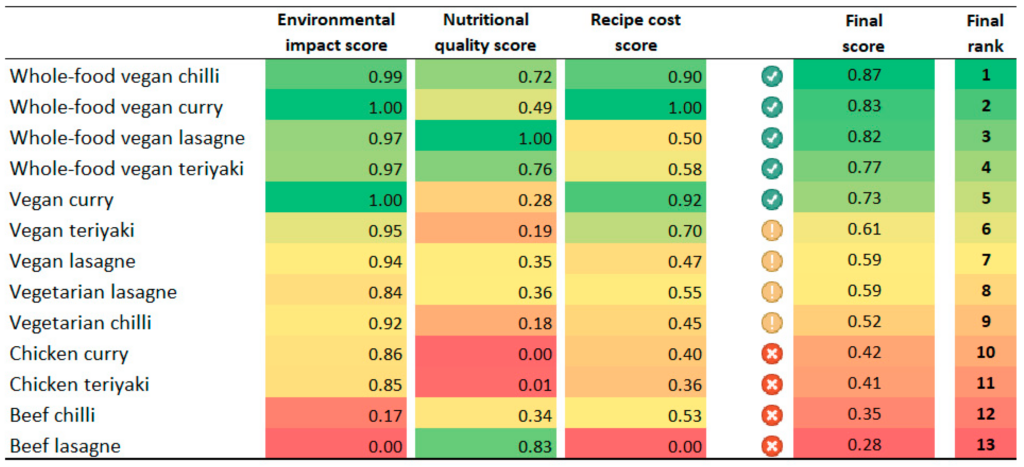
Published in the Nutrients journal, researchers looked at the nutritional quality, environmental impact, and cost of vegan, vegetarian and meat-based versions of four lunch dishes at a London university cafe.

The study included lasagne, chilli, curry and teriyaki meals, with the meat-based dishes using beef or chicken, meat-free versions using vegan mince or Quorn, and whole-food plant-based meals employing vegetables, tofu, and lentils.

In all cases, the whole-food plant-based meals “consistently outperformed” their meat-based counterparts on cost, sustainability, and nutrition.

“These findings highlight the potential benefits of increasing the availability and uptake of healthy plant-based meals in foodservice settings (e.g., restaurants, takeaways, cafeterias, schools, and workplaces) to reduce the environmental impact of food consumption while improving micronutrient intakes and public health,” the researchers noted.

Plant-based lasagne tops nutrition chart

is plant based diet healthy
Courtesy: Nutrients

The nutritional quality of meals was evaluated using the Nutrient Rich Food (NRF) index. The original NRF 9.3 index is based on nine nutrients to encourage (like protein, fibre, vitamins and minerals) and three to avoid (saturated fat, sugar and sodium), but it was originally developed for American adults.

NRF 9.3 doesn’t include some of the nutrients of public health concern for British adults, so the researchers also assessed the meals with NRF 17.3, which includes more micronutrients.

The whole-food plant-based lasagne (comprising lentils) received the highest rating, achieving over 40% of the maximum NRF 17.3 score. The chilli and teriyaki recipes made from these ingredients scored around 35%, while the curry had a score of just under 30% of the maximum.

In comparison, the beef lasagne received just under 40%, and the beef chilli only 25%. The chicken teriyaki and curry, meanwhile, scored only around 10% of the maximum.

“An ideal recipe should have an NRF score equal to approximately 30% of the maximum NRF score,” the researchers said. Only four recipes – the whole-food vegan lasagne, chilli and teriyaki, and the beef lasagne – passed this threshold.

In fact, the lentil lasagne was the most nutrient-dense recipe in the whole study, providing 19% of the daily recommended value for protein, and exceeding the fibre recommendation by 30%. In addition, it was the only lasagne to have lower than 30% of the recommended saturated fat intake, and had the highest amounts of thiamine, folate, magnesium, potassium, iron, copper and selenium across all lasagne.

Meat-based meals far worse for the planet – and the wallet

whole food plant based diet
Courtesy: Nutrients

The difference between the environmental impact of meat and meat-free dishes was massive. The global warming potential (GWP) of one beef lasagne was 5.8 kg of CO2e, equivalent to 15 lasagne containing plant-based meat, and 22 whole-food plant-based versions.

Similarly, the impact of one beef chilli is higher than that of 11 plant-based meat versions and 28 whole-food chillies. “In other words, eating a plant-based chilli for lunch every day for an entire month would result in the same climate impact as eating one beef chilli,” the study noted.

And even though chicken has a much lower carbon footprint and has been touted by bodies like the UN FAO as a climate-friendlier protein, one chicken teriyaki noodle dish had the same GWP as four tempeh-based versions. The difference was even larger with curry, with one chicken-based version equivalent to seven vegan curries.

When it came to prices, the cost of vegan meals was cheaper than meat across the board. The average cost for meat-based recipes was £2.31, while vegetarian meals averaged out at £1.97. In comparison, vegan (both whole-food and with meat analogues) dishes had the lowest average price at £1.49, subverting a constant criticism about the high prices of plant-based alternatives.

Meat was the single-largest contributor to recipe costs, with chicken responsible for up to 75% of the meal’s price, and beef up to 70%. For vegetarian recipes, the bulk of the cost came from Quorn (up to 63%) and cheese (16%), while the price of vegan meals came primarily from meat alternatives (32-56%) and non-dairy cheese (11%).

“In whole-food vegan recipes, the contribution of main ingredients (i.e., various vegetables, pulses, and pasta/noodles) to total recipe cost was relatively equally distributed,” the researchers found.

vegan diet expensive
Courtesy: Nutrients

Whole-food plant-based on the rise in the UK

“Meat-based meals in this study with high environmental impact were transformed into more sustainable alternatives by replacing animal-based ingredients (e.g., meat and dairy) with plant-based options… [which] significantly reduced the environmental impact of meals in all cases while also improving the nutrient density of recipes in most cases,” the study stated.

It added that plant-based meat and dairy “can serve as healthful replacements for meat when chosen carefully” and be more climate-friendly too. “However, their nutritional quality is dependent on the type of product, formulation and degree of processing.”

The study serves as further proof that the real stars are whole foods such as vegetables, legumes, whole grains, and nuts. Already, British consumers and food companies are recognising this. Last month, Oh So Wholesome released Veg’chop, a whole-food-packed protein block, the same day meat alternative maker THIS launched a similar concept called Super Superfood.

Meanwhile, the UK is spearheading the ’30 plants a week’ movement, led by figures like Zoe co-founder and nutritionist Tim Spector and documentaries like Netflix’s Hack Your Health.

plant based diet vs meat
Courtesy: Nutrients

This study shows that in addition to retail, foodservice operators play a “central role” in encouraging consumers to eat better. “The more convenient and accessible these healthy and sustainable options are, the more likely consumers are to choose them,” the researchers said.

They advocated for “clear and accessible communication strategies”, such as traffic-light labels for health and climate impacts, making plant-based meals the “dish of the day”, and optimising sensory-focused descriptions that enhance their appeal.

In 2024, the World Resources Institute compiled a list of 90 techniques that can help foodservice players ‘nudge’ plant-based behaviours among diners. Some of the most effective strategies include chef training to improve the quality of vegan meals, increasing the ratio of these dishes, integrating meat-free options into meat sections in displays, and – as this new study recommends – using indulgent and appealing language to describe them.

https://www.greenqueen.com.hk/whole-food-plant-based-diet-meat-meals-nutrition-climate-cost/

Sunday, April 27, 2025

‘5 Plant-Based Foods My Family Eats Every Week’

From plantbasednews.org/lifestyle

SweetPotatoSoul’s Jenné Claiborne shares staple ingredients from her plant-based kitchen that are affordable, accessible, and nutritious 

Jenné Claiborne, a vegan chef and content creator known for her YouTube channel SweetPotatoSoul, recently shared the five vegan food essentials she and her daughter eat daily. Claiborne, who has been vegan since 2011 and raised her six-year-old daughter on a plant-based diet since birth, uses her platform to show how vegan living can be practical, nourishing, and satisfying for families.

In her latest video, she breaks down simple, whole foods that she relies on every week. “These five foods are nutritious, they are versatile, they are inexpensive, you can find them anywhere,” Claiborne says. The aim, she adds, is to help people who are new to plant-based eating – or those who want to incorporate more whole foods into their diet – start with ingredients that are accessible and nutrient-dense.

                  From sweet potatoes to sourdough bread, here are some of Jenné Claiborne's favourite kid-friendly vegan foods

                                                                        Media Credit: YouTube/SweetPotatoSoul

Here are the five vegan foods Claiborne eats every day and why they’re worth considering for your own routine.

Sweet potatoes

As the name of her channel suggests, sweet potatoes are a staple in Claiborne’s home. She describes them as her favourite food and highlights both their flavour and nutritional value. “Sweet potatoes are so nutritious,” she says, later adding: “They act as fuel, giving your body energy that you need to think clearly, to move your body, and be active.”

Sweet potatoes are complex carbohydrates that contain fibre, beta-carotene (a powerful antioxidant that converts to vitamin A), and vitamin C, which supports immunity and skin health. Claiborne notes that vitamin C “is also great for something else: collagen production.”

Beyond their health benefits, sweet potatoes are easy to cook and can be used in both sweet and savoury dishes. Claiborne has published recipes on her website ranging from sweet potato pie to air-fried wedges and even a sweet potato latte.

Lentils

Another daily essential for Claiborne is lentils. “There’s nothing you cannot do with lentils,” she says, listing soups, salads, lentil loaves, and tacos as just a few examples.

Lentils are a type of legume and are rich in plant-based protein, iron, zinc, and fibre. They also contain complex carbohydrates, which support sustained energy levels. Claiborne pointed out that lentils are convenient and affordable: “You can cook lentils in the Instant Pot in just 10 minutes.”

She emphasizes that healthy eating does not have to be expensive, noting that lentils are widely available and budget-friendly.

Flax seeds

Ground up flax seed, a vegan food essential
YouTube/SweetPotatoSoulIt’s important to grind up flax seeds before eating them

Claiborne and her daughter consume flax seeds daily, primarily for their omega-3 fatty acids. “Omega-3 fatty acids are necessary for brain, heart, and immunity health,” she says. Flax seeds are among the best plant-based sources of these fats, alongside walnuts.

Claiborne recommends purchasing whole flax seeds and grinding them at home in small batches to retain freshness and nutrient content. “You need to grind them to be able to digest and take advantage of the nutrients inside,” she explains.

Flax seeds are a regular addition to her morning oatmeal and smoothies and are also used in baking as an egg replacement. She notes that they are “available everywhere” and can be incorporated into a variety of dishes.

Cruciferous vegetables

Cruciferous vegetables – including kale, broccoli, Brussels sprouts, cabbage, and collard greens – feature in Claiborne’s meals every day. “This category of foods is incredibly nutritious in so many ways,” she says.

These vegetables contain sulfur compounds that are beneficial to health but can produce a strong smell when overcooked. Claiborne suggests lightly steaming or roasting cruciferous vegetables to preserve nutrients and avoid bitterness.

She also notes that while these vegetables are common, many people don’t eat them regularly. “This is your reminder to eat them every day,” she says.

Sourdough bread

Sourdough is made through fermentation, a process that can make bread easier to digest. It typically contains only flour, water, salt, and a sourdough starter, making it less processed than many shelf-stable loaves. Because it spoils quickly, Claiborne stores it in the freezer to extend its shelf life.

She also highlights sourdough-based products such as pasta and crackers, which are now available from online retailers. “The gut bacteria in your belly love sourdough,” she adds

These five foods – sweet potatoes, lentils, flax seeds, cruciferous vegetables, and sourdough bread – form the foundation of Claiborne’s plant-based routine. According to her, they are nutritious, easy to prepare, and suitable for both adults and children. They also serve as a starting point for anyone looking to eat more whole, plant-based foods without overcomplicating their meals, and they’re great for kids too.

https://plantbasednews.org/lifestyle/food/plant-based-foods-my-family-eats-every-week/

Monday, March 3, 2025

‘My Simple Hack For Easier Plant-Based Meals’

From plantbasednews.org

With this simple hack, you can easily prepare delicious plant-based meals throughout the week 

Nisha Vora, a Harvard Law School graduate and former corporate lawyer, transitioned away from law to pursue her passion for plant-based cooking. As the founder of Rainbow Plant Life, she shares vibrant, flavour-packed vegan recipes designed to make plant-based eating accessible.

Many people find weeknight cooking overwhelming, whether due to time constraints, meal prep fatigue, or the challenge of making plant-based meals taste exciting. In a recent video, Vora shared her simple strategy for making plant-based meals easier throughout the week: preparing a few versatile sauces in advance. “The secret to making delicious healthy meals all week long is sauces,” she explains. By spending just 20 minutes on a Sunday preparing one or two sauces, she says it becomes effortless to assemble quick and flavourful meals on busy nights. “A good sauce transforms simple foods into something gourmet and makes it a breeze to whip up delicious weeknight meals.”

This simple hack will make it easier to create delicious recipes throughout the week - Media Credit: Rainbow Plant Life/YouTube

She highlights four key sauces that can elevate plant-based meals and demonstrates how to use them across multiple dishes. 

Vegan tzatziki

A Greek-inspired yogurt sauce, tzatziki is often served as a dip, spread, or dressing. Vora makes it plant-based by using thick coconut yogurt, which provides a creamy texture similar to traditional Greek yogurt. She mixes it with grated cucumber, fresh dill, garlic, red wine vinegar, salt, and pepper, creating a tangy and refreshing sauce.

Vora suggests several ways to use tzatziki throughout the week:

  • Greek salad bowl – A mix of cucumbers, tomatoes, red onions, capers, olives, olive oil, and red wine vinegar, topped with roasted chickpeas and vegan feta and finished with a dollop of tzatziki.
  • Wraps and sandwiches – A replacement for mayo, adding creaminess to wraps with dressed greens, crispy vegetables, avocado, and beans.
  • Grain bowls – Served over farro or another grain with roasted vegetables and a crunchy topping for contrast.
  • Side sauce for roasted vegetables – Paired with carrots, broccoli, or cabbage, served alongside beans or nuts.

Beet hummus

Nisha Vora pouring bright pink homemade beet hummus from a blender into a glass food container
Rainbow Plant Life/YouTubeBeet hummus adds flavour and a pop of colour to your recipes

A twist on traditional hummus, this vibrant pink dip combines roasted beets, chickpeas, tahini, garlic, lemon zest and juice, cumin, coriander, salt, and olive oil. “This is definitely our most involved sauce, but she’s worth it,” Vora says, noting that roasting beets enhances both flavour and colour.

Ways to use beet hummus include:

  • Mezze platters – Served with pita, olives, pickled vegetables, and raw vegetables for a no-cook dinner.
  • Grain bowls – Layered with brown rice, tofu, kale, and a crunchy topping like toasted panko.
  • Sandwich spread – Added to wraps and sandwiches with tofu, sprouts, cucumbers, and pickled onions.
  • Salad dressing – Thinned out with lemon juice or vinegar and drizzled over fresh greens.

Vegan queso

A dairy-free alternative to cheesy Tex-Mex sauces, this queso is made with cashews, vegan yogurt, cumin, smoked paprika, chili powder, nutritional yeast, pickled jalapeños, jalapeño brine, salsa, salt, and pepper. “I’ve been making this sauce for over four years, and it never gets old,” Vora says.

She suggests using it for:

  • Quesadillas and burritos – Spread inside buffalo chickpea quesadillas or burritos.
  • Nachos – Poured over tortilla chips with beans, salsa, and guacamole.
  • Tacos – Drizzled over charred corn tortillas with avocado, pickled onions, and fresh cilantro.
  • Burrito bowls – Paired with rice, beans, fajita vegetables, and salsa.

Vegan pesto

A plant-based version of traditional pesto, this sauce blends fresh basil, toasted pine nuts, garlic, lemon zest and juice, nutritional yeast, olive oil, salt, and pepper. Vora notes that pesto is highly adaptable, allowing for swaps like walnuts instead of pine nuts or parsley instead of basil.

Pesto works well in:

  • Pasta and pasta salads – Tossed with cooked pasta or cold pasta salad.
  • Sandwiches – Spread on sourdough with fried tofu, tomatoes, and greens.
  • Soups – Stirred into vegetable soups for added depth.
  • Vegetable salads – Mixed into salads made with blanched green beans, red onions, and toasted nuts.

A simple way to elevate plant-based meals

By preparing one or two sauces at the start of the week, Vora demonstrates how it becomes easier to assemble quick and delicious plant-based meals. Whether used in grain bowls, sandwiches, or simple vegetable sides, these sauces enhance flavor and variety, making plant-based eating easy.

Find out how to make Nisha Vora’s sauce recipes and lots more on her website and YouTube channel.

https://plantbasednews.org/lifestyle/food/my-simple-hack-for-easier-plant-based-meals/