Showing posts with label vitamins. Show all posts

Wednesday, July 22, 2026

The Vegan Diet Debate: What Nobody Tells You

From yahoo.com

Few diets attract as many strong opinions as veganism, with people on both sides certain they have the science on their side. Somewhere between the enthusiastic advocates and the sceptics, a handful of facts tend to get glossed over.

None of them are secret exactly, they just rarely make it into the highlight reel. Here is what actually shows up in the research.

The Protein Panic That Keeps Getting Debunked

Protein deficiency is probably the most repeated worry about vegan diets, and it turns out to be one of the least supported by data. Multiple reviews have found that plant based diets can meet protein needs across different life stages without much extra effort.

Global health data even suggests that true protein deficiency is almost always tied to a shortage of food overall, not a shortage of meat specifically. A varied plate of beans, grains and vegetables covers more ground than the stereotype suggests.

The Nutrients That Genuinely Need Watching

That said, the diet is not without real gaps. Large scale reviews have consistently flagged lower intakes of vitamin B12, D, iodine, zinc, calcium and omega-3 fats among people following a strict vegan diet.

B12 in particular does not occur naturally in plant foods at all, which is why most nutrition guidelines recommend a supplement rather than trying to eat around it. None of these gaps are inevitable, but they do take some deliberate planning to avoid.

Vegan Does Not Automatically Mean Healthy

A bag of chips and a soda both technically qualify as vegan, which is easy to forget in the middle of a wellness minded grocery run. Heavily processed vegan food carries the same downsides as any other ultra processed option, salt, sugar and low nutritional value included.

Swapping meat and dairy out does not automatically swap junk food out along with it. The healthiest version of the diet still comes down to whole foods rather than the label on the package.

Even the Experts Don't Fully Agree

Nutrition researchers themselves have gone head to head over this exact question in academic journals, not just online comment sections. One physician group has pushed back hard against claims that plant based eating causes deficiencies, arguing that clinical trials do not support that conclusion.

Other researchers maintain the opposite, pointing to evolutionary history and specific nutrient gaps as reasons to be cautious about cutting out animal foods entirely. Neither side seems likely to fully convince the other anytime soon.

https://www.yahoo.com/lifestyle/articles/vegan-diet-debate-nobody-tells-130900820.html 

Monday, July 13, 2026

Is Plant-Based Vitamin D3 Really Better? Doctors Reveal the Truth

From healthandme.com

Plant-based Vitamin D3 is often marketed as a healthier or superior alternative to traditional supplements, but doctors say that's not necessarily the case.

According to Dr. Murtaza S. Bagwala, Head of Emergency Medical Services at Saifee Hospital in Mumbai, existing research shows that plant-based Vitamin D3 is just as effective as conventional Vitamin D3 in increasing the body's vitamin D levels.

"Current evidence suggests that plant-based Vitamin D3 performs similarly to conventional Vitamin D3 supplements. For people who prefer vegan or plant-based products, it is a suitable alternative," he told HealthandMe.

Echoing this view, Dr. Sudhir Kumar, Neurologist at Apollo Hospitals in Hyderabad, said that plant-derived Vitamin D3—usually obtained from lichen, algae, or modern fermentation methods—provides an animal-free option without sacrificing effectiveness.

In a post on X, he noted that while plant-based Vitamin D3 is welcome news for vegans and those seeking cruelty-free supplements, both forms work equally well. He added that there is no medical need for people to switch if they are already taking conventional Vitamin D3 supplements.


India has approved its first plant-based Vitamin D3 (cholecalciferol) ingredient, a move that could expand options for food fortification and dietary supplements while addressing the country's widespread Vitamin D deficiency.

The Food Safety and Standards Authority of India (FSSAI) has cleared VITADEE Green, developed by Fermenta Biotech, for use in health supplements, nutraceuticals and food products.

The company stated that the ingredient is produced using an India-patented process and offers a sustainable, scalable and vegetarian-friendly source of Vitamin D3.

The approval allows Indian manufacturers to incorporate the ingredient into fortified foods, beverages and dietary supplements.

It is particularly significant for vegetarians and vegans, who have traditionally had limited access to Vitamin D3 because most supplements are derived from lanolin, a by-product of sheep's wool.

The approval also supports India's broader efforts to improve nutrition through food fortification, an area where experts say Vitamin D remains a major gap.

What Is Vitamin D3?

Vitamin D3, often called the "sunshine vitamin," is produced by the body when the skin is exposed to sunlight.

It helps the body absorb calcium, maintain healthy bones and teeth, and lowers the risk of fractures. In children, severe deficiency can lead to rickets, while in adults it increases the risk of osteoporosis, muscle weakness, and falls.

Beyond bone health, Vitamin D3 also supports immune function. Research suggests low Vitamin D levels may be associated with increased susceptibility to infections and higher levels of inflammation.

The experts said the key question is whether supplementation is needed, not whether the source is plant- or animal-derived.

"The source matters mainly for ethical, dietary or personal preference—not for efficacy," Dr. Sudhir said.

Dr. Bagwala cautioned against taking high-dose Vitamin D without medical advice, as excessive intake can raise calcium levels and increase the risk of kidney stones and other complications.

https://www.healthandme.com/health-wellness/is-plant-based-vitamin-d3-really-better-doctors-reveal-the-truth-article-155054505 

Saturday, March 28, 2026

Gaining muscle on a vegan diet: 7 essential nutrients for building your strength

From veganfoodandliving.com

Is gaining muscle on a vegan diet easy, or even possible? Yes! We explore the essential vitamins and minerals for building and maintaining muscle, and how you can get them from plant-based sources


Can a vegan really succeed at building muscle? If you’ve ever seen Patrik Baboumian, you’ll know the answer is a resounding yes.

In fact, a healthy vegan diet can actually improve how your muscles work. When you eat plant foods that are naturally low in saturated fats and high in antioxidants and fibre, your blood vessels are healthier. They contract and relax more quickly and efficiently, regulating blood flow more precisely.

Research suggests that a wholesome vegan diet can lower levels of systemic inflammation, which is essential for muscle recovery. While physical activity causes natural micro-damage to muscle tissue, the phenols and polyunsaturated fats found in plants help to limit this damage and speed up your recovery time. Furthermore, the natural nitrates found in vegetables can widen blood vessels, allowing more oxygen and nutrients to reach your muscles during a workout.

Whether you are focused on gaining muscle on a vegan diet or simply aiming to maintain muscle function, these are the seven essential nutrients you’ll need.

1. Protein: The key to muscle repair

Muscles suffer a series of micro tears during the day simply as a result of your activity. This damage is in constant need of speedy and efficient repair, so, for muscle maintenance, you need to supply your body with the materials – or ‘building blocks’ – it needs to patch up those tears. For this, your body needs protein.

During digestion, protein is broken down into amino acids, which are the various types of ‘building blocks’ that are used for maintaining and gaining muscle mass. Contrary to popular belief, vegans can get all the essential amino acids with the right foods.

All plants contain protein. Certain foods contain more than others, such as pulses (soya, chickpeas, beans and lentils), wholegrains (oats, wholemeal bread and pasta, quinoa), nuts and seeds, for example. The only vegan-friendly foods that may not contain at least a little protein are extracts, such as oil or sugar.

It’s not difficult to get enough vegan protein from everyday foods alone. A regular, moderately active person doesn’t need to worry about their protein intake if each meal contains one of the foods listed above – that’s how easy it is.

Only if you specifically want to gain muscle on a vegan diet should you increase your intake. Online calculators are available, but a dietician or trainer will be able to help you figure out the optimal protein target for you, based on your body composition, activity levels, and goals.

Generally, consuming protein evenly throughout the day, rather than a large protein dose in one meal, is better, because that way your muscles have a steady supply of amino acids to work with. You’re also more likely to get your protein from a variety of different plant sources, helping your body to produce more of the different amino acids it needs.

2. Carbohydrates: Muscles’ main fuel

Fruits are an excellent source of healthy carbs to fuel your muscles. Photo © Oleksandr/Adobe Stock

Carbs are not the enemy; our bodies are built to use carbohydrates as our main source of energy. When carbs are digested, they release glucose (sugar) into the bloodstream, and glucose is the primary fuel needed by every single cell in your body.

Muscles store glucose in a special form called glycogen – an energy reserve used during exercise or prolonged physical activity. For muscles to be at their best, they need a good supply of healthy carbohydrates to fuel activity and to replenish energy stores.

The best sources for fuelling vegan muscle growth include wholegrains, starchy veg (sweet potatoes, root veg, squashes and pumpkins, peas and corn) and fruit, both fresh and dried.

3. Omega-3: For muscle care

There’s some evidence that omega-3s can improve muscle function and support muscle gain. Because they’re anti-inflammatory and also supply building material to cell membranes, they can aid faster muscle recovery. This makes them a vital component for anyone building muscle on a vegan diet.

The best sources are flaxseed, chia seeds, hemp seeds, walnuts and rapeseed oil. You can also opt for a supplement made from microalgae.

4. Magnesium: To prevent cramps


Fruits, veggies, and even chocolate are sources of magnesium. Photo © somegirl/Adobe Stock

Magnesium is essential for muscle function. If you’re running low, you may experience muscle cramps because magnesium helps muscles relax. For those focused on vegan muscle building, maintaining steady magnesium levels ensures that your training isn’t interrupted by avoidable tension or spasms.

Luckily, a healthy vegan diet is rich in magnesium, with the best sources being green leafy vegetables, nuts, seeds, oats, whole wheat pasta, brown rice, pulses, bananas, apricots, apples, prunes and cocoa powder.

5. Calcium: For muscle signalling

It’s not only important for bones and teeth; calcium is also essential for muscle function. This mineral helps muscles to contract and is also required for nerve signal transmission. Without sufficient calcium, muscles are more prone to cramping, fatigue, and spasms.

Among the best vegan sources of calcium are green leafy veggies (kale, broccoli, spring greens), sesame seeds and tahini, almonds, chia seeds, tofu (calcium-set varieties, specifically), tempeh, beans, dried figs, fortified plant-based milk, fortified vegan breakfast cereals, wholemeal bread and even butternut squash.

6. B vitamins: Energy converters

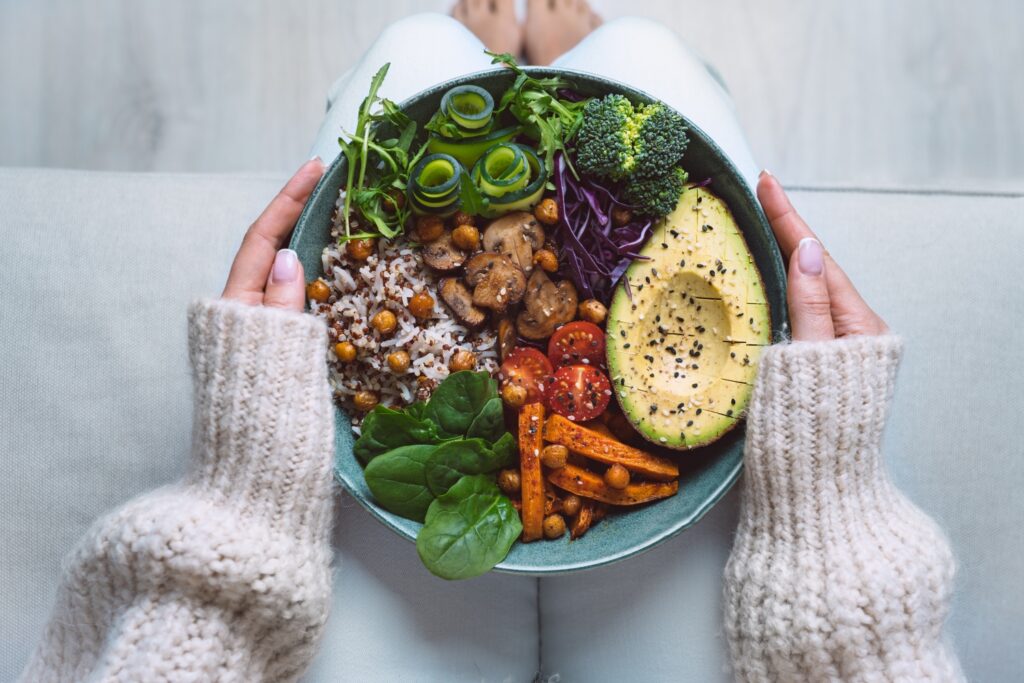
Avocados are a great source of B vitamins (if not the easiest snack to eat during a work out). Photo © luismolinero/Adobe Stock

When it comes to muscle performance, B vitamins play a big role. Your body needs them to convert nutrients into energy, and they are essential for the manufacture of red blood cells that carry oxygen to your muscles.

It’s possible to get a sufficient amount of all B vitamins, except for B12, from a plant-based diet, so it’s not too tricky for a vegan to fuel their muscle-building efforts.

Ideal vegan sources of B vitamins include wholegrains, fortified breakfast cereals, wheat germ, nutritional yeast, sunflower seeds, sesame seeds (including tahini), leafy greens, corn, avocados, mushrooms, nuts, pulses and acorn squash.

For vitamin B12, you need a supplement to get an adequate intake. Aim for at least 50 micrograms daily or 2,000 micrograms weekly, although a daily supplement is better.

7. Vitamin D: Essential for maintenance

Vitamin D is important for healthy muscle function, as a deficiency can lead to the loss of muscle mass and impaired muscle metabolism.

Our main supply of vitamin D comes from sunlight acting on our skin. This means that you probably produce enough vitamin D when exposed to natural sunlight, unless you spend your days indoors or always protect your skin. However, regardless of diet, we all need to supplement vitamin D during the dark winter months as our skin can’t make enough from sunlight alone. The recommended daily dose is 10 micrograms or 400 IU (international units).

Building and maintaining muscles beyond your vegan diet

It’s not just about what you eat; muscles need stimulation to be at their best. This doesn’t necessarily mean you need to start lifting weights (though, it doesn’t hurt – or, not for too long in any case). Just engage in some type of daily physical activity.

Even for those who don’t plan to partake in competitive sports, muscles support your body in virtually any position and any movement. They stabilise joints and enable you to perform essential tasks. Stronger muscles also help prevent injuries and can reduce your risk of osteoporosis.

As we age, we’re more prone to losing muscle mass, but it’s not inevitable – exercise or an active lifestyle can keep your muscles in good shape and is excellent for bone health, too.

https://www.veganfoodandliving.com/vegan-diet/gaining-muscle-on-vegan-diet-essential-nutrients-building-maintaining-strength/


Monday, January 26, 2026

Can A Vegan Diet Cause Vitamin B12 Deficiency? Diet Expert Says Yes, Reveals Why

From ndtv.com

Vegan diets can increase the risk of vitamin B12 deficiency if not planned properly. A senior clinical dietician explains why B12 matters, who is most at risk, and how vegans can prevent serious health complications 

Vegan diets are increasingly popular for ethical, environmental, and health reasons. However, doctors and nutrition experts caution that while a well-planned vegan diet can meet most nutritional needs, vitamin B12 remains a critical exception. Unlike many other nutrients, vitamin B12 is not naturally present in plant-based foods in a form the human body can use.

"A vegan diet pattern will cause a deficiency of vitamin B12, unless it is consciously managed," says Ms. Veena V, Chief Clinical Dietician and Head, Department of Clinical Nutrition and Dietetics, Aster Whitefield Hospital. Vitamin B12, also known as cobalamin, is produced by microorganisms and is found almost exclusively in animal-derived foods such as meat, fish, eggs, and dairy.

This makes vitamin B12 deficiency one of the most common nutritional risks among vegans and unsupplemented vegetarians. Studies consistently show that people who avoid animal foods without taking supplements or fortified products have significantly lower B12 levels and biomarkers compared to non-vegetarians. The consequences can go far beyond fatigue, affecting blood health, nerve function, and even memory.

Why Vitamin B12 Is Essential For Health

Vitamin B12 plays a crucial role in red blood cell formation, DNA synthesis, and neurological function. While the body stores B12 in the liver, these reserves are finite. "If no additional B12 is consumed, these stores can last only a few years," explains Ms. Veena.

When levels drop, early symptoms may include tiredness, weakness, and pale skin due to macrocytic anaemia. More concerning, however, are the neurological effects. "Vitamin B12 deficiency can lead to nerve damage, numbness or tingling in the hands and feet, memory difficulties, and problems with coordination and walking," she warns.

Research published by the National Institutes of Health shows that prolonged B12 deficiency can cause irreversible neurological damage if not addressed in time. This makes early prevention and routine screening especially important for people following vegan diets.

Why Plant Foods Aren't Reliable Sources Of Vitamin B12

A common misconception is that certain plant foods, such as seaweed, spirulina, or fermented products, can provide adequate vitamin B12. However, experts strongly caution against this assumption.

"Plant foods cannot be considered a good source of functional vitamin B12," says Ms. Veena. Many of these foods contain B12-like analogues that are inactive in humans and may even interfere with proper B12 absorption. Relying on these "natural" sources can delay diagnosis and worsen deficiency.


How Vegans Can Prevent Vitamin B12 Deficiency

The good news is that preventing B12 deficiency is both simple and affordable. Vitamin B12 in fortified foods and supplements is present in a crystalline form, which is easily absorbed by the body.

"Various clinical trials and population studies show that supplementation is essential for maintaining adequate B12 levels among vegans," says Ms. Veena. Common strategies include:

  • 50-100 micrograms daily, or
  • 2,000 micrograms once a week, depending on individual needs

Fortified foods such as plant-based milks, nutritional yeast, and fortified breakfast cereals can also contribute to daily intake, but supplements remain the most reliable option.

Who Needs To Be Extra Careful?

Certain groups require closer monitoring of vitamin B12 levels:

  • People transitioning to a vegan diet
  • Pregnant or breastfeeding women
  • Adults over 60 years of age
  • Individuals taking medications such as metformin, which can reduce B12 absorption

"If you are pregnant or trying to conceive, low Vitamin B12 levels may affect the baby's neurological development," Ms. Veena cautions. Regular blood tests can help detect deficiency before symptoms appear.

A vegan diet does not automatically mean nutritional deficiency, but it does require informed planning. Vitamin B12 is one nutrient that cannot be ignored or sourced reliably from plants alone. As experts stress, a small daily supplement or fortified food choice can prevent serious, long-term health problems. Being vegan and being healthy are fully compatible, as long as science, not social media myths, guides your choices.

Disclaimer: This content, including advice, provides generic information only. It is in no way a substitute for a qualified medical opinion. Always consult a specialist or your own doctor for more information. NDTV does not claim responsibility for this information.

https://www.ndtv.com/health/can-a-vegan-diet-cause-vitamin-b12-deficiency-diet-expert-says-yes-reveals-why-10881365

Saturday, January 24, 2026

Veganism is not a renunciation, but an opportunity

From trademagazin.hu

In January, many of us feel like it’s time to slow down, rethink our habits, and be more conscious about our bodies. The Vegan January challenge was born in exactly this spirit: it allows us to step outside our usual framework and literally experience what it means to eat plant-based for a month.

Don’t be afraid of it, it’s not bad


The vegan diet is still surrounded by many misconceptions. “You can’t live well with it,” “it leads to deficiency diseases,” “it’s too complicated,” “people are carnivores” – we often hear these reasons regarding the topic, many people think that it’s only about “not eating meat,” but the reality is that a well-composed plant-based diet can easily become complete and provide all the necessary nutrients. The key is what goes on our plate!

One of the critical points of veganism is protein intake – and not by chance. In addition to building muscle, the body also needs protein for hormone balance, cell regeneration, and energy supply – to name a few – which is why it is important to replace animal protein with plant-based protein. This is not impossible, according to Sára Somogyi, a dietitian at BioTechUSA, the solution lies in combining: “By consuming a variety of legumes, grains, and oilseeds, we can obtain complete protein sources. These include, for example, tofu and other soy products, and grains, breads, baked goods, grain-based side dishes, and pasta. As for seeds, we can eat them raw, but butters made from them, such as peanut, cashew, or nut butters, can also be perfect alternatives for protein supplementation.

Another obvious solution in addition to dietary changes is to purchase a high-quality protein powder – this is not only useful for those who exercise regularly. Vegan Protein Bar is also worth keeping in your drawer, as they can give you extra energy after a workout, and can even be used when you suddenly feel hungry.

Although a well-composed plant-based diet basically requires more fibre intake, it is still important to keep variety in mind.

“Let’s give preference to seasonal produce; of course, it’s no problem if a Hungarian vegetable is not on the menu. on the plate. The point is to eat them as varied as possible”
– the expert added.

The devil is in the details

Since vitamin D3 and vitamin B12 cannot be obtained from a plant-based diet, or only to a limited extent, as can omega-3 fatty acids, they must be supplemented in the form of dietary supplements. In addition, iron and calcium supplements can also be useful. Although they can be provided from plant-based sources, it requires awareness and a varied diet that can be a challenge even for an experienced vegan. Vitamin C helps iron absorb, so it is worth always consuming them at the same time. You don’t have to think about it too much, hummus with a little lemon or chickpea curry with freshly squeezed lime juice can be a good choice.

The truly committed can also balance their zinc, iodine and selenium needs by incorporating legumes, seeds – especially Brazil nuts for selenium -, algae, and iodized salt into their diet.

Not a waiver, but an opportunity

Many people only focus on the “what not to eat” part of veganism and are scared of the waivers – for example, giving up eggs, which are associated with flaxseed.

https://trademagazin.hu/en/a-vegansag-nem-lemondas-hanem-lehetoseg/