Showing posts with label South Korea. Show all posts

Friday, October 23, 2026

7 Unforgettable Days in South Korea: The Ultimate Vegan Travel Guide

From vegnews.com

By Charlotte Pointing

We turned to vegan South Korea travel experts to help us create the ultimate seven-day itinerary, covering must-visit restaurants in Seoul, Busan, and Jeju

The eggless sandwich at ByTofu in Seoul is legendary. Speak to almost any vegan who has recently visited the South Korean capital, and there’s a good chance they’ll mention it. The combination of fluffy tofu egg salad, fresh-baked bread, crispy cucumber, juicy tomatoes, velvety avocado mayonnaise, and sweet strawberry jam (yes, you read that correctly) keeps people returning to the café in the vibrant, trendy central Yongsan District. For some travellers, ByTofu is the first place they visit after landing.

Yes, the top item on the priority list, ahead of South Korea’s spectacular scenery, historic landmarks, and towering glass skyscrapers, is a tofu sandwich.

Perhaps it isn’t all that surprising that tofu is a vegan attraction in South Korea. It is a beloved staple with a long history in Korean cuisine. During the Goryeo period, between 918 and 1392, people even wrote poems about tofu, or dubu in Korean. Some visitors might be tempted to write poetry about the ByTofu sandwich, too. Maybe they already have.
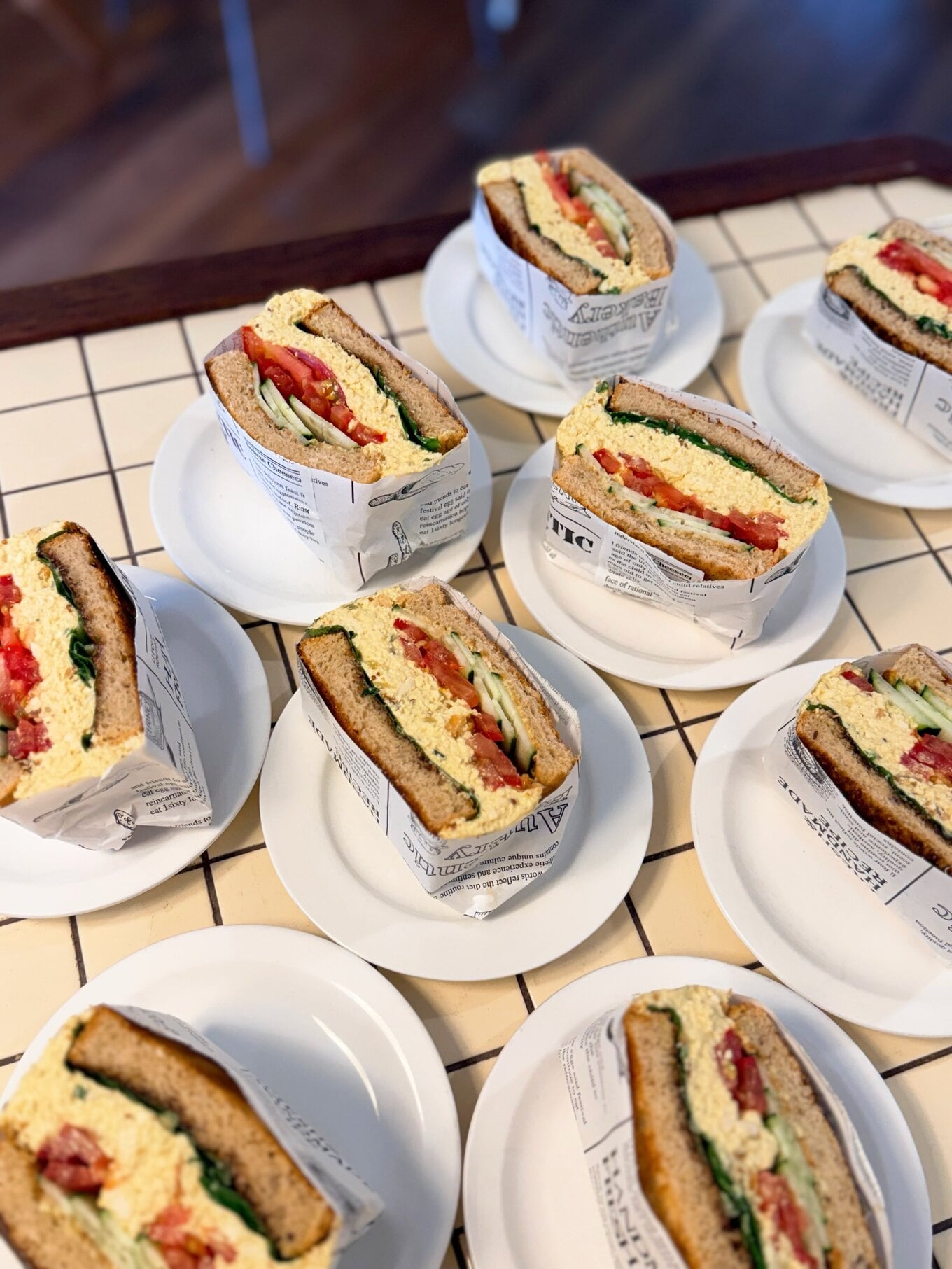
ByTofuByTofu’s vegan egg sandwiches are legendary in Seoul. | ByTofu

ByTofu isn’t alone. The café is part of South Korea’s thriving vegan scene, which marries traditional ingredients with modern appetites. According to HappyCow, there are nearly 900 vegan-friendly restaurants across the country. Almost half are concentrated in Seoul, but travellers will also find dozens of options in popular destinations such as the coastal city of Busan and the sprawling island of Jeju.

For vegan travellers, the food alone is reason enough to visit. That was the case for Paul Eyers, co-founder of the vegan travel guide and review site Vegan Food Quest, who recalls spending most of his time in Seoul eating, as well as “walking and soaking up the unique vibe that is omnipresent in the city.”

“Having lived in Southeast Asia for more than 12 years and explored many corners of the region since the late 90s, nothing could have prepared us for the sensory overload and bustling vibe of this exciting city,” he told VegNews. 

How to experience South Korea in just one week

Like Eyers, most visitors to South Korea begin in Seoul, and not just because of its vegan options. The capital blends the futuristic with the traditional, with modern skyscrapers standing alongside ancient temples. You could spend months exploring the city and still feel as though you had barely scratched the surface.

But let’s be honest: not everyone has months to dedicate to exploring. If you have only seven days in South Korea, don’t worry. The trip is still well worth taking, and you’ll have plenty of time to see the sights and sample the food.

The key is to prioritize quality over quantity, says Verene Erhart of Vegan Tours New York, which runs tours in New York City and beyond, including a vegan trip to South Korea this fall.

“Seoul could keep you busy for months,” she says. “But in order to get a feel for the country, I would divide my time between Seoul and Busan if possible. Taking the high-speed train between the two cities is an experience on its own.” 

Busan Korea Tourism OrganizationBusan is just a short high-speed train ride from Seoul. | Korea Tourism Organization, Lee Subin

For a more relaxing escape, Erhart also recommends Jeju Island, which is a short flight from Seoul.

To help you plan, we spoke with Eyers and Erhart about how to make the most of one week in South Korea. With their expert guidance, we’ve created a comprehensive seven-day vegan itinerary that begins in Seoul and then heads to Busan or Jeju. So leave the planning to us and get straight to exploring and eating—we hope your stomach is ready.

But before we dive in, here’s what you need to know about when to visit, where to stay, and how to make the most of your trip.

Choosing the perfect time to visit South Korea

If you have only seven days to explore, choosing the right time of year is essential. Three words: avoid peak summer. As in many parts of the world, the climate crisis is making South Korea’s hottest season even hotter. In 2026, temperatures regularly exceeded 100 degrees Fahrenheit.

For cooler, more comfortable conditions, book your trip during spring (March to May) or fall (September to November). The weather is generally pleasant, with a lower risk of heat waves and extreme conditions such as monsoon rains.

If you prefer cold weather, winter is another option. Be prepared, however, as night-time temperatures can fall below 45 degrees Fahrenheit.

Transportation 101

Several airlines fly from the US to South Korea, including Delta and United, but many travellers recommend flying to Seoul with Korean Air. The airline is known for its comfortable flights, strong customer service, and wide selection of food. Vegan meals are available, including Korean-style dishes such as tofu tteokgalbi (a plant-based version of minced beef short ribs) and siraegi (sun-dried radish greens) with braised potatoes. There are also Western options: just make sure to request one when booking.

Korean Air also flies to South Korea from several major European cities, including London, Madrid, Amsterdam, and Paris.

Once you arrive in Seoul, getting around is relatively easy, but there are a few things to keep in mind. Erhart recommends downloading Naver Maps, for example. “It’s the local equivalent of Google Maps,” she explains. “It will guide you around the country. It has way more functionality than Google Maps, which is somewhat limited.”

When you need a ride, make sure you have Kakao T downloaded. “It’s the South Korean version of Uber or Grab,” says Eyers. “It will make hailing a ride that much easier.”

Finding your perfect base: South Korea stays to consider

Our seven-day itinerary covers three destinations: Seoul, Busan, and Jeju. So, where should you stay in each one? Here are some of our top accommodation picks to help narrow your search.

For luxury and high-end Japanese dining, stay at Four Seasons Seoul

Four Seasons operates luxury hotels around the world, and South Korea is no exception. Its stylish, contemporary Seoul property sits in the heart of the elegant Jongno-gu district and features several bars and restaurants, including Akira Back, a Japanese-fusion restaurant with a dedicated vegan menu. That means that after a long day of exploring the city, you can enjoy a banquet of dishes such as crispy avocado rice, seaweed salad, popcorn tofu, and vegetable tempura.

For a cosy home away from home, book this vegan Airbnb in Busan

An apartment in the same building as a vegan bakery and a vegan grocery store? We may have struck vegan gold. Guests who have stayed at this Airbnb in Busan’s portside Chungmu-dong neighborhood describe it as a vegan paradise that is also clean, comfortable, quiet, and conveniently located near a subway station, making it easy to sightsee.

Embrace nature at Doldam B&B on Jeju Island

If you’re looking for tranquillity, peace, and nature, Doldam B&B on Jeju Island delivers. It’s located in the busy resort city of Seogwipo, but you wouldn’t know it. Situated on the beach, the B&B is welcoming, friendly, and cosy, according to former guests. Doldam B&B is conveniently located for sightseeing, and you can also enjoy on-site activities, including vegan-friendly cooking classes. Just let the owners know you’re plant-based, and they’ll cook you a nourishing vegan breakfast every morning. We can see why some reviewers have called this place heaven on earth.
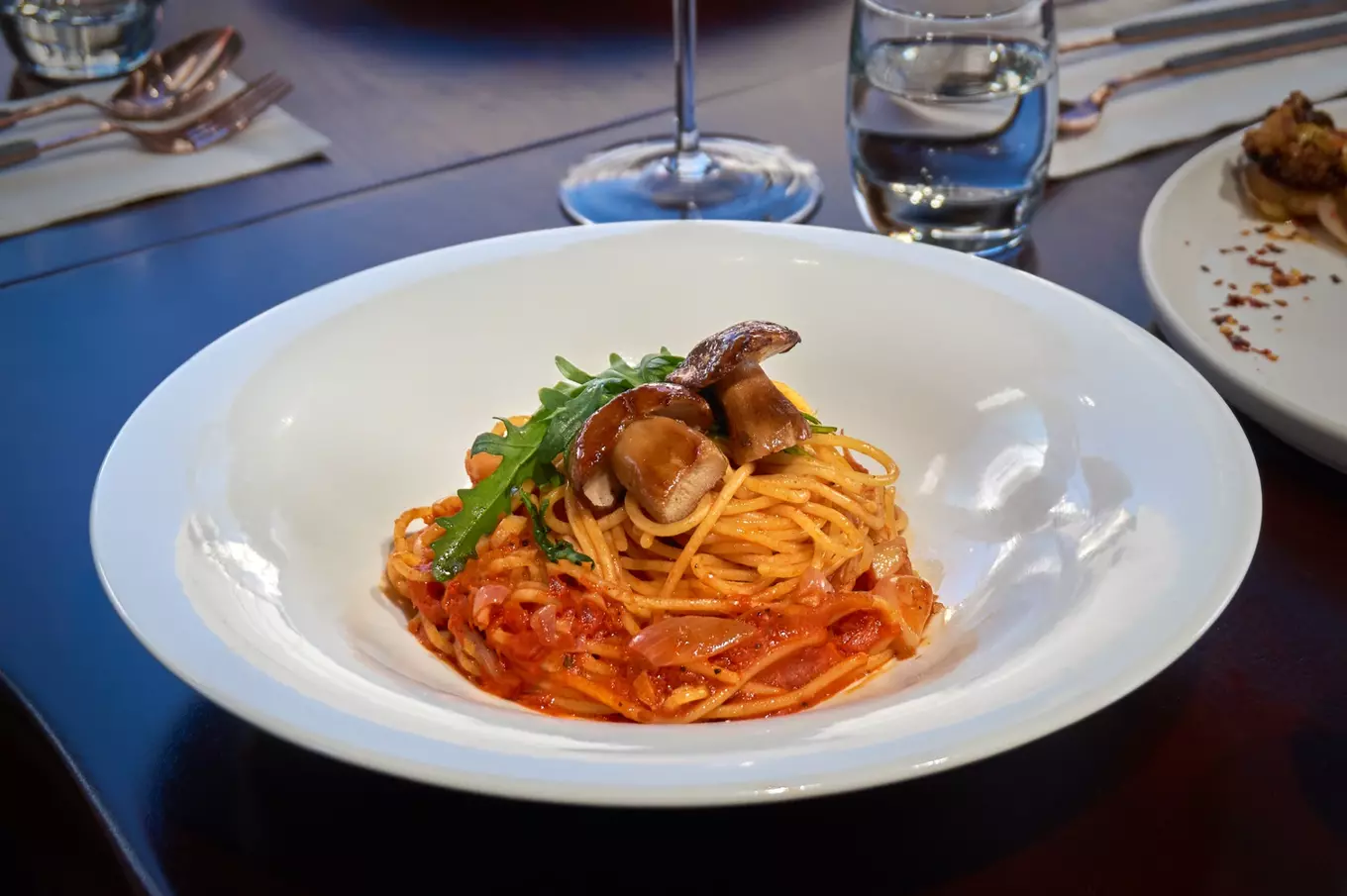
 Mahina Vegan Table  PastaMahina Vegan Table is the place to go for high-end, Italian dining. | Mahina Vegan Table

Don’t miss vegan fried chicken, Italian fine-dining, and doughnuts in Seoul

As we said, Seoul isn’t short on vegan options. There are hundreds of vegan-friendly restaurants across the city, and according to HappyCow, nearly 60 of them are entirely vegan. As much as we would love to visit them all in a few days, that probably isn’t possible, although you’re welcome to give it your best shot.

As we’ve established, ByTofu is a must. The Eggless Egg Mayo sandwich is a firm favourite, but you can also choose from wraps, smoothies, freshly squeezed orange juice, nourishing bowls, and freshly baked cookies. 

For lunch, dinner, and dessert, you’ll be spoiled for choice. Eyers loved the Korean-spiced vegan chicken at Vegan Insa in the historic Jongno District and indulged in vegan doughnuts at “the excellent O.verte” in the bustling Jung District.

For Western-style food, check out Mahina Vegan Table in Gangnam for Italian-inspired fine dining or Weirdough in Seodaemun-gu for pizza. Camouflage in the Yongsan District is also a good choice for American-Chinese cuisine.

Our top restaurant picks in Seoul:

  • ByTofu, Yongsan District

  • Camouflage, Yongsan District

  • Mahina Vegan Table, Gangnam District

  • O.verte, Jung District

  • Vegan Insa, Jongno District

  • Weirdough, Seodaemun-gu

Soban Vegan soy chickenSoban Vegan is all about hearty, delicious, vegan comfort food. | Soban Vegan

Inside Busan’s thriving vegan food scene, with temple food and fine dining

With more than 70 vegan-friendly restaurants, nine of which are entirely vegan, Busan isn’t short on plant-based options. “Great vegan spots are dotted throughout the city,” Erhart assures.

Soban Vegan in Seo-gu is one such spot, serving homestyle Korean dishes such as bean bulgogi, fried dumplings, and crispy soy chicken. For fine dining, visit the Michelin-recommended Arp in the island district of Yeongdo-gu. Expect high-end Asian fusion, fresh, locally sourced ingredients, and creative presentation. Just make sure to book in advance, as the restaurant is seriously popular.

For healthy, organic, and nourishing plant-based food, try Nayuta’s Kitchen in Geumjeong-gu. Don’t miss the selection of vegan temple food at Vegenarang in Suyeong-gu, either. For pure comfort, head to Pyeonhan Jipbap in Buk-gu for hearty soups, noodles, dumplings, and soy chicken.

Our top restaurant picks in Busan:

  • Arp, Yeongdo-gu

  • Nayuta’s Kitchen, Geumjeong-gu

  • Pyeonhan Jipbap, Buk-gu

  • Soban Vegan, Seo-gu

  • Vegenarang, Suyeong-gu

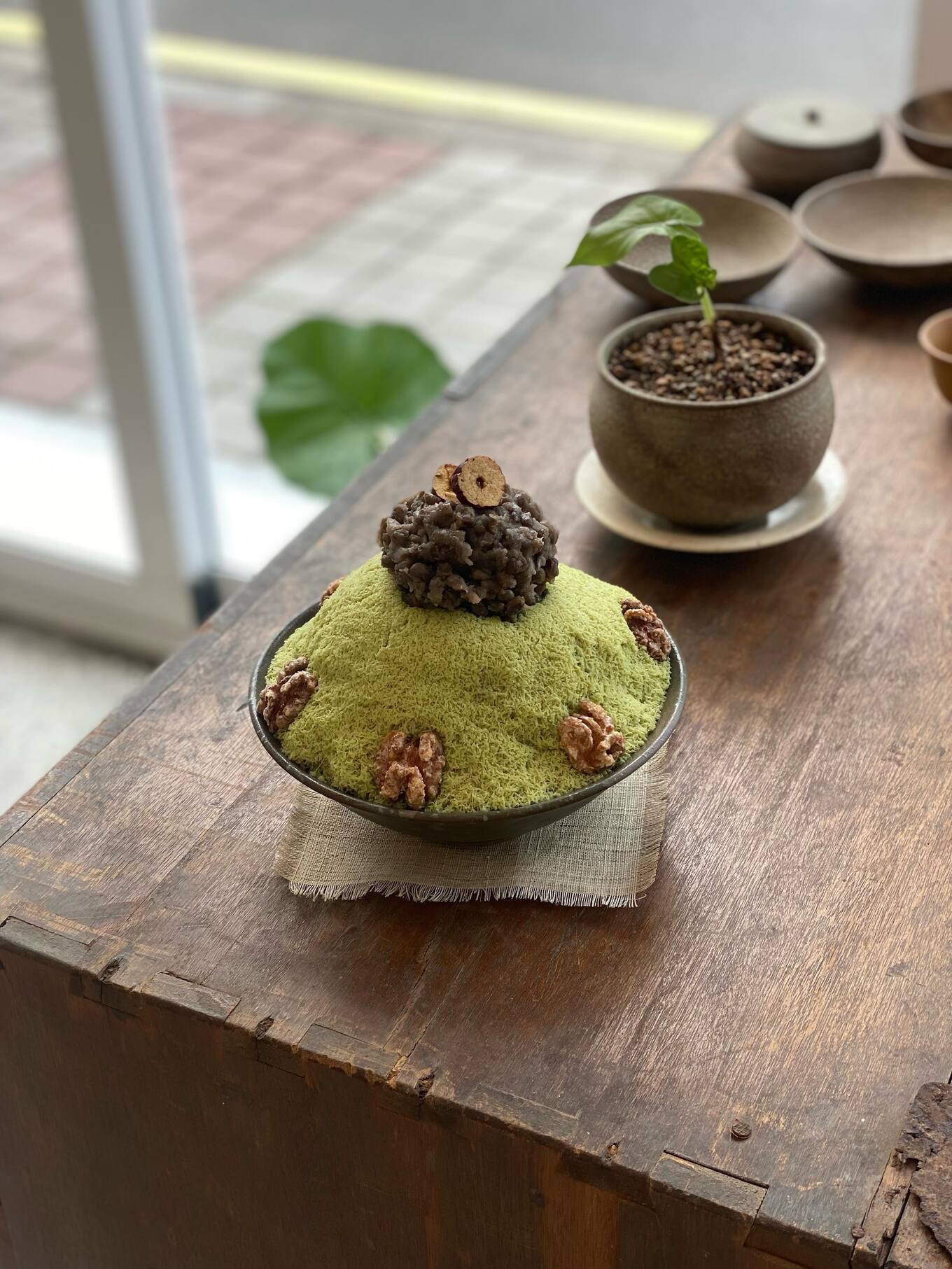
Tathata bingsuTathata is known for its vegan take on bingsu, a traditional Korean dessert. | Tathata

Ocean views, vegan hot pot, and bingsu in Jeju

Jeju doesn’t disappoint when it comes to vegan food. According to HappyCow, the island has more than 90 vegan-friendly restaurants, 12 of which are entirely vegan.

One must-visit spot is AndYuCafe in Jeju-si, which serves an extensive menu of Asian-Western fusion dishes. Think club sandwiches, green curry, and vegan chicken burgers, with plenty of cakes for dessert.

Cafe Craft Danda in the coastal town of Gujwa-eup offers vegan versions of traditional Korean dishes, alongside yoga classes and a shop selling handmade clothing. Gujwa-eup is also home to Five Seventh, which serves Asian-Western fusion food and offers stunning ocean views. At Lan’s Kitchen in Aewol-eup, you’ll find vegan takes on Vietnamese and Korean classics, including banh mi and hot pot.

For a sweet treat, head to Tathata in Aewol Port Harbour for traditional vegan bingsu, a fluffy shaved-ice dessert.

Our top restaurant picks in Jeju:

  • AndYuCafe, Jeju-si

  • Cafe Craft Danda, Gujwa-eup

  • Five Seventh, Gujwa-eup

  • Lan’s Kitchen, Aewol-eup

  • Tathata, Aewol Port

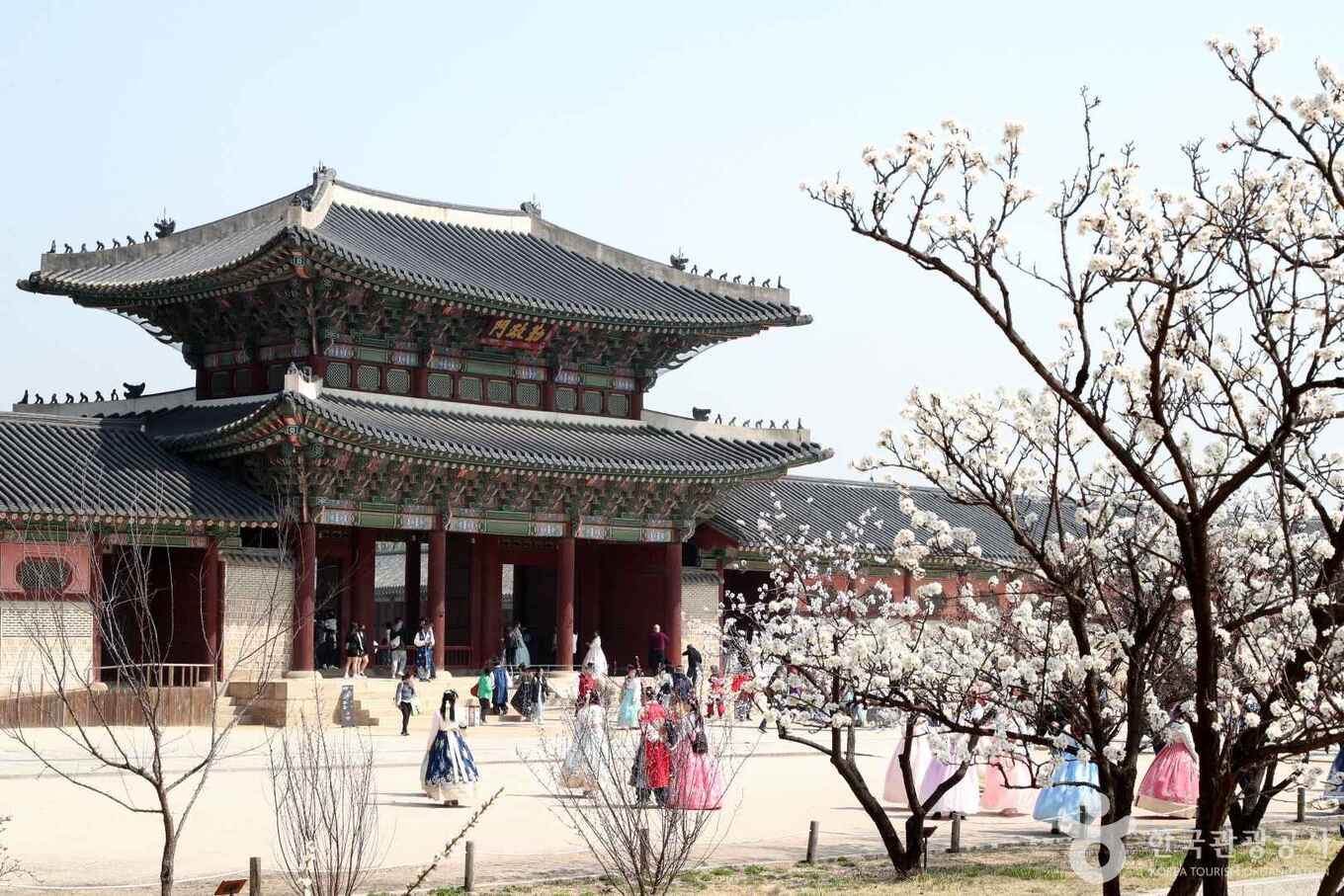
Gyeongbokgung PalaceMake sure to visit Gyeongbokgung Palace, a 14th-century former royal palace in Seoul. | Korea Tourism Organization, Lee Bumsu

The ultimate seven-day vegan South Korea itinerary 

Okay, it’s time to plan your activities. Here, we’ve pulled together the ultimate seven-day vegan South Korea Itinerary with the help of our experts.

Day 1: Settling in, getting to know Seoul

After you’ve battled your way through customs and made it to your hotel, take a deep breath. Things are about to get busy.

If you’re ready to stretch your legs after the journey, head toward Namsan Park. Enjoy a leisurely walk before making your way up to the famous N Seoul Tower for sweeping views across the city.

Ride the historic Namsan Cable Car back down, ready for an evening of fun. Feeling fancy? Make a reservation at the Michelin-recommended Legume. If you’d rather experience Seoul’s bustling nightlife, consider joining an organized pub crawl with one of the city’s many tour operators.

Day 2: Take yourself on a self-guided walking tour of historic Seoul

Start the day by grabbing breakfast at ByTofu after it opens at 9 am (just be sure to check it’s open, as it is closed on Tuesdays and Wednesdays). 

You’ll need a hearty breakfast because you’re about to rack up a lot of steps. Fun fact: Seoul was ranked as the most walkable city in the world by Time Out this year. 

Start your sightseeing at Gyeongbokgung Palace, the 14th-century former royal palace of the Joseon dynasty. Then head to Bukchon Hanok Village, where traditional Korean houses line the narrow streets. From there, continue toward Insadong and Ikseon-dong, two neighbourhoods packed with shops, cafés, and restaurants.

This would be a great opportunity for a lunch stop at Vegan Insa, and after you’ve filled up on fried chicken, you can stroll toward Cheonggyecheon Stream, an 7-mile-long stream that runs through downtown Seoul.

“We were particularly impressed by Cheonggyecheon Stream, which has replaced an elevated highway in the heart of the city,” says Eyers. “It’s now a hub of activity and [people exercising] and has attracted a myriad of wildlife to this urban artery.”

Day 3: Temple day

According to Erhart, a half-day or overnight temple stay is an essential experience when visiting South Korea. It’s peaceful, restorative, and culturally enriching. As an added bonus for vegan travellers, Korean Buddhist temple cuisine is traditionally plant-based.

Seoul is home to many Buddhist temples, but historic Jingwansa, one of the city’s four major temples, stands out for its location in the scenic Bukhansan National Park. During a temple stay, you’ll gain first-hand insight into Korean monastic life through activities such as meditation, chanting, and tea ceremonies. You can also expect simple meals of rice and vegetables served in balwoo, the traditional wooden bowls used in Korean Buddhist temples.

If you don’t have the opportunity to visit a temple, stop by Balwoo Gongyang in Jongno District for fine-dining vegan temple cuisine. The menu changes with the season, but in the fall, you can expect dishes like root vegetable japchae, deep-fried mushrooms with chili, pickled vegetables, and candied walnuts.
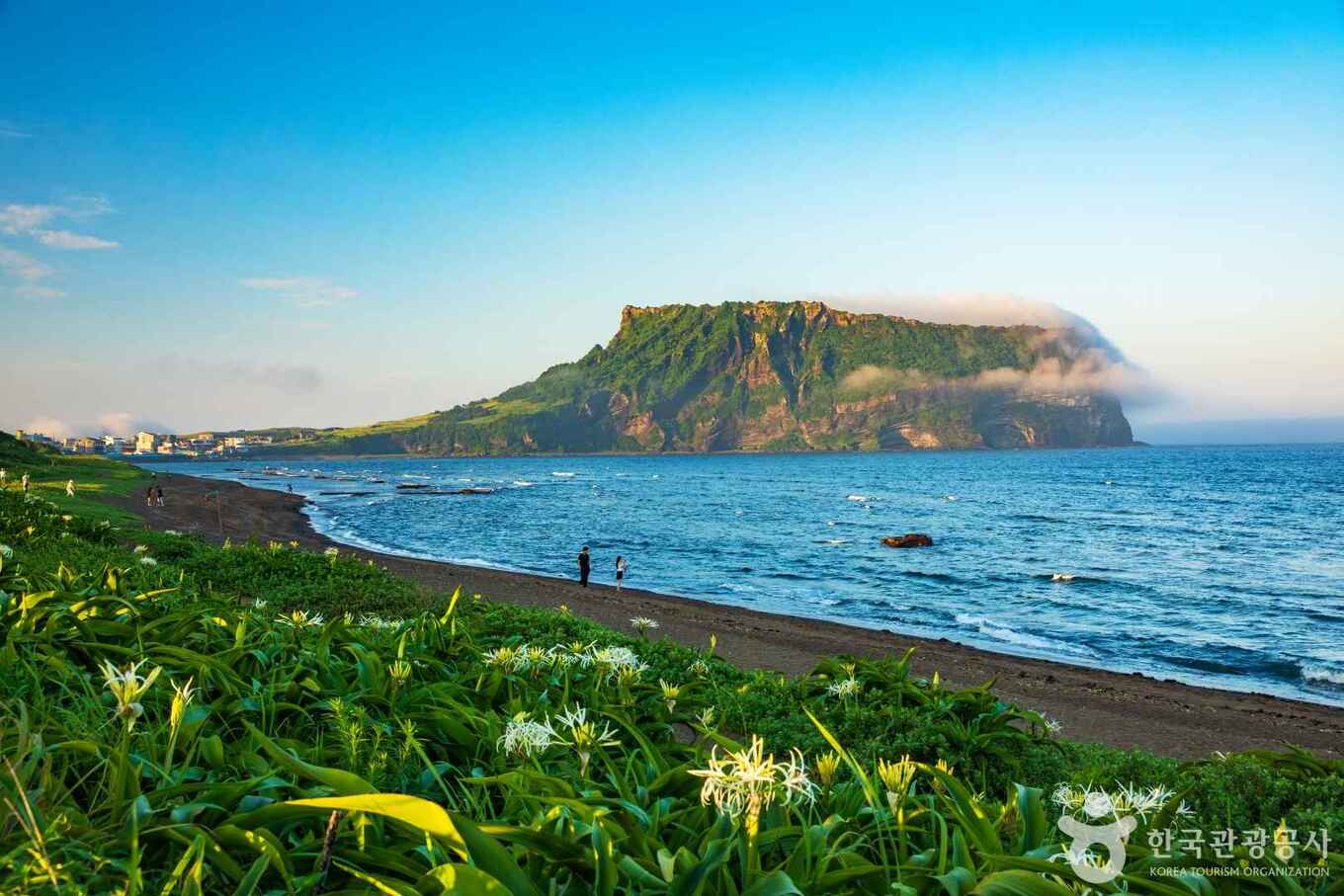
jeju islandPicturesque Jeju Island is just a short flight from Seoul. | Korea Tourism Organization, Jeong Heui-jun

Day 4: Pick your adventure–Busan or Jeju Island

Now, it’s time to see a little more of South Korea outside of the Seoul metropolis. But “don’t try to cram too much in a week,” reminds Erhart. It’s about quality, not quantity.

Her advice? Pick between Busan and Jeju Island, both of which are located just a few hours from Seoul. Want more bustling city action with a touch of sea air? Head to Busan. If you want a break from the hustle and bustle, pick Jeju Island, which is a haven for nature lovers. “It’s small enough to be explored in a few days (and a short flight from Seoul’s Gimpo Airport).”

For Busan, hop on either the Korea Train Express at Seoul Station or the Super Rapid Train at Suseo Station—both high-speed bullet trains that will have you in Busan within two to three hours. For Jeju Island, the quickest option is a domestic flight, which takes a little over an hour from either Gimpo International Airport or Incheon International Airport.

You can spend the rest of the day settling into your hotels and exploring your new surroundings. Stock up on vegan groceries (especially if you’re staying in Busan’s Airbnb!), take a walk along the beach, or spend the afternoon poolside, with a cocktail, before heading out to dinner.

Day 5: Explore Busan or Jeju

If you picked Busan, make the most of the walking paths and oceanfront temples, says Erhart. And don’t miss the “huge Korean Jjiljimbang, a spa located inside the world’s largest department store.” Called Spa Land Centum City, this spa features 22 natural thermal water baths, multiple saunas, indoor gardens, and outdoor foot baths. 

You could also head for a 30-minute private ride on the Haeundae Blueline Park Sky Capsule for stunning views of Busan’s skyline, or take a ride along the coast on the old railway line via Busan’s scenic Beach Train. 

The Gamcheon Culture Village, full of murals and bright, colorful homes, is another stand-out choice. The Haedong Yonggungsa, one of the most famous temples in South Korea, is also worth prioritizing, but note you will probably need to book a private transfer, as it’s a little way from the city centre. 

If you picked Jeju, spend the day relaxing on one of the island’s beaches or, if you want to take in more of the sights, rent a car or join a tour.

The island is full of volcanic craters, waterfalls, and seriously impressive caves, including the recently reopened Manjanggul Lava Tube, part of Jeju’s UNESCO-listed volcanic landscape.
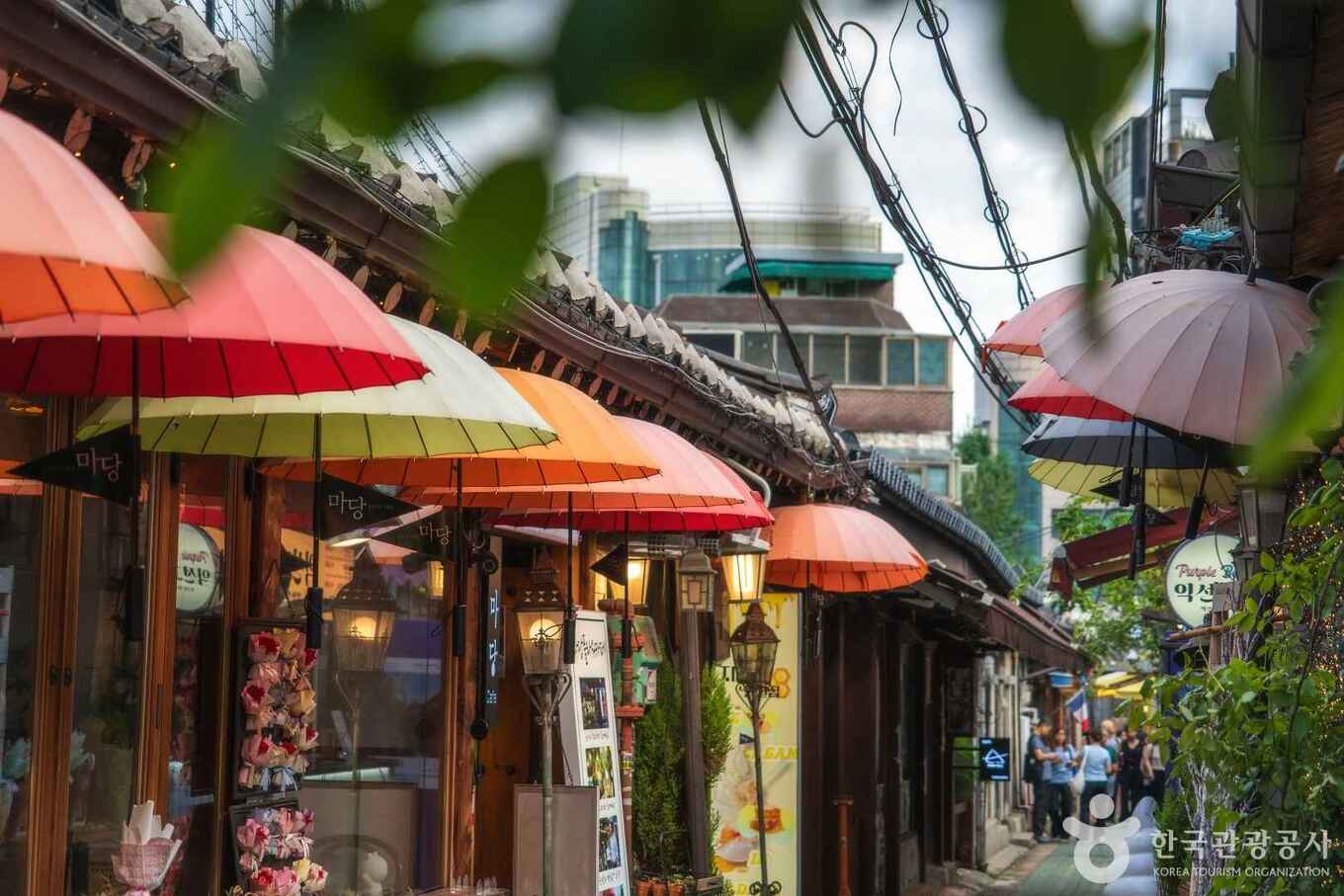
Seoul2Soak up the last few hours of Seoul before catching your flight home. | Korea Tourism Organization, Jeong Kyujin

Day 6: Soak up your last few hours in Busan or Jeju, then head back to Seoul

Haven’t had your fill of Busan or Jeju? Take the morning to squeeze in a little more exploring before heading back to Seoul.

In Busan, you could explore Nampo, which is home to the famous Diamond Tower and Biff Walking Street. In Jeju, consider a trip to Iho Tewoo Beach, which is just a short bus ride from the airport and perfect for a last-minute swim. 

Once you’re back in the capital, keep things relaxed. Eyers’ tip? Dedicate your final afternoon or evening to Yeouido Hangang Park.

“If escaping the concrete skyscrapers and oversized (and seriously impressive) 3D digital billboards is on your agenda, then be sure to spend time walking through Yeouido Hangang Park,” he says. “It’s on the banks of the Han River and gives more opportunity to relax and rejuvenate, surrounded by nature, breathing the fresh air.”

Day 7: Enjoy vegan bulgogi before your flight home

Before you leave, Eyers recommends seeking out a plant-based version of bulgogi, the famous Korean dish traditionally made with thinly sliced, marinated meat.

“We made sure to search for a plant-based version of this South Korean staple,” says Eyers. “This vegan food quest led us to Hotel 28 in Myeongdong, which listed a vegan version on its breakfast menu. It was insanely good.”

After breakfast, squeeze in some last-minute shopping or sightseeing before heading to the airport. But don’t worry, we suspect you’ll be back. In fact, you might find yourself searching for return flights before you’ve even landed at home.


Thank you to the Korea Tourism Organization for partnering with VegNews on this story.

Monday, October 5, 2026

Beyond Vegan Restaurants: A New Way for Plant-Based Travellers to Experience Korea

From openpr.com

SEOUL, South Korea - October 2, 2026 - As international interest in Korean food grows, plant-based travellers are looking for experiences beyond restaurant recommendations. For many plant-based travellers, the question is not only where to eat, but how to understand Korean food while navigating dietary preferences.

Korean cuisine includes a wide range of vegetable-based dishes, fermented foods and traditional side dishes. For plant-based travellers, however, navigating Korean sauces, broths and other ingredients can require more local knowledge.

That is where Korean food educator So Nayoung sees an opportunity. So studied food and nutrition and has more than a decade of experience in culinary education. She previously operated a vegan cooking academy, taught Korean food and culture to international students at Yonsei University's Korean Language Institute, and authored two books on vegan cooking.

Today, through Travelko, So creates small-group experiences that introduce international visitors to Korean food through a more personal, local setting. Its Seoul-based Korean vegan cooking experience brings guests into a local home to prepare several Korean dishes, learn how they are seasoned, and share a home-style meal together. Rather than simply choosing a vegan dish from a restaurant menu, guests take part in preparing Korean food and experience how different dishes come together at the table.


Experience the Korean Vegan Cooking Class: https://www.airbnb.co.kr/x/travelko2

Travelko has also expanded beyond Seoul. Its Ganghwa Island food tour, "A Chef-Led Local K-Food Tasting in Ganghwado," was selected as one of 15 products in the Korea Tourism Organization's 2025 K-Culture Specialized Products for Individual Travelers program. The tour is also featured on the official VISITKOREA platform, presenting Ganghwa's local ingredients, food culture and history, with vegan options available.

"I wanted to create an experience where vegan travellers don't feel like they are missing out on Korean food culture," So said. "They can cook, taste different dishes and experience how Korean food is shared at home."

The concept has resonated with international guests. Emma, a traveller from Portland, Oregon, wrote in a review that if the cooking class had been the only thing she did in South Korea, she "would have been more than satisfied," adding that she made memories and food "I will carry with me for the rest of my life."

The concept comes as Seoul's international tourism continues to grow. The Seoul Metropolitan Government reported a record 8.23 million international visitors in the first half of 2026, while card spending by international tourists reached KRW 5.617 trillion.

About Travelko

Founded in June 2025, Travelko is a Seoul-based inbound travel company offering immersive experiences for international visitors to Korea. Through local food, hands-on cooking and cultural activities, Travelko connects travelers with Korea's everyday life and local communities.

Media Contact
Company Name: Travelko

Contact Person: So Nayoung

Email: Send Email [http://www.universalpressrelease.com/?pr=beyond-vegan-restaurants-a-new-way-for-plantbased-travelers-to-experience-korea]

Country: South Korea
Website: https://www.travelko.kr


Legal Disclaimer: Information contained on this page is provided by an independent third-party content provider. GetNews makes no warranties or responsibility or liability for the accuracy, content, images, videos, licenses, completeness, legality, or reliability of the information contained in this article. If you are affiliated with this article or have any complaints or copyright issues related to this article and would like it to be removed, please contact retract@swscontact.com 

https://www.openpr.com/news/4650769/beyond-vegan-restaurants-a-new-way-for-plant-based-travelers

Sunday, June 21, 2026

Vegan Cocktail Foaming Solutions

From trendhunter.com

Vegg White By Vegg White has launched Across Asia-Pacific 

Vegg White, a plant-based alternative to egg whites created by Polish founders Kacper Dylak and Piotr Pieron, is expanding across Greater China, Japan, South Korea, Singapore and Australia through a partnership with brand strategist Nimbility. Designed for contemporary mixology, the product features a vegan foaming formula that replicates the texture, foam stability and mouthfeel of fresh egg whites while offering greater consistency and a longer shelf life. Mixologist and content creator Kevin Kos joined the company as co-owner in February 2026 and will help lead educational initiatives supporting the expansion.


The partnership leverages Nimbility’s distributor network, hospitality relationships and activation capabilities to introduce Vegg White to leading bars and hospitality venues across the region. The product is designed to support foam-driven cocktails and low- and no-alcohol serves while reducing operational challenges associated with fresh egg whites, including food-safety risks, allergen concerns and product waste.

For hospitality operators, Vegg White provides a reliable, scalable ingredient that supports both cocktail performance and sustainability goals. As Asia-Pacific’s bar scene increasingly emphasizes texture, presentation and operational efficiency, the expansion reflects growing demand for plant-based, functional ingredients that help venues deliver consistent premium drinking experiences.

Vegan Cocktail Foams
Plant-based foaming ingredients are reshaping premium mixology by delivering egg-white-like texture, stability and mouthfeel without animal-derived inputs.
Functional Bar Ingredients
Shelf-stable cocktail components create new efficiency models for hospitality venues balancing consistency, food safety and high-end presentation.
Low-no Alcohol Texture
Texture-enhancing vegan formulas expand the sensory appeal of low- and no-alcohol drinks, helping bars elevate non-traditional serves beyond flavour alone.

                                                        From: Fruit-Focused Foam Toppers

Industries Being Reshaped

Hospitality
Bars, hotels and restaurants gain access to scalable plant-based ingredients that reduce waste, simplify operations and support premium beverage programs.
Food Technology
Ingredient innovation in plant-based emulsification and foaming opens white-space opportunities for alternatives that replicate animal-based culinary functions.
Beverage Distribution
Regional distributor networks become strategic channels for introducing specialized mixology products into high-growth Asia-Pacific cocktail markets.

https://www.trendhunter.com/trends/vegg-white

Wednesday, February 25, 2026

6 Michelin-Star vegan restaurants that even carnivores book months ahead

From veganfoodandliving.com

Planning a luxury plant-based trip? Here are the top Michelin-starred vegan restaurants you need to visit, featuring the award-winning chefs pioneering sustainable gastronomy


For decades, the prestigious red Michelin star was synonymous with butter-laden French sauces and prime cuts of meat. But since the boom of veganism in the late 2010s, the Michelin Guide has undergone a radical transformation. In recent years, the industry has seen the vegetable option move from a sidelined alternative to the main event, and Michelin star vegan restaurants have been flourishing.


6 Michelin star vegan restaurants you need to visit

1. Plates London – United Kingdom

Number of Michelin stars: ★
Price range: £109 for 8 courses (+£70 for wine pairings)
Location: 320 Old Street, Hoxton, London, EC1V 9DR, United Kingdom
How to book: Visit exploretock.com/plates-london

About the restaurant:

As one of the more recent Michelin star vegan restaurants to join the guide, Plates London made history as the first UK vegan restaurant to win a Michelin star in 2025, a feat achieved less than six months after opening its doors. It was founded by siblings Kirk and Keeley Haworth shortly after Kirk was crowned ‘Champion of Champions’ on the BBC’s The Great British Menu.

Both Kirk and Keeley bear a lifelong passion for food, with a focus on sustainability, embracing nature, and, above all, great flavours. Together, they’ve developed Plates’ unique style of cookery, serving skilfully-crafted, exquisitely flavoured seasonal dishes in its relaxed yet upmarket dining area.

This limited-edition Plates London menu reimagined childhood classics such as arctic roll, fish finger sandwiches, and Salt 'n' Shake crisps. Photo © Plates London


About the chef:

Classically-trained chef Kirk Haworth turned his talents to plant-based cuisine after contracting Lyme disease in Australia in 2016. Before opening Plates, he spent almost 20 years honing his skills in Michelin-starred restaurants across the world.

While sustainability is important to Kirk, he prefers not to focus on the ‘vegan’ aspect of the food, instead striving to bring flavour, excitement, and innovation to nourishing ingredients that just happen to be plant-based.

Menu highlights:

Plates London’s eight-course tasting experience starts with its signature house-laminated sourdough bread, served with whipped vegan butter. This rich, fluffy butter is often infused with seasonal flavours to complement Chef Kirk’s menu.

He often focuses on nostalgic flavours, with fresh takes on classic dishes. Other highlights include caramelised lion’s mane mushrooms with seasonal fruits and vegetables, and warm cacao sponge with parsnip ice cream.

What Michelin says:

“There’s an appropriately earthy, natural vibe to this elegant restaurant dedicated to promoting plant-based cuisine. The slate floor, warm hues and rustic plastering help it feel stripped-back yet stylish, with some counter seating providing another on-trend touch.

“Chef Kirk Haworth … brings his strong classical technique to bear on inventive and inviting vegan dishes that give vegetables the respect they deserve. The maitake mushroom with black bean mole is superb, while the raw cocoa gateau is a real treat to finish.”

2. De Nieuwe Winkel – the Netherlands

Number of Michelin stars: ★ ★

Price range: €205-€215 for 9 courses (+€95 for drinks pairings)

Location: Gebroeders Van Limburgplein 7, Nijmegen, 6511 BW, Netherlands

How to book: Visit denieuwewinkel.com

About the restaurant:

Housed in a 14th-century orphanage in downtown Nijmegen, this ‘botanical gastronomy’ restaurant offers farm-to-table tasting menus which change with the seasons. Expect a magical dining experience, complete with an open kitchen where you can watch the team expertly prepare the impressive fare.

But food at De Nieuwe Winkel goes beyond the kitchen with its food lab, in which chefs, farmers, and scientists come together to develop incredible innovations. The restaurant’s realistically rich almond-based cheese and a sustainably-produced chestnut-based chocolate are just two of the environmentally restorative products to come from DNW Labs.

Along with its two Michelin stars, this vegan restaurant has also been awarded a green star, recognising its outstanding sustainability practices. Among them is its zero-waste approach, which includes using the SCOBY left over from fermenting kombucha to create crispy ‘tulle’ with umami flavour.

The interior of De Nieuwe Winkel is understated with raw, functional decor, keeping focus on its 'botanical gastronomy' concept. Photo © De Nieuwe Winkel


About the chef:

The mastermind behind De Nieuwe Winkel is Chef Emile van der Staak, awarded Chef of the Year 2024 by Gault&Millau Netherlands.

His culinary philosophy of ‘botanical gastronomy’ is inspired by Ketelbroek, the self-sustaining ‘food forest’ planted by his friend, Wouter van Eck. This resilient ecosystem offers conditions ideal for growing exotic plants that would not normally thrive in the Netherlands.

In Ketelbroek and the nearby organic garden ‘Ommuurde tuin‘, Chef Emile and his team taste and gather the astonishing ingredients to be developed into the restaurant’s innovative dishes.

Menu highlights:

Innovative dishes at this Michelin star vegan restaurant include a kombu cracker, topped with kohlrabi and SCOBY (leftover from making kombucha) or carrot dumplings with Japanese rose and Szechuan pepper.

Also look out for DNW’s signature butter, which is made from sunflowers.

What Michelin says:

“[Emile van der Staak] is a visionary writing a story, with every chapter whetting your appetite. The passion and positivity he and his team radiate is truly inspiring.

“[Ketelbroek] is where he makes discoveries, reflects and creates – and his is a creative spirit that seems to know no bounds. He has developed a precise technique of bringing the microseasons to life in his set menu, which changes three times a year.”

3. Seven Swans – Germany

Number of Michelin stars: ★

Price range: €229 for 7 courses (+€119 for wine pairings)

Location: Mainkai 4, Frankfurt on the Main, 60311, Germany

How to book: Visit sevenswans.de/reservation

About the restaurant:

This restaurant appears shrouded in mystery, with very little information on its website. No sample menu, no pictures of the food, and no information about the restaurant and its operation. There’s not even any indication that it’s vegan. But this is intentional.

Head Chef Ricky Saward believes that the magic of food comes from being surprised, and once you’ve seen the menu and imagined the taste, the magic is gone. So, if you want to get the true Seven Swans experience, skip to the next restaurant in this list now.

Seven Swans serves farm-to-table dishes crafted from ingredients grown no more than 50 km from the restaurant. In fact, many of them come from the restaurant’s own permaculture garden, Braumannswiesen (or, Brewer’s Meadows), just outside of Frankfurt. This is one reason Seven Swans has also been awarded a green star for sustainability.

Dining here is an experience, as each part of the seven-course ‘surprise menu’ is served to all guests in the dining room at the same time, along with a detailed, impassioned description of the dish by the head chef himself.

The decor is stripped-back and minimalistic, and the seating isn’t exactly comfortable, but this is all part of the plan. At Seven Swans, diners’ attention is turned completely to the food, meaning every morsel is enjoyed to the fullest.

Seven Swans is housed in Frankfurt's narrowest building. Photo © Seven Swans


About the chef:

Chef Ricky Saward took over Seven Swans in 2018, at which point it was a vegetarian restaurant that already held a Michelin star. This was Ricky’s first head chef job, and his first venture into vegetarian cuisine. He quickly gained a flair for it and became passionate about sustainability through food. This naturally led to an interest in vegan cuisine, and by 2019, he had quietly phased out all animal products from the menu.

It wasn’t until around six months later that Seven Swans announced that it had been serving plant-based food for some time, and apparently, no one had missed the animal products. Despite the changes made to the restaurant, it maintained its Michelin star, and in 2020, Ricky Saward was officially recognised as the world’s first vegan Michelin-starred chef.

When he took over the Seven Swans kitchen, Ricky also got involved in its permaculture garden, which, at the time, only produced herbs and a few vegetables. Now, it has more than quadrupled in size and produces a range of local and sustainable ingredients for the restaurant. From these, Ricky crafts his dishes, carefully considering what’s in season (or what has been preserved for the colder months), what works together, and how to make the most of the whole plant to reduce waste.

He believes that more mainstream meat-based dishes, like caviar or lobster, are boring and require little skill to prepare. So, rather than try to emulate meat dishes, he prefers to experiment and create exciting new dishes which showcase the true potential of plants. He even avoids spices to let the local produce truly shine.

Menu highlights:

While the menu is always a surprise for guests, marinated moss, pinecones cooked in sweet syrup, and crisps made from potato ‘jelly’ are just a few examples of the outlandish dishes served here.

Working with exotic ingredients like coffee and chocolate is not done here. Instead, you may find that dessert consists of a brownie made from fermented oats, lupine beans (roasted and ground, much like coffee), and reduced beetroot juice, creating a chocolate-like flavour with only local, ethical ingredients.

What Michelin says:

“The location is out of the ordinary, as is the philosophy behind the cuisine! Housed in the city’s narrowest building, which is still seven storeys high, this stylish and sleek restaurant boasts fantastic views of the River Main through large floor-to-ceiling windows.

“Permaculture is the name of the game here, meaning only those regional ingredients that have been produced ecologically and in harmony with nature are used in the dishes. In keeping with this ideology, much of the produce used comes from the restaurant’s own local farm.”

4. KLE – Switzerland

Number of Michelin stars: ★
Price range: €114 for 4 courses, €129 for 5 courses, €139 for 6 courses (+ wine pairings from €76)
Location: Zweierstrasse 114, Zurich, 8003, Switzerland
How to book: Visit mytools.aleno.me

About the restaurant:

With a name derived from ‘sauerklee’, the German word for wood sorrel, vegan Michelin star restaurant KLE has been fully focused on local, seasonal plant foods since it opened in 2020.

A beacon of its neighbourhood in Zurich, this cosy, welcoming restaurant serves up a surprise menu, showcasing its “seasonal protagonists”. From this list of over 50 ingredients, Head Chef Zineb (“Zizi”) Hattab creates a range of dishes that not only vary from day to day, but even from table to table.

The name of the game is sustainability, and this approach means the chefs at KLE can reduce waste and utilise ingredients that are abundant at the time. Along with working closely with organic farmers in the area, this has led to KLE also being awarded a green Michelin star.

Guests can choose from four, five, or six courses, each paired with biodynamic wines and served by a team that is passionate about plant-based cuisine. The flavours of the modern, creative dishes are inspired by Mexico and Chef Zizi’s own Moroccan heritage.

You've probably never had New York hot dogs quite like this. Photo © KLE


About the chef:

Zineb Hattab hasn’t always been a chef. In fact, she worked as a software developer when she first moved from Spain to Switzerland in 2012. Here, she developed a passion for cooking and began training as a chef in 2014, going on to work in some of the world’s most renowned restaurants.

As she learned more about the food industry, she turned away from animal products and went vegan in late 2019. By January of 2020, she had opened KLE as a fully vegan dining concept.

In 2022, KLE joined the ranks of Michelin star vegan restaurants. Zizi was just 26 years old at the time, making her among the youngest chefs to earn a star, along with being Switzerland’s first vegan Michelin-starred chef.

And Chef Zizi isn’t just an advocate for animals. She also places great importance on workplace well-being, emphasising that sustainability goes beyond the food in the restaurant, ensuring that the team’s work-life balance is sustainable too. In Zizi’s kitchen, creating a kind, respectful environment is just as important as creating great food.

Menu highlights:

KLE doesn’t lean heavily on meat alternatives, but that doesn’t mean you won’t find any on the menu. A vegan hot dog may not sound like haute cuisine, but Chef Zizi reimagines this American classic with a fine dining twist as a smoky terrine in a sweet potato bun with spicy mustard & crisp cucumber relish.

This Michelin star vegan restaurant also serves dishes such as beetroot or carrot tartare, pumpkin tostada, and ‘Corn Four Ways’, inspired by elotes.

What Michelin says:

“Zineb (“Zizi”) Hattab proposes something out of the ordinary in her charming pub. Not only is the modern-creative food entirely vegan, but it also draws on interesting Moroccan and Mexican influences.

“Great importance is attached to regionality and sustainability, and that also applies to the wine.”

5. Légume – South Korea

Number of Michelin stars: ★
Price range: 200,000 KRW for a 12-course dinner (+ 180,000 KRW for wine pairings), or 120,000 KRW for a 7-course lunch (+120,000 KRW for wine pairings)
Location: 652 Gangnam-daero, Gangnam District, Seoul, South Korea
How to book: Visit legume.kr/reservation

About the restaurant:

Légume is Asia’s first and only vegan Michelin-starred restaurant; an accolade it earned only recently, in 2025. Nestled in the heart of Seoul’s Gangnam district, this plant-based fine dining restaurant was opened in 2023 by Head Chef Siwoo Sung.

The menu at Légume changes seasonally, serving local, Korean ingredients in a haute cuisine style. Dinner consists of around 11 courses followed by petit fours and tea, with optional wine pairings and additional morsels to accompany your meal. Studying the menu gives barely a hint of the delights that await, as each dish is simply named after a single, star ingredient.

However, if you just can’t wait for the food to arrive, you can peer into the restaurant’s open kitchen to sneak a peek at what the chefs are doing. The bar, which seats up to 10 guests, is a great vantage point for this. Otherwise, reserve one of Légume’s two tables to enjoy your meal in this cosy eatery.

The restaurant itself is airy and open, while also offering an intimate dining experience. The decor hints at Légume’s focus on waste reduction and the use of sustainable materials. Even the chefs’ aprons are upcycled from discarded plastic.

Légume's signature truffle & hazelnut sorbet can be added to the the tasting menu at lunch or dinner. Photo © Légume


About the chef:

Chef Siwoo Sung is not vegan, but has shown an affinity for vegetables since childhood, driven by his mother’s meat allergy. He also harbours a lifelong passion for gastronomy, dreaming of becoming a fine dining chef at a time when fine dining restaurants were sparse in Korea.

Despite receiving no formal training, Siwoo Sung was a pioneer of the Korean gastronomic scene, starting work under Chef Jun Lee at Soigné as soon as the restaurant entered the scene. Over the ten years he worked here, Soigné earned two Michelin stars, while Sung perfected his craft and worked his way up to become head chef at the prestigious restaurant.

Not long after, Sung decided to take a chance on founding an unconventional vegan fine-dining restaurant, challenging the usual fast-food-focused plant-based scene in Seoul. In opening Légume, Chef Sung aimed to highlight the versatility of Korean vegetables, creating innovative dishes that diners with all kinds of dietary needs could enjoy.

Menu highlights:

Named simply ‘seaweed’, one of the restaurant’s newer dishes features savoury custard with a rich laver sauce, topped with diced jicama, water parsley, ginkgo nuts, and black chanterelle mushrooms.

You won’t want to miss out on Légume’s signature truffle and hazelnut sorbet, which can be added to your meal for an additional charge.

What Michelin says:

“In pursuit of 100 per cent vegan cuisine, this eatery has perfected a refined vegetarian dining style that transcends the provision of mere plant-based meals, thereby highlighting the diversity and direction of Korean vegetarian cuisine.

“At Légume, sensorial contemporary cuisine meets the chef’s seasoned skills and is transformed into a vegan menu with a distinct identity and imaginative flavours. The evident truth is that the kitchen’s vegan fare not only appeals to vegetarians but also to people with a wide range of palates.”

6. Bonvivant Cocktail Bistro – Germany

Number of Michelin stars: ★
Price range: €130 for 6 courses (+€89 for drink pairings), €143 for 7 courses (+€97 for drink pairings)
Location: Goltzstraße 32, Berlin, 10781, Germany
How to book: Visit bonvivant.berlin

About the restaurant:

Originally opened as a vegetarian restaurant in 2019, this Berlin bistro concept started its journey to becoming vegan in early 2025, when it made its dinner menu plant-based.

Bonvivant earned its Michelin star in 2023, which it maintained with its new dinner menu, also earning a green star for sustainability in 2025. Now, the restaurant is fully vegan after removing eggs and dairy from its brunch menu in early 2026.

Bonvivant Cocktail Bistro is famous for its ‘bistronomy’ concept, offering a relaxed, social atmosphere where world-class food meets an avant-garde cocktail programme. Here, as much thought is put into the drinks as the food, with pairings designed to elevate the nuances of each seasonal dish. Along with an extravagant cocktail menu, featuring drinks such as Juniper & Foam and Smoke & Bean, Bonvivant offers a selection of biodynamic wines and non-alcoholic alternatives that are just as enjoyable as their counterparts.

Its ever-changing menu is focused on sustainability, using local ingredients from trusted producers, or even hand-picked by the team. Meanwhile, the kitchen follows a zero-waste approach, paying careful attention to using all parts of produce, “from leaf to root”, wherever possible.

Social responsibility is important too, as Bonvivant emphasises the importance of nurturing staff and making a positive impact on the wider community.

Bonvivant is housed inside the beautiful Kachelhaus building in Berlin. Photo © Bonvivant Cocktail Bistro


About the chef:

Austria-born Nikodemus Berger is the head chef at Bonvivant. His cooking style combines classic French techniques with regional ingredients and Asian influences, creating innovative dishes with pleasantly surprising flavours.

He’s passionate about delivering exquisite food, encouraging his team to embrace challenges to create unusual dishes that give guests a unique, delightful experience. Throughout Bonvivant’s transition to a fully plant-based cuisine, he ensured there was no compromise in taste, texture, or presentation, without relying on processed meat alternatives.

Menu highlights:

Made with ingredients from the local eco-village of Brodowin, Chef Nikodemus’ signature dish is Erdäpfelkas (spreadable potato ‘cheese’), served with wild broccoli and marjoram.

In line with the restaurant’s affinity for sustainability, guests can also snack on crackers served with beer brewed from leftover bread at a nearby brewery.

What Michelin says:

“The successful concept that awaits you here comprises a six- or seven-course vegan set menu, which can be extended to include a signature dish. The absence of meat and fish in no way detracts from the experience.

“When it comes to selecting ingredients, many are sourced from local producers, with a focus on the region and the seasons. Interesting accompaniments for the delicious mains are also given their due, plus there are original and sophisticated drinks and cocktails.”

https://www.veganfoodandliving.com/features/michelin-star-vegan-restaurants/