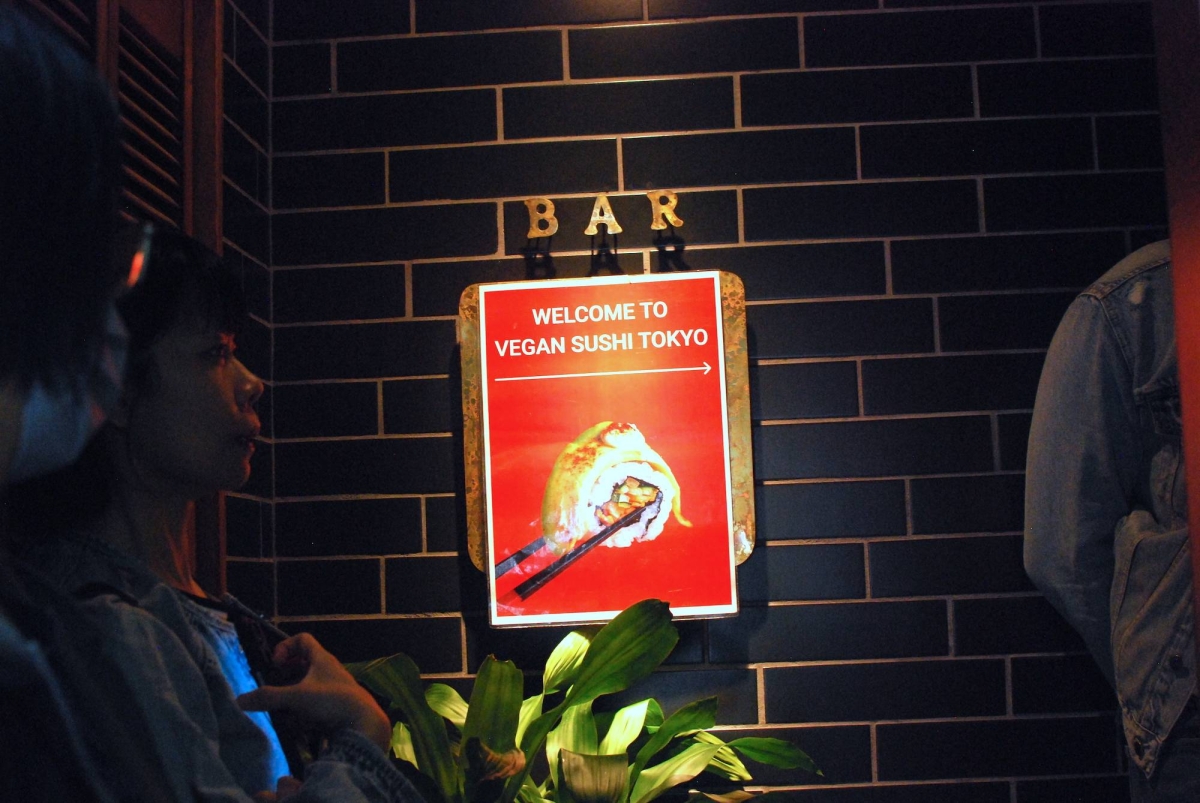
All is quiet at 10:30 a.m. on a Thursday in Shibuya, Tokyo’s famous commercial district. In an alleyway just steps from one of the busiest train stations in the world, a short line of tourists huddles outside of a bar. Finally, half an hour later, the door cracks open and, greeted with a soft “irasshaimase,” or “welcome,” the parties shuffle in to sample one of the rarest dishes in Japan: faux-fish sushi.
“Nowadays, there are many vegan ‘meat’ products,” said Kazue Maeda, one of the four founding employees of the restaurant, Vegan Sushi Tokyo. “But I’m Japanese. What I really used to love is sushi and salmon.”
Her restaurant attempts to fill a relatively unclaimed niche in the local food scene. Even in Tokyo, where much of the country’s vegan population lives, plant-based versions of traditional Japanese food remain challenging to find — most vegan options are Western-inspired dishes like curry rice or vegan hamburg steak.
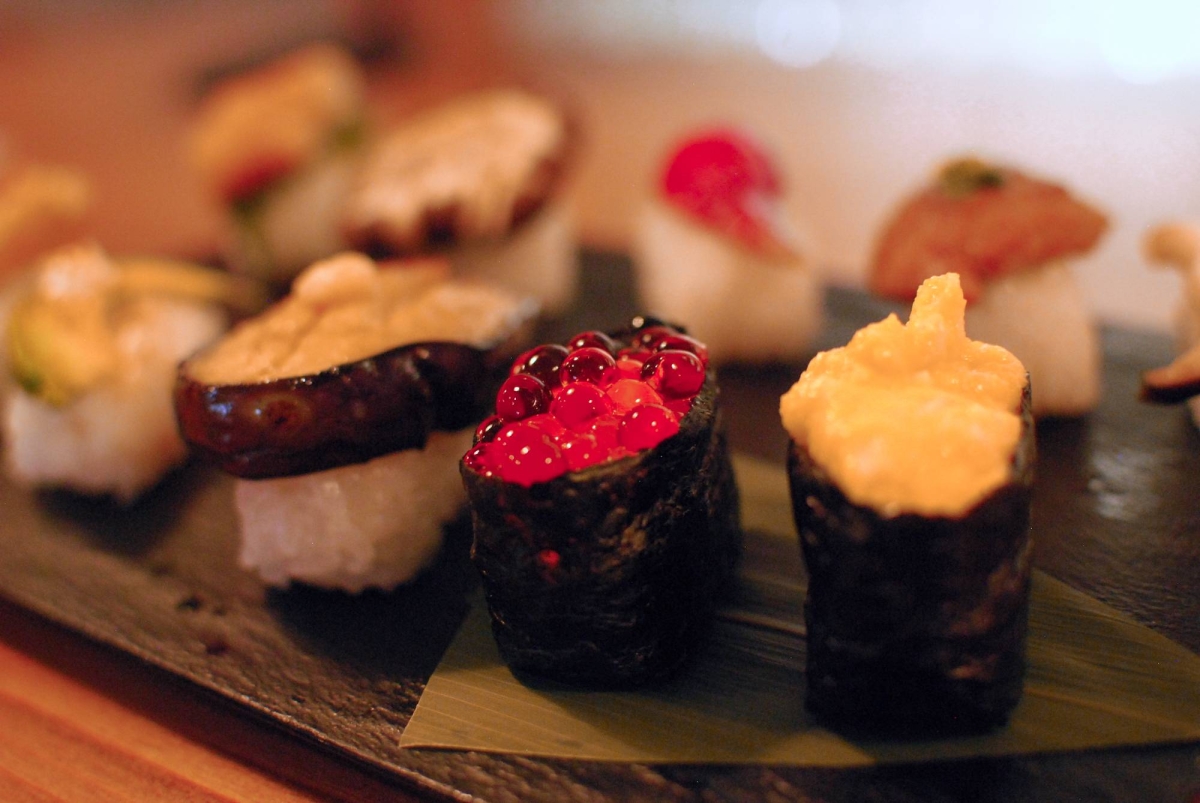
Vegan Sushi Tokyo is open only for lunch: Although rave reviews keep pouring in from customers, the small business still doesn’t have a storefront of its own and rents out the interior of a bar by day. It serves 10-piece nigiri lunch sets, which include a plant-based Japanese-style “egg,” “shrimp” tempura and beads made out of seaweed that look nearly indistinguishable from salmon roe.
Japan’s culinary culture may be rich and diverse, but it remains reliant on animal products, especially when dashi, a savoury broth made of dried tuna flakes and kelp, is present in so many dishes.
Maeda became a vegan six years ago, due to her growing concern over environmental and animal rights issues. It’s a familiar origin story for those who have come to defy the typical Japanese diet by giving up meat, fish and dairy.
“In terms of the vegan movement, I think we’re maybe behind other countries. The number of vegans is very small,” Maeda said. “But there are more and more vegetarian and vegan restaurants in Tokyo, I think because of tourists — especially from countries with many vegetarian people.”
Nigiri served at Vegan Sushi Tokyo. Although rave reviews keep pouring in from customers, the small business still doesn’t have a storefront of its own, and rents out the interior of a bar by day. | Sachi Kitajima Mulkey / Grist
Outside large cities like Tokyo, Osaka and Kyoto, vegan options quickly vanish. In a culture that prizes convention and scrupulous attention to detail, individual accommodations — like vegan menu substitutions — are often frowned upon. And as in many other countries, vegan options are sometimes stigmatized as less nutritious.
But recently, things have been changing. The anticipation of a tourism boom for the 2020 Olympics in Tokyo pushed the Japanese government to encourage new vegan businesses and menu options in major cities. And in the years since, restaurants like Maeda’s have sprung up, offering novel adaptations of traditional dishes. Under pressure from Japan’s pledge to nearly halve its carbon emissions by 2030, the government has also begun collaborating with vegan activists and advocates and awarding grants to alternative protein start-ups.
Though challenges remain, it’s gotten easier and easier to go vegan in Japan over the last decade.
“Climate issues and animal issues are growing,” Maeda said. “For me, I can’t imagine going back to eating meat again.”
Only for tourists?
Convincing people to eat less meat is key to reaching international climate goals. Up to 20% of planet-warming greenhouse gases emitted annually come from animal agriculture alone — all the cows, pigs, lambs, chickens and other animals (not including fish) that people raise for meat, milk, eggs and the like. According to one study from the University of Oxford that looked at the diets of over 55,000 people, vegans — defined as those who eschew all animal products — create 75% less climate pollution through their food choices than those who eat a meat-heavy diet.
For most of the last two millennia, the Japanese diet was a model of climate-friendly eating due to Buddhist and Shinto objections to meat and dairy consumption — although fish has long been a staple. Beginning in 675, meat-eating was banned by official imperial decree.
Kazue Maeda, co-founder of Vegan Sushi Tokyo, serves customers at the restaurant, where the recommended lunch set includes a tray of faux-fish sushi. | Sachi Kitajima Mulkey / Grist
The ban set the stage for the flourishing of shōjin ryōri, a traditional cuisine that arrived in the sixth century along with Buddhism and aligns with the religion’s prohibition against killing animals. In the 13th century, the cuisine developed into a spiritual movement focused on simplicity and balance between one’s mind and body.
A typical shōjin ryōri set meal is vegan, highlights seasonal produce and is designed around sets of five — five colours, five flavours and five cooking methods. While it can still commonly be found in the dining halls of Buddhist temples, modern chefs have taken shōjin ryōri into the mainstream, including in Michelin-starred restaurants, where they emphasize the concept’s focus on harmony with nature by using local ingredients and minimizing waste.
It wasn’t until 1872 that Emperor Meiji lifted the meat-eating ban, seeking to usher in an era of westernization. Meat consumption grew quickly as domestic beef production boomed and animal products became a symbol of power and status. As reports spread that Emperor Meiji drank milk twice a day, dairy consumption became more popular, too.
Today, Japan ranks 11th in beef consumption globally, and its per capita milk consumption is 68% higher than that of the average East Asian country. Japanese people buy eight times more meat than they did in the 1960s, and in 2007, families began eating it more than fish.
But interest in plant-based foods appears to be growing. Japan’s market for plant-based foods tripled between 2015 and 2020, and the Ministry of Agriculture, Forestry, and Fisheries expects it to double again by 2030. These shifts have taken place as the Japanese population at large has expressed a readiness to shift toward plant-based products for health, animal welfare and climate-related reasons, according to a 2022 analysis in the Journal of Agricultural Management.
Although no official government statistic exists, a 2021 survey found that 2.2% of Japanese people identify as vegan — a potentially higher percentage than in the United States, where estimates range from 1% to 4%.
Vegan activist Azumi Yamanaka eats a vegan lunch at Brown Rice in Omotesando, Tokyo. | Sachi Kitajima Mulkey / Grist
Though vegan restaurants have been on the upswing since 2017, Japanese vegans still lack a wide variety of options. According to HappyCow, a popular directory of vegan and vegetarian restaurant options, Japan has fewer than six vegetarian restaurants per 1 million people in Japan, more than a fifth of them in Tokyo. By comparison, there are nine vegetarian restaurants per 1 million people in the U.S.
“Even many chefs still don’t know what vegan is, they don’t know the concept,” said Azumi Yamanaka, a vegan activist in Tokyo, during a recent lunch at Brown Rice, a sleek vegan restaurant with an organic, health-focused menu in the capital’s Omotesando district.
“They don't realize that adding a small piece of bacon or fish is still meat. I still have to explain it,” she said, while picking at a slice of roasted lotus root with her chopsticks.
When Yamanaka became vegan 16 years ago, most people in Japan hadn’t even heard of the term “vegan,” she said. But in recent years, she said, being vegan has become a somewhat fashionable subculture — judging from social media trends and an upswing in photogenic vegan cafes, which she said get more young people interested in becoming vegan, too.
Even if trendiness is an effective way to draw people toward plant-based lifestyles, Yamanaka said Japanese who commit to veganism are motivated by a variety of issues, including sustainability and animal rights. The country imports between 40% and 60% of its meat but depends on domestic factory farming to produce much of its dairy supply. Its animal protection laws have been given low grades by international animal welfare organizations.
Other factors include the country’s relatively high rate of lactose intolerance, which some estimate affects the majority of the population. Food allergies are also a factor for many of the country’s vegan converts. Between 2010 and 2019, the prevalence of allergies to eggs and milk, along with peanuts and wheat, nearly doubled among Japanese children. And eggs are the country's most common food allergy.
Still, Yamanaka said city governments and companies don’t care about expanding vegan options until they want to market to tourists. “They believe vegan products won’t sell, aren’t understood or have failed in the past,” she said. “Many consider them only for foreign visitors.”
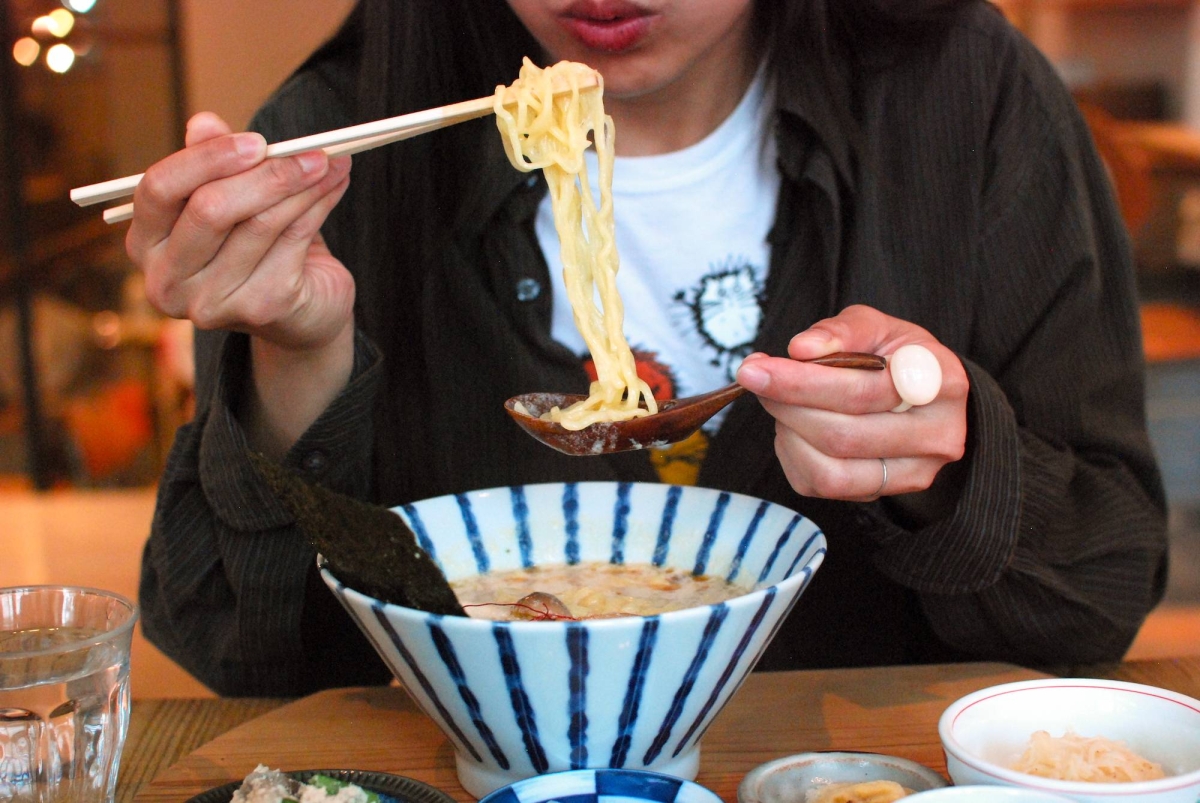
Mumokuteki, a natural lifestyle store with a cafe, serves up soy milk-based ramen on its all-vegan menu at its location on busy Teramachi shopping street in the city of Kyoto. | Sachi Kitajima Mulkey / Grist
Tourism is certainly a huge economic factor in Japan. In 2024, 37 million foreign tourists entered the country, outstripping the previous full-year record by almost 5 million. Over a quarter of these tourists hail from neighbouring parts of Asia with large vegan and vegetarian populations, like Taiwan, China and Singapore, due to the widespread practice of Buddhism.
“Before 2019, the vegan environment was not so good,” said Mayumi Muroya, chair of the Japan Vegan Society, the largest vegan and plant-based industry organization in Japan. “The reality is that many of the foreigners visiting Japan are vegans and vegetarians. And with the Olympics coming up in 2020, the government knew the number of visitors was going to increase hugely.”
In the run-up to the Games, which ultimately took place a year late because of the COVID-19 pandemic, the government created food guidelines to help restaurants offer more vegan options and distributed subsidies to help them pay for those options.
In December 2023, Muroya’s organization became the first-ever permitted by the government’s Japanese Agricultural Standards to officially certify vegan products. Adoption requires in-person inspections, and fewer than 10 businesses have been certified. A different non-profit, VegeProject Japan, started unofficially certifying products as vegan in 2016, and its marker has become the most widely used vegan label in Japan — showing up on instant curry pouches, protein bars and some cosmetics.
Recently, in an effort to make dining easier for tourists, the Tokyo Metropolitan Government began offering subsidies to vegan businesses with foreign language menus available that want to be certified with one of these labels — the Japan Vegan Society’s certification costs an estimated ¥165,000 ($1,060).
Inclusive eating
The beloved and beleaguered tourism hub of Kyoto has also begun investing money into making the city’s vegan options more visible — both to accommodate foreign visitors and due to the city’s pledge to meet the United Nations’ Sustainable Development Goals. Japan has used SDGs as the basis for a public awareness campaign on climate change, conservation and sustainability.
Despite its small size compared with Tokyo and neighbouring Osaka, Kyoto has long been considered an easier place to be vegan than the rest of the country. As both the former capital and a youthful university town, the city is awash with historic businesses maintaining the traditions of a preindustrial Japan and a distinctly crunchy-granola youth culture. Although the population is a sixth of the size of Tokyo’s, it has half as many vegan options. And recently, the local government partnered with Kyoto Vegan, an environmental organization that was founded in 2020 to expand and increase awareness of vegan options in the city.
“After 2020, the city asked if they could collaborate with me,” said Chisayo Tamaki, who founded the group.
Kyoto Vegan founder Chisayo Tamaki says the city of Kyoto can't achieve its net zero carbon emissions goal without the support of vegans. | Sachi Kitajima Mulkey / Grist
Kyoto Vegan receives most of its funding from a subsidy from the country’s national tourism agency, but it is also supported by the city as one of its “Do You Kyoto 2050” projects. The initiative aims to cut carbon emissions down to zero by 2050.
“They can’t achieve that goal without the support of vegan lifestyles,” said Tamaki.
In its plan to reduce its carbon footprint, Kyoto considers veganism to be the 11th most effective way to cut down its emissions, below expanding electric vehicle usage and above teleworking. The private sector is helping to advance those goals. For instance, Plant Based Lifestyle Lab — an initiative backed by a group of companies — began in 2021 to promote and research plant-based food technologies.
For Tamaki, it’s a welcome change from just a few years ago when she was told vegans were “demanding” or “picky.”
In many ways, people in Japan face the same barriers to veganism as anywhere else. There are the logistical limitations — the lack of options on restaurant menus and at grocery stores. But there are also the psychological ones, like the stigma of being considered picky, exclusion from social activities and misinformation about health and nutrition.
In 2021, Muroya — the chair of the Japan Vegan Society — tried introducing monthly vegan lunches at an elementary school near Tokyo, the first attempt of its kind in Japan. Despite working with the school’s nutritionist to design the menu, Muroya’s effort ran into barriers like the national school-lunch calcium requirements, which promote milk, and pushback from parents worried their children wouldn’t get adequate nourishment. (Research shows that well-balanced vegan diets are healthy for most people, as long as they take supplements to provide some vitamins and minerals.)
Muroya’s program lasted for only a year, but she said the school still regularly does “meat-free Mondays.”
Two friends catch up over lunch at Choice Kyoto, a long-standing vegan cafe serving Western-style dishes in Gion, the city’s ancient entertainment district. | Sachi Kitajima Mulkey / Grist
Perhaps one of the biggest challenges to being vegan in Japan is the country’s culture of conformity — which considers standing out to be troublesome.
“Having a different opinion from everybody else is very controversial. Everybody wants to move together as a community,” Yamanaka said. “Some people fear coming out as vegan at school or work due to potential bullying.” Although she said she hasn’t faced much adversity in recent years, former co-workers pressured her to eat meat.
For Yamanaka, the best way to make a more sustainable, less meat-intensive Japan is to bridge the gap between vegans and nonvegans. She said that when people discuss various issues that can motivate veganism — like sustainability, factory farming and allergies — as well as the popularity of veganism among tourists, more local governments and businesses can be convinced to make more options available.
Local plant-based businesses are already making an effort to appeal to as many customers as possible. At Universal Bakes, a cult-favourite plant-based bakery in Tokyo’s trendy Shimokitazawa neighbourhood known for its vegan croissants and savoury tarts, the ethos is to provide allergen-free food, not necessarily animal-free.
“I want people to understand that vegan food isn’t just for a select few. It’s an inclusive eating style,” Yamanaka said. “Reaching beyond the vegan community is essential for creating a vegan-friendly world.”
The first guests of the day line up outside the door of Vegan Sushi Tokyo in the Shibuya district. | Sachi Kitajima Mulkey / Grist
Correction: This story originally mischaracterized the relationship between the city of Kyoto and the Plant Based Lifestyle Lab.