From sci-tech-today.com/stats
Introduction
Vegan Statistics: Veganism is a lifestyle that excludes all animal-derived products, including food and clothing, emphasizing a plant-based diet. Nutritionally, vegan diets are typically higher in dietary fibre, magnesium, folic acid, vitamin C, vitamin E, and phytochemicals, while being lower in calories, saturated fat, cholesterol, long-chain omega-3 fatty acids, vitamin D, calcium, zinc, and vitamin B₁₂. For instance, vegans often consume approximately 21 grams of saturated fat daily, compared to 54 grams in omnivores. Additionally, vegans tend to have about double the dietary fibre intake compared to omnivores.
However, due to the exclusion of animal products, vegans may need to pay special attention to certain nutrients, such as vitamin B₁₂, which is not readily available in plant foods and often requires supplementation. Let’s understand these recent Vegan Statistics, which will shed light on the development in the market.
Editor’s Choice
- 80% of the leading meat producers are also producing vegan food items.
- According to the report Worldwide Growth of Veganism by The Vegan Society, in 2023, based on Google Trends, Germany became the leading country with the most searches related to veganism on Google, followed by Austria and the United Kingdom.
- Meticulous Research findings state that, as of 2023, 2.6 million European residents have adopted a vegan diet, which makes up 3.2% of the total European population.
- By 2027, the plant-based milk market size is expected to grow at a CAGR of 15%, reaching 14.9 billion.
- The global vegan food market was valued at $24.58 billion in 2023 and is expected to be valued at $27.8 billion in 2028.
- If the entire planet’s population shifts to a vegan diet, then within the next 25 years, the environment, personal health, and pollution will be greatly improved, and more than 8 million animal lives will be saved.
- The plant-based protein market is expected to grow at a CAGR of 7.3% between 2023 and 2032, reaching $24.1 billion by the forecast period.
- As of today, more than 2,500 companies are selling 65,000+ certified vegan products, 18,000 of which are edible and 30,000 of which are usable.
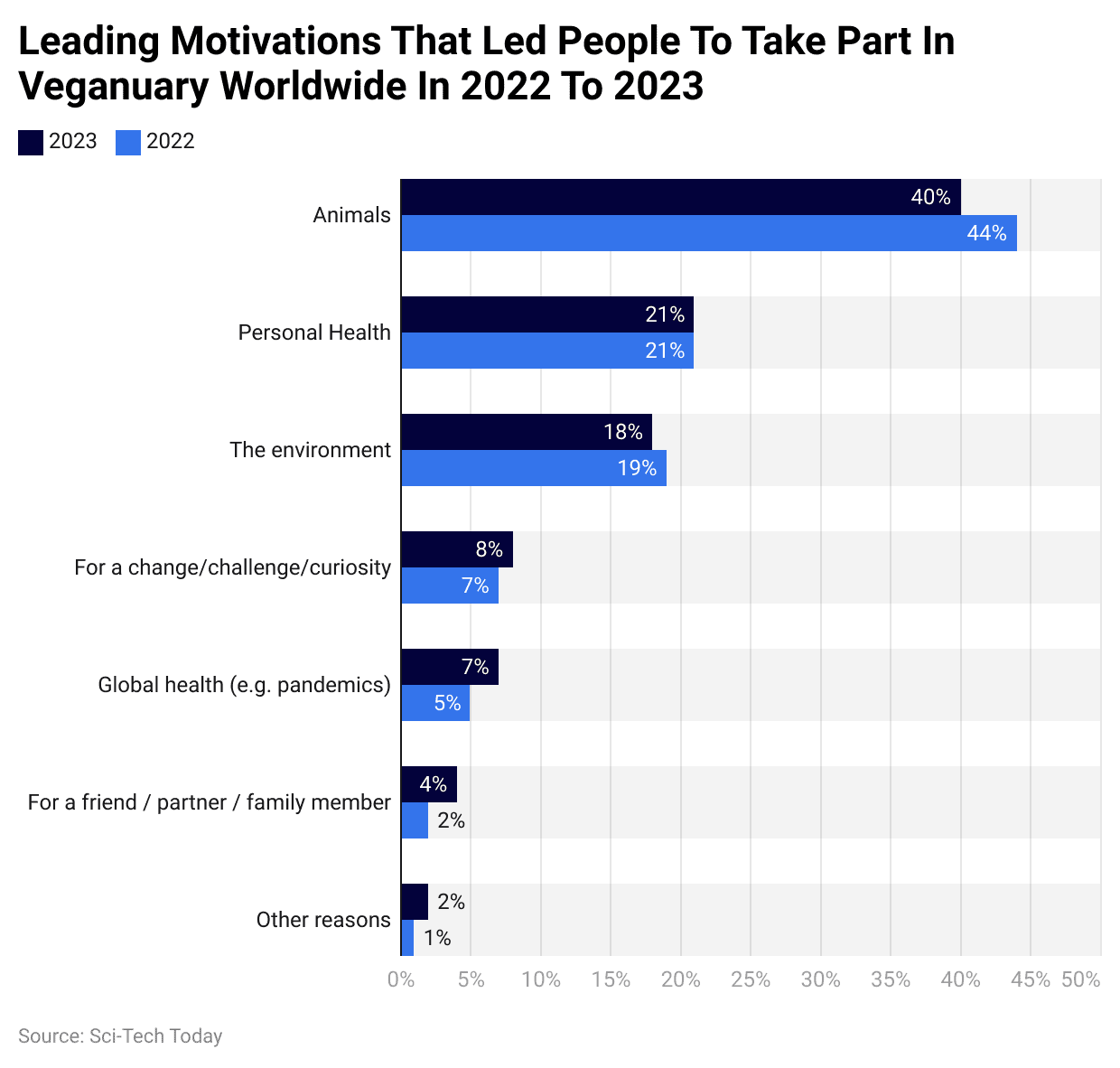
- Between 2022 and 2023, animal welfare was the top reason given by respondents to a survey by Statista for participating in Veganuary.
General Vegan Statistics
- According to the report Worldwide Growth of Veganism by The Vegan Society, in 2023, based on Google Trends, Germany became the leading country with the most searches related to veganism on Google, followed by Austria and the United Kingdom.
- As of today, only 7.1% of vegans have around ten years of experience in shifting their lifestyle to veganism, while 2.7% reported having the same for 20 years.
- Meticulous Research findings state that, as of 2023, 2.6 million European residents have adopted a vegan diet, which makes up 3.2% of the total European population.
- As of today, more than 2,500 companies are selling 65,000+ certified vegan products, 18,000 of which are edible and 30,000 of which are usable.
- Vegan Statistics show that 80% of the leading meat producers are also producing vegan food items.
- Based on a report by the World Health Organization (WHO), 55 billion land animals are unfortunately slaughtered for consumption every year.
- Plant-based food sales have improved by 29% compared to the last two years.
- 92% of the vegan population can easily find vegan products during shopping trips.
- 1 out of 12 black Americans is either vegan or vegetarian.
Vegan Statistics By Market Value
- Retail sales of vegan ice cream are expected to exceed $1 billion by 2024.
- According to Vegan Statistics, the vegan meat market is projected to be valued at $21 billion by 2026.
- The plant-based protein market is expected to grow at a CAGR of 7.3% between 2023 and 2032, reaching $24.1 billion by the forecast period.
- By 2029, the worldwide Vegan footwear market is expected to increase to $46 billion.
- By 2027, the plant-based milk market size is expected to grow at a CAGR of 15%, reaching 14.9 billion.
Vegan Statistics By Health Benefits And Deficiencies
- A person following a vegan diet is likely to suffer from insufficient levels of vitamins B2, B3, B12, and D, along with selenium, calcium, and zinc
- Vegan Statistics show that a vegan diet aids in reducing the risk of prostate cancer.
- If the entire planet’s population shifts to a vegan diet, then within the next 25 years, the environment, personal health, and pollution will be greatly improved, and more than 8 million animal lives will be saved.
- Based on a report by the University of Oxford, global Veganism can reduce greenhouse gas emissions created by farming by 66%.
- Furthermore, if greenhouse gas emissions are reduced, then governments can save $1.5 trillion in climate change mitigation projects.
- Vegan Statistics further show that a vegan lifestyle worldwide is likely to reduce overall agricultural land use by 76%.
- Worldwide Vegan Food Market Value
 (Reference: statista.com)
According to Vegan Statistics, in 2023, the global vegan food market was valued at $24.58 billion, which is expected to be valued currently at $27.8 billion. This has shown a significant increase in the demand for vegan food.
Eating Habits Of Americans By Gender
 (Reference: statista.com)
Comparing the eating habits of American males and females, 46% and 53%, respectively, do not follow any diet. However, those people who follow some kind of diet are majority males. Considering the vegan diet, at least 5% of males and 2% of females in the USA are following it.
Reasons To Take Part In Veganuary Worldwide
 (Reference: statista.com)
Between 2022 and 2023, the top reason given by respondents to a survey by Statista for taking part in Veganuary was animal welfare. The second leading reason was personal health and environment, which collectively represented 79% in 2022 and 84% in 2023.
Share Of Consumers Who Consume Meat Substitutes Regularly In The USA By Generation
 (Reference: statista.com)
According to Vegan Statistics 2023, in the USA, 14% of people consume meat substitutes. The majority are millennials, representing 17% of the total. Gen Z and Gen X contribute to meat substitute consumption by 15% and 11%, respectively. In addition, 8% of baby boomers do the same.
Share Of Vegan Diet Consumers In Selected Countries
According to Vegan Statistics by Statista, the following are the number of vegan consumers residing in different countries.
| Country | Share of vegan consumers |
| India | 11% |
| Israel | 6% |
| Switzerland | 6% |
| Hong Kong | 4% |
| United States | 4% |
| Turkey | 4% |
| Egpyt | 4% |
| Singapore | 4% |
| Saudi Arabia | 4% |
| Pakistan | 4% |
| China | 4% |
| South Africa | 3% |
| Germany | 3% |
| France | 3% |
| Austria | 3% |
| Taiwan | 3% |
| Philippines | 3% |
| United Arab Emirates | 3% |
| United Kingdom | 3% |
| Vietnam | 3% |
| Poland | 3% |
| Indonesia | 3% |
| Sweden | 3% |
| Thailand | 3% |
| Finland | 2% |
| Spain | 2% |
| Italy | 2% |
| South Korea | 2% |
| Mexico | 2% |
| Canada | 2% |
| Netherlands | 2% |
| Brazil | 2% |
| Australia | 2% |
| Belgium | 2% |
| New Zealand | 2% |
| Argentina | 2% |
| Chile | 2% |
| Peru | 2% |
| Denmark | 2% |
| Kenya | 2% |
| Ireland | 2% |
| Greece | 2% |
| Dominican Republic | 2% |
| Malaysia | 2% |
| Serbia | 2% |
| Norway | 2% |
| Nigeria | 2% |
| Morocco | 2% |
| Russia | 1% |
| Colombia | 1% |
| Japan | 1% |
| Czechia | 1% |
| Hungary | 1% |
| Lithuania | 1% |
| Portugal | 1% |
| Romania | 1% |
(Source: statista.com)
List Of Celebrities Who Have Turned Vegan
| Celebrities | Since when? |
| Moby | 1987 |
| Joaquin Phoenix | Since 3 years old |
| Billie Eilish | Since Childhood |
| Woody Harrelson | More than 30 years |
| Rainn Wilson | Around 2017 |
| Evanna Lynch | 2014 |
| Stevie Wonder | 2016 |
| Elliot Page | 2011 |
| Lewis Hamilton | 2017 |
| Rooney Mara | 2011 |
| Ricky Gervais | Unknown |
| Pamela Anderson | More than 30 years |
| Alan Cumming | 12 years |
| Sia Furler | 2014 |
| Peter Dinklage | 2014 |
| RZA | 1997 |
| Mayim Bialik | At the age of 19 years |
| Fearne Cotton | At the age of 11 years |
| Colin Kaepernick | Revealed in 2016 |
| Sadie Sink | Unknown |
| Leona Lewis | 2012 |
| Lucy Watson | Unknown |
| Joan Jett | During 80s |
| Thandiwe Newton | Unknown |
| Tobey Maguire | 2009 |
| Bryan Adams | 1989 |
| Mýa | Since a younger age |
| Madelaine Petsch | Since birth |
| Alicia Silverstone | 1998 |
| Natalie Portman | 2008 |
| Daisy Ridley | Unknown |
| Emily Deschanel | At the age of 17 years |
| Kate Mara | Unknown |
| Ruby Rose | Unknown |
| Danielle Brooks | 2017 |
| James Cromwell | While filming Babe |
| Nathalie Emmanuel | Unknown |
| Kevin Smith | Unknown |
| Bimini Bon Boulash | Unknown |
| Rob Zombie | Unknown |
| Romesh Ranganathan | 2013 |
| Will.i.am | 2018 |
| Travis Barker | 2008 |
| Brian May | Unknown |
| Maggie Q | Unknown |
| Theo Rossi | At the age of 22 |
| Christ Packham | Unknown |
| Casey Affleck | 1995 |
| Jenna Dewan | 2013 |
| Jessica Chastain | More than 15 years |
| Daryl Hannah | At the age of 11 |
| Morrissey | 2010 |
| Jared Leto | Unknown |
| Oli Skyes | 2013 |
| Bella Ramsey | Unknown |
| Halle Bailey | Unknown |
| Jessie Cave | 2016 |
| Jon Stewart | 2015 |
| Sam Ryder | Unknown |
| Peter Egan | 2016 |
| Elaine Hendrix | 2006 |
| Aidan Gallagher | From a young age |
| Lizzo | 2020 |
| Jermaine Dupri | Unknown |
| Lee Mack | 2016 |
| Jennifer Coolidge | Unknown |
| Cillian Murphy | Unknown |
| Donna D’Errico | Unknown |
| Jon Richardson | Unknown |
(Source: statista.com)
Leading Meat Substitute Brands In The USA By Brand Awareness
 (Reference: statista.com)
Based on Vegan Statistics 2023, Morning Star Farms is the leading meat substitute brand in the USA, with more than 50% of its popularity. Other popular brands in a similar category are Beyond Meat, Impossible, Amy’s Kitchen, and Gardein.
Unveiling Veganism – A Compassionate Approach To Living
Veganism goes beyond just a dietary shift; it’s a philosophy and a way of life centred around minimizing the exploitation and cruelty inflicted on animals. This translates into abstaining from all animal products, not just in what you eat but also in clothing, cosmetics, and anything that might involve animal testing. It’s a conscious decision to live with compassion and respect for all living beings.
Unveiling The Health Benefits Of Veganism
While individual results may vary, a well-planned vegan diet offers a multitude of health advantages:
- Reduced Risk of Heart Disease: Vegan diets are typically lower in saturated fat and cholesterol, both significant contributors to heart health concerns. By eliminating animal products, you’re reducing your intake of these potentially harmful elements, lowering your risk of heart disease.
- Lower Blood Pressure: Studies suggest that vegans may have lower blood pressure levels compared to meat-eaters. This could be due to the reduced intake of saturated fat and sodium, which are known to elevate blood pressure.
- Weight Management: Vegan meals are often naturally rich in fibre and lower in calories. Fibre keeps you feeling fuller for longer, aiding in weight management by curbing cravings and reducing overall calorie intake.
- Improved Blood Sugar Control: Plant-based diets can be incredibly beneficial for managing blood sugar levels, especially for those with type 2 diabetes. This is because plant-based foods tend to have a lower glycaemic index, meaning they cause a slower and steadier rise in blood sugar compared to processed foods and animal products.
- Increased Fibre Intake: Fibre is crucial for healthy digestion and gut health. Vegans naturally tend to get more fibre due to their focus on fruits, vegetables, and whole grains, which are all excellent sources of dietary fibre.
Important Note: Consulting a registered dietitian is highly recommended, especially when transitioning to a vegan lifestyle. This ensures you’re getting all the essential nutrients your body needs, particularly vitamin B12, iron, and calcium, which are more readily available in animal products. They can guide you on incorporating fortified foods and supplements to address any potential deficiencies.
Veganism And The Environment: A Glimmer Of Hope For The Future
The environmental impact of animal agriculture is undeniable. Livestock farming contributes significantly to greenhouse gas emissions, deforestation, and water pollution. Here’s how a large-scale shift toward veganism could benefit the environment in the next decade:
- Reduced Greenhouse Gas Emissions: Animal agriculture is a major contributor to methane and nitrous oxide emissions, both potent greenhouse gases that trap heat in the atmosphere and contribute to climate change. A significant decline in meat consumption could significantly mitigate these emissions, helping to slow down global warming.
- Conserved Water Resources: Raising animals requires a substantial amount of water. Studies suggest that shifting to plant-based diets could significantly reduce overall water usage. Plant-based proteins generally require less water to produce compared to meat, leading to significant water conservation efforts.
- Preserved Biodiversity: Animal agriculture often leads to deforestation to create grazing land for livestock. This deforestation disrupts ecosystems and threatens endangered species. Widespread veganism could help protect rainforests and the diverse species that call them home.
However, it’s important to consider
Sustainable Practices: Even within a vegan framework, responsible sourcing of plant-based foods is crucial. Practices like monoculture farming, where large areas are dedicated to a single crop, can have environmental drawbacks such as soil depletion. Opting for organic and locally sourced produce whenever possible promotes sustainable agricultural practices.
Embracing A Plant-Powered Plate – A World Of Delicious Vegan Options
Going vegan doesn’t mean sacrificing flavour or variety. The world of vegan cuisine is vibrant and offers endless possibilities for delicious and healthy meals. Here’s a glimpse into the exciting world of plant-based food:
- Plant-Based Proteins: Lentils, beans, chickpeas, tofu, tempeh, seitan, and various plant-based meat alternatives offer a wide range of protein sources to keep you feeling energized. These options can be incorporated into various dishes, from hearty stews to flavourful stir-fries.
- Whole Grains: Brown rice, quinoa, whole-wheat bread, and other whole grains provide complex carbohydrates and fibre, keeping you feeling full for longer and providing sustained energy throughout the day.
- Fruits and Vegetables: The vibrant world of fruits and vegetables offers a treasure trove of vitamins, minerals, and antioxidants essential for overall health and well-being. Explore the vast array of seasonal produce to create colourful and flavourful meals.
- Healthy Fats: Avocados, nuts, seeds, and olive oil provide essential fats that your body needs for proper functioning. These healthy fats also contribute to feelings of satiety and can enhance the taste of your meals.
- Plant-Based Milk: Soy milk, almond milk, oat milk, and coconut milk offer delicious alternatives to dairy. These can be enjoyed in cereal, smoothies, coffee, or simply on their own.
- Vegan Cheese and Yogurt: The world of vegan cheese and yogurt is constantly evolving, offering a growing variety of plant-based options that are both delicious and nutritious. From creamy cheeses to tangy yogurts, there’s a vegan alternative to satisfy your cravings.
With a little creativity and exploration, you can find vegan versions of all your favourite dishes. Websites and cookbooks dedicated to vegan cuisine provide endless inspiration for creating mouth-watering meals that are kind to your body and the planet.
Dispelling Myths And Embracing The Truth About Veganism
There are many misconceptions surrounding veganism. Here are some common myths debunked and the truths revealed:
- Myth: Vegans don’t get enough protein.
- Truth: With proper planning, vegans can easily get enough protein from a variety of plant-based sources, such as legumes, nuts, seeds, and whole grains. These options are often packed with protein and other essential nutrients.
- Myth: Vegan diets are bland.
- Truth: Vegan cuisine is vibrant and flavourful, with endless possibilities for creating delicious and exciting dishes. From innovative plant-based meat alternatives to colourful and creative vegetable dishes, vegan meals can be just as satisfying and flavourful as any traditional meal.
- Myth: Being vegan is too expensive.
- Truth: While some specialty vegan products can be pricey, a well-planned vegan diet can be quite affordable. Focusing on whole grains, beans, and seasonal fruits and vegetables can keep grocery costs reasonable. Additionally, many staple vegan ingredients are naturally budget-friendly.
- Myth: Being vegan is all or nothing.
- Truth: Every step towards reducing animal products helps. Consider “Meatless Mondays” or gradually incorporating more plant-based meals into your diet. Even small changes can make a positive difference in your health and the environment.
Conclusion
As shown in these Vegan Statistics, veganism is a personal choice with far-reaching benefits. Whether motivated by animal welfare, environmental concerns, or personal health, a vegan lifestyle can be a positive and rewarding change for you and the planet. With a little planning and exploration, you can discover a world of delicious vegan options and embrace a compassionate and sustainable way of living.
https://www.sci-tech-today.com/stats/vegan-statistics-upgrade/