Showing posts with label Just Egg. Show all posts

Thursday, July 23, 2026

Josh Tetrick of Eat Just: “When You Don’t Burn Money, You Have More Power to Do Good”

From vegconomist.com

At Natural Products Expo West in Anaheim, vegconomist caught up with Josh Tetrick, CEO and co-founder of Eat Just, on the sidelines of a busy show floor. With Just Egg now in over 500 REWE stores across Germany, and a second retail launch underway with Edeka, Tetrick spoke candidly about what the German market has taught him, how his company has defied the industry’s difficult moment, and why the path to transforming the food system runs through financial discipline as much as innovation.

Nils:  You launched Just Egg in Germany in January with REWE. How has it gone?

Josh:  We launched in January with REWE, and it sold well enough that they’ve expanded the number of regions we’re in. We’re now north of 500 stores with them. A couple of weeks ago we also launched with Edeka. I’ve been following the progress of our launch through the German vegan Reddit boards.I translate them and read everything people like and don’t like. They seem to like the product. They seem not to like the price.

Nils:  That sounds very German.

Josh:  I get it. Germans are spoiled for good quality. We’re producing out of our manufacturing facility in Lüneburg, Germany. We have 90 people there, a full line. We’ve invested a lot of capital getting that line set up.

“If someone is putting a perishable item in their suitcase when they travel to the US, that is a good sign the market wants it.”

Nils:  How is consumer response in Germany different from the US?

Josh:  Much better. I’m not sure if it’s because Just Egg is just more established in the US and people are more aware of it, or if there’s simply more appetite for what we’re doing in Germany. Just Egg is currently the highest-selling plant-based protein item in the United States in terms of units per store per week. But in Germany, there’s a very active conversation on the Reddit boards about Just Egg specifically. We’re seeing things like, “Now I don’t have to pack this in my suitcase when I visit the US.” If someone is putting a perishable item in their suitcase, that is a good sign the market wants it. I don’t need any McKinsey consultant to tell me anything. If that’s happening, that’s all I need to know.
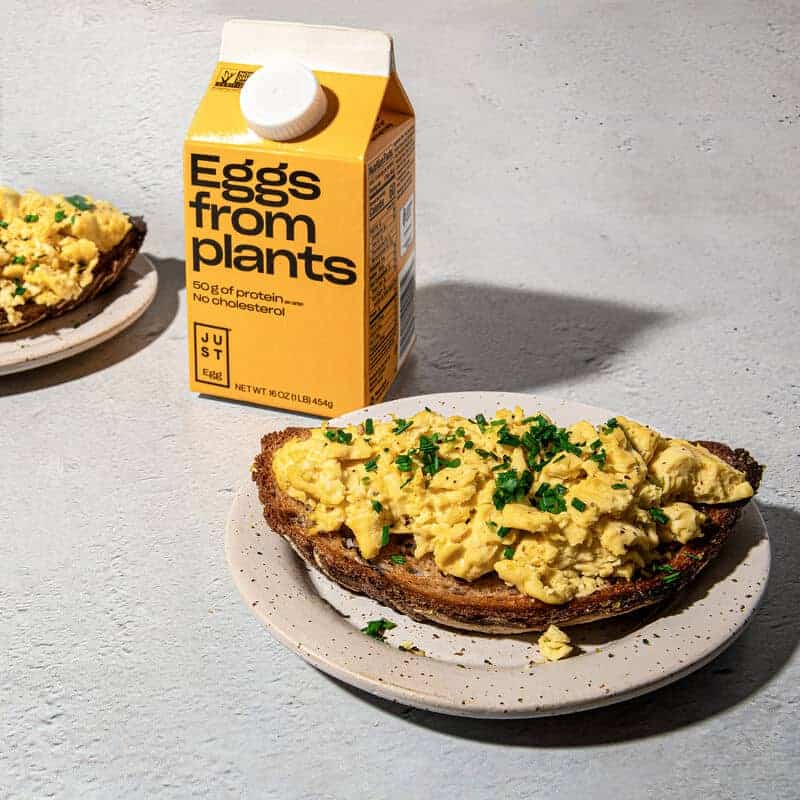
Just Egg Verpackung neben veganer Rührei Stulle
© Just Egg

Nils:  Why did you choose this particular partnership structure for the European launch?

Josh:  We partnered with the Vegan Food Group, which is backed by Ahimsa, one of the largest investors in the plant-based protein space and also one of our larger investors. The manufacturing facility in Lünerburg is owned by Ahimsa, and we wanted to launch in a facility where we have more autonomy and agency. The retail partnership flows naturally from that larger relationship.

Messaging for Germany: Vegan over Plant-Based

Nils:  You’re relaunching your website in Germany at ju.st/de. Did you change the positioning and messaging for the German market?

Josh:  Yes. We’re definitely using the word “vegan” more. In the US, I would say “made from plants” or “plant-based.” In Germany, I’m much more explicit: vegan. It’s a word that doesn’t seem nearly as polarizing in Germany as it can be in the United States. And there’s also much more emphasis on impact, on animals and on the environment. In the US, I’d lead with health. In Germany, it’s animals first, then environment, then health.

Defying the Industry Downturn

Nils:  There’s been a lot happening in the alt-protein market: companies filing for bankruptcy, headwinds across the board. What gave you conviction to keep going?

Josh:  At least as it relates to us, the last three months have been our highest-ever revenue months in the history of the company. Just Egg is selling more than it ever has. Just Meat is now launching. Our margins are higher. That’s not speaking to the broader industry situation, but I think the reality is: if we can make things that are really tasty and really different, things that connect with people, we’ll win. And if we’re not making things that taste good enough and aren’t generating profit, it’s probably going to mean we lose.

                                                                                                              © Josh Tetrick

Nils:  What do you do differently from other players?

Josh:  A few things. First: if you’re going to launch something, make it meaningfully different from anything else on the shelf. Different enough that even if you didn’t put a single dollar into marketing, people would still buy it. Second, and this is probably equally important, something someone close to me told me: when you don’t burn money, you have more power to do good. We’ve learned how not to burn money. That was a hard lesson for me. It means an intense focus on every detail: warehousing, our entire bill of materials, whether we’re spending $100 on a software subscription we don’t actually need. You look at every single penny, maximize efficiency at every turn, and then wake up the next day and do it again.

“When you don’t burn money, you have more power to do good. We’ve learned how not to burn money.”

Josh:  And eventually you look at the bank account on the first of the month and then on the last day of the month, and it actually has more money at the end. That feels really good. You want to keep doing that, because there’s a lot of good that flows from that kind of discipline.

The Portfolio: Eggs, Meat, and the Long Game on Cultivated

Nils:  You now have Just Egg, Just Meat, and Good Meat. How does it all fit together?

Josh:  Really, 95% of the focus is Just Egg and Just Meat. Five percent is long-term Good Meat, very long-term. Right now we’re trying to figure out how to build a cultivated meat facility for significantly less cost than it costs to build one today. We’re not close to solving that, so there’s a lot of work ahead. But the strategy is: let the plant-based side drive us, generate cash, and fuel growth in Europe. And then, long-term, we still want to do cultivated.
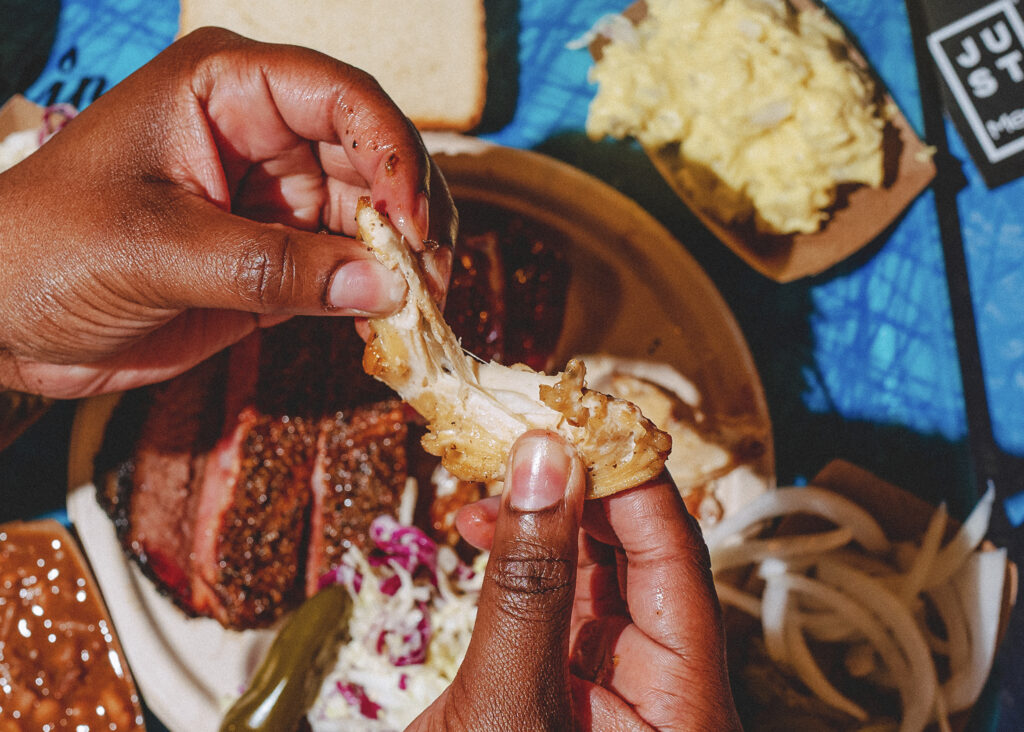
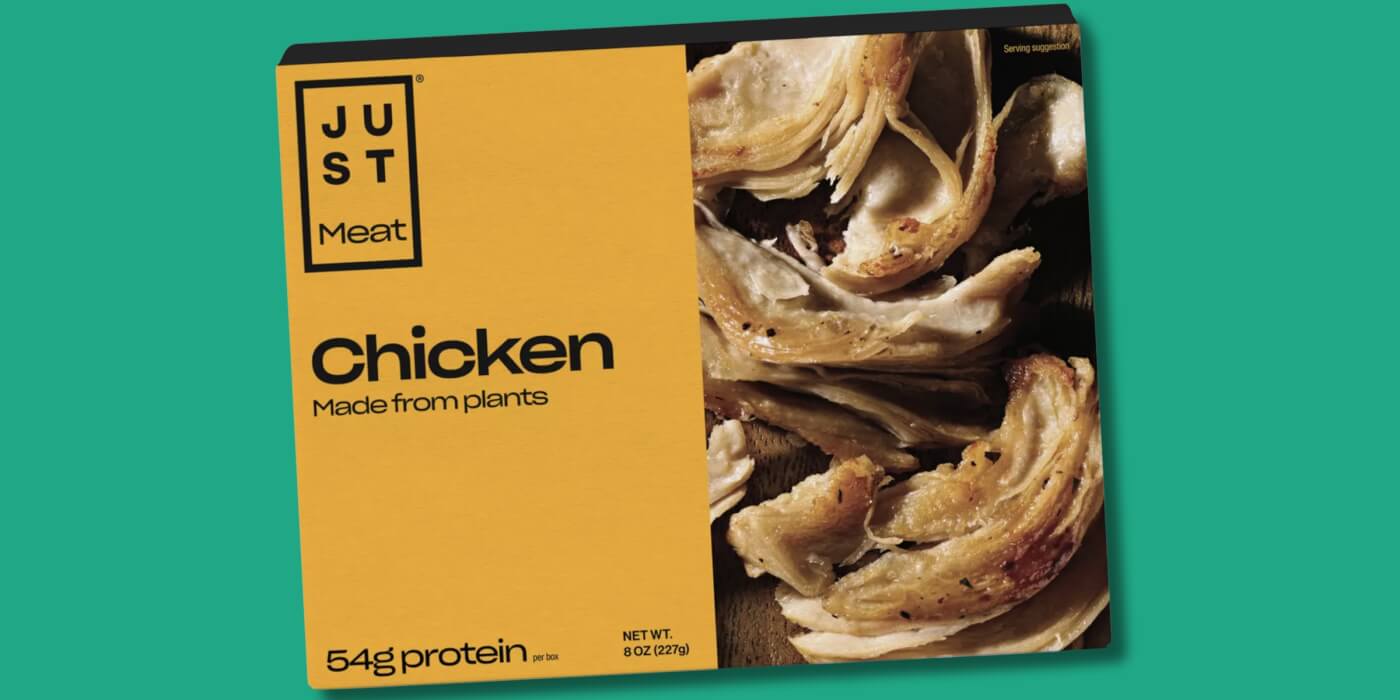
Eat Just chicken
© Eat Just

Nils:  If Just Egg, Just Meat, and ultimately Good Meat all hit their full potential. What does the food system look like?

Josh:  Full potential would be: on any given day, let’s say Expo West ten, twenty, thirty years from now, the majority of eggs and chicken produced in the world on that day don’t require harming an animal. That’s full potential. Whether it’s us alone (which is very unlikely) or any number of companies collectively making that happen. There are already countries in the world, Norway and Sweden among them, where the majority of cars sold on a given day are electric. Twenty years ago, no one would have predicted that.

The Assumption That’s Completely Wrong

Nils:  What’s an assumption people have right now that you think is completely wrong?

Josh:  Two things. First: a lot of people have tried plant-based products and had a bad experience with one, and then they assume that’s what all plant-based products taste like. It’s like driving one of the first electric cars and concluding that’s what electric vehicles are. Forgetting that a Tesla Model S or a Rivian doesn’t drive anything like that first EV. That assumption is wrong.

Josh:  Second: I think people are genuinely confused about health. One of the most important things we can do for our health is radically reduce saturated fat intake. There are plenty of plant-based products and non-plant-based products that are packed with saturated fat, both will increase your risk of cardiovascular disease. People need to be able to discern which plant-based products are actually healthy, not based on the label, but based on a pretty basic understanding of nutrition that unfortunately gets distorted in the media ecosystem we live in.

Nils:  Do you think consumers are confused?

Josh:  Definitely. I’m thinking of Dan Buettner, the Blue Zones researcher. Someone offered him decent money to write a weekly nutrition column, and he turned it down. He said he’d just write the same article every week: eat lots of plants like kale, broccoli, blueberries. Keep saturated fat under 15%. Get enough protein. If you eat chicken, better to be plant-based than animal-based. That’s it. The same article every week. And because you can’t build an audience writing the same thing repeatedly, people generate new content, new takes, and that creates confusion. Sometimes the truth is extremely boring. But it’s a truthful one.

What’s Next for Europe

Nils:  Last question: where next in Europe after Germany?

Josh:  Germany is the foundation. From Germany we’re going to the UK, then the Netherlands, then the Nordic countries. 

https://vegconomist.com/interviews/josh-tetrick-when-you-dont-burn-money-you-have-more-power-to-do-good/ 

Thursday, January 22, 2026

Just Egg has still not launched in the UK – here’s why

From veganfoodandliving.com

Plans for a Just Egg UK launch have stalled again, as regulatory delays and upheaval at The Vegan Food Group raise fresh questions about its future


For years, Just Egg has been one of the most anticipated vegan product launches in the UK. The mung bean-based vegan egg alternative, which has been enjoyed in the US since 2017, has repeatedly appeared to be on the brink of arrival, only to disappear again.

The brand’s most recent promise of a UK launch came just last year, bolstered by a new partnership with The Vegan Food Group. Backed by a multi-million-pound investment, Just Egg was expected to hit UK stores in mid-2025, and was even spotted online by some eagle-eyed shoppers.

But once again, the launch has failed to materialise. While its use of mung bean protein has been deemed safe by the Food Standards Agency, the product has still not received the final legal clearance required to go on sale. Meanwhile, wider changes at its UK manufacturing partner have added further uncertainty around the brand’s prospects.

                                                                     Featured image © Eat Just/Vegan Food & Living

Why the Just Egg UK launch keeps stalling

At the heart of the delay is regulation. Eat Just first applied for authorisation of mung bean protein as a novel food in January 2021, with plans for a UK launch stretching back as far as 2018.

Although the FSA concluded last July that the ingredient was safe to eat and not nutritionally disadvantageous, that approval still required ministerial sign-off before products could legally be sold in UK supermarkets.

Despite this, Just Egg announced an Ocado launch in August, and the product was even spotted listed on Sainsbury’s website late last year. However, it never officially went on sale. It has since emerged that a lack of final legal sign-off prevented the launch from moving forward.

Changes at The Vegan Food Group

Complicating matters further is turmoil at The Vegan Food Group, which holds exclusive rights to manufacture and supply Just Egg across Europe. According to The Grocer, the business is winding down its operations, and approximately 60 staff members have been made redundant across its UK sites, alongside significant job losses at VFG’s German production facility in Lüneburg.

While this leaves the future of Just Egg in the UK uncertain, popular meat alternative brands Meatless Farm and VFC will be separated from the group to be run as a standalone business, ‘VFC Foods’, by Vegan Food Group co-founder Adam Lyons.

https://www.veganfoodandliving.com/news/just-egg-still-not-launched-uk/

Thursday, December 18, 2025

Just Egg Cracks the Competition: Eat Just Is PETA’s 2025 Company of the Year

From peta.org

Did you know vegan egg sales are growing five times faster than the chicken egg market? This egg-cellent news is in large part thanks to Eat Just, whose delicious, nutritious, and easy-to-use vegan Just Egg is available nationwide in the U.S. That’s why Eat Just is PETA’s 2025 Company of the Year. Thanks to Eat Just, choosing eggs made from plants is not just easy, but it also helps save millions of hens from a lifetime of suffering.

Why Eat Just Is PETA’s 2025 Company of the Year

As bird flu ran rampant through the egg industry’s filthy sheds this year, egg cartons went missing from grocery store shelves, Eat Just was ready with its zero-cholesterol, chicken-friendly vegan egg. PETA distributed the protein-packed egg substitute to hungry passers by from coast to coast, nabbing rave reviews and encouraging people across the country to break up with cruelty- and cholesterol-laden chicken eggs.

Since launching in 2019, the plant-powered pioneer’s Just Egg line has sold the equivalent of 500 million chicken eggs.

In another significant win for birds, Eat Just debuted its vegan Just Meat Chicken in August, which blew away its meaty counterpart in a head-to-head consumer taste test.

Eat Just also pledged not to test on animals and signed on to PETA’s Eat Without Experiments Program—ensuring that it harms no animals to create or develop its products.

Eat Just Is Just the Best for Birds

Chickens form complex social structures, dream when they sleep, and worry about the future, just as humans do. But hens in the egg industry—regardless of whether or not eggs are labelled “cage-free” or “humane”—are crammed together inside crowded, filthy sheds where they don’t even have enough room to spread their wings without hitting the sides of a cage or other birds. Once their egg production drops, industry workers send them to slaughterhouses, where mechanized blades slit their throats or scald them in defeathering tanks, often while they’re still able to feel every bit of pain.

Since the bird flu outbreak began, the egg and chicken flesh industry has killed more than 180 million birds in horrifying ways, such as by smothering them to death with foam, in an attempt to contain the disease.

Thankfully, the future of food is looking bright thanks to the culinary innovators at Eat Just, who have won over consumers with products that are eggstraordinary for animals, human health, and our environment. Are you ready to leave eggs off your plate? Take PETA’s 3-Week Vegan Challenge today!

Sunday, October 5, 2025

American Airlines Expands Vegan Offerings with Just Egg Scramble

From vegconomist.com

Starting October 5, American Airlines will offer a new vegan breakfast option on select flights. The airline is introducing a plant-based scrambled egg dish made with Just Egg, hash browns, vegan cheese, spinach, corn, and red pepper. This new addition is part of the airline’s ongoing efforts to expand its vegan menu options.

                                                                                                                             © Eat Just

LAX-JFK passengers first to try

The new dish is being offered on select morning flights between Los Angeles (LAX) and New York (JFK) in premium economy class. This launch comes after the airline worked with Eat Just, the company behind Just Egg, to sample the product and ultimately bring it to passengers.

American Airlines had previously made a notable change to its in-flight offerings in 2024 by adding oat milk creamer to its beverage menu, following requests from over 140,000 PETA supporters.

                                                                                                            © Just Egg

Making better food accessible at 30,000 feet

This is the first time that American Airlines has offered a plant-based egg option on a transcontinental route. Josh Tetrick, CEO of Eat Just, noted, “Eat Just is proud to partner with one of the world’s largest airlines to make better food more accessible at 30,000 feet.”

Other airlines have previously trialled JUST Egg breakfast items on their in-flight menus, including United Airlines’ vegan breakfast bagel and Alaska Airlines’ JUST Egg frittata.

PETA President Tracy Reiman praised the move, saying, “American Airlines is soaring above the competition with a savoury vegan egg dish that’s kind to hens and appeals to conscientious travellers. PETA urges other airlines to get on board by following American Airlines’ compassionate and business-savvy example.”

https://vegconomist.com/food-and-beverage/egg-alternatives/american-airlines-expands-vegan-offerings-just-egg-scramble/ 

Monday, April 21, 2025

As a Vegan, I’m Blissfully Untouched by the Egg Crisis. You Too Can Be Free!

From slate.com/life

By Noella Williams

I come from the land of plant-based living with a gift that will change your life—or at least save you a lot of money

It’s recently come to my attention that a lot of you out there are—let’s say perturbed—by the price of eggs, as it has fluctuated considerably over the past few months. I’m generally aware of inflation in the economy, obviously—my occasional trip to restock a few hygiene supplies feels like the equivalent of a full grocery haul nowadays, and I have to think twice before purchasing basics like olive oil. But eggs, hm, I hadn’t noticed! Maybe it’s like that thing about car-less New Yorkers being unaware of gas prices. As someone who’s been on a vegan journey for about six years now, the going rate of a dozen just hasn’t been on my radar. The soaring price of fresh produce being threatened by tariffs and the invisible tax on vegan products, definitely. But not eggs.

Of course, it’s not like I haven’t thought about eggs before. Things like the completely inhumane practice of large-scale commercial egg farming and the cruel treatment of chicks within slaughterhouses are what drove me to veganism in the first place. Between my published work about the animal rights movement and my constant conversations about food justice, I’ve continuously stood 10 toes down about my veganism being an extension of liberation for all—both humans and animals. For me, avoiding eggs is as much about ethics as it is about appetite.

That said, I’m really not too judgmental toward people who eat eggs. I could crack some corny vegan jokes about them, sure, but I’ll try to refrain. Because there’s one dimension of this issue that I understand intimately as a vegan—the need for protein. So many people depend on eggs as an efficient source of protein for daily nutrition, weight management, and general health, and finding those things elsewhere is no laughing matter.

With an average egg packing about 6 grams of protein, it’s understandably a staple across meals. As a Black Southerner, I’d never want to take devilled eggs away from a baby-shower spread. Not to mention that it’s hard to get most baked goods to bind correctly without an egg’s coagulating co-dependency. To friends who inquire about my diet, but who aren’t ready to take the full vegan plunge, I suggest practicing moderation over abstaining from animal products. And as I’ve learned—and will magnanimously share with you now—there are excellent and creative ways to handle your protein intake (and eat deliciously!) that don’t involve hens.

                                                         Photo illustration by Slate. Photos via Eat Just, Inc. and JeffKearney/iStock/Getty Images Plus

In my time in this no-egg life, I’ve learned that seitan, tofu, tempeh, beans, lentils, nuts, seeds, and quinoa are incredible sources of protein, along with vegetables like broccoli, spinach, Brussels sprouts, and sweet potatoes. Regardless of gluten intolerance, nut allergies, or concerns about soy intake, there’s a vegan protein waiting for you. Just be sure that along with your Beyonds and Impossibles, you’re hitting up your pharmacy for supplemental multivitamins—it’s common for vegetarians and vegans to be depleted of nutrients like vitamin B12, iron, vitamin D, and calcium.

You probably already know about the plethora of plant-based alternatives for meat, but since we’re here to talk about eggs, allow me to give you a leg up and introduce you to the brand Eat Just, and their product “Just Egg.” This mung bean–based substitute is, and I do not exaggerate, the Holy Grail of egg alternatives.

I’ll be honest: Prior to my vegan years, the pungent smell of eggs chased me away from cooking them. It was far more difficult to part ways with desserts and other foods that were baked with eggs than it was to miss a scramble or a sunny-side up. Just Egg is amazing because not only has it totally replaced eggs in my cooking, but it lacks that sulfuric scent that I found so off-putting. After watching it gradually appear in more online recipes, blogs, and grocery stores since its national introduction in 2019, I decided to give it a try. And let me tell you: With salt, pepper, and a couple taps of hot sauce, it was exactly what I needed to revive my breakfast sandwiches.

Eventually, this initial success inspired a curiosity about baking vegetable quiches and starting my mornings with a colourful omelette. (It works in most baked goods as well, with a few limitations.) I started seeing more restaurants—vegan and nonvegan—incorporate Just Egg into their menus. In Los Angeles, Millie’s Cafe serves a tasty rendition of chilaquiles, and my favourite breakfast quiches in Brooklyn are found in the pastry cases at L’Imprimerie and Le Petit Monstre. The mung-bean madness continues at Ras Plant Based alongside injera for their brunch, and I’m still at a loss for words for the Khachapuri with a convincing yolk at Anixi. Suddenly, everything that I presumed lost with my eschewing of eggs was found again, and all that goodness was accessible with a quick scroll on Happy Cow, an app that helps you locate local vegan restaurants.

Count yourself lucky that you live in the glorious era of Just Egg! As long-time vegans will tell you, this isn’t how it’s always been—in the before times, they had to rely on the tofu scramble. Which is not to knock them at all: Tofu scrambles are a protein-packed alternative for eggs that compliment any breakfast burrito or platter. With a sprinkle of the right seasonings, fresh produce, and nutritional yeast, tofu can be brought to life, truly. In addition to using tofu as an egg replacement, chickpea-flour scrambles are another possibility.

My point is, if you’re willing to expand your cooking imagination just a little, there are plenty of ways to get your egg fix without spending all your cash. In a recent article from Vox’s Future Perfect, Kenny Torrella shares a comprehensive list of alternatives—ranging from the less popular identical twin of Just Egg to hard-boiled egg lookalike WunderEggs—that’s worth a look. Whichever road you choose, take heart: By doing something smart for your wallet in these challenging and fearful times, you’re also doing just a little bit of good for the world.

https://slate.com/life/2025/04/vegan-egg-substitutes-just-egg-recipes.html 

Wednesday, April 16, 2025

Vegan Food Group signs Europe production deal for Just Egg

From just-food.com

The production of Just Egg in Europe is scheduled to begin later this year 

The UK’s Vegan Food Group (VFG) has struck a deal to bring Eat Just’s plant-based egg, Just Egg, to European markets for the first time. 

In a statement, VFG chairman Matthew Glover said the company has secured “exclusive” manufacturing and distribution rights for Just Egg across the UK and EU.  

He described the agreement as a “landmark deal” for the company. The production of Just Egg in Europe is scheduled to begin later this year.

                                                                    A carton of Just Egg. Credit: Vegan Food Group / Just Egg

US-based Eat Just develops egg alternatives using mung beans and produces plant-based mayonnaise and dressings.  

Founded in 2011 by Josh Tetrick, the company has also expanded into cell-based meat through its subsidiary Good Meat. Under the agreement, VFG will invest £11.5m ($15.2m) in a “fully automated” production line at its Lüneburg facility in Germany, which it claims is Europe’s “largest” dedicated plant-based site. 

“This partnership is a huge leap forward in transforming plant-based food across Europe,” Glover added. 

The journey of Just Egg to Europe has been in development for several years.  In 2018, Eat Just entered a manufacturing and distribution deal with Italian egg supplier Eurovo, followed by a sales and distribution agreement with German poultry company PHW Group in 2019.  

The launch was contingent on regulatory approval, which was granted by the European Food Safety Authority in October 2021. 

Just Egg is available in markets, including South Africa, South Korea, Canada, Hong Kong, China and Singapore.

VFG was originally in 2020 as VFC Foods by Adam Lyons and Glover, the latter known for launching the Veganuary campaign. The company has since grown its presence through M&A, with its portfolio including VFC, Meatless Farm and Clive’s.

In October, VFG has sold a manufacturing facility in Germany to tofu specialist The New Originals Company.

https://www.just-food.com/news/vfg-just-egg-europe-production/?cf-view&cf-closed

Tuesday, April 1, 2025

Egg prices hit record highs. Are you ready to try a vegan egg?

From grist.org

Bird flu has apparently done what environmentalists have long dreamed of: made Americans curious about egg alternatives


Sometimes, Josh Tetrick will quiz strangers in the dairy aisle. He’ll strike up a conversation with a fellow grocery store patron and ask if they’ve heard about “this egg that’s made from plants?” He might point out the golden-yellow boxes shaped like milk cartons sitting on refrigerated shelves, not too far from the egg cartons. Generally, he finds that people don’t know what he’s talking about. “Most people will be like, ‘What?’”

The product Tetrick is referring to — which, not coincidentally, he manufactures — is called Just Egg. It’s a liquid vegan egg substitute made from mung beans, a member of the legume family, and it’s designed to scramble just like a real chicken egg when cooked over heat. (The company also sells frozen omelette-style patties that can be heated up in a toaster oven and frozen breakfast burritos.) Along with his best friend Josh Balk, Tetrick cofounded the company Eat Just, formerly known as Hampton Creek, which developed Just Egg over years of testing. On a recent call with Grist, Tetrick described the products — which are meant to look, taste, and cook like real eggs — as “definitely, definitely weird.”

But lately, Tetrick says the team at Eat Just has been hearing from restaurant owners and chefs overcoming the weirdness to inquire about becoming new customers — in part because avian influenza has sent egg prices soaring in January and February in the United States. Nationally, the average cost of a dozen large eggs rose to about $5.90 last month, up almost 100 percent from a year before, according to data from the Bureau of Labor Statistics. In expensive cities like New York and San Francisco, a dozen eggs could cost $10 or more. The pressure has raised prices at some bakeries, brunch spots, and bodegas slinging bacon-egg-and-cheese sandwiches — and has made some buyers and consumers more open to alternatives. 

Tetrick has said that Just Egg’s sales are now five times higher than at this time last year, and that a majority of its customers are omnivores. The latest outbreak of avian flu has apparently done what environmentalists and animal rights activists have long dreamed of: made Americans curious about vegan eggs. It’s a development that could indicate how consumers may learn to gradually embrace more environmentally sustainable options.

The environmental benefits of not eating meat or dairy have long been documented. A quarter of global greenhouse gas emissions come from the way we grow and produce food; within that, livestock — which includes raising animals for eggs and dairy — is responsible for about a third. 

But brands that have tried to capitalize on the climate case for eating plant-based protein have failed to win over customers. Beyond Meat has struggled to reach profitability, while the CEO of Impossible Foods says the industry has done a “lousy job” of appealing to consumers. 

Producing eggs has a lower environmental impact than raising beef and other forms of animal protein — but growing feed for laying hens still requires a significant amount of land and resources. Eat Just claims that making its mung bean-based alt-egg uses significantly less land and water than the conventional chicken egg. But Tetrick said its most effective marketing strategy is highlighting the benefits of eating a “healthier protein” for breakfast. For instance, Just Egg contains zero milligrams of cholesterol per serving, while one large chicken egg contains about 180 milligrams. 

a photo of a carton of a vegan egg substitute next to a plate of scrambled (vegan) eggs on a piece of toast
Josh Tetrick, CEO of the food tech company Eat Just, said sales of its vegan egg substitute are five times higher than last year.
Eat Just

Over the years, Tetrick’s company, which also houses the cultivated meat subsidiary Good Meat, has received criticism for allegedly exaggerating its environmental claims and sales figures. In 2016, Bloomberg Businessweek reported that the company — then called Hampton Creek — removed the climate benefits of its vegan mayonnaise product, Just Mayo, from its website after an external audit found they were inaccurate. Previously, Bloomberg reported that Hampton Creek had instructed contractors to buy back its vegan mayo from stores. Tetrick said that the buybacks were for quality assurance purposes only, but in 2016 both the Department of Justice and the Securities and Exchange Commission launched inquiries into the company for potentially inflating its sales numbers. The following year, both investigations were dropped.    

Those in the plant-based industry say that once vegan alternatives taste as good as real meat and cost the same or less, then sales will go up. Entrepreneurs and advocates have focused on developing the technology, supply chains, and economies of scale needed to lower the price of animal-free protein products. But the current situation with vegan eggs suggests that change can also happen when the animal-based option becomes much more expensive. Prices vary from store to store and region to region, but on the online store for the Manhattan West location of Whole Foods, one 16-ounce carton of Just Egg, the equivalent of about 10 small eggs, costs $7.89. Meanwhile, a dozen eggs, depending on the brand, run from about $7 to up to $13. 

Tetrick said that the newly interested potential customers currently talking to Eat Just aren’t motivated by climate change or animal welfare. Their point of view, in his words, is that they’re tired of the unpredictability of egg prices going up and down. That exasperation, he added, “is probably the most effective lens for change.” Earlier this month, Eat Just launched a campaign in New York City advertising its vegan breakfast sandwiches, sold at bodegas, as a “Bird Flu Bailout.” The company’s website cheekily boasts, “We’re in stock.”

Founders of vegan egg companies argue that the root cause of price volatility for meat, eggs, and dairy is not any one disease or policy, but the way the United States raises animals. “When you cram animals together in really tight spaces, they’re gonna get sick,” said Tetrick. “It’s not Trump’s fault. It’s not MAGA’s fault. It’s just biology.” 

A 2023 report by the United Nations Environmental Programme cited alternative proteins — meaning plant-based foods, as well as cultivated meat and fermentation-derived products — as a way to reduce the risk of zoonotic disease outbreaks. Raising animals for human consumption requires a lot of antibiotics, which raises the risk of creating antibiotic-resistant pathogens. It also creates ideal conditions for viruses to spread, evolve, and cross over to new species. Lowering the global demand for animal protein could greatly reduce those risks. Or as Tetrick put it, “You can pack mung beans into tiny little spaces all you want. They’re not getting the flu.”

Hema Reddy, who developed the vegan hard-boiled egg brand WunderEggs during the COVID-19 pandemic, offered a similar critique of industrial animal agriculture. “If the chickens are crowded together, then disease will follow,” she said. “The only solution,” she posited, “is to change the way we farm. And that’s a big step. It’s like moving the Titanic.”

WunderEggs are made from almonds, cashews, and coconut milk and are currently sold in stores and online. Like Tetrick, Reddy says she has heard from plenty of newly interested restaurants in the last few months. But she is reluctant to draw long-term conclusions from it, arguing that consumer behaviour doesn’t change that quickly. Many people, she argued, “probably want to eat eggs, they’re missing eggs,” and “they’re going to wait for things to get better.”

signs saying "SOLD OUT EGGS" in front of the egg section at CostCo
Nationally, the average cost of a dozen large eggs rose to about $5.90 in February, up almost 100 percent from a year before.
Zeng Hui / Xinhua via Getty Images

But for some adoptees of vegan egg substitutes, the upside of ditching chicken eggs is obvious. Chef Jason Hull, director of food services at Marin Country Day School in the Bay Area, has been using Just Egg for years. “They have nailed the delicious flavour of egg,” said Hull. He swaps out regular eggs for the plant-based version in baked goods like cookies, muffins, and quick breads, as well as in dishes like fried rice. There’s virtually no difference, he said. While he’s a long-time fan of the brand, the uptick in egg prices has validated his decision. “Especially with egg prices right now, I’m not going to use chicken eggs for baking or fried rice or things like that any time soon,” he said.

Hull said some of his peers, especially those in other parts of the country, are potentially less open-minded about vegan egg substitutes. But rising costs may have them reconsidering. Other chefs are “warming up to it, absolutely,” he said. “And the high egg prices are kind of forcing that warm-up.”

Wholesale egg prices are trending downward as of March, according to U.S. Department of Agriculture data, so this momentum could be short-lived. But it may only be a matter of time before the next price hike happens. “Because the virus is so ubiquitous in so many different environments … it’s hard to imagine the virus ever completely going away at this point,” said Maurice Pitesky, an associate professor in cooperative extension at University of California, Davis School of Veterinary Medicine. 

Reddy insisted that taking advantage of a cost-of-living crisis to promote her product does not sit right with her, and she prefers to let consumers come to their own conclusions about what’s right for them. But if avian influenza continues to upend egg production in the U.S., that might mean the economic case for going dairy-free could become more and more evident with time. Regardless of what happens in the future, Reddy said, “I really think that now is the time for egg alternatives to shine.”

https://grist.org/food-and-agriculture/egg-prices-vegan-plant-based-alternatives-just-egg/