Showing posts with label sunflower. Show all posts

Tuesday, November 25, 2025

Grilliant or soy disgusting? Daily Mail tests vegan 'meat' made from sunflower flour - and it's almost as good as real mince

From dailymail.co.uk

If you think vegan burgers and sausages lack flavour, an unlikely ingredient could change your mind.

Sunflower flour is emerging as a promising new option for meat substitutes. 

This sustainable, healthy, nutrient-packed ingredient is 'surprisingly meat-like' and makes excellent burgers that are fast to prepare and cook. 

And scientists in Brazil believe it could be the thing to finally push meat-lovers over to a plant-based lifestyle. 

'Sunflower meal, as a food ingredient, has potential for a sustainable food system,' say the experts from the University of Campinas (UNICAMP) in São Paulo, Brazil. 

'High content of monounsaturated fatty acids and minerals contributes to a healthier diet.' 

While sunflower flour is not new, modern health-conscious consumers are only just realizing its dietary benefits. 

I had a go at the experts' recipe for burgers in my own kitchen – and was pleasantly surprised. 


If you think vegan 'meat' lacks flavour, a new study names an unlikely ingredient that could change your mind. Sunflowers may be the future of vegan meat

If you think vegan 'meat' lacks flavour, a new study names an unlikely ingredient that could change your mind. Sunflowers may be the future of vegan meat

According to the scientists, food made from sunflower flour can serve as an effective nutrient-packed substitute for real meat - with authentic-looking 'meat' patties

According to the scientists, food made from sunflower flour can serve as an effective nutrient-packed substitute for real meat - with authentic-looking 'meat' patties

For now, sunflower flour – which is simply ground up sunflower seeds – is difficult to find in high street shops around Britain.

So I get a 500g bag sent to me from Best of Hungary, an online supplier in Aberystwyth, Wales specializing in Hungarian food. 

Co-owner Zoltan Kopacsi told the Daily Mail: 'In Hungary, sunflower seeds are a popular food, and sunflowers are widely grown around the country.

'Sunflower flour is a recent product made by only a few producers but it is becoming better known, especially among health-conscious consumers.' 

Sunflower seeds were the kind of thing I used to feed my hamsters 25 years ago (RIP Bertie, Bournville and Sammy), so I don't have massive expectations going into this. 

Ingredients for sunflower burgers  

  • Cup and a half of sunflower flour
  • 2 tablespoons of paprika 
  • 2 tablespoons of cumin
  • 2 tablespoons of tomato powder/puree  
  • 1 tablespoon of oregano
  • Half a cup of oil (sunflower, olive or linseed)
  • A splash of water  

Following the Brazilian scientists' method, I add herbs and spices including paprika, cumin and oregano, tomato (the experts used tomato powder but I use puree), sunflower oil and a splash of water. 

At this point, I resist the temptation to add anything more because I want to appreciate the flavour of sunflower without too many embellishments. 

I start mixing with a spoon and quite quickly it turns into a brown, meaty-looking concoction – not unlike cooked beef mince, but also a bit like desiccated cow dung. 

I start mixing with a spoon and quite quickly it turns into a brown, meaty-looking concoction – not unlike cooked beef mince, but also a bit like desiccated cow dung. 

The burger patties contain sunflower flour, herbs and spices, tomato, oil and a splash of water

The burger patties contain sunflower flour, herbs and spices, tomato, oil and a splash of water

I start mixing with a spoon and very quickly it turns into a brown, meaty-looking concoction - not unlike cooked beef mince

I start mixing with a spoon and very quickly it turns into a brown, meaty-looking concoction - not unlike cooked beef mince

Then I form the dough into patties (they keep their shape really nicely) and griddle them for seven minutes on a high heat without oil. 

Chomping down on a cooked patty with a seeded bun and a slice of cheese, the result is surprisingly good – a nice nutty flavour with a hint of meaty smokiness. 

The only drawback is the dough's slight clagginess which requires quite a lot of chewing (and a few sips of beer) to wash down. 

That's why is probably a good idea to use only a small golf ball-sized portion of dough per patty, and squash them until they're nice and thin. 

I also admit this recipe would benefit from a couple extra ingredients to add some extra texture – maybe some browned-off onions and mushrooms. 

But overall, as a basis for a vegan burger, sunflower flour is a more interesting and satisfying option than many 'fake meats' currently on supermarket shelves – which incidentally are known to be packed full of nasties

Another advantage is that there are no genetically modified commercial varieties of the sunflower plant, making it an appealing ingredient for consumers seeking non-GMO options. 

Sunflower flour also fits into the whole trendy 'zero-waste' ethos because a lot of the grain is left from extracting the oil commonly used for cooking. 

The sunflower flour patties keep their shape rather nicely with the use of oil and a splash of water in absence of any egg

The sunflower flour patties keep their shape rather nicely with the use of oil and a splash of water in absence of any egg

Marianna Pinczes, founder of manufacturer Grapoila, developed a zero-waste technology that produces healthy, cold-pressed oils from sunflower seeds; the 'leftovers' are finely cold-milled into this versatile flour

Marianna Pinczes, founder of manufacturer Grapoila, developed a zero-waste technology that produces healthy, cold-pressed oils from sunflower seeds; the 'leftovers' are finely cold-milled into this versatile flour 

Marianna Pinczes, founder of sunflower flour manufacturer Grapoila, developed a 'zero-waste technology' to produce cold-pressed oil from sunflower seeds. 

The 'leftovers' are finely-milled into the flour, which has 'exceptionally high protein and dietary fibre content' and significant amounts of magnesium, zinc, selenium, manganese, copper and iron. 

In their study, published in Food Research International, the scientists admit plant-based products face do face 'consumer acceptance' barriers.

But tasty, natural and nutritious options such as sunflower could be the answer to the escalating climate crisis fulled in large part by red meat consumption

The team conclude: 'While further refinement is necessary to optimize flavor, the study underscores the potential of sunflower meal to contribute to a more sustainable food system and provide consumers with a nutritious and appealing plant-based protein alternative.' 

Why is meat bad for the planet? 

Meat-heavy diets risk the health of our planet, as livestock farming on a massive scale destroys habitats and generates greenhouse gases. 

Animal agriculture contributes to global warming because of the methane, nitrous oxide and carbon emissions - not just emitted by the animals themselves but the process of packing and transporting their meat. 

Also, the clearing of trees to make way for grazing cattle reduces carbon sequestration (trees capturing and storing atmospheric carbon dioxide). 

That's why climate scientists routinely suggest we replace meat in our diet with plant-based options like vegetables, nuts, seeds and pulses, as well as fungi-based options like mushrooms and mycoprotein

Recently, a scientist suggested we should eat more offal - the internal organs of a slaughtered animal such as liver, kidneys and lungs. 

Of course, eating offal still requires farmed and slaughtered animals - but eating more offal could at least reduce the rate at which animals are farmed and slaughtered. 

https://www.dailymail.co.uk/sciencetech/article-15302387/vegan-meat-sunflower-flour.html

Thursday, November 6, 2025

Sunflowers may be the future of "vegan meat"

From sciencedaily.com

Sunflower flour emerges as a sustainable, nutrient-packed, and surprisingly meat-like plant protein innovation

Researchers at the Institute of Food Technology (ITAL) and the University of Campinas (UNICAMP) in São Paulo, Brazil, working with colleagues from the Fraunhofer IVV Institute in Germany, have developed a new type of food made from sunflower flour that can serve as a substitute for meat.

The process begins by extracting oil from sunflower seeds. To make the resulting flour safe and digestible for humans, the outer husks and certain phenolic compounds must first be removed. These elements normally give the flour a darker colour and make it harder for the body to absorb nutrients effectively.

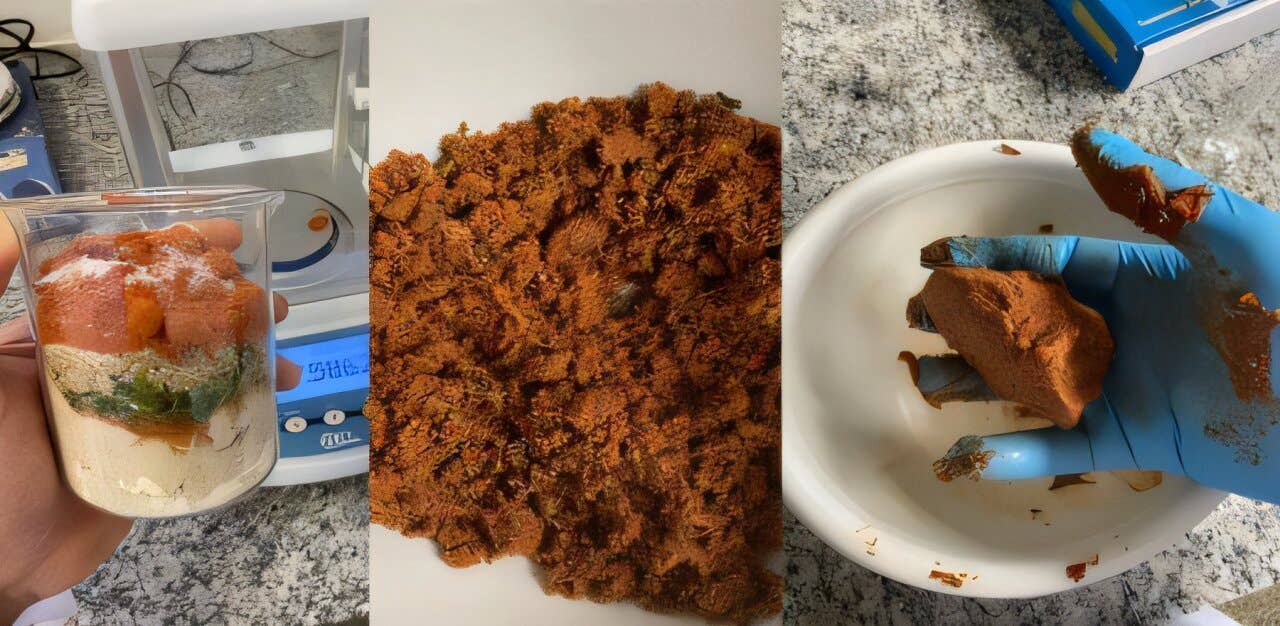
Researchers enriched the product with tomato powder, spices, and a mixture of fat sources made up of sunflower, olive, and linseed oils. Credit: Unicamp


Creating and Testing the Sunflower-Based Burgers

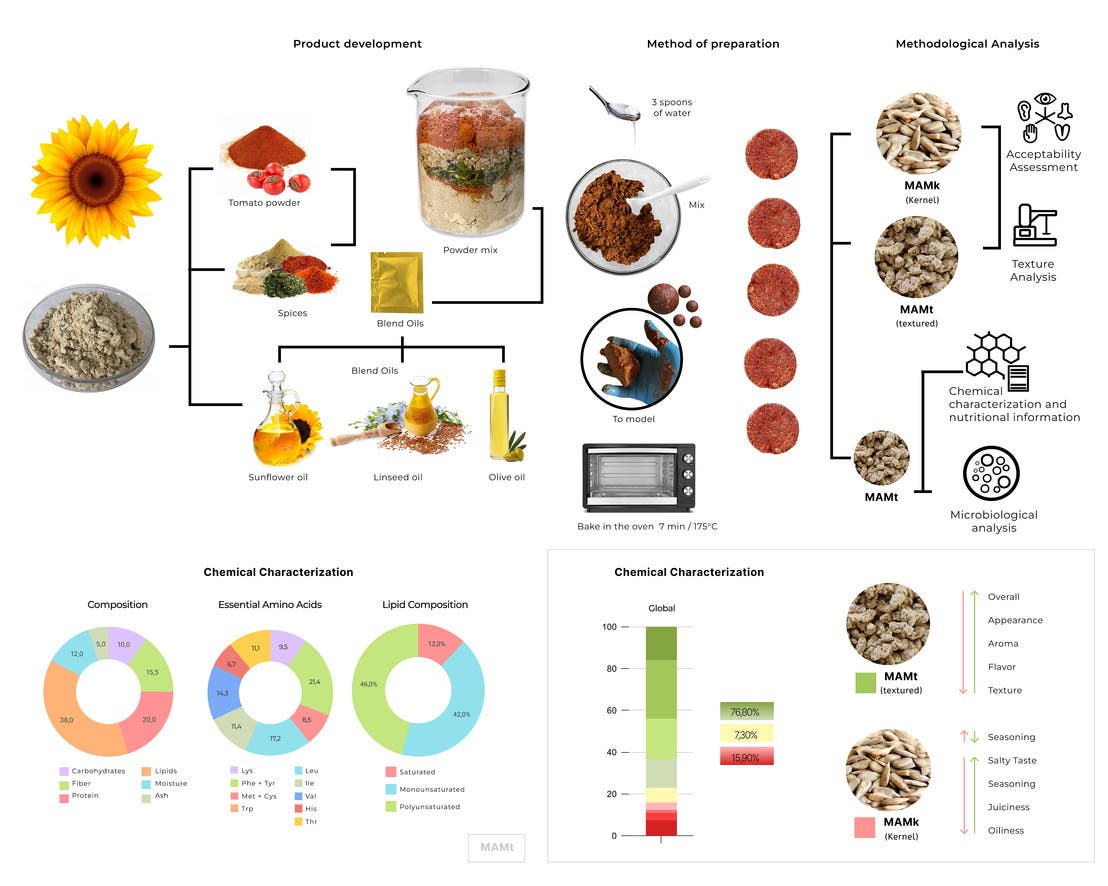
Researchers prepared two variations of the meat substitute. One was made from flour derived from roasted sunflower grains, while the other used textured sunflower protein. Both formulations were enhanced with tomato powder, spices, and a blend of sunflower, olive, and linseed oils to improve flavour and nutritional value.

The team shaped the mixtures into small burger patties and baked them. They then conducted sensory and physicochemical tests to evaluate the products' texture, flavour, and composition. Results revealed that the version made from textured sunflower protein had better consistency and higher levels of protein, along with healthy fats such as monounsaturated fatty acids. It also contained impressive mineral levels, providing 49% of the recommended daily intake of iron, 68% of zinc, 95% of magnesium, and 89% of manganese.


Sustainable, Non-GMO Protein Potential

The study, supported by FAPESP, focused on sunflower meal because sunflower oil is already widely used in Europe, and sunflower cultivation is steadily increasing in Brazil. Another advantage is that the plant is not genetically modified, making it an appealing ingredient for consumers seeking non-GMO options.

Sunflower flour also offers a valuable source of plant-based protein, aligning with the growing global demand for sustainable and environmentally friendly food choices.


Mild Flavour and Strong Nutritional Profile

Maria Teresa Bertoldo Pacheco, a researcher at ITAL's Center for Food Science and Quality and lead author of the paper published in Food Research International, explained that removing the husks and phenolic compounds gives the flour a neutral flavour and aroma. "It should also be noted that, after removing the husks and phenolic compounds, the flour has a very neutral taste and aroma, especially compared to the various vegetable proteins on the market," she said.

Pacheco also highlighted the favourable balance of essential amino acids in the flour, which adds to its nutritional value. From a technological standpoint, she noted that creating a fibrous structure through processes like extrusion is key to achieving a product with a more authentic, meat-like appearance and texture.

Pacheco emphasized that the research contributes valuable insights for maximizing the use of sunflower cultivars while encouraging appreciation for their nutritional benefits. She also praised the collaboration with German researchers, noting that the partnership fostered technical exchanges, knowledge sharing, and opportunities for students and scientists to work together.

https://www.sciencedaily.com/releases/2025/11/251104013006.htm

Sunday, September 21, 2025

Scientists create nutritious vegan-meat alternative from sunflowers

From thebrighterside.news

While more and more people turn to plant food, a team of scientists might have found a new meat substitute—in a crop you know. Sunflower, usually grown for its seeds and oil, is now being used to cook a nutritious as well as tasty meat substitute.

Scientists turn sunflower meal into a healthy, sustainable meat substitute packed with protein and minerals. (CREDIT: Yumba)

By transforming sunflower meal, a waste product of oil production, into a plant protein, German and Brazilian researchers are revolutionizing the way we think about food waste, sustainability, and nutrition.


A New Purpose for a Well-Known Crop

Sunflower oil is already a household name, particularly in Europe. But what becomes of the remaining sunflower seed meal after the oil has been removed? Typically, it's discarded or fed to livestock. Researchers chose to investigate its viability for use by humans.

Sunflower meal comes from the oil-extracted seeds that are crushed. However, it does not become safe to eat or pleasant until the meal is cleaned through a process. Husks and portions of plant material called phenolics are removed. Phenolic materials colour the flour darker and harder to digest for the body. Once these are filtered out, the rest of the flour smells and tastes much milder. 

In the opinion of Maria Teresa Bertoldo Pacheco, food scientist at Brazil's Institute of Food Technology (ITAL), that neutrality sets sunflower protein apart from other plant-based proteins. "It should also be added that, after husk and phenolic compound removal, the flour has a very neutral flavour and odour, particularly when compared to the different vegetable proteins available," Pacheco said.


Producing a Meat Substitute from Sunflower Meal

After they cleaned and prepared the sunflower meal, the group prepared two different meat substitute mixtures. The first was prepared with flour from roasted sunflower seeds. The second used a textured version of sunflower protein, which gives the final product a more solid bite. Both mixes were then mixed with tomato powder, spices, and a blend of healthy oils—such as sunflower, olive, and linseed oils.

The blend was formed into small patties and cooked to produce mini-burgers. These were put through a series of tests. Flavour testers graded the flavour, smell, texture, and overall enjoyment. The textured protein version emerged victorious, especially for texture. It more closely matched the mouthfeel of meat foods.

The chemistry of the patties showed that they were not only tasty—They were healthy too. The textured mix had about 20% protein and 38% fat, which was mainly a combination of heart-friendly monounsaturated fatty acids. The healthy fats made up almost 42% of the fat.

Researchers enriched the product with tomato powder, spices, and a mixture of fat sources made up of sunflower, olive, and linseed oils.
Researchers enriched the product with tomato powder, spices, and a mixture of fat sources made up of sunflower, olive, and linseed oils. (CREDIT: UNICAMP)

In addition to that, the patties contained important nutrients. Large amounts of iron, zinc, magnesium, and manganese were included. In fact, a serving supplied 49% of the daily value for iron, 68% for zinc, 95% for magnesium, and 89% for manganese. This mineral burst is especially useful in plant-based eating plans, which tend to lack these items.


More Than Just Protein

Protein isn't just about quantity—it's also about quality. The sunflower-based burger contained all the necessary amino acids. Those are the blocks your body needs but can't produce for itself. The only partially limiting amino acid was lysine, and that still scored 0.8. That's nearly the threshold of complete proteins.

Pacheco noted that this profile also justifies the use of sunflower flour as a meat substitute. "The product has a good balance of essential amino acids," she said. "This is another reason it could make its way onto the food market as a meat product substitute from a nutritional standpoint."

While the burger mixture isn't there yet to provide the taste of meat, the study has vast potential. Other processing technologies, including extrusion, can help to develop a meat-like texture and fibrous structure. "From a functional-technological point of view, processes that build fibrous proteins, such as extrusion, are needed to give a product a more meat-like appearance and sensation," Pacheco said.

Graphical abstract.
Graphical abstract. (CREDIT: Maria Teresa Bertoldo Pacheco, et al.)


A Growing Field in More Ways Than One

There is a reason that the scientists chose to study sunflower meal today. Sunflower oil is a massive commodity in Europe, and sunflower crops are increasing in Brazil. The more fields that cultivate the crop, the more sunflower meal will be created. That gives a massive amount of plant material that isn't genetically modified and ready for use.

As environmental issues and climate change dictate the manner in which humans are consuming, the demand for sustainable and green food is increasing. Taking a ubiquitous farm by-product and turning it into a delicious, protein-rich meat substitute that checks many boxes: less food waste, smaller water footprint than raising animals, and less greenhouse gas emissions.

The study was supported by FAPESP, Brazil's largest science funding agency. Pacheco attributed international collaboration to keeping the research alive. The exchange with the German scientists did not stop at exchanging techniques—it went so far as to involve student exchange and knowledge acquisition. "I think the research provided a good amount of positive references, both to make full use of the cultivar and to encourage consumption and appreciation of the flour," stated Pacheco.


The Future of Sunflower Protein

It is just the start, but here is hope. With further development, sunflower meal could play a large role in the food system of the future. Not only is it a nutritional giant, but it is also an option within a tidal wave of plant-based proteins.

Most importantly, it solves two gigantic problems at once—how to feed a growing population and how to feed them without destroying the planet. These kinds of foods could be the keys to a more sustainable and balanced diet.

As the science continues to unfold, expect to see more of these kinds of foods in the markets.

Research was conducted in collaboration between Brazil's Institute of Food Technology (ITAL) and the University of Campinas (UNICAMP) and researchers at Germany's Fraunhofer IVV Institute.

Research findings are available online in the journal Food Research International.

https://www.thebrighterside.news/post/scientists-create-nutritious-vegan-meat-alternative-from-sunflowers/