Showing posts with label seafood. Show all posts

Wednesday, April 29, 2026

The Vegan Calamari Recipe That Can Fool Even Seafood Lovers

From plantbasednews.org

They're crispy, chewy, and even a little jiggly 

If you’ve ever missed crispy seafood textures, this vegan calamari recipe might be the closest thing yet. In a recent video, Miyoko Schinner shows how to recreate calamari using simple, plant-based ingredients that deliver the same bite, chew, and crisp finish.

Schinner, widely known as a vegan cheese pioneer and the founder of Miyoko’s Creamery, shares the method as part of her cookbook The Vegan Meat Cookbook. The result is a surprisingly convincing seafood alternative that even sceptics struggle to tell apart from the original.

A traditional ingredient with a modern twist

These crispy, chewy calamari rings are made from konjac and layered with flavour using vegan fish sauce and a flax egg - Media Credit: YouTube / The Vegan Good Life with Miyoko

At the centre of this vegan calamari recipe is konjac, a root vegetable used in Japan for centuries. Schinner explains that it’s “the ground-up powder of a strange-looking root of a plant, the konjac plant,” which transforms into a jelly-like texture when cooked.

One of its standout features is that “it has no calories,” she says, making it a unique base for recreating seafood textures. Once combined with water, seasoning, and heat, the mixture thickens into a glossy, sliceable block that mimics the elasticity of calamari.

To build flavour, Schinner adds vegan fish sauce, explaining that it helps “render it like something that’s out of the sea.” This step is key to achieving that subtle ocean-like taste without using any animal products.

Turning konjac into convincing calamari


YouTube / The Vegan Good Life with Miyoko
The konjac mixture thickens into a glossy, jelly-like mixture that’s refrigerated to set before being sliced into rings

The process starts by whisking water with a small amount of pickling lime. Schinner notes you can substitute baking soda if needed. She then adds konjac powder, salt, and vegan fish sauce before heating the mixture.

As it cooks, it quickly thickens. “Already you’re beginning to see it thicken up,” she says, noting that it should cook for just a few minutes until glossy. Overcooking can cause it to separate, so timing matters.

Once ready, the mixture is poured into a container and chilled. After about 30 minutes, it firms up into a jelly-like slab that can be sliced into rings or irregular shapes. “You don’t have to do [rings],” Schinner adds, pointing out that it all tastes the same regardless of shape.

Getting the texture just right

Texture is where this vegan calamari recipe really stands out. Schinner describes the final result as “crispy on the outside, jiggly and tender on the inside with just that right amount of bite and chew.”

Before frying, she tweaks the traditional Italian method. While classic calamari is simply coated in semolina, she finds that plant-based versions can be dry. To fix this, she creates a flax egg and dips the pieces first.

“I find that this is a little bit drier than traditional calamari,” she says, which is why the flax mixture helps lock in moisture before coating with semolina. Regular flour can also be used if semolina isn’t available.

Frying and finishing touches

Once coated, the pieces are fried in hot oil until golden brown. Schinner recommends testing the oil by dropping in a small piece. “When you drop something in there … and it rises right away is when you know that the oil is hot enough.”

She also advises not to overcrowd the pan. This can lower the oil temperature and affect the crispness.

The finished calamari can be served simply or paired with a dipping sauce made from lemon juice, capers, and vegan mayonnaise. But according to Schinner, it’s just as good on its own.

Even non-vegans are convinced

The most telling moment comes when Schinner shares feedback from a friend. “I had an Italian, non-vegetarian, non-vegan, tell me that she was struggling to tell the difference between the real thing and this,” she says.

That realism comes down to the unique properties of konjac and the careful layering of flavour and texture. The end result is “wiggly … elastic,” she adds. It captures the exact qualities that people associate with traditional calamari.

For anyone curious about plant-based seafood, this vegan calamari recipe shows how far ingredients and technique have come.

For more of Schinner’s magical plant-based recipes visit her YouTube channel.

https://plantbasednews.org/lifestyle/food/vegan-calamari-recipe/

Tuesday, January 27, 2026

Vegan Shrimp Comes To US Foodservice As Climate Crisis Impacts Seafood Industry

From plantbasednews.org

By Liam Pritchett

Bayou Best Foods created its vegan shrimp as a direct replacement for traditional seafood 

Bayou Best Foods has expanded access to its vegan shrimp nationwide.

The plant-based seafood company is now supplying its vegan shrimp to three of the largest US foodservice distributors: Performance Food Group, US Foods, and Sysco.

This reach expansion means that Bayou’s vegan shrimp is more accessible to restaurants, hospitality, healthcare, and every other part of the foodservice industry.

“Nationwide availability was a major milestone for Bayou Best Foods,” Kelli Wilson, CEO of Bayou Best Foods, told Protein Production Technology International. “By partnering with the distributors chefs already rely on, we’re making it easier than ever to offer plant-based shrimp that cooks, tastes, and satisfies just like ocean shrimp.”

Bayou's vegan shrimp was created in collaboration with chefs and seafood experts - Media Credit: Bayou Best Foods

The move comes as the climate crisis places additional pressure on traditional animal products, including the traditional seafood industry. Alternative proteins such as Bayou’s vegan shrimp represent both sustainability and stability.

On its website, Bayou Best Foods notes that seafood demand has surged by 122 percent over the last 20 years, while overfishing, contamination, and supply chain issues have undermined wild stocks and consistent pricing.

Furthermore, up to 73 percent of consumers are seeking sustainable alternatives to seafood that meet their needs more effectively, according to the company.

Vegan seafood, diet, and sustainability

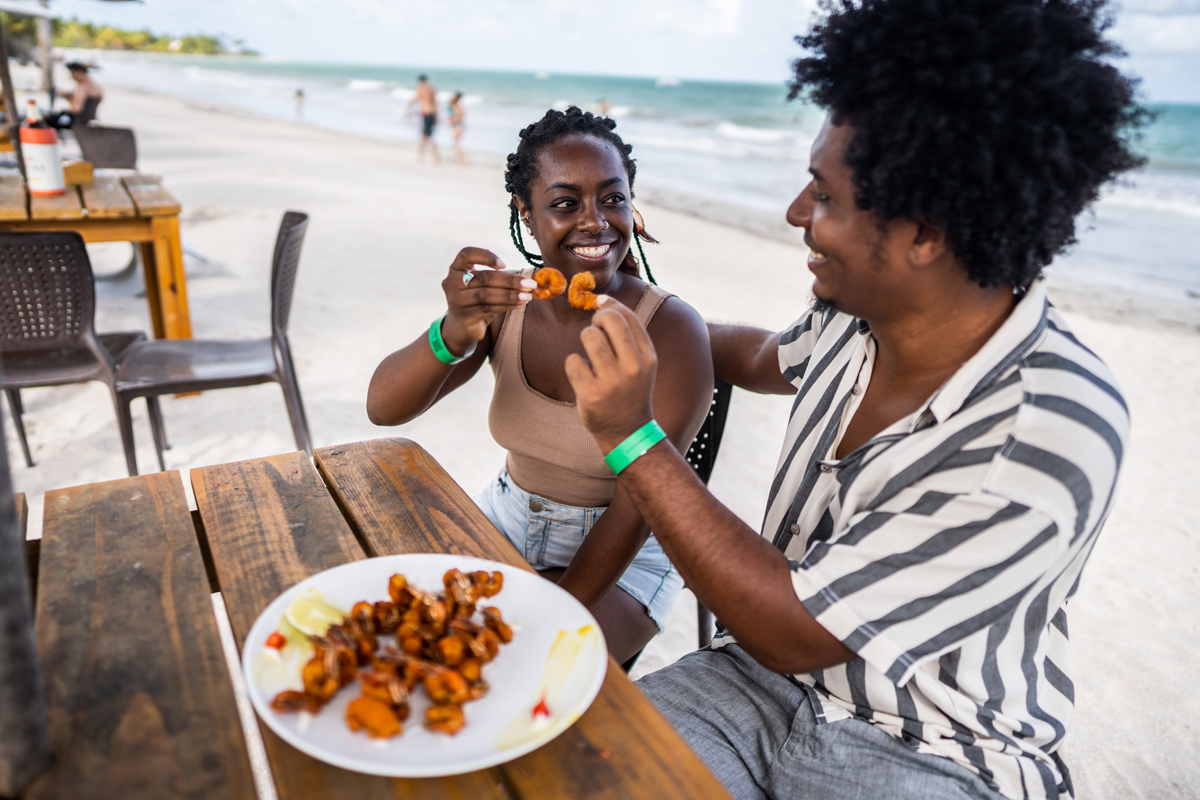
Photo shows a couple eating a plate of vegan shrimp from Bayou Best Foods by the sea
Bayou Best FoodsBayou Best Foods says its vegan shrimp has been through “rigorous” taste and texture testing

Bayou Best Foods created its vegan shrimp alongside “acclaimed chefs” and seafood experts as a direct replacement for traditional seafood.

Following “rigorous” taste and texture testing, people can expect to bake, fry, or steam the pea protein-based alternative, just like the real thing. In addition to being vegan, Bayou’s shrimp is also free from the top nine allergens.

Earlier this year, a report found that Japan’s ongoing vegan tuna boom is being driven by urban flexitarians, primarily in response to changing dietary ethics and concerns about the environment, seafood prices, and food system security.

Globally, the seafood industry could hit USD $1.3 billion by 2031. In the last year alone, Juicy Marbles and Revo Foods collaboratively produced and launched whole cuts of vegan cod and of vegan salmon. Separately, Revo Foods also relaunched its popular but divisive vegan octopus tentacle in response to “overwhelming demand.”

https://plantbasednews.org/news/alternative-protein/vegan-shrimp-comes-to-us-foodservice/

Saturday, September 20, 2025

After Meat & Dairy, Seafood Becomes the Latest Blended Protein Innovation

From greenqueen.com.hk

Dutch firm Vegan Visboer has expanded beyond animal-free offerings with a new blended salmon offering, combining the fish with mycoprotein and plants

                                                                                                   Courtesy: Vegan Visboer


Blended proteins are on an unstoppable streak, and the Netherlands is at the heart of the race.

Lidl, Aldi and Albert Heijn have all released private-label products blending meat with plants, and the latter has also brought out two hybrid milk SKUs.

Now, one Dutch start-up is taking the idea further with a first-of-its-kind product, extending the blended protein portfolio to seafood.

Based in Zwolle, Vegan Visboer (Vegan Fisherman) has unveiled a hybrid salmon fillet in collaboration with aquaculture company Tiptopp, which produces probiotics for feed and processes industry sidestreams.

Vegan Visboer tackles Norwegian salmon sidestreams

                                                                                                      Courtesy: Vegan Visboer


Vegan Visboer already sells a range of plant-based seafood products, including fish fillets, nuggets, burgers and shrimp croquettes. But its move into blended proteins marks a departure from what its brand name promises.

Its new innovation, manufactured at Kramer Fish in Urk, comprises 54% Norwegian salmon from sidestreams that “normally never reach consumers’ plates”.

The rest of the ingredients include textured mycoprotein, textured rice flour, potato starch, bamboo fibre, rapeseed oil, salt, and paprika extract.

“For many consumers, the step to go fully plant-based is still too big. Our Hybrid Salmon Fillet bridges that gap: the familiar taste of salmon, combined with the benefits of plant-based innovation,” the company said.

It suggested that the product was developed with the intention of reducing the business’s carbon footprint, although adding a seafood product to an entirely vegan range isn’t exactly best practice on the environmental front. Rather, the fillet – as is the case with other blended meats – will help lower the climate impact of the seafood industry.

Norwegian salmon is notorious for being overly dependent on global fish feed supplies – the sector’s feed footprint makes up 2.5% of global marine fisheries catch, and the forage fish targeted by the industry contain key micronutrients that are critical to healthy populations in West Africa, leading to experts accusing the sector of ‘food colonialism’.

Globally, too, farmed salmon consumes 44% of the world’s fish oil, despite only accounting for 4.5% of seafood production by the aquaculture industry.

To navigate this, Vegan Visboer works with Tiptopp to remove the salmon left over from filleting, and uses this residual flow to extract its ingredients and flavours. It then adds hypoallergenic rice grains to help bridge the gap between the fish and plant-based ingredients.

Are blended proteins the answer to alt-seafood’s problems?

                                                                                                 Courtesy: Vegan Visboer


Europeans are still reluctant to go fully plant-based. Less than one in five (18%) avoid animal products in their diet, and when asked what changes they’d like to make in their eating patterns, 12% wish to increase their intake of meat and dairy.

At the same time, two in five actively avoid processed foods, a category that includes plant-based seafood as well as processed conventional fish products. Plus, 51% of Europeans want to eat healthier, versus just 9% who want to prioritise sustainability.

“By combining the best of both worlds, we retain the authentic taste and nutritional value while still taking a step towards plant-based,” Vegan Visboer stated.

“The ‘convenience generation’ is the future: health, sustainability, and food safety are more important than ever before. This generation is growing up with plant-based alternatives and is very conscious about making informed choices,” it added.

The move is the latest marker of the embattled plant-based seafood industry. These products represent just 1% of both the vegan meat market and overall seafood sales. Over the last year, several alternative seafood startups have closed, including France’s Olala! and Dutch startups Upstream Foods and Vegan Finest Foods. In the US, celeb-favourite vegan sushi chain Planta filed for bankruptcy this summer and was recently acquired by a VC group for $7.8M.

And despite consumers viewing fish as a healthier, more sustainable alternative to other meats, plant-based versions can still be lacking in protein and omega-3s. Vegan Visboer’s blended salmon contains 14g of protein and 2.5g of fibre per 100g, and is rich in minerals like selenium, magnesium and potassium, and omega-3 and omega-6 fatty acids.

The firm plans to appeal to a broad target group, including flexitarians, eco-conscious consumers, and conventional fish lovers. It will debut the hybrid salmon fillet at Gastvrij Rotterdam and Anuga in Cologne, with a rollout set for January.

Consumers have already taken to blended meat, with omnivores and flexitarians finding some of these products better than their conventional counterparts – will seafood have the same effect?

https://www.greenqueen.com.hk/vegan-visboer-hybrid-salmon-fillet-blended-meat-fish-plant-based/ 

Tuesday, August 26, 2025

Bettaf!sh Launches Vegan Tuna With Continente Food Lab in Portugal

From vegconomist.com

Berlin-based food start-up BettaF!sh has introduced a new plant-based canned tuna alternative, TU-NAH, to Portugal’s seafood market. The product, made from European seaweed, fava beans, and peas, will be available at 12 high-traffic Continente stores across the country.

                                                                                                        ©BettaF!sh

Portugal’s love for seafood

Portugal, known for its high seafood consumption—averaging more than 10 kg per person annually—presents a significant market for alternatives to traditional fish products. The country generates over €1.2 billion in seafood revenue each year (Statista, 2025), underscoring both its strong culinary tradition and the demand for more sustainable options.

Deniz Ficicioglu, CEO and Founder of BettaF!sh, noted, “Portugal’s deep love for seafood inspired us to introduce BettaF!sh TU-NAH here – as a celebration of ocean flavour, not ocean depletion.” The product is designed to replicate the taste and texture of traditional tuna while offering a sustainable alternative. TU-NAH is free from soy and wheat, and contains no methylcellulose, making it suitable for a variety of dietary needs.

TU-NAH’s composition includes seaweed, fava beans, and pea protein, providing a high-fibre and protein-rich option. The product is marketed as ready to eat straight from the can, ideal for sandwiches, wraps, salads, or traditional Portuguese dishes like Salada de Atum.

The product will be available at Continente locations in cities such as Matosinhos, Amadora, and Lisbon’s Vasco da Gama and Colombo shopping centres. Continente, Portugal’s largest retailer with a history spanning 40 years, has been actively expanding its food offerings to include more sustainable products.

Seaweed-based approach

                          ©BettaF!sh

                                    
BettaF!sh, which is also involved in developing seaweed-based ingredients for the wider food industry, is supported by investors focused on climate and sustainable food initiatives, including Pale Blue Dot, Astanor, and Mudcake, among others. The company is also involved in the EU-funded FunSea project, which aims to further advance research into plant-based seafood products.

Marlos Silva, R&D and Innovation Director at MC Sonae, which oversees Continente, explained, “The numbers reflect both a rich culinary tradition and the urgent need for sustainable alternatives. That’s where BettaF!sh steps in. We especially appreciate their innovative seaweed-based approach to rethinking seafood from the ground up.”


https://vegconomist.com/products-launches/bettafsh-launches-vegan-tuna-continente-food-lab-portugal/

Saturday, July 5, 2025

PETA Names 2025’s Top Vegan Seafood Brands

From vegconomist.com/food-and-beverage

Ahead of the 2025 summer season, PETA has released its rankings for the top vegan seafood brands. The list recognizes companies offering plant-based alternatives that cater to the growing demand for seafood alternatives while promoting ocean conservation.

Among the featured brands is Mind Blown, based in Chesapeake Bay, Maryland, known for its vegan crab cakes and shrimp. This year, Mind Blown has also focused on expanding its presence in foodservice, securing partnerships with Wintzell’s Oyster House and a repeating collaboration with PLNT Burger.

                                                                                                        © Konscious Foods

Government support for vegan seafood

Also making the list is Konscious Foods, a Canadian brand recognized for its vegan sushi and poke bowls. Recently, Konscious received a significant investment from the Government of Canada to expand production, increase exports, and create jobs, further boosting the brand’s ability to meet rising consumer demand for sustainable seafood alternatives.

“From craveable crab-free crab cakes to savory sea-friendly salmon, more food brands than ever are serving up fintastic fare that leaves marine life where they belong, in their ocean homes,” said PETA President Ingrid Newkirk, who transitioned to a vegan lifestyle 48 years ago after learning about the treatment of lobsters.

ave Da Sea Foods
© Save Da Sea Foods

The rise of convenient seafood alternatives

Save Da Sea, a Canadian brand best known for its carrot-based smoked salmon, and Gardein, which offers products like fishless filets and crabless cakes, also secured spots in PETA’s rankings. Gardein continues to be a well-established name in the plant-based food sector, providing convenient seafood alternatives for a wide consumer base.

Other brands making an impact in the vegan seafood space include Finneato Fysh Foods, with its plant-based spicy tuna, and Jinka, which offers spreadable vegan tuna and calamari. Both brands cater to a growing interest in accessible, sustainable seafood alternatives.

Pushing boundaries with new tech

Seed to SurfOshi, and Cavi-art round out the list with innovative products like whole-vegetable seafood and 3D-printed salmon fillets. Oshi, in particular, has recentley recently opened direct online sales for its 100% plant-based salmon, which was previously only available through select foodservice partnerships and restaurant suppliers, providing consumer access to its sustainable products.

“Every winner on PETA’s list is enticing diners with innovative vegan products that will have even the pickiest of people clam-oring for more,” Newkirk added.

https://vegconomist.com/food-and-beverage/meat-and-fish-alternatives/peta-names-2025s-top-vegan-seafood-brands/ 

Tuesday, June 24, 2025

USA: ‘Dive In’! PETA Names Top Vegan Seafood Brands

From peta.org/media

Norfolk, Va. – Time to shell-abrate! Ahead of the summer dining season, PETA is announcing its 2025 Vegan Seafood Rankings—honouring the brands that satisfy the cravings of “seafood” seekers who also want to protect sealife.

PETA’s picks offer boatload of plant-powered options bursting with flavour—including spicy tuna from Fysh Food in Los Angeles, mouth-watering crab cakes from Mind Blown in Chesapeake Bay, Maryland, and tender yet crispy calamari from Jinka in Burlingame, California.

The winning brands also span the globe—from Cavi-art in Herning, Denmark and Oshi in Rehovot, Israel, to a quartet of winners in Canada, including Save Da Sea in Victoria, British ColumbiaSeed to Surf in Toronto, Ontario, and Konscious and Gardein, both located in Richmond, British Columbia.

Credit: Mind Blown

“From craveable crab-free crab cakes to savoury sea-friendly salmon, more food brands than ever are serving up fintastic fare that leaves marine life where they belong, in their ocean homes,” says PETA President Ingrid Newkirk, who went vegan 48 years ago after learning more about lobsters. “Every winner on PETA’s list is enticing diners with innovative vegan products that will have even the pickiest of people clam-ouring for more.”

All of PETA’s top picks are available to ship throughout the U.S.

PETA notes that sea animals feel pain, yet fish are gutted on the decks of fishing boats, live lobsters are dropped into boiling water, and crabs are dismembered while still conscious.

PETA—whose motto reads, in part, that “animals are not ours to eat”—points out that Every Animal Is Someone and offers free Empathy Kits for people who need a lesson in kindness. PETA’s free vegan starter kit is filled with tips to help anyone looking to make the switch. For more information, please visit PETA.org or follow PETA on XFacebook, or Instagram.

https://www.peta.org/media/news-releases/dive-in-peta-names-top-vegan-seafood-brands/ 

Friday, September 13, 2024

‘I’ll have them with hot sauce’: should vegans eat oysters?

From theguardian.com

Bivalve veganism is built on the philosophy that molluscs such as mussels and oysters feel no pain. But some say the scientific jury is still out 

Alex Karol is fantasising about the next time she gets to slurp up some freshly shucked oysters. “I’ll have them with lemon juice, shallots, and a couple of drops of hot sauce. Sometimes, I have a couple with a splash of vodka,” says the London- and Toronto-based publicist. Cost curbs her craving for oysters to one meal a month, and so even just talking about them makes her hungry. “I really, really enjoy them – like, properly enjoy them. I wish that I had oysters every single day of my life.”

Oysters are not to everyone’s taste but Karol’s enthusiasm for the filter-feeding bivalves comes as a surprise – because she is vegan. She is otherwise strict: she does not even consume honey. But a few years back she found she was struggling to get certain nutrients in suitable quantities from plants alone, and someone tipped her off to the idea that you could eat oysters and still be vegan. It was called “bivalve veganism” – and Karol was sold.

“I was so excited to bring oysters back into my life,” she says, adding, however that “I do feel like lots of people think I’ve made up the rule myself, and it’s not a real thing.”

Alex Karol, who describes herself as a bivalve vegan, enjoying a meal at Rodney’s Oyster House in Toronto, Canada. Photograph: Cole Burston/The Guardian

Bivalve veganism is built on the idea that molluscs such as mussels and oysters do not possess a brain and are unable to process pain, so eating them does not cause animal suffering. This has prompted a simmering philosophical debate: can vegans really consume oysters?

According to the Vegan Society, “In dietary terms [veganism] denotes the practice of dispensing with all products derived wholly or partly from animals.” Maisie Stedman, a spokesperson for the UK charity, says it “understands the word ‘animal’ to refer to the entire animal kingdom. That is all vertebrates and all multicellular invertebrates. Oysters and other bivalves are invertebrates and, taking this into account, it is not vegan to consume them.”

However, some say the argument is more nuanced. Philosopher Peter Singer says: “You can say, by definition, a vegan won’t eat oysters. But that doesn’t solve the ethical question of, ‘is there anything wrong with eating oysters?’”

Singer is emeritus professor of bioethics at Princeton University in New Jersey, US, and in 1975 published Animal Liberation, a book that argues for the more ethical treatment of animals. He decided to be almost exclusively vegan, so he would “not be complicit in inflicting unnecessary suffering on any sentient beings”. But occasionally he will enjoy an oyster, believing that oysters do not suffer pain.

The idea behind ‘bivalve veganism’ is that molluscs such as mussels and oysters do not feel pain, so do not suffer. Photograph: Cole Burston/The Guardian


To understand this, it makes sense to find out more about how pain works. Firstly, pain involves a “nociceptive response” where nerves react to a harmful stimulus, such as heat, by triggering a reflexive withdrawal of the exposed body part to protect it from further harm, says Lynne Sneddon, a professor at the University of Gothenburg in Sweden who studies aquatic animal behaviour.

For some organisms, nociception tips over into a second phase, sensory pain, which promotes behaviours such as nursing a wound. We know from human experience that sensory pain can lead to suffering.

But oysters and mussels lack what is considered a critical ingredient required to process sensory pain: a centralised nervous system, or brain. The logic follows that killing and consuming oysters causes them no suffering.

Adding to this theory, oysters and mussels are anchored to rocks and unable to flee their attackers compared with other bivalves such as scallops, which can swim away.

“It’s harder to see why [oysters and mussels] would have evolved the capacity for pain since there’s not much that they can do about being ripped off the rock,” Singer says.

Singer’s recent book, Animal Liberation Now, excludes scallops and clams from the list of bivalves he is happy to consume. But oysters remain on the menu. “I think that the ethical reasons for being vegan don’t apply to eating some bivalves. So I think that people who are vegan and would like to eat some bivalves … are justified in doing so.”

The subject of animal pain continues to compel researchers and, according to Sneddon, “there’s nowhere that it is more hotly debated than in aquatic animals”. Unable to get into animal minds, researchers rely on behavioural changes as the closest evidence that these organisms might experience pain. Sneddon’s own studies on behavioural changes in fish add to a mounting body of research suggesting that fish do feel sensory pain. Meanwhile molluscs such as octopuses have been observed cradling wounded tentacles, and other experiments show that such behaviours subside when animals are supplied with pain treatments.

Oysters and mussels show potential signs of nociception, such as closing their shells against a threat, Sneddon says. They may not have a centralised brain, but they do have a diffuse system of nerve cells, she notes: “Their [central nervous system] is just laid out differently.” And considering the close evolutionary ties between these bivalves and other molluscs, she thinks it is worth investigating further whether they can experience pain.

But there is currently almost no pain research underway on bivalves. “The jury’s out. We don’t have the science in place to inform anyone’s decision about that. But if you’re concerned that there might be a likelihood that these animals suffer in some way, then I would suggest you should avoid eating them,” Sneddon advises.

Sneddon and Singer agree, however, that there is more to this question than the welfare of individual animals, such as what seafood production does to wider ecosystems. “I’m a little bit biased: my concern is for the individual animal, that’s the priority,” says Sneddon. “But there are so many other questions about how the animals were caught, what was done to them and how that affects the wider environment – the ecosystem and other animals.”

For example, there is evidence that scallop dredging destroys whole ecosystems, which raises questions about how this affects the wellbeing of other living things. Similarly, while oyster and mussel farms filter the water and are generally considered the most sustainable aquatic foods you can consume, there are some concerns around the chemical pollution and wider biodiversity impacts linked to largescale bivalve farms.

While the research catches up with the philosophising, Karol, who identifies as a bivalve vegan, prefers to source her oysters from sustainable fisheries and farms. But, she says: “I’m always open to listening. I would be open for someone to sway me into complete veganism, for sure.”

https://www.theguardian.com/environment/2024/sep/12/ill-have-them-with-hot-sauce-should-vegans-eat-oysters