Showing posts with label gut health. Show all posts

Friday, October 3, 2025

Squeaky Bean’s new gut-friendly vegan pies are the perfect autumn comfort food

From veganfoodandliving.com

Squeaky Bean has unveiled two brand-new plant-based pies, serving up comfort food with a gut-friendly twist just in time for autumn


                                                                                              Squeaky Bean/Vegan Food & Living


Plant-based brand Squeaky Bean is expanding its popular meat-free range with two tasty new additions that are loaded with flavour and gut-health benefits.

The new Braised Veggie Pie and Spanish Chorizo Style Pie (both 209g with an RRP of £3.75) will be landing in Tesco stores nationwide from 6th October, expanding the brand’s growing range of vegan convenience foods.

Gut health has become one of the biggest talking points in food this year, and Squeaky Bean is leaning into the trend by adding naturally fermented vegetables to the filling that not only enhance flavour but also deliver a boost for the digestive system.

The Braised Veggie Pie puts vegetables centre stage, with a shortcrust pastry base filled with a medley of naturally fermented vegetables in a rich ale gravy, all topped with golden puff pastry. The fermentation process not only boosts flavour but also delivers gut-friendly benefits.

For those seeking a bolder bite, the Spanish Chorizo Style Pie combines butter beans, courgettes and fermented vegetables inside crisp shortcrust pastry, finished with a puff pastry lid. The result is a hearty, smoky flavour inspired by classic Spanish chorizo, but completely plant-based.

The new vegan pies from Squeaky Bean join the company's extensive range of ready-to-eat, protein-packed vegan products such as Smoked Salmon Style Slices, snackable bites, and a variety of sandwich slices


Gut-friendly option

Brand Manager Katie Atkin explained that the new pies were created to answer growing demand for plant-based foods that don’t compromise on taste.

She said the range is designed to put vegetables in the spotlight while still delivering the hearty textures consumers often associate with meat. Fermentation, she added, brings “a rich umami depth and subtle zing” that makes the pies stand out as a flavourful, gut-friendly option.

Perfect as a quick and easy midweek dinner or as the centrepiece of a vegan roast dinner, both pies can be baked straight from the packet and paired with mashed potatoes and vegetables for the ultimate comfort food.

The new additions join Squeaky Bean’s extensive vegan range, which includes ready-to-eat, protein-packed products such as Cooking Chorizo Style Sausage, Tuna Style Flakes, Crispy Bacon Style Strips, Salmon Style Flakes, Chargrilled Steak Style Strips and a variety of sandwich slices.

The Squeaky Bean Braised Veggie Pie (209g) and Spanish Chorizo Style Pie (209g) will be available in Tesco from 6th October (RRP £3.75).

 https://www.veganfoodandliving.com/news/squeaky-bean-launches-plant-based-pies/#google_vignette

Wednesday, August 13, 2025

New gut health-boosting ‘superfood’ range hits Ocado, with 15 plant points per serving

From veganfoodandliving.com

Moving Mountains’ new superfood range lands at Ocado, packing up to 15 gut-boosting plant points into quick, flavour-packed meals


If you’ve been hearing about the importance of gut health but aren’t sure where to start, a new vegan food range promises to make it simple.

Nutrition experts recommend aiming for 30 different plant points each week to support a healthy gut microbiome, which plays a key role in digestion and overall well-being. Now, a new range of ‘superfood‘ products has launched in Ocado, delivering 14–15 plant points in one serving, thanks to ingredients like lentils, chia seeds and chickpeas.

Plant-based innovator Moving Mountains has created the Superfood range to pack maximum nutrition into everyday meals, helping shoppers hit their weekly ‘plant points’ target without complicated meal plans.

The brand promised to ‘supercharge your plate’ with its new Spicy Superfood Burger, Spicy Superfood Bites and Superfood Crispy Dippers, all rich in protein and fibre.

Moving Mountains Marketing Manager Eleanor Faragher-Siddall said the company is ‘thrilled’ to bring the range to retail, adding that it makes ‘healthy, plant-based eating delicious and simple.’

The new Superfood range from Moving Mountains promises a convenient way to boost health with whole plant foods. Images © Moving Mountains/Vegan Food & Living

The new Superfood range from Moving Mountains promises a convenient way to boost health with whole plant foods. Images © Moving Mountains/Vegan Food & Living


What’s in the Moving Mountains Superfood range?

The Superfood Spicy Burger (£3.50, 200g) is gluten- and soya-free, with 8.3g of protein per 100g. It offers 15 plant points and a gentle kick of spice, making it ideal for burgers, rice bowls or stuffed pitta breads.

The Spicy Superfood Bites (£3.50, 204g) are a source of protein (9.5g per 100g), fibre and vitamin E, with a punchy seasoning and 15 plant points. They work well in wraps, salads or as a snack.

The Superfood Crispy Dippers (£3.50, 210g) are the brand’s newest ‘health hack’. Containing 8.5g of protein, iron, fibre and 14.25 plant points, they’re coated in a golden crunch and pair easily with fresh salads or dips.

Moving Mountains says the Superfood range is not only good for your gut but also better for the planet. According to the brand, producing these plant-based products in the UK uses 92% less CO₂ than their meat equivalents.

The range first launched into UK foodservice earlier this year, where it was well-received by restaurants and catering providers. Now available through Ocado at £3.50 per pack, it’s designed to help shoppers upgrade their everyday meals while supporting gut and planetary health in one go.

https://www.veganfoodandliving.com/news/new-moving-mountains-gut-health-superfood-range-ocado-plant-points/ 

Monday, June 30, 2025

9 things nobody tells you about the first month of going vegan

From vegoutmag.com/lifestyle 

By Jordan Cooper

Going vegan isn’t just a food choice—it’s a full-body remix, a social shift, and a mind-bending taste test. Here’s what really happens in those first 30 days

When I first went vegan, I thought I was ready. I had the almond milk. I had the tofu. I had the documentaries queued up and the fridge cleansed of every trace of dairy. But no one warned me about how weirdly emotional I’d get standing in the cheese aisle. Or how my taste buds would straight-up riot before making peace.

The first month of going vegan is a crash course in cravings, identity, biology, and—yes—some late-night label-reading marathons that will have you questioning what even counts as food. Here are 9 things nobody tells you about your first month of plant-based living (but I’m here to spill the oat milk).


1. Your gut is going to throw a party. And maybe a protest.

Let’s talk fibre. If your pre-vegan diet looked like a grilled cheese dreamscape, your microbiome is about to meet its match. Lentils, chickpeas, kale—all that fibre is great in theory, but your gut bacteria need time to adjust.

In week one, bloating can make you question your life choices. Your digestion is adapting to more plant matter than it’s seen in years. The good news? Most people report that after two weeks, they’re more regular than a Swiss train schedule. The bad news? You may need to cancel that second-date ramen night.

2. You’ll grieve certain foods like lost lovers.

I found myself wandering the grocery store like I was in a breakup montage. I wasn’t hungry—I was mourning. Brie, butter chicken, and those absurdly cheesy microwave snacks? Gone.

And it’s not just the taste—it’s the memories. That mac and cheese your mom made when you were sick? The birthday cake ritual? You’ll miss them in strange, sentimental ways. But hang tight. Eventually, your palate (and your emotions) recalibrate.

3. You might feel amazing—or completely off—for a while.

Some new vegans report feeling euphoric, light, and “clean” within days. Others? Sluggish, foggy, and cranky. The variance usually comes down to what you’re eating (yes, Oreos are vegan, but no, they don’t count as fuel).

Without enough protein, iron, or B12, your energy can tank fast. So while your intentions might be green, you need to make sure your meals are balanced. A diet of hummus and toast will not sustain you, friend.

Pro tip: Track your nutrients. And if you're like me and think Google Sheets is sexy, build yourself a daily food log.

4. The learning curve for ingredients is WILD.

Day 7: You’re in line at the cafe, wondering why your latte tastes “off.” You double-check the milk: oat. All good. But the cookie? Surprise—contains whey protein isolate.

It’s like ingredient whack-a-mole. Casein, gelatine, cochineal (crushed bugs in candy, no joke)—they’re lurking. You become a decoder of food labels, a midnight researcher of E-numbers, and a person who whispers “wait…is this vegan?” at least 30 times a week.

5. You’ll become a home chef—even if you weren’t before.

Before I went vegan, I thought “cooking” meant heating up Trader Joe’s frozen dumplings and dusting them with sesame seeds like a Pinterest pro.

Now? I ferment cashew cheese on Sundays. I whip aquafaba (chickpea brine) into meringue like it’s no big deal. Going vegan nudges you into your kitchen because takeout gets complicated and expensive, and honestly, homemade tastes better once you get the hang of it.

Pro tip: Batch-cook. Make double portions of curry, chili, or stir-fry and freeze the extras. Future you will cry grateful tears.

6. You’ll annoy people without meaning to.

“Wait, so you don’t eat any cheese?”
“You can’t even have eggs?”
“Where do you get your protein???”

You’ll field questions like you’re a contestant on a vegan game show. But here’s the tricky part: even if you don’t bring it up, your food choices make some people defensive. I once ate tofu in silence at a barbecue and someone felt compelled to tell me how “we’re biologically meant to eat steak.”

Your job isn’t to convert anyone. Just vibe. Trust me—curiosity always lands better than confrontation.

7. You’ll discover new flavours—and fall hard.

Here’s the cool twist: your taste buds evolve. By week three, I was obsessed with roasted cauliflower, tahini everything, and miso-glazed mushrooms. Things that once seemed “meh” are suddenly flavour bombs.

Your palate becomes more sensitive. Salty, sweet, umami—they all shine brighter. You’ll find yourself craving things like baked sweet potatoes with peanut sauce and pickled veggies on toast. Welcome to the flavour renaissance.

8. Restaurants will become treasure hunts.

Some cities are vegan havens. Others? Not so much. But even in the most steak-forward towns, there are often hidden gems—Vietnamese joints with killer tofu pho, Indian buffets full of lentil love, or burger spots that carry the Impossible patty if you just ask.

But be prepared: sometimes your only option will be fries and a side salad. That’s when snacks in your bag become essential survival gear.

My go-to? Dried mango, roasted almonds, and a protein bar that doesn’t taste like punishment.

9. You’ll start to question more than just food.

This one hit me the hardest.

Once you stop and really see where your food comes from, it’s hard to unsee. Your food choices feel political. Ethical. Emotional. You start asking bigger questions. How is clothing made? What’s in my shampoo? Who made the chocolate I’m eating?

Veganism has a way of pulling a thread that unravels much more than your diet. You might not change everything—but you will notice more. And that noticing? It stays with you.

Final Thoughts: The First Month is a Journey—Not a Test

You don’t have to be perfect. You will probably mess up (hi, honey in your favorite granola bar). You’ll get hungry in weird places. You might dream about bacon. That doesn’t make you a failure.

It makes you human.

The first month of going vegan is wild. It’s beautiful. It’s frustrating. And it’s deeply personal. But if you’re open to it, it can also be the beginning of something transformative—not just for your health, but for how you move through the world.

One bite at a time.

https://vegoutmag.com/lifestyle/gen-9-things-nobody-tells-you-about-the-first-month-of-going-vegan/

Monday, April 28, 2025

A Gut Doctor’s Survival Guide To Bloating On A Plant-Based Diet

From plantbasednews.org

Here, The Gut Health MD responds to commonly asked questions about gas and bloating on plant-based diets

Everyone deals with gas and bloating now and then, but for new vegans, it can occasionally feel like a full-blown gut rebellion. Fortunately, it’s not a sign that your body can’t handle a plant-based diet, it’s likely a sign that your gut is learning to thrive.

In an episode of The Exam Room, the YouTube channel from the Physicians Committee, gastroenterologist Dr Will Bulsiewicz – also known as The Gut Health MD – explores one of the most awkward but common issues new vegans face: gas and bloating.

Bulsiewicz is the author of Fiber Fueled and an American board-certified specialist. His work centres around the powerful connection between diet and gut health, and in this episode, he breaks down why bloating happens and how to beat it.

Gut health tips for vegans

The video, titled Gas and Plant-Based Diets: Tips from The Gut Health MD, covers practical strategies to support the microbiome and ease digestion when transitioning to a plant-based diet. From bean bloating to probiotic myths, Bulsiewicz answers a series of questions from viewers with science-backed advice.

Here’s a breakdown of the most common concerns and what Dr. B recommends.

Please note: this is intended as a guide only. If you’re worried about gas, bloating, or anything related to your gut health, you should always speak to a doctor or health professional.


Ease in slowly with fibre

Jumping headfirst into a fibre-rich diet can cause gas, bloating, and discomfort. Bulsiewicz explains that the gut microbiome needs time to adjust.

“You are changing your diet, your gut microbiome is adapted to the food that you were eating,” he says. “It’s going to take time for your gut microbes to adapt.”

He recommends starting with cooked foods, which are easy to digest, before progressing to raw foods. He also advises to take a probiotic and increase fibre gradually, making sure the bowels stay regular. Constipation, he says, is the number one cause of gas and bloating in his clinic.


Gas from beans? Don’t panic

Beans, lentils, and hummus are rich in fibre and FODMAPs, which are carbohydrates that can cause excess gas. The trick is to introduce them slowly and give the body time to adapt.

“Good news: the vegan diet is not destroying your gut. What you are experiencing is sloppy digestion,” Bulsiewicz says. “It is not indicative of you actually causing damage to the gut.”

Soaking and rinsing beans, using fresh cooking water, and even adding seaweed can help reduce a gas-causing compound called raffinose.


Water is key

Bulsiewicz emphasizes that hydration plays a big role in gut health – and plain water beats carbonated beverages every time.

“The gas that goes in your mouth has to come out one end or the other,” he jokes. “You’re either going to belch it out or it’s going to pass all the way through the intestines.”

Plain water supports digestion and helps relieve constipation, especially when paired with fibre. The doctor likens it to floating a log downstream: “If the creek bed is dry, that log is going to get stuck in the rocks.”

Keep in mind that regular bowel movements are crucial for reducing bloating.


Constipated? Try magnesium

If drinking more water and walking aren’t enough, Bulsiewicz recommends magnesium supplements before bedtime.

“It’s good for the bowels, it’s good for sleep, it’s good for anxiety…it’s even good for headaches,” he says, noting that many people find it helps “jump start the bowels.” Only once the bowels are moving regularly does he suggest slowly increasing fibre.


Fermented foods: A helpful addition

Fermented foods like sauerkraut and kimchi can benefit the microbiome, according to Bulsiewicz.

“I haven’t seen a study that says that we need fermented foods,” he says. Still, they can enhance gut health when eaten in moderation and introduce beneficial microbes that survive digestion.


Stress can impact your gut

Even if you’re eating perfectly, stress might still cause digestive issues.

“If you are not at peace with the stress in your life, it is going to have negative consequences on your gut,” Bulsiewicz says.

He explains that stress hormones trigger dysbiosis – an unhealthy imbalance in the gut bacteria – and encourages people to address stress just as seriously as diet or sleep.


Build diversity with plant variety

Want a healthy microbiome? Don’t just eat plants – eat lots of different plants.

“The single greatest predictor of a healthy gut microbiome is the diversity of plants within our diet,” Bulsiewicz says. Different plants contain different fibres, and variety ensures that all types of gut microbes are fed.


Struggling with cruciferous veggies? Cook them

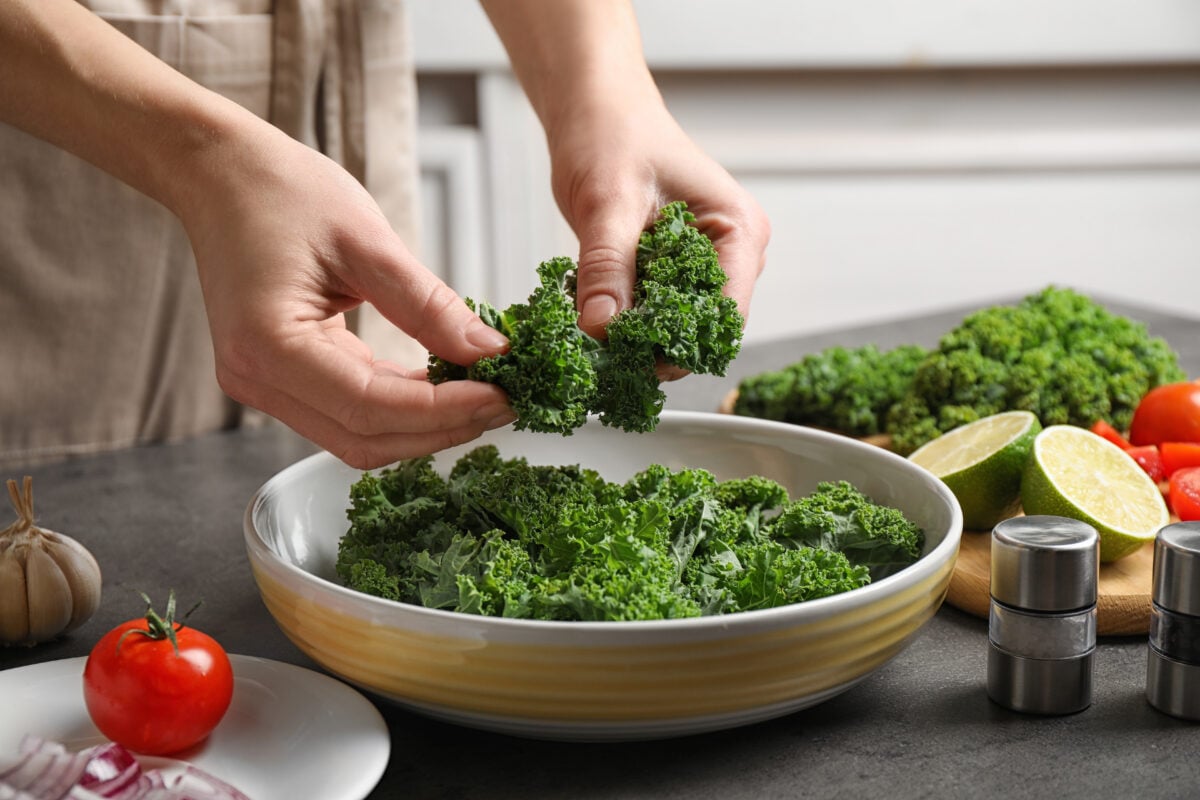
A woman preparing kale in a pot
Adobe StockCooking kale can help alleviate bloating

Cruciferous vegetables like kale and broccoli can cause discomfort for some, especially when raw. Bulsiewicz suggests cooking or steaming them to make them easier to digest, and pairing them with other greens like spinach to lighten the load.


Every gut is different

Bulsiewicz reminds us that no two microbiomes are the same. Even identical twins only share about 34 percent of the same gut microbes.

“Each one of us has a unique gut microbiome – it’s as unique as your fingerprint,” he says.

That means some people may adapt to plant-based diets quickly, while others need more time and support.

If excessive gas persists, Bulsiewicz suggests seeing a gastroenterologist to rule out underlying issues.


The big takeaway?

Sloppy digestion doesn’t mean your diet is broken, it just means your gut is learning. Support it with water, plant variety, exercise, patience, and yes, a little magnesium if needed. As Bulsiewicz puts it, “Once the gut settles in and gets adapted to what you’re doing from a dietary perspective, the gas and bloating is gone.”

Catch the full episode on the Physicians Committee’s YouTube channel for more insights and a good laugh or two along the way.

You can find more plant-based health videos on the Physicians Committee YouTube channel.

https://plantbasednews.org/lifestyle/health/gut-doctor-survival-guide-bloating-plant-based-diet/