Showing posts with label Poland. Show all posts

Friday, May 8, 2026

Future Food Quick Bites: Beyond Meat x Taco Bell, Crowdfunding Galore & Marigold Protein

From greenqueen.com.hk

By Anay Mridul

New products and launches

Fast-food giant Taco Bell has teased a new partnership with vegan giant Beyond Meat to create a new plant-based protein that will be tested within this year. The chain said it chose the latter due to its track record of attracting young consumers. They previously tested a meat-free carne asada steak quesadilla and tacos offered at price parity.

Courtesy: Beyond Meat

US vitamins brand Perelel has launched Daily Resilience Complex, a new daily supplement featuring TurtleTree‘s precision-fermented lactoferrin ingredient, LF+. It isn’t vegan, however, since the powder also contains bovine collagen.

In time for grilling season, whole-food brand Actual Veggies has rolled out a 10-pack of its vegan black bean burger at most Costco locations across the US.

Likewise, whole-cut plant-based meat pioneer Chunk Foods has gained a listing at Whole Foods Market across the Northeast for its steak filet, pulled steak and a new Moroccan Cubes SKU with 19g of protein.

Speaking of vegan steak, Dutch start-up Rival Foods‘s clean-label alternative has landed in its home country. The pulled beef is available in 2kg packs for foodservice operators on InstockMarket, and contains 31g of protein per 100g.

Courtesy: Jay&Joy

Weeks after securing $2.3M in fresh funding, French vegan cheesemaker Jay&Joy has expanded its footprint through a listing at 400 new points of sale at German organic retailer Denns BioMarkt.

Fellow French company La Vie‘s plant-based ham, sandwiches and snacks are now being stocked at 180 TotalEnergies service stations across the country.

In more good news for France’s plant-based shoppers, a new fully vegan grocery store, Herbivores, has opened on Lyon’s Rue Pasteur street.

Singaporean bean-free start-up Prefer has brought its coffee alternative to Japan, launching an iced black coffee using its PreferRoast ingredient in collaboration with Tokyu Land, a member of local conglomerate Tokyu Group.

And in the UK, Shicken Foods has launched plant-based kofta kebabs into Costco stores. They feature 21g of protein per serving and are high in fibre.

Company and finance updates

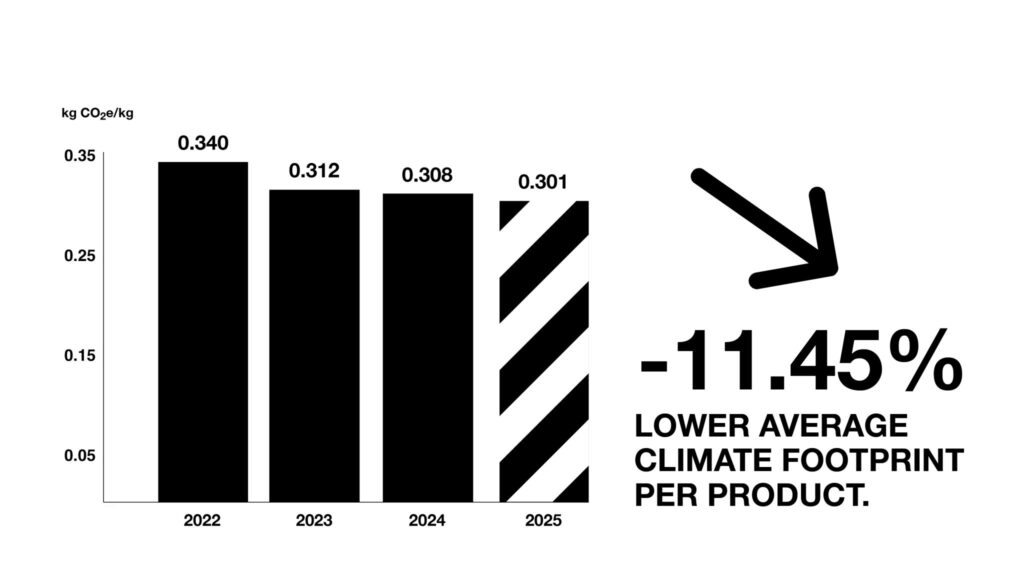
Swedish pea milk start-up Sproud has achieved its lowest-ever average carbon footprint, reducing its emissions by 11.45% to reach 0.301kg of CO2e per litre of product. Moreover, annual sales hit a new record, growing by 28% to reach 74.9 million kronor ($8.1M), with volumes up by 33%.
sproud sales
Courtesy: Sproud

Californian cultivated seafood start-up Finless Foods has opened a crowdfunding campaign on Republic, with a goal of securing $75,000. It has already entered the pre-market consultation process with the US Food and Drug Administration for its cultivated tuna, with approval expected in 2027.

Weeks after receiving $700,000 in seed funding, Danish mycelium meat maker Tempty Foods has kicked off a crowd investment round on Republic. It has already landed nearly all of its €355,000 ($415,000) target.

Courtesy: Tempty Foods

In more investment news, British eco material player Ponda has also launched a crowdfunding effort on Republic with the aim of raising €230,000 ($270,000) to build out its capacity and expand production of BioPuff, a bulrush-based alternative to goose down and polyester fibres.

Speaking of eco materials, Australia’s Uluu has moved into a new industrial facility in Henderson, Western Australia, which will allow it to scale up production of its seaweed-derived bioplastics. This follows a $10.5M investment round in November.

US industrial biotech start-up Fermeate has raised $2M in seed funding to advance its optogenetic control tech for precision-fermented products and accelerate price parity for them.

Belgian beanless coffee start-up Koppie has reached a major milestone in its scale-up efforts, producing 12 tonnes of its fermentation-derived alternative.

Climate advocacy group Madre Brava has closed its Thailand programme, according to its former director.

Policy, research and awards

Dutch start-up NoPalm Ingredients – which makes palm oil alternatives from food waste, yeast and fermentation – has been named as one of the four finalists of the 2026 Food Planet Prize.

Catering giant Sodexo has become the first employee restaurant chain in Poland to monitor the share of plant-based proteins on offer, with analysis using the Protein Tracker tool revealing that 30% of its 2024-25 protein portfolio was sourced from plants.

Two new studies by the Physicians Committee for Responsible Medicine show that low-fat plant-based diets cut greenhouse gas emissions by 55-57% and cumulative energy demand by 44-55%.
marigold protein
Courtesy: ACS Food Science & Technology

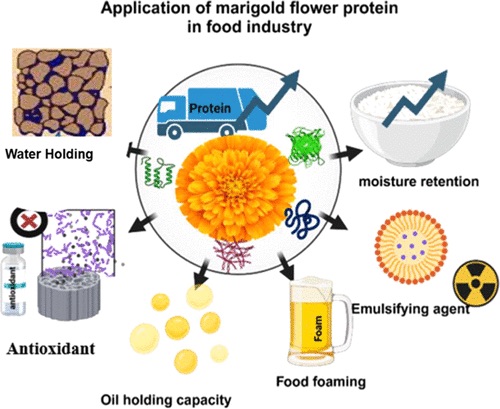
study led by scientists at the University of Georgia suggests that dried marigold flowers – 40% of which end up wasted – show potential as a sustainable plant protein source, exhibiting high levels of glutamic and aspartic acids, greater heat stability than peas and chickpeas, and excellent emulsifying capacity.

Researchers at the University of Warwick have published the results of their meta-analysis of clinical trials involving 541 participants, finding that plant-based eaters were associated with significantly lower levels of C-reactive protein – a widely used marker of systemic inflammation – than omnivores.
veganuary success
Courtesy: Veganuary

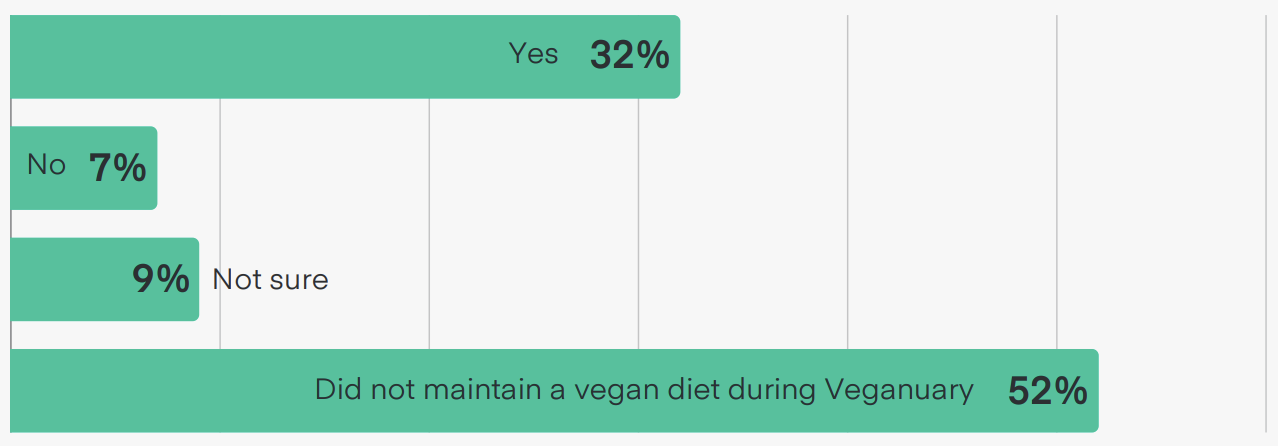
Finally, in Veganuary‘s 2026 participant survey, a third (32%) of those who weren’t vegan before said they planned to continue following a plant-based diet after the monthlong campaign, while 79% intended to halve their intake of animal products.

https://www.greenqueen.com.hk/future-food-quick-bites-beyond-meat-taco-bell-crowdfunding-marigold-protein/

Sunday, January 11, 2026

‘We were as stuffed as the dumplings’: a tour of Warsaw’s top vegan restaurants

From theguardian.com

By Rachel Dixon

Poland’s capital is now rated above cities like San Francisco and Copenhagen for its vegan options. We sample plant-based schnitzel, ramen and, of course, pierogi

Pinny on, hands dusted with flour, I rolled out dough, cut it into circles, added a spoonful of filling and sealed it into little parcels. I was getting stuck into a dumpling cooking class in one of the most vegan-friendly cities in the world. Making gyoza in Tokyo, perhaps? Wontons in Singapore? Potstickers in Taipei?

In fact, I was preparing pierogi in Warsaw. Friends who associate Polish cuisine with stews and sausages were surprised to hear it, but vegan food has proliferated across the country over the past 20 years. Happy Cow, the veteran vegan restaurant guide, now consistently ranks Warsaw in its top cities globally – last year it was in 11th place, ahead of Bangkok, San Francisco and Copenhagen.

Food for thought: ‘Warsaw has 34 vegan restaurants, rising to 80 if you include vegetarian restaurants with vegan options.’ Photograph: Krivinis/Getty Images

Poland may be best known for its meat dishes, but fungi and vegetables such as potatoes, cabbage, beetroot and cucumbers have long been central to its food culture. Agnieszka Skrodzka, a Warsaw tour guide specialising in plant-based food, says it is far easier to avoid meat than mushrooms – as she found out when she recently developed a mushroom allergy. As Karol Adamiak, a chef from Warsaw, wrote in the Guardian last year: “Veganism represents a return to Poland’s peasant roots, and a more conscious and healthy way of eating.”

I was inspired to visit Poland after I wrote about holidaying as a vegan last summer, and several readers recommended the country. One sang the praises of Gdańsk, and I was also tempted by Kraków, but Happy Cow’s findings were hard to argue with: Warsaw has an impressive 34 vegan restaurants, rising to 80 if you include vegetarian restaurants with vegan options, and another 200-odd “vegan-friendly” places.

                                               Peerless pierogi, the dumpling that is emblematic of Polish cuisine

Challenge accepted: my sister and I set about eating as much as humanly possible in three days. We started with vegan versions of traditional Polish dishes, including huge plates of pierogi with spinach and tofu (£7) and potato pancakes with crispy oyster mushrooms (£8) at Vege Miasto, the oldest vegan restaurant in the city. Comfort food such as soy schnitzel with mash and beetroot (£8) at Veganda, and Silesian potato dumplings with soy meat, gravy and fried onions (£8) at Lokal Vegan Bistro, helped us cope with the bitter cold of a Warsaw winter.

Then we went global. First, a colourful meze platter for two (£17.50) at Falla, a Middle Eastern-inspired restaurant that also has branches in Gdynia, Poznań, Wrocław and Katowice. Next, brimming bowls of noodle soup (£10) at Vegan Ramen Shop, which has three outlets across the city. Our favourite variety was the tan-tan men: a creamy, spicy broth made from tahini, chilli oil, black vinegar and Sichuan peppercorns. We also scoffed a mound of spaghetti “carbonara” with vegan bacon and artichokes (£8) at Lokal, and a classic crispy tofu burger (£9) at Veganda. Finally, we squeezed in brunch at Bistro Jaskółka – I sampled shakshuka with tofu scramble and my sister heroically worked her way through the fry-up (both about £7).

There were many other highly recommended restaurants we simply couldn’t fit in, either due to our schedule or our bellies – I was particularly disappointed not to try a platter of plant-based sushi at Vegan Sushi Bar.

Even our hotel, Puro Stare Miasto, had three vegan dishes on the à la carte breakfast menu; I loved the porridge with forest fruit compote, olive oil and herbs. This Scandi-style hotel group (at Polish prices) has branches in Warsaw, Gdańsk, Kraków, Łódź, Poznań and Wrocław, plus Budapest and Prague.

                                      No beef with this: Silesian potato dumplings at Lokal Vegan Bistro. Photograph: Rachel Dixon

To work up an appetite for our next meal, which was never far away, we walked all over the city: through the charming Old and New Towns, along the Royal Route, up to the 30th-floor viewing platform of the Stalinist Palace of Culture and Science (in the lift, admittedly), and around lovely Royal Łazienki Park. We visited some revitalised former industrial spaces, such as the Norblin Factory and the Warsaw Brewery, now full of cafes, restaurants and shops. At the Museum of Modern Art, we saw a fascinating exhibition called The Woman Question, featuring 150 female artists from Artemisia Gentileschi to Cindy Sherman (until 3 May).

And, of course, we learned to make our own pierogi. Pierogi & More runs cooking classes that cater to all; our group consisted of us two vegans, three vegetarians and five meat-eaters. We all made a simple flour and water dough, then added our own fillings: the vegan ones contained mashed potato and beans, and chickpeas and lentils, with various herbs and spices. The most challenging part, and the most satisfying, was attempting different ways of sealing and folding them. We started with classic half-moons with crimped edges, and moved on to more complex shapes, such as mini cornish pasties with a pleated “crust”, and ring-shaped tortellini.

The only potential downside was the communal taste-test afterwards: as every vegan knows, everyone wants to try yours, but you can’t try theirs. In our case, it was for the best: this was just elevenses and we had lunch scheduled afterwards. The couple of pierogi I did gulp down, topped with slow-cooked onions, were delicious.

Is Warsaw really one of the most vegan-friendly cities in the world? In my brief experience, yes – and I live in the top-ranked city (London) and have visited seven of the top 10. The food is also far more affordable than in most of the other highly rated cities.

By the end of our vegan eating odyssey, much like the dumplings, we were stuffed. But in for a penny … We grabbed a takeout box of pastries from Baja, a vegan patisserie, to sustain us on the journey home. It turns out there’s always room for a Lotus Biscoff doughnut.

The trip was provided by the Warsaw Tourism Office. Doubles at Puro Stare Miasto from about £85 (413 złoty)

https://www.theguardian.com/travel/2026/jan/09/warsaw-poland-vegan-restaurants-foodie-city-break

Saturday, February 1, 2025

How Warsaw became the unlikely vegan capital of Europe

From theguardian.com

By Karol Adamiak

A city associated with sausage and herring is now a haven for plant-based foods – and Poland’s right-wing politicians aren’t happy 

want to tell you about a relatively typical neighbourhood in my city. There are two vegan sushi restaurants, three vegan ramen spots. There are a few vegan delis. All the convenience stores have a vegan section. There’s an abundance of vegan bakeries. There’s a place that does vegan peking duck – it’s good, I promise. Many of these vegan places proudly have a rainbow flag on display. I’m not talking about Los Angeles or New York. I’m not even talking about Copenhagen. My neighbourhood is called Śródmieście. The vegan paradise I’m talking about – it’s Warsaw.

If you don’t believe me, well, Warsaw has been ranked among the top vegan cities in the world by HappyCow (a vegan ranking website) for the past six years. In 2022, it was National Geographic’s number one vegan city in the world. Maybe your perception of Poland is all kielbasa (sausage) and conservative politics. Herring and hate. It’s more complicated than that. In the past two decades there has been a quiet vegan revolution in the country.

                                                A cafe in Warsaw, Poland. Photograph: Nathaniel Noir/Alamy

In reality, it shouldn’t be too much of a shock that Polish food lends itself well to veganism. Prior to falling under the long shadow of the iron curtain, Polish cuisine was mostly plant-based. Only the aristocracy had easy access to meat, fish and dairy products. Most of the people in the country were peasants and they ate what they grew. The cuisine was full of root vegetables, potatoes and earthy greens. This was a plant-based diet by default, not ideology.

As today, this cuisine was heavy on soups and stews. An old favourite was a vegetable soup, flavoured with sugar and cinnamon to which beer was added at the end to create a yeasted acidity. That one didn’t stand the test of time. Cracovian Jews used to make obwarzanek, parboiled rye dough shaped into a circle, and sell it from carts on the streets of the city. This fared a little better – it likely inspired what we know today as bagels.

In the communist era, meat was a luxury, despite everyone’s alleged equality. Meat production was inefficient, which meant ordinary people did not have the money to afford the scant supply. This meant people craved meat as a status symbol – particularly because the socialist elite did have access to animal proteins. When the USSR collapsed people wanted to eat meat – and as market forces entered agriculture and people gradually gained disposable income, they spent heavily on it.

But as Poland became a mature liberal democracy appetites changed. For the younger generation that grew up in a time of relative abundance, animal products were so commonplace they failed to have much lustre.

“I lived in Madrid as an Erasmus student and I found it hard to sustain my social life without eating meat … Whereas in Warsaw, I honestly cannot recall the last time I went to a restaurant that did not have a vegan option in their offering,” Michał Korkosz, AKA Rozkoszny, told me. Rozkoszny is one of the most prominent vegetarian food influencers in the country – with more than 700k followers on instagram. His cookbooks Fresh from Poland and Polish’d, which offer vegetarian twists on classic Polish recipes, have sold 230,000 copies and been translated into three languages.

In some cases, Rozkoszny celebrates the plant-based foods of old Poland. Schabowy z kani (parasol mushroom schnitzel) is a traditional recipe, one known to seemingly every Polish grandma. Similar to a regular schnitzel, the mushroom is prepped, paneed, and then fried, often served alongside young boiled potatoes and mizeria (Polish tzatziki). In other cases, he takes traditional dishes and gives them a modern twist to make them vegan. Żurek is a popular soup traditionally made with stock of smoked pork ribs and served with various kinds of kielbasa (sausage). But in żurek as proposed by Rozkoszny, the soup is made with miso – hardly a traditional Polish staple, but now widely available – and roasted mushrooms.

Before becoming a bestselling author and influencer, Rozkoszny studied politics and sociology. He’s attuned to the fact that what you eat can be a political statement. He once conducted a study in which he interviewed a number of Polish MPs on their diets and tried to map their politics. “The more left-leaning a politician, the more likely they were to have a vegetarian diet and eat international cuisines,” he told me. A 2019 study by Ipsos showed similar results. Polish politicians were asked: “What actions are you willing to take to help fight climate change?” Among politicians from the left, 30% stated that they would give up meat, versus a mere 11% for the right wing Law and Justice party.

“Veganism tends to be perceived as a pejorative term,” according to Anna Spurek, the chief operating officer at the Green REV Institute, Poland’s first vegan thinktank. “The meat lobby and interest groups use it to polarise society.” It has been a common refrain of rightwing politicians that veganism is anti-Polish – that it is a similar form of propaganda to the “LGBT agenda” – and that vegans are “insane and detached from reality,” she said.

But veganism should be an idea that transcends neat political brackets. For one, Spurek thinks that the Polish idea of solidarność – solidarity, and the name of the political movement that helped bring down communism in Poland – can also include the concept of interspecies unity and green politics. And in a way veganism represents a return to Poland’s peasant roots, and a more conscious and healthy way of eating. Across Poland, even in rural areas, diets are increasingly plant-based.

While veganism has been caught in Poland’s increasingly polarised politics, its impact on the culture is obvious everywhere. With Barclay Bram, I run a vegan Polish supper club in London called Bracia (it means brothers in Polish). Many people in London comment that this seems like something that could only happen here – and we see their surprise when we tell them how vegan-friendly Poland is. Recently, we’ve been doing events back in Warsaw. In February, we’re taking over Lotos, a traditional restaurant open since 1958, famous for its nóżki w galarecie (legs in jelly – literally a chicken soup served cold so the collagen has become gelatinous, with veg and carrots suspended in it). The owner, Hanna Szymańska, told us she’s looking forward to putting out a vegan menu for the night: “You have to move with the times.”


  • Karol Adamiak is a chef from Warsaw. Barclay Bram contributed research and writing to this article. They cook together as Bracia