Showing posts with label carbohydrates. Show all posts

Saturday, March 28, 2026

Gaining muscle on a vegan diet: 7 essential nutrients for building your strength

From veganfoodandliving.com

Is gaining muscle on a vegan diet easy, or even possible? Yes! We explore the essential vitamins and minerals for building and maintaining muscle, and how you can get them from plant-based sources


Can a vegan really succeed at building muscle? If you’ve ever seen Patrik Baboumian, you’ll know the answer is a resounding yes.

In fact, a healthy vegan diet can actually improve how your muscles work. When you eat plant foods that are naturally low in saturated fats and high in antioxidants and fibre, your blood vessels are healthier. They contract and relax more quickly and efficiently, regulating blood flow more precisely.

Research suggests that a wholesome vegan diet can lower levels of systemic inflammation, which is essential for muscle recovery. While physical activity causes natural micro-damage to muscle tissue, the phenols and polyunsaturated fats found in plants help to limit this damage and speed up your recovery time. Furthermore, the natural nitrates found in vegetables can widen blood vessels, allowing more oxygen and nutrients to reach your muscles during a workout.

Whether you are focused on gaining muscle on a vegan diet or simply aiming to maintain muscle function, these are the seven essential nutrients you’ll need.

1. Protein: The key to muscle repair

Muscles suffer a series of micro tears during the day simply as a result of your activity. This damage is in constant need of speedy and efficient repair, so, for muscle maintenance, you need to supply your body with the materials – or ‘building blocks’ – it needs to patch up those tears. For this, your body needs protein.

During digestion, protein is broken down into amino acids, which are the various types of ‘building blocks’ that are used for maintaining and gaining muscle mass. Contrary to popular belief, vegans can get all the essential amino acids with the right foods.

All plants contain protein. Certain foods contain more than others, such as pulses (soya, chickpeas, beans and lentils), wholegrains (oats, wholemeal bread and pasta, quinoa), nuts and seeds, for example. The only vegan-friendly foods that may not contain at least a little protein are extracts, such as oil or sugar.

It’s not difficult to get enough vegan protein from everyday foods alone. A regular, moderately active person doesn’t need to worry about their protein intake if each meal contains one of the foods listed above – that’s how easy it is.

Only if you specifically want to gain muscle on a vegan diet should you increase your intake. Online calculators are available, but a dietician or trainer will be able to help you figure out the optimal protein target for you, based on your body composition, activity levels, and goals.

Generally, consuming protein evenly throughout the day, rather than a large protein dose in one meal, is better, because that way your muscles have a steady supply of amino acids to work with. You’re also more likely to get your protein from a variety of different plant sources, helping your body to produce more of the different amino acids it needs.

2. Carbohydrates: Muscles’ main fuel

Fruits are an excellent source of healthy carbs to fuel your muscles. Photo © Oleksandr/Adobe Stock

Carbs are not the enemy; our bodies are built to use carbohydrates as our main source of energy. When carbs are digested, they release glucose (sugar) into the bloodstream, and glucose is the primary fuel needed by every single cell in your body.

Muscles store glucose in a special form called glycogen – an energy reserve used during exercise or prolonged physical activity. For muscles to be at their best, they need a good supply of healthy carbohydrates to fuel activity and to replenish energy stores.

The best sources for fuelling vegan muscle growth include wholegrains, starchy veg (sweet potatoes, root veg, squashes and pumpkins, peas and corn) and fruit, both fresh and dried.

3. Omega-3: For muscle care

There’s some evidence that omega-3s can improve muscle function and support muscle gain. Because they’re anti-inflammatory and also supply building material to cell membranes, they can aid faster muscle recovery. This makes them a vital component for anyone building muscle on a vegan diet.

The best sources are flaxseed, chia seeds, hemp seeds, walnuts and rapeseed oil. You can also opt for a supplement made from microalgae.

4. Magnesium: To prevent cramps


Fruits, veggies, and even chocolate are sources of magnesium. Photo © somegirl/Adobe Stock

Magnesium is essential for muscle function. If you’re running low, you may experience muscle cramps because magnesium helps muscles relax. For those focused on vegan muscle building, maintaining steady magnesium levels ensures that your training isn’t interrupted by avoidable tension or spasms.

Luckily, a healthy vegan diet is rich in magnesium, with the best sources being green leafy vegetables, nuts, seeds, oats, whole wheat pasta, brown rice, pulses, bananas, apricots, apples, prunes and cocoa powder.

5. Calcium: For muscle signalling

It’s not only important for bones and teeth; calcium is also essential for muscle function. This mineral helps muscles to contract and is also required for nerve signal transmission. Without sufficient calcium, muscles are more prone to cramping, fatigue, and spasms.

Among the best vegan sources of calcium are green leafy veggies (kale, broccoli, spring greens), sesame seeds and tahini, almonds, chia seeds, tofu (calcium-set varieties, specifically), tempeh, beans, dried figs, fortified plant-based milk, fortified vegan breakfast cereals, wholemeal bread and even butternut squash.

6. B vitamins: Energy converters

Avocados are a great source of B vitamins (if not the easiest snack to eat during a work out). Photo © luismolinero/Adobe Stock

When it comes to muscle performance, B vitamins play a big role. Your body needs them to convert nutrients into energy, and they are essential for the manufacture of red blood cells that carry oxygen to your muscles.

It’s possible to get a sufficient amount of all B vitamins, except for B12, from a plant-based diet, so it’s not too tricky for a vegan to fuel their muscle-building efforts.

Ideal vegan sources of B vitamins include wholegrains, fortified breakfast cereals, wheat germ, nutritional yeast, sunflower seeds, sesame seeds (including tahini), leafy greens, corn, avocados, mushrooms, nuts, pulses and acorn squash.

For vitamin B12, you need a supplement to get an adequate intake. Aim for at least 50 micrograms daily or 2,000 micrograms weekly, although a daily supplement is better.

7. Vitamin D: Essential for maintenance

Vitamin D is important for healthy muscle function, as a deficiency can lead to the loss of muscle mass and impaired muscle metabolism.

Our main supply of vitamin D comes from sunlight acting on our skin. This means that you probably produce enough vitamin D when exposed to natural sunlight, unless you spend your days indoors or always protect your skin. However, regardless of diet, we all need to supplement vitamin D during the dark winter months as our skin can’t make enough from sunlight alone. The recommended daily dose is 10 micrograms or 400 IU (international units).

Building and maintaining muscles beyond your vegan diet

It’s not just about what you eat; muscles need stimulation to be at their best. This doesn’t necessarily mean you need to start lifting weights (though, it doesn’t hurt – or, not for too long in any case). Just engage in some type of daily physical activity.

Even for those who don’t plan to partake in competitive sports, muscles support your body in virtually any position and any movement. They stabilise joints and enable you to perform essential tasks. Stronger muscles also help prevent injuries and can reduce your risk of osteoporosis.

As we age, we’re more prone to losing muscle mass, but it’s not inevitable – exercise or an active lifestyle can keep your muscles in good shape and is excellent for bone health, too.

https://www.veganfoodandliving.com/vegan-diet/gaining-muscle-on-vegan-diet-essential-nutrients-building-maintaining-strength/


 

Tuesday, July 22, 2025

"My digestion was a mess until I tried these 7 plant-based fixes"

From vegoutmag.com

By Jordan Cooper

What I thought was “just normal bloating” turned out to be totally fixable 


I used to think “gut health” was just another wellness buzzword—like oil pulling or infrared saunas—until mine broke up with me.

Picture this: me, post-taco night, curled up in bed like a sad burrito. Bloating, cramps, mystery gurgles that sounded like a haunted kettle.

And no, before you ask, it wasn’t dairy—I’d been vegan for two years already.

But I was still relying on processed plant-based everything, scarfing down fake meats and freezer meals while wondering why my stomach hated me.

Eventually, I got sick of feeling sick. So I did what any millennial would do: fell down a fiber-forward rabbit hole on Reddit, consulted a registered dietitian, and started experimenting—with my plate, not just probiotics.

Spoiler: it worked. And now, my gut and I are finally on speaking terms again.

Here are the seven plant-based tweaks that helped me go from digestive drama to digestive zen—plus the science to back them up.

1. I broke up with beige carbs and added more colour to my plate

Turns out, my “rice, vegan nugget, and ketchup” dinners weren’t doing my gut any favours.

Diets low in fibre and diversity can reduce the number and variety of microbes in your digestive system, which affects everything from immunity to mood. According to a 2022 study in Nature Reviews Gastroenterology & Hepatology, dietary diversity—especially of plant-based foods—is strongly linked to better gut health and lower inflammation markers.

Once I swapped out processed carbs for a rainbow of real foods (think purple cabbage slaw, roasted sweet potatoes, and sautĂ©ed kale with garlic), I noticed something wild: I didn’t feel bloated after meals anymore. My energy was more stable. And the, ahem, bathroom situation? Predictable in the best way.

2. I learned that “fibre” isn’t just one thing—and I needed both kinds

Raise your hand if you thought fibre was just for old people or cereal commercials.

Yeah, same.

But not all fibre is created equal. Soluble fibre (found in oats, chia seeds, and apples) helps absorb water and slow digestion. Insoluble fibre (in things like leafy greens, cauliflower, and whole grains) bulks things up and keeps things moving.

Before, I was overdoing the insoluble kind—raw salads all day, every day—and wondering why my gut felt like a lawn mower. Once I added more soluble fibre (hellooo, soaked chia pudding and oat bran smoothies), digestion felt gentler, smoother, and less like a surprise party in my lower abdomen.

3. I ditched fizzy drinks (yes, even kombucha)

Okay, this one hurt.

I love a good bubbly sip. Give me LaCroix, kombucha, sparkling cider—I’m there. But during my gut reset phase, I realized my beloved fizzy drinks were making things worse.

Carbonation can introduce extra air into your digestive tract, leading to bloating and discomfort, especially if your gut’s already sensitive.

When I cut out the bubbles (temporarily), my stomach thanked me. These days, I still drink kombucha—but in smaller amounts, after food, and never on an empty stomach.

4. I swapped protein bars for fermented foods

Here’s the kicker: I used to eat vegan protein bars every day. Sometimes two. I was convinced I needed the 20 grams of protein, but I ignored the fact that my gut felt like it was filing a complaint every time.

Those bars often had sugar alcohols, gums, and isolated proteins that didn’t sit well with me. I made the switch to whole-food proteins like lentils, edamame, and tofu—and added fermented foods like tempeh, kimchi, and miso to the mix.

According to research from the journal Nutrition, fermented plant-based foods increase gut microbial diversity and can improve digestion, immune function, and even skin health.

I didn’t expect much, but the shift was legit. My stomach calmed down, and I actually craved my grain bowls again.

5. I started drinking a gut-friendly tonic every morning

Forget fancy powders or $18 wellness shots. My morning routine now includes one humble glass of warm water with lemon, a splash of apple cider vinegar, and a dash of ginger.

I first heard about this combo from a dietitian on TikTok, then saw it backed up by gut health experts who noted its benefits for stimulating digestion, balancing stomach acid, and easing bloating. According to research, apple cider vinegar can help slow gastric emptying and stabilize post-meal blood sugar—two big wins for digestion.

Within a week, I noticed less post-breakfast bloat and more regularity. The ginger helped settle my stomach, and the whole ritual gave my gut a gentle nudge to wake up.

Plus, it feels like a small act of self-care before I dive into the day—which, for someone who used to go from bed to bagel with zero in-between, is kind of a big deal.

6. I made friends with bitter greens (and my liver thanked me)

Before this journey, I avoided bitter foods like the plague.

Arugula? Too peppery. Dandelion greens? Taste like yard.

But then I learned that bitter foods stimulate bile production, which helps break down fats and support liver detox—a key part of digestion.

I started adding a handful of bitter greens to my lunch salads or sautéing them with garlic and lemon as a side. Not only did they grow on me (especially tossed with tahini), but they genuinely helped with post-meal bloat and sluggishness.

Also, fun fact: they’re great for skin health, too.

7. I stopped skipping meals—and created a rhythm my gut could trust

Okay, so this one isn’t about a specific food—and it’s not technically plant-based—but it turned out to be one of the most important changes I made.

I used to be a “snack-all-day, eat-late-dinner” kind of person. Sometimes I skipped breakfast, then overcompensated with a heavy dinner at 9pm. Not ideal.

Your gut thrives on rhythm. The migrating motor complex (MMC), which helps sweep waste through your system between meals, operates best when you give your digestive system predictable windows of rest.

Now, I aim for consistent meals spaced out by 3–4 hours, with minimal grazing in between. I eat dinner earlier when I can. And I drink most of my fluids outside mealtimes so I don’t dilute digestive enzymes.

It’s not rigid. But it is respectful to my gut’s natural rhythm—and the difference it’s made is major.

The upshot? Your gut is talking—listen to it

If there’s one thing I’ve learned from this wild, winding journey to digestive peace, it’s that your body will tell you what’s not working. You just have to be willing to listen—and experiment with kindness.

None of these changes happened overnight. I tried things. Some worked, some didn’t. But now, I’ve got a gut that functions like a dream, and meals feel energizing instead of anxiety-inducing.

Also, let’s be real: a happy gut doesn’t just mean fewer bathroom woes. It’s linked to your mood, your skin, your immune system—even your sleep.

So if your digestion’s a mess? Start simple. Add some colour. Chew slowly. Maybe flirt with fermented foods.

Your gut will get the message.

And yes, I still eat vegan junk food now and then—just not every day. Balance, friends.

https://vegoutmag.com/food-and-drink/r-my-digestion-was-a-mess-until-i-tried-these-7-plant-based-fixes/

Saturday, July 19, 2025

If you're a vegan but still tired, you're probably doing these 7 things wrong

From vegoutmag.com

By Jordan Cooper

Tired all the time on plants? It might be your calories, your iron, or the way you ghost your pillow 

Crafting a plant-powered menu is one thing; turning that menu into all-day energy is another.

I’ve met plenty of vegans (myself included) who checked every ethical box yet still felt like an extra on The Walking Dead.

If that’s you, chances are you’re tripping over one—or several—of the seven missteps below.

Let’s fix them.


1. Under-eating calories

“Many new vegans find themselves constantly snacking or feeling fatigued… you’re just not eating enough calories or protein or fat or some combination thereof,” notes dietitian Sapna Vora in an interview with Plant Based News.

Plant foods are champions of nutrient density but lightweights in calorie density. Swapping a chicken-and-rice bowl (600 kcal) for a kale-and-quinoa bowl (350 kcal) looks heroic on Instagram—until your blood sugar free-falls by 3 p.m.

My own wake-up call came during a photo-shoot week in Portland. I stuffed myself with smoothie bowls, felt “full,” then spent the afternoons yawning behind the lens.

A calorie tracker revealed I’d been undershooting my needs by 600 kcal a day. Once I added an extra scoop of peanut butter and a fistful of walnuts, the slump vanished.

Quick fix:

  • Anchor every meal with a calorie-dense core: oats + nut butter at breakfast, hummus + whole-grain pita at lunch, or tofu curry with coconut milk at dinner.

  • Don’t fear healthy fats; one tablespoon of olive oil adds 120 effortless calories.

2. Skipping vitamin B12

The Vegan Society puts it bluntly: “To get the full benefit of a vegan diet, vegans should either eat fortified foods two or three times a day or take a B12 supplement.”

B12 keeps your red-blood-cell factory humming; stall that assembly line and oxygen delivery plummets—hello, chronic fatigue. Because plants don’t make B12, relying on kombucha “trace amounts” is like banking on rainfall to fill your swimming pool.

Quick fix:

  • Pick one: 2–3 servings of B12-fortified foods daily or a 250–500 µg chewable supplement several times a week.

  • Check labels: some plant milks contain as little as 0.4 µg per cup—far below the 2.4 µg RDA.

3. Overlooking iron

Harvard’s Nutrition Source reminds us that iron-deficiency anaemia is “the most common nutritional deficiency worldwide, causing extreme fatigue and light-headedness.”

Non-heme iron (the plant kind) absorbs at roughly 10 % the rate of heme iron. Translation: that heroic spinach salad needs a strategy. I learned this the hard way after a routine blood panel flagged low ferritin.

A squeeze of lemon over my lentils and a daily Brazil-nut-and-raisin trail mix nudged levels back into range within three months.

Quick fix:

  • Pair iron-rich beans, lentils, or tofu with vitamin C sidekicks—citrus, bell peppers, strawberries.

  • Keep coffee and tea an hour away from iron-focused meals; tannins block absorption.

  • Consider a gentle iron bisglycinate supplement if bloodwork—and your doctor—say you need it.

4. Living on processed carbs

Vegan convenience foods rescue road-trips but sabotage steady energy. On a recent Japan swing, I subsisted on konbini (convenience-store) white-bread sandwiches and soy lattes.

Delicious? Absolutely. Sustaining? Not so much. By day three my brain felt like mushy edamame.

Ultra-processed carbs spike glucose, trigger insulin crashes, and leave you hunting for the next wrapper. Whole-grain, fibre-rich staples release energy slowly and deliver minerals the body converts into ATP (think quinoa’s magnesium).

Quick fix:

  • Build a “half-plate” habit: fill 50 % of your plate with vegetables or fruit before adding starches.

  • Swap refined grains for intact ones—bulgur instead of couscous, steel-cut oats instead of instant.

  • Batch-cook beans; they’re the slow-burn logs in your metabolic fireplace.

5. Forgetting omega-3s

I’ve mentioned this before, but brain fog often masquerades as tiredness. Short-chain ALA (from flax or chia) must convert to long-chain DHA/EPA—an inefficient process. Low DHA can dull mental sharpness and deepen perceived fatigue.

Quick fix:

  • Grind two tablespoons of flaxseed daily and sprinkle it over breakfast.

  • Consider an algae-derived DHA/EPA supplement (250–500 mg combined) a few times a week.

  • Balance your omega-6 intake by moderating sunflower, corn, and soy oils.

6. Burning the candle late

Diet isn’t the only drain. During a recent album review marathon (music blogging roots die hard) I stretched editing sessions past midnight. Even with immaculate macros, five-hour sleep windows trashed my energy.

Chronic sleep debt disrupts hunger hormones, pushing you toward sugary fixes, and tanks mitochondrial efficiency—the body’s battery pack.

Quick fix:

  • Guard a non-negotiable eight-hour sleep window—yes, even during Stranger Things binges.

  • Dim screens 90 minutes before bed; blue light delays melatonin.

  • Trial magnesium glycinate (200–400 mg) if muscle tension keeps you wired.

7. Flying blind on data

Guesswork is a poor coach. Without periodic check-ins—blood tests, food logs, even a basic mood tracker—you’re steering blindfolded. I book a comprehensive panel every six months; seeing my B12 or ferritin trendlines keeps me accountable and calm.

Quick fix:

  • Schedule an annual (or biannual) panel covering B12, ferritin, vitamin D, thyroid panel, and omega-3 index.

  • Use a simple app to log meals for a week each quarter; patterns (good and bad) jump out fast.

  • Treat supplements as—wait for it—supplements, not excuses for a sugar-fuelled diet.

The takeaway

Fatigue isn’t inevitable on a vegan path; it’s a sign something’s out of tune.

Feed your calories, respect your micronutrients, curb the ultra-processed creep, and honour sleep.

Tweak these seven levers and that perpetual yawn can become the steady hum of plant-powered momentum.

https://vegoutmag.com/food-and-drink/a-if-youre-a-vegan-but-still-tired-youre-probably-doing-these-7-things-wrong/

Tuesday, March 12, 2024

Relax, You’re Probably Getting Enough Protein (But Maybe Eat More Plants)

From vegnews.com

The West is obsessed with protein, protein, protein. But the truth is, we don’t really need to worry too much about getting enough. That said, if you’re a steak-lover, it might be worth switching to tofu—here’s why

Western society has long been obsessed with protein. But for at least a decade, much of the media has been asking if this obsession is really that necessary—and according to experts, the general consensus is no, it’s not.

“It’s not a nutrient that’s of grave concern,” Andrea N Giancoli, MPH, RD told The Washington Post in 2014. Two years later, sports nutritionist Robbie Clark told HuffPost that most Australians are eating “far more protein than they actually need.” And last year, medicinal chef Dale Pinnock told Men’s Health that the fixation on protein was an example of “bro science.”

None of this is to say that protein is not important. It very much is. Protein is an essential macronutrient—it helps with muscle growth and repair, enzyme function, hormone regulation, immune system support, energy levels, and more. It’s just that the average person likely doesn’t need to obsess over it quite as much as society is telling them to. And by society, right now, we mostly mean social media. On TikTok, more than 275,000 posts feature the hashtag #highprotein, while just #protein exceeds one million posts.

To figure out how much protein we really need (and what happens if we pack in too much), we spoke to some of our own experts to get the lowdown on this much-hyped macronutrient. Plus, plants or animals—does it matter where you get it from?

VegNews.healthyveganmeals.pexelsPexels

How much protein do humans really need?

The recommended daily intake for adults varies—the guidance changes, depending on factors like activity level (an athlete needs significantly more, for example), weight, and sex. But in general, for most healthy people, the recommendation is to eat around 0.8 grams of protein per kilogram of body weight per day.

Right now, however, most adults in the US are actually exceeding this. In fact, research suggests they are eating double the amount of protein they need. “Athletes and people who are more physically active may need more protein, but for most people, exceeding 2 grams per kilogram is likely excessive,” Wan Na Chun, MPH, RD, CPT, and owner of the food blog One Pot Wellness, told VegNews.

She added that “focusing heavily on protein may crowd out other essential nutrients from your diet, such as fibre, carbohydrates, and healthy fats.” None of these get as much attention as protein.

The #carbohydrates has fewer than 10,000 posts on TikTok; #healthyfats has around 12,000; and while #fibre receives considerably more attention (with more than 144,000 posts), it’s still dwarfed by the protein hashtags. And yet, they are just as important. Fibre is linked with maintaining digestive health, gut health, and lowering cholesterol, for example, and carbohydrates are vital energy sources that also support brain health and function. Healthy fats are also important for energy levels, as well as heart health, hormone production, vitamin absorption, and much more.

What happens if you eat too much protein?

Firstly, it’s unlikely that the average person would consume so much protein it would cause them major problems. “Protein is a macronutrient, meaning it contributes to your total caloric intake, and thus excess intake could result in undesired weight gain,” explains Derek Lipton MS RD CSSD CSCC, a Registered Dietitian and Sports Nutrition Consultant for Bodybuilding Reviews. “However, this is extremely rare since protein is very filling, which often leads to less overall intake.”

Those with kidney problems, however, need to be mindful. “The kidneys filter out protein in the body, and if you overload them with protein, this could lead to the kidneys being damaged slowly over time,” says Michelle Saari MSc, RD, of the EHealth project. “This is especially concerning for anyone who is predisposed to kidney problems.”

However, even if you don’t have issues with your kidneys, you could still notice some ill effects from eating more protein than your body needs. For some people, it could lead to nausea, constipation, diarrhoea, and bloating. But not eating enough protein can also lead to issues, too, hence why it’s important to stick to the guidelines.

“Chronically low protein intake can lead to muscle loss, weakness, and fatigue. This can make everyday activities more difficult and hinder recovery from injuries,” says Chun.

VegNews.eatingsteak.unsplashUnsplash

Which is better, animal protein or plant protein?

Most people who follow a varied and balanced diet are getting enough protein—yep, even vegans. Plant-based sources of protein include tofu, peas, beans, lentils, chickpeas, nuts, and seeds. But animal products are, of course, packed with protein, too.

“Both plant-based sources like beans and animal-based sources like meat have their own set of unique nutrients that are beneficial for the body,” notes Chun. “Animal proteins are “complete”, meaning they contain all nine essential amino acids, and are thus more effective for muscle growth and repair,” says Lipton. “However, plant-based proteins, such as beans, can be just as effective as long as multiple sources are consumed in order to ensure all of the amino acids; for example, eating beans with rice.”

“While the overall protein intake might be sufficient, it is very common for people to rely heavily on animal sources for protein. This can lead to potential issues like consuming excess saturated fat and neglecting other essential nutrients like fibre found more readily in plant-based protein sources.” — Wan Na Chun, MPH, RD, CPT

But while there’s no denying that animal products can give us protein, they also often come with major downsides. Red meats, for example, are packed with protein (one steak contains around 25 grams), but they also contain high levels of saturated fat. The latter can raise blood cholesterol levels, and when consumed often, could lead to a higher risk of heart disease. Research suggests eating too much red meat could increase the risk of type 2 diabetes by 62 percent, and it could also raise cancer risk, too.

The World Health Organization classifies red meat products as a Group 2 Carcinogen, while processed meats (like sausages, bacon, and so on) are classified as Group 1—the same category as smoking.

On the other hand, a growing body of research has linked plant-based whole foods with a reduced risk of chronic disease. Last year, researchers looked at 20 randomized clinical trials and found that a plant-based whole-food diet could help to decrease the risk of heart disease. Another study in 2023 linked eating more plant-based protein with a lower risk of kidney disease, and further research suggested that a plant-based diet could help reverse type 2 diabetes.

“The prevalence of diabetes is growing, as is recognition in the healthcare community that diet as the primary intervention can achieve lasting remission in individuals with type 2 diabetes,” Dr. Gunadhar Panigrahi, the study’s first author, said in a statement at the time.

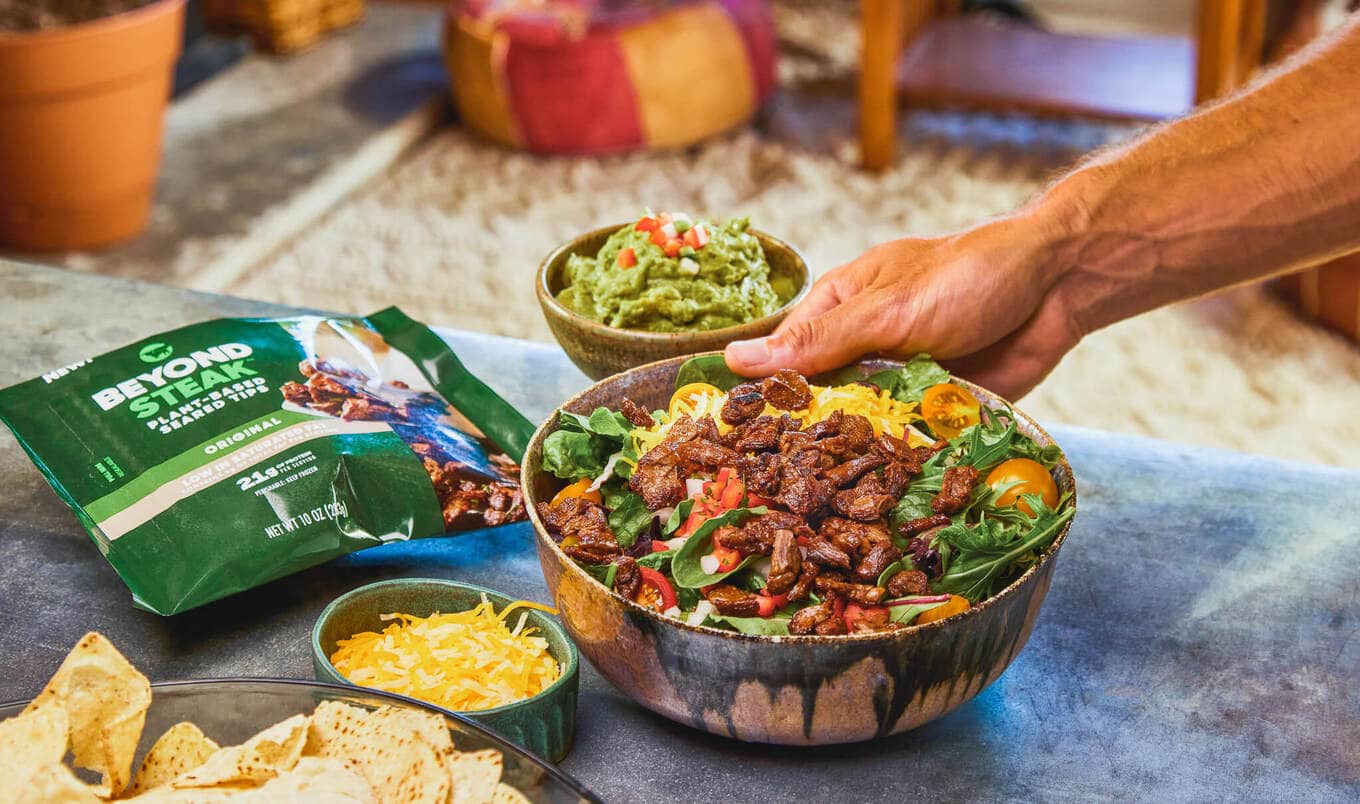
VegNews.BeyondSteak.BeyondMeat1Beyond Meat

But while whole food, plant-based sources are widely thought of by many experts as the best sources of protein for our health, research has also suggested that vegan protein-packed meat alternatives—like those from Beyond Meat and Impossible Foods—are better for us than traditional meat products, too. In fact, at the end of last year, a Stanford study suggested that incorporating an average of two servings of plant-based meat alternatives into your diet may lead to a reduction in certain cardiovascular risk factors.

“Find [protein sources] that you love eating and find creative ways to cook them.” — Michelle Saari MSc, RD

So, when it comes to protein intake, the winner, in our view, is seemingly clear: don’t sweat it too much, and stick to plants for the most part. As long as you’re eating a wide variety of whole foods, the essential nutrients (including all-important fibre, carbohydrates, and healthy fats) should take care of themselves—and likely without the heightened disease risk either.

But also, one final note, make sure you make room for joy on your plate, too. “The best protein source will always be the food that you enjoy and will actually eat throughout the day,” says Saari.

https://vegnews.com/vegan-health-wellness/am-i-getting-enough-protein