Showing posts with label meat. Show all posts

Saturday, June 6, 2026

8 New Meaty Vegan Recipes To Try Now

From plantbasednews.org

In the mood for something meaty? Here's eight recipes to try 

If you’re a fan of meat substitutes like Beyond and Redefine, there are now more meaty vegan recipes than ever using plant-based versions of steak, chicken, mince, and burgers. These recipes use modern meat alternatives in everything from comfort food dinners to quick lunches and high-protein meals.

Plant-based meat has changed a lot in recent years, with products designed to replicate the texture, flavour, and richness of traditional meat more closely. That means recipes can now focus on familiar dishes while still keeping everything fully vegan. Many of these meals also come together quickly and use simple cooking methods.

Whether you already cook with meat alternatives regularly or just want new ideas, these recipes make it easy to try something different. Expect hearty meals, rich sauces, crispy textures, and plenty of flavour throughout.

TVP meatball spaghetti
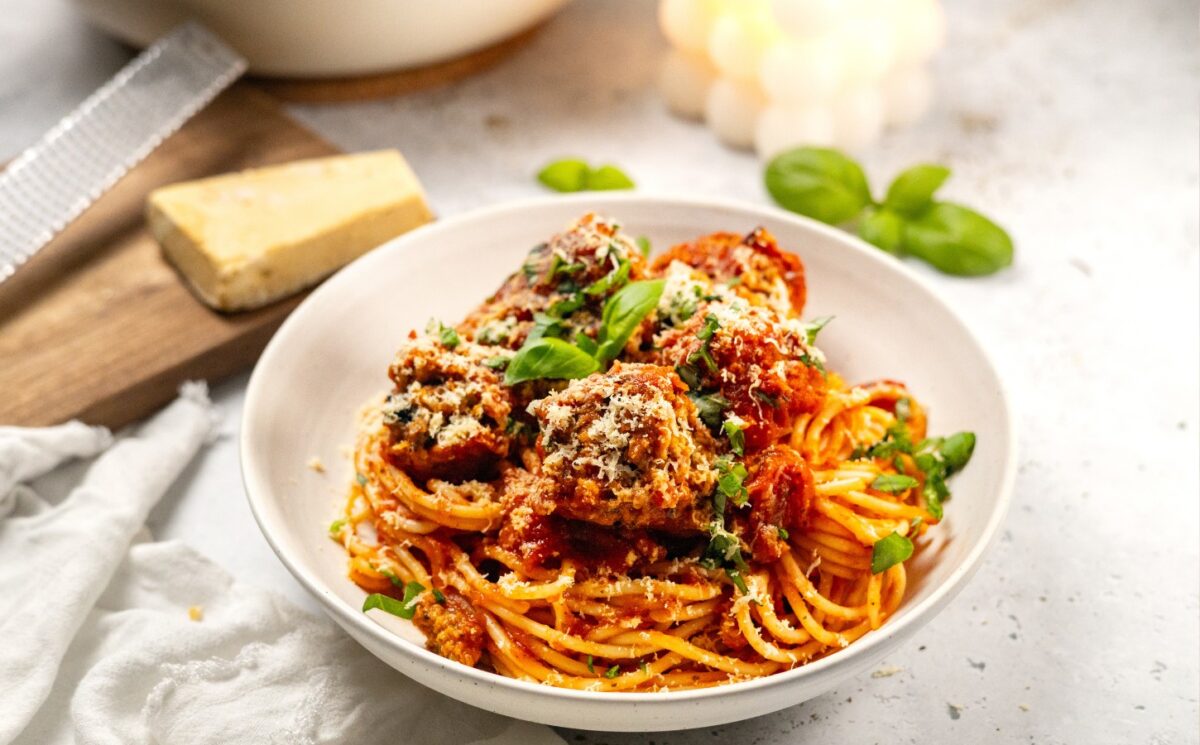
TVP meatball spaghetti with vegetable protein meatballs and a rich tomato sauce for meaty vegan recipes
Romy LondonThis spaghetti will be your next go-to for dinner

This TVP meatball spaghetti by Romy London turns textured vegetable protein into tender, high-protein meatballs baked until golden and served in a rich tomato sauce. Finished with spaghetti, basil, and vegan parmesan, it makes an easy dinner that still feels a little special.

Find the recipe here.

Plant-based lamb kofta pasta bake

plant-based lamb kofta pasta bake with rigatoni
Romy LondonPlant-based lamb, vegan cheese, and creamy tomatoey pasta make this dish high-protein and comforting

Also by Romy London is this plant-based lamb kofta pasta bake. Spiced vegan kofta pieces bake with rigatoni, creamy tomato sauce, and melted vegan cheese for a hearty meal that comes together easily in one dish.

Find the recipe here.

Korean-style glazed beyond tenders with coconut broth
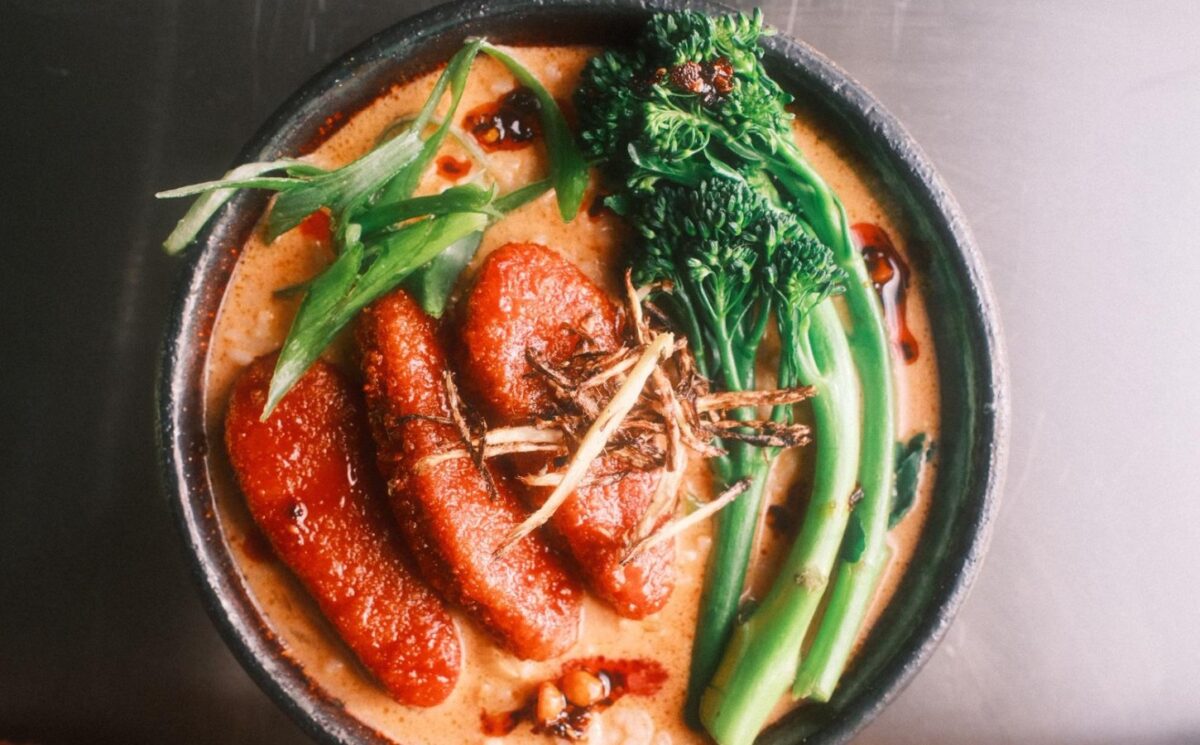
Korean-Style Glazed Beyond Tenders With Coconut Broth and sticky rice for meaty vegan recipes
NoMeatDiscoSpicy, sweet, and umami, this high-protein dish is bound to scare away the cold

NoMeatDisco makes this Korean-style glazed Beyond tenders with coconut broth dish for a comforting meal. Sticky rice, spicy glazed tenders, lime, miso, and creamy coconut broth create a rich bowl with plenty of texture and heat.

Find the recipe here.

Beyond steak-loaded smashed potatoes
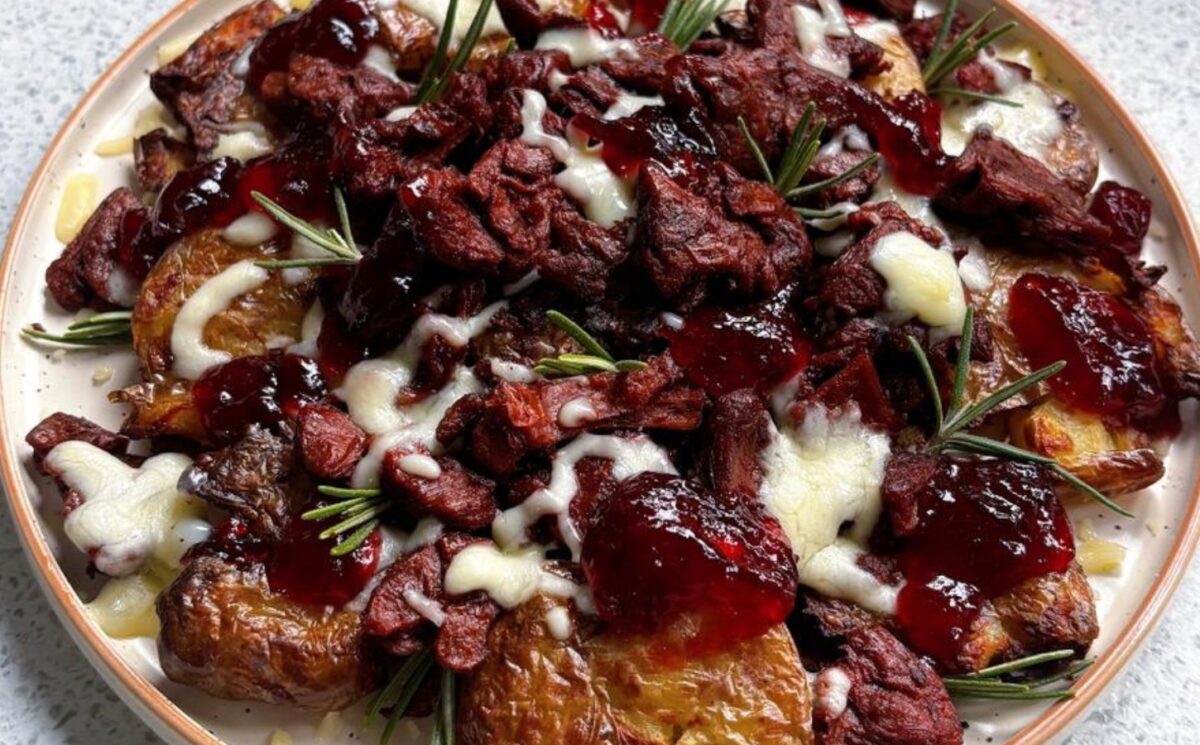
beyond steak loaded smashed potatoes with cranberry sauce and cheese
Christina KynigiosMake this delish air fryer recipe when you want high-protein comfort food

Try this festive Beyond Steak loaded smashed potatoes recipe anytime of year. It comes from Christina Kynigos and layers crispy smashed potatoes with vegan steak pieces, melted cheese, cranberry sauce, rosemary, and gravy for a rich comfort food dinner.

Find the recipe here.

Copycat Greggs vegan lattice pastry

copycat Greggs vegan lattice pastry festive edition with vegan chicken, bacon, stuffing, and cranberry sauce wrapped in vegan puff pastry
Sophie SugrueFilled with vegan chicken, bacon, and stuffing, this pastry is Christmas in a bite

Next, try Sophie Sugrue’s copycat Greggs vegan lattice pastry. Vegan chicken, bacon, stuffing, and cranberry sauce get wrapped in flaky puff pastry and baked until crisp and golden for a savoury bake with classic holiday flavours.

Find the recipe here.

Caramelized apple and red onion vegan sausage rolls

a plate of caramelized apple and red onion vegan sausage rolls
JAZZ AppleSausage rolls are a must-have at any holiday celebration, and these happen to use apple and red onion

In the mood for sausage rolls? Try these vegan sausage rolls with caramelized apple and red onion. Sweet apple balances the savoury filling, while fennel, mustard, and flaky pastry turn them into an easy snack or party food.

Find the recipe here.

Island gravy with veggie chunks
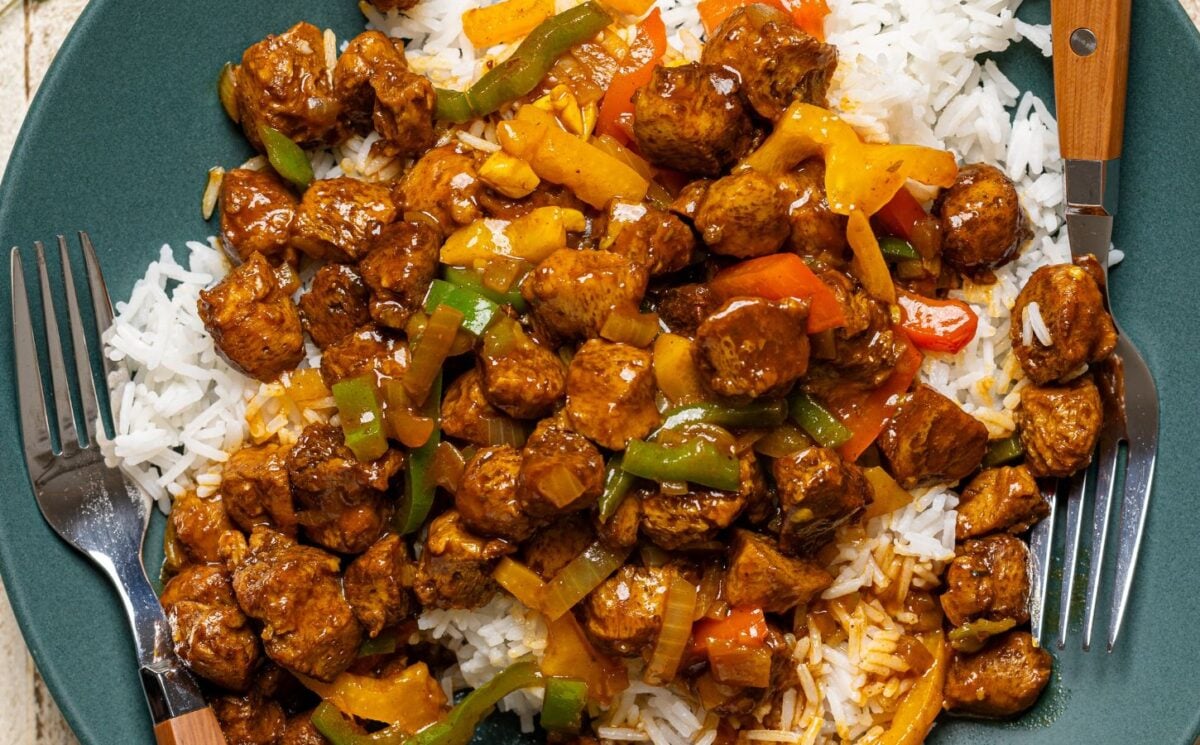
island gravy with veggie chunks made with bell pepper and soy chunks
Shanika Graham-WhiteSoy chunks make up the plant protein in this dish

For a comforting, high-protein dinner, try this island gravy with veggie chunks by Lloyd Rose. Soy chunks simmer in a rich Caribbean-style gravy with thyme, allspice, tomato paste, and Scotch bonnet for a deeply savoury dish that pairs well with rice.

Find the recipe here.

Earth Day burger
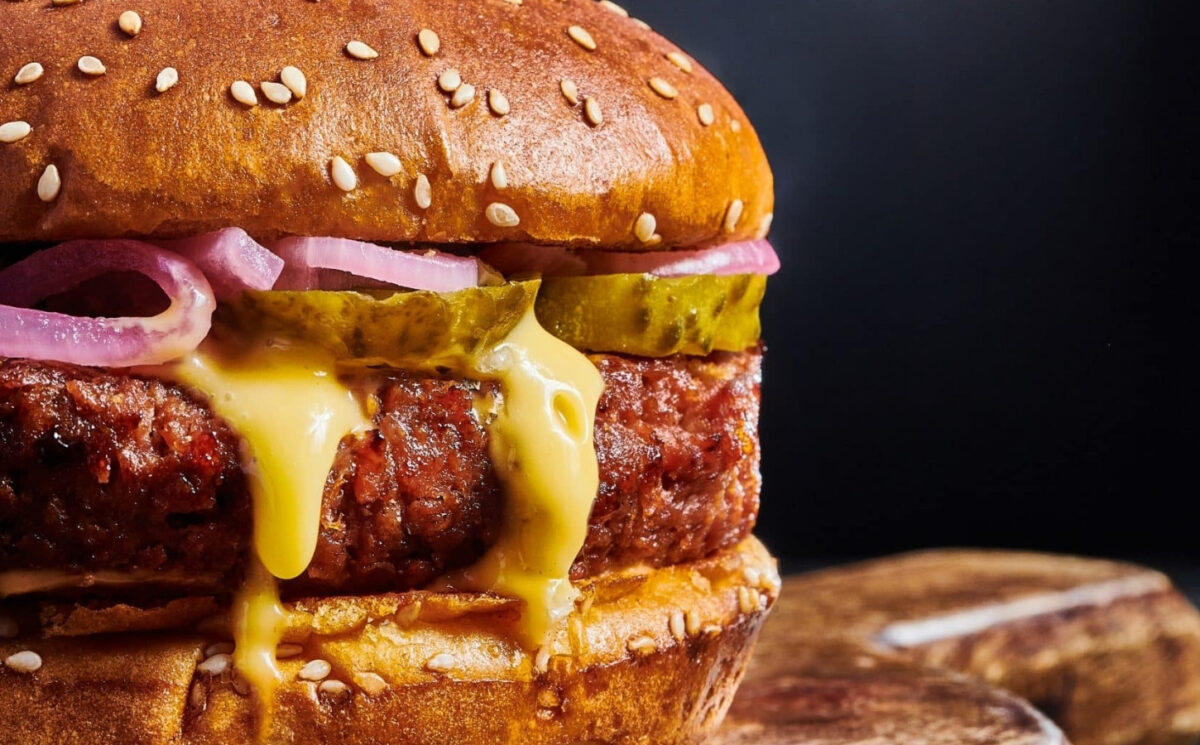
vegan earth day burger for Earth Day, BBQs spring etc
Redefine MeatCut down on carbon emissions with easy swaps like meat alternatives and plant-based ingredients

This list ends with an easy Earth-friendly burger recipe. A plant-based burger patty gets stacked with pickles, lettuce, vegan cheese, and a creamy dill-sriracha relish made with white beans for a filling meal with plenty of flavour.

Find the recipe here.

https://plantbasednews.org/veganrecipes/dinner/new-meaty-vegan-recipes/

Friday, May 1, 2026

Plant-Based Proteins Now Cheaper in Germany As ‘Climateflation’ Drives Up Meat Prices

From greenqueen.com.hk

By Anay Mridul

Meat prices in Germany have risen by 25% since 2021, even as vegan alternatives have become 8% cheaper, according to a new analysis.

Lowering meat consumption to align with the national dietary guidelines could help German households save hundreds of euros per year, thanks to price hikes driven by “climateflation” and other factors.

Euromonitor data analysed by Madre Brava shows that meat prices in the country have skyrocketed, just as the cost of plant proteins and meat alternatives have stabilised or dropped. That makes healthy, plant-rich diets the most economical option for its citizens.


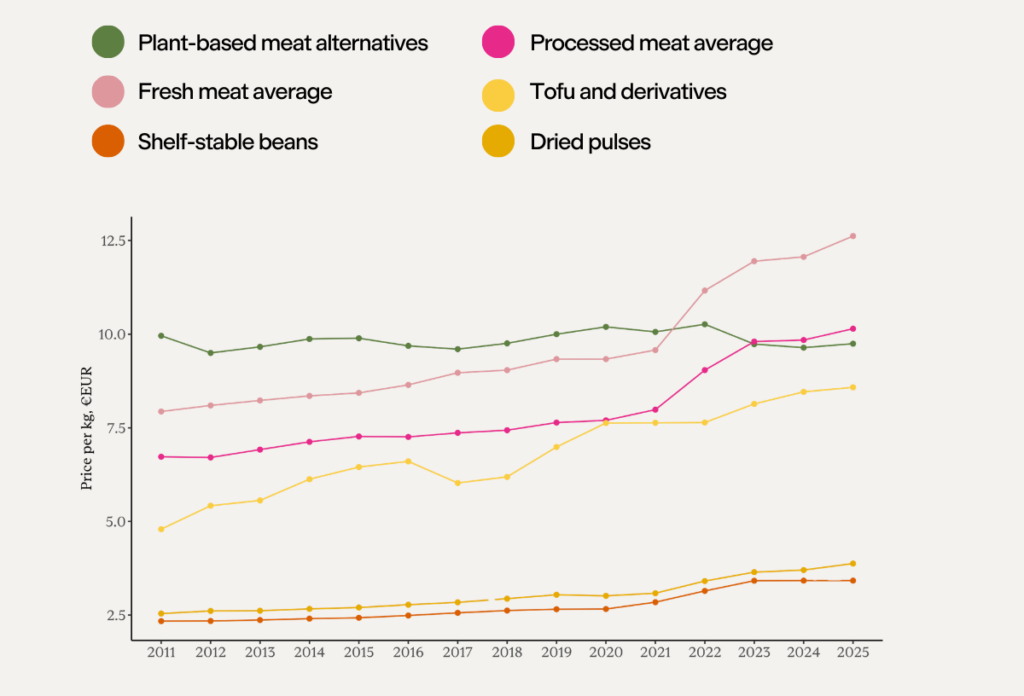
The report reveals that on average, plant-based meat cost €10.06 per kg at the beginning of 2021, but fell to €9.75 per kg at the end of 2025, making it cheaper than processed animal meat (€10.41) for the first time.

With meat prices set to keep rising, Madre Brava highlights how increased consumption of plant proteins could help Germans save money, improve health outcomes, and lower the climate impact of their diets.

Price gap between meat and plants widens in Germany

plant based meat price
Courtesy: Madre Brava

The national dietary guidelines, updated in 2024 by the German Nutrition Society (DGE), recommend eating less meat, dairy, and eggs, and more plant-based foods – the latter should make up at least 75% of the diet.

But Germans ate an average of around 25kg of sausages and processed meats in 2023, equivalent to over 68g per day. The WHO has classified processed meat as carcinogenic, and studies have shown that no amount of it is safe for human health, with people eating 50g a day (the same as two slices of ham) seeing the risk of developing type 2 diabetes rise by 30% and colorectal cancer by 26%.

The DGE recommends limiting consumption of processed meat to under 9g per day, with total meat intake not exceeding 53g per person. However, Germans “still consume too much unhealthy meat”, Madre Brava said, with men in lower-income groups leading the way.

This is not just bad for their health, it is bad for their bank balance too. Since 2011, the price of meat has risen by more than 50% (to 57% for processed poultry), more than twice as fast as rents in Germany (24%). And over the last five years, the average cost of red and processed meat has increased by €2.41 (over 25%).

In comparison, the price of canned legumes and beans only rose by 58 cents, while dried pulses saw a mere 80-cent hike. The difference between pork and beans, therefore, has increased by €2.73 since 2020, with the latter now around €10 cheaper per kg.

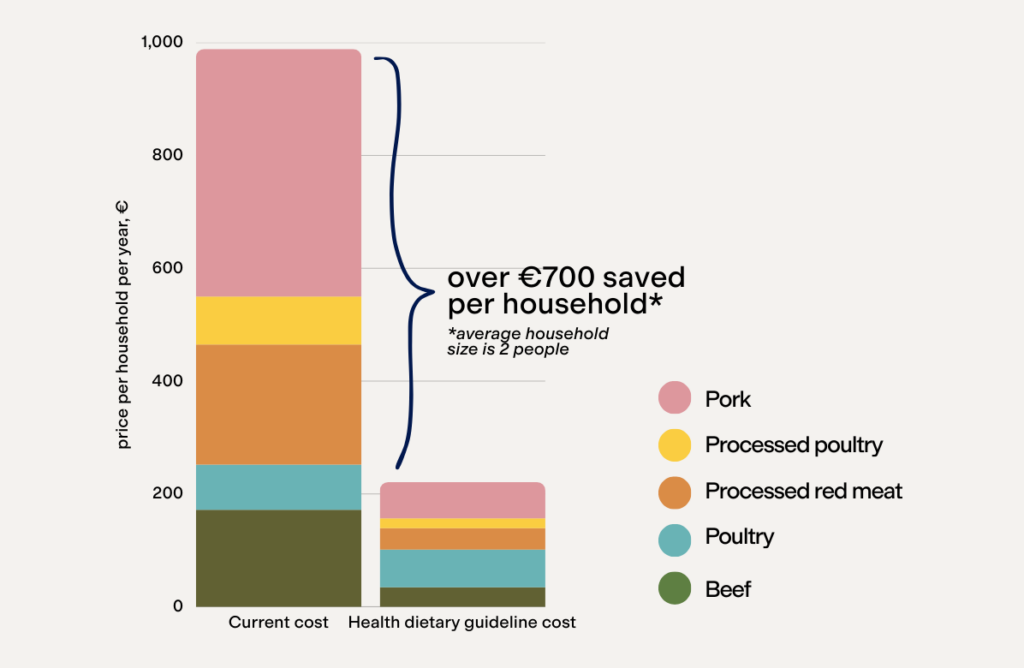
Mapping this price data against the DGE’s recommendations, Madre Brava’s calculations show that a household of two people would save over €700 on their meat shop in one year if they follow the plant-rich guidelines.

Plus, the DGE’s evaluation of available studies found that plant-based meat products are significantly healthier and safer than their conventional counterparts and other highly processed foods, thanks in part to the former’s high fibre and lower saturated fat content.

germany meat prices
Courtesy: Madre Brava

Germans ditch animal proteins for plant-based

It’s perhaps why meat consumption reached an all-time low in 2022, and remained 13% lower in 2024 compared to a decade prior, with pork and beef primarily to blame.

Meanwhile, the number of meat alternatives produced in Germany has grown every year since 2019, reaching more than 2,000 by 2024. That has dovetailed with an estimated 43% hike in consumption between 2021 and 2025.

Analysis by ProVeg International has found that over 50% of citizens in Europe’s largest market for plant-based food now identify as vegan, vegetarian or flexitarian. Separate research by the Good Food Institute Europe shows that half of German adults want to change their diets by either reducing meat or eating more plant-based foods, citing high costs (25%) and health concerns (24%) as the main reasons.

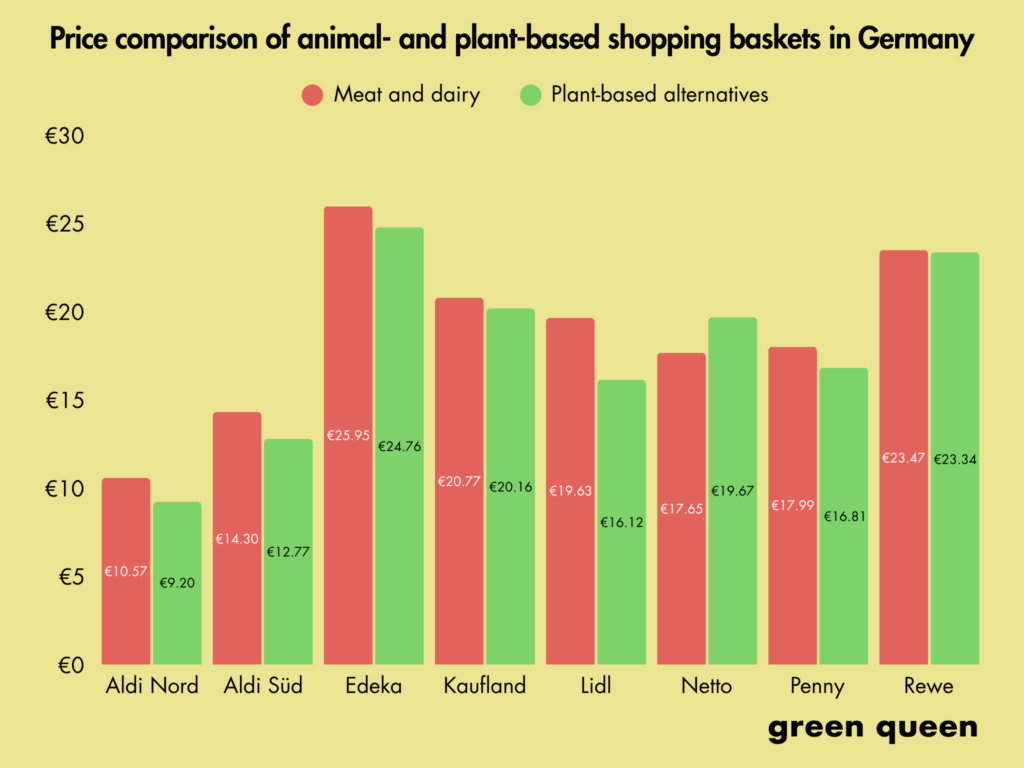
Supermarkets are supporting this shift. Discount retailer Lidl has been selling its private-label Vemondo plant-based products at prices that match or undercut meat and dairy since 2023. In fact, a vegan shopping basket is now 5% more affordable than one with animal proteins in Germany.

Across seven of the country’s eight largest supermarkets, the cost of plant-based alternatives is now lower than that of meat, dairy and seafood. Half of the 12 plant-based categories assessed were cheaper than their animal equivalents last year, up from just a third in 2024.

plant based meat price
Graphic by Green Queen

Experts predict meat prices will continue to expand due to heat stress in animal husbandry, volatile feed supplies and prices, rising refrigeration costs, and the culling of livestock caused by a growth in diseases.

“The structural causes of meat price rises, which weigh less heavily on plant proteins, mean those of us who adjust our diets, eating less meat and more plants, will discover new tastes, better health and a healthier bank balance,” said Moritz Möller, Madre Brava’s director for Germany.

“German supermarkets are responding to this change and have already set targets to balance their meat versus plant protein offerings. Now, we need them to step up further and provide a level playing field with an industry-wide target,” he added. “This is the best way to help household budgets by offering more tasty, affordable, healthy food.”

https://www.greenqueen.com.hk/plant-based-meat-prices-vegan-germany-madre-brava-inflation/ 

Saturday, April 25, 2026

Forget Burgers—Vegan Meat Is Taking on Cultured Bacon, Marbly Steak, and Octopus

From vegnews.com

From whole-cut steaks to hyper-realistic seafood, the next wave of vegan meat is redefining what plant-based protein can be

Ask any long-time vegan: 2016 was a pivotal year for the plant-based sector, with Beyond Meat and Impossible Foods debuting their flagship burgers to the masses, ultimately changing plant-based meat forever. The new, beefy, bleeding burgers were a stark pivot from the vegetable-forward bean burgers of the 20th century.

A decade later, Beyond and Impossible remain at the forefront of the industry and have expanded their portfolios to include plant-based chicken and pork—products engineered to mimic everything from fibrous muscle pull to lightly browned skin and rendered fat.

But now, a new era of plant meat is on the horizon. A number of companies are perfecting specialty meatless meats that move beyond all-purpose proteins like beef, chicken, and pork, and instead tackle regional spice profiles, cuts, and cooking traditions.

                                                                                                        Millennial Flavor Town


Pushing the boundaries of plant-based

At woman-owned Kula, pea protein forms the base of the brand’s heat-and-eat goat curry—an aromatic, hearty staple in Afro-Caribbean cuisine. The protein is structured to hold up in long-simmered sauces, soaking in warming spices and delivering the dense, stew-ready bite associated with conventional goat meat.

The vegan meat purveyors at London-born company This also employs pea protein when crafting its lamb kebabs, designed to char at the edges while staying springy and juicy at the centre. Flavoured with mint and cumin for depth of flavour, these bites come complete with skewers so they’re instantly ready for grilling.

Vegan beef breaks out from the confines of burger patties and crumbly grounds thanks to South Korea’s Millennial Flavor Town. Fermented hedgehog mushrooms, fava beans, and soy are used to create a whole-cut tenderloin complete with melt-in-your-mouth, fatty marbling. When cooked, the marbling softens and bastes the surrounding “muscle,” just like high-end beef cuts.

Seafood in a new light

Mushroom fermentation technology isn’t just breathing new life into beefless beef—it’s also expanding the plant-based seafood category as well. Revo Foods’ The Kraken—one-of-a-kind vegan octopus tentacles complete with suckers and a firm, elastic bite designed to withstand grilling or braising—is crafted from mycoprotein, a fermented fungus-based protein.

Juicy Marbles’ flaky, whole-cut cod fish fillet, created in partnership with Revo, boasts a similar mycoprotein makeup.

                                                                                                                 Juicy Marbles

Beyond fungi and plant ingredients, new technologies are being developed to cultivate real animal protein without slaughter. Cell samples taken harmlessly from living animals are placed inside bioreactors and fed nutrients to grow into real meat, recreating familiar cuts at a cellular level.

San Diego-based BlueNalu uses this technology to produce cultivated bluefin tuna toro, a highly sought-after cut of tuna belly fat prized for its silken texture, high fat content, and buttery mouthfeel. By growing toro instead of depleting tuna from the oceans, BlueNalu aims to usher in a new era of sustainable seafood production that supports ocean diversity.

And to make its flaky white fish and forthcoming eel, Steakholder Foods trades meat-growing bioreactors for 3D printers to transform plant-based and cultivated ingredients into next-generation seafood products.

Global appeal with pork and poultry

Some of the most ambitious advances in meatless meat now revolve around the proteins people eat most worldwide. New York-based MyForest Foods uses oyster mushroom mycelium—the meaty, fibrous root structure of mushrooms—to craft clean-label, plant-based renditions of pulled pork and crispy bacon.

San Francisco start-up Mission Barns innovates by melding cell-grown pork fat with plant-based proteins to mimic pork’s richness and succulence—qualities notoriously difficult to replicate with plants alone. Last year, the company made history when its pork meatballs debuted for a limited run on grocery store shelves, marking the first time cultivated meat was available for purchase in US stores. Next up? Bacon, pepperoni, and sausages.

                                                                                                                    Mission Barns

In Australia, cultured meat company Vow has developed a number of “publicity stunt” bites (including a kangaroo dumpling and a mammoth meatball) to demonstrate its technology, before bringing its cultivated Japanese quail to Singapore—the first government to approve the meat for sale. Vow used the quail to craft a luxurious foie gras, complete with the dish’s signature unctuousness and gentle melt—but without the cruelty.

With cutting-edge technology, compassion for animals, and a hunger for the tastiest options, the plant-based sector is poised for continued innovation. Only time will tell what’s next.

https://vegnews.com/new-generation-of-meatless-meat