From greenqueen.com.hk
By Anay Mridul
Meat prices in Germany have risen by 25% since 2021, even as vegan alternatives have become 8% cheaper, according to a new analysis.
Lowering meat consumption to align with the national dietary guidelines could help German households save hundreds of euros per year, thanks to price hikes driven by “climateflation” and other factors.
Euromonitor data analysed by Madre Brava shows that meat prices in the country have skyrocketed, just as the cost of plant proteins and meat alternatives have stabilised or dropped. That makes healthy, plant-rich diets the most economical option for its citizens.

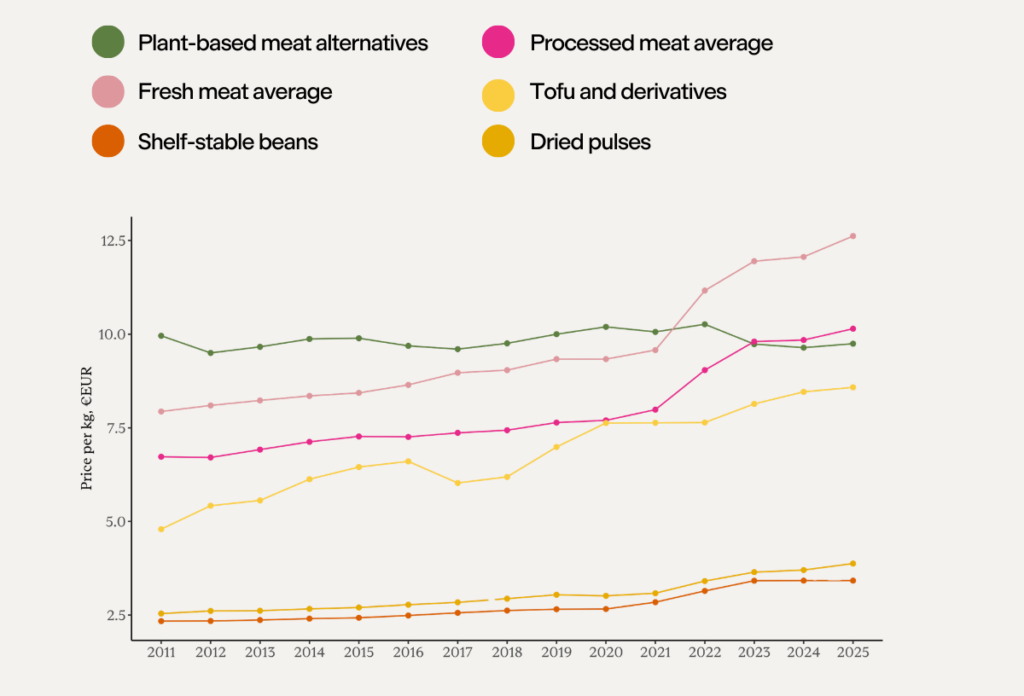
The report reveals that on average, plant-based meat cost €10.06 per kg at the beginning of 2021, but fell to €9.75 per kg at the end of 2025, making it cheaper than processed animal meat (€10.41) for the first time.
With meat prices set to keep rising, Madre Brava highlights how increased consumption of plant proteins could help Germans save money, improve health outcomes, and lower the climate impact of their diets.
Price gap between meat and plants widens in Germany
The national dietary guidelines, updated in 2024 by the German Nutrition Society (DGE), recommend eating less meat, dairy, and eggs, and more plant-based foods – the latter should make up at least 75% of the diet.
But Germans ate an average of around 25kg of sausages and processed meats in 2023, equivalent to over 68g per day. The WHO has classified processed meat as carcinogenic, and studies have shown that no amount of it is safe for human health, with people eating 50g a day (the same as two slices of ham) seeing the risk of developing type 2 diabetes rise by 30% and colorectal cancer by 26%.
The DGE recommends limiting consumption of processed meat to under 9g per day, with total meat intake not exceeding 53g per person. However, Germans “still consume too much unhealthy meat”, Madre Brava said, with men in lower-income groups leading the way.
This is not just bad for their health, it is bad for their bank balance too. Since 2011, the price of meat has risen by more than 50% (to 57% for processed poultry), more than twice as fast as rents in Germany (24%). And over the last five years, the average cost of red and processed meat has increased by €2.41 (over 25%).
In comparison, the price of canned legumes and beans only rose by 58 cents, while dried pulses saw a mere 80-cent hike. The difference between pork and beans, therefore, has increased by €2.73 since 2020, with the latter now around €10 cheaper per kg.
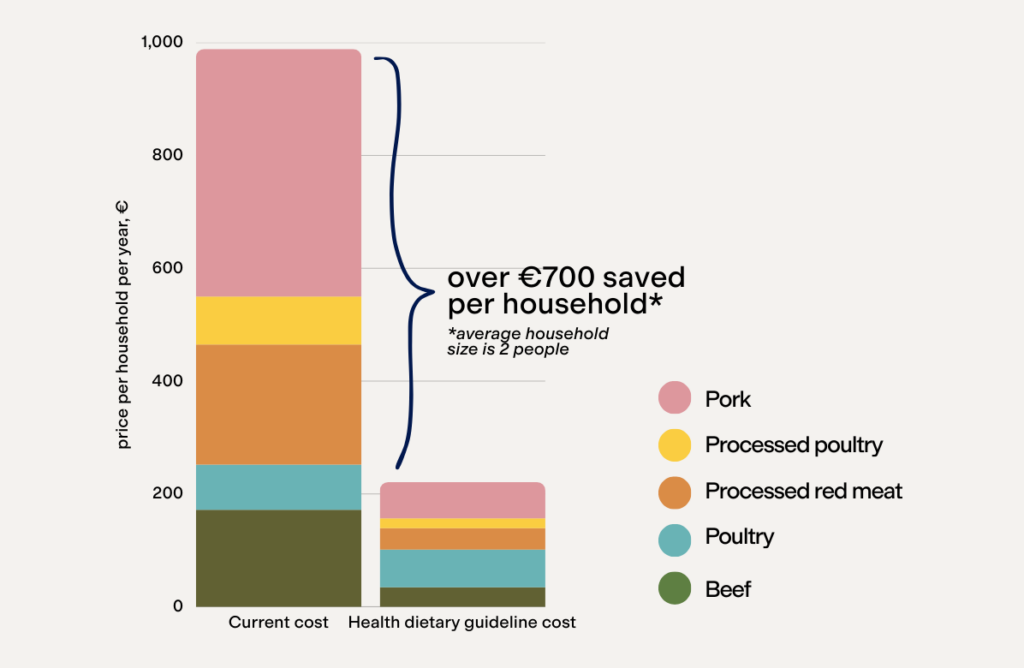
Mapping this price data against the DGE’s recommendations, Madre Brava’s calculations show that a household of two people would save over €700 on their meat shop in one year if they follow the plant-rich guidelines.
Plus, the DGE’s evaluation of available studies found that plant-based meat products are significantly healthier and safer than their conventional counterparts and other highly processed foods, thanks in part to the former’s high fibre and lower saturated fat content.
Germans ditch animal proteins for plant-based
It’s perhaps why meat consumption reached an all-time low in 2022, and remained 13% lower in 2024 compared to a decade prior, with pork and beef primarily to blame.
Meanwhile, the number of meat alternatives produced in Germany has grown every year since 2019, reaching more than 2,000 by 2024. That has dovetailed with an estimated 43% hike in consumption between 2021 and 2025.
Analysis by ProVeg International has found that over 50% of citizens in Europe’s largest market for plant-based food now identify as vegan, vegetarian or flexitarian. Separate research by the Good Food Institute Europe shows that half of German adults want to change their diets by either reducing meat or eating more plant-based foods, citing high costs (25%) and health concerns (24%) as the main reasons.
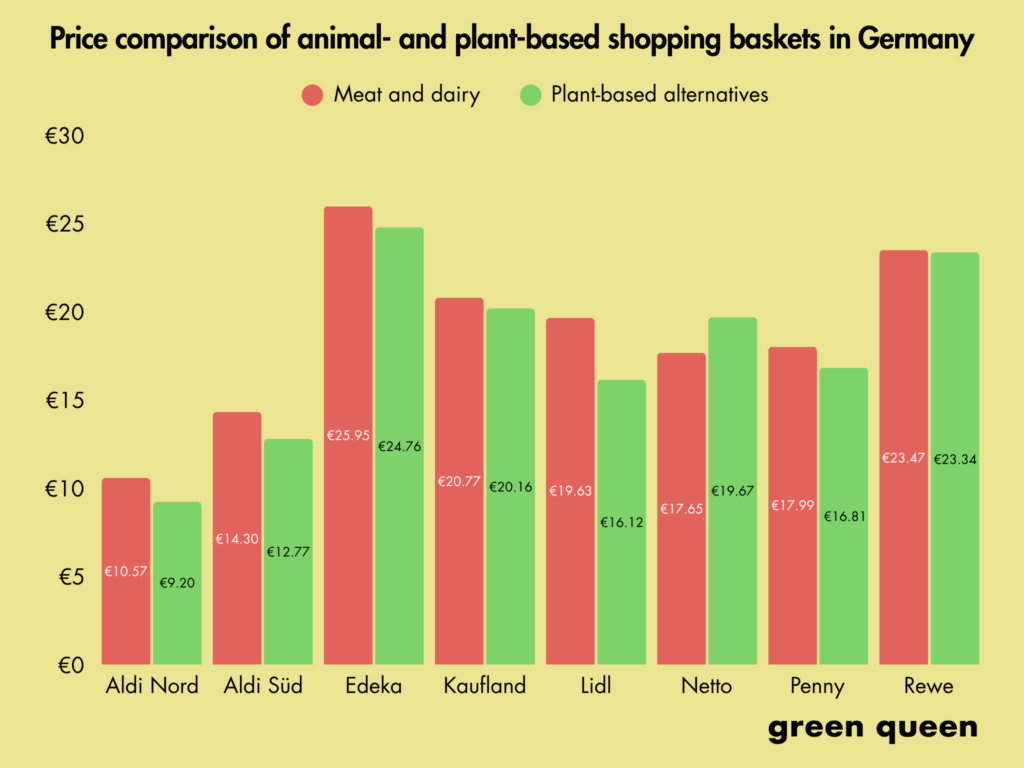
Supermarkets are supporting this shift. Discount retailer Lidl has been selling its private-label Vemondo plant-based products at prices that match or undercut meat and dairy since 2023. In fact, a vegan shopping basket is now 5% more affordable than one with animal proteins in Germany.
Across seven of the country’s eight largest supermarkets, the cost of plant-based alternatives is now lower than that of meat, dairy and seafood. Half of the 12 plant-based categories assessed were cheaper than their animal equivalents last year, up from just a third in 2024.
Experts predict meat prices will continue to expand due to heat stress in animal husbandry, volatile feed supplies and prices, rising refrigeration costs, and the culling of livestock caused by a growth in diseases.
“The structural causes of meat price rises, which weigh less heavily on plant proteins, mean those of us who adjust our diets, eating less meat and more plants, will discover new tastes, better health and a healthier bank balance,” said Moritz Möller, Madre Brava’s director for Germany.
“German supermarkets are responding to this change and have already set targets to balance their meat versus plant protein offerings. Now, we need them to step up further and provide a level playing field with an industry-wide target,” he added. “This is the best way to help household budgets by offering more tasty, affordable, healthy food.”
https://www.greenqueen.com.hk/plant-based-meat-prices-vegan-germany-madre-brava-inflation/

No comments:
Post a Comment