Showing posts with label vegan. Show all posts

Sunday, November 16, 2025

The value(s) of veganism

From winnipegfreepress.com

During World Vegan Month, vegans across generations share their reasons for embracing the lifestyle


November is World Vegan Month, an event celebrated worldwide to shine a light on what it means to be vegan.

The U.K.-based Vegan Society defines veganism as: “a philosophy and way of living which seeks to exclude — as far as is possible and practicable — all forms of exploitation of, and cruelty to, animals for food, clothing or any other purpose; and by extension, promotes the development and use of animal-free alternatives for the benefit of animals, humans and the environment.”

In other words, vegans are fully plant-powered.

Ruth Bonneville / Free Press
                                Health, sustainability and kindness to animals are some of the reasons Debbie Wall (from left), Jahzara MacDougall and Randy Tonnellier practise veganism.

Ruth Bonneville / Free Press

Health, sustainability and kindness to animals are some of the reasons Debbie Wall (from left), Jahzara MacDougall and Randy Tonnellier practise veganism.

While veganism was once considered an option from the fringes, it’s now much better recognized, discussed and practiced by old and young, famous and not.

The late primatologist and anthropologist Jane Goodall was a longtime vegan who helped normalize and encourage the lifestyle. While Loretta Swit may have been best known as Major Margaret Houlihan on the popular television series M*A*S*H, she was also a vegan and a champion of all animals.

Musicians Lenny Kravitz, Bryan Adams and Billie Eilish, and actors Pamela Anderson and Joaquin Phoenix are but a few on the long list of celebrities who use their platforms to speak up for animal rights. Veganism is growing in every field and profession, as is the curiosity about the lifestyle.

● ● ●

Debbie Wall was once a hardcore meat eater. When she began taking pre-veterinary courses at the University of Manitoba, she met a calf who licked her face; she recalled thinking, “They’re just like a dog.”

“That was it,” Wall said.

Wall stopped eating meat in 1978 and lived as a vegetarian, dedicating much of her life to animal rights advocacy and the social justice movement. At age 60, she stopped consuming eggs and dairy and became vegan.

Wall, who will be 67 next month, has worked in veterinary clinics as an assistant, played drums in an all-girl punk band, competed in body-building competitions, donated blood 55 times and given countless hours to volunteer endeavours. Federally, she ran for the Animal Protection Party of Canada in the last two elections. At the provincial level, she’s a member of the Vegan Greens Caucus with the Green Party of Manitoba.

“I used to be able to out-pogo people half my age, now I can out-pogo people a third my age,” she chuckled, referring to the mosh-pit dance move involving high-energy bouncing up and down.

Wall fosters cats at home, and heads over to Animal Services for the doggie dates program. Bob and Russ, her nine-year-old rescued goldfish, are long-term roommates.

“We seem to be a very selfish species. Until something affects us directly we won’t take notice,” she said, concerned about the irreparable damage to the environment, species loss and the food system.

She’d like to see more education for the young, focused on kindness and compassion. Her advocacy promotes a sustainable system that helps farmers transition to plant-based food.

“Our society is steeped in violence. We eat it, we wear it, we use it in entertainment; we shouldn’t be surprised when it bubbles up and boils over. Violence against animals is very much linked to violence against humans,” she said, adding that atrocities against animals could end tomorrow if different choices were made.

● ● ●

Jahzara MacDougall is a lifelong musician who plays cello and piano and loves all kinds of music. The 17-year-old student is also a lifelong vegan; she and her sister were raised vegan by their mother.

“It actually makes a lot of sense to me. It aligns with my values. It’s never been something that I’ve thought about changing,” MacDougall said.

Currently in Grade 12, MacDougall looks forward to attending university next year to study science and music. She’s thankful that, unlike some other young vegans, she’s never faced any bullying.

Her friends and aquaintances nowadays are open to veganism, but she remembers how, as a young child, she would feel left out at birthday parties when everyone was eating cake and she wasn’t. Her mother always talked with other parents, bought pizza and made cupcakes for her.

“When you’re a little kid, you just wanna fit in. That really made a difference,” she said about her mother’s gestures.

For MacDougall, all of the benefits of veganism outweigh any drawbacks.

“The fact that I’m not contributing to pain and suffering — being vegan reduces my carbon footprint. Being vegan is my best option.”

The family household is home to two Great Pyrenees and a cat.

“My mom is somewhat of an animal whisperer,” she said. “Pets, they’re like little humans.”

MacDougall wants people to know that veganism doesn’t mean missing out on anything, but is a door to a whole new world.

She loves cooking as a way to manage stress and make something she can share with her family, and notes that she’s learned to veganize numerous recipes.

At the end of the day, she feels good about living her vegan values:

“Kindness to animals, to self and others, sustainability of the planet, mindfulness of what we put in our body.”

● ● ●

In his youth, retired City of Winnipeg transit operations manager Randy Tonnellier had an experience that would change his life.

“As a teenager, I visited a friend’s farm. They were egg producers. I walked through the facilities and couldn’t eat eggs after that. The conditions were horrific,” he recalled, adding that he knew in that moment that he didn’t want to have any part of the process.

“There’s an immense amount of suffering with animals raised in industrialized farming.”

Over time, he worked his way to cutting out all animal products from his diet. Tonnellier, who’s always had an affinity for rescue animals, shares a home with his partner, three cats and one dog.

The 61-year-old Winnipegger volunteers as board treasurer with the Animal Welfare Foundation of Canada, which supports animal welfare projects. He has volunteered with the Winnipeg Humane Society for more than 20 years in various capacities, and now focuses on farm animal welfare.

At home, he enjoys cooking with his partner and trying new recipes and flavours.

“One of the things that comes from being vegan is that there are so many amazing and wonderful things you can make,” he said, noting that he made a lentil walnut Wellington at a recent family gathering, which went over well with vegans and meat-eaters alike.

https://www.winnipegfreepress.com/arts-and-life/food/2025/11/15/the-values-of-veganism 

Saturday, August 16, 2025

Let's get physical: Here's what happens to your body when you go vegan

From vegoutmag.com

By Avery White

From gut bacteria shifts within 72 hours to cholesterol drops in weeks—the measurable changes might surprise you 

When I first started tracking the numbers behind plant-based eating five years ago, I was hunting for investment opportunities in alt-protein start-ups.

What I found instead was a fascinating dataset about human biology—one that completely changed how I fuel my own body.

The research is clear: switching to a vegan diet triggers a cascade of measurable changes in your system, from blood markers to gut bacteria. Some happen within days, others unfold over months.

Here's what the science says about your body's plant-based transformation.


Your digestive system gets a complete makeover

The most dramatic shifts happen in your gut, and they start almost immediately.

Within 24 to 72 hours of going vegan, your intestinal microbiome begins changing as fibre-loving bacteria multiply and meat-processing microbes decline.

A 2013 study published in Nature found that participants who switched from an animal-based diet to a plant-based one saw significant microbiome changes within a short time.

The beneficial bacteria that thrive on fibre—like Bifidobacterium and Lactobacillus—increased by up to 20%, while potentially harmful bacteria associated with animal protein decreased.

This shift brings real benefits. Your body becomes more efficient at producing short-chain fatty acids, which reduce inflammation and may lower your risk of colorectal cancer.

You'll likely notice changes too: more regular bowel movements, less bloating, and potentially some initial gas as your system adjusts to processing more fibre.

That said, the transition isn't always smooth sailing. Many new vegans experience digestive discomfort in their first few weeks as gut bacteria populations rebalance.

The key is gradually increasing fibre intake rather than diving headfirst into beans and brussels sprouts.

Your cholesterol numbers take a nosedive

Here's where the data gets exciting for anyone who's ever worried about heart health. Multiple studies show that vegan diets can slash total cholesterol levels significantly within just four weeks.

The mechanism is straightforward: animal products contain dietary cholesterol and saturated fat, while plants contain neither.

When you eliminate these from your diet, your liver doesn't need to work as hard to manage cholesterol levels, and your LDL (the "bad" cholesterol) drops significantly.

The timeline matters here. You'll see initial improvements within two to four weeks, but the most dramatic changes happen over three to six months as your body fully adapts to processing plant-based fats and fibre.

Your blood pressure finds its sweet spot

The numbers don't lie: plant-based diets consistently lower blood pressure, and the effect is both rapid and sustained.

Research found that vegans had systolic blood pressure readings that averaged 7 points lower than meat-eaters—enough to significantly reduce stroke and heart attack risk.

The magic happens through multiple pathways.

Plant foods are naturally low in sodium and high in potassium, a mineral that helps relax blood vessel walls.

They're also rich in nitrates (think leafy greens and beets), which your body converts to nitric oxide—a compound that dilates blood vessels and improves circulation.

You might notice this shift within your first month, especially if you're coming from a diet heavy in processed foods.

Your heart doesn't have to work as hard to pump blood through your system, which can translate to more energy and better exercise recovery.

Your weight regulation system gets an upgrade

Weight loss often happens on vegan diets, but not always for the reasons people expect.

It's not magic—it's math, combined with some fascinating metabolic shifts.

Plant foods are generally less calorie-dense than animal products, meaning you can eat larger volumes while consuming fewer calories.

A cup of cooked quinoa has about 220 calories; the same volume of ground beef contains nearly 340 calories. But the real game-changer is fibre.

High-fibre foods trigger satiety hormones more effectively, helping you feel full on fewer calories.

A study in Nutrition found that people following plant-based diets can experience greater weight loss than those on other eating patterns, even without restricting calories.

Your inflammation levels cool down

Chronic inflammation is linked to everything from arthritis to heart disease, and vegan diets appear to be natural anti-inflammatory agents.

The research consistently shows lower levels of C-reactive protein and other inflammatory markers in people eating plant-based diets.

The mechanism is multifaceted. Plants are packed with antioxidants and phytonutrients that directly combat oxidative stress.

Meanwhile, eliminating animal products removes compounds like arachidonic acid and trimethylamine N-oxide (TMAO) that can promote inflammation.

A 2019 study in Frontiers in Nutrition found that people with rheumatoid arthritis who followed a vegan diet showed significant reductions in inflammatory markers and reported less joint pain and stiffness.

You might feel this shift as improved recovery after workouts, less joint stiffness in the morning, or simply more sustained energy throughout the day.

Your energy levels find a new rhythm

Many new vegans report an energy boost, though the timeline varies. Some feel it within days, others need weeks for their bodies to adapt to processing different fuel sources.

The initial energy bump often comes from eating more nutrient-dense foods and fewer processed options. Plant foods deliver steady glucose to your bloodstream without the spikes and crashes associated with refined sugars and heavy animal proteins.

But there's a learning curve. Your body needs time to optimize its production of certain enzymes that break down plant proteins and complex carbohydrates.

During this transition period—usually two to six weeks—you might experience some fatigue as your system adjusts.

The key is ensuring adequate calorie intake and focusing on nutrient-dense options like legumes, whole grains, nuts, and seeds. Many new vegans accidentally under-eat because plant foods are less calorie-dense than their previous diet.

The bottom line on your body's plant-based journey

The research paints a clear picture: vegan diets trigger measurable, beneficial changes in multiple body systems. From gut bacteria to cholesterol levels, the shifts happen faster than many people expect.

But context matters. These benefits depend on eating a well-planned, whole-food-based vegan diet—not surviving on pasta and french fries.

The data also shows that individual responses vary based on genetics, starting health status, and how carefully you manage the transition.

The takeaway isn't that everyone should go vegan overnight. It's that plant-based eating creates documented physiological changes that align with better long-term health outcomes.

Whether you're curious about a full transition or simply want to eat more plants, understanding these changes can help you make informed decisions about fueling your body.

Your system is remarkably adaptable. Give it the right inputs, and the data suggests it will respond in kind.

https://vegoutmag.com/news/r-lets-get-physical-heres-what-happens-to-your-body-when-you-go-vegan/

Friday, May 2, 2025

The Ultimate Guide To Vegan Grocery Shopping On A Budget

From plantbasednews.org

Cheap meals don't have to be boring 

Candice Hutchings, known for running the Edgy Veg YouTube channel, recently shared a video titled Vegan Grocery Shopping on a Budget (Affordable Recipe Ideas that are DELICIOUS). In it, she offers practical tips for saving money while maintaining a delicious, plant-based lifestyle – busting the myth that eating vegan has to be expensive. Hutchings also shares easy meal ideas that make the most of affordable, nutrient-dense ingredients.

Hutchings is a Canadian content creator, cookbook author, and long-time advocate for making veganism accessible without sacrificing flavour. Through Edgy Veg, she has built a reputation for reinventing comfort food classics and offering realistic lifestyle advice – including how to shop smarter, cook creatively, and enjoy plant-based meals on a budget. Her personal mission to make vegan living easier and more approachable directly supports the message of this latest video.

                                                Plant-based YouTuber Candice Hutchings has shared some plant-based grocery shopping hacks

                                                                                                 Media Credit: YouTube/Edgy Veg

Bulk legumes and grains: a cost-effective foundation

One of Hutchings’ key strategies is buying staples like beans, lentils, and rice in bulk. She emphasizes that purchasing dried legumes is far cheaper than buying canned versions. “Buying Staples in bulk is a huge thing,” she says, noting that these ingredients can be turned into burgers, taco fillings, hummus, and much more. Bulk legumes and grains are not only affordable but also provide essential fibre, protein, and vitamins for a balanced diet.

Frozen produce: affordable, nutritious, and convenient

Fresh produce can be expensive and spoil quickly, especially out of season. Hutchings encourages using frozen fruits and vegetables, which are often flash-frozen at peak ripeness to retain their nutrients. She explains, “Cook and shop smarter with what is available to you,” highlighting that frozen produce is perfect for smoothies, stews, and cooked dishes. Choosing frozen options minimizes waste and keeps grocery bills lower without sacrificing nutrition.

Imperfect produce: saving money without sacrificing quality

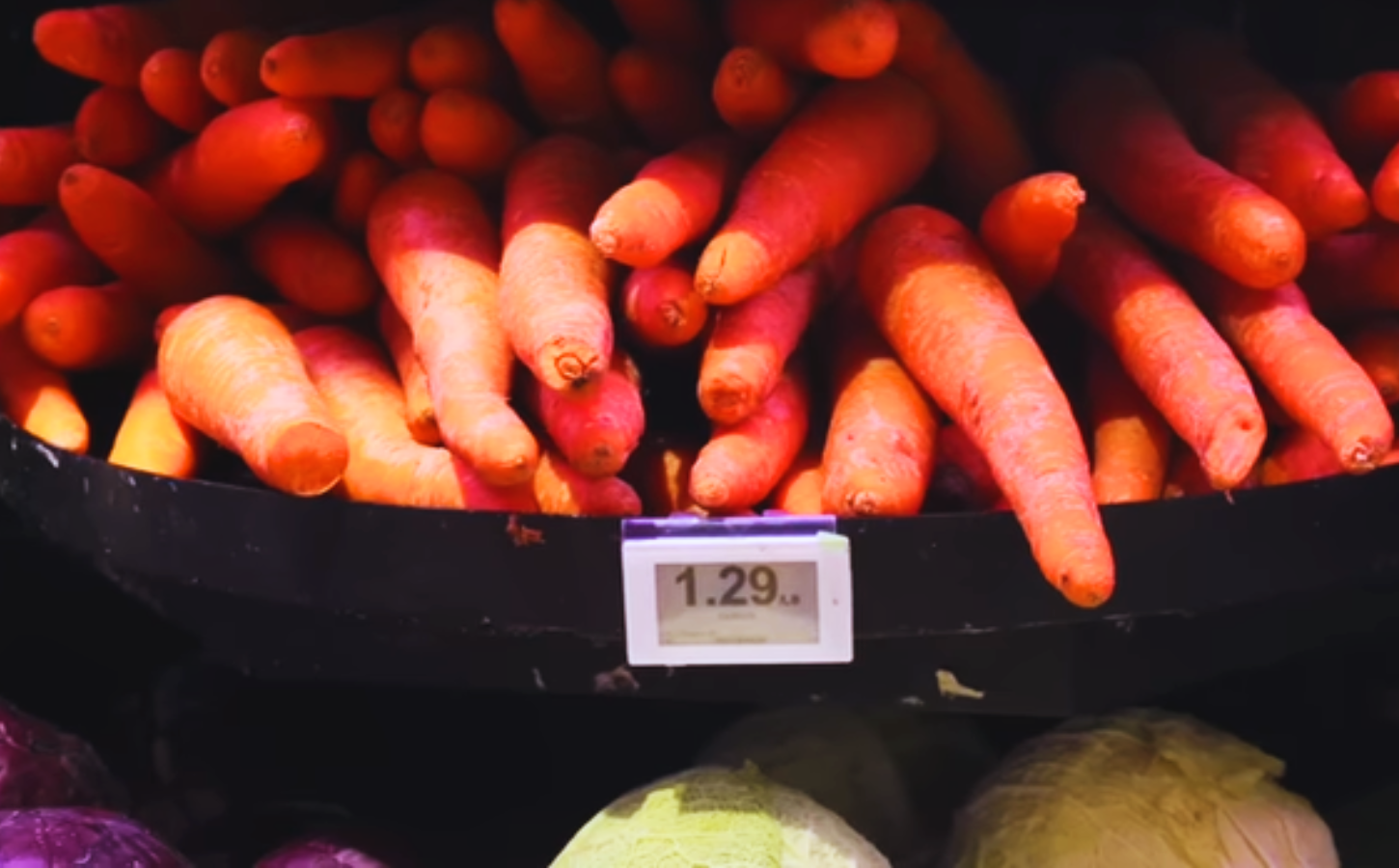
Imperfect - or "ugly" carrots - on a supermarket shelf
YouTube/Edgy VegBuying imperfect – or “ugly” vegetables – can help you save money

Another smart shopping tip from Hutchings is to buy imperfect or “ugly” produce, which is often heavily discounted despite being just as nutritious as flawless fruits and vegetables. “The perfect pristine carrot is just as nutritious as the ugly carrot,” she says, pointing out that appearances don’t affect the health benefits. Embracing less-than-perfect produce helps save money, reduce food waste, and support a more sustainable food system.

Meal ideas that are cheap but flavourful

Meal planning is crucial for budget-conscious eating, and Hutchings offers plenty of inspiration. Dishes like ramen with jazzed-up broths, hearty chilis, stews, lentil enchiladas, and shepherd’s pie are inexpensive yet packed with flavor and nutrients. “At the end of the day it’ll totally be worth it,” Hutchings adds, encouraging viewers to put in a little extra effort for big rewards in flavor, nutrition, and savings.

You can find more plant-based videos on the Edgy Veg YouTube channel.

https://plantbasednews.org/lifestyle/food/vegan-grocery-shopping-budget/

Wednesday, February 19, 2025

New Platform ‘FoodFacts.org’ Combats Nutrition Misinformation

From plantbasednews.org

With misinformation and disinformation rife on social media, FoodFacts.org is here to share the truth 

The Freedom Food Alliance (FFA) has announced the launch of a new platform, FoodFacts.org, which aims to combat nutrition misinformation in the digital age.

The lines between fact and fiction are “increasingly blurred,” according to the FFA. Following the news that Meta CEO Mark Zuckerberg would be ending third-party fact-checking on platforms like Facebook and Instagram, there has been growing concern about the rise of false information on social media.

FoodFacts.org is dedicated to “providing accurate, reliable, and up-to-date information about the food we consume.” Its central feature is an AI-powered chatbot that can answer a wide range of questions regarding food, nutrition, and myth-busting. A team of experts also contributes regular articles dedicated to combating misinformation and disinformation in media, covering issues such as seed oils and the recent social media allegation that oats are “unhealthy.”

“Food is one of the most fundamental aspects of human life, and yet it remains one of the most misunderstood,” said FFA founder Robbie Lockie in a statement. “FoodFacts.org is here to cut through the noise, debunk myths, and give people access to trustworthy, science-backed information.”

About the Freedom Food Alliance and FoodFacts.org

An AI-generated image of a person looking at lots of different computer screens
Freedom Food AllianceThe Freedom Food Alliance was set up to combat nutrition misinformation

Founded by Lockie – the cofounder of Plant Based News – in 2024, the FFA was set up to combat misinformation and disinformation in the global food industry. It previously published a major report detailing how the animal agriculture industry is spreading falsehoods via publicity campaigns, which is having a considerable and negative impact on global food systems and the environment.

For the FFA, accuracy is “paramount,” and Lockie is working with several nutrition experts to ensure the most up-to-date and precise information is available. The platform goes further, aiming to educate its readers on the issues of misinformation and disinformation, how to recognize them, and the dangers they pose to society.

“Our starting point as fact-checkers is to address and correct widely circulating claims that could harm people’s health and well-being. But our mission extends beyond the correction of inaccuracies,” said Dr. Elise Hutchinson, Ph.D., lead researcher and cofounder of FoodFacts.org. “We analyse and expose the broader narratives that tie these claims together and make them persuasive, helping our readers understand the mechanisms behind misinformation.”

Visit FoodFacts.org for more information.

https://plantbasednews.org/lifestyle/food/foodfacts-nutrition-misinformation/

Friday, June 30, 2023

Vegan Food: What to Eat for Dinner? Key Ingredients

From businessmanchester.co.uk 

More and more people are becoming aware that vegan food has a wide range of ingredients and nuances, allowing us to enjoy many flavours, such as the refreshing ones that will help us combat the heat of this summer, the now so popular umami, or those that will be thoroughly enjoyed by lovers of spicy or sweet. Undoubtedly, two myths have finally been debunked in 2023, vegan food is not composed solely of salads and tofu, nor is it exclusive to those who have decided to follow this diet. Therefore, when we think about preparing a vegan dinner, the options are endless.

Vegan Food Ingredients that Stand Out

The list of ingredients suitable for people who have chosen a vegan-based diet is very wide. However, we have considered that there are some flavours that stand out and are worth knowing whether you are vegan or not. Let’s review some of these flavours and get ideas for your dinner tonight!

Herbal and Refreshing Flavours

Herbal flavours add vitality to dishes; they are also the most suitable for this summer season when the sun is all out and our body asks for something light and refreshing. Some of the key ingredients that fit into this type of flavour are:

  • Mint: It provides a fresh aroma and a refreshing flavour to preparations. Ideal for salads, smoothies and vegan desserts.
  • Basil: With its sweet aroma and slightly spicy flavour, basil is a versatile herb for dressings, sauces, pasta and main dishes.
  • Coriander: It offers a unique flavour and a citrusy freshness. Perfect for guacamole, soups, curries and salads.
  • Flat-leaf parsley: Adds a mild herbal flavour and is commonly used in sauces, dressings and marinades.
  • Dill: With its aniseed and refreshing flavour, it is used in dishes like salads, yoghurt sauces and marinades.

Umami Flavours

Umami flavours are hearty and provide a feeling of fullness and satisfaction to the palate. Although there is some controversy, umami is known as the fifth basic taste, and is characterised by being savoury and slightly salty. Some of the ingredients with this flavour are:

  • Mushrooms: Portobello, shiitake and cremini mushrooms have an earthy taste and a meaty texture that makes them ideal ingredients for hearty vegan dishes such as stews, stir-fries and burgers.
  • Sun-dried tomatoes: They provide a concentrated and sweet taste, and are perfect for sauces, pasta, dips and homemade vegan pizzas.
  • Soy sauce: With its rich umami flavour, soy sauce or tamari is a versatile condiment that is used to enhance the flavour of other ingredients in stir-fries, marinades and sauces.

Spicy and Hot Flavours

Spicy and hot flavours add a touch of intensity and passion to any type of food. These flavours awaken the senses and provide a culinary experience full of energy and excitement. The following ingredients fit into this type of flavour:

  • Chilli pepper: Whether it’s jalapeño, habanero or any other type of chilli pepper, it provides intense heat and bold flavours to vegan dishes. You can use it in sauces, guacamole, stir-fries or even to marinate tofu or roasted vegetables.
  • Cayenne pepper: This potent and fiery spice is ideal for adding a spicy touch to your vegan preparations. Use it in soups, sauces, marinades or rice dishes to give them a spicy and exciting flavour.
  • Chilli powder: Chilli powder is a versatile spice that adds a spicy and earthy flavour to your vegan dishes. Use it in tacos, vegan chili, sauces or even to season your oven-baked potatoes with a spicy touch.
  • Wasabi: Known for its spicy and distinctive flavour, wasabi is perfect for accompanying vegan sushi, dressings, sauces or even to give your vegan snacks a spicy touch.
  • Sriracha: This spicy sauce of Thai origin is a popular condiment to add heat and flavour to your vegan dishes. Use it in tofu scrambles, marinades, soups or to enhance the flavour of your veggie burgers.

Sweet and Fruity Flavours

Although we think of them more as desserts or snacks, these fruits and sweet flavours can also sneak into our main courses. Let’s review some:

  • Mango: This juicy tropical fruit is known for its sweet taste and smooth texture. You can enjoy it in smoothies, ice cream, fruit salads or even in sweet and sour sauces to accompany main vegan dishes.
  • Banana: Ripe bananas are an excellent option to sweeten and give a creamy texture to your vegan recipes. Use them in smoothies, muffins, pancakes or as a base for homemade vegan ice cream.
  • Pineapple: With its sweet and refreshing taste, pineapple is ideal to give a tropical touch to your vegan dishes. You can incorporate it in salads, stir-fries, juices or even grill it to highlight its natural sweetness.
  • Strawberries: These delicious and juicy red fruits are perfect for adding a touch of sweetness and colour to your vegan desserts. Enjoy them in smoothies, salads, cakes or simply alone as a healthy snack.
  • Dates: Dates are a natural and nutritious option to sweeten your vegan preparations. You can use them in homemade energy bars, cakes, puddings or as a filling for your favourite sweets.

Put it into Practice

The best thing about all these flavours is that they are very versatile and we can use them in countless recipes, be they vegan or not. If you haven’t decided on your dinner yet, here are two ideas that won’t disappoint you.

Spicy and Sweet Quinoa Salad

Ingredients:

  • 1 cup of quinoa
  • 2 cups of water
  • 1 ripe mango, peeled and diced
  • 1 ripe avocado, diced
  • 1/2 red onion, finely chopped
  • 1/4 cup fresh coriander, chopped
  • Juice of 1 lime
  • 1 tablespoon of soy sauce
  • 1 teaspoon of chilli paste
  • Salt and pepper to taste

Instructions:

  1. Rinse the quinoa under cold water and drain
  2. In a saucepan, bring 2 cups of water to a boil. Add the quinoa and cook over medium-low heat for 15-20 minutes, or until tender and the water has been completely absorbed. Remove from the heat and let cool.
  3. In a large bowl, combine the cooked quinoa, mango, avocado, red onion and coriander.
  4. In a small bowl, mix the lime juice, soy sauce, chilli paste, salt and pepper.
  5. Pour the dressing mixture over the quinoa salad and gently mix to combine all the flavours.
  6. Taste and adjust the seasonings as needed.
  7. Refrigerate for at least 30 minutes for the flavours to blend.
  8. Serve the spicy and sweet quinoa salad as a main dish or as a refreshing side dish. Enjoy the combination of spicy and sweet flavours in every bite!

Mushroom Tacos with Spicy Pineapple Sauce

Ingredients:

  • 8 corn tortillas
  • 400 g mushrooms, sliced
  • 1 onion, julienned
  • 2 cloves of garlic, chopped
  • 1 red pepper, julienned
  • 1 cup fresh pineapple, diced
  • 1 jalapeño pepper, chopped (optional)
  • 2 tablespoons olive oil
  • Juice of 1 lemon
  • Salt and pepper to taste
  • Fresh coriander leaves, to decorate

Instructions:

  1. Heat the olive oil in a large frying pan over medium-high heat.
  2. Add the onion and garlic, and sauté until they are golden and fragrant.
  3. Add the mushrooms and red pepper to the pan. Cook until the mushrooms are tender and golden.
  4. Add the pineapple and chopped jalapeño pepper to the pan. Cook for a few more minutes until the pineapple is slightly caramelised.
  5. Squeeze the lemon juice over the ingredients in the pan and season with salt and pepper to taste. Mix well.
  6. Heat the corn tortillas in a separate frying pan or in the oven.
  7. Fill each tortilla with the mushroom and pineapple mixture.
  8. Decorate with fresh coriander leaves.
  9. Serve the mushroom tacos with spicy pineapple sauce and enjoy the combination of flavours and textures in every bite.

Thursday, November 3, 2022

Top Tips On Going Vegan For Beginners

From theveganreview.com

Thinking about going vegan? It’s a great decision to make but we recognise that it can sometimes seem like a daunting lifestyle move. We’ve created this vegan for beginners guide to give you all the tips and suggestions you need to get you on your way. 

There is a conservative estimated count of around 79 million vegans in the world – with some researchers putting this number as high as 200 million. Believe it or not, this accounts for only 1-3% of the population, however, it’s a constantly expanding community, with predictions suggesting as many as one in ten will switch to a vegan lifestyle in the next decade.

So let’s get on with how to “vegan” for beginners…yes, we will be talking about cheese, what to avoid on a vegan diet, other lifestyle changes, a few super quick pantry check-ins, and how to tackle restaurants when you aren’t sure what’s vegan. Let’s get on…

What even is veganism?

Veganism isn’t just a diet, it’s a whole lifestyle choice in which we avoid animal products in all areas of life including clothing, health and beauty products that contain animal products or that are tested on animals, plus of course, food and drinks. The dictionary states that a vegan is a person who does not eat any food derived from animals and who typically does not use other animal products.” which is a more concise way of saying what we elaborated on in the first two sentences!

In the most positive light, veganism allows you to feel less demanding to the environment and often leads an individual into having a stronger interest in planet-related issues. 

“Why are you vegan?”

If I had a pound for every time I was asked this, I’d undoubtedly be a rich vegan by now!

There are so many answers to this question, all of which are unique to the individual. Many people can’t face the idea of eating another creature and the cruelty involved, whereas others look at it from an environmental approach. For example, many vegans recognise the poor impact animal agriculture has on our planet, and are conscious that it’s the leading cause of our current climate emergency, plus the amount of carbon in the atmosphere. Aside from that, the healthiest way of eating is arguably a plant-based whole foods diet which is, of course, vegan. And sticking to health, many people choose to ditch the dairy because it gives them more energy and has been known to clear up issues such as unhealthy skin conditions. 

Whyever you have chosen to become vegan is personal to you and should stick in your mind as a reason for moving forward, and learning more and more about veganism, and the positive impact you are having on the planet. Plus, it’s pretty cool to learn random “pat yourself on the back” stats, such as that on average a vegan indirectly consumes almost 600 gallons of water PER DAY less than someone (based on US stats) who eats dairy and meat. Isn’t that incredible?

What Do Vegans Eat? 


Another question you should be prepared to answer at least a million times a week…

BUT it’s true, vegans potentially have the most varied and interesting, not to mention the most colourful, diet around. Focusing away from the traditional style of eating – carbs, a bit of meat, and a few veg – there is a whole world of creativity out there. And we highly recommend you do  a little research, possibly join some Facebook groups (searching “vegan food” will bring up a load of options), and even check out YouTube, as well as other vegan food bloggers.  

People we recommend you start with – and this list is by no means exhaustive – Earthling Ed, AvantGarde Vegan, and Rachel Ama. Of course, there are tons to choose from so have a little explore and see who’s cooking you’re most drawn to. 

In terms of pantry essentials – there are plenty of vegan versions of everything you may previously have loved, such as hotdogs, burgers, cheese, and even scampi. BUT as we said before, don’t be reliant on plant-based meat alternatives, and see how creative you can be. 

Foods to Avoid

Word of warning. There are many products that people don’t realise aren’t suitable for vegans to eat. Many sweets contain gelatin so be sure to read the ingredients, and if in doubt, it’s probably not vegan. This includes things like marshmallows, however, there are many fantastic vegan marshmallows available from online stores, as well as some of the better supermarkets, and health food shops.

Casein – a milk by-product that seems to make its way into many products. Always check labels!

Alcohol – again, a bit of a weird one but many wines and beers are not vegan because of the fining agents used in the processing. Products often used are egg white, milk, and casein or isinglass which is gelatin from fish. Check labels or look a product up on a site, such as Barnivore

Beeswax and honey – many a contentious argument has been had about the consumption and use of these products, however, they are from an animal and are therefore not considered vegan. 

E numbers – there are too many to mention that are potentially problematic but the most common ones you will find in the UK that aren’t vegan are E120 Cochineal or Carmine, E542 Edible bone, phosphate, E904 Shellac, E901 Beeswax, E913 Lanolin, E966 Lactitol, E1105 Lysozyme. 

Find Your Vegan Community 

While you may already know what you’re doing, it can be helpful to join a vegan Facebook group or two. There are many out there, from communities that focus on vegan beauty products, vegan recipes, eating vegan on a tight budget, as well as family-focused community groups.

They can offer new ideas and are the place to find out about updated product ranges and products that are accidentally vegan.  There’s also regular hashtagged discussions on Twitter, as well as an absolute multitude of vegan accounts to follow on Instagram. Search “vegan” “vegan food”, “vegan beauty” etc and you’ll find your people. 

A few documentaries can always help

Again, education is key, and many fantastic vegan documentaries are out there to help you understand more about veganism. Here are just a few of our favourites:

  • What the Health
  • Cowspiracy
  • Seaspiracy
  • Land of Hope and Glory
  • The Game Changers
  • Forks Over Knives

Eating at Restaurants

It can be really quite daunting when you first go out to a restaurant. All the options you previously had are now not available to you so what do you do? Well, it often comes with experience but you can soon learn what to look out for on any menu, plus don’t be afraid to ask your waiter for their advice. They know what goes into the dishes and will have been asked about vegan options a million times.  Even if you’re in a steak restaurant, I can guarantee you won’t be the first vegan to grace their doorway, and you won’t be the first to ask what they have that you can eat. 

We are very fortunate in the UK that a large number of restaurants are either creating unique vegan menus or clearly marking the vegan options in their main menu. If there really is nothing, and you don’t want to just have water for your dinner, look at the side dishes and see if you can make something up with them. It’s not ideal, but this is just giving a worst-case scenario situation so you have to be creative! However, we have been pleasantly surprised at the number of even the smallest eateries that really make an effort. If you want to keep things simple, then chain restaurants are a no-brainer – largely leading the way in making vegan options easy to identify, with the likes of Zizzi, Wagamama, Wahaca, Leon, Honest Burger, Pret, Papa John’s and even Gregg’s – plus a whole lot more – making our lives a lot easier. 

https://theveganreview.com/top-tips-on-going-vegan-for-beginners/