Showing posts with label grocery. Show all posts

Friday, March 27, 2026

3 Budget-Friendly Plant-Based Recipes To Lower Your Grocery Bill

From plantbasednews.org

Oats, beans, and eggplant have teamed up to fight inflation 

If your grocery bill has crept up lately, you’re not alone. Fortunately, these budget-friendly plant-based recipes prove you don’t have to sacrifice flavour to save money.

Sadia Badiei, the dietitian behind Pick Up Limes, recently shared a video focused on simple meals that keep costs low and satisfaction high. Badiei, who is originally from British Columbia, met her partner while traveling in Thailand before later settling in the Netherlands. There, she built Pick Up Limes into a global platform and app centred on nourishing, accessible plant-based cooking. In this latest video, she turns her attention to affordability, explaining: “With everything getting more expensive lately, groceries included, I wanted to help you save some money..."

Below are the three standout recipes she shares.

Sadia Badiei’s homemade granola is a low-cost breakfast option that crisps up in the oven and keeps for days - Media Credit: YouTube / Pick Up Limes

Peanut granola made with just seven ingredients

Store-bought granola can quickly become expensive, especially varieties packed with specialty nuts and sweeteners. Badiei keeps hers refreshingly simple.

“Some granolas can be super pricey, especially the ones that are loaded with a bunch of fancy nuts, but this recipe keeps things super simple with just seven simple ingredients,” she says.

She combines rolled oats with chopped peanuts, cinnamon, and salt. On the stove, natural peanut butter made from “100 percent peanuts, no added oils or sugars” melts together with maple syrup, coconut oil, and vanilla. For those looking to trim costs even further, she notes you can swap in agave: “Or you could use agave syrup for a more budget-friendly option. I’m just Canadian and love maple syrup.”

After baking for 20 to 25 minutes and stirring halfway through, the mixture crisps as it cools. The result is a golden, crunchy breakfast base that lasts for days. Badiei enjoys it with plant milk or yogurt and whatever fruit is available. “Truly any fruits that you have and that you love will work great,” she adds.

Buffalo pasta salad with beans for affordable protein

Shot of the pasta salad dressing containing vegan mayo, yogurt, and hot sauce, to illustrate article about budget-friendly plant-based recipes
YouTube / Pick Up LimesA dressing made with hot sauce and a homemade ranch spice mix brings tangy heat to this pasta salad

For lunch or meal prep, Badiei leans on pantry staples. This buffalo pasta salad centres beans as an economical protein source.

“This one’s big on flavour, low on cost, and we’re going to be using beans as a protein source because it’s filling and affordable,” she explains.

She shares a practical tip for pasta salads: “Anytime you’re cooking pasta, specifically for a pasta salad, cook it for two minutes longer than al dente.” The reason? “When pasta cools, it hardens. But you don’t want a hard pasta in your pasta salad.”

The salad includes shredded carrots, celery, red onion, cherry tomatoes, and pickles. Butter beans crisp lightly in a pan, though she notes alternatives like chickpeas or lentils also work. The creamy dressing blends vegan mayo, unsweetened soy yogurt, Frank’s hot sauce, and a homemade ranch spice mix. Once tossed together, she admires the result: “It’s so creamy, hearty, spicy, tangy, all at once.”

It’s a practical, flavour-packed example of how budget-friendly plant-based recipes can rely on accessible staples rather than expensive meat substitutes.

Cosy eggplant pesto orzo for weeknights

The final dish is a comforting dinner built from just a handful of ingredients. “This next recipe is my new favourite weeknight dinner. It’s a cosy eggplant orzo. You’re going to love it,” Badiei says.

Orzo cooks separately while the onion and eggplant sauté. Tomato paste and vegan red pesto caramelize briefly to deepen flavour before cannellini beans, soy cooking cream, nutritional yeast, and seasoning join the pan. The mixture simmers until the eggplant turns soft and creamy.

An optional topping of croutons toasted with Italian seasoning adds crunch. Even though it’s optional, Badiei recommends it. Once the drained orzo folds into the sauce, the dish comes together quickly. “This orzo is just so creamy and comforting and full of flavour. And it’s made with just a handful of very simple ingredients.”

Across all three meals, Badiei emphasizes practicality. These budget-friendly plant-based recipes use oats, beans, pasta, and seasonal produce to stretch ingredients further while keeping meals varied and satisfying. As grocery prices fluctuate, her approach offers a reminder that affordable cooking often starts with returning to simple, staple foods.

You can find more plant-based recipes and lifestyle tips on the Pick Up Limes YouTube channel.

https://plantbasednews.org/lifestyle/food/budget-friendly-plant-based-recipes/

Sunday, August 10, 2025

‘The Plant-Based Foods I Can’t Go Without’

From plantbasednews.org

Need some whole foods, plant-based grocery haul inspiration? Look no further 

Malcolm Regisford, the creator behind Tapped In Wellness, shares a look into his typical vegan grocery haul. After nearly seven years on a whole foodplant-based diet, Regisford sticks to foods that support digestion, energy, and minimal cooking. He shops mostly at Sprouts, Whole Foods, and Trader Joe’s, depending on what he needs.

In this video, he takes viewers through a grocery run that cost about $120 to 130. “This run was a pretty average run,” he says. “Sometimes I get less, sometimes I get more.”

The focus is on produce, staples, snacks, and oils that help him stay consistent with his lifestyle.

Fruits, veggies, and juicing essentials

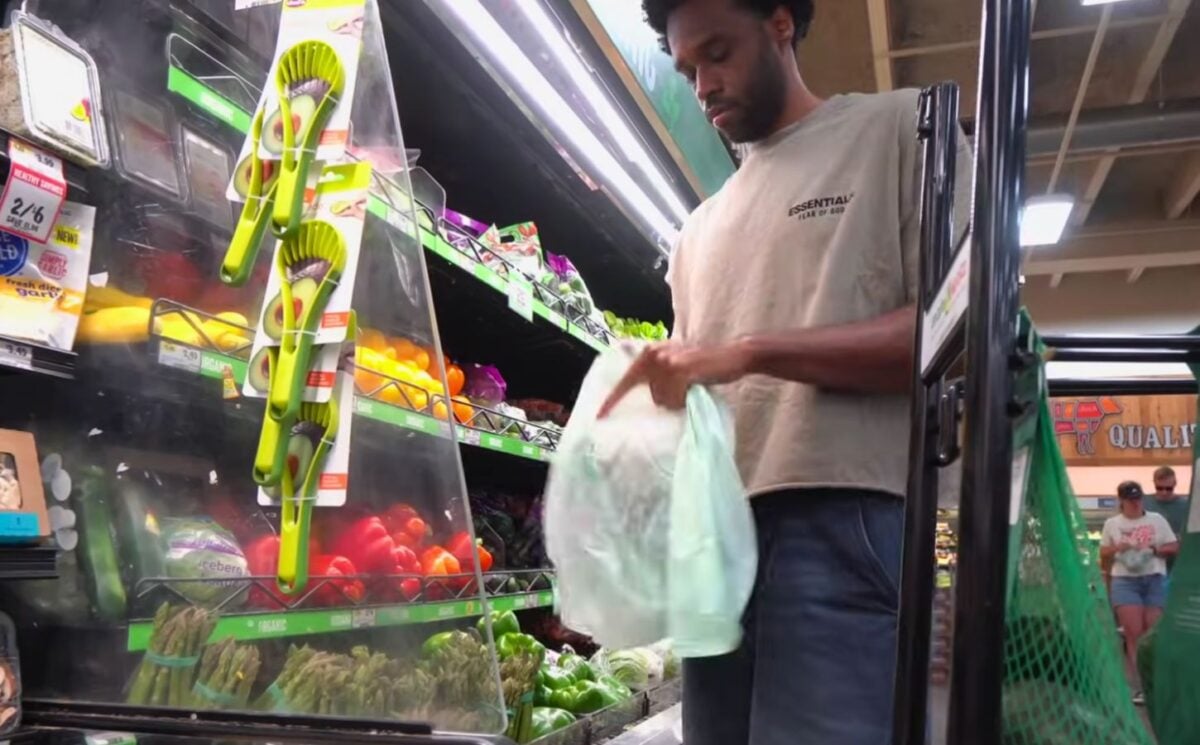
vegan grocery haul shopping with Tapped In Wellness
YouTube/ Tapped In WellnessMalcolm buys organic fruits and vegetables

Regisford buys a lot of fruit for smoothies and juicing. Pineapples, apples, frozen bananas, and berries are staples for his daily juice. “I have a juice at least once a day, once or twice a day and these contribute to those greatly,” he says.

Celery also goes into his juice, even though he doesn’t enjoy eating it. “I actually don’t like raw celery… but I love it in a juice form though.”

Other produce in his vegan grocery haul includes lettuce, broccolini, and Brussels sprouts, which he eats raw or cooked, not juiced. Tomatoes are on his no-go list when raw. “I can’t do it unless it’s cooked down in a sauce, cut down really fine, or sliced really thin.”

He also picks up cauliflower and cabbage, which he calls versatile and budget-friendly. “You can get so much out of them for what they cost,” he says. He uses cabbage in stews and salads, and cauliflower in sauces, smoothies, and even as wings.

Pantry goods and plant-based proteins

Regisford keeps canned goods around for convenience, especially beans. “As long as they’re non-BPA line cans… then you’re really good to go.” He also stocks organic peanut butter, which he uses in bowls, dressings, and wraps.

For meat replacements, he prefers the brand Abbot’s. “This is really the only meat replacement I’ll eat on a consistent basis,” he explains. He likes that the ingredients are all organic, pea protein-based, and recognizable.

Snacks, bars, and trusted brands

He also highlights a few snacks and sweet treats. Regisford loves Partake’s vanilla wafers, especially when making banana pudding. “These ones from Partake hit every time,” he says. He’s also a fan of Vegan Rob’s cauliflower and cheddar puffs, as well as Siete’s lentil and tortilla chips.

For bars, Aloha is his go-to. “Brown rice protein and pumpkin seed protein is the base for this.” He adds, “I feel personally America’s a little bit obsessed with the protein thing, but you know, that’s a topic for another video.”

Oils and cooking tips

To close out the vegan grocery haul, Regisford talks through his top oils. His favourite is avocado oil. “You want to make sure it’s organic… but this is one of the best ones because it’s a high smoke point oil.” He also uses grapeseed oil and cold-pressed olive oil, but never cooks olive oil at high heat. “If anything, I’m consuming it raw.”

This mix of produce, staples, and store-bought finds gives him the tools to cook nourishing, high-quality meals every day. As he puts it: “It’s a priority of mine to eat balanced, eat a wide variety and range of different plant-based foods that all serve your gut microbiome.”

You can find more plant-based food videos on Malcolm’s YouTube Channel Tapped In Wellness.

https://plantbasednews.org/lifestyle/food/vegan-grocery-haul/

Monday, July 14, 2025

How to Eat Plant-Based on a Budget: A Dietitian’s Guide

From pcrm.org

By Xavier Toledo

Grocery costs are top of mind for many Americans right now, and for good reason 

recent nationally representative survey found that 77% of U.S. adults feel grocery prices are too high. At the same time, many assume that eating plant-based would only make things worse—with 61% of respondents saying they believe a plant-based diet is inherently more expensive than one that includes meat and dairy.

As a dietitian, I want to unpack these beliefs—because misconceptions like these may be holding people back from what can be an incredibly affordable and nourishing way of eating.

Let’s explore what’s really driving high grocery bills, what the data tell us about the cost of plant-based eating, and how you can minimize costs while maximizing nutrition. Let’s also dive into cost-saving tips, common pitfalls, and practical plant-based swaps that can help stretch your grocery budget further.

What the Data Show

One of the most striking findings from the survey is that 70% of U.S. adults say meat is the item they spend the most money on. That lines up with what I’ve seen as a dietitian—meat and other animal products often end up being some of the priciest items in people’s carts. And lest we forget about the astronomical egg prices as of recent months.

This raises a key opportunity. Shifting to plant-based proteins—like beans, lentils, tofu, or tempeh—can lead to meaningful savings over time.

And according to a 2024 study published in JAMA Network Open, people following a low-fat vegan diet cut grocery costs by 19% compared with a Standard American Diet, and by 25% compared with a Mediterranean diet.

That translates to more than $650 per year in savings compared with the Standard American Diet, and over $870 per year compared with the Mediterranean diet.

                                                                                                           Photo: Getty Images

Cost-Saving Tips From a Dietitian

As a registered dietitian, I often hear people say they want to eat healthier but worry about the cost. Here’s the part that often surprises them: Eating more plant-based meals can actually lower your grocery bill—especially when you focus on affordable, versatile staples.

Over the years, I’ve seen certain habits make a big difference. Here are a few strategies I often recommend to help stretch your food budget while eating plant-based:

Build meals around starches

Whole grains and starchy vegetables aren’t just affordable—they’re the backbone of filling, balanced meals. Think potatoes, brown rice, oats, and whole-grain pasta. A bag of dried brown rice can stretch into a dozen meals for just a few bucks.

Buy canned and frozen

You don’t have to buy all fresh produce to eat well. While fresh fruits and vegetables are great when they’re accessible and in your budget, canned and frozen options are also valuable—and often more convenient. Frozen veggies are picked and flash-frozen at peak ripeness, locking in nutrients and giving you more time to use them. Canned beans, tomatoes, corn, and greens are shelf-stable, affordable, and ready when you are—no chopping, washing, or racing the clock before they spoil.

Shop seasonally

Seasonal produce isn’t just tastier—it’s often cheaper because there’s more supply. Summer squash in July? Affordable. Zucchini in February? Not so much. Most grocery stores don’t tell you what’s in season, so a quick online search or farmers market visit can help you plan your week’s meals around the most cost-effective options.

Choose store brands

Brand loyalty can cost you. Store-brand peanut butter, canned goods, and plant milks are often made in the same facilities as name-brand versions—but without the premium price tag. Swapping out just a few pantry staples for generic can lead to noticeable savings over time, especially for items you buy regularly.

Limit specialty items

Vegan cheeses, nuggets, and frozen entrees can be fun and convenient—but they’re often priced like luxury goods. If you rely on them daily, the costs rack up fast. Meals centred around whole plant foods like beans, lentils, grains, and vegetables tend to be far more cost-effective.

Batch cook and freeze

Cooking in bulk saves more than time—it saves you from impulse takeout orders and repeated grocery runs. Large batches of soup, chili, curry, or stir-fry freeze beautifully and stretch across the week. You also waste fewer ingredients because you’re using up the full bag of spinach or entire can of beans instead of letting leftovers rot in the fridge.

Common Pitfalls That Raise Grocery Costs

Even with the best intentions, a few common habits can quietly drive up your grocery bill. Here’s what I often see—and how to avoid them:

Treating specialty items as daily staples

Products like vegan nuggets, specialty yogurts, and meat alternatives have their purpose, but certain ones can be priced like premium items. If those items make up the bulk of your meals, costs add up fast. If you're price conscious and still would like to include these items in your diet, try using them as accents rather than anchors.

Assuming everything has to be organic

Organic produce has its benefits—but it’s not the only way to eat well. Frozen, canned, and conventional fruits and vegetables still provide important nutrients and are often more affordable. If cost is a limiting factor, don’t let the pressure to buy organic keep you from filling your cart with produce.

Shopping only at premium grocery stores

Specialty markets are great—but they’re not always the best choice if you’re watching your budget. Places like Aldi, Walmart, or international grocery stores often carry many of the same pantry staples for a fraction of the price.

Skipping meal prep altogether

Without a rough plan, it’s easy to fall into the trap of daily grocery runs or last-minute takeout. A little prep—batch cooking, using leftovers, or just mapping out meals—can go a long way in keeping food costs predictable and waste low.

Closing Thoughts

Plant-based eating can be misunderstood as expensive or inaccessible—but in reality, it can be one of the most budget-friendly ways to eat. With the right strategies and a focus on staples like beans, grains, and seasonal produce, it’s more than possible to nourish yourself and stretch your grocery budget at the same time.

A growing body of evidence shows that plant-based diets aren’t just good for your health—they can also lighten the load on your grocery bill.

And in today’s economy, that matters more than ever.

https://www.pcrm.org/news/how-eat-plant-based-budget-dietitians-guide

Sunday, June 29, 2025

8 things you only understand once you go vegan

From vegoutmag.com

By Avery White

Switching to plants changes more than your plate—it rewires how you shop, snack, and show up in social settings

Ever notice how some experiences only click after you’re in the middle of them? Switching to a vegan lifestyle is one of those shifts. 

I went in thinking mostly about animal welfare, yet within weeks I was puzzling over changes in my taste buds, my grocery budget, even my social life.

Those “aha” moments kept piling up, each rewriting a tiny piece of how I relate to food, culture, and my own body.

Curious what actually changes once the plant-based train leaves the station?

Below are eight lessons that only seem obvious after you’ve made the leap—and each one comes with a practical nudge so you can sidestep the rookie potholes and keep the ride smooth.


1. Your palate is far more flexible than you thought

“Taste buds are adaptable little fellas,” nutrition expert Dr. David Katz jokes, “when they can’t be with foods they love, they learn to love the foods they’re with."

Give it two to three weeks and the kale that once tasted like lawn clippings starts whispering sweet nothings. The science is simple: receptors for salt, sugar, and fat down-regulate when those stimuli drop, making subtler flavours pop.

Action step? Taper—not nuke—salt and added sugar. You’ll stay motivated long enough for your biology to catch up.

2. Grocery trips morph into scavenger hunts—then routines

The first plant-based shopping run feels like decoding a secret map.

Five trips later you glide past the dairy aisle because you already know which oat-milk brand steams best for lattes and which frozen edamame costs half as much when you buy the bulk bag.

I keep a running list on my phone of “wins” (nutritional yeast by the kilo, hello) and rotate stores monthly to restock.

Treat the learning curve like an adventure: you’ll build a personalized supply chain that makes weekday meals faster, cheaper, and less wasteful.

3. Social meals trigger hidden psychology

Ever been teased with “Come on, one bite won’t hurt”?

Social psychologist Dr. Melanie Joy captures the dynamic: “How we feel about an animal and how we treat it has much less to do with the animal than with our perception of it.” 

People often defend shared habits because they symbolize belonging. Instead of debating ethics over appetizers, I re-route the focus: “I’m here for the company—tell me about your new project.”

It preserves connection while normalizing your plate as just one personal choice at the table.

4. Planning beats willpower—especially for protein

Contrary to myth, plants aren’t protein ghosts.

The Academy of Nutrition and Dietetics states that well-planned vegan diets are “healthful, nutritionally adequate, and may provide benefits in preventing and treating disease.”

Translation: as long as you stock daily sources—beans, lentils, tofu, tempeh, seitan, nuts—you’re covered. My shortcut is prepping a double batch of lentil-walnut taco “meat” every Sunday.

Half goes into jars for salads; half hits the freezer for emergency dinners. It’s easier to open a jar than to open a delivery app.

5. Labels teach miniature lessons in critical thinking

Scan a package of cookies and you’ll see “vegan” in bold—right next to 20 g of added sugar.

Plant-based doesn’t equal healthful by default. I read front labels for quick filters (dairy-free, egg-free), then flip to the back where the truth lives.

Aiming for mostly whole-food ingredients keeps me honest and prevents the processed-food pothole that derails many beginners.

6. Energy levels shift—but timing matters

Week one you might feel lighter; week two a little sluggish as your microbiome recalibrates to extra fibre.

Around the one-month mark many people report steady energy and fewer afternoon crashes.

I track sleep and mood in a simple spreadsheet so I can match dietary tweaks (like adding B-12 or iron-rich greens) with how I feel.

Data beats guesswork, and noticing upward trends fuels motivation.

7. Compassion spills into unexpected corners of life

The longer I stay vegan, the more I catch myself extending patience—toward co-workers, stray cats, even my own inner critic.

Psychologists call this moral consistency: aligning values across domains once a big value shift locks in.

A practical move?

Volunteer at an animal-rescue event or plant a pollinator-friendly herb bed. Reinforcing compassion through action cements that wider mindset.

8. The conversation never ends—and that’s a good thing

Friends will ping you for recipe tips, parents will worry about calcium, and someone at a barbecue will quiz you on quinoa protein math.

Each chat sharpens your knowledge or reveals a gap to research. I keep a running “FAQ” note on my phone: favourite documentary links, beginner cookbooks, quick stats on land use.

Sharing from a place of curiosity rather than superiority keeps relationships warm and the dialogue evolving.

Conclusion

Going vegan isn’t a finish line; it’s a collection of pivots that keep unfolding—from taste buds recalibrating to deeper empathy sneaking into daily choices.

If you’re new to the fold, remember that adaptation is wired into your biology and your psychology: flavours adjust, habits settle, and social circles learn to meet you halfway.

Bank on planning over sheer resolve—batch-cook proteins, jot quick comeback lines, stock that emergency dark-chocolate bar.

And if you’re already a seasoned plant-lover, maybe one of these eight reminders nudged you to level-up: track energy, volunteer locally, or finally master homemade seitan.

The takeaway is simple: change rewards consistency more than perfection.

So lean into the small wins—today’s satisfying lunch, tomorrow’s confident reply, next month’s grocery bill that’s mysteriously lower.

Stack enough of those victories and you’ll look back wondering how something that once felt radical became your new normal. 

https://vegoutmag.com/food-and-drink/ain-8-things-you-only-understand-once-you-go-vegan/

Friday, May 2, 2025

The Ultimate Guide To Vegan Grocery Shopping On A Budget

From plantbasednews.org

Cheap meals don't have to be boring 

Candice Hutchings, known for running the Edgy Veg YouTube channel, recently shared a video titled Vegan Grocery Shopping on a Budget (Affordable Recipe Ideas that are DELICIOUS). In it, she offers practical tips for saving money while maintaining a delicious, plant-based lifestyle – busting the myth that eating vegan has to be expensive. Hutchings also shares easy meal ideas that make the most of affordable, nutrient-dense ingredients.

Hutchings is a Canadian content creator, cookbook author, and long-time advocate for making veganism accessible without sacrificing flavour. Through Edgy Veg, she has built a reputation for reinventing comfort food classics and offering realistic lifestyle advice – including how to shop smarter, cook creatively, and enjoy plant-based meals on a budget. Her personal mission to make vegan living easier and more approachable directly supports the message of this latest video.

                                                Plant-based YouTuber Candice Hutchings has shared some plant-based grocery shopping hacks

                                                                                                 Media Credit: YouTube/Edgy Veg

Bulk legumes and grains: a cost-effective foundation

One of Hutchings’ key strategies is buying staples like beans, lentils, and rice in bulk. She emphasizes that purchasing dried legumes is far cheaper than buying canned versions. “Buying Staples in bulk is a huge thing,” she says, noting that these ingredients can be turned into burgers, taco fillings, hummus, and much more. Bulk legumes and grains are not only affordable but also provide essential fibre, protein, and vitamins for a balanced diet.

Frozen produce: affordable, nutritious, and convenient

Fresh produce can be expensive and spoil quickly, especially out of season. Hutchings encourages using frozen fruits and vegetables, which are often flash-frozen at peak ripeness to retain their nutrients. She explains, “Cook and shop smarter with what is available to you,” highlighting that frozen produce is perfect for smoothies, stews, and cooked dishes. Choosing frozen options minimizes waste and keeps grocery bills lower without sacrificing nutrition.

Imperfect produce: saving money without sacrificing quality

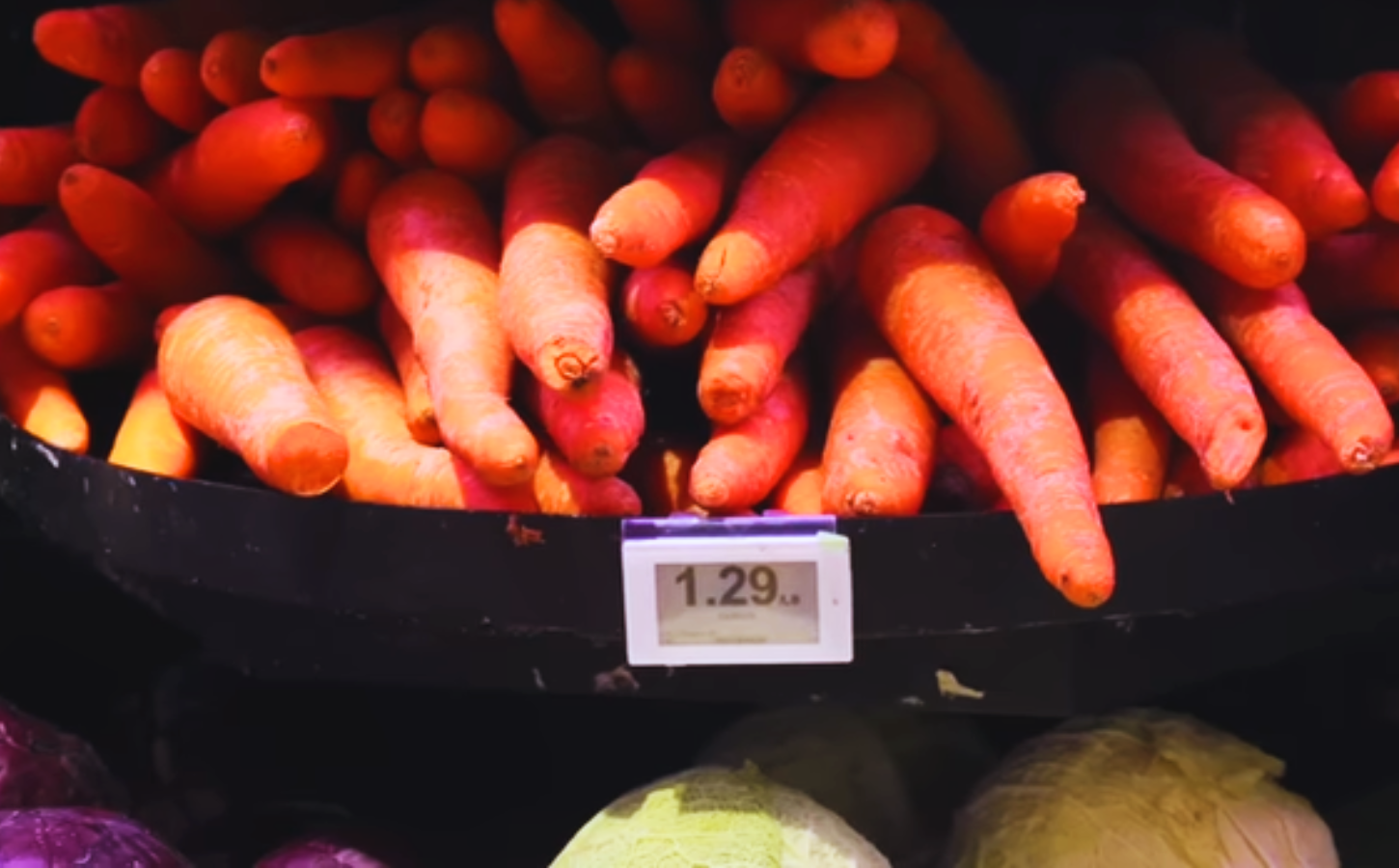
Imperfect - or "ugly" carrots - on a supermarket shelf
YouTube/Edgy VegBuying imperfect – or “ugly” vegetables – can help you save money

Another smart shopping tip from Hutchings is to buy imperfect or “ugly” produce, which is often heavily discounted despite being just as nutritious as flawless fruits and vegetables. “The perfect pristine carrot is just as nutritious as the ugly carrot,” she says, pointing out that appearances don’t affect the health benefits. Embracing less-than-perfect produce helps save money, reduce food waste, and support a more sustainable food system.

Meal ideas that are cheap but flavourful

Meal planning is crucial for budget-conscious eating, and Hutchings offers plenty of inspiration. Dishes like ramen with jazzed-up broths, hearty chilis, stews, lentil enchiladas, and shepherd’s pie are inexpensive yet packed with flavor and nutrients. “At the end of the day it’ll totally be worth it,” Hutchings adds, encouraging viewers to put in a little extra effort for big rewards in flavor, nutrition, and savings.

You can find more plant-based videos on the Edgy Veg YouTube channel.

https://plantbasednews.org/lifestyle/food/vegan-grocery-shopping-budget/