Showing posts with label Vietnamese. Show all posts

Tuesday, January 13, 2026

This Chinese-Vietnamese plant-based influencer makes even haters love tofu

From scmp.com 

Wendy the Food Scientist is on a mission to make plant-based eating simple, healthy and satisfying – no ultra-processed ‘fake meat’ required

January used to be about detoxes and gym sign-ups. Now, for millions, it is about giving up meat, eggs and dairy – at least for a while, as more people taste-test the vegan lifestyle.

A study last year by YouGov and non-profit organisation Veganuary – both based in the United Kingdom – found that 25.8 million people worldwide took part in the month-long challenge to avoid animal products in January 2025, even if they did not hold out for the whole month.

Since its launch in the UK in 2014, the Veganuary movement has spread globally, with official campaigns in 20 countries, including Australia, Brazil, Canada, Germany, India, Malaysia, Peru, Singapore and the United States.

Last year saw the first Chinese equivalent of Veganuary, albeit held in March, following Lunar New Year. According to the World Population Review, an independent platform focused on demographics, mainland China is the world’s largest meat consumer, with consumption reaching 102.9 million tonnes in 2022, nearly five times the 21.3 million tonnes eaten in second-place Brazil.

Hong Kong is also a meat-lovers’ Mecca, with the average Hongkonger consuming 123kg (271lbs) of meat in 2022, the fourth-highest per capita intake globally.

According to a survey by Veganuary, in 2025 nearly half of the participants cited animal welfare as their main motivation, followed by health and the environment.
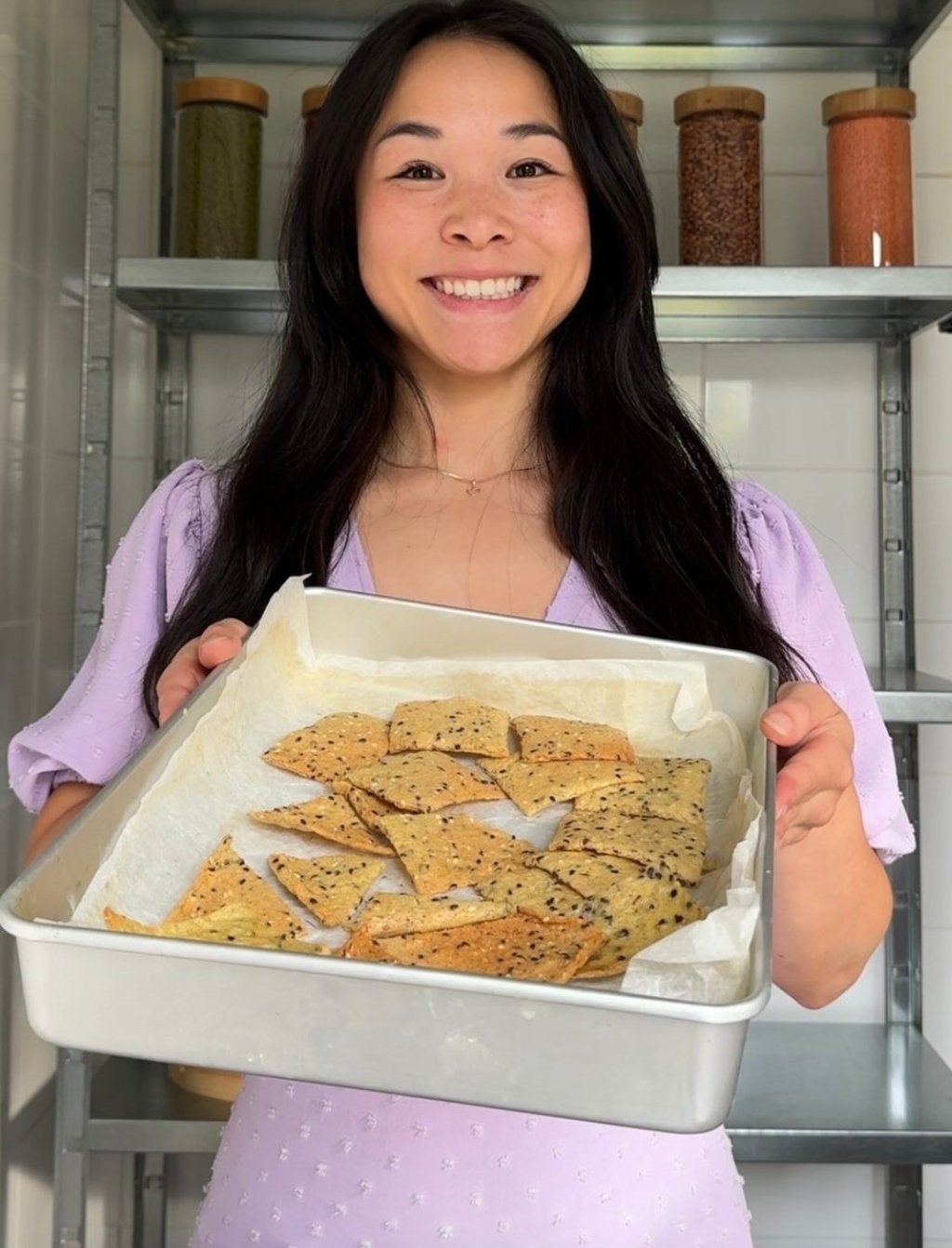
Luong holds a pan of crispy lentil crackers that are simple to make. Photo: Instagram/wendythefoodscientist

If they knew how to cook delicious plant-based food, even more people might be inclined to adopt a vegan lifestyle, food scientist and author Wendy Luong believes.

This belief prompted the Netherlands-based long-time vegan, known as Wendy the Food Scientist, to share her tips and tricks on social media. She has since attracted a huge audience, with more than 400,000 followers on Instagram alone.

“The messages I get from people make me so happy: ‘I finally love tofu!’ they say,” says the 27-year-old, referring to her viral video showing her boiling tofu in salted water. “People who thought tofu was bland finally understand how to cook it deliciously.”

In August 2024, she began posting videos of her cooking techniques on Instagram, Facebook, YouTube and TikTok. Last November, she published her nearly 300-page cookbook, Tofu Mastery.

Her mission is to teach people the technical side of cooking vegan dishes from scratch, especially plant-based staples such as tofu (made from soy milk, coagulated with lemon juice, then pressed), seitan (made from vital wheat gluten, considered a “vegan chicken” substitute) and fermented foods.

“Once someone understands that making a healthy meal can take less than 30 minutes, it becomes easier to choose that,” she says.

                                                                                                  Photo: Wendy Luong

With growing awareness of ultra-processed foods and the harm they can cause, people are increasingly open to cooking from scratch.

Many vegan convenience options, however, come in the form of ultra-processed nuggets and packaged meat alternatives, which are also unhealthy.

“We live in a time where convenience is sought,” Luong says. “Not everyone has time to cook from scratch, but I’m seeing a shift. As people learn more about home cooking, they understand how simple it can be.

“The key is that the shift comes through understanding, not through guilt or preaching. I never tell people what to eat. I show them what I eat and how I make it.”

Luong became a vegetarian in college; she attended Wageningen University & Research in the Netherlands, where she earned a master’s degree in food technology.

As she learned the science behind food, which she infused with the roots from her Asian upbringing, she would experiment with tofu and seitan in various ways.

“At some point I ate so much plant-based [food] that I decided to go all in” and become vegan, she says.

Her friends were her guinea pigs. Many had never tried vegan food and gave rave reviews of her cooking, encouraging her to share her recipes on social media, which is how Wendy the Food Scientist was born.

Growing up in the Netherlands with Chinese-Vietnamese parents, Luong developed a fascination with food almost as soon as she could walk. Like most immigrants, her parents worked tirelessly; her father was a chef in a local Chinese restaurant, and the only evening they could have dinner together as a family was on Monday, his day off.

“On Mondays, my parents would cook something more elaborate and special,” she says. “I’d come home from school and help them in the kitchen. Even as a toddler, I was there watching, learning, absorbing how food was made with intention and care.

“Those Monday kitchen moments are where my love for cooking was born. It wasn’t just about making food. It was about time together, about recreating home, about showing love through cooking.”

They bought staple ingredients at the Chinese toko, a speciality shop, but when something was unavailable, her parents adapted.

“That taught me something crucial: cooking isn’t about having perfect ingredients. It’s about understanding principles and being resourceful,” she says. “That resourcefulness is actually what I try to pass on now. It’s not ‘follow this recipe blindly’. It’s ‘understand this technique, and you can adapt it to what you have.’”

How to get enough protein as a vegan is a common question.

Luong points to her home-made firm tofu and seitan, which offer about 17 grams and 30 grams of protein per 100 grams, respectively, making them an effective way to reach typical daily protein goals of 0.8 grams per kilogram of body weight.

“I grew up with tofu because it’s part of my culture, but what fascinated me is that once you understand the technique, the possibilities are endless,” she says. “You can make hundreds of different tofu dishes just by varying the technique, seasoning and preparation, using food science to transform tofu into doughs, meat-like textures and elegant desserts.”

Her most compelling advice? Take “small steps, learn the basics and cook one dish at a time”.

“The biggest fear I hear is: ‘I will not be able to sustain this diet,’” she says.

People are afraid of failing and worry too much before committing to a diet or lifestyle change, but it is not about perfection.

“If you try, and you eat plant-based 80 per cent of the time, we’re all better off,” she says.

Luong insists she is not reinventing the wheel, but opening people’s eyes to 2,000 years of healthy food production.

“This knowledge has been forgotten in the West,” she says. “When people make these, they understand this isn’t a new trend. It has been around and it works!”

Vegan chocolate mousse recipe

Those who think vegan is “difficult” may want to try this two-ingredient recipe from Luong’s cookbook, Tofu Mastery.

2 parts silken tofu (400g/14oz)

1 part (200g/7oz) melted chocolate*

Blend together until smooth and slightly airy.

Refrigerate until set, and enjoy.

*For a vegan dessert, use chocolate that does not contain milk products. Most high-cocoa dark chocolate, rated 50 per cent or higher, does not. Check the label.

https://www.scmp.com/lifestyle/health-wellness/article/3339367/chinese-vietnamese-plant-based-influencer-makes-even-haters-love-tofu?module=perpetual_scroll_0&pgtype=article

Sunday, September 15, 2024

Plant-based flavours: the sushi changing HCMC's vegan scene

From e.vnexpress.net

A Japanese-style vegan restaurant in District 7 of Ho Chi Minh City is turning heads with its lifelike vegan salmon sashimi made from seaweed and agar 

Tojy, a vegan restaurant located at 113 Le Van Luong Street, opened in May and offers over 60 dishes inspired by Japanese cuisine, including sushi, sashimi and tempura. The salmon sashimi stands out for its colour and texture, often making it difficult for customers to distinguish between vegan and non-vegan options.

"The vegan salmon sushi looks realistic," said Thuy Linh, who visited the restaurant in mid-August.

Hoang Cao Khoa, 28, the owner of the restaurant, previously ran a Japanese restaurant in Australia. Upon returning to Vietnam, he opened this vegan restaurant to offer more options for customers looking for plant-based meals.

Khoa, who also serves as the head chef, explained that Japanese-style vegan cuisine is not just about presentation but also balancing flavour and nutrition. As one of the pioneers of vegan sushi in Ho Chi Minh City, he strives to impress diners with the quality of his dishes, the ambiance and the service.

One of the most challenging vegan sushi dishes he creates is flame-seared sushi. Unlike fish, plant-based ingredients are easily ruined under heat, making it difficult to achieve an authentic look. After much experimentation, Khoa finally developed a method to perfect both flavour and appearance.


The vegan salmon is made from ground seaweed mixed with flour, agar and other ingredients according to Khoa's recipe. To create realistic orange and white fillets, he uses food-grade colouring.

Khoa sources his vegan ingredients from a family-owned company with over 20 years of experience in supplying vegan products locally and internationally. The soy sauce, chili powder, mayonnaise and wasabi are imported from Japan.

While the ingredients differ, the preparation and presentation of the vegan sushi follow traditional Japanese practices. The dishes are served on wooden plates with a few slices of pink ginger and soy sauce mixed with wasabi. Customers often describe the vegan sushi as chewy, tender and lightly creamy.


In addition to the vegan salmon, the restaurant also offers vegan sushi sets featuring plant-based versions of octopus, tuna, eel, and shrimp, alongside Japanese rice. Vegan fish sushi is made fresh per order, with a 15-minute wait, while vegetable sushi is served faster. Vegan salmon sushi starts at VND42,000 (US$1.70).

Unlike traditional sushi, where fish can be frozen in bulk, fresh vegetables, fruit and mushrooms used in vegan sushi must be managed daily to maintain freshness. This poses a challenge for vegan sashimi, which requires both freshness and appeal.

The restaurant also serves other Japanese-inspired vegan dishes like tempura, ramen, and udon. Prices are from VND10,000 to VND300,000. Popular orders after sushi include seaweed mushroom soup and rice dishes.

The average meal costs about VND150,000 per person, and the owner notes that larger groups can sample more dishes at a better value.

Le Lam Thao Nguyen, 19, travelled 15 km from Go Vap District after hearing about the restaurant from friends. "The dishes are beautifully presented and taste unique," she said.


Sahil (L), 31, from South Africa, was impressed by how real the vegan dishes seemed. "It felt just like the real thing," he said.

Thai Hanh, 45, a vegan restaurant owner from District 6, has visited Tojy twice with friends. "The food is fresh and suits my taste," she shared.

The restaurant has both a main dining area with shared tables and private rooms. Guests can also sit at the bar to watch the staff prepare dishes and serve them directly.

Tojy can accommodate up to 150 people. The decor includes Japanese-style ceramics and wooden furnishings, creating a warm atmosphere. Many customers come not only for the food but also to take photos.

In July, during the Vu Lan Festival, a Buddhist holiday in Vietnam honouring parents and ancestors, Tojy saw a rise in customer traffic, serving up to 300 people daily.

Given the Japanese vegan theme, the flavours cater mostly to regular vegans, though many customers visit out of curiosity or a desire to try plant-based options. Despite the restaurant's large space, guests may still experience long wait times during peak hours.

Tojy is easy to find, with a parking area and security service. The restaurant is open daily from 11 a.m. to 10 p.m.

https://e.vnexpress.net/photo/food-recipes/plant-based-flavors-the-sushi-changing-hcmcs-vegan-scene-4786704.html

Friday, September 22, 2023

Recipe: Vegan Pho

From epicurious.com

Originating from the Nam Dinh Province southeast of Hanoi in the early twentieth century, phở is one of the most famous traditional dishes in Vietnam. In fact, this is often the dish that introduces most people to Vietnamese cuisine. This vegan phở starts with a rich vegetable broth flavoured with shallot, ginger, star anise, black cardamom, apple, and pear. Black cardamom is larger than green cardamom, has a smoky flavour, and is mostly used in savoury dishes. If you have trouble finding black, you can substitute with green, but your phở will lack that signature smoky, hot flavour. See Cooks' Note below for essential tips on making plant-based phở broth.

Ingredients

Serves 8 to 10

For the broth

16 cups water
1 medium juicy red or Gala apple, peeled and cut into 2-inch cubes
1 medium Asian or Bosc pear, peeled and cut into 2-inch cubes
2 medium carrots, peeled and sliced into 1-inch thick rounds
1 kohlrabi, chayote, or daikon radish, peeled and cut into 2-inch cubes
1 medium yellow onion, peeled
2 ounces (50 g) rock sugar
2 to 3 Tbsp. salt
2 Asian shallots or 1 medium yellow onion
2 pieces ginger, thinly sliced
3 star anise
2 cinnamon sticks
2 black cardamom pods
Salt, to taste
Vegetable or mushroom stock powder, to taste

For the toppings

¼ cup plus 2 Tbsp. vegetable oil, divided
1 block firm tofu, drained
3½ ounces (100 g) dried bean curd stick or sheet, soaked, or dried mock beef slices, soaked
1 tsp. salt, divided
1 Tbsp. granulated sugar, divided
2 tsp. vegetable or mushroom stock powder, divided
1 tsp. five-spice powder, divided
2 Tbsp. soy sauce, divided
9 ounces (250 g) fresh mushrooms (straw, king oyster, or shiitake), stems trimmed and sliced
1 Tbsp. minced leek (white part only) for serving
16 ounces (454 g) dried flat rice noodles or 2¼ pounds fresh pho noodles
2 ounces (56 g) sawtooth herb, chopped
3½ ounces (100 g) Asian basil
1 pound (454 g) mung bean sprouts, blanched
1 lime, cut into wedges
1 bird's eye chili pepper, sliced
¼ cup sriracha sauce (optional)
¼ cup hoisin sauce (optional)
  1. Make the broth

    Step 1

    Fill a large stockpot with the water, and add the apple, pear, carrot, kohlrabi, onion, rock sugar, and 2 to 3 tablespoons of salt. Bring to a boil, and then reduce heat to low. Simmer uncovered until the fruits and vegetables are tender (about 30 minutes).

    1. Step 2

      Heat the shallots and ginger slices directly over an open flame on the stove until slightly charred on all sides. Toast the star anise, cinnamon sticks, and cardamom pods in a small skillet over medium-low heat for 2 to 3 minutes, until fragrant.

      Step 3

      Peel the shallots, and then rinse with the ginger under warm running water. Scrape off all charred bits and place in large tea bags or wrap securely in cheesecloth with star anise, cinnamon sticks, and black cardamom. Add to stockpot, and then season broth with salt and stock powder.

    2. Make the toppings

      Step 4

    3.  In a small skillet, heat ¼ cup of the oil over medium-low heat. Once hot, add the tofu and cook until golden brown on all sides (10 to 15 minutes). Transfer the tofu to a cooling rack or paper towel–lined plate to drain. Once cool, cut the fried tofu and soaked bean curd into bite-size pieces.

      Step 5

      Combine the fried tofu and bean curd slices in a large bowl and season with ½ teaspoon of the salt, ½ tablespoon of the granulated sugar, 1 teaspoon of the stock powder, ½ teaspoon of the five-spice powder, and 1 tablespoon of the soy sauce.

      Step 6

      In a separate large bowl, combine the mushrooms and season with the remaining ½ teaspoon salt, ½ tablespoon granulated sugar, 1 teaspoon stock powder, ½ teaspoon five-spice powder, and 1 tablespoon soy sauce.

      1. Step 7

        Heat 1 tablespoon of the vegetable oil in a large skillet over medium-low heat. When hot, add half of the minced leek, and cook and stir until fragrant (about 1 minute). Add the tofu–bean curd mixture and cook and stir until seasonings are well absorbed (about 3 minutes). Transfer to a clean bowl.

        Step 8

        Return skillet to medium-low heat and add remaining 1 tablespoon vegetable oil. Add remaining leek and cook and stir until fragrant (about 1 minute). Add mushroom mixture and cook and stir until soft and seasonings are well absorbed (about 3 minutes). Transfer to a separate clean bowl.

      2.                                                                                                                   Photo by Detas Studio

      3. For serving

        Step 9

        1. Follow the instructions on the package to cook the dried noodles.

          Step 10

          Fill each serving bowl about one-third with noodles, add tofu and mushroom toppings, top with sawtooth herb, and then ladle the hot broth over the top.

          Step 11

          Serve with a platter of fresh herbs, blanched mung bean sprouts, lime wedges, and sliced chili peppers, along with sriracha (if using) and hoisin sauce (if using).

        Cooks' Note

        The broth is considered to be the soul of pho. However, when it comes to the vegan version, not everyone knows how to combine and prep their vegetables properly. Below are a few tips that will help you create a delicious (and nutritious) broth:

      4. Combine more varieties of fruits and vegetables: This creates a more delicious, richer flavour than you get when using just one type. In addition to apples, pears, carrots, and kohlrabi, you can also add onion, celery, leek tops, parsnips, chayote, daikon, and more. Limit starchier vegetables, like potatoes and sweet potatoes, as they tend to turn a broth cloudy when simmered for long stretches.

        Cut all vegetables roughly the same size: This ensures they have similar surface areas to absorb the water. About 1 to 2 inches is generally good.

        Use the skins and roots: The ends and skins of onions, carrots, parsnips, and other veggies can be included in your broth.

        Grill or pre-bake the veggies: Just toss them on a baking sheet and bake at 400°F (200°C) for 15 minutes before you cook the broth.

        Add mushrooms whenever you’re after a savoury flavour: They’re rich in umami (amino acids and nucleotides) and will give your broth that “meaty” flavour without any meat. I prefer dried shiitake mushrooms, but feel free to use your favourite or mix different kinds.

        Add fruit when you need something sweet: Apples and pears, in particular, add an all-natural sweetness to a broth. You can also use sugarcane or kombu, a type of kelp used often in Japanese cuisine.

        Add enough water: A good ratio is 16 cups of water for every 2 to 4½ pounds of vegetables. Always cook them in cold water, so the overly sweet flavors are extracted at the right temperature.

        Batch-cook your broth: You can make a large amount of vegan pho broth ahead of time so that it will be ready to warm up whenever you need it. Store in an airtight container in the refrigerator for up to 1 week or in the freezer for up to 2 months.

      5. https://www.epicurious.com/recipes/food/views/vegan-pho