From scmp.com
Wendy the Food Scientist is on a mission to make plant-based eating simple, healthy and satisfying – no ultra-processed ‘fake meat’ required
January used to be about detoxes and gym sign-ups. Now, for millions, it is about giving up meat, eggs and dairy – at least for a while, as more people taste-test the vegan lifestyle.
A study last year by YouGov and non-profit organisation Veganuary – both based in the United Kingdom – found that 25.8 million people worldwide took part in the month-long challenge to avoid animal products in January 2025, even if they did not hold out for the whole month.
Since its launch in the UK in 2014, the Veganuary movement has spread globally, with official campaigns in 20 countries, including Australia, Brazil, Canada, Germany, India, Malaysia, Peru, Singapore and the United States.
Last year saw the first Chinese equivalent of Veganuary, albeit held in March, following Lunar New Year. According to the World Population Review, an independent platform focused on demographics, mainland China is the world’s largest meat consumer, with consumption reaching 102.9 million tonnes in 2022, nearly five times the 21.3 million tonnes eaten in second-place Brazil.
Hong Kong is also a meat-lovers’ Mecca, with the average Hongkonger consuming 123kg (271lbs) of meat in 2022, the fourth-highest per capita intake globally.
According to a survey by Veganuary, in 2025 nearly half of the participants cited animal welfare as their main motivation, followed by health and the environment.
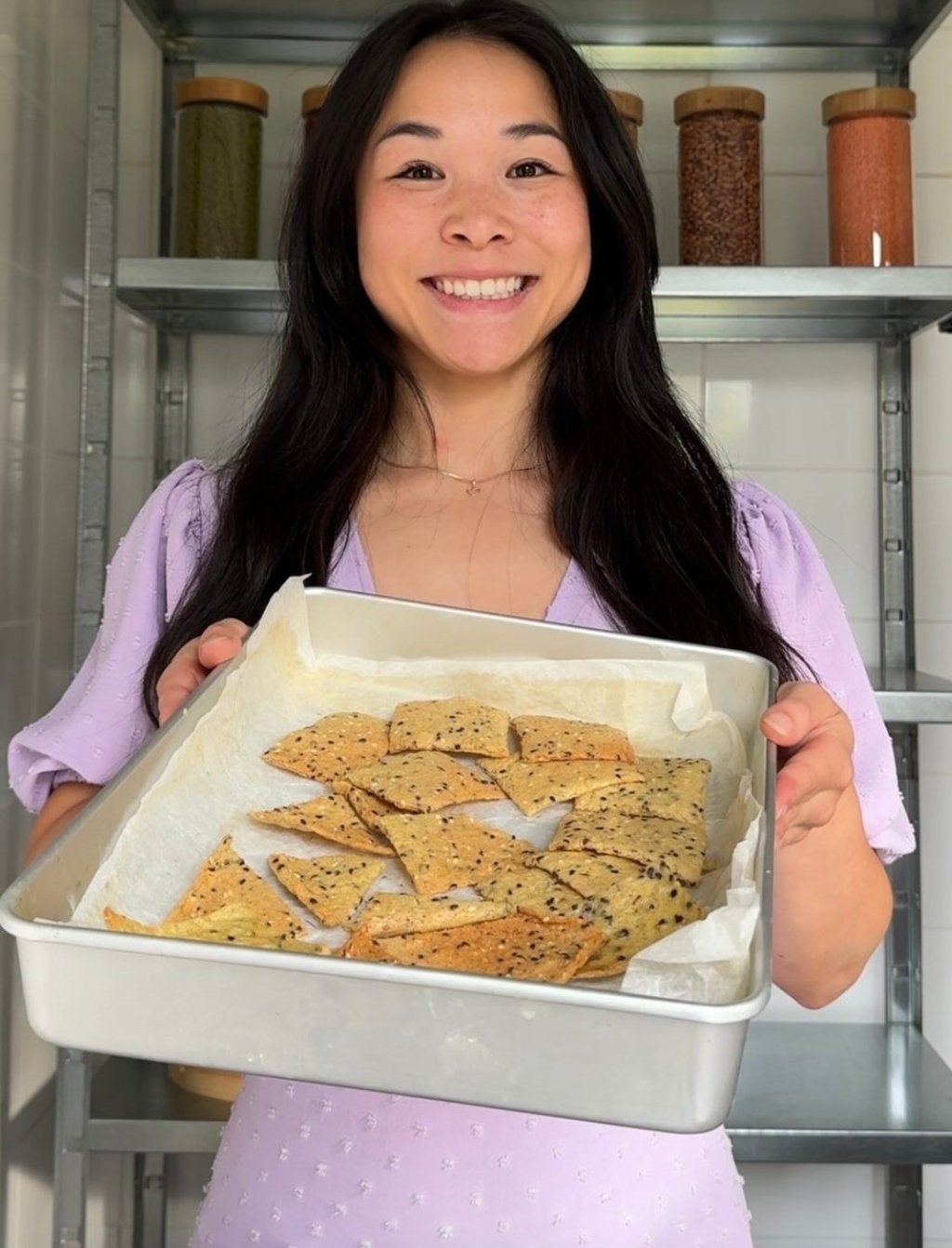
If they knew how to cook delicious plant-based food, even more people might be inclined to adopt a vegan lifestyle, food scientist and author Wendy Luong believes.
This belief prompted the Netherlands-based long-time vegan, known as Wendy the Food Scientist, to share her tips and tricks on social media. She has since attracted a huge audience, with more than 400,000 followers on Instagram alone.
“The messages I get from people make me so happy: ‘I finally love tofu!’ they say,” says the 27-year-old, referring to her viral video showing her boiling tofu in salted water. “People who thought tofu was bland finally understand how to cook it deliciously.”
In August 2024, she began posting videos of her cooking techniques on Instagram, Facebook, YouTube and TikTok. Last November, she published her nearly 300-page cookbook, Tofu Mastery.
Her mission is to teach people the technical side of cooking vegan dishes from scratch, especially plant-based staples such as tofu (made from soy milk, coagulated with lemon juice, then pressed), seitan (made from vital wheat gluten, considered a “vegan chicken” substitute) and fermented foods.
“Once someone understands that making a healthy meal can take less than 30 minutes, it becomes easier to choose that,” she says.

With growing awareness of ultra-processed foods and the harm they can cause, people are increasingly open to cooking from scratch.
Many vegan convenience options, however, come in the form of ultra-processed nuggets and packaged meat alternatives, which are also unhealthy.
“We live in a time where convenience is sought,” Luong says. “Not everyone has time to cook from scratch, but I’m seeing a shift. As people learn more about home cooking, they understand how simple it can be.
“The key is that the shift comes through understanding, not through guilt or preaching. I never tell people what to eat. I show them what I eat and how I make it.”
Luong became a vegetarian in college; she attended Wageningen University & Research in the Netherlands, where she earned a master’s degree in food technology.
As she learned the science behind food, which she infused with the roots from her Asian upbringing, she would experiment with tofu and seitan in various ways.
“At some point I ate so much plant-based [food] that I decided to go all in” and become vegan, she says.
Her friends were her guinea pigs. Many had never tried vegan food and gave rave reviews of her cooking, encouraging her to share her recipes on social media, which is how Wendy the Food Scientist was born.
Growing up in the Netherlands with Chinese-Vietnamese parents, Luong developed a fascination with food almost as soon as she could walk. Like most immigrants, her parents worked tirelessly; her father was a chef in a local Chinese restaurant, and the only evening they could have dinner together as a family was on Monday, his day off.
“On Mondays, my parents would cook something more elaborate and special,” she says. “I’d come home from school and help them in the kitchen. Even as a toddler, I was there watching, learning, absorbing how food was made with intention and care.
“Those Monday kitchen moments are where my love for cooking was born. It wasn’t just about making food. It was about time together, about recreating home, about showing love through cooking.”
They bought staple ingredients at the Chinese toko, a speciality shop, but when something was unavailable, her parents adapted.
“That taught me something crucial: cooking isn’t about having perfect ingredients. It’s about understanding principles and being resourceful,” she says. “That resourcefulness is actually what I try to pass on now. It’s not ‘follow this recipe blindly’. It’s ‘understand this technique, and you can adapt it to what you have.’”
Luong points to her home-made firm tofu and seitan, which offer about 17 grams and 30 grams of protein per 100 grams, respectively, making them an effective way to reach typical daily protein goals of 0.8 grams per kilogram of body weight.
“I grew up with tofu because it’s part of my culture, but what fascinated me is that once you understand the technique, the possibilities are endless,” she says. “You can make hundreds of different tofu dishes just by varying the technique, seasoning and preparation, using food science to transform tofu into doughs, meat-like textures and elegant desserts.”
Her most compelling advice? Take “small steps, learn the basics and cook one dish at a time”.
“The biggest fear I hear is: ‘I will not be able to sustain this diet,’” she says.
People are afraid of failing and worry too much before committing to a diet or lifestyle change, but it is not about perfection.
“If you try, and you eat plant-based 80 per cent of the time, we’re all better off,” she says.
Luong insists she is not reinventing the wheel, but opening people’s eyes to 2,000 years of healthy food production.
“This knowledge has been forgotten in the West,” she says. “When people make these, they understand this isn’t a new trend. It has been around and it works!”
Vegan chocolate mousse recipe
Those who think vegan is “difficult” may want to try this two-ingredient recipe from Luong’s cookbook, Tofu Mastery.
2 parts silken tofu (400g/14oz)
1 part (200g/7oz) melted chocolate*
Blend together until smooth and slightly airy.
Refrigerate until set, and enjoy.
*For a vegan dessert, use chocolate that does not contain milk products. Most high-cocoa dark chocolate, rated 50 per cent or higher, does not. Check the label.

No comments:
Post a Comment