Showing posts with label charcuterie board. Show all posts

Monday, March 9, 2026

Charcuterie, Reimagined — No Meat Required

From totalfood.com

By Cherry Dumaual

Chef Jenna McPartland of Joylark Plant Kitchen & Bar on designing plant-based boards with broad guest appeal

                                               Chef Jenna McPartland (Photo by Noah Fecks Photography)

These days, charcuterie boards are becoming a menu staple, with industry data showing their incidence on U.S. menus has climbed by roughly 84 percent. Even before the pandemic reshaped how diners approach shared plates and grazing formats, trend forecasters were already bullish: 2022 projections estimated charcuterie boards would grow by approximately 25 percent on U.S. menus over a four-year period.

What those forecasts did not fully anticipate, however, is how the category would expand beyond cured meats and cheeses — opening the door for plant-based interpretations that emphasize fermentation, global flavours, and culinary craft.

Few chefs exemplify that evolution better than Jenna McPartland of Joylark Plant Kitchen & Bar, in Fairfield, CT. The restaurant, which opened last year in October, is a destination in its own right. At Joylark, the 100% vegan menu is designed to feel abundant, craveable, and welcoming. It appeals to plant-based diners and omnivores alike.

In the following Q&A, Chef McPartland shares how she approaches plant-based charcuterie through flavour, technique, and hospitality. From her, operators can learn from reimagining the board for today’s evolving guests.


Joylark Plant Kitchen & Bar is fully plant-based yet designed to feel inclusive and celebratory. What was your vision for the restaurant, and what do you want guests — especially first-time visitors — to feel when they walk in?

 I would like everyone to walk in our doors and immediately feel welcome.  So many vegan places feel like a stereotype, which can be alienating.  Our decor is cheerful and vibrant, with enough elegance to feel special. Our hospitality is warm and inviting.  We really want our guests to feel relaxed and cared for.  And that’s even before anyone has had a bite to eat! The menu is also designed to be approachable and familiar, yet unexpected.  I think most people have pre-conceived notions about vegan food, and we are able to surprise people with just how satisfying it is.  After all, good food is good food.

                                       Avocado Toast from the Joylark menu (Photo by Noah Fecks Photography)

On your website, you say, “The time of plant-based cuisine has arrived — no sacrifices here.” How does that philosophy translate to your approach to charcuterie?

Joylark approaches charcuterie the same way that we approach our menu; We use real ingredients, well seasoned, and plated beautifully.  That’s not a sacrifice – it’s delicious. Charcuterie boards have come to mean so much more than meat in recent years.  They include nuts, dips, crackers and breads, fruits, jams, cheeses, and more.  They range from simple plates to works of art.  It’s hard to look at a bountiful platter of delicious finger-foods and feel anything but delighted.  

Plant-based menus are sometimes perceived as niche. How do you design a charcuterie board that feels craveable and satisfying to non-vegans — especially guests who may arrive sceptical?

 In my experience, the sceptics haven’t had vegan food that was made thoughtfully. The best way to help people to get over that scepticism is to give them things they eat all the time without giving it a second thought. Grapes and strawberries, sourdough bread, mushrooms, almonds… Ominvores eat them all the time without questioning that there’s no meat or dairy involved. Putting those every day items on a platter along with some items that may be lesser known is a great introduction.  When a guest spreads our cheese on a toast point and tops it with a dollop of caponata, they are eating something they’ve eaten before — except our cheese is made with coconut milk.  

                                                Cornflake potatoes (Photo by Noah Fecks Photography)

Traditional charcuterie relies on cured meats to deliver fat, salt, and umami. How do you recreate — or reinterpret — those sensory cues using plant-based ingredients? Are there specific techniques or flavour strategies you return to again and again?

Fat, salt, and umami are not unique to cured meats, though most of us never have a reason to consider it.  Good chefs incorporate them into everything they create.  Marinating a portobello mushroom in tamari provides that familiar flavour, just as holding carrot ribbons in olive oil gives it that fatty unctuousness we all love with charcuterie.  There’s no reason to trick people into thinking they are eating meat when they can get all the same satisfaction just by using excellent flavours and techniques.

Joylark’s vibrant design, from bold colour palettes to themed seating areas like The Birdcage, creates a sense of joy and playfulness. How do you encourage your team to carry that same energy into service, and why is hospitality such an important part of the dining experience for you?

Throughout all of history and around the world, people come together over food.  For that reason, restaurants have an almost sacred responsibility to deliver that experience with gracious hospitality.  At Joylark, we believe that modern fine dining means both the food and the hospitality are about genuine connection.  It’s not only possible, but necessary, to be simultaneously elegant and playful.  Training staff in the skills necessary for upscale service while giving them the freedom to be human means that they can truly connect. The fact that our guests know that the cute little nook in the back is known as The Birdcage is a sign that those connections are happening.

Learn more about Joylark Plant Kitchen & Bar at Joylarkkitchen.com

https://totalfood.com/charcuterie-reimagined-no-meat-required/ 

Monday, August 25, 2025

How to build a vegan cheese board that makes everyone forget what they're missing

From vegoutmag.com/recipes

By Avery White

The secret to a great vegan cheese board isn't trying to replicate a traditional one 

There's a specific face people make when they realize the creamy wedge they just spread on a cracker isn't dairy. It's not disappointment—it's something closer to curiosity mixed with mild betrayal. "Wait, this is cashew?" they ask, already reaching for another piece, their brain recalibrating what they thought they knew about cheese.

The secret to a great vegan cheese board isn't trying to replicate a traditional one. It's understanding that abundance and variety do most of the heavy lifting—that the ritual of selecting, combining, and grazing matters more than any single component. When you fill a board with enough colours, textures, and flavours, people stop comparing and start enjoying.


The foundation: choosing your plant-based cheeses

Start with three to five varieties that hit different notes. The key is contrast—creamy against firm, mild against bold, familiar against unexpected.

Essential categories:

  • Soft and spreadable: Cashew brie, almond ricotta, or cultured cream cheese provide that essential creamy element
  • Firm and sliceable: Aged nut cheeses or pressed blocks offer structure and visual variety
  • Bold and memorable: Truffle-infused, smoked, or sharp varieties become conversation starters
  • The wildcard: Fermented macadamia, hemp seed cheese, or homemade cultured cashew add intrigue

Shopping reality: Quality plant-based cheese runs $8-15 per piece. Build your board around two or three good cheeses, then amplify with abundant accompaniments. Miyoko's and Kite Hill are widely available; Violife works for firm cheeses. Local vegan cheese makers, if you have them, make stunning centrepieces. For those without specialty stores, even mainstream grocers now carry decent options.

Nut allergy alternatives: Seek out coconut-based, tofu-based, or root vegetable cheeses. Brands like Daiya and some Violife products are nut-free.

Building your board: three approaches

The weeknight board

Serves 2-4 | Prep time: 15 minutes | Budget: $25-30

When someone drops by unexpectedly, this comes together with pantry staples and one good cheese:

  • 1 spreadable cheese (whatever's best at your store)
  • 1 firm block, cubed
  • Water crackers and seeded crackers
  • Apple or pear slices (brushed with lemon to prevent browning)
  • Mixed roasted nuts
  • Your best jam or preserve
  • Fresh grapes or dried apricots

Arrange everything on your largest cutting board. The key is confidence—present it like you planned it.

The dinner party board

Serves 8-10 | Prep time: 30 minutes | Budget: $60-80

This is where you invest in variety and let abundance do the work:

Cheeses (choose 3-4):

  • Aged cashew brie with herbs
  • Smoked almond cheddar, sliced
  • Truffle macadamia spread
  • Fermented sharp cheese, cubed
  • Coconut milk feta, crumbled

Carriers:

  • Three cracker varieties (plain, seeded, and something interesting)
  • Sliced baguette, lightly toasted
  • Endive leaves for scooping

Sweet elements:

  • Fresh grapes in small clusters
  • Dried figs or apricots
  • Quince paste or fig jam (small bowl)
  • Fresh berries (seasonal)

Savoury additions:

  • Marcona almonds or spiced pecans
  • Mixed olives (Castelvetrano and Kalamata)
  • Cornichons
  • Sun-dried tomatoes
  • Marinated artichoke hearts

Fresh touches:

  • Cherry tomatoes on the vine
  • Fresh rosemary sprigs (decorative and aromatic)

The holiday showstopper

Serves 12-15 | Prep time: 1 hour | Budget: $100+

Everything from the dinner party board, enhanced with:

Special additions:

  • Homemade cultured cashew cheese (recipe follows)
  • Mushroom "prosciutto" (marinated and dehydrated king oyster mushrooms—find at specialty stores or make ahead)
  • Candied walnuts with rosemary
  • Pomegranate seeds (when in season) or jewel-like red currants
  • Dark chocolate (70% cacao or higher), broken into shards
  • Fresh figs, quartered (summer/fall) or persimmons (winter)
  • Multiple mustards and chutneys in small bowls
  • Vegan honey alternative or agave-sweetened spreads

The game-changer: 48-hour cultured cashew cheese

Active time: 20 minutes | Culturing time: 24-48 hours | Makes about 2 cups

When people taste properly cultured cashew cheese, something shifts. It has that tangy complexity that stops them from asking what it's made from.

Ingredients:

  • 2 cups raw cashews, soaked in water 8 hours or overnight
  • 1/2 cup filtered water (may need slightly more)
  • 2 tablespoons fresh lemon juice
  • 2 tablespoons apple cider vinegar
  • Contents of 2 probiotic capsules (at least 10 billion CFUs)
  • 1 teaspoon fine sea salt
  • Optional additions: 2 tablespoons nutritional yeast, fresh herbs, truffle oil

Instructions:

  1. Drain cashews, discard soaking water
  2. Blend cashews with filtered water in high-speed blender for 5-7 minutes until completely smooth and creamy (add water 1 tablespoon at a time if needed)
  3. Add lemon juice, vinegar, and probiotic contents, pulse to combine
  4. Transfer to clean glass bowl, cover with cheesecloth or clean kitchen towel
  5. Leave at room temperature (68-75°F) for 24-48 hours—it should smell tangy and slightly sour when ready
  6. Stir in salt and any optional additions
  7. Transfer to container and refrigerate to firm up, or press into cheese mould lined with cheesecloth

Storage: Keeps refrigerated for up to 10 days. The flavour continues developing.

Troubleshooting: If cheese doesn't culture, your probiotics may be inactive or temperature too cool. If it over-cultures (very sour), reduce time next batch.

Nut-free version: Substitute sunflower seeds or hemp hearts, though texture differs slightly.

Assembly: the visual architecture

Creating an abundant-looking board follows a few principles that matter and many rules that don't.

What actually matters:

Odd numbers create visual harmony. Groups of three, five, or seven items look more natural than even numbers.

Colour distribution prevents dead zones. Scatter bright elements (berries, tomatoes) across the board rather than clustering them.

Height adds drama. Use small bowls for wet items (olives, spreads), stack some crackers vertically, let grapes cascade over edges.

Negative space lets elements breathe. Resist filling every inch—sparse areas make abundant areas pop.

The S-curve draws the eye. Arrange your main elements in a subtle S-shape across the board.

What doesn't matter:

You don't need special equipment—a large cutting board or even a clean baking sheet works. Not everything needs to be homemade. Perfect symmetry actually looks less appealing than organic arrangement. People can (and should) cut their own cheese portions.

The small details that elevate everything

Truffle oil: A 1/4 teaspoon drizzled on plain cashew cheese transforms it into something memorable.

Edible flowers: Violets, pansies, or nasturtiums in spring and summer add colour that makes the board photograph-worthy. In winter, try microgreens or herb blossoms.

Crystallized ginger: Unexpected alongside aged cheeses, it bridges sweet and savoury.

Pomegranate molasses: A small dish for drizzling adds sophisticated sweet-tart notes.

Activated charcoal crackers: Black crackers create dramatic visual contrast.

Good olive oil and flaky salt: Set these beside the board for those who like to embellish.

The timeline for success

Three days before: Shop for specialty cheeses and start culturing homemade cheese if making

One day before: Shop for fresh items, make candied nuts, prep any homemade elements

Morning of: Cube firm cheeses (store covered), wash and dry produce

One hour before: Remove cheeses from refrigerator to come to room temperature

30 minutes before: Arrange board, starting with cheeses, then bowls, then filling in gaps

Just before serving: Add final fresh herbs and delicate items

What happens at the table

Here's what I've noticed: around the third or fourth bite, people stop comparing. They stop looking for what's missing and start discovering what's there. The conversation shifts from "this is good for vegan cheese" to simply "this is good."

Someone always gravitates toward the cultured cashew cheese, spreading it thickly on crackers. Someone else discovers that dark chocolate with smoked almond cheese works brilliantly. The pomegranate seeds disappear first, then the candied nuts, then suddenly people are making their own combinations you hadn't thought of.

The best vegan cheese boards don't apologize or explain. They show up abundant and confident, offering so many flavours and textures that the absence of dairy becomes irrelevant. It's not about convincing anyone. It's about creating something delicious that happens to be made from plants, and letting that be enough.

Because it is.

https://tinyurl.com/4kft4srz

Friday, October 28, 2022

How to Build a Gorgeous, Delicious, Vegan ‘Charcuterie’ Board

From vegetariantimes.com

By Andy Zambrano


Upgrade your next gathering with a 'Gram-worth grazing tray

Everyone loves a beautiful grazing board, displaying perfectly arranged snacks. Usually, these boards are compiled with an assortment of cured meats and cheeses – but who says it can’t be whatever the heck you want on it? Boards are not only pretty to look at, they’re also really satisfying to make. They may seem a little intimidating at first. But trust me, if you give yourself some time to build it, your vegan charcuterie board can go head-to-head with any bountiful board you’ve seen on Instagram.

Pick Your Vegan Charcuterie Board Stars

The first thing you want to figure out is what kind of dips to use as the “mains” of the board. This one that I’ve made here, I wanted to have more savoury, lunch-type options. I chose garlic and thyme tomato confit, jackfruit salad, and roasted poblano chickpea salad (you can find my recipe for the salad here). I made all three of these recipes ahead of time so that when I was ready to build, I just needed to place them on the board.

Next you need something to spread the dip on. It could be anything from little gem leaves, crackers, pita bread, tortilla chips, maybe a combination of all of them. I used some rosemary crackers that I found at the market along with some pita bread and crostinis.

You can definitely buy some crostinis already made, but I prefer to make my own using a pretty straight-forward recipe. I use a large baguette roll cut 1/4-inch thick at a bias. Lay the slices flat on a sheet pan and drizzle with olive oil and salt. Bake for 20 minutes at 350 and let them cool. These can be made ahead of time and will be fine to sit in a container on your shelf for a week.

Assemble the Crudités

Lastly, the ingredients that fill up the rest of your board. Fruits, raw veggies, pickled veggies, any of your favourite snacks can go here. You can even take an extra step here and roast some of the veggies as I did, just to add more depth of flavours in your overall board. My picks here included roasted rainbow carrots, blackberries, cornichons, radishes, and grapes.

Lay It All Out

When you’re ready to build you can use anything stable enough to hold all your ingredients. Many photos I see use large cutting boards, but for this one, I decided to go with a sheet pan.

To put it all together, I started by placing the bowls of dips, spaced evenly over the board. I find it easier to spread the breads and crackers next. You’ll want to use them to create a shape or pattern; I chose to have them spiral and curve around the dip bowls, but you can choose any design that suits your ingredients and tray.

Next, I evenly spread out the veggies and fruits in small clusters across the vegan charcuterie board until the space has been filled completely and you cannot see the tray itself. If you notice small gap-spaces, feel free to add in a few more crackers or other items. For a bit of depth and additional texture, I added some sprigs of dried herbs.

If you give yourself the time, you can make your own amazing vegan charcuterie board look amazing. Just remember to have fun with it.

https://www.vegetariantimes.com/vegan-vegetarian-recipes/vegan-charcuterie-board/

Thursday, July 21, 2022

What goes on a vegan 'charcuterie' board? From dried fruits to plant-based cheese, get snacking ideas that will please any guest

From uk.news.yahoo.com

Just about every TikTok For You Page is filled with funny videos, dance trends and ... over-the-top charcuterie boards. Frequently found at dinner parties and backyard happy hours, these boards often contain piles of meats and cheeses, alongside crackers, fruit and olives. But are vegan "charcuterie" boards also a thing?

The short answer is yes, a plant-based snack board can be created using items like dried fruit, cherry tomatoes, apple slices and vegan cheeses. In fact, these types of charcuterie boards are on the rise, as more people have started adding plant-based proteins to their diets.

The vegan lifestyle has been around for decades, but it's recently grown in popularity thanks to social media and creatives like Pinky Cole, founder of Atlanta-based vegan burger joint Slutty Vegan.

"In Los Angeles you can get vegan food on every corner, at any time of day," says Cole, adding that, at the time she started Slutty Vegan, there were few fast-and-easy vegan options in Atlanta. "I started brainstorming what I could quickly put together for a restaurant that would serve good vegan food late at night."

While Slutty Vegan doesn't have charcuterie boards on the menu, Cole does know a thing or two about what a delicious plant-based grazing board should look like.

What do you put on a vegan charcuterie board?

Cole is no stranger to vegan charcuterie boards and says vegan cheese is a game-changer. "I love vegan cheese," she says. "It tastes better than your everyday regular cheese: jalapeño, pepper jack, cheddar and sharp — but make it vegan."

Cole says to add fruits, vegetables, nuts, seeds, crackers and other hearty and satisfying foods to a vegan charcuterie board. There's no one-size-fits-all definition when it comes to creating your board — as long as it tastes delicious and satisfies your cravings, that's all that matters.

A simple vegan charcuterie board

Danielle Brown, founder of Healthy Girl Kitchen, has gained a massive following on TikTok. Nearly two million followers keep tabs on Brown, taking note of her healthy, plant-based recipes.

Brown says it's possible to make a satisfying vegan charcuterie board at home — without any meat or cheese.

"You can use crackers, bread, veggies, olives, salted nuts, fruit like grapes and dried apricots, spreads like hummus, vegan spinach artichoke dip, a variety of mustards and even fig jam," Brown says. "Plus, the selection of plant-based products [in stores] is growing every day, which means you can now find amazing vegan meats and cheese that you can add to your board."

Brown's ultimate vegan charcuterie board includes organic crackers, olives, hummus, vegan cheeses, grapes, carrots, almonds, cherry tomatoes, apple slices and pistachios.

A sweet, savoury vegan charcuterie board

Adylia-Rhenee Gutierrez is a certified integrative nutrition health coach and creator of Build Yhorlife Coaching. Her favourite type of vegan charcuterie board is a sweet-and-savoury version, perfect for snacking.

Guacamole and vegan honey are the star dipping-items on this charcuterie board. (Photo: Adylia-Rhenee Gutierrez)

"As long as everything makes sense to you and your guests, you could honestly add all the finger foods," says Gutierrez. "The best part: It's easy to create a full vegan board without even realizing it's only vegan items."

Her vegan charcuterie board recipe? Combine dates, grapes, almonds, [vegan] honey, vegan-friendly chocolate and bars, sliced cucumbers, sliced apples, organic crackers, sliced organic sourdough bread and guacamole and enjoy.

A vegan charcuterie board ... that mimics meatier boards

Serena Poon, a chef and founder of wellness site Culinary Alchemy, shares her go-to recipe for a classic vegan charcuterie board.

This nutty charcuterie board is filled with fresh and dried fruit, flavorful crackers and a selection of nuts. (Photo: Serena Poon)
This nutty charcuterie board is filled with fresh and dried fruit, flavourful crackers and a selection of nuts. (Photo: Serena Poon)

"No vegan charcuterie board would be complete without a sprinkling of raw and organic nuts such as cashews, walnuts, almonds and macadamia nuts," says Poon. "Along the edges, I'll place whole grain or seeded crackers. A homemade vegan cashew spread and dehydrated portabella mushroom jerky are also delightful options for those looking for a cheese and salami substitute."

https://uk.news.yahoo.com/vegan-charcuterie-board-ideas-for-any-occasion-150007959.html 

Friday, December 17, 2021

Vegnews Guide To Creating The Ultimate Holiday Vegan Charcuterie Board

From vegnews.com

Turn a popular holiday staple into an easy vegan dish that you and your guests will love

Traditionally, many charcuterie boards are not suitable for vegans because they contain a variety of animal-based products such as meats and cheeses. With the rise in plant-based substitutes, however, sourcing ingredients and creating a fully vegan cured meat and cheese board is now more accessible than ever. Serving a plant-based charcuterie board at your next holiday party will not only make your board more inclusive for your guests but will also present a unique opportunity to discuss your passion for veganism in a welcoming and hospitable manner. With a little planning and a well-stocked kitchen, get ready to dazzle with a curated, homemade vegan charcuterie board that will immediately trigger the nibbles. 

Vegnews.renegardboard1Renegade Foods

How to build a vegan charcuterie board

Portions

Before you begin building your board, you’ll want to plan how much of each food item your board will require. Maegan Brown of Beautiful Boards recommends that your board provides three to five different varieties each of vegan meats and cheeses. For small gatherings, estimate two to three ounces of plant-based meats and one ounce of vegan cheese per person. For larger, more extended gatherings, strive for three to five ounces of vegan meat and one-and-a-half ounces of vegan cheese per person. The amount of nuts, crackers, pickles, jams, and other accoutrements varies depending on how much room you’ll have on your board. The key is to fill in any gaps with these extra nibbles. Pro host tip: be sure to have a refill on hand—particularly when it comes to crackers. Keep an eye on the board throughout the night and replenish these edible vessels when they run low. 

Food options

Having a variety of ingredients and flavours on your board is essential. Your plant-based meats and cheeses should include a selection of smoked, crumbly, firm, and soft options. Additionally, check your pantry for complementary foods such as crackers, nuts, dips, spreads (mustards, jams, preserves), and fresh fruits and veggies. You’ll want to ensure that your complementary sides contain a mix of crunchy, salty, sweet, and tangy options. For your guests who are of legal drinking age, plan to provide at least one red and one white wine for food pairing purposes. 

Vegan charcuterie board cheeses

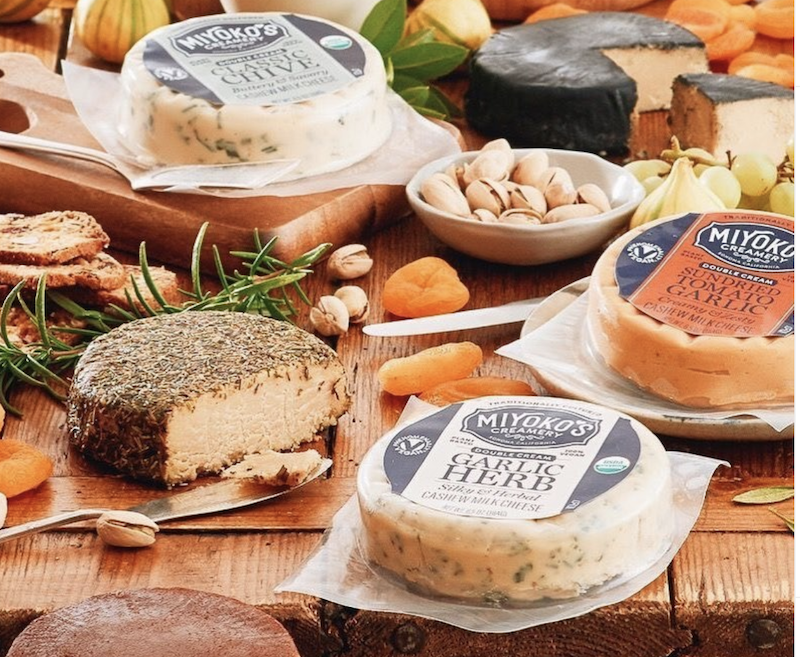
VegNews.MiyokosCheeseWheelsMiyoko’s Creamery

1Miyoko’s Cheese Wheels

If you’re a subscriber to VegNews magazine, then you’ll recognize Miyoko’s Creamery vegan cheese wheels from our 2021 holiday food issue. It’s not a party without a gourmet cheese wheel, and Miyoko’s is one of the most accessible brands available. With eight different varieties, you don’t have to put much effort into hunting down a range of cheeses for your board. For a dash of elegance, try the Aged Black Ash Cashew Milk or the Aged Herbes De Provence wheels. If you’re feeling a little less daring but seeking something equally mouthwatering, options like Sundried Tomato Garlic will certainly satisfy your guests’ taste buds. 
FIND IT HERE 

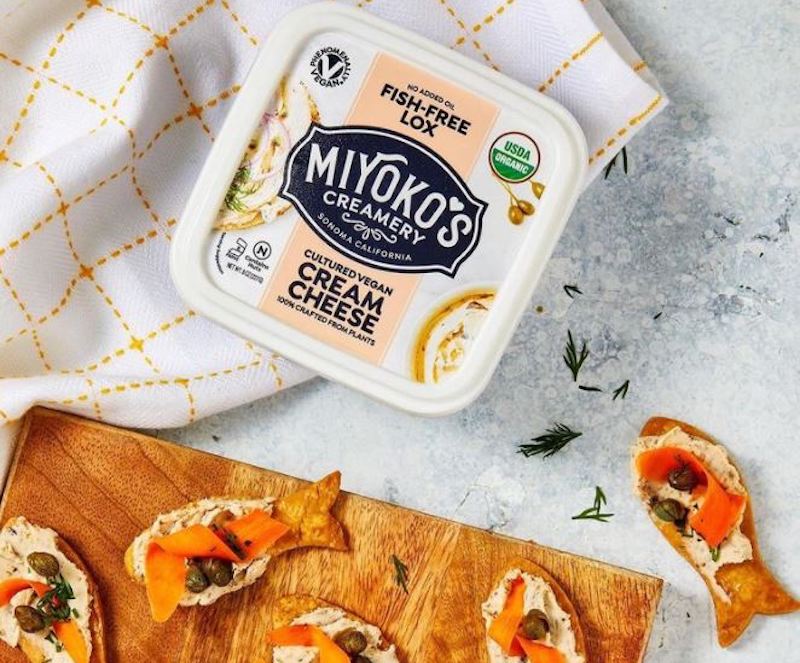
VegNews.MiyokoLoxMiyoko’s Creamery

2Miyoko’s Cheese Spreads

To keep guests coming back for more, it’s always nice to have a soft cheese spread on the board. Miyoko’s cashew-based cream cheese spreads easily complement the artisan wheels mentioned above. Whether you choose the Original Classic Plain or opt for the savoury Salmon-inspired vegan spread, guests won’t be able to tell they’re enjoying a vegan product. For something sharper, give the Roadhouse Classic Sharp cheddar a try. It pairs well with pretzel chips and breadstick batons. 
FIND IT HERE

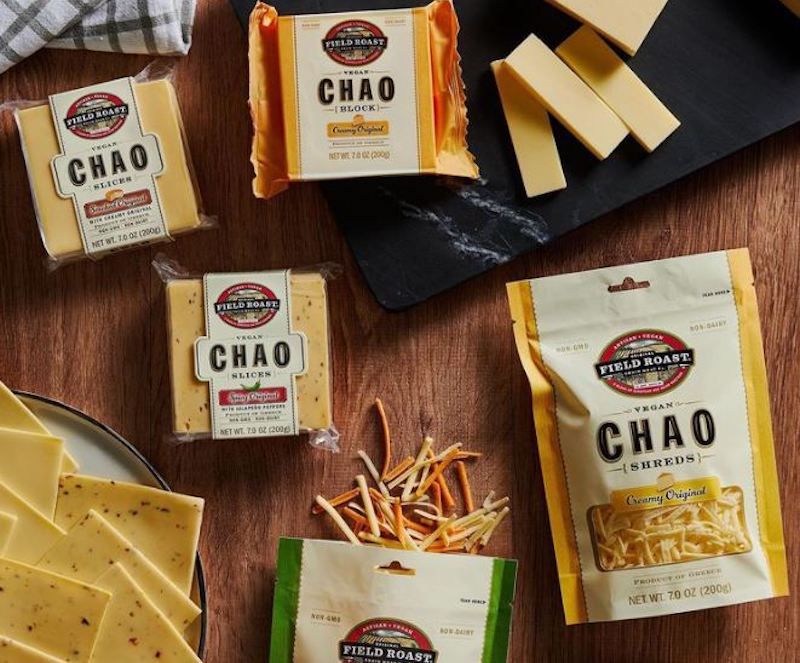
VegNews.chaoField Roast

3Field Roast Chao Cheese Blocks & Slices

Field Roast’s sister company, Chao, makes some of the best and wallet-friendly vegan cheeses on the market. The Creamy Original Cheese Block is a solid canvas to build strong flavours—it plays well with both sweet and savoury accoutrements such as dijon mustard and fig or onion jam slathered on sliced baguette. For a spicy element, check out the Tomato Cayenne, Smoked Original, or Spicy Chao slices. 
FIND IT HERE

Vegan Meats

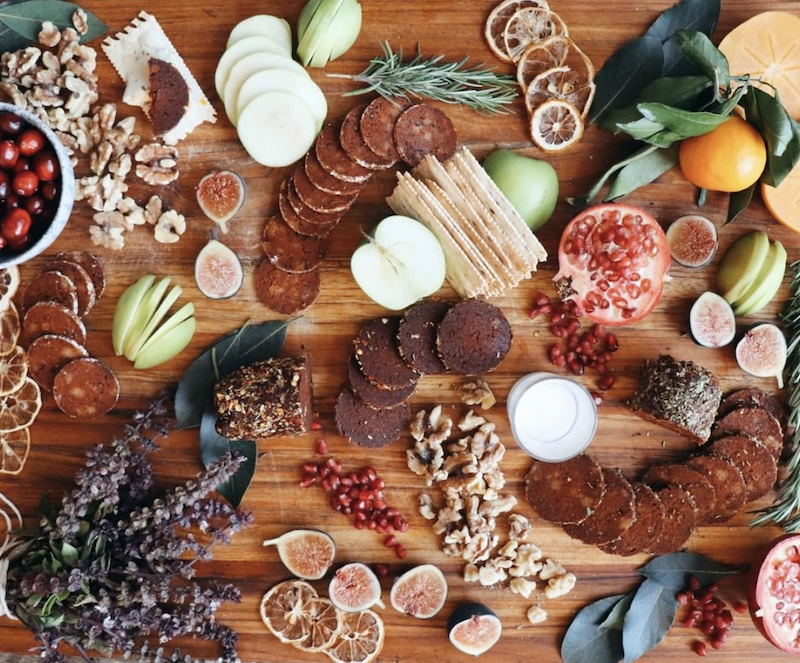
VegNEws.RenegadesalamiRenegade Foods

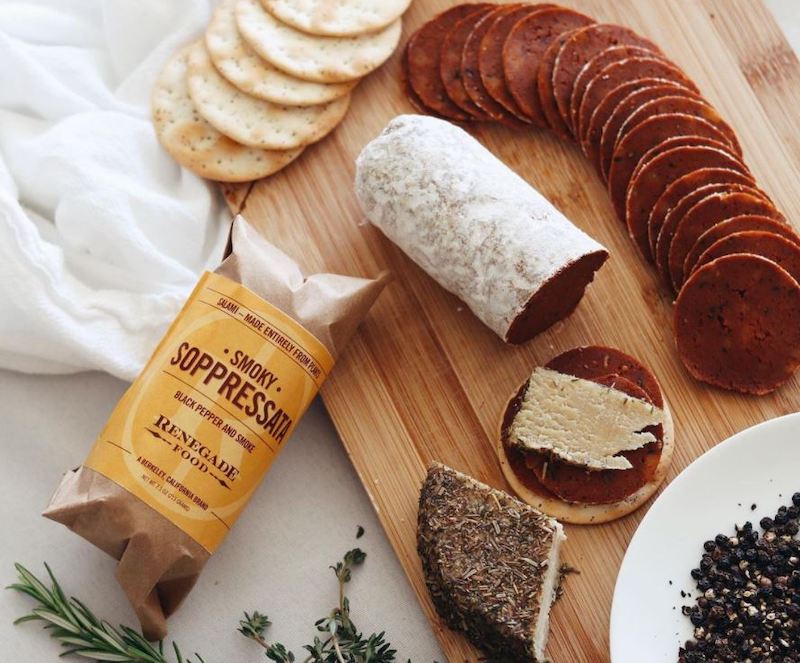
1Renegade Foods Vegan Salami

Renegade Foods offers an exquisite vegan salami sampler pack that is a must-have for your holiday platter. The relatively new vegan start-up company recently launched a vegan subscription service to bring its umami-packed, seitan-based salamis straight to your door. These spicy, smoked vegan meats take common cheese and crackers to a whole new level. 
FIND IT HERE 

Vegnews.fieldroastpeperoniField Roast

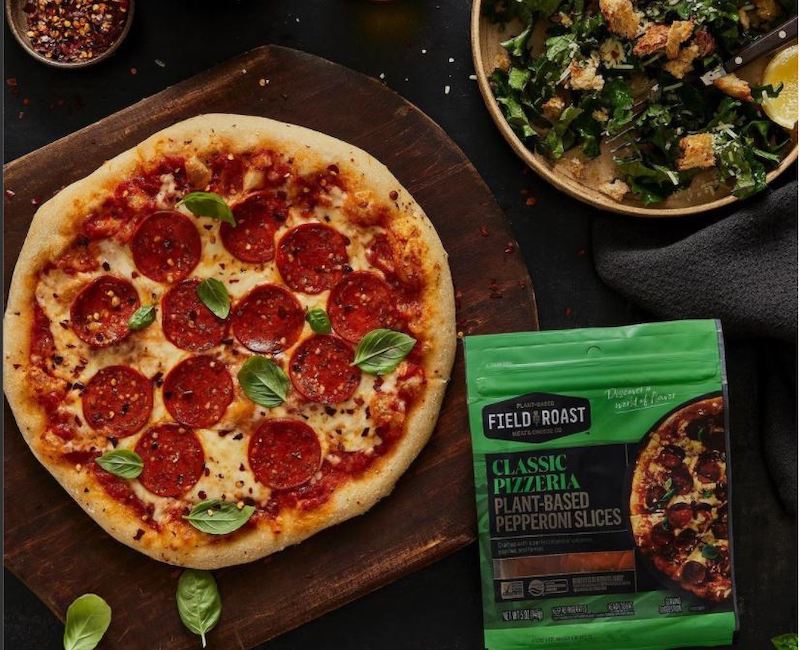
2Field Roast Pepperoni

Pepperoni isn’t just for pizza. Shingle these peppery rounds throughout your board for a spicy kick to complement the smoky, nutty, and sweet flavours on the table. Keep an extra package in the fridge—these slices will go fast. 
FIND IT HERE

VegNews.TofurkyslicesTofurky

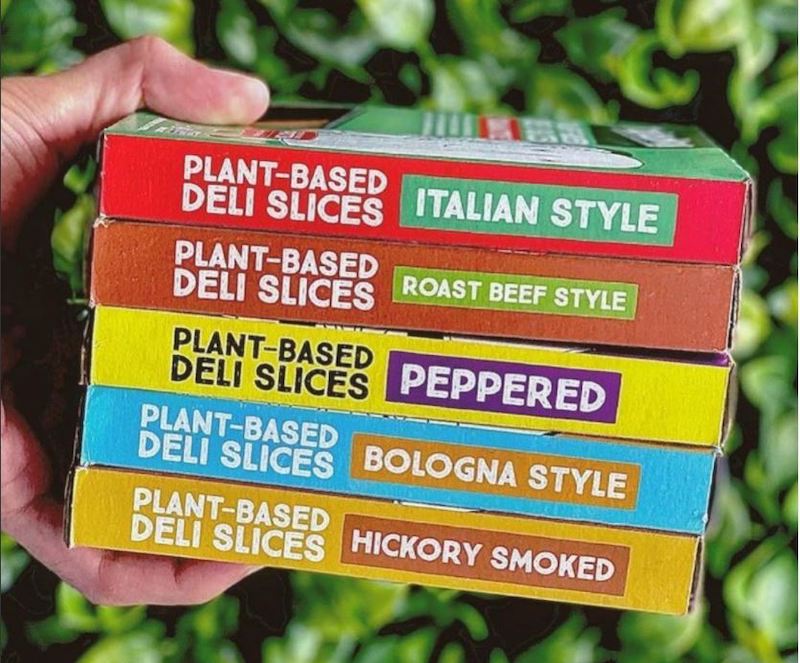
3Tofurky Plant-Based Deli Slices 

Tofurky makes more than just, well, Tofurkys. The old-school brand’s Plant-Based Deli Slices are available year-round and come in five delicious flavours including Smoked, Oven Roasted, Peppered, Hickory Smoked, and Bologna. The affordable price point means that you can easily mix and match. Roll them, lay them flat, or ripple them to create an elegant display for your guests to enjoy.
FIND IT HERE

VegNews.FieldroasthamField Roast

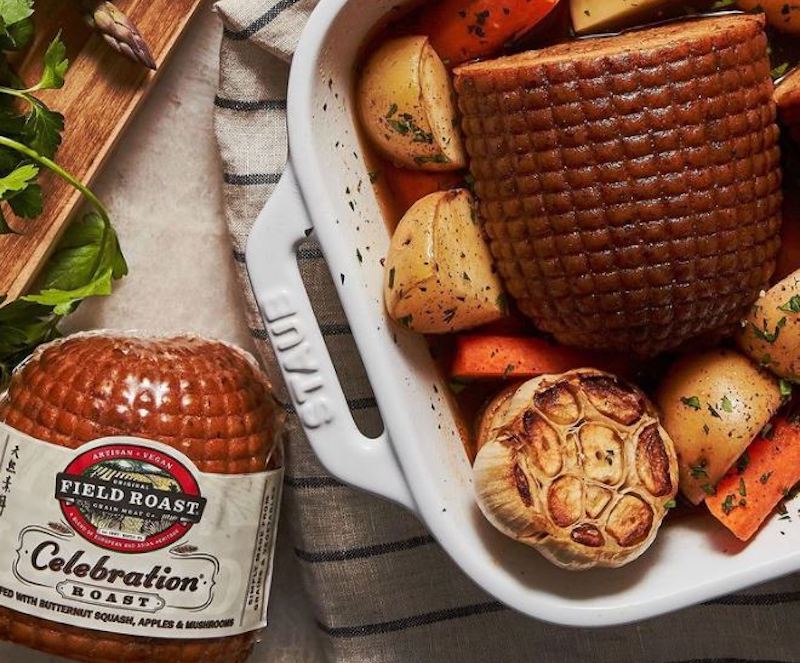
4Field Roast Celebration Roast

If you’re looking to take your vegan charcuterie board to the next level, consider choosing the Field Roast Celebration Roast as the centrepiece of your board. This meat-free roast should be served hot and fresh. Make serving easy on your guests by thinly slicing half of the roast on the board prior to serving. This is an excellent option when you need to provide heavy appetizers and avoid the hassle of hosting a full sit-down dinner.
FIND IT HERE

Vegnews.FieldroastsausageField Roast

5Field Roast Mini Sausages

The Field Roast mini apple and maple breakfast sausages are a versatile choice for any plant-based holiday board. Serve these mini weenies as is with a side of spicy mustard or bake them up into tiny vegan crescent dogs. Pop a toothpick in each sausage and you’ll have a hot snack to complement room-temp elements on your holiday board.
FIND IT HERE

VegNews.goodandgreen@FelsineoVeg/Instagram

6Good and Green Plant-Based Deli Slices

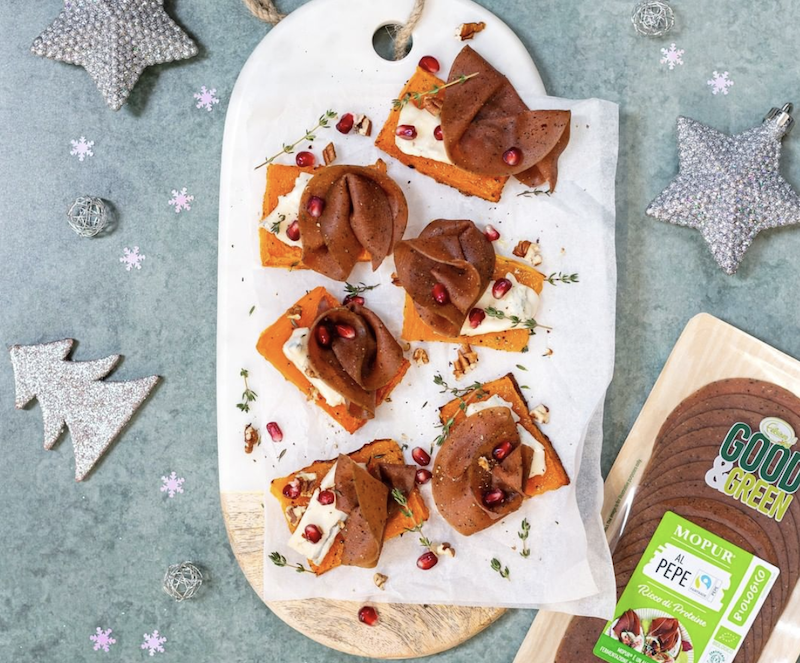
We first discovered this Italian company at the 2019 Expo West trade show, and we were so blown away by its savoury, super-thin vegan prosciutto and carpaccio, we knew we had to give it a Best New Product Award. These slices level up any plant-based charcuterie board. If you can’t find this particular brand, Mia also makes a range of Italian-style deli slices. 

https://vegnews.com/2021/12/vegnews-guide-holiday-vegan-charcuterie-board