Showing posts with label Finland. Show all posts

Sunday, April 26, 2026

Opinion: The ‘Vegan’ Label is Losing Power – That’s A Good Thing for Plant-Based Foods

From greenqueen.com.hk

Annamari Jukkola, co-founder and CEO of Finnish dairy-free company Mö Foods, explains why the plant-based movement must embrace the “post-vegan” era

For more than a decade, ‘vegan’ was one of the most potent words in food. 

It signalled conscience, urgency and a deliberate break from industrial animal agriculture. For a time, commercial growth followed that moral energy. But in recent years, retail sales of plant-based meat have declined in several major markets.

In the US, dollar sales fell again in 2025, with unit sales down by more than 10%, and parts of Europe have seen similar softening in volumes. Concern about climate change and animal welfare has not evaporated. What has changed is the context in which food choices are made.

Households are under pressure. Food inflation has lingered, energy bills remain high, and wages have struggled to keep pace. When the weekly shop becomes a calculation rather than an expression of values, shoppers trade down. Premium-priced products are often the first to go,  particularly when they are seen as optional. And much of the plant-based category is still treated that way: placed in separate sections, framed in contrast to the “real thing”, positioned as a substitute rather than an everyday staple.

I say this as someone who grew up on a traditional dairy farm in Finland, where food was our way of life. Movements may begin with identity, but I learned early that anything that endures does so because it works. The foods people grow up with carry weight. They are familiar, trusted, and woven into routine. No one abandons them lightly.

                                                                                                          Courtesy: Mö Foods

If you want people to change what they eat, the alternative cannot simply be different – it has to be at least as good, and ideally better. That’s why the plant-based food movement must embrace the “post-vegan” era: not the abandonment of ethics, but the normalisation of plant-based food. 

The flexitarian majority

The first wave of plant-based innovation was fuelled by urgency and investor optimism. Some products were rushed to market; others promised more than they delivered. Many were marketed primarily under ‘vegan’ or ‘vegetarian’ labels: terms that signalled good intent, but gradually became associated with products that were more expensive, less satisfying, or inconsistent in quality. 

Some shoppers felt misled; others drifted back to familiar habits. Those who continued buying most consistently were the ones whose identities already aligned with the label: vegetarians and vegans.

The issue is simple: there just aren’t that many vegans. Fewer than 1% of the world’s population identifies as vegan. Even when vegetarians are included, the group remains relatively small in most Western markets.

Far larger numbers – over 40%, by some estimates – describe themselves as flexitarian: actively reducing their meat consumption without abandoning it entirely. If the goal is to reduce emissions, land use, and animal suffering, scale matters more than purity. Small shifts adopted by millions outweigh total exclusion practised by thousands.

This is an approach that meets consumers where they are and lowers the barrier to participation, with the objective not to win an identity, but to shift behaviour, repeatedly and at a global scale.

The shift from identity to impact
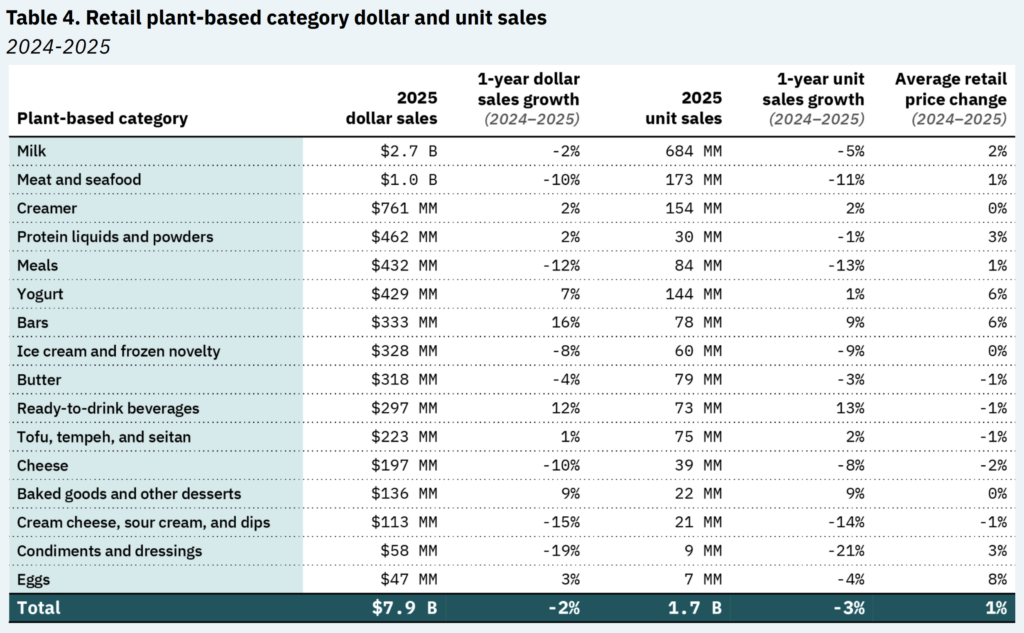
plant based meat sales
Courtesy: GFI

Every product that moves from the margins to the mainstream faces the same test. Early adopters will tolerate inconvenience because they believe in the mission. Most consumers will not. For broad adoption, the alternative must stand on its own and fit easily into daily life.

We have seen this pattern elsewhere. Renewable energy expanded when it became cheaper. Electric vehicles gained ground when range improved, and costs fell. Organic produce grew when availability widened, and quality stabilised.

Plant-based food is already showing signs of this transition. While plant-based meat has softened in some markets, plant-based milk continues to hold a significant market share, accounting for well over 10% of total retail milk sales in the US, and higher in parts of Europe. Where functionality is reliable, familiarity is high, and price gaps have narrowed, adoption has stabilised.

But performance alone is not enough. The real question is who these products are designed for.  If plant-based food is to move beyond the margins, performance must be defined in everyday terms.

The discipline of the mainstream

                                  Courtesy: Hellmans/Follow Your Heart/Naturli/Quorn/Magnum | Graphic by Green Queen


Most grocery decisions are made in a moment. Shoppers spend little more than 10 or 15 seconds choosing a product on the shelf. In that brief window, familiarity outweighs ideology.

 It begins with price. In an era of rising food costs, few households can treat sustainability as a premium add-on. It continues with taste and functionality. On the farm where I grew up in western Finland, customers noticed the small things: texture, consistency, whether a product behaved the same way every time. If it didn’t, they went elsewhere.

These are not superficial concerns, but the basic conditions of repeat purchase. Cheese must melt. Milk must foam. A meat alternative must hold its own at the dinner table.

Performance must also include transparency. Environmental claims can no longer rely on branding alone. As climate literacy increases, consumers expect evidence on emissions, land use, and supply chains. If plant-based food genuinely reduces environmental harm, that advantage should be measurable.

None of this guarantees success. Some brands will not survive this phase. Investment has already tightened, and in parts of Europe, public support continues to favour established agricultural systems. But industries mature through correction, and those that endure become stronger.

When plant-based stops being oppositional

For years, plant-based food defined itself in opposition to meat and dairy. That framing was necessary at the beginning. But opposition is not transformation. Real impact comes from scale, and, perhaps ironically, scale happens when a product becomes unremarkable, when it blends into weekly shopping lists without fanfare.

The future of plant-based food will not be decided by labels, but by small, ordinary substitutions: an oat-based chèvre paired with a glass of wine, a milk that rounds out a morning coffee, a meat alternative folded into a weeknight pasta. When those choices feel natural rather than ideological, change stops being a statement and becomes a habit.

That is how movements grow up.

https://www.greenqueen.com.hk/vegan-vs-plant-based-labelling-brands-mo-foods/ 

Saturday, April 18, 2026

Finland sees tofu sales soar following new nutrition guidelines

From veganfoodandliving.com

Finland is currently undergoing a dietary transformation that has caught even industry experts by surprise. A new industry market report by Plant Based Food Finland has revealed a startling increase in sales of certain plant-based foods.

This shift follows the 2024 update to the country’s national nutrition guidelines, which focused on foods that benefit both health and the environment. Recent data reveals that a staggering 15 per cent of Finns have actively altered their eating habits in direct response to these recommendations.

Rather than a minor adjustment, this has manifested as a dramatic surge in demand for whole food plant-based proteins, demonstrating that the Finnish public is remarkably receptive to science-led official guidance.

Finland’s ‘tofu boom’


The retail landscape has shifted rapidly, with sales of tofu jumping by 12 per cent and canned legumes rising by 14 per cent over the last year.


This ‘tofu boom’ was arguably accelerated by strong media attention surrounding the advice to limit processed red meats and cold cuts. The resulting headlines inadvertently spotlighted plant-based alternatives, even leading to tofu shortages as supermarkets quickly sold out.

Jouko Riihimäki, CEO of Jalofoods, noted that the company has never seen such a “sharp upswing in demand” in its three decades of operation. To keep up with the nation’s newfound appetite for plant protein, the leading producer has had to expand production capacity and recruit additional staff.

It appears that for many, the guidelines provided the necessary push to turn the intention to eat less meat into a concrete lifestyle change.

While tofu and legumes have seen sales boom in Finland, those aren't the only plant-based proteins seeing a surge. Photo © Kukka-Maria Rosenlund/ProVege

National guidelines vs global trends

Finland’s success stands in stark contrast to the dietary friction seen elsewhere. While the Finnish approach relies on a “strong policy-to-market signal,” other nations are facing more ideological divides.

Jukka Kajan, Executive Director of Plant Based Food Finland, highlighted the difference between the Finnish model and the controversial “Make America Healthy Again” strategy in the United States.

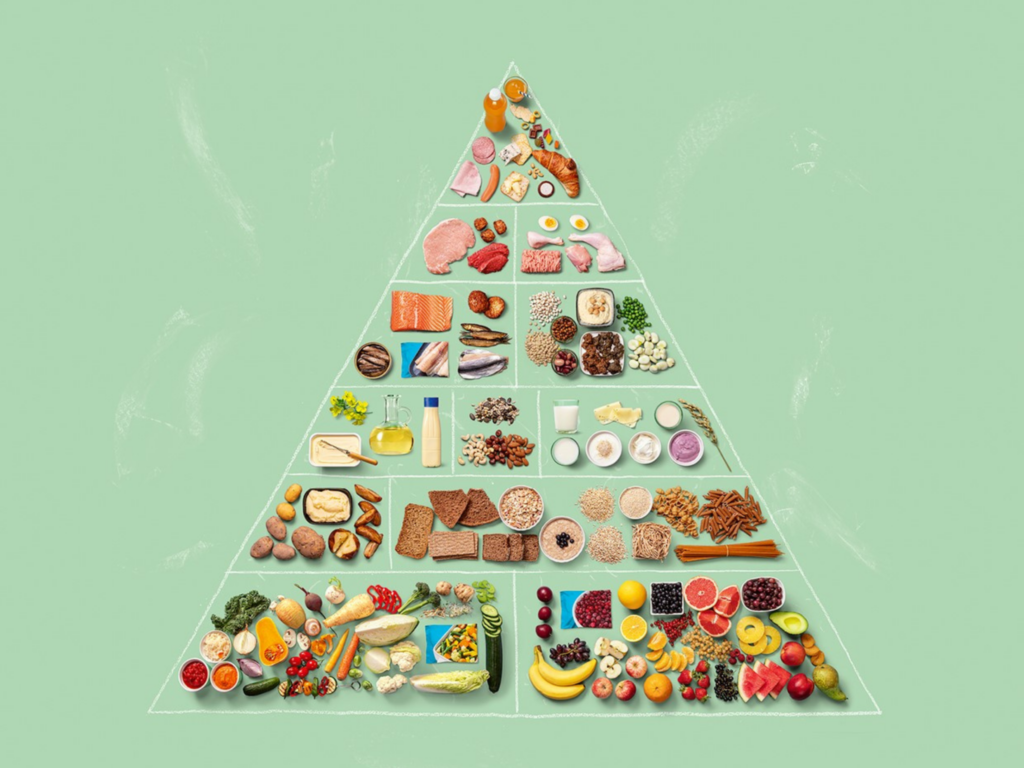
Kajan remarked that the traditional food pyramid is “based on scientific evidence linking plant-rich diets to lower risks,” suggesting that inverted models favouring saturated fats fail to provide a “stable foundation for public health.”

The Finnish data also reveals an interesting gender split; 19 per cent of women followed the new advice compared to 11 per cent of men. Kajan suggests that “cracking” the cultural link between masculinity and meat consumption remains a major opportunity for both public health and the plant-based industry.

As the nation moves towards a ‘tipping point,’ the focus is now on whether these pragmatic, health-driven choices will become a permanent fixture of the Nordic diet.

https://www.veganfoodandliving.com/news/finland-nutrition-guidelines-tofu-sales-soar/ 

Wednesday, February 25, 2026

Tofu, Pulled Oats & Blended Meat: How S Group’s Shoppers Are Eating More Plants

From greenqueen.com.hk

Finland’s largest supermarket, S Group, has revealed that sales of plant-based products were on the rise last year, alongside growing interest in blended meat.

The owner of nearly half of Finland’s retail market share has yet again witnessed growth in sales of plant-based proteins, with a helping hand from blended meat.

S Group, the parent company of Prisma, S-market, Sale, and Alepa supermarkets, suggests that consumer interest in plant-based products has been growing for some time now. And this is backed by its data, which points to a rise in consumption of vegetables and plant protein sources over the last year.

“Looking at individual product types, sales growth has been driven especially by plant‑based protein sources such as tofu and pulled‑oats‑type products,” Hans Backström, sales director of S Group’s grocery division, tells Green Queen.

Tofu sales expanded by 13% this January, compared to the same month a year ago, while pulled oats – a homegrown range of plant-based meat alternatives – witnessed a near-70% hike. S Group shoppers were also interested in various vegetable protein strips.

Backström credits the category-specific growth to campaigns like Vegaanihaaste, Finland’s answer to Veganuary. “This is a campaign we have been involved in regularly at the beginning of the year, when consumer interest in healthier choices tends to be high,” he says.

                                                                                                          Courtesy: S Group

Tofu sales exceeded supply at times

S Group, which occupies 49% of Finland’s grocery market, says Finns are increasingly looking for climate-smart and health-conscious options on their plates, leading them to diversify their protein sources.

Tofu sales at S Group grocery stores grew by 16% compared to 2024, as customers made repeat purchases amid a long-term growth trend, to a point when sales sometime exceeded supply.

From a broader perspective, the growth of plant‑based ‘meat‑like’ products reflects a gradual shift toward more diverse protein choices in everyday diets, rather than a comprehensive move away from animal‑based products.

Aside from plant proteins, other vegan categories sold faster at the start of this year as well. “Sales of plant-based drinks and frozen vegetables grew by 4% in January from a year ago,” he says.

“Demand for S Group’s own pre-washed, chopped and peeled Easy and Fast vegetable products, which were launched last autumn, also grew throughout the rest of the year and January.”

Blended proteins could accelerate meat reduction in Finland

The data comes just over a year after Finland updated its national dietary guidelines, which call on citizens to lower red meat consumption by 30% and limit processed meats as much as possible, and replace them with plant proteins (preferably local ones).

Still, the share of Finnish consumers who eat meat reached a four-year high in 2025, and research shows that 53% of shoppers would not support a policy recommendation to halve meat consumption.

A new class of products can help bridge this gap. Blended meat, which combines conventional meat with plant-based proteins, has been gaining popularity across Europe, and Finland is no exception.

“We are seeing growing interest in products that combine meat and plant‑based protein,” says Backström. “These so‑called blended or hybrid products have been identified in our sales data as an emerging trend. Overall, these products appear to appeal to customers who want to diversify their protein sources while still retaining familiar flavours and usage occasions.”

For instance, the beef-pea and chicken-broad-bean minced meats and the finalist product of the Finnish Success Recipe competition, the Sopu dumpling – which combines meat and plant protein – have attracted widespread interest from consumers.

Blended meats are already taking over European shelves, with retailers like LidlAldiAlbert Heijn and Colruyt Group all selling own-label versions in markets including the Netherlands and Belgium.

By using less beef per product, these innovations allow companies to lower their emissions impact and boost the nutritional value of protein offerings, all while contributing to their goals of increasing the share of plant proteins sold.

S Group has a target to ensure that 65% of all food sold is plant-based by 2030, which includes categories like vegetables and cereals. As of 2024, this share stood at 60%.

“We have not yet published a verified full‑year figure for 2025, so we are not able to comment on any potential change at this stage. The updated figure will be published at the end of March,” says Backström.

In a LinkedIn post, Stella Hoynalanmaa, director of the food programme at WWF Finland, said the data yet again outlines how Finns are “moving towards diets that are better for their health and for the planet”: “The shift is particularly strong in January – but it also continues to grow year-on-year.”

https://www.greenqueen.com.hk/s-group-ryhma-finland-plant-based-vegan-sales-blended-meat/

Tuesday, October 7, 2025

Swedish Plant-Based Brand Oumph! Returns to Finland

From vegconomist.com

Swedish plant-based brand Oumph!, which is owned by LIVEKINDLY Collective, has announced that it is returning to the Finnish market following significant consumer demand.

Three products will be available — Pulled BBQ Chunks, Herbs & Garlic Chunks, and Mince. The range will launch at Kesko stores across Finland in collaboration with Ecolink, which has been importing vegan food products into the country since 2015.

“We are excited to relaunch Oumph! in Finland as a part of expanding our plant-based offering internationally,” said Thomas van der Kamp, General Manager B2B & Export at LIVEKINDLY Collective. “Oumph! has a unique position, focusing on taste and joy, and it is super clear to us that our Finnish consumers have missed it.”

Van der Kamp also noted that strategically located factories in Sweden, the Netherlands, and South Africa are enabling LIVEKINDLY Collective to expand into new markets, either through branded products or as a private label partner.

© Oumph!

“A brand that energizes and engages people”

Oumph! was founded in 2015 and has become a favourite across the Nordics and the UK, winning several awards. In 2020, the brand was acquired by LIVEKINDLY Collective, which also owns Like, Fry’s, and No Meat.

“We have gotten many messages from Finnish consumers saying that they are missing Oumph!, which makes this launch extra special,” said Elisabeth Samuelsson, Marketing Manager and Oumph! Brand Lead at LIVEKINDLY Collective. “Oumph! is a brand that energizes and engages people; it is proven successful in its homeland of Sweden and beyond, so we really believe that this launch will thrill both old and new consumers.”

The three products all come in 280g packages, with a recommended price of €4.75.

https://vegconomist.com/products-launches/swedish-plant-based-brand-oumph-returns-finland/ 

Sunday, September 14, 2025

Fortified foods and dietary supplements key to bone health in vegan diets, says study

From medicalxpress.com

The MIRA2 study conducted at the University of Helsinki investigated bone metabolism and the intake of nutrients critical to bone health, such as calcium, vitamin D and protein. The study involved children residing in Helsinki aged between two and seven who followed a vegan, vegetarian or omnivorous diet, as well as their caregivers.

The findings are published in the European Journal of Nutrition.

The study subjects following a  adhered almost without exception also to the recommendations on the consumption of dietary supplements and fortified foods, and they had on average adequate vitamin D and calcium intakes.

The children on a vegan diet had higher vitamin D intake than those on an omnivorous or a  due to more active consumption of vitamin D supplements with higher doses. On average, vitamin D status measured from blood was also adequate in all diet groups.

The study found that the more plant-based diets, namely vegan and vegetarian ones, were in adults associated with higher concentrations of bone formation and resorption markers, which may indicate accelerated bone metabolism.

In contrast, more plant-based diets among children were associated with higher parathyroid hormone concentrations, which have been associated with more active bone resorption. While these observations can indicate long-term adverse effects on bone health, their clinical significance is unclear.

"The calcium naturally occurring in plant-based foods is fairly poorly absorbed. In fact, the widespread vitamin D and calcium fortification of plant-based dairy alternatives in Finland is important for the adequate intake of these nutrients among vegans and, consequently, for their bone health," says Docent Suvi Itkonen from the Faculty of Agriculture and Forestry, University of Helsinki.

Many international studies have raised concerns about the potential adverse effects of vegan diets on bone health. However, these studies have typically targeted populations where vitamin D intake is low, the selection of vegan products on the market is narrow, and the consumption of fortified foods or dietary supplements is less widespread than in Finland.

                                                                                      Credit: Unsplash/CC0 Public Domain

Vegan diets require careful planning, especially for children

The researchers found that vegans and vegetarians had lower protein intake compared to those who followed an omnivorous diet, although on average it was adequate. Proteins are composed of .

"It's possible that the poorer absorption and different amino acid composition of plant-based proteins compared to animal proteins partly explain the observed differences in , but more research is needed on the topic. In fact, we will next investigate amino acid intake among the MIRA2 subjects and the amino acid composition of vegan diets," Itkonen says.

The MIRA2 dataset was collected in Helsinki, where vegan food in daycare centers and various vegan food products are abundantly available. The families who participated in the study were well versed in guidelines for vitamin D supplementation and fortified food consumption.

"People in the Helsinki Metropolitan Area live in a kind of veggie bubble. Due to that, one has to keep in mind that the findings of the study are not directly applicable to the populations of other regions or countries," Itkonen points out.

The nutrition recommendations published last autumn emphasize a predominantly plant-based diet, restricting meat consumption and moderating milk consumption.

If a food is entirely excluded from the diet, it is important to replace it with nutritionally comprehensive alternatives. When planning a vegan diet for children and adolescents, a visit to a registered dietitian is recommended.

"In terms of bone health, it is essential when consuming plant-based drinks and yogurt-like products to choose the option fortified with calcium and vitamin D," Itkonen notes.

"Children should take a daily vitamin D supplement throughout the year. If the daily diet contains no margarines, dairy products or plant-based drinks fortified with vitamin D, and if fish is eaten less than two to three times per week, it's important to ensure adequate vitamin D intake, especially during the dark season, by taking a vitamin D supplement. Among vegans, the need for vitamin D supplementation is common."

Other findings in the MIRA2 study related to, among other things, lipid metabolism, metabolomics and the intake of other nutrients will be published in the future.

https://medicalxpress.com/news/2025-09-fortified-foods-dietary-supplements-key.html 

Wednesday, May 7, 2025

This Start-up Is Making Vegan Butter Out of Thin Air—Literally

From vegnews.com 

A revolutionary new process is turning carbon dioxide into the fats we use every day—without the need for animals or traditional agriculture

We all know that excessive carbon dioxide isn’t good for the planet. In fact, it’s one of the biggest drivers of climate change. As a greenhouse gas, carbon dioxide traps heat in the Earth’s atmosphere. In small amounts, that’s normal—even necessary. But today, there’s far too much of it, and that excess is heating the planet at an unsustainable rate. The result? More extreme weather events, including storms, droughts, and wildfires—threatening both wildlife and human life.

From emissions to innovation

So, how do we keep carbon dioxide from reaching the atmosphere in the first place? The obvious solution is to cut emissions. But another exciting option? Recycling carbon into something new. Right now, a handful of pioneering companies are doing just that. 

In 2021, for example, New York-based Air Company launched a vodka made with carbon dioxide. Yes, you read that right. The brand uses captured carbon—sourced from the air or industrial sites—along with hydrogen created via electrolysis to produce ethanol. Combine that with water, and you get vodka.

It’s not alone. Finnish start-up Solar Foods captures carbon dioxide and combines it with hydrogen—generated using renewable energy like solar power—to produce a novel protein called Solein. This nutrient-dense powder can be used in everything from meat alternatives to egg-free foods.

And then there’s Savor, a California-based company transforming captured carbon into versatile, sustainable fats. Most recently, it unveiled its first-ever butter made using this technology. Already, Michelin-starred chefs are taking notice, and you may soon see it on menus at acclaimed restaurants like SingleThread and One65. Beyond butter, Savor’s carbon-based fats could one day replace animal fats, palm oil, and more.

But how does this science actually work? What does carbon-based butter taste like? And does it function like traditional fats in our bodies? We sat down with Savor CEO Kathleen Alexander to find out.

Turning carbon into butter with Savor CEO Kathleen Alexander

VegNews: Let’s start with the basics—how exactly do you turn carbon into butter?

Kathleen Alexander: Savor has developed a pioneering process that creates real fats without relying on traditional animal or plant agriculture. Our technology begins with the most fundamental building blocks of life—carbon gases like carbon dioxide and methane.

VN: And what do you do with those gases?

KA: Through a carefully controlled process involving heat and pressure, we transform these simple carbon gases directly into carbon chains. These chains are then converted into fatty acids—the essential building blocks of fats and oils—and ultimately into complete fat molecules.

VN: That skips a lot of the usual steps in how we get fat today, right?

KA: Exactly. This direct approach bypasses the lengthy traditional agricultural cycle where plants capture carbon, animals consume those plants, and humans then harvest, process, and refine those resources into usable fats. By eliminating this conventional pathway, our process dramatically reduces land use, water consumption, and greenhouse gas emissions.

Savor butterSavor

VN: And the final product—does it work the same way in our bodies?

KA: The fats we produce are chemically identical to those you consume daily, meaning they provide the same nutritional fuel for your body.

VN: Are there any nutritional advantages?

KA: What makes our fats distinctive is their composition—we produce higher concentrations of both medium-chain and odd-chain fatty acids compared to most agricultural fats. These particular fatty acid profiles have been associated with positive health outcomes, and we are currently conducting nutritional studies to better understand their potential benefits.

VN: That sounds incredibly versatile. Can you adjust the fat depending on what it’s needed for?

KA: Our technological platform offers unparalleled versatility. We can match the performance characteristics of virtually any type of fat—from animal fats and dairy fats to vegetable oils, tropical fats, and even specialty oils used in cosmetics—all using the same core technology. This flexibility, combined with our position in the broader energy ecosystem and our adaptability regarding feedstock, makes Savor uniquely positioned to meet diverse industry needs with sustainable fat solutions.

VN: Let’s talk about scale. A lot of alternative fat producers struggle to expand—how does Savor plan to grow sustainably?

KA: A peer-reviewed study published in Nature Sustainability—authored by myself, my co-founder Ian McKay, and others before we established the company—describes how we can achieve emissions intensities that are dramatically lower than traditional agriculture—much lower than 0.8 gCO2e/kcal at commercial scale.

VN: Are you verifying that independently?

KA: We are currently working with a third party to complete a lifecycle assessment (LCA) for our first commercial facility, which is in the design phase. As we continue to scale production capacity at our pilot plant, we may perform a formal LCA there as well, but our current efforts are focused on lifecycle assessment for commercial production.

VN: Beyond sustainability, what else sets Savor apart in terms of industry potential?

KA: Scalability and flexibility make Savor’s fat solutions uniquely positioned to meet industry needs. Our ability to match the performance of animal fats, dairy fats, vegetable oils, tropical fats, as well as specialty oils used in the cosmetics industry—all with the same technological platform—sets us apart.

VN: Are food companies already taking an interest?

KA: Our proprietary technology has already attracted multinational consumer packaged goods companies, whose R&D teams are working on ingredient innovation projects that can leverage Savor’s unique ability to create customizable fats and oils. The company is actively negotiating joint development agreements with some of these partners, who have been particularly impressed by the versatility and tunability of fatty acid profiles that Savor’s platform can produce—capabilities that extend well beyond the company’s initial dairy-fat mimicking formulation.

savor croissantsSavor

VN: All that science is impressive—but let’s get to the real test: taste. How does your butter compare?

KA: Our products are made to be direct substitutes in some of the most common applications and recipes. This is true whether our products replace existing fats, or are customized to meet a specific purpose, or if they are integrated into more complex products like butter.

VN: So can it pass the croissant test?

KA: Our initial butter formulation has properties that are amazingly close to dairy butter. Impressively, it can “croissant” and can be a 1:1 replacement in most baking applications, plus many other popular culinary uses for butter.

VN: And finally, what’s the feedback been like?

KA: Even the most discerning guests at our launch dinners couldn’t tell the difference between our butter and conventional butter.

Tuesday, March 11, 2025

As Finland Promotes Plants, Its Largest Supermarket Sees Vegan Sales Grow – Here’s Why

From greenqueen.com.hk 

Finland’s S Group witnessed heightened sales of vegan food across its retail stores in January, aiding its long-term plant-based sales goal amid a wider government push to eat less meat.

More and more plants are on dinner plates in Finland, the world’s happiest country – is that a coincidence?

Weeks after the country updated its dietary guidelines in favour of plant-based proteins, its largest supermarket has reported a hike in sales of vegan products in January.

S Group, the parent company of Prisma, S-market, Sale, and Alepa supermarkets, holds 48% of the retail market share in Finland. In the first month of the year, it expanded its partnership with the Vegan Challenge – or Vegaanihaaste, the country’s answer to Veganuary – to include all four of these retailers.

With record participation numbers in 2025, combined with coordinated discounts, sales of non-dairy milk and cheeses at S-Group stores escalated by 10% from January 2024. Similarly, fava bean protein brand Härkis and plant-based dairy maker Oddlygood jumped by “several dozen percents”, according to Hans Backström, sales director of S Group’s grocery division.

Shoppers also showcased greater interest in fresh vegetables, frozen vegetables, and plant-based cooking products, compared to 12 months prior.

“There is a growing trend towards responsibility and sustainability among Finnish consumers. Additionally, the diversification of vegetable consumption and the introduction of affordable vegetable options have encouraged more people to incorporate plant-based foods into their diets,” Backström tells Green Queen.

For Jukka Kajan, executive director of trade association Plant Based Food Finland (or Pro Vege), it’s a clear sign that the “normalisation of plant-based foods is well underway”.

                                                                                             Courtesy: Jukka Kajan

S Group is a founding member of the association, which aims to promote the development and growth of plant-based food in Finland. “It’s delightful to see such an established retailer keen on putting vegan food options in the spotlight – something that some years ago might have been considered radical,” Kajan tells Green Queen.

S Group’s plant-based sales target ‘very encouraging’

Kajan notes that this year’s Vegan Challenge “broke all records”, challenging the perception that meat is a necessary part of one’s diet – a sentiment that grew louder after the latest update to the dietary guidelines in December, but one that was called “gendered and quite masculine” by Mahla Kettunen, the communications head for the challenge.

More than 27,000 people signed up for the January campaign in Finland – and this is likely an underestimate, as is the case with Veganuary participation globally too, since not everyone who tries the challenge does so officially. “S Group partnered with the campaign and expanded its promotions to all its retail stores following the success in one of its chains in previous years,” says Kajan.

“The results of the price promotion experiments and the successful efforts behind Vegan Challenge campaigns clearly demonstrate the impact retailers can have in steering consumers’ food choices toward plant-rich options. The leverage is tremendous, and we look forward to all retailers making the most out of it,” he adds.

Speaking of all retailers, there has been a Europe-wide shift among supermarket groups to introduce ‘protein split’ targets, i.e., increase the sales share of plant proteins versus animal proteins. Lidl has led the shift across several markets, with Ahold Delhaize and Rewe Group following suit in the Netherlands and Germany.

In 2022, S Group itself announced a target to ensure that 65% of all food sold is plant-based by 2030. “We are already close to the goal; in 2023, plant-based food accounted for 60% of sales,” says Backström.

Kajan points out that this isn’t “strictly a protein split”, since it includes all kinds of categories, including vegetables and cereals. “However, it is very encouraging that plant-based foods have their own target in the sustainability agenda,” he says. “We believe it would be more effective to set more precise mid-term targets, as they would have a stronger influence in guiding employees’ everyday choices.”

How S Group is helping consumers eat more plants

finland plant based
Courtesy: Pro Vege

Backström explains that S Group has adopted several measures to encourage Finns to eat more fruits and vegetables. “We prominently display seasonal vegetables in our fruit and vegetable sections throughout the year. Seasonal vegetable tables have been a part of our produce sections for over nine years,” he says.

“For the past two years, our stores have highlighted ‘Under One Euro’ produce, which features fruits and vegetables priced under €1 per kilo or package. Additionally, we enable our co-op members to track their vegetable consumption through the My Purchases section in the S-mobiili app.”

He adds: “We collect edible fruits and vegetables that are at risk of becoming waste into special ‘Hevihävikki’ boxes or bags. This practice expanded nationwide in the S-market chain in 2023 and is also used in many Prismas, Sales, and Alepas.” In 2023, this helped S Group save around two million kgs of fruits and vegetables from going to waste, and these boxes’ popularity has “significantly increased” in 2024.

“Last year, we conducted a nudging experiment at the Tornio Prisma in collaboration with the VTT [Technical Research Centre],” he says. “During the experiment, a few Yhteishyvä (our customer magazine) vegetable recipes and all the ingredients needed to prepare them were made available in the store’s fruit and vegetable section. The recipes and ingredients were placed in the same location, making them easy for customers to collect.”

The best way to promote plant-based? Don’t make a fuss

finland dietary guidelines
Courtesy: Finnish Food Authority

“It was a pleasure to see that customers bought more diverse foods in January and more and more people started trying plant-based products,” said Backström said in a statement. “We want to lower the threshold for trying plant-based products and help them become part of everyday life.”

This will help expand Finland’s burgeoning vegan sector. According to Kajan, the domestic plant-based market is valued at €150M, thrice as large as the €50M meat-free market.

The industry hopes to attract more interest following the publication of the new dietary guidelines, which urge locals to cut red meat intake by 30%, limit processed meats as much as possible, and essentially avoid eating meat as a snack.

The government encourages Finns to replace these with plant proteins – especially homegrown legumes like peas and white beans – which it recognises as planet-friendly and health-promoting foods. In addition, it suggests consuming fortified non-dairy milk and replacing animal fats and tropical oils with plant-based spreads rich in unsaturated fat.

“The updated guidelines are highly welcomed, as is the inclusion of the impact of food on the environment and climate in them,” says Kajan. “Since school meals, other public food services, and workplace dining are standard in Finland, we assume the new guidelines will have the greatest impact through these food services, many of which follow them strictly.

“In these settings, consumers can easily try new dishes and become accustomed to inspiring flavours prepared by professionals – an inspiration they can then take home.”

He adds that the new guidelines “sparked strong public discussion”, and while many of the loudest comments in the media focused on defending individuals’ right to choose their own diet, the “rather surreal debate undoubtedly worked in favour of plant-based foods”.

“The key to successfully implementing the new guidelines is not to make a big fuss about them – tasty food is tasty food and will always find its eaters. However, if a delicious vegan curry is framed as an alternative option and explicitly labelled as meatless, the reaction might not be as favourable,” he suggests.

“In the best-case scenario, the food environment will be reshaped in a way that eliminates the need for consumers to make conscious food choices repeatedly,” continues Kajan. “Instead, they will naturally end up eating healthier thanks to adjustments in product development, changes in offerings, and strategic nudging in retail and foodservice.”

https://www.greenqueen.com.hk/finland-s-group-market-plant-based-food-vegan-sales-pro-vege/