Showing posts with label fat. Show all posts

Friday, March 13, 2026

Is the Low Fat Vegan Diet Missing Key Health Benefits?

From plantbasednews.org

Cutting back on fat could mean missing out on the full health power of your veggies 

For years, many plant-based eaters have embraced the low fat vegan diet as the gold standard for heart health, weight control, and disease prevention. But what if cutting fat too far means leaving powerful nutrients on the table?

That’s the question posed by Mic the Vegan, who recently revisited the science behind ultra-low-fat plant-based eating. Known for breaking down complex nutrition studies for a broad audience, Mic explains that while low-fat vegan diets have historical and scientific backing, new research has made him reconsider whether they may unintentionally reduce absorption of key fat-soluble compounds.

“I’ve eaten low-fat vegan diets in the past, been down at 10 percent or less calories,” he says. “Based off some recent studies that I’ve been exposed to, I thought, let’s explore this.”

The history and logic behind going very low fat

Even a small drizzle of healthy fats, like olive oil, can dramatically increase nutrient absorption from vegetables - Media Credit: Adobe Stock


The ultra-low-fat approach, often around 10 percent of calories from fat, gained traction online between 2012 and 2015. It also has scientific roots. Mic points to populations like the Tarahumara and Okinawans, as well as physicians such as Dr Neal Barnard and T. Colin Campbell, who have supported lower fat intakes.

The logic is straightforward: saturated fat raises LDL cholesterol, and high LDL increases heart disease risk. There is also the common belief that “the fat you eat is the fat you wear.”

But Mic notes that not all fat is saturated. And weight gain ultimately comes down to calories. “It’s pretty obvious that at a calorie deficit, regardless of macronutrient ratio, you’re going to lose weight,” he says.

Still, the bigger issue, he argues, may not be weight or cholesterol, but nutrient absorption.

Carotenoids, fat, and what you might be missing

Carotenoids such as beta-carotene in carrots and lycopene in tomatoes are fat-soluble compounds. They require fat in the digestive tract to form micelles, which allow them to be absorbed into the bloodstream.

A common narrative in low-fat circles has been that even a gram or two of fat is enough. Mic says he remembers hearing that “even like a gram of fat is going to let you absorb as much fat soluble stuff as you possibly would need.”

But he adds, “I can’t find a reference for that.”

Research suggests that while three to five grams of fat may ensure “sufficient” absorption, sufficient does not mean optimal. In one salad study, adding canola oil significantly increased carotenoid absorption compared to fat-free salad, which he describes as “basically flatlined carotenoid sadness.”

Another study compared tomato and carrot meals with and without avocado. The difference was dramatic. “We’re just seeing a huge difference in absorption,” he says. “Like a disturbingly large amount, a gargantuan difference.”

The avocado provided about 23 grams of fat, roughly three-quarters of a large avocado. Even half an avocado substantially boosted absorption.

For those investing heavily in high-antioxidant foods, this has implications. Mic suggests someone avoiding fat might need to eat “like seven, eight carrots instead of one” to achieve similar absorption as someone including some fat.

Lycopene and prostate cancer risk
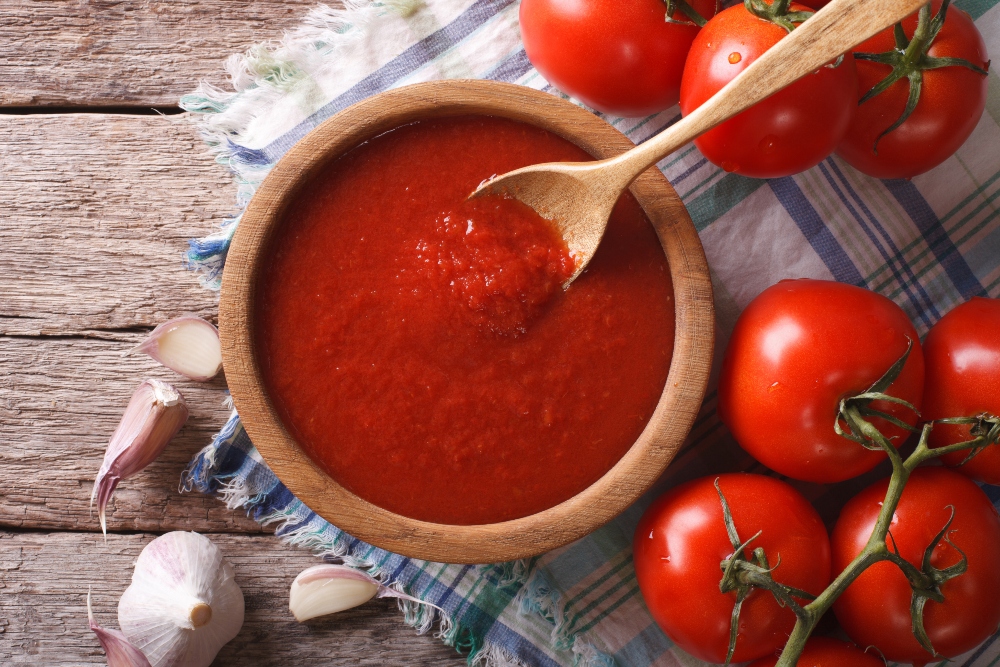
Tomato sauce with garlic and basil in a bowl closeup, to illustrate article about low fat vegan diet
Adobe StockFat helps the body absorb lycopene, the antioxidant in tomatoes linked to reduced prostate cancer risk

The stakes are personal for Mic. Prostate cancer runs in his family. Lycopene, the antioxidant abundant in tomatoes, has been linked to a lower risk of prostate cancer.

He notes that research shows “about a 30 percent lower risk of prostate cancer with high lycopene intake.” Given that connection, he questions whether strict fat avoidance could reduce the protective potential of plant foods.

“I wouldn’t want to throw away, you know, four times more lycopene than I need to because I’m super obsessed with dodging fat,” he says.

Carotenoids may also play a role in cardiovascular protection. He cites research finding a 76 percent lower risk of atherosclerotic cardiovascular disease among those with the highest skin carotenoid levels.

“You want to absorb it,” he says.

Does the type of fat matter?

Not all fats perform equally. Studies comparing saturated fat to monounsaturated fats found that butter underperformed compared to plant oils such as canola and soybean oil when paired with salads.

“Saturated fat is worse,” Mic says plainly.

Interestingly, smaller amounts of fat – around three grams – performed nearly as well as higher amounts in some trials. Emulsified fats, such as those found in mayonnaise or blended dressings, may further enhance absorption. One study suggested a 40 percent increase in carotenoid absorption with emulsified fat.

Whole food sources appear effective, too. While avocado oil slightly outperformed whole avocado in one trial, half an avocado still significantly improved beta-carotene and lycopene absorption.

What about other antioxidants?

Carotenoids are not alone. Some polyphenols also benefit from fat. Mic explains that “curcumin from turmeric as well as quercetin … and resveratrol in grapes all do a bit better with fat.”

However, not all antioxidants behave the same way. Anthocyanins, the pigments in berries and purple foods, “just don’t care if they have more fat,” he says.

Overall, he concludes, “it appears that all carotenoids and quite a few polyphenols will be more absorbed with fat.”

So, are low fat vegans wrong?

Mic does not dismiss the low fat vegan diet outright. He acknowledges that some people thrive on it, including those managing conditions like Type 1 diabetes.

Instead, he frames the issue as one of optimization rather than ideology. “You have to be including some fat to really be getting your money’s worth in terms of carotenoids, really getting that disease fighting power of carotenoids,” he says.

He suggests that even a small amount, perhaps three grams of emulsified oil or a blended nut-based dressing, could make a meaningful difference.

Rather than focusing strictly on macronutrient targets, he now emphasizes low saturated fat while including whole food plant fats. “I personally land in like a low saturated fat whole food fat emphasis as opposed to trying to hit a certain macronutrient target,” he says.

For those committed to a low fat vegan diet, the takeaway may not be to abandon it, but to rethink how low is too low, especially when it comes to unlocking the full disease-fighting power of plants.

You’ll find more videos about vegan health, science, and nutrition on Mic the Vegan’s YouTube channel.

https://plantbasednews.org/lifestyle/health/low-fat-vegan-diet-health-benefits/

Tuesday, June 24, 2025

If you are doing these 6 things, then you’re accidentally making your vegan meals unhealthy

From vegoutmag.com/food-and-drink

By Avery White

Even the prettiest plant-based meals can sabotage energy if balance, protein, and key nutrients get left behind 

Plant-based plates can look picture-perfect—sprinkled with crimson beet ribbons and quinoa glistening like confetti.

Yet I’ve stepped away from that same tableau feeling sluggish, craving snacks within the hour. Sound familiar?

When I switched from omnivore spreadsheets to kale spreadsheets (yes, I tracked my macros for fun), I thought eliminating animal products equalled instant health.

Reality checked me hard.

Vegan equals plant-based, not automatically nutrient-balanced. In fact, simple missteps can sneak excess sugar, sodium, and deficiency into every forkful.


If you’ve wondered why a supposedly clean lunch leaves you dozing at your desk, read on. The next six habits quietly sabotage plant-powered goals—and every one has a fix within reach.

1. Loading your plate with refined carbs

Ever devoured a mountain of white rice and felt hungry an hour later? That’s refined starch doing its quick-burn trick.

Strip grain of bran and germ and you lose fibre, B-vitamins, and steady energy.

Nutrition researcher Dr. David Katz highlights what happens when whole grains replace refined starch: “When saturated fat calories were replaced with whole grain calories … rates of cardiovascular disease declined significantly.”

Whole-grain brown rice, oats, farro, or quinoa stabilize blood sugar and keep you full.

I stash pre-cooked barley in the freezer, ready for speedy stir-fries, so the refined option never tempts me after a long run.

2. Treating veggies as your only protein

“Leafy greens have protein too,” friends insist, piling spinach high. True, but sheer volume required turns lunch into a lawn-mower marathon.

Skimping on beans, lentils, tofu, tempeh, or seitan means muscles miss their repair material and satiety crashes.

During spring marathon prep, I tracked grams and spotted a glaring gap.

Once I swapped half my salad for a cup of chickpeas and hemp seeds, evening snack raids dropped off.

Aim for roughly 1.2–1.5 g protein per kilogram body weight when training or recovering. A single cup of cooked lentils delivers 18 g—far easier than five cups of lettuce.

3. Ignoring critical micronutrients

A vegan plate can reach rainbow status and still miss vitamin B12, iodine, omega-3s, calcium, and iron. Low B12 in particular can drain energy and cloud focus.

The Vegan Society spells it out plainly: “The only reliable vegan sources of B12 are foods fortified with B12 … and B12 supplements.”

I keep a 1000 µg sublingual tablet next to my coffee grinder—habit stacking at its finest.

For omega-3s, ground flaxseed whirls into smoothies, while iodine-rich seaweed flakes top grain bowls. Tiny tweaks, big payoffs.

4. Replacing wholesome ingredients with processed vegan convenience foods

Those glowing “plant-based” nuggets may come loaded with sodium, saturated coconut oil, and mysterious additives.

Dr. Michael Greger cuts through the marketing haze: “Just because you’re eating a vegetarian or vegan diet doesn’t mean you’re eating healthfully.”

I once logged a single frozen vegan pizza—nearly a full day’s sodium.

Convenience has its place, yet placing quick products at the centre of every meal crowds out fresh produce, legumes, and whole grains.

Choose processed items as sidekicks, not stars.

Pair a modest portion of baked tofu jerky with leafy salad, or fold a veggie-burger patty into a bowl brimming with roasted sweet potato, black beans, and avocado.

5. Forgetting healthy fats

Low-fat fads still haunt plant kitchens. Skip nuts, seeds, and avocado, and you miss fat-soluble vitamins A, D, E, K as well as satiety.

I learned this the crunchy way: a fat-free smoothie bowl left me raiding the pantry within thirty minutes.

Now a tablespoon of almond butter or chia seeds keeps me humming through writing sessions.

Choose minimally processed sources: walnuts, flaxseed, tahini, extra-virgin olive oil. They cushion blood-sugar spikes and lend luscious mouthfeel without drenching plates in refined oils.

6. Building meals without colour or variety

It’s easy to fall into the beige loop—oat-milk latte, hummus wrap, pasta with red sauce—day after day.

Limited diversity shortchanges phytonutrients and gutsy microbes.

Think of your produce drawer as a palette. How many pigments can you fit into one bowl? Purple-cabbage slaw next to golden turmeric quinoa and emerald kale feels like eating a sunset.

Beyond aesthetics, varied plants feed different gut-bacteria strains linked with immunity and mood regulation.

Rotate proteins too: lentils Monday, edamame Tuesday, tempeh Wednesday. Variety ensures a broader nutrient spectrum and keeps boredom at bay.

Final thoughts

Healthy vegan eating rarely hinges on one grand overhaul. It lives in ordinary swaps repeated meal after meal.

Trade white bread for sprouted grain, slide chickpeas into salads, pop a B12 lozenge before your morning jog, and let whole-food colours crowd processed packages off the plate.

Notice energy levels within a week. Skin may brighten, sleep can deepen, and that subtle mental fog often lifts.

The body loves plants, yet it thrives when those plants arrive balanced, minimally altered, and varied.

Glance through the six habits again. Which one sneaks into your routine most often? Pick a single tweak today—perhaps adding ground flax to breakfast or choosing brown rice at lunch.

Tiny shifts compound quickly; spreadsheets prove it, and taste buds agree.

Trust yourself to course-correct. Every nourishing choice affirms commitment to both personal health and planet well-being.

Keep your fork adventurous, your pantry colourful, and momentum will follow.

https://vegoutmag.com/food-and-drink/ain-if-you-are-doing-these-6-things-then-youre-accidentally-making-your-vegan-meals-unhealthy/

Sunday, May 18, 2025

The Best Vegan Butters, According to Experts

From wellandgood.com 

The vegan butter market is slaying. No really—so many of the available options taste just like the real thing, making them delicious choices for both dairy-free and dairy-loving folks. In fact, I personally invest in vegan butter and I’m not even dairy-free.

These butter alternatives not only skirt some of the dietary concerns of regular butter, but they can be used in pretty much the very same ways. “My favourite ways to use vegan butter are in baking—think cookies, banana bread, or brownies—where the flavour and texture really matter,” says Sapna Peruvemba, MS, RDN, registered dietitian and founder of Health by Sapna. “I also love it melted over pancakes or spread onto my breads like butter naan, garlic bread, and roti.”

Here’s why vegan butter might be a “better” (and equally delicious) choice compared to the real stuff, plus six of the best brands to reach for on your next grocery run.

Why skip regular butter if you’re not dairy-free?

When it comes to the concerning nutrients found in real butter, saturated fat, dietary cholesterol, and sodium typically top the list. Good news: Vegan butters actually tend to be lower in saturated fat than dairy butter. Though a controversial nutrient in terms of its impact on heart disease, some evidence has shown saturated fat to increase overall risk through elevating blood cholesterol levels. 

Therefore, the healthcare community still generally recommends limiting consumption. “In fact, the 2020–2025 U.S. Dietary Guidelines for Americans recommend limiting saturated fat to less than 10 percent of total daily calories,”  explains Peruvemba. “On a 2,000-calorie diet, that’s fewer than 200 calories—or roughly less than 22 grams of saturated fat per day, which equates to around three tablespoons of butter if no other sources of saturated fat are consumed.”

Replacing saturated fat with unsaturated fats—like monounsaturated and polyunsaturated fats—can help to lower cholesterol levels and inflammation throughout the body, encouraging better heart health. These types of fats are regularly found in plant-based sources—what vegan butter is made from. “Many vegan butters are made with oils like canola, soybean, olive, and sunflower oils, which are good sources of unsaturated fats,” Peruvemba adds. “However, some are made primarily with coconut oil or palm oil, which are still high in saturated fat so it’s important to check the ingredient list if you're looking for a vegan butter for regular use.” Where vegan butter is a clear step ahead of the regular stuff is its lack of dietary cholesterol. “Vegan butters are made from plant-based sources, so they have no cholesterol, which can increase the risk of heart-related issues,” shares Rhyan Geiger, RDN, registered dietitian and founder of the Phoenix Vegan Dietitian. Similar to saturated fat, there is some conflicting evidence around dietary cholesterol and heart disease risk, but there are also counter studies showing its correlation to increased cardiovascular disease risk, warranting caution around its consumption. While there’s no official maximum intake recommendation for this nutrient, the Dietary Guidelines suggest keeping consumption “as low as possible,” and vegan butter can help you accomplish this goal.

The 6 best vegan butters

Miyoko's Organic Salted Oat Milk Cultured Vegan Plant Based Butter

Miyoko's Organic Salted Oat Milk Cultured Vegan Plant Based Butter

$6

Serving Size: 1 tablespoon

Calories: 80 calories

Saturated Fat: 4.5 grams

Total Unsaturated Fat: 4.5 grams

Dietary Cholesterol: 0 milligrams

Sodium: 70 milligrams

Price: $6.99

“While slightly harder to find, Miyoko's vegan oat milk butter has a delicious taste,” says Geiger. And I can absolutely attest to this, as it’s my butter of choice and has been for years. With its smooth, creamy, perfectly salty, and slightly tangy (thanks to the cultured oat milk it’s made with) taste you’d never know it wasn’t the real thing. It’s also organic and made with recognizable ingredients, like turmeric for its butter-yellow color. “This butter has more saturated fat than other plant-based butters, making it more similar to dairy butter in saturated fat content,” Geiger adds. This makes it a great option for baking projects.

Pros:

  • Incredible taste
  • Lowest sodium content of this round-up
  • Organic

Cons:

  • Harder to find in some grocery stores (typically sold at some retailers, like Whole Foods)
Earth Balance Original Buttery Spread

Earth Balance Original Buttery Spread

$7

Serving Size: 1 tablespoon

Calories: 100 calories

Saturated Fat: 3 grams

Total Unsaturated Fat: 7 grams

Dietary Cholesterol: 0 milligrams

Sodium: 105 milligrams

Price: $3.99

“Made with a blend of canola, soybean, flaxseed, and olive oils, Earth Balance provides a good mix of monounsaturated and polyunsaturated fats,” says Peruvemba. “Flaxseed oil is one of the best plant sources of omega-3 fatty acids, a type of polyunsaturated fat important for heart and brain health.” 

And this brand has been around for quite a while as far as vegan butters go. “Earth Balance is a classic vegan butter, the Buttery Spread is one of my favourites,” Geiger adds. “It’s made with heart-healthy plant-based oils, has less saturated fat than dairy butter, and has no cholesterol.” Plus, you’ll be sure to find this at most major grocery store chains nationwide. “It’s widely available and affordable, which makes it easy to use regularly for cooking and baking,” Peruvemba agrees.

Pros:

  • Widely available
  • Excellent, butter-like taste
  • Features flax for a healthy dose of omega-3 fatty acids and unsaturated fats

Cons:

  • Higher sodium content than regular butter

Serving Size: 1 tablespoon

Calories: 100 calories

Saturated Fat: 5 grams

Total Unsaturated Fat: 5.5 grams

Dietary Cholesterol: 0 milligrams

Sodium: 110 milligrams

Price: $5.99

Country Crock is a brand many of us grew up with…and they’ve been innovating in the plant-based butter space ever since. While they have lots of dairy-free options to choose from, their olive oil-infused plant butter is not to be missed out on. “The olive oil version is my favourite because of its rich, creamy taste and olive oil is rich in heart-healthy monounsaturated fats,” says Peruvemba. 

Though this option does have some palm products in it, increasing the saturated fat content, it still measures in at less than regular butter. “It’s also readily available in most grocery stores,” Peruvemba adds.

Pros:

  • Excellent taste, ideal for both savoury and sweet culinary pursuits
  • Rich in unsaturated fats
  • Widely available

Cons:

  • Pricier option
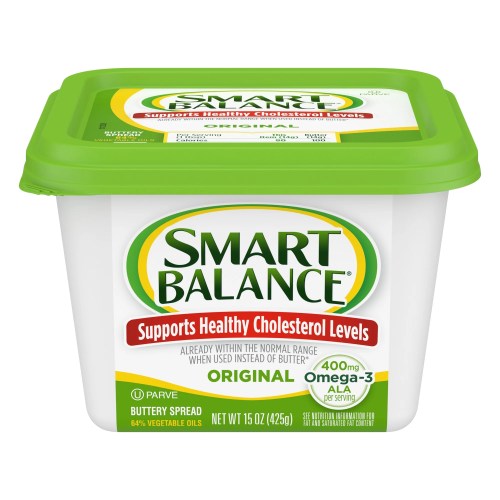
Smart Balance Original Spread

Smart Balance Original Spread

$3

Serving Size: 1 tablespoon

Calories: 80 calories

Saturated Fat: 2.5 grams

Total Unsaturated Fat: 6.5 grams

Dietary Cholesterol: 0 milligrams

Sodium: 90 milligrams

Price: $3.99

“Smart Balance Original is made with plant-based oils and has 400 mg of plant-based omega-3s like alpha-linolenic acid (ALA),” Geiger offers. “It has no cholesterol, low sodium, and only 2.5 grams of saturated fat.” This omega-3 content bodes well for inflammation reduction body-wide. Smart Balance, too, has been on the market for a long time, building a strong customer base—largely due to this impressive nutrition. This also means that it’s widely available across the country.

Pros:

  • Very low in saturated fat compared to other vegan butters
  • Lower in calories and sodium
  • Very affordable

Cons:

  • Less butter-like flavour compared to other brands
Melt Organic Cold Pressed Plant Butter Spread

Melt Organic Cold Pressed Plant Butter Spread

$5

Serving Size: 1 tablespoon

Calories: 80 calories

Saturated Fat: 3.5 grams

Total Unsaturated Fat: 5.5 grams

Dietary Cholesterol: 0 milligrams

Sodium: 80 mg

Price: $6.99

As a newer kid on the block, Melt is making a name for itself with the yummy buttery flavour and impressive nutrition of its plant-based spread. “It’s made with a blend of organic canola, sunflower, and flaxseed oils, which are high in polyunsaturated fats, plus a small amount of coconut and sustainably sourced palm fruit oil,” explains Peruvemba. “Plus, all oils are expeller-pressed, meaning they are mechanically extracted without chemical solvents, preserving more nutrients and flavour.” However, this brand is not (yet) as accessible as others on this list. “Melt is a bit more expensive and harder to find compared to Earth Balance or Country Crock,” Peruvemba adds.

Pros:

  • Organic
  • Made with a variety of oil sources for rich, butter-like flavour
  • Cold pressed for minimal processing and maximum taste
  • Cons:

    • Probably the hardest to find on this list
    Violife Salted Plant Butter

    Violife Salted Plant Butter

    $3

    Serving Size: 1 tablespoon

    Calories: 100 calories

    Saturated Fat: 6 grams

    Total Unsaturated Fat: 5 grams

    Dietary Cholesterol: 0 milligrams

    Sodium: 85 milligrams

    Price: $4.99

    Violife is a leader in the dairy-free product movement, offering a variety of cheese, creamer, and dip alternatives. So, it’s no surprise that they also produce top-notch plant-based butter. “Violife includes coconut oil (higher in saturated fat) along with canola and sunflower oils to add some polyunsaturated fats,” says Peruvemba. “Because of the higher saturated fat content and price, I tend to save this one for baking special treats like cookies or pastries rather than using it daily for cooking or spreading.”

    This tasty option is usually my runner-up purchase when Miyoko’s isn’t in stock at my local grocer.

  • Pros: