Showing posts with label Italy. Show all posts

Tuesday, March 3, 2026

From Salsiccia to Salame, Italians Embrace Plant-Based Food with 11% Growth Since 2023

From greenqueen.com.hk

By Anay Mridul

Italy’s consumer base for plant-based meat, dairy and other products has expanded by nearly 11% in the last three years, with health at the forefront of the shift.

Italians love their polpete, salsicce and salame – and not just the conventional versions their government has weaponised.

A new report by the Italian Food Union’s plant-based products arm suggests that the number of Italians who eat vegan foods like meat and dairy alternatives has increased by 10.6% since 2023.

And the products spearheading this consumption trend are meat-free burgers, meatballs, sausages, and cold cuts, which are consumed by 45% of Italians. They’re followed by non-dairy milk (34%) and yoghurts (32%).

These attitudes are reflected in the market performance of plant-based alternatives in Italy, which saw increases in sales of meat analogues (15%), plant-based milk (3%), and dairy-free yoghurt (2%) between 2023 and 2024.

                                                                                                            Courtesy: Heura

Health drives Italy’s plant-based market

The research shows that nearly half of Italians (46%) now eat plant-based products two to three times a month. Asked why they consume these foods, 42% said they want to diversify their diet, and 19% cited a wish to increase the intake of plant proteins.

According to the Italian Food Union, it’s not just vegans and vegetarians who are choosing these foods; it’s also people who want to rethink their consumption habits with a focus on adding more plants to their rotation.

In fact, vegan food is perceived very positively among Italians, who recognise the value it brings to maintaining a balanced and sustainable diet. Over 73% of respondents found plant-based products healthy, recognising them as a rich source of fibre, vitamins, minerals and protein, with a low fat and cholesterol content.

This is in line with the dietary recommendations from scientists across the world. For instance, the Eat-Lancet Commission recommends eating a predominantly plant-based diet with only small amounts of meat and dairy in its flagship Planetary Health Diet framework.

“All national and international guidelines for healthy eating recommend increasing the consumption of plants, and plant-based proteins in particular,” notes Giancarlo Giorgio, president of the Italian Food Union’s plant-based group.

These guidelines advise people to eat more legumes (like beans, peas and lentils), more often. However, only one in four Italians consumes them more than four times a week, and a majority eats below the recommended amount.

“In this transition, plant-based products can be a key ally in achieving this goal. The plant-based choice is reasoned, guided by practical and nutritional reasons, but also ethical or linked to specific needs such as intolerances, and this is why it is important to continue on the path undertaken in recent years without upheavals.”

Ahead of EU vote, Italians not misled by plant-based meat labels

                                                                                        Courtesy: Anay Mridul/Green Queen

Aside from nutrition, two-thirds of Italians (66%) credited their elevated intake of plant-based foods to culinary creativity, noting that they allow them to experiment with new flavours, textures and ingredients in the kitchen. For 65%, they are an excellent option when there’s little time to cook, and enable them to eat vegetables even when they’re not fully in season.

Sustainability plays a role, too. Over two-thirds of respondents (68%) said they choose plant-based products because they’re made exclusively without animal-derived ingredients, and 63% cited their low environmental impact.

Moreover, the Italian Food Union took the temperature of the country’s views on the EU-wide ‘veggie burger’ ban. This week, the bloc will vote on whether plant-based meat should be banned from using meat-like terms on product labelling. Hundreds of thousands of Europeans have come out in opposition to the proposal.

A survey conducted by AstraRicerche for the trade group finds that 90% of Italians who buy vegan products know what they’re putting on the plate. And when subjected to a visual test, they correctly recognise plant-based alternatives. For instance, only one in 30 (3.4%) thought vegan meatballs were of animal origin, based purely on sight.

The Italian Food Union itself is against the EU proposal. “This measure aims to ban established and easily understood terms, which have never caused any misunderstanding or misinterpretation over time, and appears to run counter to real consumer awareness,” it says.

“The growing interest in plant-based products is not a passing phenomenon, but rather a symptom of a concrete transformation in Italians’ eating habits,” argues Giorgio.

The shift towards plant-based eating brings economic benefits for the country and its businesses alike. Vegan cheese producer Dreamfarm, for instance, saw its sales double in 2025. And new research reveals that a transition to alternative proteins could boost Italy’s self-sufficiency by reducing the reliance on imports, adding €10B in gross value annually by 2040.

End products could represent a domestic market of nearly €6B – that’s twice the size of Italy’s domestic olive oil market. And when considering the full value chain, the total market opportunity could rise to €8B. Trade opportunities, meanwhile, could reach €3B in 2040, on par with Italy’s pasta exports in 2022. Plus, the industry could help create 31,000 jobs across the value chain.

https://www.greenqueen.com.hk/italy-plant-based-food-market-vegan-sales-growth-demand/ 

Tuesday, February 3, 2026

Omnia, the vegan restaurant that focuses entirely on taste: the rise of Aggeliki Charami

From reportergourmet.com

In the heart of the Dolomites, the restaurant at the Paradiso Pure.Living Hotel offers an ethical and highly personal take on contemporary vegan cuisine, combining experimentation, tradition, and continuous research

At an altitude of over two thousand meters, on the Alpe di Siusi, in the heart of the Sciliar-Catinaccio Nature Park, the Paradiso Pure.Living Hotel offers a distinctive and consistent vision of hospitality and fine dining. Here, in the Dolomites, a UNESCO World Heritage Site, the concept of luxury moves away from ostentation and towards a more conscious idea, where sustainability, well-being, and aesthetics coexist naturally.

The project stems from the vision of brothers Alexander and Maximilian Spögler, who built the hotel's identity around the Pure.Living philosophy, divided into three complementary areas: Pure.Food, where the completely plant-based cuisine focuses strongly on the organic origin of raw ingredients and an ethical approach to catering; Pure.Art, the cultural heart of the hotel, which houses a constantly changing contemporary art gallery and artist residency programs; and finally Pure.Energy, the element dedicated to Alpine-style wellness, which includes indoor and outdoor yoga, regeneration rituals, an indoor pool, saunas, a gym, and an outdoor hot tub overlooking the mountains. 

The hotel, open during the winter season from December to April and during the summer season from June to September, is designed as an immersive destination: direct access to the Dolomiti Superski slopes during the cold months, a dense network of trails during the summer, and a concept of hospitality that aims to be transformative and respectful of the natural environment.

The culinary offerings of chef Aggeliki Charami

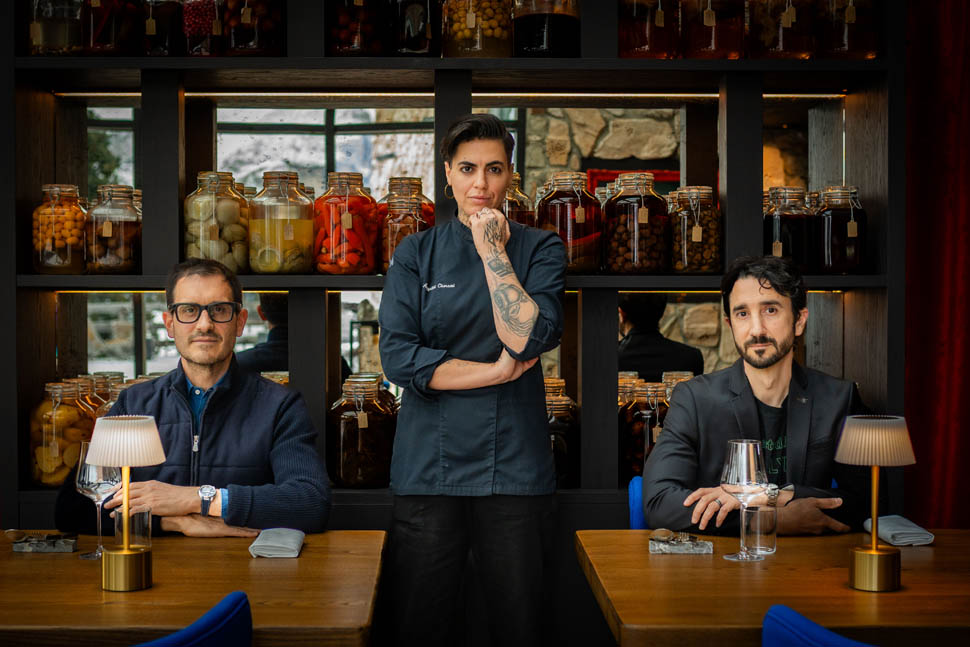
Leading the entire gastronomic offering, from breakfast to dinner, is Aggeliki Charami, a Greek chef originally from Sparta, with experience in Greece, Italy, and Dubai. Specializing in plant-based cuisine, Charami is involved in some of the most important projects in the sector, including La Vimea, the first vegan hotel in Italy owned by the Spögler family.

1 Owners Alexander Maximilian Spogler and Chef Aggeliki Charami
 

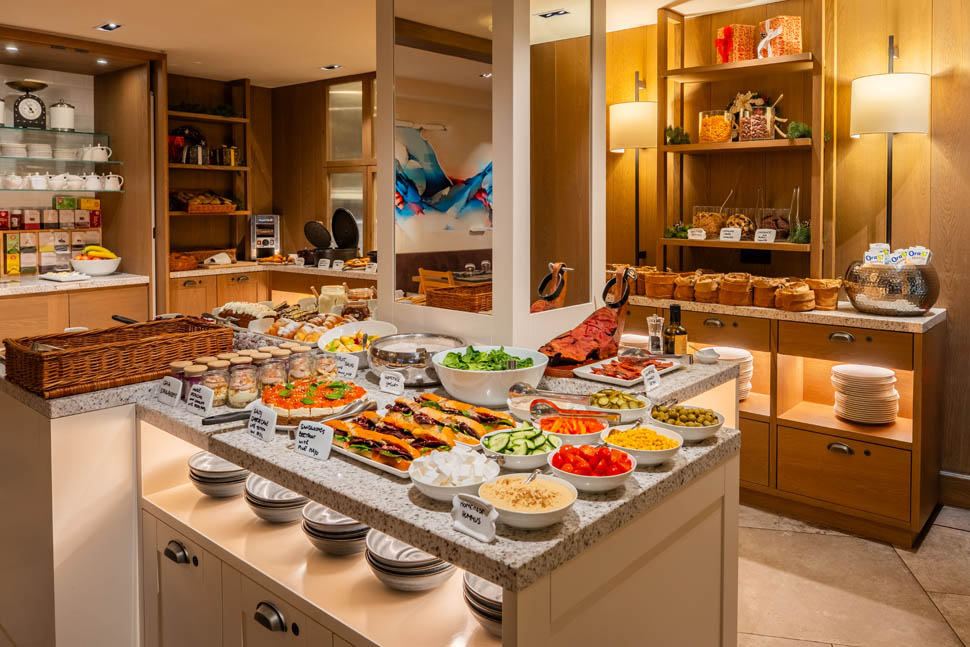
Charami's style is certainly influenced by her origins, as can be seen in her use of spices and her bold, intense flavours. Perhaps what is most surprising is that the expectations of a delicate, light, and simple plant-based vegan cuisine are completely overturned. The chef aims to experiment with techniques, but it is certainly her personal memories that shape her gastronomic identity. Breakfast boasts a wide range of pastries: cakes, croissants, and bread are all made in-house, as are the jams and spreads that accompany them.

Breakfast 1


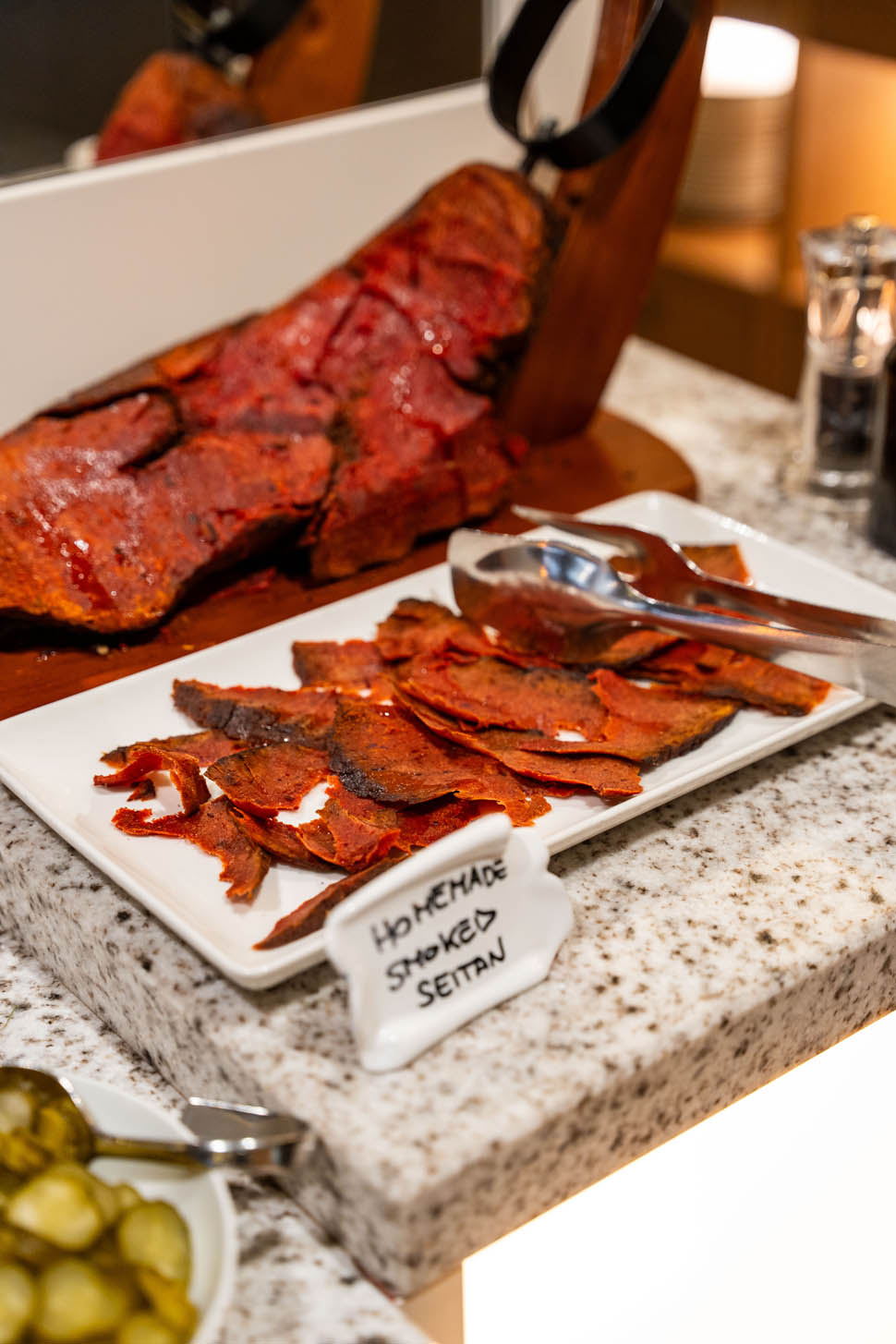
Savoury options include scrambled tofu, cooked and raw vegetables, plant-based cheeses, and even smoked seitan, placed on a jamonero, to be sliced on the spot as a plant-based alternative to cold cuts. The hotel's lunch and dinner menu is interesting, offering, among other things, risotto with mushrooms, spätzle with basil pesto, salads, and naturally leavened pizzas that surprise with their light dough and creative toppings.

Breakfast 8
 

OMNIA Plant-Based Restaurant, vegan fine dining by chef Charami

OMNIA has only six tables, set in an elegant winter garden overlooking the spectacular peaks of the Dolomites. The experience is designed as an intimate and immersive journey in which contemporary vegan cuisine, the local area, and ethical principles speak a single common language. Charami works very carefully with fermentation, starting with koji and scoby, which she uses to create plant-based cheeses and many other ingredients that she incorporates into her recipes. Hers is a process that is constantly evolving and always in the experimental phase.

The menu offers a single ten-course tasting menu, entirely plant-based, designed to enhance the raw ingredients and transform them into a very personal gastronomic narrative. The pairing, curated by Anna Giusti, focuses on kombucha, which is prepared here with initial fermentations based on different types of tea and then, in a second fermentation, calibrated with local ingredients and more. Charami's cuisine focuses on depth of flavour and long and meticulous technical research, which is evident in all of his dishes. The tasting menu is always composed of at least two dishes per course and, in many cases, a broth is also served to replace the accompanying kombucha.

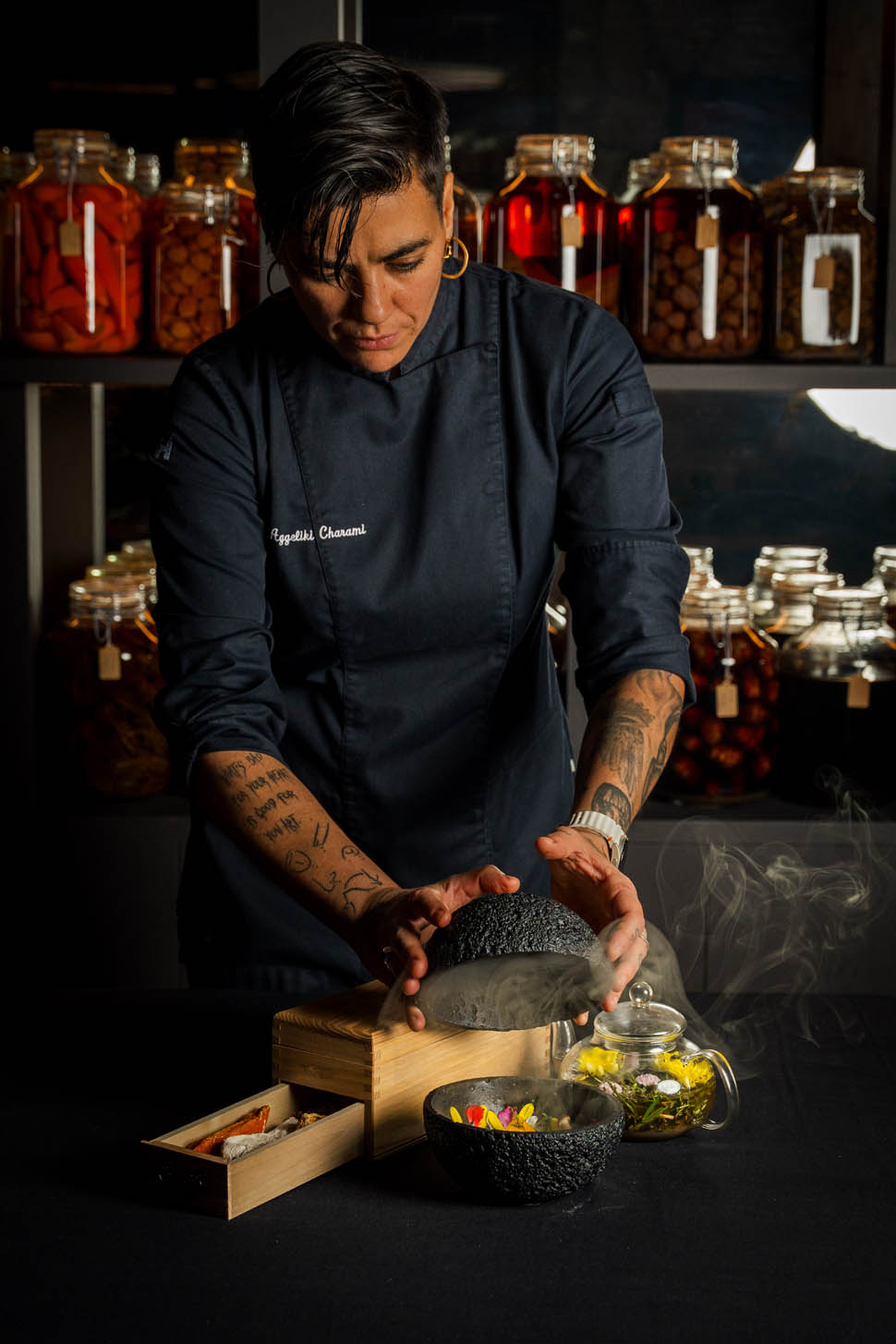
17 Chef Aggeliki Charami
 
The tasting begins with From Sea to Soil, a lower shell containing a faux oyster of crème brûlée with orange and grilled Greek mushrooms. Next to it is a jar of mushrooms with celery foam, hazelnut, truffle, and mushroom demi-glace. The combination of sea and soil reflects the chef's origins and current life. The dish is intense but manages to maintain a good balance and a certain delicacy.
Next comes Deep in the Hay, Egg, another composite dish that looks like an egg yolk surrounded by caviar. It is a fondant of mountain potatoes, truffles, seaweed caviar, fermented pumpkin yolk, and chamomile. It is accompanied by a thick broth of burnt potatoes that opens the palate with a pleasant savoury flavor—an element that often characterizes many of Charami's dishes.

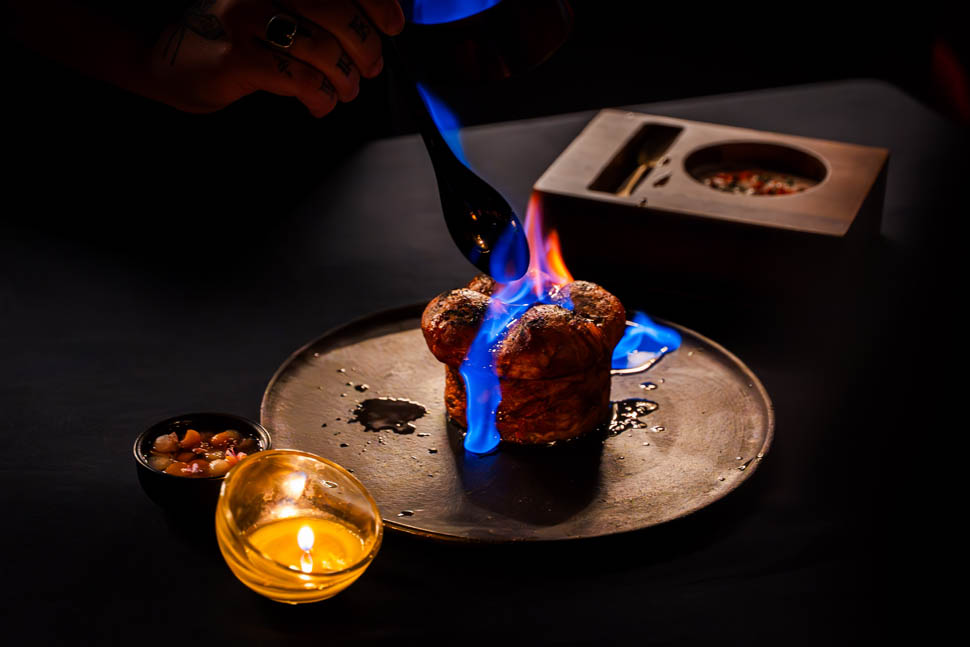
One of the most interesting dishes on the menu is Earthbound Roots, Brioche, a surprisingly soft brioche bread considering that it contains no butter or yeast. The bread, flambéed at the table, is accompanied by a delicate foam of lemon, oregano, and salt.

Earthbound Roots Brioche 1

What does the cheffe eat when she's at home?” Warm Simplicity Ramen was born from Charami's answer to this question. She honestly admits that she doesn't cook at home and often finds herself eating instant noodles. So, noodles (which look more like tagliolini in shape) arrive at the table with a slow-cooked mushroom broth with an intense umami flavour, into which the diner dissolves two sachets, one with chestnut powder and the other with a mix of 12 herbs.

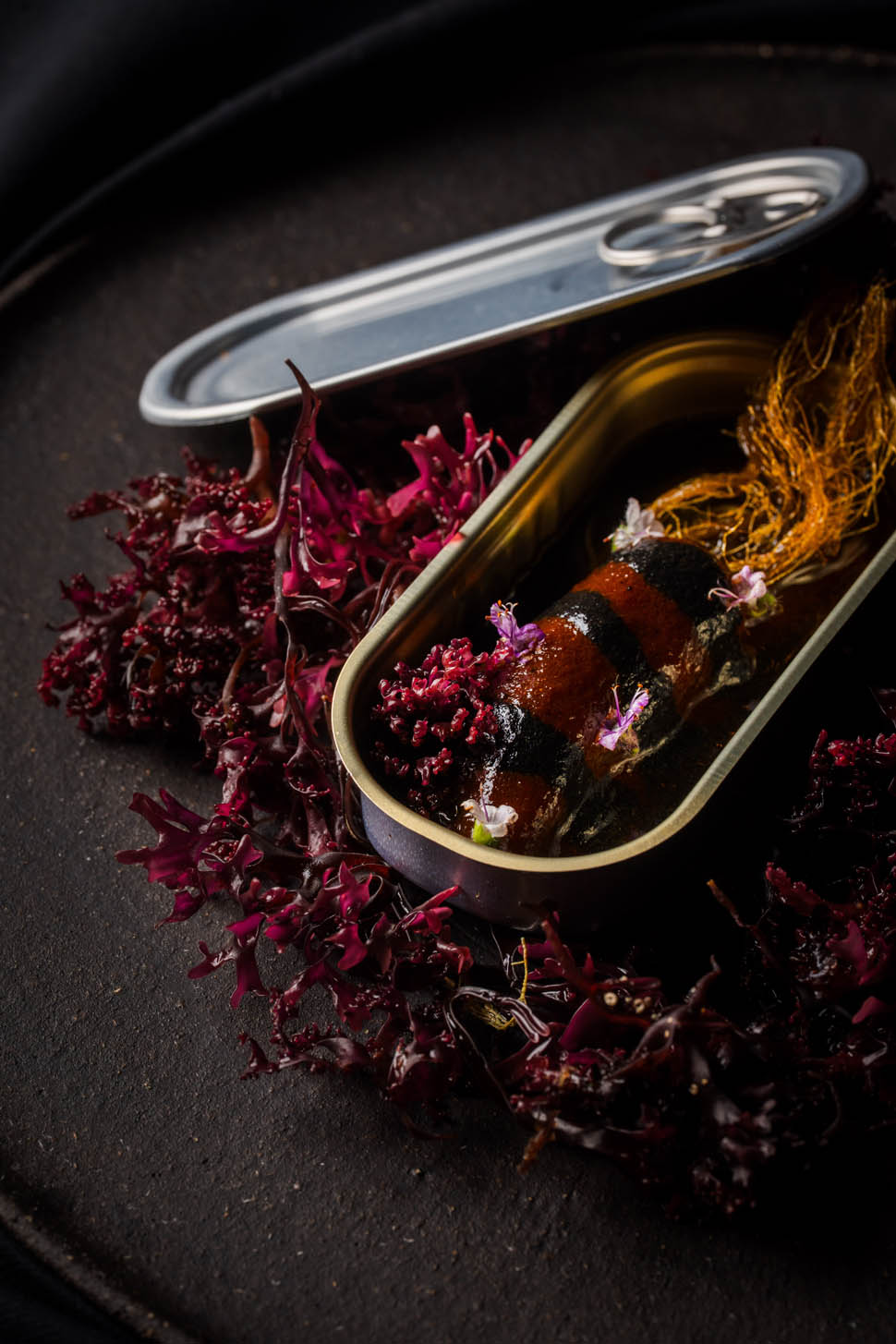
Echoes of Memory, Squid is one of Charami's signature dishes. Born into a family of humble origins, as a child she would complain to her mother that she always served the same cheap canned fish. Once, to please her, her mother prepared rice with the contents of the can, and today the chef is inspired by that simple yet loving gesture. Inside a replica tin can, there is a fake cuttlefish stuffed with plankton rice and fennel oil, seasoned with seaweed bisque and finished at the table with black sesame ink. The textures in this dish are delightful, interspersed with the crunchiness of the fake fried tentacles. Undoubtedly spectacular to look at.

Echoes of memory Squid 2
 

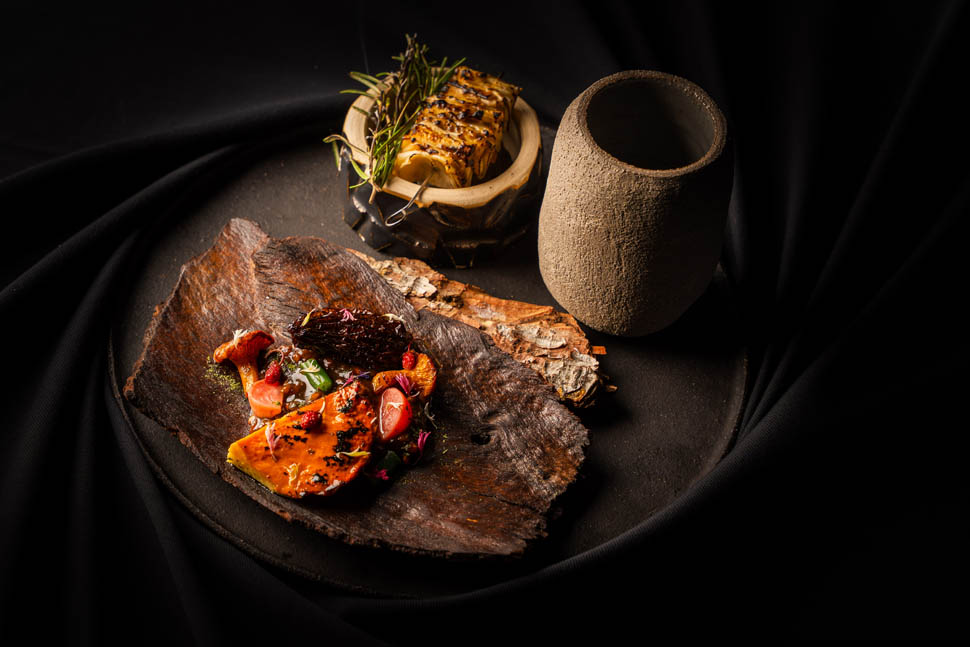
Another interesting dish is Ode to the Dolomites, Chicken of the Woods, where the mushroom recalls the texture and appearance of chicken fillet and a souvlaki with a truly amazing texture.

Ode to the Dolomites Chicken of the Woods 1
 

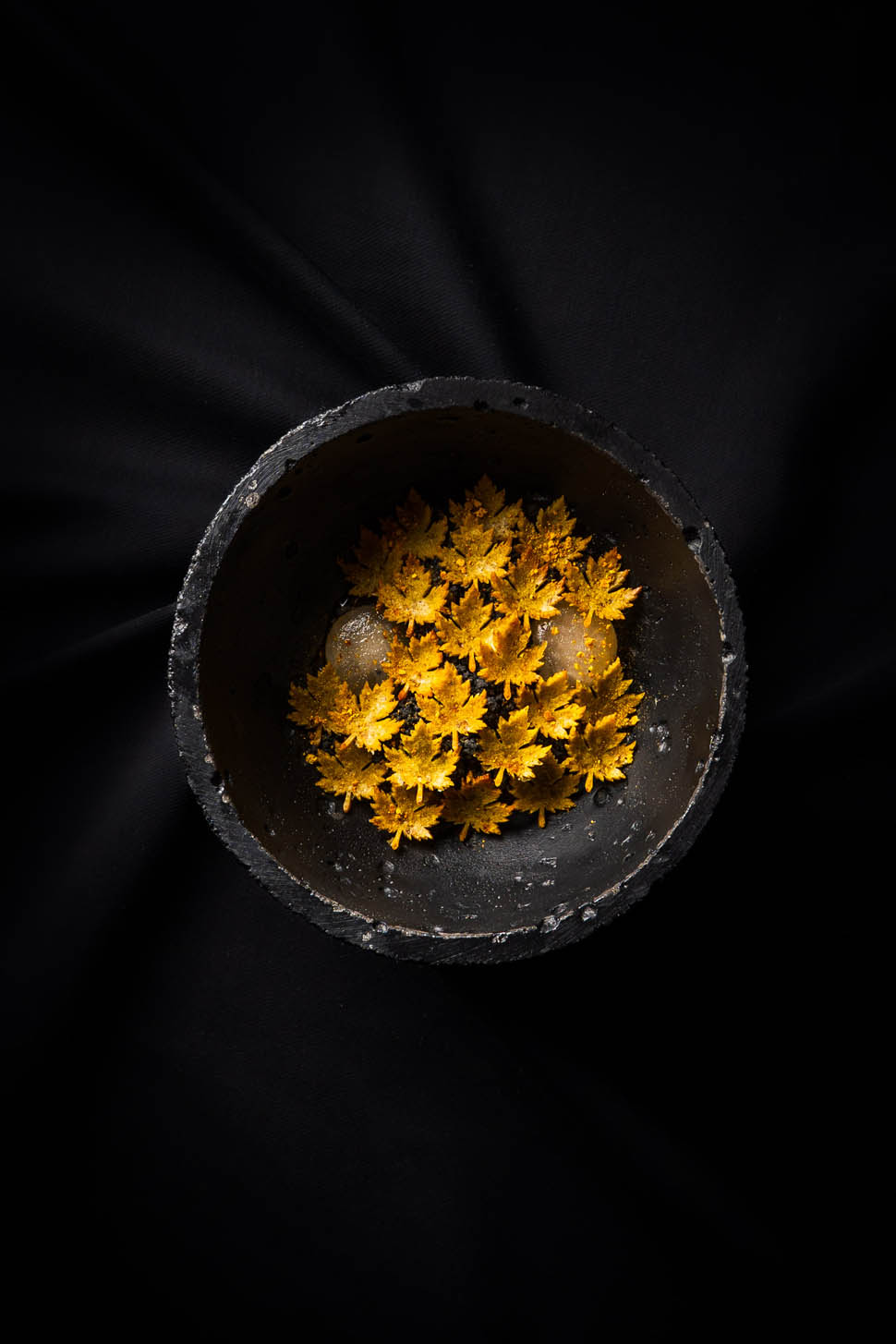
The dessert is round, balanced, complex: koji rice pudding with burnt almond milk, miso caramel, porcini powder, cinnamon, and a pine sorbet and musk syrup with mini leaves of very thin bergamot shortcrust pastry. A masterpiece of technique.

Childhood Reverie Rice Pudding 1
 

Charami's cuisine is certainly noble in both concept and technique. It is not a watered-down cuisine; it speaks with a loud voice and explodes with flavour. Meat, fish, eggs, and dairy products will not be lacking on the palate, which will be continually pushed upward without ever turning back. When I asked the chef why a vegan cook would seek out so many elements that are commonly associated with meat and fish, she replied that “cuisine and flavours are memories, and I haven't always been vegan.” Touché.

Contacts and info

Omnia Plant-Based restaurant

Via Joch, 17 – 39040 Castelrotto (BZ) 

Phone: +39 0471 727 905

Email: info@paradiso-pure.com      Website: https://paradiso-pure.com/it/

https://reportergourmet.com/en/news/9705-omnia-the-vegan-restaurant-that-focuses-entirely-on-taste-the-rise-of-aggeliki-charami

Saturday, November 1, 2025

Top 10 Countries With The Highest Number of Vegans In The World

From thehealthsite.com

These are the top 10 countries with the highest number of vegans in 2025 as the world celebrates World Vegan Day

These days, everybody is more concerned about health and wellness for the longevity of life and to stay healthy, and honestly, people are also making such choices that are considered more of thoughtful eating. It's not just about choosing the right food, but people are also turning vegetarian. They have turned Vegan. Being vegan means not consuming any type of animal products, including food, clothing, and other materials. From celebrities like Akshay Kumar to Anushka Sharma, many have switched to a vegan diet.


List of Countries With Highest Number Of Vegans

According To Statistics of World Population Review, here's the list of the top 10 countries with the highest number of Vegans in the world.

India

Something which is more interesting is that India remains at the top when it comes to being Vegan because being compared to other countries in the world, India has the highest number of Vegans. At least 30 to 40% of people follow vegetarian diet can also be linked to culture or religion that many people follow as many religions are the promoter of nonviolence towards animals.

Israel

Israel is also one of the countries that approximately has 13 to 15% of a vegetarian population. One of the reasons is also that because it is also known as the vegan capital of the world.

Italy

Italy is also one of the countries that has a vegetarian population of around 10 to 12 percent of the population. Italy's vegetarian population continues to grow, and it is because many people are becoming health-conscious of the plant based eating.

United Kingdom

United Kingdom has at least 10% of vegetarian population. People have seen rise in vegetarianism increasing over the years especially it is more prominent in London which also shows an inclination of British people towards plant based diets.

Germany

Germany has at least 9 to 10% of vegetarian population and people are becoming more aware of environmental sustainability. Many Germans have switched to plant based diets and something called veggie day. Movement has promoted a weekly vegetarian diet.

Brazil

Brazil has a vegetarian population of 8% and country has also experienced a notable rise. Many people are becoming more concerned about their environment and the population has turned to plant based diets.

Sweden

Sweden government has never failed to support plant based eating which also includes campaigns that reduce meat consumption promoting Vegeterianism.

United States

United States does not have much vegetarian population but definitely of 5 to 7% and it is also one of the fastest growing vegetarian populations in urban areas. Recent times have seen a lot of change in people adopting to vegetarian diet.

Australia

Australia has a vegetarian population of only 5% but significant changes. Device of vegetarian population has been observed, specially in cities like Melbourne and Sydney.

Mexico

While Vegan trend has not touched Mexico, but population adopting to vegan diet is gradually increasing. Many plant based diets are becoming part of Mexico's traditions.

Overall, these are few of the countries who are vegan and many are making shift towards vegan culture. Being vegan is a part of new normal and it is health and environmental factors that have influenced people to take this step further as people are becoming more aware about health impacts of meat consumption.

Thursday, October 16, 2025

Italian Vegan Cheese Start-up Brings Mozzarella, Stracciatella & More to France

From greenqueen.com.hk

Italian non-dairy cheese maker Dreamfarm has expanded into supermarkets in France, bringing its suite of innovations to the Paris area.

Parisians can get a taste of classic Italian cheeses made without the cow, as Dreamfarm brings its nut-based alternatives to grocery stores in the French capital.

The start-up has gained a listing with retail giant Monoprix, rolling out six of its innovations in around 70 stores across the Paris area. “We’re proud to bring our plant-based alternatives to such an iconic cheese-loving country,” says Dreamfarm CEO Giovanni Menozzi.

Dreamfarm is hoping to tap into France’s burgeoning vegan cheese market – sales of dairy-free cheese grew by 19% in 2024 (albeit from a relatively small base), making it the fastest-growing segment in the country’s plant-based food market.

Dreamfarm wants to tap into France’s ‘incredible food culture’

Founded in 2021 by Maddalena Zanoni and Mattia Sandei, Dreamfarm uses almonds and cashews to make clean-label dairy-free alternatives to staple Italian cheeses like mozzarella, ricotta, and stracciatella, each with a Nutri-Score A rating.

The mozzarella, its flagship product, comes as a ball-shaped piece submerged in water, reminiscent of its conventional counterpart. And earlier this year, Dreamfarm debuted vegan ciliegine, or mini mozzarella balls. The firm also makes cream-cheese-like spreads in plain and garlic-and-herb flavours.

Its cheeses have already been available in France at online retailer Official Vegan Shop, and via Végétal Food and Prevogel for foodservice. The Monoprix launch marks the brand’s brick-and-mortar debut, opening it up to a wider audience of “flexitarian, vegan, and food-curious consumers”.

“France has an incredible food culture, and we believe Dreamfarm can be part of it, offering the same pleasure and creativity of traditional dairy, but made from plants,” Menozzi said.

                                                                                                        Courtesy: Dreamfarm

Plenty of potential and challenges for non-dairy cheese in France

Dreamfarm raised €5M in funding in 2023, and is actively targeting the Gen Z market. In May, it conducted a guerrilla marketing stunt in the streets of Milan, with actors posing as tourists wearing cow masks and vacation-ready attire to send cows on a break, since they’re no longer needed to produce great-tasting cheese.

Now, to celebrate its French launch, Dreamfarm and Monoprix are planning in-store tastings, local events, and collaboration with food influencers. The company will face competition from existing vegan cheese players in the country, including Jay&Joy and its now-subsidiary Les Nouveaux Affineurs, Sojami, Petit Veganne, and Tomm’Pousse.

Despite vegan cheese’s growth in France, it remains 42% more expensive than conventional cheese, and makes up just 0.1% of the overall market. Dreamfarm’s products are highly rated—they have earned rave reviews from Miyoko Schinner, a pioneer of modern plant-based cheese, who told Green Queen she found its cheeses “voluptuous, silky, and delicious”.

The development follows Dreamfarm’s expansion in other European countries, namely Belgium, the Netherlands, and Germany. Now, it aims to continue its continental growth, with plans to enter more nations this year.

https://www.greenqueen.com.hk/dreamfarm-vegan-cheese-mozzarella-fromage-vegetal-france/ 

Tuesday, September 16, 2025

This creamy chickpea pasta proves Italian comfort food can be plant-based

From vegoutmag.com

By Adam Kelton

A comfort classic gets a plant-based upgrade—and the secret ingredient might just surprise you

From white-glove wine pairings on the Amalfi Coast to sizzling yakitori stalls in Osaka, I’ve had the privilege of experiencing food that speaks every language.

And I’ll be honest—when I first heard about “chickpea pasta,” I filed it under the same category as oat milk cheese and jackfruit pulled pork: noble, but rarely memorable.

But here’s the kicker: one night, a friend made me a bowl of creamy chickpea pasta with garlic, olive oil, blistered tomatoes, and fresh herbs.

It was rich. It was satisfying. It was comforting in the way good Italian food should be. And it didn’t leave me in a food coma or wondering what I just did to my cholesterol.

That was the beginning of a small obsession—not just with chickpea pasta, but with a broader question: Can we make the kind of food we crave… without wrecking our health or the planet?

Spoiler: yes. And chickpea pasta is an excellent place to start.


Why chickpea pasta hits the sweet spot for flavour, health, and sustainability

We’re in a moment of food reckoning. Climate change is accelerating, grocery prices are climbing, and more of us are rethinking what it means to eat well—for our bodies, our wallets, and the planet. That’s where chickpea pasta quietly shines.

It satisfies your cravings—without the crash.
Traditional pasta is pure comfort, but it can be a blood sugar rollercoaster. Thanks to its high protein and fibre content, chickpea pasta delivers a slower, more stable energy release. Translation? You get that hearty, belly-warming satisfaction without the post-lunch slump or carb hangover.

It’s a quiet win for the planet.
Legumes like chickpeas are climate-friendly MVPs. They use less water than wheat, enrich the soil with nitrogen, and support regenerative farming. According to a 2021 Nature Food study, animal-based foods account for 57% of food-related greenhouse gas emissions, while plant-based foods account for just 29%. So swapping your spaghetti night for chickpea penne isn’t just a personal upgrade—it’s an environmental one.

It plays well with bold flavours.
Today’s chickpea pastas—think Banza, Chickapea, or Barilla’s legume line—are a far cry from the grainy substitutes of the past. They cook up al dente, with a mild, nutty flavour that holds sauce like a pro. Whether you're going for silky garlic cream or a spicy tomato pesto, chickpea pasta delivers on texture and taste.

It supports a better food system.
Many brands sourcing chickpeas today are partnering with small farms, investing in food equity, and rethinking how business can be done. That means every box you buy isn’t just a dinner—it’s a vote for fairer, smarter, more sustainable food.

The upshot?
Chickpea pasta isn’t just a health trend or a gluten-free alternative. It’s a micro-shift that touches everything: your cravings, your energy, your values. And it proves you don’t need to compromise indulgence to make a better choice.

Step-by-step: How to make chickpea pasta feel like a five-star meal

Whether you’re meal-prepping for the week or hosting a Friday dinner party, chickpea pasta can play the main character. The secret is treating it with the same respect you'd give traditional pasta—plus a few smart upgrades.

Step 1: Start with a quality brand

Not all chickpea pastas are created equal. Look for options with just one or two ingredients (ideally 100% chickpeas), and experiment until you find your favourite texture. I personally lean toward Banza’s penne or Chickapea’s spirals.

Step 2: Salt your water like the Mediterranean

Yes, even chickpea pasta needs well-salted water. Bring it to a rolling boil and add enough salt that it tastes like a mild ocean. This infuses flavour from the inside out.

Step 3: Cook until barely al dente

Chickpea pasta goes from perfect to mushy quickly. Undercook it by 30–60 seconds, then finish in the sauce for that coveted restaurant-level cohesion.

Step 4: Go bold with sauce

Chickpea pasta’s nutty base welcomes richness. Some of my go-to combos:

  • Roasted red pepper + cashew cream + chili flakes 
  • Lemon zest + olive oil + sautéed kale + white beans 
  • Sun-dried tomato pesto + vegan parmesan + pine nuts 
  • Blistered cherry tomatoes + garlic + basil + plant butter

And yes—if you’re feeling decadent, a touch of oat-based heavy cream or truffle oil doesn’t hurt.

Step 5: Finish like a pro

Add a splash of pasta water to marry the sauce and noodles. Then top with cracked pepper, fresh herbs, and something crunchy (like toasted breadcrumbs or chopped walnuts). This step separates “meh” from “wow.”

Want to level it up? Try these comfort-forward recipes

Here are two tried-and-true favourites that have earned repeat status in my own kitchen.

1. Creamy chickpea carbonara (vegan)

Ingredients:

  • 1 box chickpea spaghetti 
  • 1 tbsp olive oil 
  • 2 cloves garlic, minced 
  • 1/2 cup unsweetened oat milk 
  • 1 tbsp nutritional yeast 
  • 1/2 tsp turmeric 
  • 1/2 tsp smoked paprika 
  • Salt and pepper to taste 
  • 1/4 cup vegan bacon or tempeh bits

Instructions:

  1. Cook pasta until al dente. Reserve 1/2 cup of pasta water. 
  2. In a skillet, heat olive oil and sauté garlic for 1–2 minutes. 
  3. Add oat milk, nutritional yeast, turmeric, and paprika. Simmer until slightly thickened. 
  4. Stir in pasta and a bit of pasta water to loosen. 
  5. Top with vegan bacon and cracked pepper.

2. Herby tomato and chickpea penne

Ingredients:

  • 1 box chickpea penne 
  • 2 cups cherry tomatoes 
  • 1 tbsp olive oil 
  • 2 cloves garlic, sliced 
  • 1/4 cup chopped fresh basil 
  • Salt and red pepper flakes 
  • Optional: vegan feta or almond ricotta

Instructions:

  1. Toss tomatoes with olive oil and roast at 400°F for 15–20 minutes until blistered. 
  2. Cook pasta al dente. Drain and reserve 1/4 cup pasta water. 
  3. In a pan, sauté garlic, then add roasted tomatoes and pasta water. 
  4. Add pasta and toss to coat. Finish with basil, salt, and heat. 
  5. Crumble vegan cheese on top, if using.

Final thoughts: it’s not about giving up—it’s about levelling up

If there’s one thing I’ve learned from working in high-end kitchens, it’s this: Comfort food is about memory.

It’s about warmth, texture, generosity. Chickpea pasta doesn’t ask you to give that up—it invites you to redefine it.

And for someone like me—someone who still craves buttered noodles and midnight cacio e pepe—it’s a way to keep the soul of Italian cooking alive…without compromising on the things that matter most.

So no, you don’t have to be vegan to fall in love with chickpea pasta. But once you taste it done right, you might start seeing plant-based comfort food in a whole new light.

https://vegoutmag.com/recipes/c-this-creamy-chickpea-pasta-proves-italian-comfort-food-can-be-plant-based/

Wednesday, August 27, 2025

How to Make Stanley Tucci’s Hearty Italian Lunch Fully Vegan

From vegnews.com

Stanley Tucci’s quick, hearty, tasty lunch is easy to make fully plant-based with traditional Italian staples

If you want to create rich flavours without spending hours in the kitchen poring over long ingredient lists, Italian food is always a good go-to. For centuries, Italians have adopted a cucina povera, or “poor kitchen,” approach to cooking, which focuses on making the most of simple, humble ingredients.

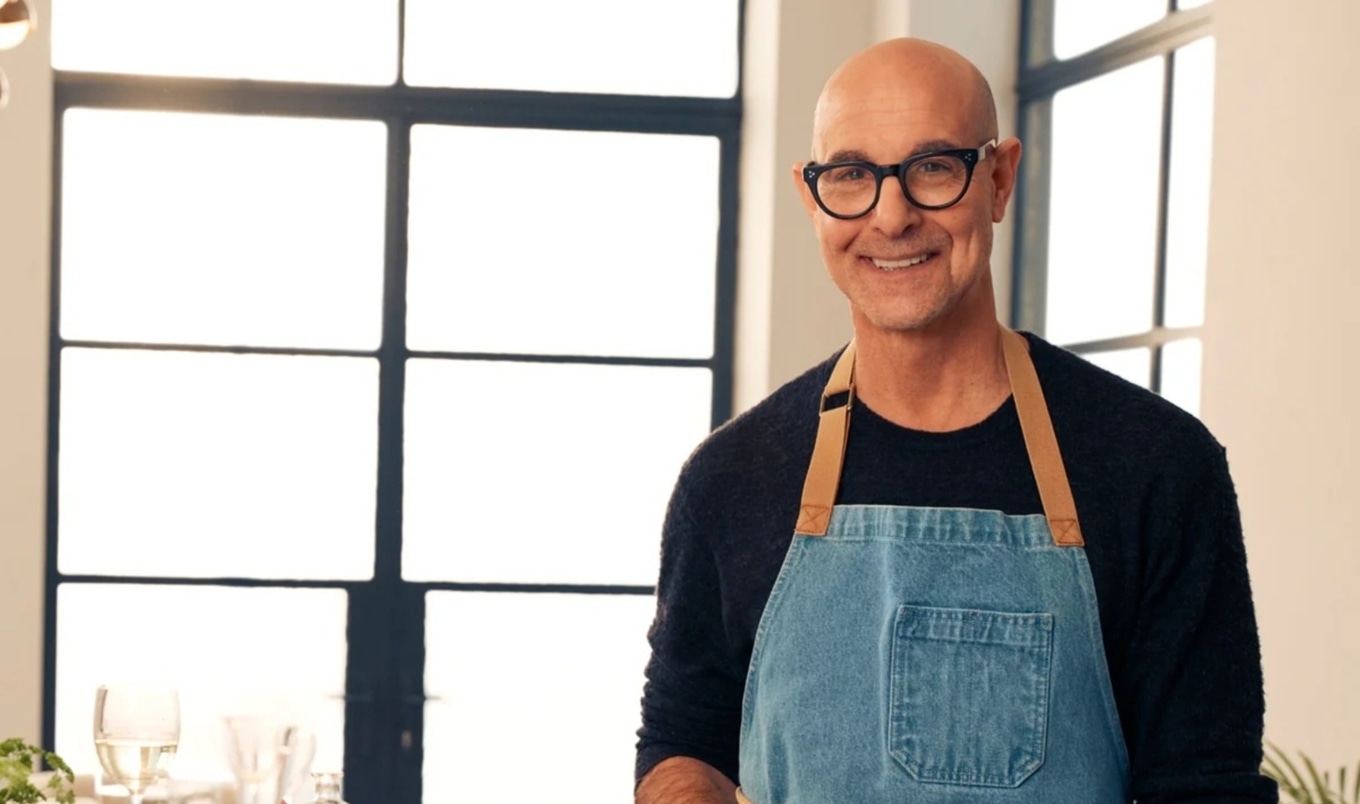
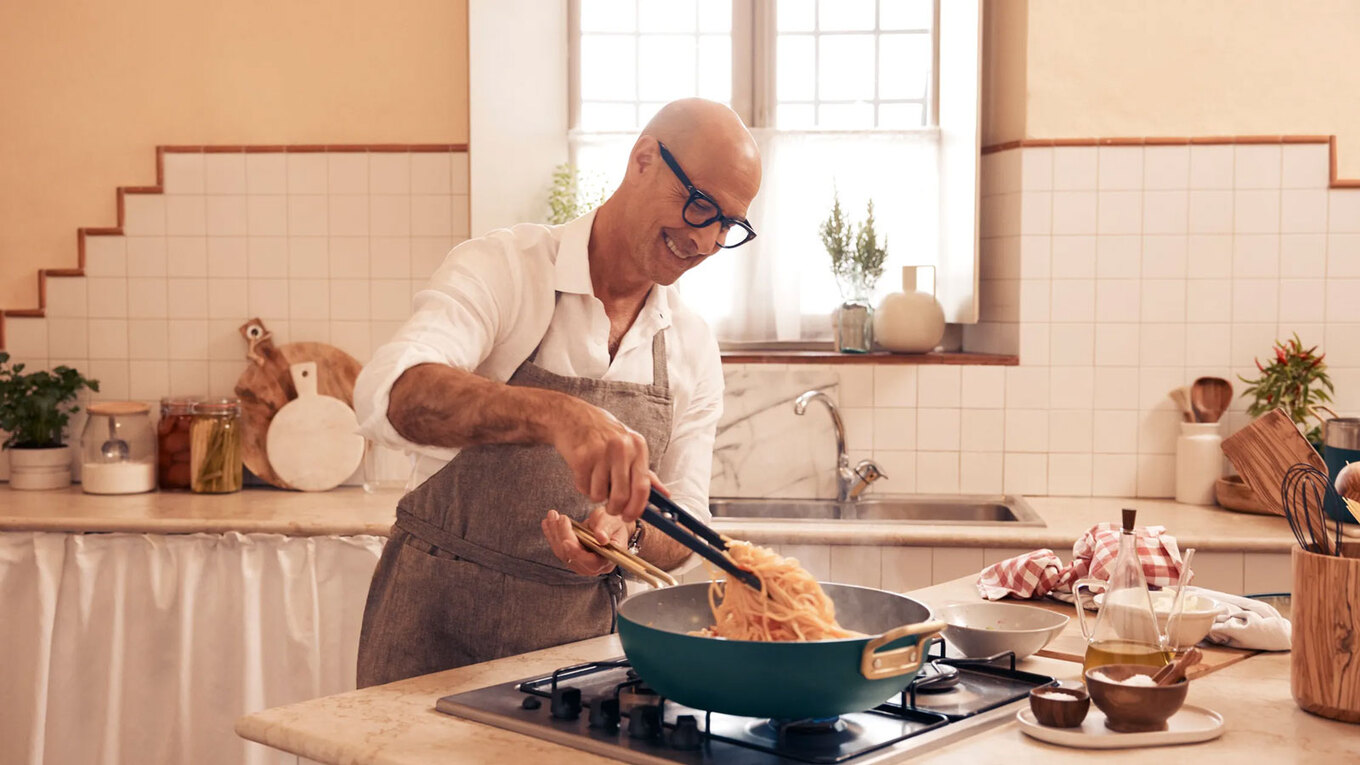
Italian-American actor and renowned foodie Stanley Tucci is a big fan of simple Italian recipes. As well as starring in shows like Stanley Tucci: Searching for Italy and Tucci in Italy, he frequently shares easy, tasty, nutritious recipes on his social media account. Last month, for example, he shared a quick lunch he enjoyed before filming the sequel to The Devil Wears Prada.

stanley tucciGreenPan

“It’s really good, really hearty,” he said about the dish, which combines tomato sauce, cannellini beans, onions, garlic, and fresh basil. The simple concoction is finished off with salt, pepper, and a drizzle of olive oil for serving. 

Like many dishes influenced by cucina povera techniques, Tucci’s lunch included twice-baked bread softened in the sauce. It’s a common way to use leftover bread, saving money and reducing waste.

Tucci also elected to add tuna to his hearty soup, but if you wanted to make the dish vegan, you could add extra beans or chickpeas. For a fishy flavour, you could sprinkle in a little nori seaweed or mix in a store-bought vegan tuna alternative.

Stanley Tucci’s go-to plant-forward meals

Many of the dishes Tucci enjoys are plant-forward. Last year, for example, he shared his take on pasta e fagioli on Today. The dish is another example of simple, cucina povera cuisine: it’s made with just cannellini beans, onions, and marinara. The name literally translates to “pasta and beans.”

“It’s a classic, classic dish, it’s been around forever,” Tucci said during the segment. “It’s been abused sometimes, and made, sometimes, really badly, but it doesn’t have to be. It’s incredibly simple.” 

VegNews.StanleyTucci.MattHolyoak.WilliamsSonomajpg

Matt Holyoak/Williams Sonoma

Tucci added chicken stock and dairy cheese to his version, but these can easily be swapped for vegetable broth and dairy-free cheese. The actor has also shared recipes for plant-based string bean minestra on his social media, as well as pitti fritti (deep-fried pizza dough with sugar) and pasta e ceci (pasta with chickpeas).

Previously, Tucci told Eating Well that most of his go-to ingredients are vegan. “Olive oil, tomatoes, garlic, onion, basil, carrots, celery, you can do a lot with that right there,” he said. “Risotto rice, polenta, pasta, and any kind of vegetable. You can do a million things with all of that.”

https://vegnews.com/stanley-tucci-vegan-italian-lunch 

Tuesday, June 3, 2025

Italian Vegan Cheesemaker Sends Cows on Vacation in New Milan Marketing Push

From greenqueen.com.hk

Italian plant-based cheese start-up Dreamfarm flooded the streets of Milan with tourists featuring cow masks as part of a new marketing campaign.

The Milanese were amused last Wednesday.

A group of tourists sporting cow masks and vacation-ready attire took to the streets between Piazza Cordusio and Castello Sforzesco, causing confusion in Italy’s fashion capital.

In reality, these were actors participating in a guerrilla marketing stunt as part of a new campaign by dairy-free cheese firm Dreamfarm. The idea, it says, is to “finally” send cows on a well-deserved break this summer, since they’re no longer needed to produce great-tasting cheese.

The idea behind Dreamfarm’s marketing drive

dreamfarm vegan cheese
Courtesy: Dreamfarm

Dreamfarm’s The Cows Go on Vacation drive was dreamt up by Al.ta Agency, a food-focused communications firm launched last year by the media company Al.ta Cucina.

The integrated campaign features what Dreamfarm and AI.ta Agency call “an ironic and unexpected tone”. “Our choice was to tell the story of plant-based living without divisive tones or shocking imagery,” the companies said in a joint statement.

“Instead, we opted for a sunny, symbolic, and light-hearted provocation – one that sparks reflection with a smile, about the positive change Dreamfarm aims to create.”

In Milan, the actors wore Hawaiian shirts, Bermuda shorts, fanny packs and sandals to exude the vacation vibes, paired with cameras and the cow masks. The group of ‘tourists’ was led by a guide holding a branded sign with the words “Dreamfarm Vacation Group”.

The stunt caught the attention of passersby – whether local residents or actual tourists – who pulled out their phones to take images and videos, driving user-generated content to promote Dreamfarm.

Before the Milan march, plant-based influencers and creators were sent a kit to amplify the activation. And in the days since, Dreamfarm will post short videos on its online channels, documenting the cows’ departure for holiday, from train stations and packed trunks to selfies near monuments.

dreamfarm
Courtesy: Dreamfarm

Young Italians driving the plant-based shift

The company’s use of influencer marketing and a campaign made for social media is a shrewd move, as it will likely capture the attention of young Italians, a key demographic for plant-based brands.

According to a 2024 report by the retailer Coop, 82% of 17- to 35-year-olds are driving the adoption of plant-based diets out of health and climate concerns. This group, titled the Explorers, is leading the shift towards flexitarianism in the country.

Another key opportunity in Italy’s vegan market lies with challenger brands reinventing classics with a sustainable and health-forward twist. “This movement spans across the plant-based dairy, meat, and dessert sectors, blending modern innovation with culinary excellence,” Felippe Fontanelli, founder of the Virtuous Food Revolution Alliance, wrote last year.

This is where Dreamfarm comes in. The company uses almonds and cashews to make clean-label dairy-free alternatives to classics like mozzarella, ricotta, and stracciatella, each with a Nutri-Score A rating. Last month, it debuted vegan Ciliegine (or mini mozzarella balls) at the TuttoFood fair in Milan.

The company raised €5M in funding in 2023, and its products are available in Esselunga, Coop, and Conad in Italy, as well as retailers in the Netherlands, Belgium and Germany.

Other plant-based dairy brands challenging the status quo in Italy include Heaven and SQUP. “For companies with vision and commitment, Italy represents one of the most dynamic opportunities in Europe’s plant-based landscape – a market with incredible growth potential for those ready to invest in its future,” said Fontanelli.

https://www.greenqueen.com.hk/dreamfarm-vegan-cheese-plant-based-italy-cows-vacation/