Showing posts with label sauce. Show all posts

Thursday, May 28, 2026

The Rise of Vegan Mayonnaise in the UK Restaurant Industry

From on-magazine.co.uk/food

Plant-based dining in the UK has moved well beyond specialist vegan cafés. It is now part of mainstream hospitality, from casual dining and pub menus to hotel catering, quick-service restaurants and grab-and-go food. For operators, this shift is not only about trends. It is about making menus more flexible, commercially efficient and accessible to a wider customer base.

One category where this change is especially visible is condiments. Mayonnaise remains a core ingredient in professional kitchens, used in burgers, sandwiches, wraps, salads, dips, dressings and loaded fries. However, restaurants are increasingly looking at egg-free alternatives as a practical way to serve vegan, vegetarian, flexitarian and allergy-conscious customers without creating unnecessary complexity in the kitchen.

Plant-based demand is no longer niche

Recent consumer research suggests that plant-based products now appeal to a much broader audience than strict vegans. A 2025 GFI Europe report found that 71.5% of UK adults could be considered potential consumers of plant-based food, while only 2% identified as vegan. This matters for restaurants because the largest opportunity is not limited to vegan diners, but includes mainstream customers who are open to plant-based choices when they taste good and fit naturally into familiar dishes.


Why egg-free sauces work for modern menus

For foodservice operators, egg-free mayonnaise can simplify menu planning. Instead of stocking separate sauces for standard, vegetarian and vegan dishes, one high-quality plant-based option can work across several menu items. That can reduce the number of stock-keeping units, make staff training easier and lower the risk of mistakes during busy service.

There is also an allergen-management benefit. Egg is a common allergen that food businesses must handle carefully. For family restaurants, hotels, cafés and caterers, using egg-free alternatives in selected dishes can make menu communication simpler and more inclusive.

For restaurants, the practical advantages include:

  • broader appeal across vegan, vegetarian and flexitarian customers;
  • easier menu adaptation without changing core recipes;
  • reduced reliance on egg-containing condiments;
  • simpler stock management for busy kitchens;
  • more flexible use across burgers, wraps, salads, dips and dressings.

Commercial advantages for restaurants

The business case is not only about ethics or dietary preference. A versatile creamy sauce can support cost control and operational consistency. It can be used as a spread, dip, dressing base or sauce component, helping kitchens standardise recipes across multiple dishes.

A good egg-free product should offer a neutral flavour, stable texture and reliable performance in cold applications. These characteristics matter in foodservice because sauces are often prepared in advance, stored in bulk and used across different menu formats throughout the day.

The global vegan mayonnaise category is also expanding. Persistence Market Research projects the market to reach US$1.13 billion in 2026 and grow to US$2.12 billion by 2033, with an estimated 9.4% CAGR. This growth reflects a wider shift in consumer expectations and product availability, giving restaurants more choice than they had a few years ago.

B2B supply and QP Foods UK

For restaurants and wholesalers, supply reliability is as important as the product itself. Packaging formats, bulk availability, production consistency and delivery planning all affect whether a sauce works in a commercial kitchen.

One relevant B2B supplier is QP Foods UK, which produces premium egg-free mayonnaise in modern manufacturing facilities in Ukraine and offers various packaging options for bulk buyers.

QP Foods UK’s product range includes options suitable for professional kitchens, wholesalers, food manufacturers and restaurant operators looking for scalable supply. For buyers, the key value is not simply that the product is plant-based, but that it can be integrated into everyday foodservice operations without adding unnecessary complexity.

Why now is a good time to review sauce supply

For UK restaurants, the rise of egg-free condiments is part of a broader move towards flexible menus. Customers increasingly expect plant-based options to be available without needing a separate or limited menu. At the same time, operators need ingredients that are practical, cost-effective and easy to integrate into existing recipes.

Reviewing sauce supply now can help restaurants improve menu inclusivity, simplify kitchen operations and prepare for continued demand from flexitarian and plant-curious diners. The most successful products in this category are not those that feel like substitutes, but those that perform well enough to become standard kitchen ingredients.

https://www.on-magazine.co.uk/food/food-features/vegan-mayonnaise-in-the-uk-restaurant-industry/ 

Friday, November 21, 2025

If you’re not ready to go vegan, these 7 swaps still make a massive difference

From vegoutmag.com 

By Adam Kelton

Start small. Try one swap a week. Get curious. Experiment like a home cook with a new ingredient

Let’s be real. Not everyone is ready to jump into a fully vegan lifestyle.

I’m not vegan myself. I love a good steak, a perfectly seared scallop, and the kind of buttery pastry that melts before you take your second bite.

But I also spend a lot of time around food, kitchens, and people who care deeply about what they eat and where it comes from. And something I’ve learned over the years is that you don’t need to commit to an all or nothing lifestyle for your choices to matter.

Sometimes small changes make a surprisingly big impact. On your health. On the environment. And honestly, on your cooking skills too.

If you’re curious about eating a little more plant based without giving up the foods you love, here are seven easy swaps that deliver way more change than you’d expect.

Let’s get into it.


1) Swap dairy milk for oat or soy milk

Milk is one of the easiest places to make a meaningful shift.

You don’t need to swear off ice cream forever or throw out every cheese in your fridge. Just switching your daily milk can cut your environmental impact dramatically.

Oat and soy milks are two of the most consistent performers. They foam well in coffee, work beautifully in smoothies, and play nicely in baking.

When I worked in luxury F&B, I saw oat milk become the default request for cappuccinos because it gave that creamy, velvety texture without overpowering the coffee.

Try it in small ways. Your morning latte. A bowl of cereal. Pancakes on a lazy Sunday.

You might be surprised how quickly your taste buds adapt.

2) Swap beef mince for lentils or plant based ground

Here’s a question I ask people all the time. Are you craving the flavour of beef, or the comfort of a hearty, savoury dish?

Because those are not the same thing.

Lentils make an incredible replacement for ground beef in dishes like tacos, chili, Bolognese, or shepherd’s pie. They absorb flavour beautifully and offer the same hearty texture once seasoned properly.

And if you still want something closer to meat, plant based grounds have come a long way. I once blind tasted one at a restaurant and didn’t realize it wasn’t beef until the chef told me.

Start with meals where the sauce does the talking. You’ll barely notice the difference, but your health and footprint will.

3) Swap butter for olive oil in your everyday cooking

This one surprised me when I first tried it.

As someone who spent years around chefs, butter used to feel sacred. But once you start experimenting with good quality olive oil, especially for roasts, sautés, and everyday stove work, it becomes a game changer.

Olive oil is heart healthy, flavourful, and incredibly versatile. Plus, it handles vegetables, grains, and proteins with ease.

Of course, bake your croissants with butter. Life is too short not to. But in your daily cooking, olive oil delivers a lighter, cleaner richness that works with almost any dish.

Even better, it encourages you to use more herbs, spices, and aromatics to deepen flavour, which naturally makes your cooking more interesting.

4) Swap heavy cream in sauces for coconut milk or cashew cream

If you love creamy dishes but want something lighter and plant forward, this one is perfect.

Coconut milk works beautifully in curries, soups, and marinades. It gives body without feeling overly indulgent. Cashew cream, on the other hand, is one of those things you try once and wonder why you never used it before.

You soak cashews, blend them with a little water, and suddenly you have a neutral, silky base that transforms pastas, sauces, and even desserts.

I learned this from a chef friend who said cashew cream became one of their secret ingredients because it allowed them to create rich, elegant dishes without weighing everything down.

Try it in Alfredo. Seriously. You won’t look back.


5) Swap eggs in baking for flax eggs or applesauce

If you’re not a vegan baker, this one might sound strange, but hear me out.

Many baking recipes don’t rely on eggs for flavour. They’re mostly used for structure, moisture, or binding. And flax eggs (ground flaxseed plus water) do that job surprisingly well.

Applesauce works beautifully too, especially in muffins, banana bread, and cakes where moisture is essential.

I learned about egg alternatives while testing recipes for a friend’s café. The vegan chocolate loaf became one of their best selling items, and no one knew there were no eggs in it unless they asked.

It’s not about making everything egg free. It’s about having a few simple swaps that open up new possibilities.

6) Swap chicken broth for vegetable broth in soups and grains

This is the easiest swap on the entire list, and the impact is bigger than you think.

Vegetable broth has come a long way. It’s no longer the watery, bland base it used to be. There are deeply flavoured, roasted varieties that make risotto, soups, stews, quinoa, couscous, and rice taste incredible.

Most people couldn’t tell the difference in a blind tasting, especially in dishes with herbs, garlic, wine, or tomatoes.

Even better, vegetable broth is lighter and allows other ingredients to shine.

This small change cuts down your consumption of animal products without altering your routine at all.

7) Finally, swap one meat meal a week for a plant focused one

This is often the swap that creates the most change overall.

I’m not saying ditch your favourite steakhouse or vow to never grill chicken again. But choosing just one meal a week to explore something plant based opens the door to creativity and discovery.

You can try a chickpea curry, a mushroom stir fry, a hearty grain bowl, or even a well built veggie burger.

I once read in a food sustainability book that if every person in a country swapped just one meat based meal per week for a plant based one, the environmental impact would be equivalent to taking millions of cars off the road.

That stuck with me. Small decisions become big waves when they’re repeated.

And honestly, it is fun to explore new dishes without the pressure of changing your whole lifestyle.

Conclusion

You don’t need to go all in on a plant based lifestyle to make choices that matter.

You don’t need to give up the foods you love or pretend you don’t enjoy a good ribeye. You can still appreciate flavours, textures, and techniques while making thoughtful swaps that support your health and the planet.

Start small. Try one swap a week. Get curious. Experiment like a home cook with a new ingredient.

And most of all, don’t treat this like a diet or a moral checklist. Treat it like an upgrade to your cooking, your habits, and your awareness.

Sometimes the biggest changes start with the smallest ingredients.


https://vegoutmag.com/lifestyle/c-t-if-youre-not-ready-to-go-vegan-these-7-swaps-still-make-a-massive-difference/

Friday, November 7, 2025

UK: Aagrah Foods expands Indian cooking sauce range with vegan-friendly Butter Chicken Tarka Paste

From theplantbasemag.com

Indian food brand Aagrah Foods has expanded its range of premium cooking sauces with a vegan-friendly Butter Chicken Tarka Paste.


The paste combines a smooth, creamy tomato base with a balance of aromatic spices and subtle sweetness. Unlike a finished curry sauce, which offers a heat-and-serve solution, a tarka pasta provides the foundation for a convenient, freshly cooked dish while enabling consumers to engage more in the cooking process.


Aagrah’s latest offering is made with slow-cooked onions, tomato, garlic, ginger and its signature bled of spices, giving home cooks the flexibility to customise dishes without the complexity of cooking from scratch.


The brand said the product is ideal for consumers seeking authentic, restaurant-quality dishes that can be prepared at home within minutes.


Though Butter Chicken is traditionally made with meat and dairy, the fully plant-based paste also caters to consumers seeking to make vegetarian and vegan alternatives to the dish by substituting chicken for a plant-based chicken alternative or tofu, and using plant-based dairy alternatives.


The launch comes as the UK ambient cooking sauce category continues to grow, now valued at over £1 billion and driven by rising interest in world cuisine and premium at-home dining.


Aagrah Foods was founded by family-owned Yorkshire-based Aagrah Restaurant Group, established in 1977. Beyond its sauces, the brand offers a broad range of Indian products including chutneys, spice blends and marinades, and breads and snacks such as naans, popadoms and an onion bhaji mix.


Shezad Aslam, managing director of Aagrah Foods, said: “Butter Chicken has long been a crowd pleaser in our restaurants, and we wanted to make that same flavour experience available for consumers at home”.


“Our new tarka paste is rich, indulgent and true to our Northern Indian roots.  We’re continuing to see a strong appetite for people wanting to cook authentically at home using  premium-quality ingredients that offer both convenience and credibility, and this new addition to our ever-expanding range meets that demand perfectly.”

The new Butter Chicken Tarka Paste is available across the UK grocery, speciality and convenience channels for £3.76 per 270g jar.

https://www.theplantbasemag.com/news/aagrah-foods-expands-indian-cooking-sauce-range-with-vegan-friendly-butter-chicken-tarka-paste 

Tuesday, October 28, 2025

9 family recipes passed down for generations that still define “home”

From vegoutmag.com

By Jordan Cooper

Food is memory, identity, and love all simmered together. These nine family recipes, passed down through generations, remind us that “home” isn’t a place—it’s the flavours, rituals, and values we carry forward, one meal at a time 

Food has this strange power—it’s both memory and moment.

You can taste something your grandmother made decades ago, and suddenly you’re eight again, sitting on the floor while she hums over the stove.

We talk a lot about self-development, about how to evolve, grow, and adapt.

But sometimes, the most grounding parts of who we are come from the things that don’t change. Like a recipe.

Here are nine family recipes, passed down through generations, that still define what “home” feels like, whether you grew up in a tiny kitchen or one packed with Sunday chaos.

Let’s dig in.

1) Sunday stew

Every family has that one dish that marks the end of the week. For mine, it was stew. My grandmother’s version was hearty, slow-cooked, and smelled like comfort itself.

I’ve adapted it to be vegan, of course, swapping out the beef for lentils, mushrooms, and potatoes that break apart just right.

What I’ve learned over the years is that it’s not the ingredients that matter most. It’s the ritual.

The simmering. The patience. The quiet rhythm of something slowly becoming ready.

Maybe that’s why it still feels like home. It reminds me that some good things can’t be rushed.

2) The “everything” bread

If therapy had a scent, it would smell like freshly baked bread.

My great-aunt’s bread recipe has been passed around so many times that no one really remembers where it started.

It’s been modified, reinvented, and, let’s be honest, mangled. But it still works.

There’s something beautiful about how universal bread is. Every culture has a version. Every family has a twist.

Ours? A mix of whole grains, flaxseed, and whatever the week offered.

When I make it now, kneading dough with music in the background, I think about the continuity of hands doing the same thing for generations. It’s humbling.

And maybe that’s the point. Bread teaches you to show up.

3) The secret sauce

Every family swears they have the best sauce.

Mine called it “red gold.” It was tomato-based, simmered for hours, with no written measurements, just instinct.

When I went vegan, I thought I’d lose that connection. But it turns out, flavour isn’t dependent on meat; it’s dependent on care.

The same sauce works beautifully with roasted vegetables or chickpea “meatballs.”

What I love about this recipe isn’t just the taste, it’s how it brings people together.

Whether we were laughing around the table or arguing about who added too much garlic (it was always me), the sauce made everything feel okay again.

It’s funny how one recipe can become a language of its own.

4) Grandma’s pickled magic

There’s a science to pickling. Vinegar, salt, sugar, and patience.

But the art of it? That’s intuition.

My grandma had jars of pickled everything: beets, cucumbers, even watermelon rind. As a kid, I didn’t get it. Why preserve something when you could just buy it? Now, I see it differently.

Pickling is a rebellion against waste, against forgetting. It’s preservation in the literal and emotional sense.

I’ve carried that mindset into other areas of life. Some things are worth keeping: memories, values, stories.

You just have to learn how to preserve them without letting them turn bitter.

5) The festival soup


Every holiday season, my family made a huge pot of soup that could feed an army.

It was a mash-up of everyone’s heritage, part Latin, part Mediterranean, part whatever someone brought over.

It was chaotic, unmeasured, and perfect.

Now, I make my version with roasted sweet potatoes, coconut milk, turmeric, and lime. It’s become my comfort bowl when I’m far from home.

I’ve mentioned this before, but one of the biggest lessons travel taught me is that comfort isn’t found in geography. It’s found in rituals.

In flavours that remind you that you belong somewhere, even if you’re alone in a new city.

6) The “accidental” cookie

Some of the best recipes are born from mistakes.

The story goes that my mom was trying to make brownies, but she ran out of cocoa. So she improvised, swapping it for oats, peanut butter, and maple syrup.

The result? Something between a cookie and a granola bar that became a family staple.

It’s still my go-to comfort snack, especially after a long writing day.

There’s something about those kitchen accidents that feels symbolic. Life doesn’t always follow the recipe, but sometimes, it ends up better that way.

7) The passed-down spice mix

If your family has a spice mix that comes out only on special occasions, you know what I’m talking about.

For mine, it was a blend of smoked paprika, garlic, cumin, and something no one could ever quite identify.

It made its way into everything from grilled veggies to holiday casseroles.

I love how scents can time-travel you. One whiff of that mix, and I’m back in my mother’s kitchen, watching her move like she knew every sound the house made.

There’s psychology behind that, actually.

Research suggests that smell is directly tied to emotional memory. Maybe that’s why a certain aroma can ground you instantly. It’s home, bottled.

8) The “Sunday pancake truce”

Sunday mornings were for pancakes and peace.

No matter what arguments had erupted during the week, pancakes were neutral territory.

My dad would make them tall, my mom would make them thin, and eventually, they agreed to take turns.

I still follow that unwritten tradition: pancakes equal pause.

These days, I make mine with oat flour, flaxseed, and almond milk. Not quite like theirs, but close enough.

Every time I flip one, I think about how food can heal in small, quiet ways. How something as simple as breakfast can reset a week, a mood, or a relationship.

9) The “always something green” rule

Not technically a recipe, but a principle that guided every meal.

No matter what we ate, my mom would insist on adding “something green.” It could be herbs, veggies, or a handful of spinach no one asked for.

Back then, I rolled my eyes. Now, as someone vegan and constantly reading about nutrition and psychology, I get it. She wasn’t just feeding us plants; she was teaching us balance.

This rule stuck with me far beyond the kitchen. Every meal, every project, every choice, I try to include something that nourishes.

Something green, in the metaphorical sense.

The bottom line

What I’ve realized is that family recipes aren’t really about food.

They’re about the values we quietly inherit, the patience of a stew, the persistence of a sourdough starter, the creativity of a failed brownie.

They remind us that home isn’t a fixed place. It’s something you keep creating, one recipe at a time.

So, what recipes define your version of home?

https://vegoutmag.com/recipes/n-t-9-family-recipes-passed-down-for-generations-that-still-define-home/

Saturday, October 4, 2025

9 vegan swaps that work so well, you'll forget the original existed

From vegoutmag.com

By Maya Flores

Forget “almost as good”—these vegan alternatives steal the spotlight from the originals 

My mother-in-law served her famous spinach artichoke dip at Christmas last year. Everyone demanded the recipe. She forgot to mention she'd been using cashew cream instead of dairy for three years—not for ethical reasons, but because Costco's cashews were on sale once and she never went back. This is how the best swaps work: they become the default not through ideology but through being genuinely better at their job.


1. Aquafaba for egg whites in meringues and cocktails

The liquid from a can of chickpeas whips into stiff peaks exactly like egg whites—it just takes 10-15 minutes instead of 3-5. My bartender friend started using it for whiskey sours not because vegan customers asked, but because it's shelf-stable, costs nothing, and never risks salmonella. She goes through twelve cans a week now. The chickpeas become hummus for bar snacks. Save the liquid from any can of chickpeas, add a pinch of cream of tartar for stability, and whip with an electric mixer until peaks form. No special technique required—just patience.

Why it wins: No waste, always available, literally free if you're already using chickpeas, safer than raw eggs.

2. Miyoko's butter for actual butter in baking

Most vegan butters taste like salted oil. Miyoko's cultured butter behaves remarkably like European butter—it creams properly for cookies, creates genuine flaky layers in pie crusts, and browns into something nutty and complex. My neighbour, who sells wedding cakes from her home kitchen, switched completely after discovering it extends her products' shelf life by two days. She charges the same prices. Nobody has noticed. At $7-8 per pound, it's pricier than regular butter, but the consistency pays off.

Why it wins: Better shelf stability, same baking chemistry, close enough to butter that professionals use it.

3. Oat milk in lattes (but only barista editions)

Oatly Barista Edition, Minor Figures, and Califia Farms Barista Blend all foam like whole milk and add subtle sweetness that makes sugar unnecessary. The coffee shop on my corner switched entirely after their wholesale dairy prices spiked. They kept the switch even when prices dropped. Not because of values—because drink returns noticeably decreased. Turns out oat milk is harder to mess up and stays stable longer in steam pitchers.

Why it wins: Naturally sweet, foams consistently, doesn't compete with coffee flavour, more forgiving for new baristas.

4. Kala namak (black salt) for egg flavour

This sulfuric salt from India makes anything taste mysteriously eggy. Sprinkled on smashed avocado toast or stirred into scrambled tofu, it creates that specific savoury note people miss. My cousin discovered it trying to recreate her grandmother's egg salad. She uses it on chickpea salad now. Her grandmother, still alive and opinionated, prefers the chickpea version. Find it at Indian grocery stores, Whole Foods, or Amazon for about $5 per jar.

Why it wins: One ingredient transforms anything into "egg" flavour, lasts forever in your pantry, widely available.

5. Refined coconut oil for butter in pastry

Unlike virgin coconut oil, refined has zero coconut flavour. When kept cold and cut into flour like butter, it creates the same tender crumb in biscuits, same flakiness in pie crust. Stays solid longer than butter in warm kitchens. The French bakery near me uses it for their afternoon batches in summer. They started for practical reasons—butter was melting too fast during lamination. They never switched back.

6. Nutritional yeast or MSG for different umami needs

Nutritional yeast (deactivated yeast) brings cheesy, nutty umami to popcorn and pasta—it's not MSG but delivers savoury depth. Pure MSG (monosodium glutamate, a sodium salt of glutamic acid) provides clean umami without the cheese notes. My Italian uncle keeps both by his stove. The MSG goes in broths and stir-fries, the nutritional yeast on anything that needs parmesan vibes. Different tools, both essential.

Why it wins: Nutritional yeast adds B vitamins and cheesy flavour; MSG is pure umami with less sodium than salt.

7. Tahini for cream in soups and sauces

Tahini turns into cream when whisked with hot liquid—start with 2 tablespoons tahini to 1 cup liquid and adjust from there. No cashew soaking, no coconut milk sweetness. Just sesame paste and whatever liquid you're using. Creates the same richness in tomato soup, same body in pasta sauce. The Mediterranean restaurant I worked at used it in everything—their "cream" of mushroom soup won awards. Nobody questioned why a Lebanese place made great cream soup.

Why it wins: Pantry stable, one ingredient, adds depth instead of diluting flavour, naturally emulsifies.

8. Mashed banana for egg in pancakes and quick breads

One mashed banana replaces one egg in any batter that can handle subtle banana flavour (which actually complements most breakfast foods). Creates better moisture retention than eggs. Extends shelf life. The diner by campus started doing this when egg prices spiked. Their chocolate chip pancakes became accidentally famous. They're still using bananas. The sign says "classic recipe since 2019."

Why it wins: Adds moisture and natural sweetness, cheaper than eggs, reduces food waste.

9. Soy sauce + liquid smoke for bacon flavour

One drop of liquid smoke in a tablespoon of regular soy sauce (or tamari for gluten-free) creates instant bacon essence. Brush it on mushrooms, tempeh, or coconut flakes before roasting. The breakfast place that opened last year advertises "bacon" brussels sprouts. They're roasted mushrooms with this mixture. The one-star Yelp reviews complain about portion sizes, never about the missing bacon.

Why it wins: Two pantry ingredients, works on anything, more consistent than actual bacon flavour.

The pattern nobody talks about

These swaps didn't win because someone needed vegan options. They won because they work better for specific technical reasons—stability, cost, consistency, shelf life. My mother-in-law still doesn't call her dip vegan. She calls it "the good recipe."

The best replacements aren't trying to be replacements. They're just ingredients that happen to work better for the job at hand. When the coffee shop owner tells me oat milk is "easier to train new baristas on," or when the baker mentions coconut oil "holds up better in delivery boxes," they're not making ethical arguments. They're just describing what works.

That's how change actually happens—not through convincing people to sacrifice, but through quietly providing better tools for what they're already trying to do.

https://vegoutmag.com/recipes/s-9-vegan-swaps-that-work-so-well-youll-forget-the-original-existed/

Saturday, August 30, 2025

3 Vegan BBQ Sauces to Fire Up Your Summer

From plantbasednews.org

Turn up the flavour this summer with three irresistible vegan BBQ sauces 

No summer cookout is complete without a good vegan BBQ sauce.

Whether you’re brushing it over grilled vegetables, layering it on a plant-based burger, or serving it as a dip, barbecue sauce is a seasonal staple. Larisha Bernard, known for the YouTube channel she runs with her husband, Make it Dairy Free, has shared a video where she explains how to make three vegan BBQ sauces that are perfect for summer.

Bernard, a popular recipe developer and content creator, has built an audience with her vibrant plant-based cooking and family-friendly approach. In the video, she says, “I don’t know about you, but I am a hundred percent a sauce girl… If sauce is involved, I want it, and I want a lot of it.”

Each sauce starts with a familiar base and then takes on a different personality as ingredients are added: classic, fruity with blueberries, and sweet-and-spicy with peaches and habanero.

Classic vegan BBQ sauce

                                          Which BBQ sauce will you pick: smoky, fruity, or spicy? - Media Credit: YouTube/Make It Dairy Free


Bernard begins with the foundation: a traditional barbecue sauce that’s rich, tangy, and smoky. She sautés garlic in olive oil before adding ketchup, brown sugar, apple cider vinegar, vegan Worcestershire sauce, maple syrup, lemon juice, Liquid Smoke, and spices. The mixture is stirred until smooth, then left to simmer so the flavours can “marry together in a little bath,” she says.

For those who prefer a faster or oil-free version, Bernard offers a shortcut. She explains that you can skip the stovetop entirely by swapping fresh garlic for garlic powder and whisking everything in a bowl or jar. “It still tastes really, really amazing,” she says.

Blueberry BBQ sauce

The next recipe takes a creative turn by incorporating fruit. Bernard stirs blueberries into the same base ingredients, creating a sauce that is both sweet and savoury. “The sweetness from the blueberries mixed with the savouriness of the barbecue sauce just does something absolutely amazing,” she says.

She cooks garlic, adds the remaining ingredients, and folds in fresh or frozen blueberries before simmering the mixture. After about 20 minutes, she blends it all into a smooth consistency. If any blueberry skins remain, she suggests straining the sauce through a sieve for a velvety finish.

Peach habanero BBQ sauce

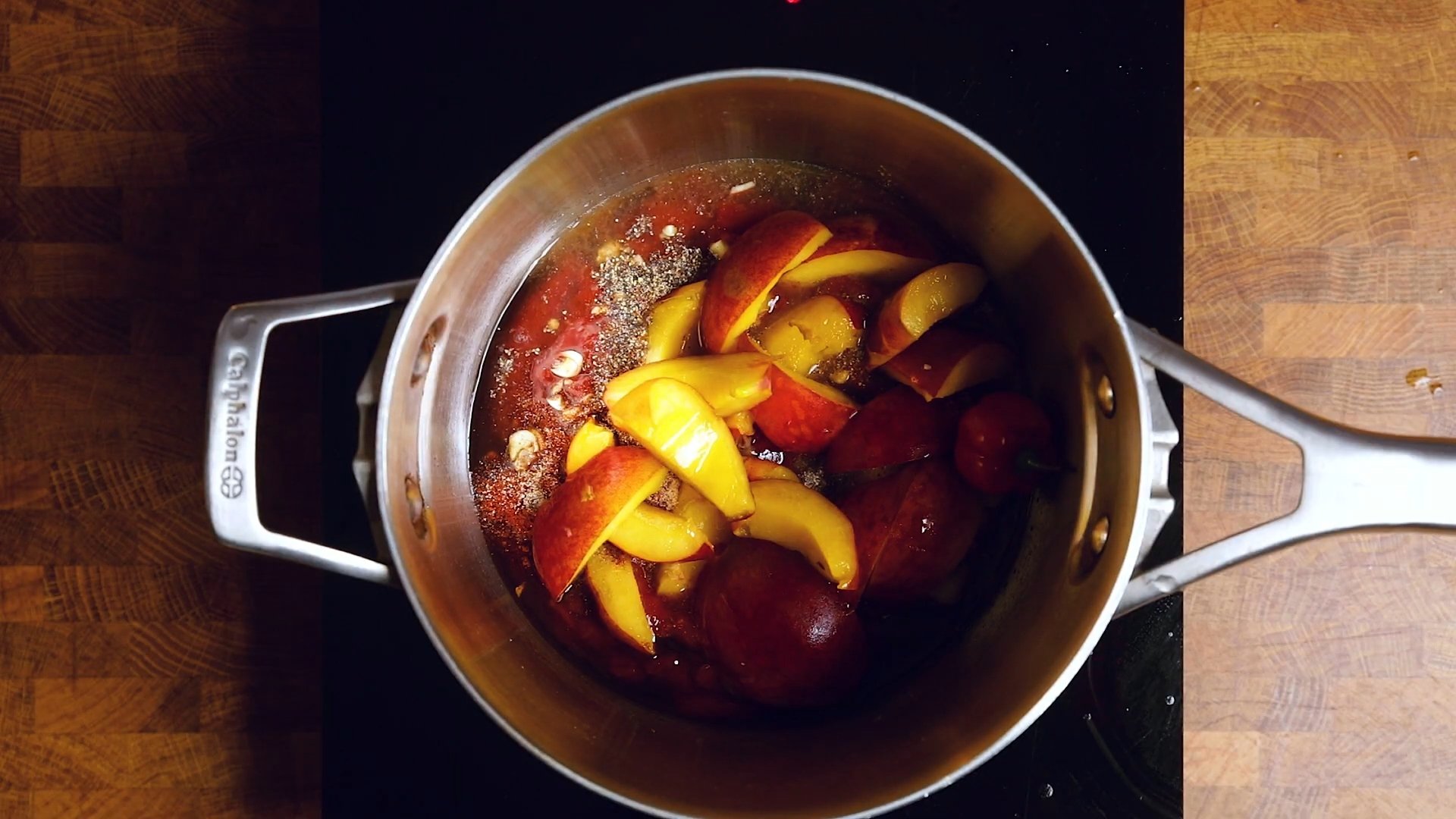
A shot of the peach habanero sauce, one of three vegan BBQ sauces, from above, as it simmers in a steel pot
YouTube/Make It Dairy FreeThe peach BBQ sauce gets a spicy kick by adding a habanero pepper to the mix as it simmers

Bernard’s final recipe leans into summer produce with juicy peaches. She combines ketchup, vinegar, maple syrup, vegan Worcestershire, lemon juice, and spices like smoked paprika and dry mustard. Ripe, fresh peaches add natural sweetness, though frozen can work in a pinch.

The twist comes with heat: a whole habanero pepper is dropped into the sauce as it simmers. “This makes sure that it is a little bit of a kick but not so much that, like, my kids won’t eat this recipe,” Bernard says. The pepper is removed before blending, but for more spice, she advises slicing some into the sauce or blending it fully. The end result balances sweet fruit with smoky heat.

Bernard recommends storing the sauces in airtight jars in the fridge, where they keep for about two weeks. She also notes that they’re allergen-friendly, with substitutions available for Worcestershire sauce and oil-free options.

“These are three delicious vegan barbecue sauces that will keep you going all summer long,” she says.

For more creative vegan recipes, check out the Make it Dairy Free YouTube Channel.

https://plantbasednews.org/lifestyle/food/3-vegan-bbq-sauces-to-fire-up-your-summer/