Attest, an AI-powered consumer survey company, carried out a nationally representative poll of 2,000 UK adults in October on behalf of The Vegan Society.
According to the poll, 72 percent of people are “somewhat” or “very” concerned about the state of UK food security, and 69 percent said that they would be open to reducing their meat and dairy consumption to make the food system more secure.
More than half (51 percent) of respondents said they were supportive of policies to help the UK food system make the transition away from livestock farming and towards plant-based proteins. Meanwhile, 82 percent agreed that securing a sustainable food supply should be a top priority for the government.
Claire Ogley, head of campaigns, policy, and research at The Vegan Society, said, “It’s encouraging to see that when presented with the facts, a significant majority of people are willing to reduce their consumption of meat and dairy to make us more food secure. But they need support from [the] Government to shift diets towards healthy plant-based foods like vegetables, pulses, legumes, fruit, nuts, seeds and wholegrains. Food policy should prioritise promoting healthy plant-based options in all settings and ensuring everyone can access, afford, and know how to cook them.”
Claire Ogley, head of campaigns, policy, and research at The Vegan Society, said, "Food policy should prioritise promoting healthy plant-based options in all settings." - Media Credit: Adobe Stock
‘Animal farming is inefficient’
According to The Vegan Society’s new research report, redirecting the large quantities of edible crops and land used to farm animals to direct human consumption could make the food system more efficient and more sustainable.
Ogley said, “Animal farming is inefficient, environmentally destructive, and reliant on imported feed and fertiliser. We have seen how that dependence exposes us this year. A transition to a plant-based food system is a big part of the answer to the interconnecting problems with global and national food security.”
The Vegan Society supports the Ten Point Plan for Plant-Rich Diets, which “proposes integrated measures to increase demand for and supply of domestically produced plant-based foods.”
The soy jokes were flying, but the results speak for themselves
A vegans vs meat-eaters strength challenge organized by popular fitness YouTuber Brandon William has put plant-powered athletes to the test, and the results may surprise anyone who still believes building serious strength requires meat.
William, a fitness content creator with more than 2.5 million YouTube subscribers, brought together some of the strongest vegan men he knew and pitted them against athletes who regularly eat meat. Across six challenges, the competitors tested maximal strength, muscular endurance, bodyweight fitness, and grip power.
“Today I’m with the strongest vegans I know who built insane strength only eating plants,” William says at the beginning of the video.
The teams competed in the deadlift, arm wrestling, a calisthenics race, tire wrestling, the dumbbell military press, and a punishing Hercules hold. While the meat eaters enjoyed an early lead, the vegans steadily fought their way back into the competition.
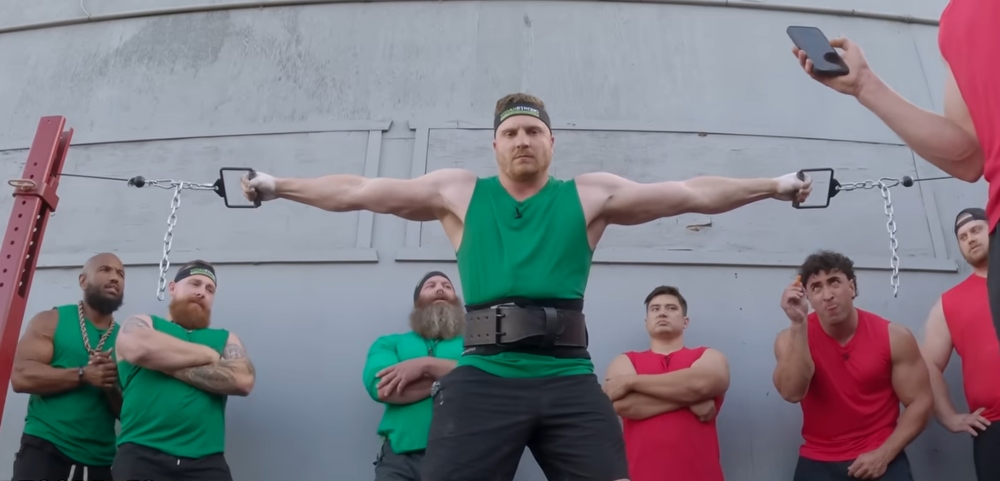
The plant-powered team won the six-event strength competition, taking victories in tire wrestling, the dumbbell military press, and the deciding Hercules hold - Media Credit: YouTube / Brandon William
Challenge one: The deadlift
The competition began with one of the clearest tests of maximal strength: the deadlift.
Representing their respective teams, Austin and Nick had to lift a loaded barbell from the floor. The rules were simple: Whoever successfully lifted the greatest amount of weight would secure the event for his team.
The pair began moving through the weights plate by plate, with 315 pounds appearing comfortable for both athletes. William acknowledged the vegan competitor’s strength as the weight increased, joking that he had never seen a vegan deadlift four plates before.
The bar was eventually loaded to 495 pounds. Amid the chalking, preparation, and encouragement from both sides, the competitors continued to match each other.
The joking quickly became more diet-focused. “What’s wrong, big boy? Afraid of a little soy?” one competitor asks as the tension rises.
Neither athlete needed lifting straps when the weight reached 585 pounds. Both continued to advance, prompting the group to increase the bar to 635 pounds.
The vegan side attempted to summon some extra motivation with a cry of “For the animals,” but the event remained closely contested. The weight eventually climbed to 675 pounds, with the result coming down to a final decisive attempt.
Austin completed the lift, earning the first point of the competition for the meat-eating team.
Winner: Meat eaters
Challenge two: Arm wrestling
The second event removed barbells and gym equipment from the equation. Michael and Rick faced one another in a traditional arm-wrestling contest.
After gripping up at the table, the pair began on William’s countdown. Both competitors strained to force the other’s arm down, but neither athlete was able to establish a decisive advantage.
The contest ended in a tie, leaving the meat eaters ahead by one event overall.
Result: Tie
Challenge three: The calisthenics race
Next came a test of bodyweight strength, endurance and speed.
William competed against Romulus in a calisthenics circuit. To finish the challenge, each man had to complete four exercises in a fixed order: 10 muscle-ups, 10 dips, 10 pull-ups, and 50 push-ups.
The athletes could not move to the next exercise until they had completed all the required repetitions of the previous movement.
Before the race, William pulled out beef jerky as his chosen fuel, while his vegan opponent produced a banana. The contrasting snacks provided another opportunity for some friendly teasing before the serious work began.
Muscle-ups made up the first and arguably most technically demanding part of the course. The movement requires an athlete to pull above a bar before pressing the body into a supported position, combining an explosive pull-up with a dip.
The competitors then moved through 10 dips, which primarily challenged their triceps, shoulders, and chest. After that came 10 pull-ups, followed by the most prolonged portion of the race: 50 push-ups.
Both men showed visible fatigue as they reached the final repetitions. With the teams shouting encouragement, William finished first and secured another point for the meat eaters.
“Those carrots don’t feed muscle, buddy,” William joked after winning the event.
The victory gave the meat-eating team a 2-1 lead, with the arm-wrestling tie separating the scored events.
Winner: Meat eaters
Challenge four: Tyre wrestling
The fourth challenge required a very different kind of strength.
In tire wrestling, two athletes held opposite sides of a large tyre. To win a round, a competitor had to either rip the tyre completely out of the opponent’s hands or drag the opponent across a marked red line.
Three athletes from each team competed, with the first team to win two rounds taking the event.
William faced Romulus in the opening contest. Once the countdown ended, both men pulled aggressively, each attempting to overpower the other while maintaining their grip on the tyre. William won the round, giving the meat eaters an early advantage.
That result meant the vegans had to win the second matchup to remain in the event.
Daniel then faced Brady. After another physical battle, the vegan team claimed the second round, levelling the tyre-wrestling contest at one win apiece.
The entire event therefore came down to the final matchup between Jordan and Rick.
Both athletes dug in as their teammates shouted from the sidelines. The vegan competitor eventually prevailed, completing a comeback from one round down and winning the best-of-three event.
“I guess soy strength is real,” William says after the vegans take the point. He adds that the plant-based team is putting up a bigger fight than he expected.
The result brought the vegans back into contention with two events remaining.
Winner: Vegans
Challenge five: Dumbbell military press
The penultimate event tested upper-body pressing strength.
Tony and Jordan competed in the dumbbell military press, with each athlete attempting to press increasingly heavy dumbbells overhead. Whoever completed the heaviest successful repetition would win.
Unlike a push press, which can use momentum generated by the legs, the military press is intended to place the emphasis on the shoulders, arms and upper body. William and the other competitors also demanded a clear lockout at the top of each repetition, meaning the athlete’s arms had to be fully extended for the lift to count.
The contest began with 50-pound dumbbells. One early repetition was challenged because the athlete did not fully lock out the weight, prompting calls of “No rep.”
The athletes then progressed to 75 pounds. Both continued to lift successfully while exchanging jokes and attempting to distract each other.
Next came the 85-pound dumbbells, which again proved manageable. The weight then reached a major milestone: 100 pounds in each hand.
The meat-eating competitor attempted the weight first. Jordan, representing the vegans, then had to match or surpass the performance. With teammates urging him to keep pressing and complete the movement, he managed the decisive lift.
The result gave the vegans the advantage going into the final challenge. A victory in the last event would confirm their overall win, while a loss would leave the competition tied.
Winner: Vegans
Final challenge: The Hercules hold
YouTube / Brandon WilliamBrady secured the overall victory for the vegan team by holding 300 pounds longer than his meat-eating opponent
The final event was the Hercules hold, a test of grip strength, endurance, and the ability to tolerate sustained discomfort.
Michael represented the meat-eaters, while Brady competed for the vegans.
Each athlete stood between two weighted handles and attempted to hold them in place for as long as possible. William explained that there were 150 pounds on each side, meaning each competitor was resisting a combined load of 300 pounds.
There was also a twist. The team going second would be blindfolded while the first athlete competed, preventing them from knowing the exact time they needed to beat.
A coin toss determined the order. The vegans lost the toss and were blindfolded, meaning Michael would establish the time for the meat-eating team.
Michael began strongly, using a slight hook grip to maintain control. William provided updates as he passed 15 seconds and then 30 seconds. As fatigue accumulated, Michael eventually released the handles and set the target.
The vegan competitors remained unaware of his exact time. William and the meat-eating team even attempted to mislead them by suggesting the hold had lasted only 10 seconds.
Brady then stepped into position for the deciding attempt.
As the clock ran, the meat-eaters tried to convince him to release his grip. His teammates countered with encouragement, telling him to ignore the distractions and continue holding.
Brady passed 30 seconds and continued. Shortly after reaching 35 seconds, William confirmed that he had exceeded Michael’s time.
“You passed it. You can let go,” William tells him.
After releasing the weight, Brady celebrates the victory. “That’s how vegans do it, baby,” he says.
Winner: Vegans
Plant-powered athletes take the overall victory
The final Hercules hold completed the vegans’ comeback.
After losing the deadlift and calisthenics events, the plant-based competitors recovered by winning tire wrestling, the dumbbell military press and the Hercules hold. Arm wrestling ended without a winner.
The vegans vs meat-eaters strength challenge was designed primarily as an entertaining fitness competition rather than a controlled scientific experiment. The results cannot establish whether one diet universally produces stronger athletes, particularly because performance depends on factors including training history, body weight, technique, genetics, and specialization.
Still, the video offers another visible challenge to the stereotype that vegan men cannot build muscle or develop exceptional strength. The vegan competitors deadlifted hundreds of pounds, completed advanced calisthenics movements, won two direct strength contests, and outlasted their opponents when the overall result was on the line.
William ends the video by joking that losing came with a contractual consequence for the meat eaters: They now had to become vegan.
Whatever their actual plans for dinner, the outcome of this vegans vs meat-eaters strength challenge was clear. When the final weight hit the ground, the plant-powered team had come out on top.
For more videos about fitness, strength, nutrition, and physical transformations, visit William’s YouTube channel.
Enjoy cosy autumn flavours with these vegan fall pumpkin recipes.
Image Credit: the Allergen Free Kitchen
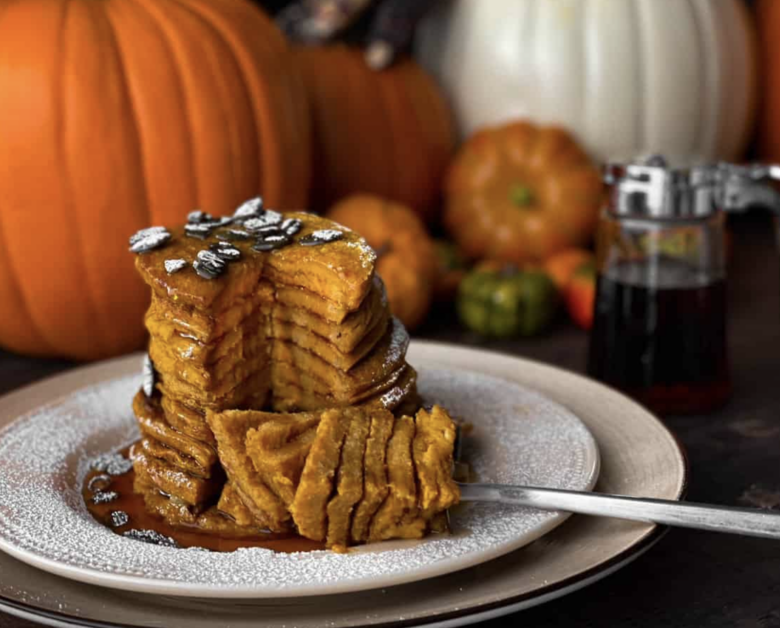
Vegan Pumpkin Pancakes
Vegan Pumpkin Pancakes are the perfect autumn breakfast treat. Full of fall pumpkin spice flavour but free from gluten, eggs, dairy, top 8 allergens and vegan. These Gluten Free Pumpkin Pancakes hit the spot for our pumpkin cravings.
Image Credit: the Allergen Free Kitchen
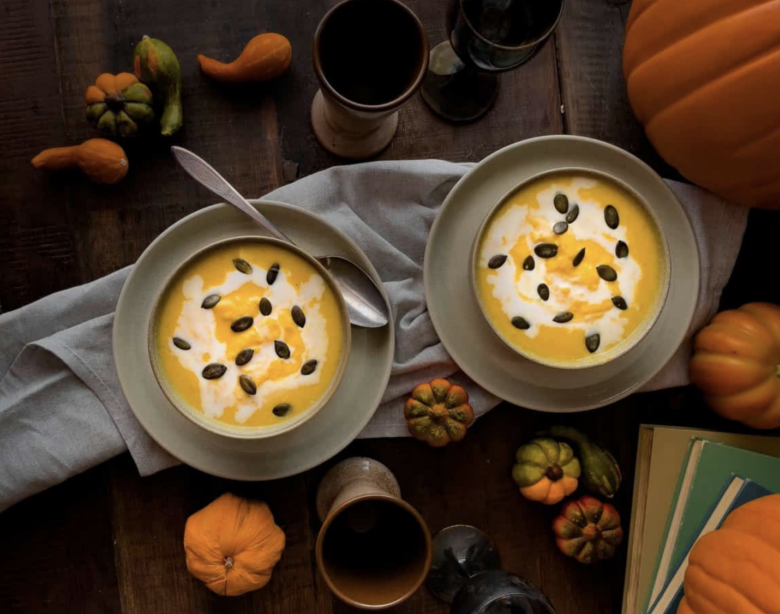
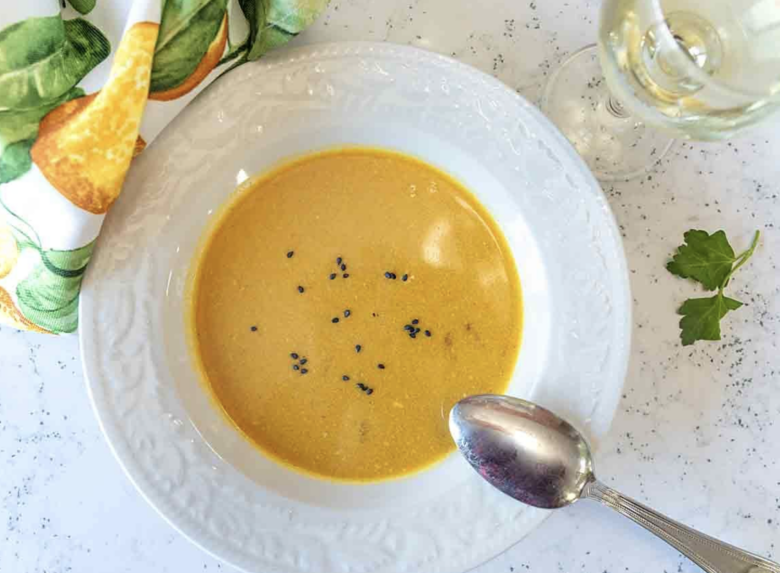
Dairy Free Pumpkin Soup – GF/DF, Vegan, Top 8 Free
This perfect fall dairy free pumpkin soup is the best meal to kick start the flannel and falling leaves season. It is a warming but not sweet or spicy soup. Vegan, top 8 allergen free, dairy and gluten free this curried pumpkin soup is perfect for a meal on a chilly day or as a soup starter for thanksgiving or autumnal dinner parties.
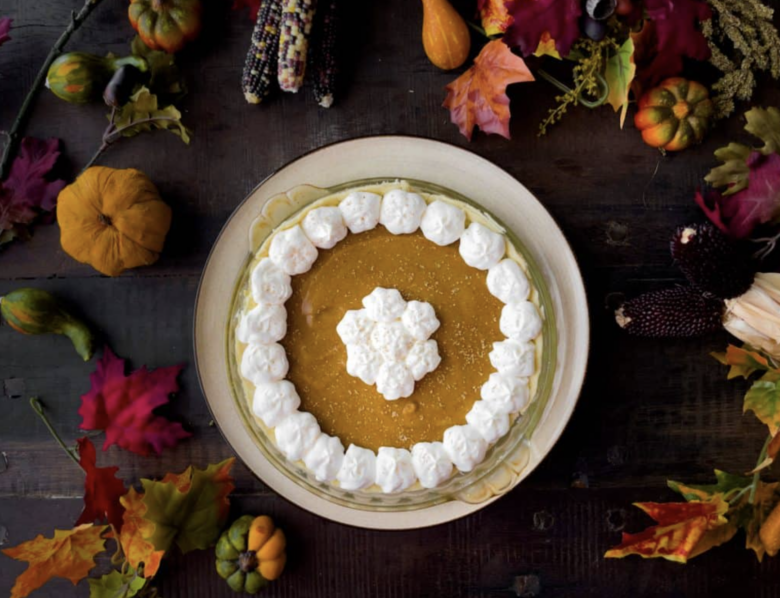
Image Credit: the Allergen Free Kitchen
Egg Free Pumpkin Chiffon Pie – Vegan, GF/DF/EF, Top 8 Free
The perfect egg free pumpkin chiffon pie is an amazing vegan pie to wow guests at all your next holiday gathering. It is gluten free, egg free, dairy free, and top 8 allergen free yet light as air.
Image Credit: Happy Kitchen/ the Allergen Free Kitchen
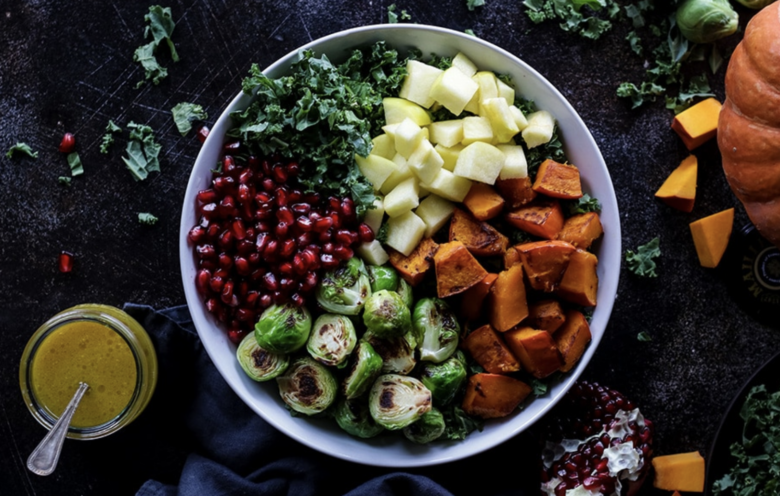
Vegan Fall Harvest Salad with Kale and Pumpkin
Light and healthy vegan fall harvest salad is as satisfying as it is nutritious: crunchy kale paired with sweet pumpkin, tart Brussels sprouts, crisp apples and pomegranate seeds all merged together with delicious homemade maple-mustard dressing. Perfect Thanksgiving harvest salad that everyone will love!
Image Credit: Art of Natural Living/ the Allergen Free Kitchen
Easy Pumpkin Coconut Soup
Made with canned pumpkin & coconut milk, & flavoured with vanilla, cinnamon & maple syrup, this easy pumpkin coconut soup is perfect all year.
Image Credit: the Allergen Free Kitchen
Chocolate Sunflower Seed Butter Balls
Chocolate Sunflower Seed Butter Balls, a no-bake cookies are perfect for those who cannot have peanut butter rice krispy balls due to food allergies. This recipe is dairy free, gluten free, peanut free, tree nut free as well as vegan, and top 9 allergy friendly.