Thursday, April 30, 2026

UK Supermarkets Could Earn Billions By Investing in Plant-Based Proteins, Shows Analysis

From greenqueen.com.hk

By Anay Mridul

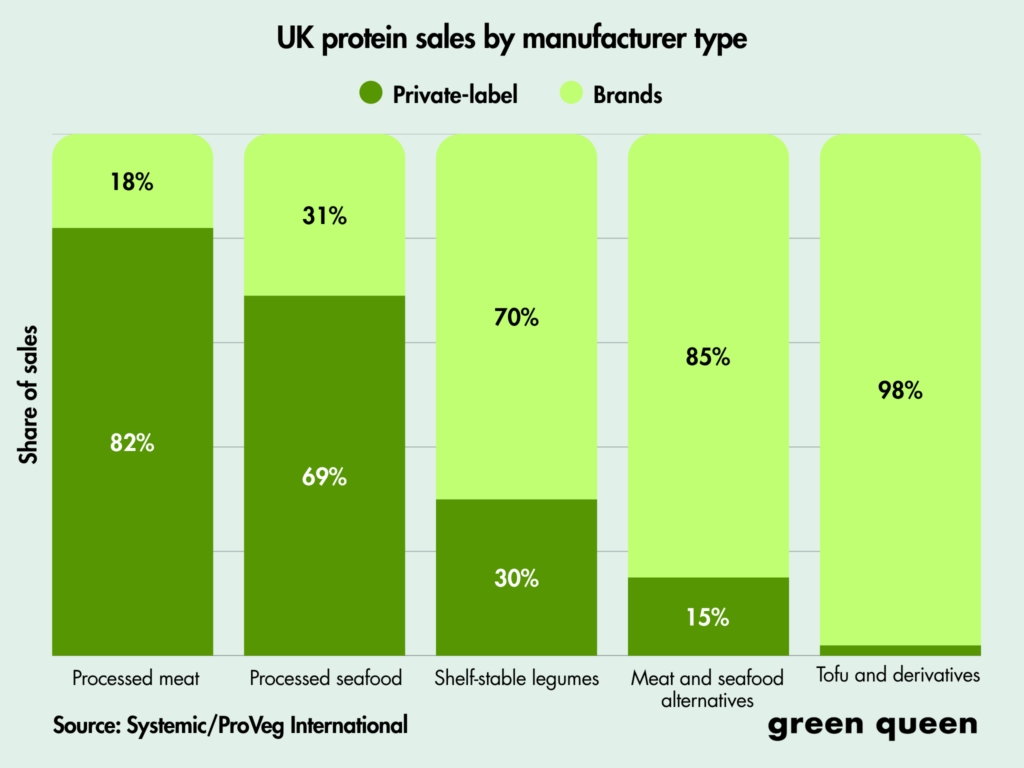
Private-label brands make up 82% of processed meat sales in the UK, but only 15% of plant-based alternatives – and retailers risk losing out on billions if they don’t promote protein diversification.

British supermarkets could stand to gain billions, make progress on their climate targets, and address the country’s fibre deficiency by championing plant-based proteins, shows a new report.

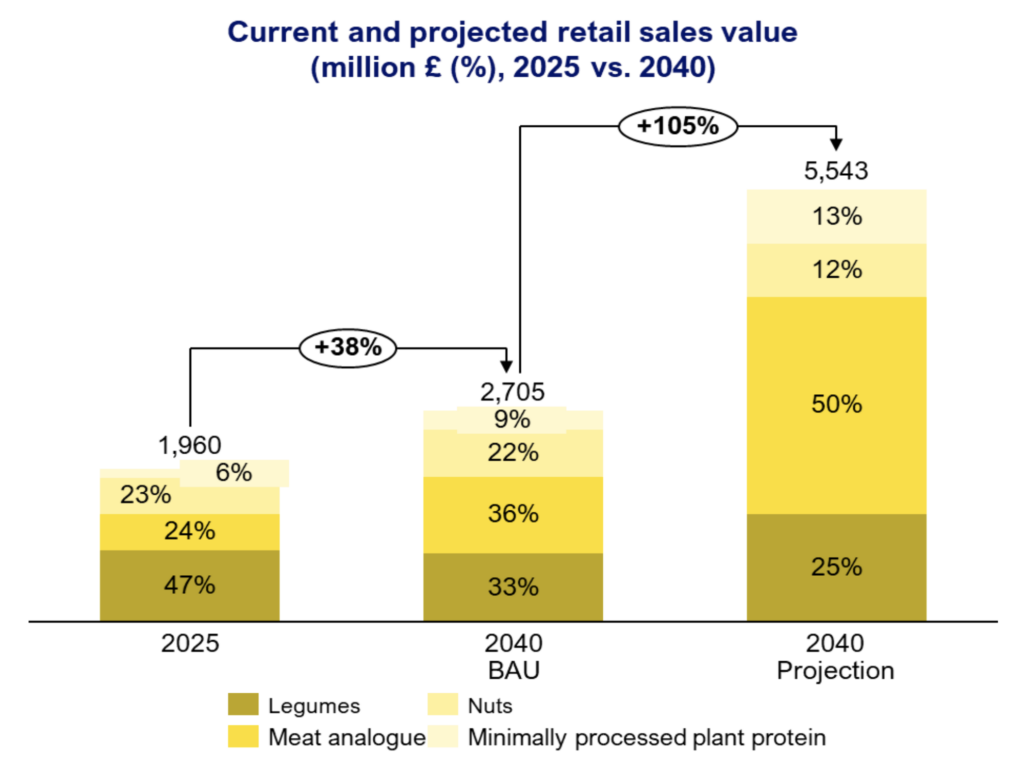
Analysis by Systemiq and ProVeg International reveals the share of protein sales from plant-based foods in the UK is set to double from 14% in 2025 to 29% in 2040.

The problem? Retailers are lagging. The research suggests that supermarkets’ own-label brands account for 85% of processed meat sales, but only 15% of plant-based meat and seafood sales, and just 2% of tofu and derivatives.

Closing this gap would give retailers direct control over pricing, margins, and category direction, which Systemiq says is the most effective way to capture the plant-based opportunity.

“The current protein model is exposed on cost, volatility, emissions and health. Are retailers ready to treat plant-based protein as a core business, rather than a peripheral experimentation?” Systemiq co-founder and managing director Jeremy Oppenheim wrote in a LinkedIn post.
private label plant based
Graphic by Green Queen

Plant-based meat sees sales hike and approaches price parity

Following the highs of 2020-21 and the subsequent correction, the UK’s plant-based category is now recovering and maturing. For instance, Lidl blasted past its target to increase alternative meat and dairy sales by 400% by 2025, recording a 694% hike since 2020. And Tesco reported that the sector was “back in growth”, with sales of vegan mince up by nearly 25% and whole-food proteins by 12%.

Even with whole-food options dominating the landscape, meat and seafood alternatives are performing well, with retail sales growing by 5% between 2024 and 2025.

The vegan market’s expected growth until 2040 will primarily be driven by both sets of proteins: meat analogues and legumes. The former are set to approach price parity with processed meat by 2028 (some products reached that mark last year), and private-label expansion represents the largest commercial opportunity here.

Legumes, meanwhile, are already cheaper and have the greatest growth potential in absolute volumes – although consumer uptake is constrained by limited awareness, underscoring the need for convenience formats and own-brand expansion.

Minimally processed proteins like tofu are cost-competitive with (or cheaper than) meat, too – though they remain underleveraged in-store. And the consumption of nuts remains five times below recommended levels, and their growth lies in positioning beyond snacking into daily cooking.

“Plant-based proteins cost less per kilogram, so revenue per unit is lower than the animal-based equivalent. However, they also carry higher and more stable margins than meat and seafood, strengthening overall profitability,” the report states.

Under a business-as-usual scenario, plant-based food sales are forecast to grow by 38% over the next decade-and-a-half, totalling £2.7B. If supermarkets were to take charge on the protein diversification front, they could double this value, crossing £5.5B by 2040.
plant based meat sales
Courtesy: Systemiq

How retailers can seize the plant-based opportunity

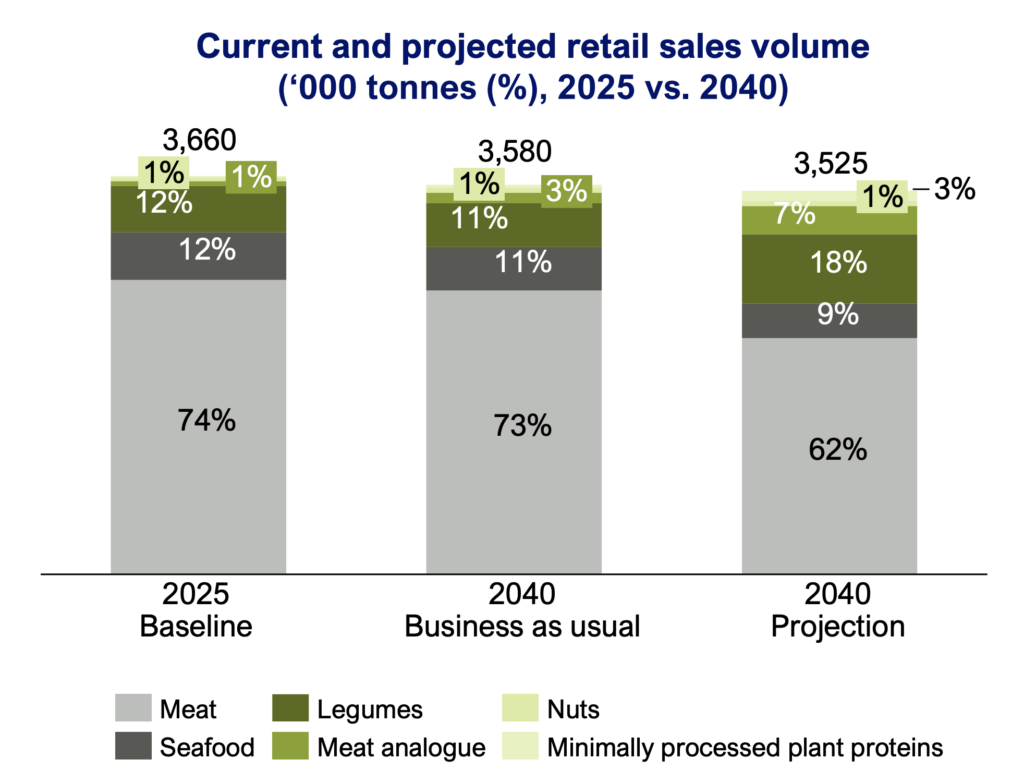
The benefits of a plant-rich transition aren’t just financial. Systemiq’s analysis shows that protein diversification could reduce greenhouse gas emissions by 16%, land use by 14%, and water consumption by 13%, making it a key lever for retailers’ scope 3 emissions targets.

Moreover, this shift would drive a 71% intake in fibre compared to a business-as-usual scenario by 2040, closing around 11% of the UK’s current fibre gap, in addition to saving over £108M in associated public healthcare costs.

Systemic suggests that retailer action is the most directly controllable growth driver, underlining three key levers: increasing the share of private-label plant-based products, placing them alongside their animal-derived equivalents with clear value communication, and measuring ‘protein split’ sales to create a level playing field for vegan food.

Calls for protein diversification are growing across Europe – last week, 25 civil society groups urged supermarkets to measure, disclose, set targets and take action on the protein split, noting that 60% of their sales should come from plant-based sources.
uk supermarkets plant based
Courtesy: Systemiq

Systemiq is asking retailers in the UK to start measuring the ratio of plant-to-animal food sales using a recognised and shared methodology (as their counterparts in the Netherlands are doing), and implement ambitious individual and sector-wide actions to rebalance sales towards plant-rich consumption, in line with the Eat-Lancet Commission‘s Planetary Health Diet.

In fact, industry-wide collaboration reduces first-mover risk and builds shared infrastructure. So the report suggests sharing pre-competitive best practices, using industry platforms to coordinate sector-wide action that outlasts singular initiatives, and engaging the government jointly to support plant-based protein policies, such as updated dietary guidelines and tax and subsidy reforms.

“The commercial case for protein diversification is stronger than most British retailers currently recognise,” said Brian Shaw, senior director at Systemiq.

“We have heard from multiple British retailers that there is no climate action without protein diversification, and our analysis validates that. For retailers serious about reaching net zero, rebalancing their protein portfolio is one of the most powerful levers available.”

https://www.greenqueen.com.hk/uk-supermarkets-protein-diversification-plant-based-meat-sales-price-parity/ 

The 9 Best Plant-Based Foods for Protein, According to Nutritionists

From marthastewart.com

Whether you're vegetarian, vegan, flexitarian, or an omnivore, these protein sources bring a lot to the table 

If you are considering adding more plant-based protein to your diet, you're not alone. More and more people have been shifting to plant-based diets over the last few years for a variety of reasons, from making eco-friendly choices to prioritizing personal health. A diet rich in fruits, vegetables, legumes, whole grains, nuts, and seeds has been linked to a range of benefits, including better heart health, lower cholesterol, and easier weight management. To find out which plant foods pack the biggest protein punch, we asked two registered dietitians for their favourite picks. Whether you're vegetarian, vegan, flexitarian, or an omnivore, these are the best ones to stock in your fridge and pantry, from vegetables and legumes to seeds.

Why Protein Is Important

Protein plays many vital roles in the body and is considered an essential nutrient,” says Jackie Topol, MS, RD, a registered dietitian and culinary nutritionist. It helps build and repair muscle, supports immune function, and keeps us feeling full and satisfied, which can aid in weight management. 

Can Plant-Based Sources Provide Enough Protein?

One common concern with eating more plants is whether you'll get enough protein, and it’s an important factor to consider. While animal foods are concentrated protein sources, you can absolutely meet your protein needs with plant-based foods while getting added benefits. "Plant proteins are a good source of fibre, antioxidants, and anti-inflammatory compounds," says Vandana Sheth, RDN, CDCES, FAND, a registered dietitian nutritionist, plant-based eating, and diabetes expert.

                                                                                                           Credit: Elizabeth Cecil

The Best Plant-Based Foods for Protein

Our experts call out the following foods for their high protein content.

  • Lentils: 9 grams of protein per 1/2 cup
  • Beans: 7 to 9 grams of protein per 1/2 cup
  • Quinoa: 8 grams of protein per cup
  • Edamame: 9 grams of protein per 1/2 cup
  • Tofu: 10 grams of protein per 1/2 cup
  • Hemp seeds: 10 grams of protein per 3 tablespoons
  • Tempeh: 15 grams of protein per 3 ounces
  • Chia Seeds: 4 grams of protein per 2 tablespoons
  • Green peas: 8 grams of protein per cup

    Ahead, learn about other benefits and suggestions for eating these superstar foods.

Lentils

With 9 grams of protein per 1/2 cup, lentils are a "powerhouse of nutrition," says Sheth. They’re also rich in fibre, folate, and iron, providing about 18 percent of your daily value of iron per serving. "The iron in animal protein is more bioavailable, but if you enjoy plant proteins with vitamin C, you can significantly enhance absorption of iron," she explains. To boost the iron content of lentils, try pairing them with vitamin C-rich foods, such as tomatoes, bell peppers, or a squeeze of fresh lemon juice.

How to Eat

  • Lentils cook quickly, giving them an advantage over beans.
  • They work well in soups, curries, salads, or casseroles, says Sheth.

Beans

Beans—from chickpeas to navy to kidney—provide about 7 to 9 grams of protein per 1/2 cup. They're also full of fibre, making them great for digestion and heart health, Sheth tells us.

How to Eat

  • Beans are versatile; they can be the star of main dishes such as stews, curries, burritos, or tacos.
  • Also, beans can be added to soups or salads, says Sheth.

Quinoa

One cooked cup of quinoa offers 8 grams of protein, 5 grams of fibre, and a generous helping of essential minerals. Quinoa is one of the few plant-based complete proteins, meaning it contains all nine essential amino acids your body needs. Animal proteins are considered complete, while many plant-based options are “incomplete.” But don’t worry, "when you enjoy a variety of [plant proteins] throughout the day, you are able to easily get all the essential amino acids," says Sheth.

How to Eat

Quinoa is very versatile and works in both sweet and savoury dishes, says Topol.

Edamame

"Edamame are young soybeans that provide 9 grams of protein per 1/2 cup," says Sheth. You'll also get 4 grams of fiber, and studies show that consuming enough fibre can help support digestive health, reduce the risk of cardiovascular disease, and improve metabolic health.

How to Eat

"Enjoy them steamed or dry-roasted as a snack, add them to stir-fries, or blend them into a creamy dip," says Sheth.

Tofu

Half a cup of tofu provides about 10 grams of protein. This soy-based plant protein is mild in flavour, so Sheth says it easily absorbs any spices and flavours.

How to Eat

Tofu is a versatile plant-based protein that takes well to a variety of cooking methods. It can be baked, air-fried, grilled, scrambled, or stir-fried.

Hemp Seeds

"Hemp seeds provide 10 grams of protein in a 3-tablespoon serving. They also provide omega-3 fats and magnesium," says Sheth. Omega-3s are essential fats that play a key role in heart and brain health. While you may associate omega-3s with fish, hemp seeds are a great plant-based source.

How to Eat

  • Sprinkle hemp seeds on cereal, toast, or salads, says Sheth.
  • Blend them into smoothies or soups for a quick plant protein boost.

Tempeh

A fermented soy product with a firm texture and nutty, slightly earthy flavour, tempeh delivers around 15 grams of protein per 3-ounce portion. Because of its hearty consistency, tempeh makes a satisfying meat alternative in everything from sandwiches to stir-fries.

How to Eat

  • Tempeh absorbs marinades well, making it perfect for baking, pan-frying, or grilling.
  • Topol suggests making tempeh bacon and enjoying it in a sandwich with lettuce, tomato, and avocado.

Chia Seeds

Chia seeds are tiny but mighty, offering 4 grams of protein, 8 grams of fibre, and 7 grams of heart-healthy fat in just two tablespoons. Like hemp seeds, they’re a great source of plant-based omega-3s, which support heart and brain health.

How to Eat

  • If you aren't already a fan of chia seed pudding, give it a try.
  • Topol also likes to sprinkle the seeds into overnight oats.

Green Peas

If you’ve only been reaching for that bag of frozen peas to soothe bumps and bruises, it’s time to give them a spot on your plate the next time you're looking for a protein punch. "Green peas are an excellent source of protein and provide 8 grams per cup," says Topol. 

How to Eat

  • Besides enjoying them as an easy side dish, add green peas to pasta or stir fry.
  • Blend them into veggie burgers, dips, and even smoothies, says Topol.

How Much Protein Do You Need?

"Protein needs vary based on different factors like age, activity level, and health status," says Topol. "The RDA, or recommended dietary allowance, for protein for healthy adults is 0.8 grams per kilogram of body weight per day," says Topol. That’s roughly 55 grams per day for a 150-pound person. However, if you're active, over 60, or have certain chronic conditions, you may need anywhere from 1.0-2.0g per kilogram of body weight.

If you're unsure, a dietitian can help you figure out your nutritional needs and how to meet them—even without eating meat.

Getting Enough Protein on a Plant-Based Diet

“With a little planning and intentionality, you can easily meet your protein needs on a plant-based diet,” says Sheth. She recommends including a variety of plant proteins throughout the day “to amplify nutrition, satisfaction, and achieve balance with a plant-based diet.”
Here's an example of a well-rounded, protein-rich day of plant-based eating:

  • Breakfast: Scrambled tofu with whole-grain toast
  • LunchLentil soup with a colourful chopped salad
  • Snack: Pistachios and a pear
  • Dinner: Chickpea curry with quinoa and a side salad
  • Evening Snack: Roasted edamame

Wednesday, April 29, 2026

The Vegan Calamari Recipe That Can Fool Even Seafood Lovers

From plantbasednews.org

They're crispy, chewy, and even a little jiggly 

If you’ve ever missed crispy seafood textures, this vegan calamari recipe might be the closest thing yet. In a recent video, Miyoko Schinner shows how to recreate calamari using simple, plant-based ingredients that deliver the same bite, chew, and crisp finish.

Schinner, widely known as a vegan cheese pioneer and the founder of Miyoko’s Creamery, shares the method as part of her cookbook The Vegan Meat Cookbook. The result is a surprisingly convincing seafood alternative that even sceptics struggle to tell apart from the original.

A traditional ingredient with a modern twist

These crispy, chewy calamari rings are made from konjac and layered with flavour using vegan fish sauce and a flax egg - Media Credit: YouTube / The Vegan Good Life with Miyoko

At the centre of this vegan calamari recipe is konjac, a root vegetable used in Japan for centuries. Schinner explains that it’s “the ground-up powder of a strange-looking root of a plant, the konjac plant,” which transforms into a jelly-like texture when cooked.

One of its standout features is that “it has no calories,” she says, making it a unique base for recreating seafood textures. Once combined with water, seasoning, and heat, the mixture thickens into a glossy, sliceable block that mimics the elasticity of calamari.

To build flavour, Schinner adds vegan fish sauce, explaining that it helps “render it like something that’s out of the sea.” This step is key to achieving that subtle ocean-like taste without using any animal products.

Turning konjac into convincing calamari


YouTube / The Vegan Good Life with Miyoko
The konjac mixture thickens into a glossy, jelly-like mixture that’s refrigerated to set before being sliced into rings

The process starts by whisking water with a small amount of pickling lime. Schinner notes you can substitute baking soda if needed. She then adds konjac powder, salt, and vegan fish sauce before heating the mixture.

As it cooks, it quickly thickens. “Already you’re beginning to see it thicken up,” she says, noting that it should cook for just a few minutes until glossy. Overcooking can cause it to separate, so timing matters.

Once ready, the mixture is poured into a container and chilled. After about 30 minutes, it firms up into a jelly-like slab that can be sliced into rings or irregular shapes. “You don’t have to do [rings],” Schinner adds, pointing out that it all tastes the same regardless of shape.

Getting the texture just right

Texture is where this vegan calamari recipe really stands out. Schinner describes the final result as “crispy on the outside, jiggly and tender on the inside with just that right amount of bite and chew.”

Before frying, she tweaks the traditional Italian method. While classic calamari is simply coated in semolina, she finds that plant-based versions can be dry. To fix this, she creates a flax egg and dips the pieces first.

“I find that this is a little bit drier than traditional calamari,” she says, which is why the flax mixture helps lock in moisture before coating with semolina. Regular flour can also be used if semolina isn’t available.

Frying and finishing touches

Once coated, the pieces are fried in hot oil until golden brown. Schinner recommends testing the oil by dropping in a small piece. “When you drop something in there … and it rises right away is when you know that the oil is hot enough.”

She also advises not to overcrowd the pan. This can lower the oil temperature and affect the crispness.

The finished calamari can be served simply or paired with a dipping sauce made from lemon juice, capers, and vegan mayonnaise. But according to Schinner, it’s just as good on its own.

Even non-vegans are convinced

The most telling moment comes when Schinner shares feedback from a friend. “I had an Italian, non-vegetarian, non-vegan, tell me that she was struggling to tell the difference between the real thing and this,” she says.

That realism comes down to the unique properties of konjac and the careful layering of flavour and texture. The end result is “wiggly … elastic,” she adds. It captures the exact qualities that people associate with traditional calamari.

For anyone curious about plant-based seafood, this vegan calamari recipe shows how far ingredients and technique have come.

For more of Schinner’s magical plant-based recipes visit her YouTube channel.

https://plantbasednews.org/lifestyle/food/vegan-calamari-recipe/

Fable proves that “fibre is the new protein” with launch of Pulled Shiitake Mushrooms in UK supermarkets

From veganfoodandliving.com

Fable is bringing its succulent Pulled Shiitake Mushrooms to UK supermarkets, offering a versatile, chef-approved protein for the discerning home cook


Fable is bringing its Pulled Shiitake Mushrooms to UK supermarkets, set to meet the rising demand for better ingredients as shoppers become more discerning about what goes into their baskets.

On a mission to make food healthier and more sustainable through the power of mushrooms, Fable’s products are minimally-processed, focusing on the natural texture of upcycled shiitake mushroom stems.

Recently, the succulent, umami-rich proteins have become a favourite in professional kitchens across the world, favoured for their texture, versatility, and umami flavour. What’s more, preparing the tender, pulled mushrooms doesn’t require complex techniques and they can be used in everything from a slow-cooked braise to a quick midweek stir-fry.

Now, to bring flavourful ease to home cooks across the UK, Fable’s mushrooms are coming to Waitrose stores.

In a statement about the product’s launch, Michael Fox, Co-founder and CEO of Fable, said: “The possibilities of Fable stretch far beyond any plant-based ingredient. We prioritise good taste, amazing texture and clean ingredients to make something that can stand alone as a centre of plate protein.”

Fable’s Tender Pulled Shiitake Mushrooms will be available through Waitrose from 6th May, priced at £3.99.

                                                                                                            Photo © Fable Food Co.

Fable Pulled Shiitake Mushrooms launch in Waitrose

Fable’s expansion into Waitrose marks a pivotal moment for the mushroom brand rewriting the rules of meat alternatives.

Despite reports of falling sales of plant-based meat alternatives, Fable sees plenty of potential demand for its products. While processed products appear to have dropped in popularity, quality, whole food plant-based products are still very much in demand.

2025 research from Innova Market Insights highlighted that artificiality is now one of the primary barriers for shoppers exploring plant-based diets. By focusing on whole foods, Fable is appealing to the 74% of British consumers who intend to purchase plant-based alternatives but are increasingly scrutinising the ingredients lists.

Made from shiitake mushrooms, coconut oil, soy protein and natural colours and flavours, Fable's meat substitute can be used in the same ways as braised beef or pulled pork. Photo © Fable Food Co.

Fibre is the ‘new protein’

Plant-based meat alternatives aren’t just about protein anymore, although Fable’s Pulled Shiitake mushrooms still offer plenty of it with over 14 grams per serving.

While the last several years have been defined by a collective obsession with getting ‘enough’ protein, the nutritional conversation is now moving towards gut health. Industry analysts suggest that fibre is “the new protein,” with the global market for fibre-rich foods expected to more than double by 2034.

Emily Quinn, Vegetarian food buyer at Waitrose, noted that the launch of Fable’s Pulled Shiitake Mushrooms builds on this “growing focus on gut health and the resurgence of fibre.” Mushrooms are naturally nutrient-dense, containing prebiotic fibres and essential micronutrients that are often stripped away in more processed meat analogues.

https://www.veganfoodandliving.com/news/fable-pulled-shiitake-mushrooms-waitrose-launch/