From greenqueen.com.hk
Annamari Jukkola, co-founder and CEO of Finnish dairy-free company Mö Foods, explains why the plant-based movement must embrace the “post-vegan” era
For more than a decade, ‘vegan’ was one of the most potent words in food.
It signalled conscience, urgency and a deliberate break from industrial animal agriculture. For a time, commercial growth followed that moral energy. But in recent years, retail sales of plant-based meat have declined in several major markets.
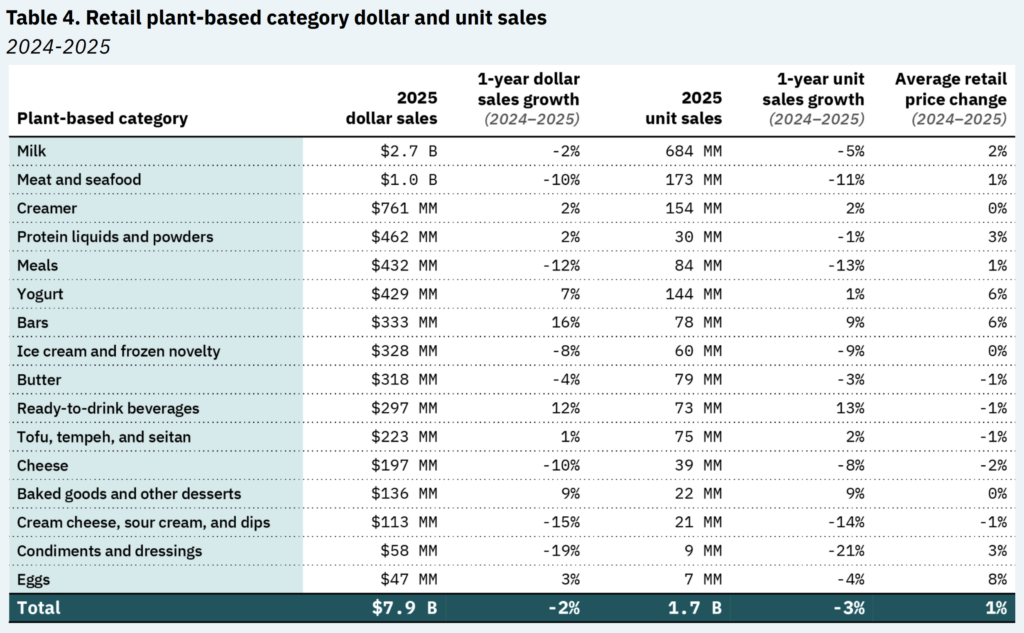
In the US, dollar sales fell again in 2025, with unit sales down by more than 10%, and parts of Europe have seen similar softening in volumes. Concern about climate change and animal welfare has not evaporated. What has changed is the context in which food choices are made.
Households are under pressure. Food inflation has lingered, energy bills remain high, and wages have struggled to keep pace. When the weekly shop becomes a calculation rather than an expression of values, shoppers trade down. Premium-priced products are often the first to go, particularly when they are seen as optional. And much of the plant-based category is still treated that way: placed in separate sections, framed in contrast to the “real thing”, positioned as a substitute rather than an everyday staple.
I say this as someone who grew up on a traditional dairy farm in Finland, where food was our way of life. Movements may begin with identity, but I learned early that anything that endures does so because it works. The foods people grow up with carry weight. They are familiar, trusted, and woven into routine. No one abandons them lightly.

If you want people to change what they eat, the alternative cannot simply be different – it has to be at least as good, and ideally better. That’s why the plant-based food movement must embrace the “post-vegan” era: not the abandonment of ethics, but the normalisation of plant-based food.
The flexitarian majority
The first wave of plant-based innovation was fuelled by urgency and investor optimism. Some products were rushed to market; others promised more than they delivered. Many were marketed primarily under ‘vegan’ or ‘vegetarian’ labels: terms that signalled good intent, but gradually became associated with products that were more expensive, less satisfying, or inconsistent in quality.
Some shoppers felt misled; others drifted back to familiar habits. Those who continued buying most consistently were the ones whose identities already aligned with the label: vegetarians and vegans.
The issue is simple: there just aren’t that many vegans. Fewer than 1% of the world’s population identifies as vegan. Even when vegetarians are included, the group remains relatively small in most Western markets.
Far larger numbers – over 40%, by some estimates – describe themselves as flexitarian: actively reducing their meat consumption without abandoning it entirely. If the goal is to reduce emissions, land use, and animal suffering, scale matters more than purity. Small shifts adopted by millions outweigh total exclusion practised by thousands.
This is an approach that meets consumers where they are and lowers the barrier to participation, with the objective not to win an identity, but to shift behaviour, repeatedly and at a global scale.
The shift from identity to impact
Every product that moves from the margins to the mainstream faces the same test. Early adopters will tolerate inconvenience because they believe in the mission. Most consumers will not. For broad adoption, the alternative must stand on its own and fit easily into daily life.
We have seen this pattern elsewhere. Renewable energy expanded when it became cheaper. Electric vehicles gained ground when range improved, and costs fell. Organic produce grew when availability widened, and quality stabilised.
Plant-based food is already showing signs of this transition. While plant-based meat has softened in some markets, plant-based milk continues to hold a significant market share, accounting for well over 10% of total retail milk sales in the US, and higher in parts of Europe. Where functionality is reliable, familiarity is high, and price gaps have narrowed, adoption has stabilised.
But performance alone is not enough. The real question is who these products are designed for. If plant-based food is to move beyond the margins, performance must be defined in everyday terms.
The discipline of the mainstream

Most grocery decisions are made in a moment. Shoppers spend little more than 10 or 15 seconds choosing a product on the shelf. In that brief window, familiarity outweighs ideology.
It begins with price. In an era of rising food costs, few households can treat sustainability as a premium add-on. It continues with taste and functionality. On the farm where I grew up in western Finland, customers noticed the small things: texture, consistency, whether a product behaved the same way every time. If it didn’t, they went elsewhere.
These are not superficial concerns, but the basic conditions of repeat purchase. Cheese must melt. Milk must foam. A meat alternative must hold its own at the dinner table.
Performance must also include transparency. Environmental claims can no longer rely on branding alone. As climate literacy increases, consumers expect evidence on emissions, land use, and supply chains. If plant-based food genuinely reduces environmental harm, that advantage should be measurable.
None of this guarantees success. Some brands will not survive this phase. Investment has already tightened, and in parts of Europe, public support continues to favour established agricultural systems. But industries mature through correction, and those that endure become stronger.
When plant-based stops being oppositional
For years, plant-based food defined itself in opposition to meat and dairy. That framing was necessary at the beginning. But opposition is not transformation. Real impact comes from scale, and, perhaps ironically, scale happens when a product becomes unremarkable, when it blends into weekly shopping lists without fanfare.
The future of plant-based food will not be decided by labels, but by small, ordinary substitutions: an oat-based chèvre paired with a glass of wine, a milk that rounds out a morning coffee, a meat alternative folded into a weeknight pasta. When those choices feel natural rather than ideological, change stops being a statement and becomes a habit.
That is how movements grow up.
https://www.greenqueen.com.hk/vegan-vs-plant-based-labelling-brands-mo-foods/

No comments:
Post a Comment