From vegnews.com
By Charlotte Pointing
Pomegranates are juicy, sweet, tart, and packed with health benefits. Here’s how to add more to your diet
But, of course, pomegranates are also enjoyed all over the world for their sweet, tart, slightly acidic taste and nutritional benefits. According to Market Research Reports, the global pomegranate market was valued at more than $281 million in 2025, and the fruit is growing in popularity. By 2032, the market research firm predicts the market could exceed $398 million. Most pomegranates are grown in Iran, but India and China are also major producers of the fruit.
One of the biggest reasons why the market is growing is because of the rising demand for processed pomegranate products, like juice and powder. While these formats are nutritious, it’s hard to beat fresh fruit. Here’s why we should all be embracing pomegranate in its original, unprocessed form, as well as some delicious plant-based recipe inspiration, too.
 Pexels
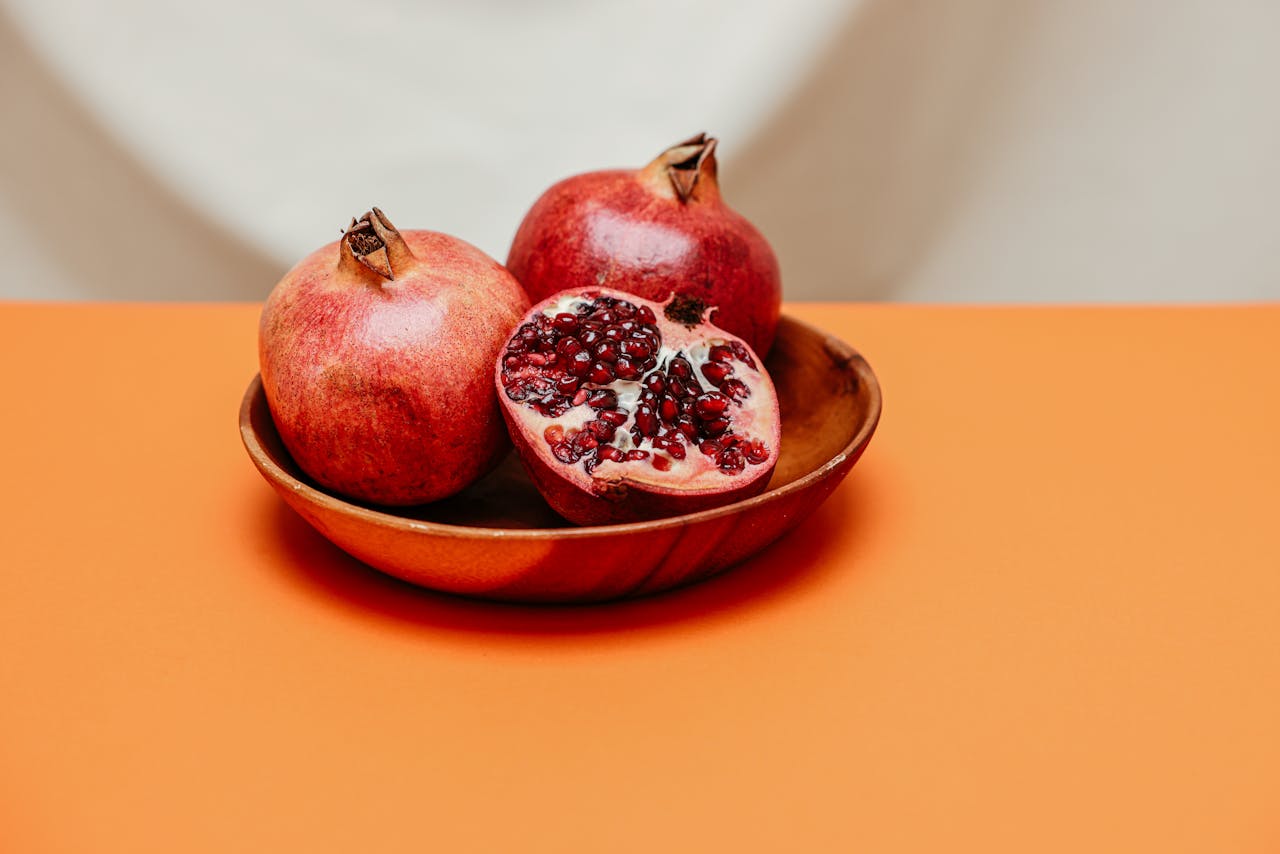
Pomegranates, which are similar in size to oranges, have a round, reddish exterior. Inside, they contain hundreds of edible seeds called arils. These seeds are usually the part of the fruit that is sprinkled on salads, curries, puddings, and more.
Pomegranate seeds are incredibly nutritious. They contain fibre, which is essential for supporting gut and digestive health, as well as protein, vitamin C, and important minerals such as folate, magnesium, phosphorous, and potassium.
On top of this, they also contain antioxidants, which are potent plant compounds that help protect the body’s cells from harmful free radical damage and reduce chronic inflammation. Over time, cell damage and inflammation can increase the risk of diseases, including heart disease and cancer.
One type of antioxidant in pomegranate, called ellagitannins, is particularly beneficial for brain health. “Some studies have found that ellagitannins may help protect the brain against Alzheimer’s and Parkinson’s disease by reducing oxidative damage and increasing the survival of brain cells,” reports Healthline.
Is it better to eat pomegranate or drink the juice?
Pomegranate juice is one of the most popular ways to consume pomegranate, and research suggests it is beneficial for health. It still contains antioxidants, for example, as well as vitamin C and folic acid.
However, drinking pomegranate juice won’t help you increase your fibre intake. This is because this particular nutrient is only available in whole pomegranate seeds.
Research suggests that most of us need to increase our fibre intake. In fact, 95 percent of Americans are currently not meeting the recommended daily intake of 30 grams per day. Eating more fresh pomegranates is a great way to help you boost your fibre, as just one fruit contains more than 11 grams of the nutrient.
“Fibre is important for keeping us regular as most of us know, but it’s also the foundation for a healthy gut,” Nichole Dandrea-Russert, MS, RDN, and author of The Fiber Effect, told VegNews. “A healthy gut leads to less acute and chronic inflammation, both in the gut and throughout the body.”

No comments:
Post a Comment