Tuesday, September 8, 2026

Beans Lead UK’s Plant-Based Food Growth As Shoppers Shun Meat & Vegan Alternatives

From greenqueen.com.hk

Legumes, tofu and tempeh are driving the resurgence of the UK’s plant-based protein sector, with conventional and vegan meat falling out of favour due to health and price concerns.

As meat prices continue to climb and vegan alternatives suffer from the ultra-processed tag, whole-food and minimally processed plant proteins are surging in the UK.

Madre Brava’s analysis of NielsenIQ data shows that, in the first half of 2026, unit sales of beans, pulses, tofu and tempeh grew by 7.3% compared to the same period a year ago, with value sales also up by 10.1%.

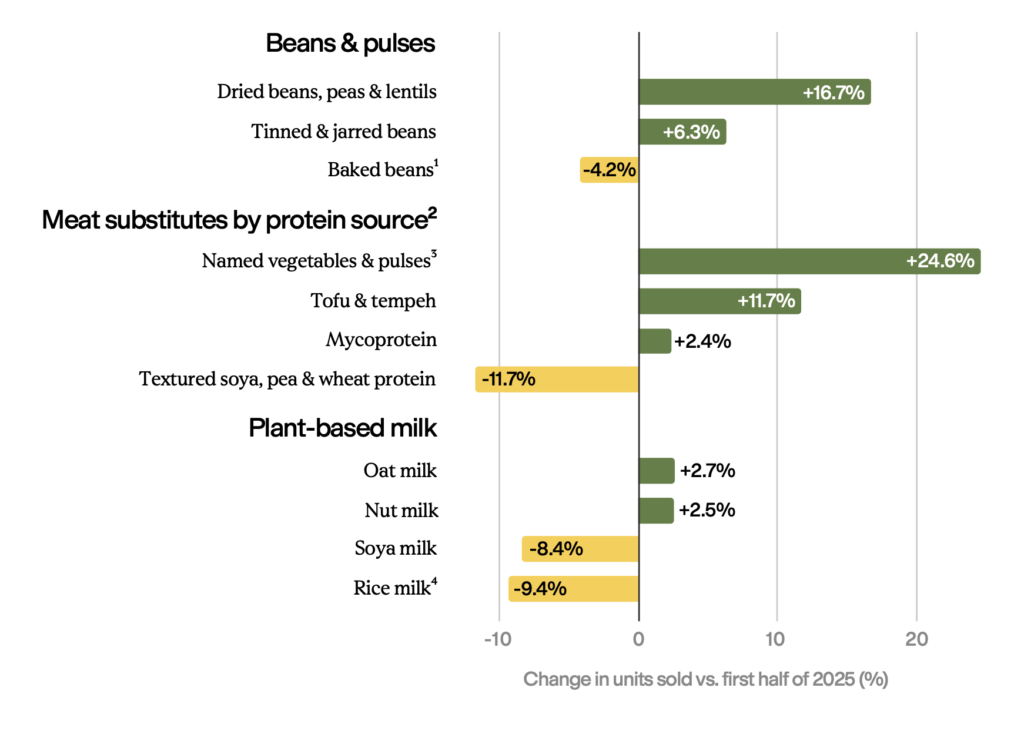
Plant-based meat alternatives, however, continued their slide with a 4.3% decline in units and 2.7% in value, though there was respite for mycoprotein (whose unit sales increased by 2.7%) and vegetable-led analogues like sausages and pies (+24.6% from a small base).

It’s not just vegan alternatives that suffered – sales of conventional meat products dipped by 1.8% during this period, according to Madre Brava’s review of Euromonitor International figures.

“Shoppers are not abandoning plant proteins – they’re shifting toward simpler, higher-fibre foods, whose prices are rising more slowly than food inflation, widening the price gap with meat. This indicates that, while food inflation and affordability remain key factors, nutrition and health benefits are also driving purchasing decisions,” the report noted.

Growth across budget and premium bean categories
uk plant based sales
Courtesy: Madre Brava

Within the traditional plant protein category, retailers sold 16.7% more units of dried beans, peas and lentils, with similar increases for canned and jarred beans (6.4%), tofu (7.2%), and tempeh (71.5%).

Textured vegetable proteins made from soy, wheat or pea experienced an 11.7% reduction in unit sales, while baked beans saw a 4.2% drop. The latter came as Brits switched from individual to multi-pack purchases, while the overall reduction came from beans that contained sausages or other processed meats.

While standard baked bean options declined in value, organic versions grew by 9.7% in unit sales. “These exemplify consumer shifts more generally, as shoppers seek healthier products, budget savings, and the success of ‘premium beans’ at the higher end of the market,” Madre Brava said.

Courtesy: Bold Bean Co

Health may just be the top driver, considering that the bean category is expanding at both the budget and premium ends. For four of the six canned and jarred bean segments (including chickpeas and butter beans) that saw a hike in demand, the price per unit lifted faster than inflation, indicating that people are spending more on premium options in these categories.

Brits’ appetite for premium beans has been driven by the popularity of London-based Bold Bean Co, which has witnessed a year-on-year growth of 117% since its launch in 2021. Such has been its success, retailers have begun coming out with jarred beans under their own-label brands.

“The canned pulses category is undergoing a real transformation,” said Beth Latham, the brand’s head of category and strategic projects. “It was previously a dusty, highly commoditised aisle in the store that lacked innovation. However, over the last few years, the premium end of the category has reshaped how consumers think about beans, proving they are delicious and can be the hero of a meal.”

Chloe Mackean, food business transformation manager at the UK’s Food Foundation (whose Bang in Some Beans initiative aims to double national legume intake by 2028), said she wasn’t surprised to see beans’ ascendancy.

“Beans are a triple win for health, sustainability and our wallets. They are a healthy and affordable protein source, high in fibre and emit far fewer greenhouse gas emissions than animal protein,” she pointed out. “But beans are also tasty, and it is thanks to brands like Bold Bean Co, who pepper social media with photos of delicious bean recipes, that have helped to change people’s perception.”

Oat milk dominates as supermarkets urged to embrace plant proteins

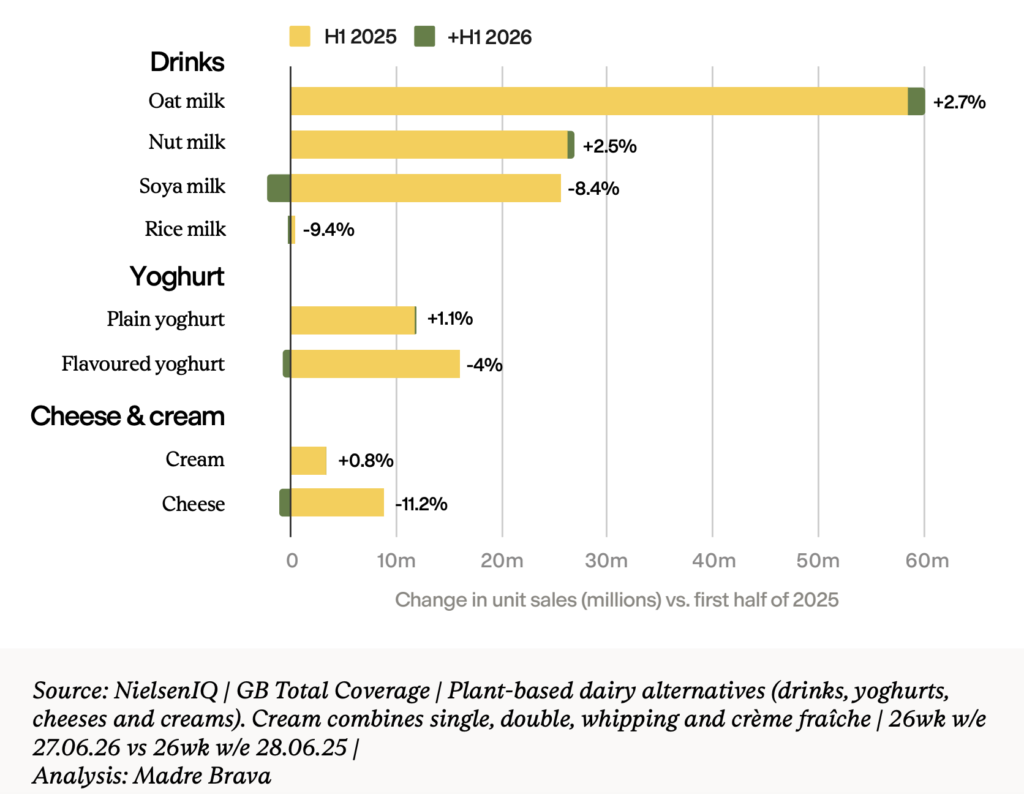
Moreover, the report looked at the performance of plant-based dairy, which decreased by just under 1% in unit sales but increased in value by 4.4%. Milk alternatives now account for 7% of the overall milk market, although sales flatlined in the first six months of 2026.uk plant based milk sales
                                                                                                Courtesy: Madre Brava

Oat milk continues to dominate with a 2.7% hike in unit sales, just as nut milks sold 2.5% better too. But purchases of soy and rice milk fell by 8.4% and 9.4%, respectively. Meanwhile, the performance of plain vegan yoghurt and non-dairy cream improved by 1.1% and 0.4%, respectively, with declines for flavoured yoghurts (-4%) and cheese (-11.2%).

Plain yoghurt is sold in larger packs in the UK, so the shift is likely to be larger in volume than unit demand. “The switch is an indication that some consumers are prepared to pay for healthier products, as the price per unit rose 4.5% for flavoured yoghurts, which contain added sugar, and 8.1% for plain yoghurt, which is lower in sugar,” the report stated.

Madre Brava has been working with other groups to urge retailers to embrace plant proteins and to ensure they account for 30% of their protein sales by 2030. A recent report co-authored by the organisation found that this would achieve 64% of supermarkets’ supply chain emissions reduction targets, while saving money on climate measures.

Lidl blasted past its target to increase alternative meat and dairy sales by 400% by 2025, recording a 694% hike since 2020. It also rolled out 20 own-brand plant-based products to encourage more consumers to eat more such foods. Tesco, which missed its sales goal for meat alternatives last year, reported that the sector was “back in growth”, with sales of vegan mince up by nearly 25% and whole-food proteins by 12%.

And Sainsbury’s has launched a Full on Fibre label to highlight high-fibre products, which include fruits, vegetables and plant proteins like beans and tempeh, building on the fibremaxxing trend that has engulfed the food industry.

“The bounce back in plant-based sales shows consumers are choosing foods that are a win for their health, their budgets and can compete on taste,” said Madre Brava’s UK director, Sara Ayech.

“Supermarkets account for more than 80% of our calorie intake. They can help drive this trend by ensuring a growing range of products that are the most convenient and appealing options for flexitarian customers, who want to eat more plants to fulfil nutrition goals. Setting targets for increasing the mix of plant proteins can also help retailers meet healthy sales and sustainability targets.”

https://www.greenqueen.com.hk/uk-plant-based-food-sales-growth-beans-meat-alternatives-tofu/ 

Monday, September 7, 2026

7 Late Summer Vegan Breakfasts For Easy Mornings

From plantbasednews.org 

Try these fun breakfasts while the season ends

At the end of summer, the days may start to cool down, but there is still time for fresh, bright breakfasts. Fruit is an easy place to start, whether you’re using berries, peaches, mango, or anything else that’s still in season. These late summer vegan breakfasts keep things simple, with recipes using oats, chia seeds, smoothie bowls, muffins, and toast.

Some are quick enough to make in the morning, while others can be prepped ahead and kept for the next few days. That makes them useful for slower late-summer mornings as well as busier days when routines start to change.

This list includes seven easy vegan breakfasts for the last stretch of the season. They’re colourful, simple, and a little more interesting than making the same thing every day.

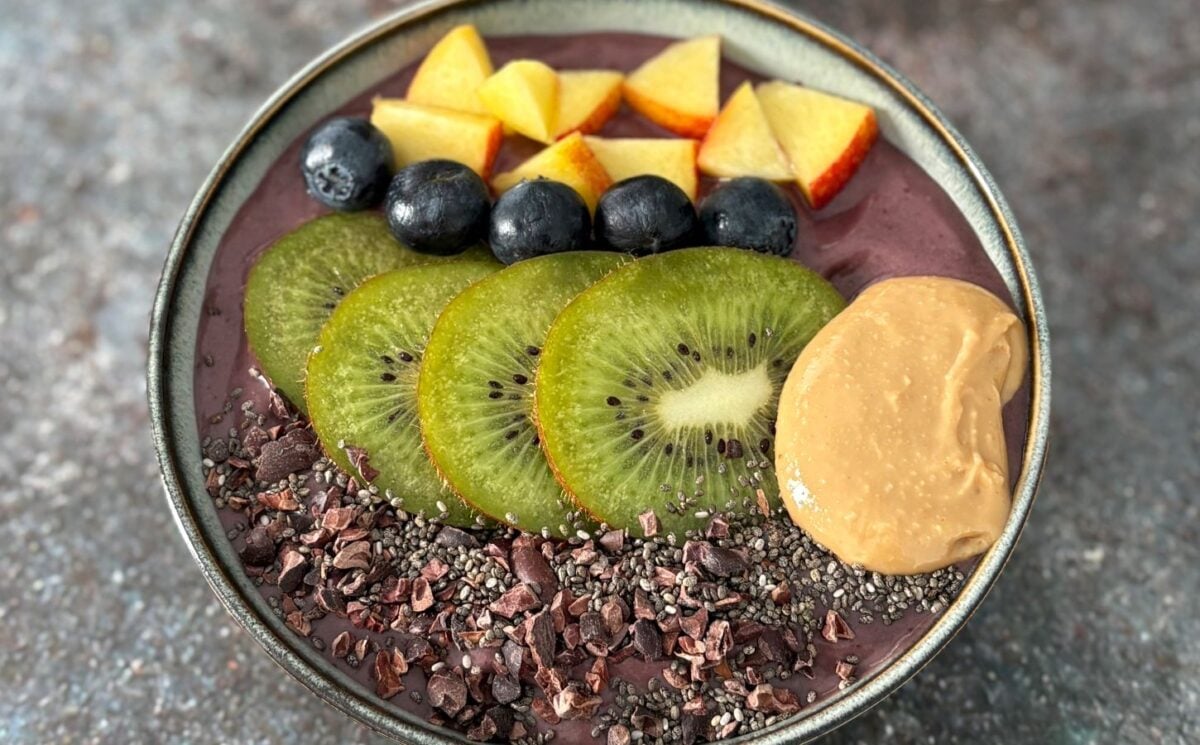
Vegan acai smoothie bowl

A vegan acai smoothie bowl topped with nectarine, blueberries, and kiwi, a high protein vegan breakfast
Natlicious FoodYou can add any fruit toppings you like to this smoothie bowl recipe

Natlicious Food blends frozen acai, banana, plant-based milk, and protein powder into a thick smoothie bowl. Fresh fruit, chia seeds, cacao nibs, and peanut butter add texture on top, so each spoonful has a mix of creamy and crunchy elements.

Find the recipe here.

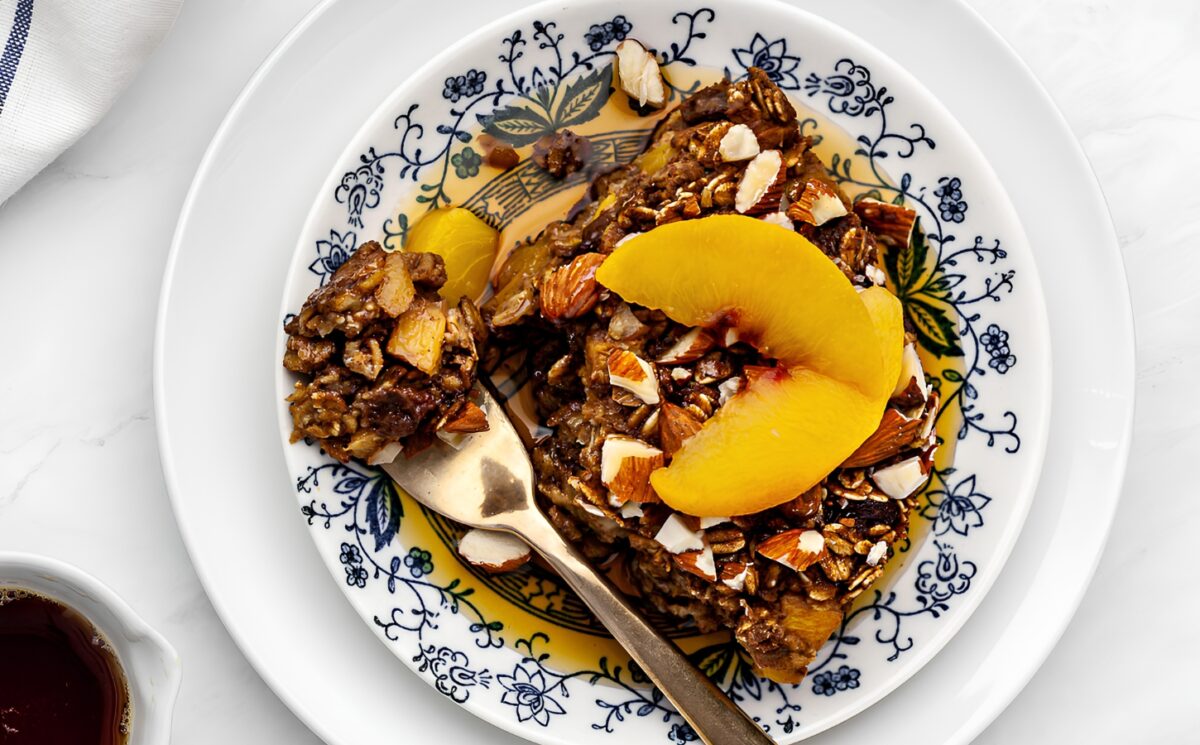
Ginger peach baked oatmeal

Ginger Peach Baked Oatmeal with rolled oats, frozen peaches, raisins, and almonds
Amber AsakuraFresh peaches work here too

Peaches, oats, dates, applesauce, flaxseed, molasses, and warm spices bake together in this breakfast from Clean Food Dirty Girl. Ginger, cinnamon, cloves, and vanilla give the oatmeal bold flavour, while raisins and almonds add sweetness and crunch.

Find the recipe here.

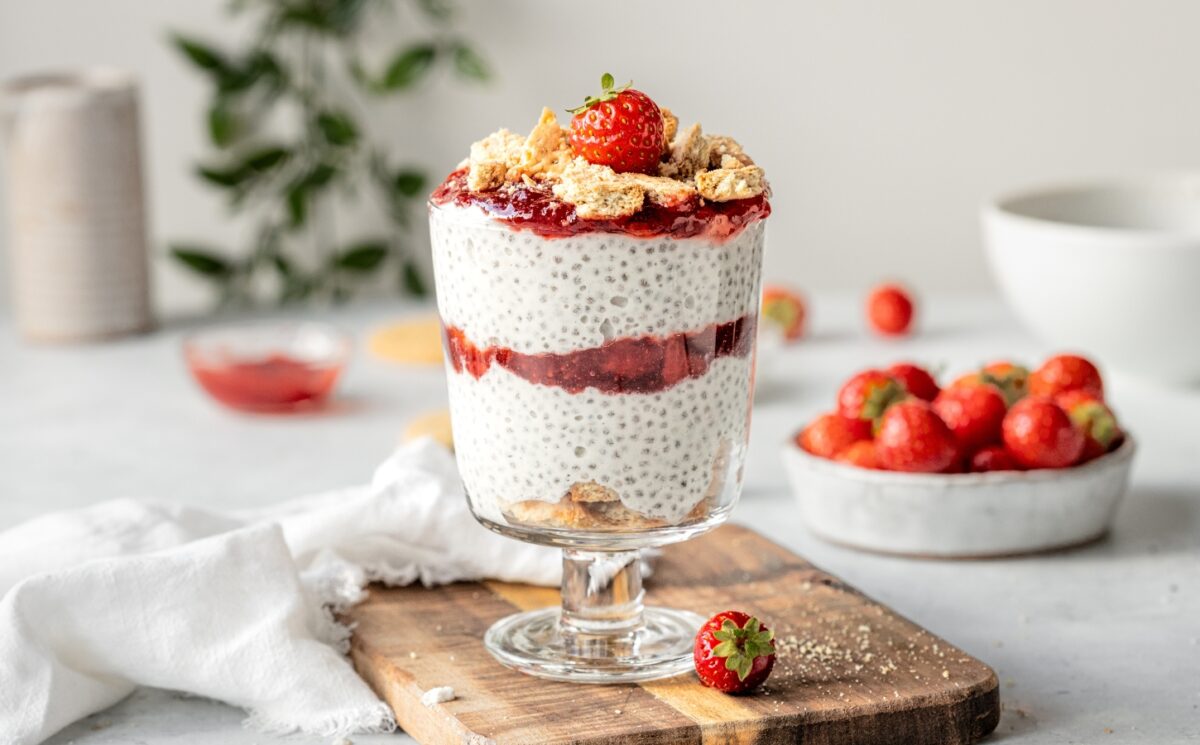
Strawberry cheesecake chia pudding

Strawberry Cheesecake Chia Pudding with coconut milk, cashews, vanilla, digestives, and strawberry compote for late summer vegan breakfasts
Romy LondonLayer sweet compote with creamy chia pudding and crunchy biscuits for an indulgent breakfast

This chia pudding from Romy London turns strawberry cheesecake flavours into an easy make-ahead breakfast. Blended cashews and coconut milk create a creamy base, chia seeds thicken it overnight, and strawberry compote and crushed biscuits finish the top.

Find the recipe here.

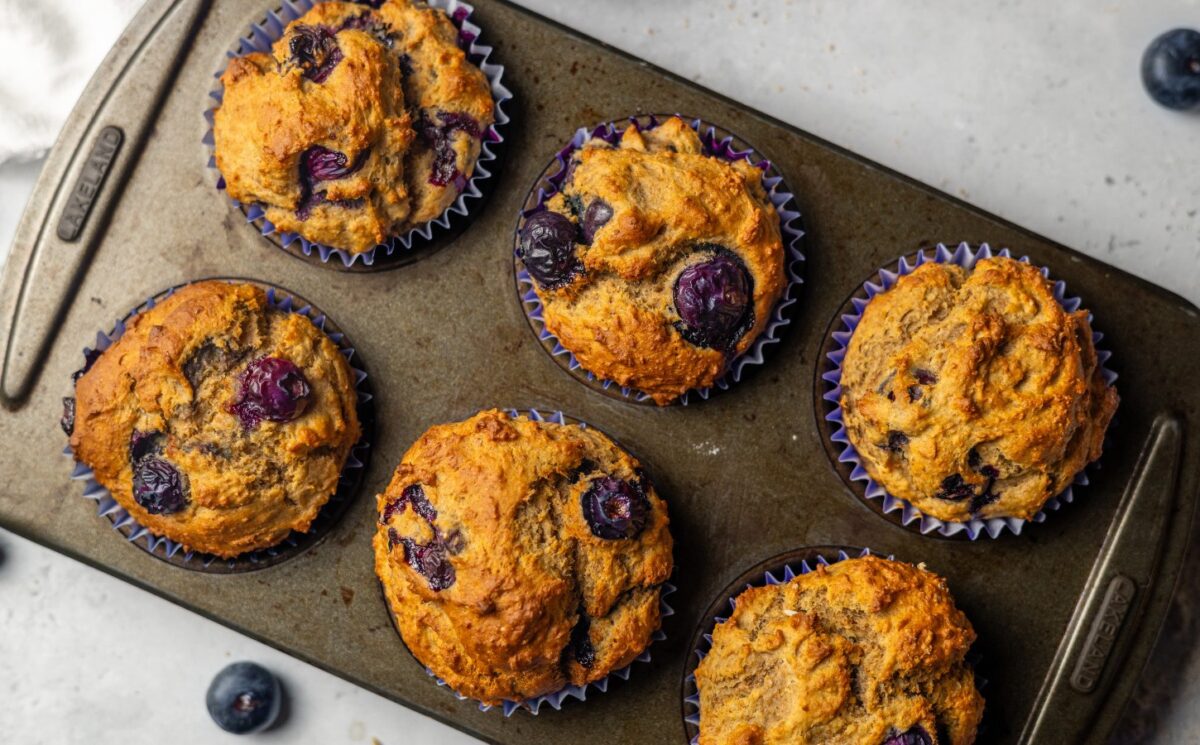
Vegan protein blueberry muffins

vegan protein blueberry muffins with silken tofu and pea protein powder
Romy LondonThese easy, on-the-go protein muffins can be frozen for up to three months

Romy London uses whole wheat flour, pea protein, silken tofu, banana, almond milk, and fresh blueberries in these breakfast muffins. They bake up soft and fluffy, with bursts of fruit throughout and enough structure to freeze for later.

Find the recipe here.

Breakfast berry chia bars

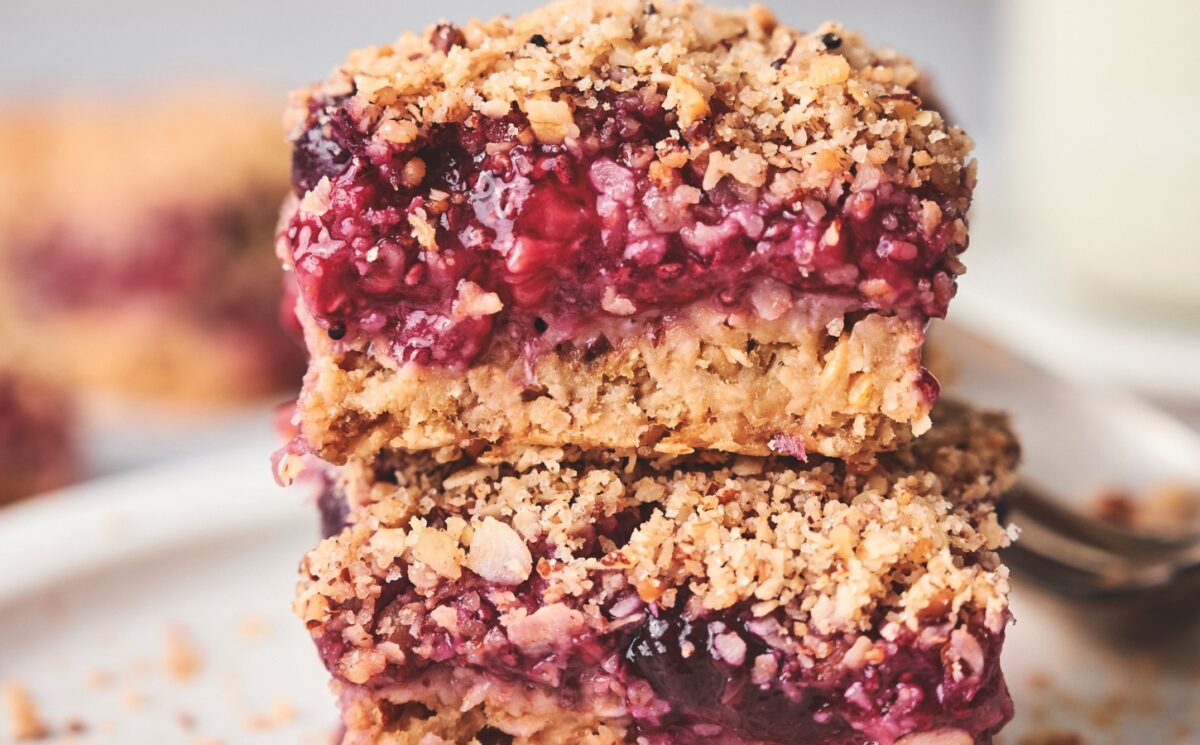
stacked breakfast berry chia bars with banana, maple syrup, rolled oats, frozen berries, and a crumble topping for late summer vegan breakfasts
Miranda StokkelThese tasty breakfast bars are full of energy-packed ingredients

A berry chia layer sits between an oat base and crumbly topping in these breakfast bars by Liz Douglas. Banana, flaxseed, plant-based milk, frozen berries, chia seeds, walnuts or pecans, and cinnamon make them useful for meal prep.

Find the recipe here.

Raspberry smoothie bowl

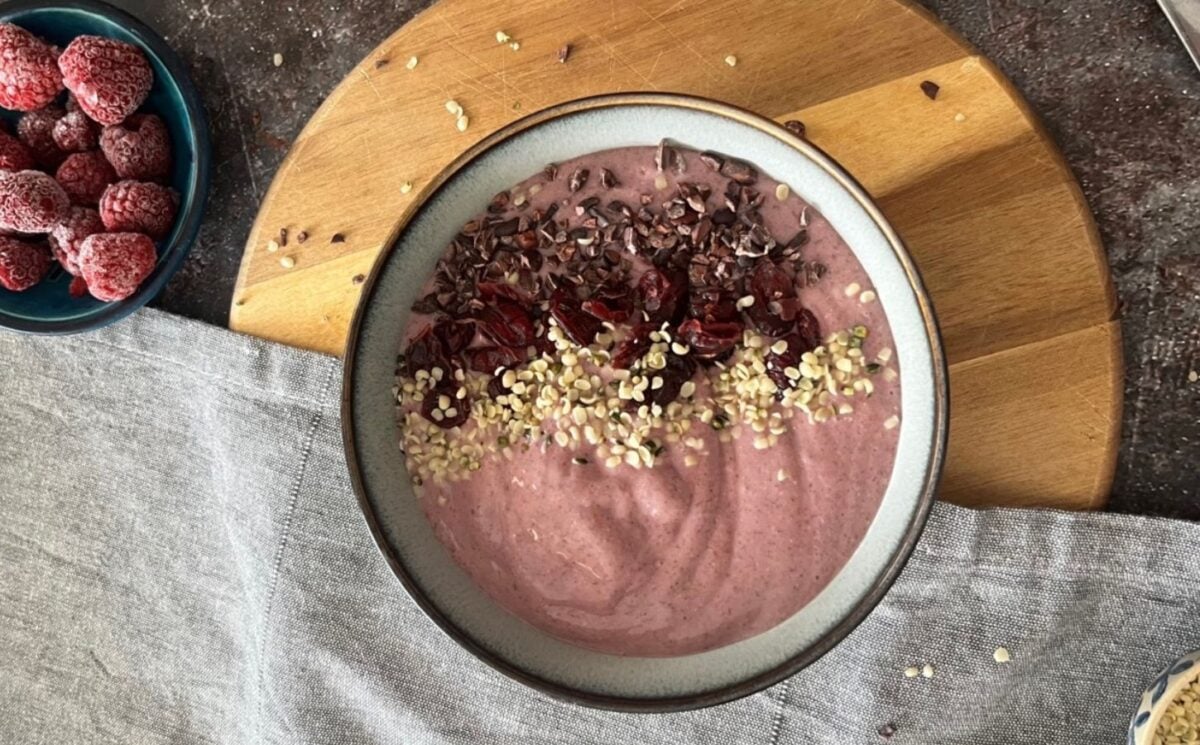
A picture of a vegan raspberry smoothie bowl topped with hemp hearts and cocoa nibs
Natlicious FoodSummer is the perfect time to test out antioxidant-rich smoothie bowls

Raspberries, banana, pomegranate seeds, plant-based milk, chia, hemp hearts, and flax seeds blend into this smoothie bowl from Natlicious Food. Cocoa nibs, dried raspberries, hemp seeds, and fresh fruit add texture and extra toppings.

Find the recipe here.

Mango avocado toast

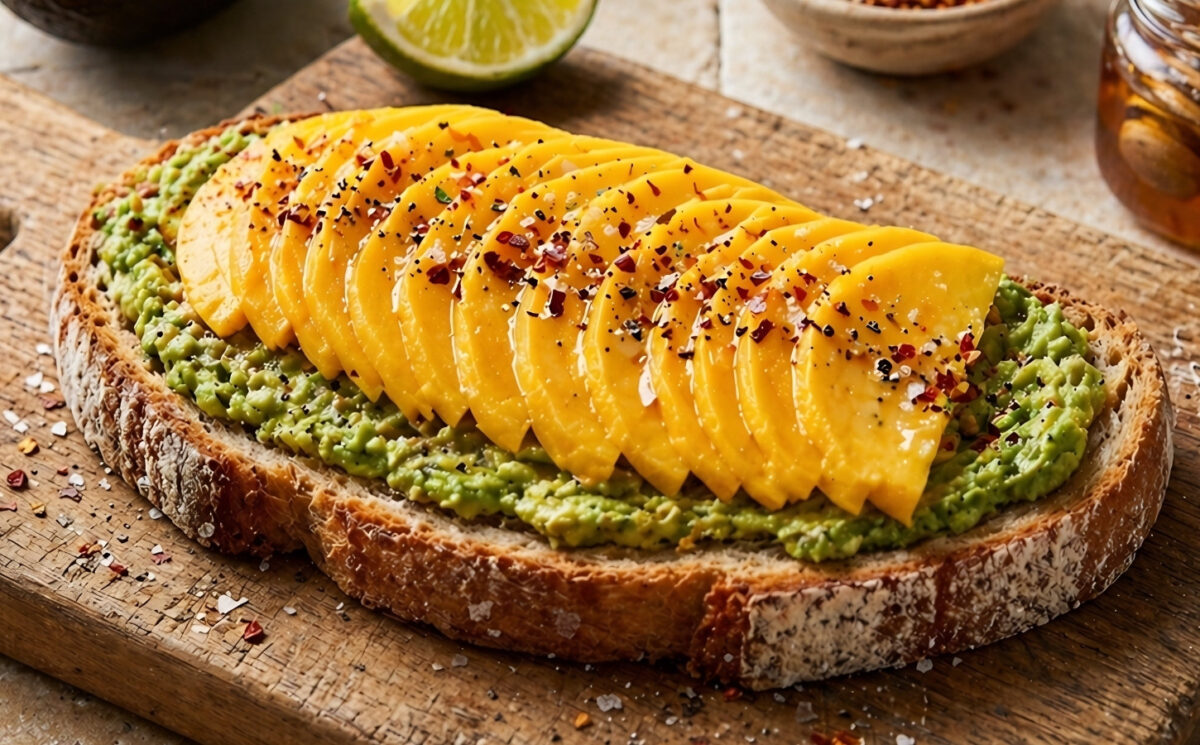
sweet and spicy mango avocado toast with lime, chili, vegan honey, and hemp hearts
Mango.orgTry this vibrant breakfast with creamy avo and tropical mango

Mango and avocado make this toast sweet, creamy, and bright. Crisp sourdough holds the mashed avocado, fresh mango, lime juice, chili flakes, salt, and pepper, with optional hemp seeds or a drizzle of maple syrup.

Find the recipe here.

https://plantbasednews.org/veganrecipes/breakfast/late-summer-vegan-breakfasts/

AI Model Screens Millions of Plant Proteins to Find Animal-Free Emulsifiers

From vegconomist.com

Researchers at the University of Leeds have built an artificial intelligence system that screens tens of millions of plant proteins to identify which ones can function as emulsifiers, narrowing the field to nearly 800 candidates. The tool is intended to replace years of manual laboratory testing with a computational shortcut for finding plant-based alternatives to dairy and synthetic emulsifiers used across food, cosmetics, and pharmaceutical products.

Emulsifiers keep oil and water blended in products ranging from mayonnaise and ice cream to lotions and medicinal creams. Many current options rely on animal-derived proteins such as casein and whey, or on synthetic compounds with a high carbon footprint.

Image: Mikhail Nilov on Pexels

A shortcut around trial and error

The research, published September 3 in Communications Chemistry, was led by postdoctoral researcher Dr Simha Sridharan and supervised by Professor Anwesha Sarkar, both based in the University of Leeds’ Sarkar Lab within the School of Food Science and Nutrition. The team worked with Dr Rik Sarkar, a machine learning specialist at the University of Edinburgh.

“There are millions of potential plant proteins, but testing them all to identify the right emulsifier is expensive and involves a time consuming trial and error approach,” said Sridharan. “Until now, there has been no reliable way to predict which plant proteins are likely to behave as emulsifiers like animal proteins.”

stock lab petri dish
Image: Edward Jenner on Pexels

The team built a simulation model to study how proteins position themselves at the boundary between oil and water, then applied machine learning to identify the molecular segments, described as di-block structures, that determine this attachment behaviour.

“We were able to model this structure mathematically for plant proteins. Using machine learning based on features obtained from statistical physics simulations, we can predict which plant proteins are most likely to work best as natural emulsifiers,” said Rik Sarkar.

Pea and potato proteins confirmed in lab tests

Applying the model to tens of millions of candidate proteins narrowed the list to nearly 800 with emulsifying potential, many of which had not previously been studied for this application. The team then tested a selection of commercially available proteins against the model’s predictions, finding matches in proteins derived from peas and potatoes.

Anwesha Sarkar, who also co-directs the National Alternative Protein Innovation Centre (NAPIC) at Leeds, said the results point to a faster route for ingredient discovery. NAPIC has previously funded UK academic-industry collaborations in areas including fungal fermentation and school meal uptake studies, among other alternative protein projects.

The findings are aimed at food and cosmetics manufacturers seeking natural emulsifiers as consumer demand shifts away from animal-derived and synthetic options.

“This shows how AI could help researchers find promising new ingredients much faster than before,” said Sarkar.

https://vegconomist.com/software-ai/ai-model-screens-millions-plant-proteins-find-animal-free-emulsifiers/ 

Sunday, September 6, 2026

Vegan Meat Brands Changing the Game at Grocery Stores Everywhere

From peta.org

The vegan revolution is a full-scale food industry. Across grocery aisles, fast-food chains, and fine dining menus, vegan meat brands are redefining what sustainable, compassionate eating can look and taste like. From juicy burgers to crispy “chicken” and deli slices, these leading vegan companies are proving that you can enjoy the same familiar flavours and textures—without any animal flesh.

JUST Meat

After changing the breakfast game with its wildly popular hen-friendly egg, Eat Just—named PETA’s 2025 Company of the Year—expanded its vegan line-up with Just Meat. The frozen, shredded vegan chicken comes in bold flavours like Original, Sesame Ginger, Buffalo, and Chili Lime, making it an easy addition to tacos and grain bowls, wraps, salads, and stir-fries. This vegan chicken contains zero cholesterol and animal suffering. Just Meat’s chicken delivers on texture and taste—without harming a single feathered friend. Shoppers can grab it at major retailers, including Walmart, Sprouts, Albertsons, United, and Stop & Shop. 

Beyond Meat


Innovative company Beyond Meat is single-handedly changing the vegan meat game. What’s its secret? Its mouthwatering products are made with non-GMO, gluten-free pea protein. After the sensation of the “bloody” Beyond Burger, the brand launched several other products and formed partnerships with popular chains. Now you can find Beyond Meat’s vegan ground beef, sausages, meatballs, and chicken at grocery stores nationwide. Beyond Steak is great in stir-fries, salads, tacos, fajitas, and other dishes.

Daring Foods

Another standout brand shaking up the vegan chicken space is Daring Foods, known for its simple-ingredient meatless chicken pieces in flavours including Original, Original Breaded, Lemon & Herb, and Cajun. The fast-rising company has also attracted major celebrity backing—Canadian rapper Drake joined one of its investment rounds as the brand continues expanding into more grocery stores nationwide. Daring products are already available at retailers such as Sprouts, Kroger, and Costco.

Chunk Foods

Chunk Foods is bringing seriously next-level innovation to the vegan meat world with products that mimic the taste, texture, look, and even the cooking experience of meat—without killing any animals. Packed with fibre and protein and flavoured with natural ingredients, Chunk’s cuts are juicy, tender, savoury, and designed to be cooked just the way you like them, from medium rare to well done. Using groundbreaking fermentation technology and natural ingredients like beet juice for that realistic “meaty” look, the brand creates whole-cut vegan meats without preservatives, binders, thickeners, or additives. Whether you’re firing up the grill with the Chunk Steak, piling tacos high with Chunk Pulled, or slicing into the ultra-hearty Chunk Slab, these satisfying cuts are a compassionate cuisine staple. Check Chunk’s store locator to see where you can find their products.

Juicy Marbles

Juicy Marbles is quickly becoming one of the biggest breakout stars in the vegan meat world thanks to its incredibly realistic whole-cut steaks that look, cook, and taste shockingly close to animal-based meat. Packed with protein and rich, savoury flavour, the brand’s Whole-Cut Loin and Thick-Cut Filet are tender, juicy, and beautifully marbled for that classic steakhouse experience—minus the animals. Whether seared in a pan or sliced into a fancy dinner spread, these plant-based cuts bring serious wow factor to the table.

Oshi


Help save the oceans and the animals who live in them with delicious and compassionate vegan salmon from Oshi. These tasty whole-cut fillets, which are fuelled by plant-based omega-3 fatty acids, are healthy and animal-friendly.

Tofurky

Founded in 1980, Tofurky quickly became famous for its holiday roasts, but it’s known for many other delectable vegan products as well, including deli slices, sausages, steak bites, pepp’roni and more.

Beleaf

Beleaf is a revolutionary, award-winning company whose innovative vegan meats are favourites among both home and restaurant chefs. This family-owned business prioritizes sustainability and animal well-being in creating its products, including the standout plant-based bacon. The crispy, smoky slices make for a great addition to breakfast dishes, sandwiches, salads, pasta, and more.

Vegan Meat Standouts From Major Brands

These aren’t vegan companies, but they offer tasty animal-friendly meat options.

Trader Joe’s Soy Chorizo


These Mexican-inspired sausages are seasoned with smoky paprika, garlic, chili, and warming spices that give them that bold, savoury kick. They’re rich, crumbly, and a little spicy, making them perfect for tacos, breakfast hashes, or anything that needs a punch of flavour.

Dr. Praeger’s Burgers

Dr. Praeger’s veggie-based burgers have been a hit since they launched in 1994, and the brand has since expanded to offer a delicious variety of vegan meat items. From the smoky, hearty Grillhouse Burger to the juicy Perfect Burger and the retro-inspired All-American Drive-Thru Burger, each one delivers that familiar savoury bite and comfort-food flavour you know and love.

MorningStar Farms® Juicy Steakhouse Style

MorningStar’s Juicy Steakhouse Style quarter-pound burgers are all about that classic steakhouse experience—thick, savoury, and a satisfyingly juicy bite in every mouthful. Made with 100% plant protein, they deliver big backyard-barbecue energy and nostalgic burger-night flavour.

The Meat of the Issue

It’s simple: Every animal is someone. Cows establish deep, lifelong bonds and mourn for their lost loved ones. Mother hens sing to their chicks before they hatch. Pigs love to play and cuddle. Fish create artworks to woo potential mates. These individuals can feel pain, joy, and fear—and they value their lives just as much as we value ours.

Going vegan doesn’t just help them. It’s the best thing you can do for the planet and for your own health, too.

https://www.peta.org/lifestyle/food/meat-replacements/?id=559&pl=86_15_0