Sunday, October 1, 2023

How To Make A Vegan Cheese Platter With Homemade Cheese

From plantbasednews.org

Thought your cheese platter days were over? Think again...

If you’re having guests over this weekend and want to prepare something fancy, why not try this dairy-free – and completely vegan – cheese platter? A few years ago, the idea of a plant-based cheese platter would have seemed laughable, but there has been a recent boom in cheeses like brie, camembert, and stilton that are completely free from animal products.

This particular vegan cheese platter idea, which comes from plant-based recipe developer Happy Skin Kitchen, features instructions on how to make your own red onion and apple chutney. It also offers ideas of vegetables, crackers, and other foods to include, but you can adjust these according to your taste.

The platter uses cashew cheese, which the recipe also shows you how to make, but you can opt for any vegan cheese you like. If you don’t have time to make your own, it is now possible to find a wide variety of options in stores.

          Here's how to make a dairy-free cheese platter, complete with homemade cashew cheese - 
                                 Media Credit: Happy Skin Kitchen


Where to buy vegan cheese for your cheese platter

While it’s often relatively easy to find plant-based versions of cheeses like cheddar and mozzarella in supermarkets, finding plant-based blue and soft cheese can be a challenge. The below recipe recommends cashew cheese, which you can often find in health food shops if you don’t fancy making it at home. Alternatively, you could seek out brands like Honestly Tasty, La Fauxmagerie, or I Am Nut OK.

If you want to put together a vegan cheeseboard but need some inspiration, check out the below:

This is the perfect sharing platter for dinner parties or when dining al fresco. I love adding grilled veggies, juicy olives, crackers, and obviously some super creamy cashew cheese! The apple chutney is just the perfect accompaniment.

Ingredients

For the chutney:
  • 3 large red onions, peeled and finely sliced
  • 1 1/2 Jazz apples, finely chopped
  • 1 1/5 cups brown sugar
  • 1 1/5 cups apple cider vinegar
  • 1 tsp salt
  • 1 tsp pepper
  • 1 bay leaf
For the platter: (these are just suggestions!)
  • Grapes
  • Roasted veggies like carrots and pepper
  • Olives
  • Crackers of your choice
  • Cashew cheese
For the cashew cheese:
  • 2 1/2 cups cashews which have been soaked overnight
  • 1/4 cup water
  • 2 tbsp nutritional yeast
  • 1 tsp miso paste
  • 2 tbsp lemon juice
  • Powder from 2 capsules of probiotics
  • 1 tsp onion powder
  • 1 tsp salt
  • 1 tbsp fresh chopped dill

Instructions

For the cashew cheese:

  • To make the cashew cheese drain the cashews and place them in a food processor, add the water, nutritional yeast, miso paste, lemon juice, probiotics, onion and salt. Start blitzing and stop the food processor from time to time to scrape the sides. Keep blitzing until you have a smooth and creamy consistency.
  • Pour the cheese mixture into a double cheese cloth. Tie the cloth at the top around a wooden spoon or something similar that will keep it suspended from a deep mixing bowl. Cover it with a tea towel and leave it in a warm and dark place (I put mine on top of the fridge) for 16hours.
  • Transfer the cashew cheese into the fridge and leave it for another 24 hours. The longer you leave it, the more it will have a “cheesy flavour”.

For the chutney

  • Add the finely diced onion to a large pot with a dash of oil. Cook them on a medium/low heat until they are soft. Add all the other ingredients. Bring the mixture to the boil and then simmer. Put the lid on and cook until all the liquid has evaporated, approximately 2 hours.
  • Let it cool down completely before serving it with the cheese platter. Store it in an airtight jar in the fridge for up to 2 weeks.

Can vegans have high cholesterol?

From medicalnewstoday.com

A vegan diet includes no animal products, which means it contains no dietary cholesterol. However, various factors influence blood cholesterol levels, so vegans may still have high cholesterol 

Research associates a vegan diet with several health benefits, including a reduced risk of heart disease, type 2 diabetes, and some types of cancer. Furthermore, vegans tend to have lower cholesterol levels than people who consume animal products.

However, some vegans may have higher cholesterol levels than expected. A range of variables can affect cholesterol, including genetic factors, physical activity levels, and diet quality.

This article explores the effects of a vegan diet on a person’s cholesterol levels.

A person picking up a bowl of vegan food from a table -1.Share on Pinterest
Kseniya Ovchinnikova/Getty Images

A vegan diet excludes animal products such as meat, dairy, and eggs.

Some animal products contain saturated fat, which research has linkedTrusted Source to elevated levels of low-density lipoprotein (LDL) cholesterol. People may refer to LDL as “bad” cholesterol.

Therefore, people may assume that a vegan diet invariably decreases LDL cholesterol. However, the reality is more complex.

Dietary cholesterol does not directly influence blood cholesterol. Eating a diet containing lots of processed food can negatively affect cholesterol levels, regardless of whether or not those foods are vegan. Some vegan products are highly processed and contain large quantities of the following:

  • sugar
  • sodium
  • trans fats
  • artificial ingredients

Research linksTrusted Source consuming processed foods to higher total and LDL cholesterol levels, putting people at risk of high blood pressure and metabolic syndrome.

Furthermore, certain plant-derived oils, such as coconut and palm, are naturally high in saturated fats. Including these oils in vegan diets can increase LDL cholesterol levels, especially if a person consumes them in significant amounts.

A person with a vegan diet may have high cholesterol for various reasons, including:

  • Diet quality: If a person consumes a lot of fried and processed foods high in saturated and trans fats, their LDL cholesterol levels may increase. Some vegan desserts and cheeses are made with coconut oil, palm oil, or partially hydrogenated oils, which are all known to increase cholesterol.
  • Refined carbohydrate intake: A diet high in refined carbohydrates and sugars can also lead to elevated cholesterol. Research suggests that an excessive intake of refined carbs and sugar negatively affects blood lipids and cardiometabolic health.
  • Genetic factors: Some individuals have a genetic predisposition called familial hypercholesterolemia. This affects howTrusted Source the body processes cholesterol, leading to high LDL cholesterol levels in the blood, regardless of dietary habits.
  • Physical inactivity: Even with a vegan diet, a sedentary lifestyle can negatively affect cholesterol levels. Regular exercise can help increaseTrusted Source high-density lipoprotein (HDL). Also known as “good” cholesterol, HDL aids in removing cholesterol from the bloodstream, thus promoting heart health.
  • Alcohol and smoking: Excessive alcohol intake can elevate a person’s triglyceride levels. Smoking reduces HDL levels and damages arterial walls, making them more susceptible to fatty deposits.
  • Other underlying health conditions: Hypothyroidism and chronic kidney disease may disrupt the normal balance and processing of blood lipids.

Maintaining healthy cholesterol levels is crucial for cardiovascular health and overall well-being. While genetics can play a role in a person’s cholesterol levels, lifestyle choices have a significant effect.

By adopting certain preventive measures, individuals can influence their cholesterol levels positively and reduce the risk of related health complications.

Here are some tipsTrusted Source:

  • Eat a nutritious diet: Prioritize a diet rich in whole foods, including fruits, vegetables, whole grains, legumes, nuts, and seeds, and reduce consumption of processed foods high in saturated and trans fats, sugars, and sodium.
  • Balance fat intake: Opt for healthy fats such as avocados, olive oil, and flaxseeds, and be cautious about consuming foods high in saturated fat, such as coconut and palm oil.
  • Get regular physical activity: Engage in at least 150 minutes of moderate-intensity aerobic exercise or 75 minutes of vigorous-intensity exercise weekly. Include strength training exercises for all major muscle groups 2 or more days a week.
  • Avoid tobacco and limit alcohol: Limit alcohol intake to moderate levels. This refers to up to one drink daily for females and two for males.
  • Monitor cholesterol levels: Monitor cholesterol, blood pressure, and blood sugar regularly to catch potential problems early. This is particularly important for people with a family history of heart disease.
  • Maintain a moderate weight: Focus on a balanced diet and regular exercise to maintain a moderate weight.

Treating and managing high cholesterol requires a multi-faceted approach that may encompass medical interventions and lifestyle modifications.

Initially, doctors may recommend lifestyle changes to manage cholesterol levels. These changes centre around making balanced dietary choices, exercising regularly, and limiting alcohol intake.

If a person is overweight, their doctor may recommend strategies to lose weight. A weight loss of just 5–10% can increase HDL cholesterol.

Depending on cholesterol levels and other risk factors, doctors may prescribeTrusted Source medications such as statins or other cholesterol-lowering drugs.

Cholesterol levels and heart health are important concerns for everyone, regardless of dietary preferences. This includes vegans.

Questions a person may wish to ask a doctor include the following:

  • How can I ensure my diet provides all the necessary nutrients to support healthy cholesterol levels?
  • Are there specific plant-based foods that can help lower LDL cholesterol?
  • Are there any particular deficiencies a person with a vegan diet should watch out for that might affect cholesterol or heart health?
  • How do plant-based sources of omega-3 fatty acids, such as flaxseeds and walnuts, compare with animal sources regarding heart health benefits?
  • Are there vegan-friendly supplements or medications that can help manage cholesterol?
  • How might processed vegan foods influence cholesterol levels and overall health?
  • Can a vegan diet provide enough soluble fibre to benefit cholesterol levels, and which foods are the best sources?
  • How often should a person get blood tests to monitor their cholesterol and their levels of nutrients of concern for vegans, such as vitamin B12, iron, and omega-3 fatty acids?

While vegan diets contain no dietary cholesterol, people who follow them can still develop high cholesterol.

To help maintain healthy cholesterol levels, people should aim to eat a balanced diet, exercise regularly, and avoid smoking or consuming excess alcohol.

Vegans can confidently manage their cholesterol levels through regular health screenings, informed dietary practices, and open dialogue with healthcare professionals.

https://www.medicalnewstoday.com/articles/do-vegans-have-high-cholesterol 

Vegan Food News of the Week: Hershey’s Oat Chocolate, Emma Chamberlain’s Favorite Cookies, and More

From vegnews.com 

From Hershey’s first oat milk chocolate bars hitting stores in Canada to mocha latte cookies approved by Emma Chamberlain, we’re serving up the best in vegan food news of the week

It seems that every week in the world of vegan food news is more exciting than the last, and this week is no exception. Vegan meat brand Plant Provisions is putting a savoury spin on sweet potatoes with its new sausage line. Emma Chamberlain teams with snack company Outstanding Foods to craft the perfect vegan cookie. And Hershey’s oat milk chocolate bars are headed to retailers across Canada. Read on for more. 

1Sweet potato sausages

Sweet potato pie season is just around the corner. While we wait, vegan meat company Plant Provisions is satisfying that craving in a savoury way with its new Smoked Sweet Potato Veggie sausage.

Made from sweet potatoes and caramelized onions and smoked with real hickory wood, this new offering is perfect for quick skillet meals and on the grill (if you still can’t pry yourself away from the outdoor grill). 

The hero ingredient is sourced from a farm in Oregon and these sausages were created to let the root vegetable shine. “We wanted to really highlight the inherent goodness of the sweet potato while pairing it with classic sweet and savoury BBQ flavours including real hickory smoke,” Lauren Klein, Head of Brand and Operations for Plant Provisions, tells VegNews.

VegNews.SweetPotatoSausages.PlantProvision

Free from soy and gluten fillers, the sausages contain 7 grams of protein per serving and are designed to have a reduced environmental impact, generating 90 percent less greenhouse gas emissions compared to traditional meat products. 

Plant Provisions was founded by Michael Galbo, the son of a deli meat distributor who started the company to give consumers a more conscious way to consume these environmentally damaging animal products. 

“Our customers have been asking us to make a veggie sausage for a while now,” Klein says. “Sausages are a fun format that allows us to innovate with flavour and take Plant Provisions beyond sandwiches.

These sausages join the brand’s existing line Veggie Slices, all made with high-quality chickpeas and various veggies, available in flavours such as Mesquite BBQ and Chipotle Chili. 

2Vegan milk, simplified

Are you tired of waking up at the crack of dawn to milk the almonds and oats for your homemade vegan milks? This new product line might be just for you. 

VegNews.SimpleMilkMooala

Dallas, TX-based company Mooala recently expanded its range of organic, plant-based milks and creamers with Mooala Simple, which is designed to meet consumer demands for fewer and organic ingredients. 

The Simple line consists of shelf-stable milks made from just three ingredients: filtered water, sea salt, and organic oats or almonds, and is free from gums, oils, and additives. 

“Consumers are reading labels carefully—they are demanding fewer ingredients in addition to organic ingredients; we created Mooala Simple as an elevated product line to address both needs,” Jeff Richards, the CEO of Mooala, said in a statement. 

The new line joins Mooala’s existing portfolio which includes coconut oat milk, banana milk, almond milks, and keto-friendly milks.  

3Creamy vegan cheese

The only thing we love more than a double entendre is vegan cheese and Nuts for Cheese is giving us both at once. The Canadian company recently introduced a new product line of cashew-based Cream Cheese Style Spreads, available in Original, Garlic & Herb, and Lemon Dill flavours. 

VegNews.VeganCreamCheeseNuts for Cheese

This month, the new line rolls out at major retailers across Canada where the brand is a key driver in the plant-based cheese market, available in more than 5,000 retail locations and responsible for significant growth in the category. 

In addition to its new cream cheese line, Nuts for Cheese offers wedges in Un-brie-lievable, Super Blue, Black Garlic, Smoky Gouda, and more. 

VegNews.vegancheese.nutsforcheeseNuts for Cheese

Nuts for Cheese is also making sure that its products are made with the utmost care when it comes to food safety and recently received an A grade in the British Retail Consortium (BRC) Certification for its cashew-based artisanal cheeses. 

This certification is an internationally recognized standard for food safety and quality, awarded only to organizations that exhibit a comprehensive approach to food safety culture. The certification covers the company’s 25,000-square-foot cheesemaking facility in London, Ontario.

“Quality has always been our number one priority,” Margaret Coons, Founder & CEO of Nuts For Cheese, said in a statement. “Food safety is an important focus as part of our commitment to quality and this achievement validates our continuous efforts to uphold the highest standards.” 

The company has raised $8 million in capital and has invested $1 million directly into its cheesemaking facility, passing a third-party audit to secure the BRC Certification. 

4Emma Chamberlain’s vegan cookies

We have had a long-term snack affair with Outstanding Foods, makers of savoury cheese balls, puffs, and crunchies (think pork rinds but without animal products). The company recently got into sweet snacks by launching a cookie line that features a Mocha flavour with some celebrity cred. 

VegNews.VeganCookiesOutstanding Foods

The new vegan Chamberlain Coffee Mocha cookies are inspired by the ready-to-drink Mocha Latte made by Chamberlain Coffee—a company founded by influencer and businesswoman Emma Chamberlain. 

“I love having snacks around that require little effort,” Chamberlain said in a statement. “These cookies are the perfect treat for when I’m in the mood for something sweet.” 

“In addition to them being delicious, they’re vegan, gluten-free, and are packed with essential vitamins, minerals and 5 grams of plant-based protein,” she said.

Mocha is one of four flavours in Outstanding’s cookie line which also includes Chocolate Chip, Double Chocolate, and Oatmeal Raisin. 

5Hershey’s vegan chocolate expands to Canada

Back in April, The Hershey Company made our dreams come true when it launched its first vegan chocolate bars made with oat milk at retailers across the United States. Now, our friends up North get to enjoy something sweet, too. 

That’s because Hershey Canada—a subsidiary of The Hershey Company—has also introduced its first plant-based chocolate bars, Hershey’s Oat Made. Similar to the US launch, these vegan chocolate bars will be available in Almond & Sea Salt and Creamy flavours.
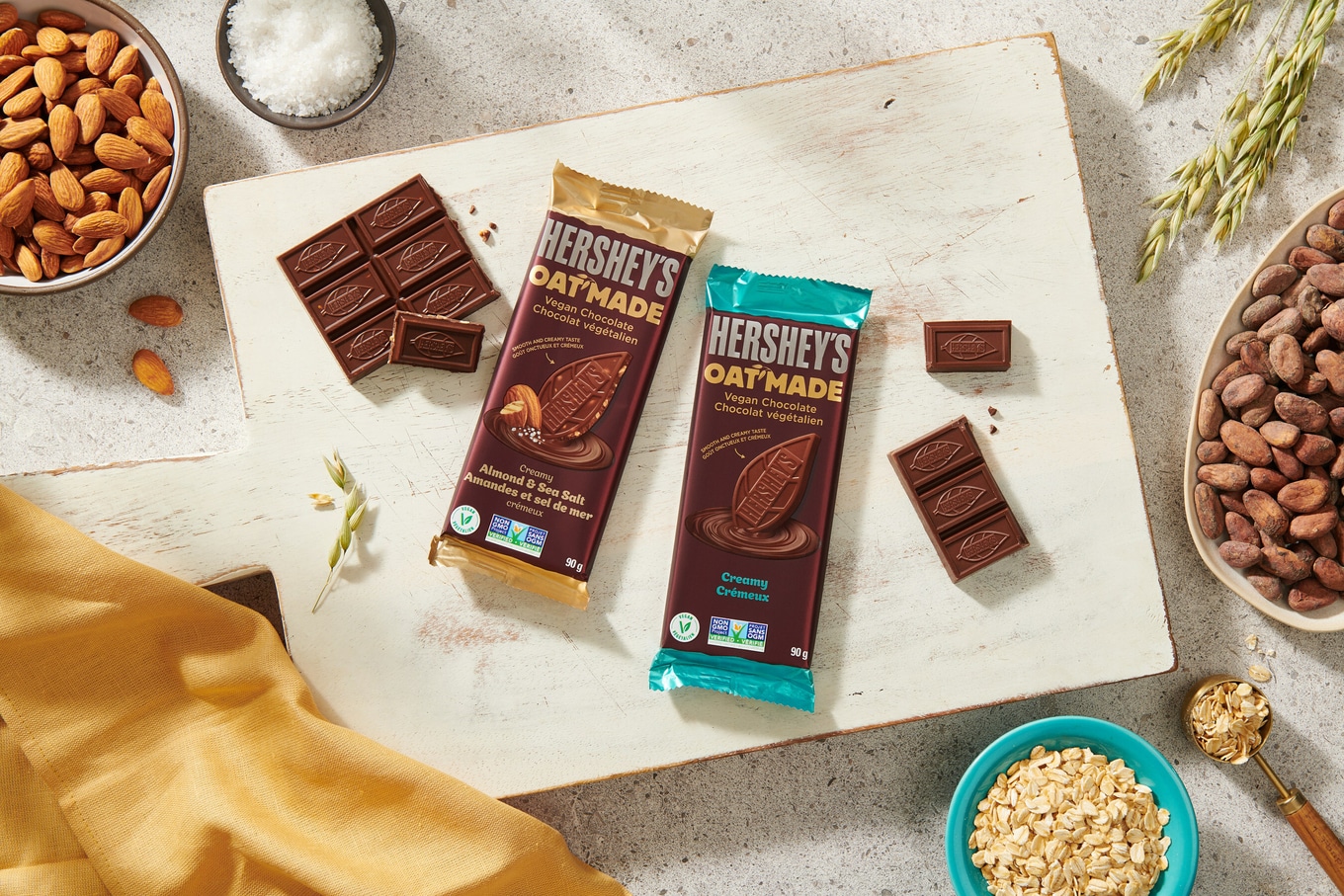
VegNews.VeganOatMilkChocolate.HersheysThe Hershey Company

“Hershey’s Oat Made bars are everything you love about milk chocolate … except the milk,” Carly Cowman, Brand Manager at Hershey Canada, said in a statement. 

“Our product development team did an unbelievable job at delivering the smooth and creamy texture that we know Canadians love and expect from Hershey’s in our first-ever plant-based bar,” Cowman said. 

The vegan chocolate bars, which are crafted using oat flour as a substitute for dairy, were developed to serve the growing plant-based consumer market and are now available in the confectionary aisles of major grocery retailers across Canada.

“The plant-based category continues to see incredible growth, and today, one in four Canadians are actively seeking more plant-based options in their diets,” Cowman said. 

“Whether you’re a vegan or vegetarian, or simply looking for more choice in the chocolate aisle, Hershey’s Oat Made bars offer an amazing and delicious alternative that doesn’t compromise on flavour,” Cowman said. 

The US launch also included Plant-Based Reese’s Peanut Butter Cups but the company has yet to announce the expansion of this new product to Canada.

https://vegnews.com/2023/9/vegan-food-news-of-the-week-september-29