Monday, February 27, 2023

How the Vegan Trademark is Empowering Consumers in a World of Hidden Animal Products

From vegconomist.com

Recently there has been consumer concern about a ruling issued by the EU allowing the use of insects in novel food. Whilst this has come as a surprise to some, insects have been used in product manufacturing for a long time. The use of shellac (a resin secreted by the female lac bug) caused an uproar when consumers discovered products they wouldn’t think to check, like fruit, were being coated in it. This caused them to unwittingly consume animal products and is just one example of the use of insects in production.

It’s not just food products that may include insects, their inclusion across all industries is prolific. Silk, often thought of as a ‘luxury’ textile, is made by boiling silk worms alive in their cocoons.  Cochineal dye is regularly used in both food and cosmetics for its red colouring and is created by crushing Cochineal bugs. In a recent survey by The Vegan Society, a worryingly high 39.9% of consumers said they didn’t know the dye is derived from these bugs, and upon learning this, they wished to avoid it.

The use of animal products, including insects, in cosmetics is particularly worrying as the ingredients lists often contain long scientific words the average consumer cannot easily identify. The Vegan Society’s Vegan Beauty report showed that only 2.6% of people can correctly identify 10 regularly used cosmetic and toiletry product ingredients which are derived from animals.

Due to consumer concern about the inclusion of animal products and by-products in items, be that food, cosmetics, fashion or more, it is not surprising that a 2021 survey* found that 77% of consumers think third-party vegan certification is important. When only vegans were surveyed, the percentage rose to 94%. This just goes to show how important trustworthy, clear labelling is to ensure vegan products get noticed by consumers. 
Vegan Society label
©The Vegan Society

The Vegan Trademark was established in 1990 to bring more clarity to product labelling.  Now, with over 65,000 registered products, it is a globally recognised certification for products which are free from animal ingredients and animal testing. As The Vegan Society defines the word “animal” to refer to all vertebrates and multi-cellular invertebrates, products registered with the Vegan Trademark would not contain insects in any part of their manufacturing process. In today’s world, where there is an increasing demand for ethical products, the Vegan Trademark provides a clear and recognisable symbol of quality and assurance.

The charity behind the certification, The Vegan Society, is the world’s first vegan organisation. In fact its founder, Donald Watson, first coined the word ‘vegan’. Since then they have continued to set the standards across the world. The charity defines veganism as:

 “A philosophy and way of living which seeks to exclude—as far as is possible and practicable—all forms of exploitation of, and cruelty to, animals for food, clothing or any other purpose; and by extension, promotes the development and use of animal-free alternatives for the benefit of animals, humans and the environment. In dietary terms it denotes the practice of dispensing with all products derived wholly or partly from animals.”

Steve Hamon, CEO of The Vegan Society shared: “Since the inception of the Vegan Society in 1944, our vision has been a world in which humans do not exploit other animals. We have not compromised our stance over the years and this vision remains integral to the goals of the society today.”

Vegan trademark, trainers
Image courtesy of The Vegan Society

Throughout the history of the society, we have aimed to make veganism an accessible and widely recognised approach to reducing animal and human suffering, and environmental damage. We are proud of the work we do to achieve this, and we see these aims reflected in all areas of the society, from our ongoing campaign work to our detailed Trademark standards.”

Shoppers can be reassured that any products that carry the Vegan Trademark do not contain any hidden animal ingredients. The stringent standards ensure that the products are free from animal-derived ingredients and by-products, no animal testing is involved in the production, and that there are cross-contamination elimination processes in place.

TVS leaflets
© The Vegan Society

By certifying their products, businesses show their commitment to the vegan movement and demonstrate their understanding of the values and principles of veganism. This not only sets them apart from their competitors, but also helps to build trust with their vegan customers.

In addition to the trust and recognition that come with carrying the Vegan Trademark, businesses also benefit from being part of a community of like-minded companies. The Vegan Society provides support and guidance to its Trademark holders, and helps to promote their products to the growing number of vegans around the world.

To find out more about the Vegan Trademark, or start your application to certify your products, visit: https://www.vegansociety.com/the-vegan-trademark


https://vegconomist.com/society/charity-campaigns/how-the-vegan-trademark-is-empowering-consumers-in-a-world-of-hidden-animal-products/ 

Sunday, February 26, 2023

Meera Sodha’s vegan recipe for simple vegetable pulao

From theguardian.com

An easy, one-pot rice dish for a quick, inexpensive family meal 

A percentage of my bones are made up of vegetable pulao. It’s a daily part of Gujarati life that I’d overlooked until a recent trip to see my parents. My mum now has arthritis in her hands and her cooking has had to adapt. She can’t, for example, make chapatis any more, with all the kneading and rolling they require, and even the ginger, garlic and chillies that she uses for today’s recipe are processed in a blender in bulk then frozen until needed. Pulao, however, for all its ingredients, is actually a very simple recipe that remains at the heart of her family cooking.

Simple vegetable pulao

You’ll need a large saute pan (mine is 28cm), pot or saucepan with a tight-fitting lid. If you do all the preparation up front, it’s just a question of putting it all into a pan ingredient by ingredient.

Prep 15 min
Cook 45 min
Serves 4

300g basmati rice
4 tbsp sunflower oil
5 cloves
1 stick cinnamon
, broken into pieces
1 large onion (about 275g), peeled and finely chopped
4 garlic cloves, peeled and minced
3cm x 3cm piece fresh ginger, peeled and finely grated
3 green finger chillies, slit lengthways
1½ tbsp tomato puree
¼ tsp turmeric
1½ tsp ground coriander
1½ tsp ground cumin
1 large potato
, peeled and cut into 1cm dice (200g net)
2 medium carrots, peeled and cut into 1cm dice (200g net)
150g frozen petit pois
2 tsp fine sea salt
Lemon slices, vegan yoghurt and fresh coriander
, to serve

Put the rice in a bowl, cover with cold water and gently swirl with your hands until the water goes cloudy. Drain and repeat a few more times, until the water remains relatively clear, then drain and cover with fresh cold water and put to one side.

Put four tablespoons of oil in a wide frying pan for which you have a lid, and put on a medium heat. Once the oil is hot, add the cloves and cinnamon, leave them them sizzle for a few seconds, then add the onion and cook, stirring occasionally, for 10-12 minutes, until the onions begin to brown.

Add the garlic, ginger and finger chillies, cook for three minutes, then stir in the tomato puree and the dry spices (turmeric, coriander and cumin), and cook for a couple of minutes longer. Add the potatoes and carrots, and mix everything well.

Pop the kettle on. Drain the rice really well, then tip the rice, peas and salt into the frying pan, stir and add 520ml just-boiled water. Bring to a rolling boil (this should take about three minutes), then pop on the lid and turn down the heat to a whisper. Leave to simmer for 15 minutes, then take off the heat and leave, still covered, to rest for 10 minutes.

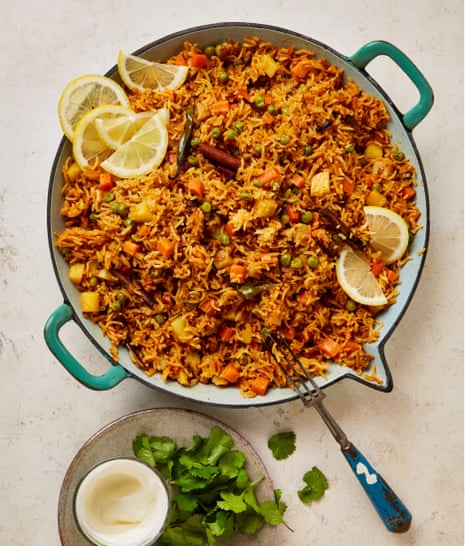
Fluff up the rice with a fork (or spaghetti fork), then serve with lemon slices, vegan yoghurt and fresh coriander.

Delicious and hearty: Meera Sodha's simple vegetable pulao. Photograph: Louise Hagger/The Guardian. Food styling: Emily Kydd. Prop styling: Jennifer Kay. Food styling assistant: Susanna Unsworth

https://www.theguardian.com/food/2023/feb/25/vegan-vegetable-pulao-recipe-meera-sodha

Saturday, February 25, 2023

BOSH! launch plant-based recipe boxes featuring dishes from their bestselling books

From veganfoodandliving.com

BOSH! co-founders Ian and Henry said they were pleased to be offering the meal kits, describing them as offering an efficient way to incorporate more plants into their cooking

BOSH! have partnered plant-based recipe kit brand Grubby to offer consumers plant-based boxes featuring dishes from their bestselling books.

While Grubby is the UK’s highest-rated recipe kit, BOSH!, co-founded by Ian Theasby and Henry Firth, have become a household name thanks to their pioneering approach to vegan recipes which they share via books, on social media, and on television.

Now at least two of their dishes will be available on the Grubby menu, with the range set to expand as demand dictates throughout this year and beyond.

The partnership marks the first time diners can get a ready-to-prepare box of ingredients for iconic BOSH! recipes sent directly to their door.

Initially offering 30 dishes, the range so far focuses on meals that offer ‘flavour and simplicity’, and feature ‘the highest quality sustainably sourced ingredients’.

Recipes on offer include ‘Dan Dan Smoked Tofu Noodles’, ‘Rogan BOSH!’, ‘Cowboy Chilli Trash Browns’ and ‘Orzo Ragu Risotto’ among others.

BOSH! recipe boxes

In a statement sent to Vegan Food & Living, Ian, co-founder at BOSH!, said: “We’re really pleased to be working with Grubby.

“Recipe kits are an incredibly efficient way for people to cook BOSH! food at home. Delivering fresh, pre-portioned ingredients direct to people’s homes makes cooking plant-based food hassle-free and really enjoyable.”

Henry, co-founder at BOSH!, added: “Our mission to put more plants on plates perfectly aligns with Grubby’s ambition to inspire people to cook more plants.

“We’re really impressed with some of the little touches Grubby have incorporated into their product, particularly the impact tracker.

“The Tracker analyses every recipe against the non-plant based equivalent, allowing customers to see the unique carbon savings and the positive impact of every box they buy.”


‘A big moment’

Meanwhile, Martin, founder and CEO of Grubby, said: “This is a big moment for us. 

“We’ve been fans of Henry and Ian’s work for some time, and when we first got talking, it was clear our values and missions to make plant-based cooking more accessible to the world were joined at the hip. 

“There was an obvious partnership to be had, and it’s been a lot of fun working with the guys to make it happen. We’re so excited to get these recipes out into the wild!”

BOSH! recipes are available to order at grubby.co.uk now. New recipes will be available weekly over the coming months.

https://www.veganfoodandliving.com/news/bosh-launch-vegan-recipe-boxes/


Recipe: Dark chocolate bark with sea salt, rosemary, pistachios and candied citrus

From deliciousmagazine.co.uk

Close your eyes and feel the Mediterranean sun beating down on you as you take a bite out of vegan dark chocolate bark studded with pistachios, rosemary-flavoured salt and little bursts of candied peel.

NUTRITION: PER SERVING

CALORIES
230KCALS
FAT
13.2G (6.1G SATURATED)
PROTEIN
3.4G
CARBOHYDRATES
23.7G (22.3G SUGARS)
FIBRE
1.3G
SALT
0.9G


Ingredients

  • 200g dark chocolate
  • 1 tsp flaky sea salt
  • 2 rosemary sprigs
  • Handful shelled pistachios
  • 2 tbsp mixed peel or candied lemon, chopped

Method


Bring a small pan of water to a simmer and put a heatproof bowl on top (ensuring the base of the bowl doesn’t touch the water). Finely chop the chocolate and add it to the bowl, then wait 5-10 minutes until it’s completely melted.


Meanwhile, line a small baking dish or container (which will dictate the shape and size of your bark) with baking paper. Put the salt in a spice grinder or pestle and mortar, then finely chop the leaves from 1 of the rosemary sprigs. Grind the chopped leaves with the salt.


Pour the melted chocolate into the lined dish or container, tilting it so the chocolate runs into each corner equally. Put the remaining rosemary sprig on top, then scatter the pistachios, rosemary salt and mixed peel all over the top.


Leave to cool for 10 minutes, then cover and put in the fridge for 2 hours to set completely. Break into shards and keep in an airtight container for up to a week.


Spicy Impossible Chicken, Oatly’s Cream Cheese, and More Vegan Food News of the Week

From vegnews.com

From new spicy chicken from Impossible Foods to Oatly’s Philadelphia-made cream cheese, we’re serving up the best in vegan food news of the week

It seems that every week in the world of vegan food news is more exciting than the last and this week is no exception. Impossible Foods is expanding its vegan chicken line with spicy patties and nuggets (plus tenders) and we’re excited for the snacking possibilities. Oatly’s first vegan cream cheese is—and the company stresses—made in Philadelphia. And Coffee-Mate’s Natural Bliss line is breaking out of vegan creamers into new oat milk territory. Read on for more.  

1Impossible Foods expands vegan chicken line

Impossible Foods may best be known for its flagship Impossible Burger but its plant-based chicken line is becoming a big deal, too. The company first entered the category with Impossible Chicken Nuggets in 2021 in the foodservice sector with notable launches at popular restaurants and AMC theatres. The company unveiled fun wild animal shapes of the nuggets soon after and added a crispy patty to the line in 2022. 

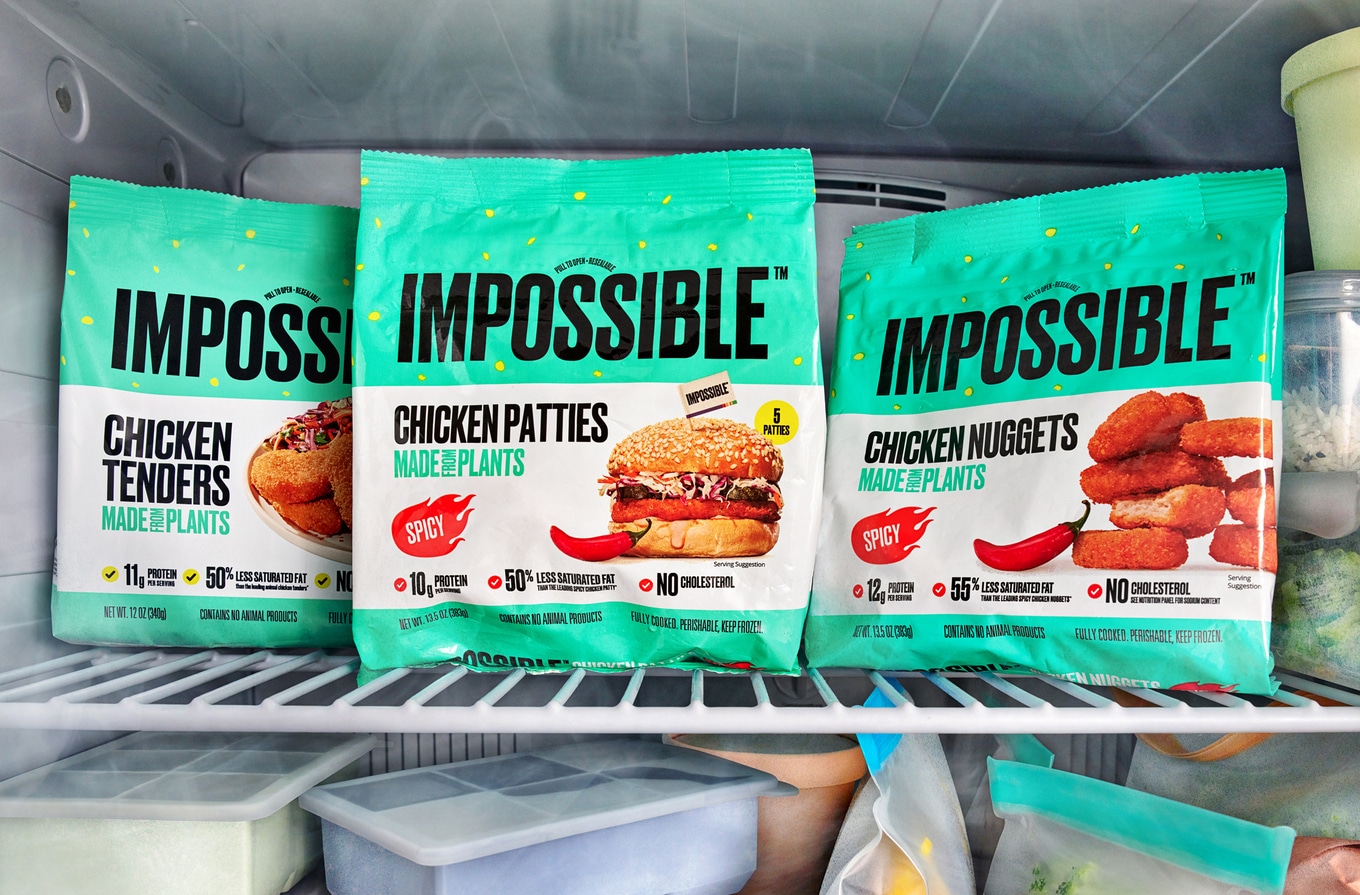
This week, Impossible is expanding its vegan chicken line even further with three exciting new products: Spicy Chicken Nuggets, Spicy Chicken Patties, and Chicken Tenders.  

VegNews.NewVeganChicken.ImpossibleFoodsImpossible Foods

“Our chicken products caught on fast with consumers, and they’ve served as a successful entry-point to our brand,” Sherene Jagla, Chief Demand Officer at Impossible Foods, said in a statement. “In retail, our original nuggets are leading the plant-based chicken category in dollar sales, and in food service, consumer.”

The new vegan chicken products are hitting select retailers this month with a wider rollout planned for coming months. Impossible’s new vegan chicken tenders will also hit select menus, including at vegan fast-food shop Honeybee Burger, at baseball stadium Trustmark Park (home of the Mississippi Braves), and at meat-centric restaurant WNB Factory.  

2Oatly takes on Philadelphia with vegan cream cheese

Quirky vegan company Oatly is at it again with a fun new product and an equally fun way of announcing it. The brand is releasing its first vegan cream cheese in the US, which it stresses was developed in Philadelphia by a team based mostly in Philadelphia. 

While a wider US launch is planned for later this year, Oatly made the announcement together with Olympic figure skating legend Tara Lipinski—a Philadelphia native—in the only city where it made sense to launch it: Philadelphia. 

Patrons of Spread Bagelry and Philly’s Bagels will be the first to taste Oatly’s new vegan cream cheese which will be available at both of the local chains until March 31 or while supplies last. 

“This cream cheese is an important step toward growing our portfolio of delicious plant-based products, and we want to first introduce it to the city it was invented in,” Leah Hoxie, SVP of Innovation at Oatly North America, said in a statement.

“At its core, this is a cream cheese with deep and authentic Philadelphia roots,” Hoxie said. 

You know who else is making vegan cream cheese these days? Philadelphia, of course. However, it actually makes it in New York—a fact Oatly took and ran with all the way to Philadelphia. 

3Macadamia milk for kids

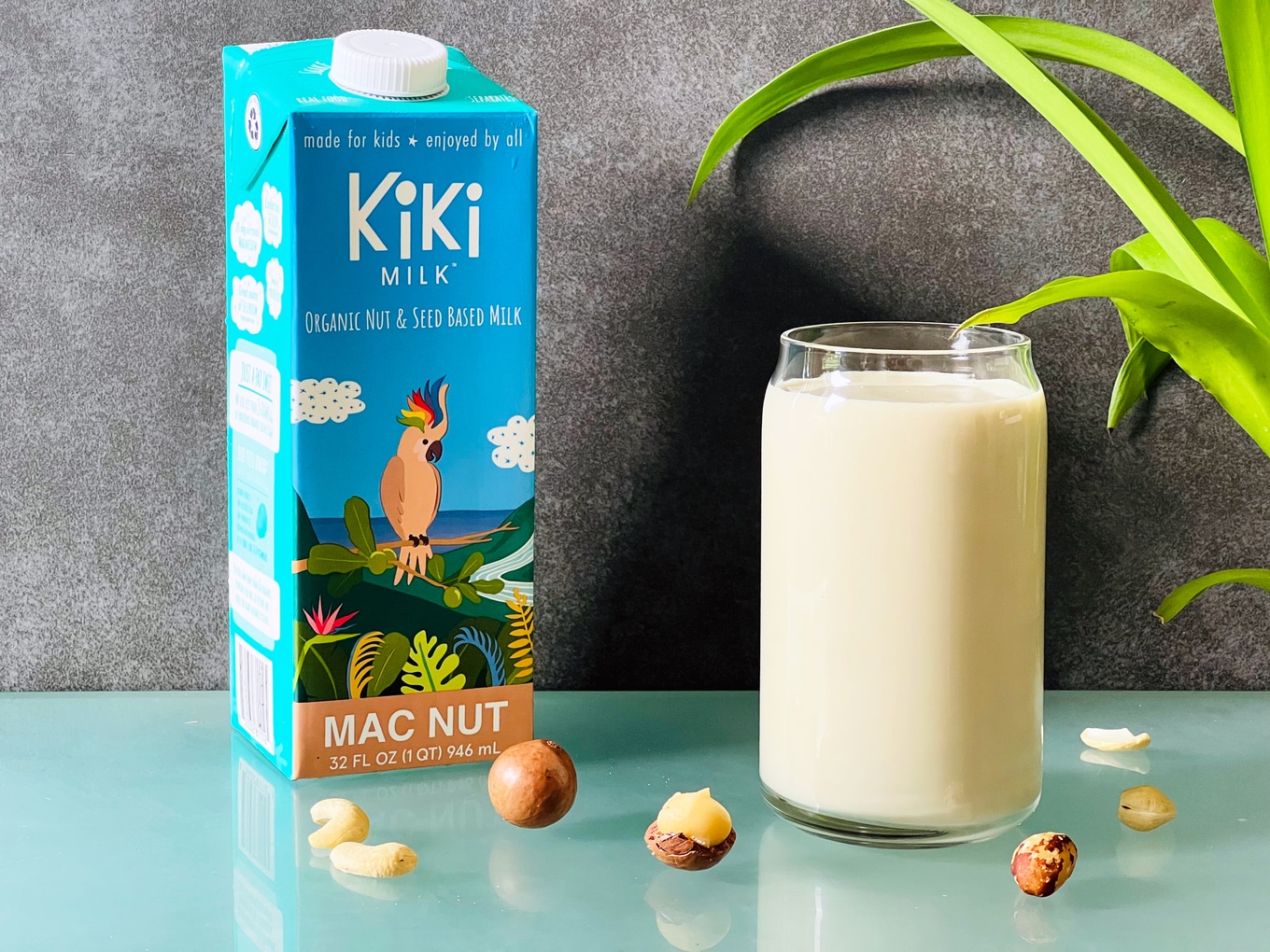
While dairy milk continues to be limited to a few sources, the versatility of vegan milk is constantly expanding. This week, Hawaiian brand PlantBaby announced the launch of Mac Nut Kiki Milk, a kid-centric organic vegan milk made from macadamia nuts, cashews, brazil nuts, sprouted pumpkin seeds, oats, coconut sugar, coconuts, and Aquamin (marine minerals). 

The new macadamia nut-based milk joins the company’s portfolio of products developed to support growth from infancy to adulthood, including its original Kiki Milk which it developed specifically for children’s nutritional needs. 

VegNews.VeganMacadamiaMilk.PLanetBabyPlantBaby

“Since launching Kiki Milk in December of 2021, we’ve seen a consistent rise in demand for products that are free of gums, inflammatory oils, and fillers while boasting whole-food and nutrient-rich ingredients,” Alex and Lauren Abelin, Co-Founders of PlantBaby, said in a joint statement. 

“We realised no true, all-organic and real tasting mac nut milk has existed on the market so we wanted to change that and create a wildly delicious and nutritious product free of gums and fillers for everyone to enjoy,” they said.

4Sesame Street vegan pancakes

Another company that is looking to make vegan food appealing to kids is Toronto-based Nola Baking Co., which partnered with iconic children’s show Sesame Street on its newest product launch. 

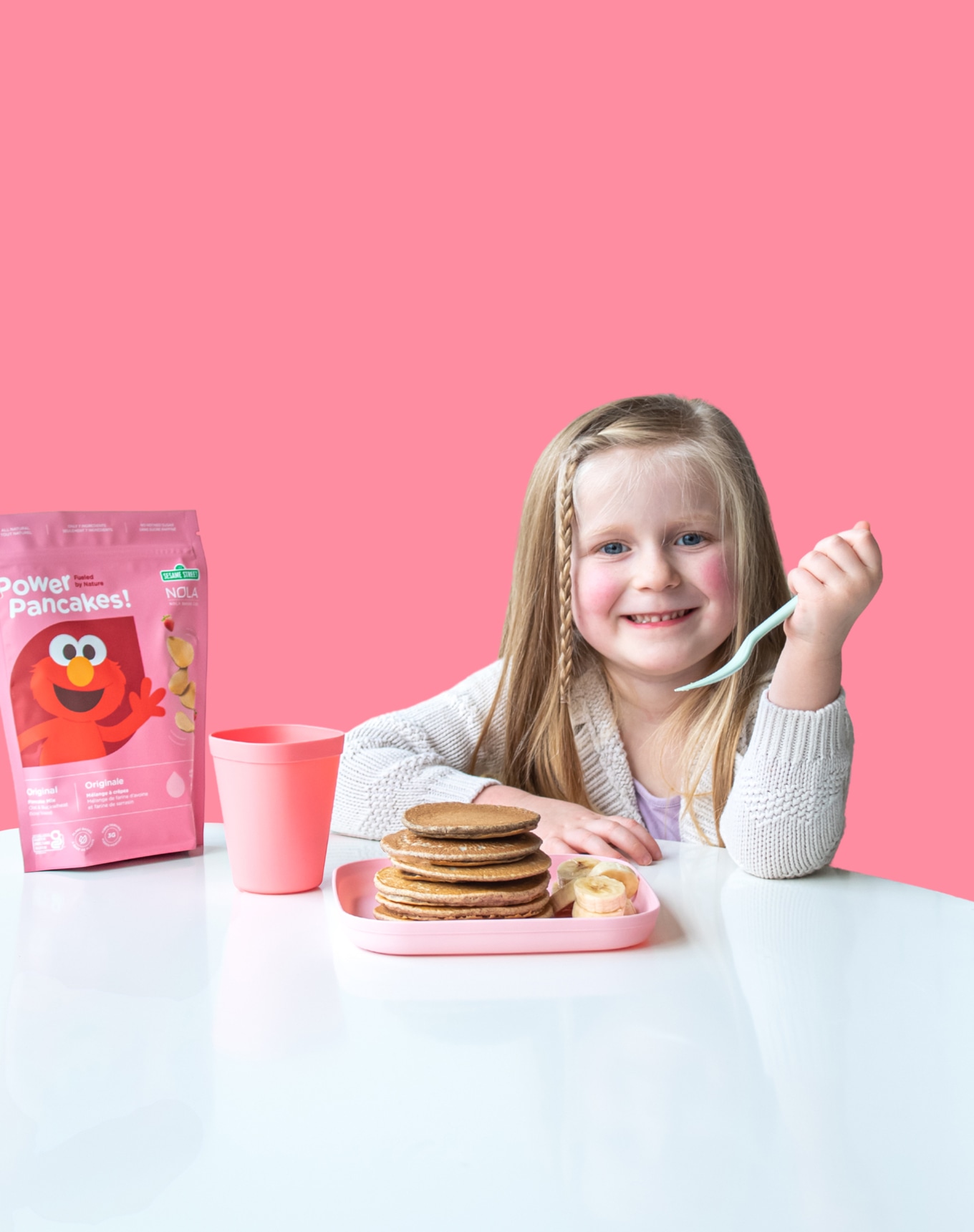
VegNews.SesameStreetPancakesElmo.NolaBakingCo

Nola Baking Co.

The company’s new Power Pancakes (in Chocolate and Original flavours) and Boost Bars (made with fruit and veggies) are adorned with Sesame Street characters such as Elmo, Cookie Monster, and Big Bird and are formulated by nutritionists to help parents make healthy breakfast and snack choices for their kids

“We’re so excited to partner with Sesame Street to launch our new line of kids products,” Julie Mitz, President and CEO of Nola Baking Co., said in a statement. “Beyond a love for the Sesame Street franchise, we share Sesame Street’s values on the importance of good nutrition and educating families on establishing an early foundation of positive eating and lifestyle habits.”

The new products are available at retailers across Canada. 

5Natural Bliss gets into oat milk

Back in 2017, Coffee-Mate—a NestlĂ©-owned company—launched its first vegan creamers under its Natural Bliss line in four flavours: Vanilla Almond Milk, Caramel Almond Milk, Hazelnut Almond Milk, and Sweet Crème Coconut Milk.

Since then, Natural Bliss has expanded its vegan creamers with a variety of products, including  cashew-based creamers and half & half. 

VegNews.VeganOatMilk.NaturalBliss

Natural Bliss

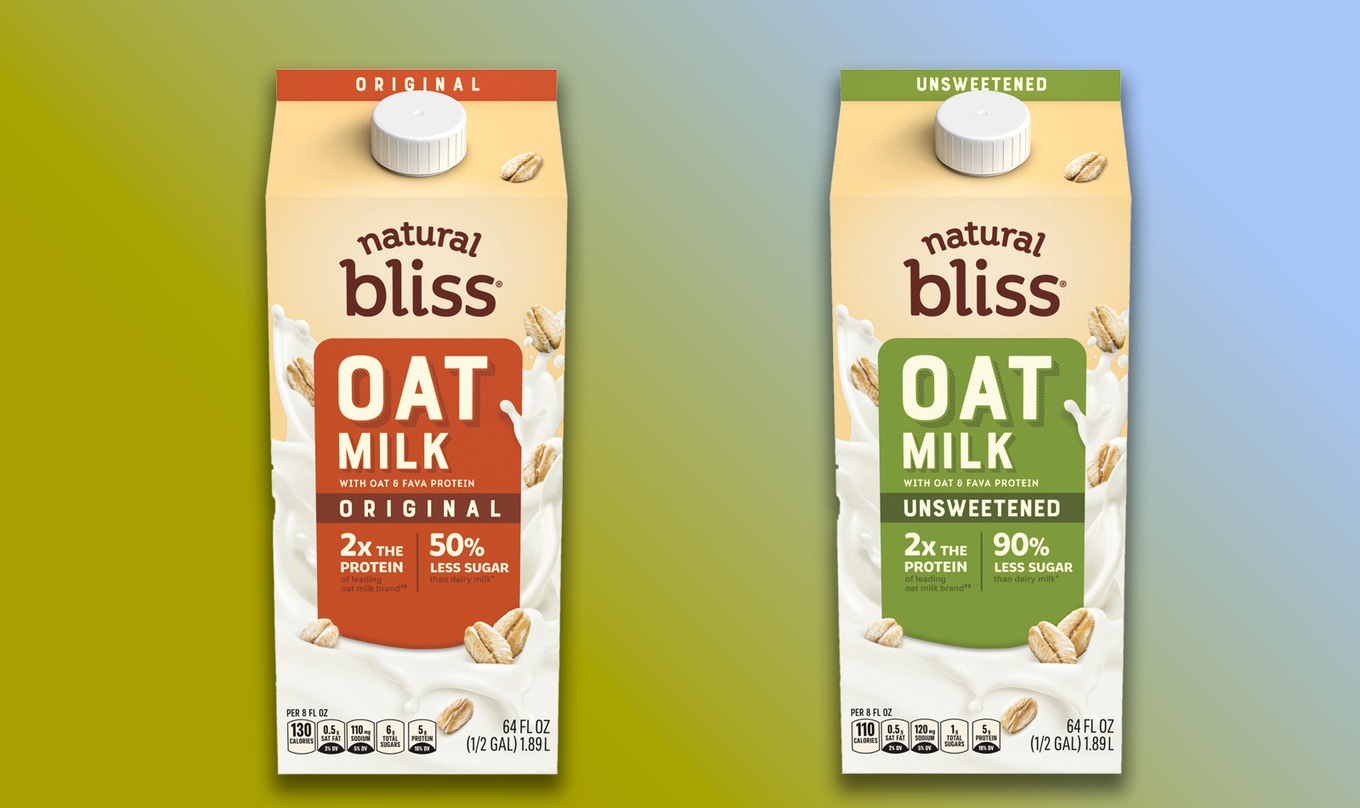
This week, the company announced its first product that is not a creamer: oat milk, a vegan milk that just won't quit. The new line is also formulated with fava bean protein and will be available in  Original and Unsweetened flavours. 

“As interest in plant-based beverages continues to rise, we’re thrilled to expand our natural bliss portfolio beyond the creamer aisle to introduce our first-ever ready-to-drink Oat Milk,” Daniel Jhung, President of Beverage at NestlĂ© USA, said in a statement. 

“We know our consumers seek products that are both delicious and nutritious, and this offering delivers with a first-to-market blend of oat and fava bean protein that has more protein than the leading oat milk brand, less sugar than dairy milk, and can be enjoyed in several ways, at any time of day,” Jhung said.

The new Natural Bliss oat milk line will hit retailers nationwide in May 2023.

https://vegnews.com/2023/2/vegan-food-news-of-the-week-february-24

Vegan Couple Visit 100 Countries To Show Plant-Based Travel Is Possible Anywhere

From plantbasednews.org

Travelling as a vegan can seem daunting, but this couple share their tips, stories, and best countries to visit 

It was in high school that Oskar and Dan first caught the traveling bug. The Swedish couple, who are now 26 and have been together for eight years, used to scrimp together their savings and salaries from odd jobs to take small trips in Europe. 

Since then, their traveling has come a long way. They went vegan in 2017, and may well be the first plant-based couple to ever visit 100 countries. 

Traveling as a vegan can be daunting. While plant-based food is growing in popularity across the world, and some countries eat mostly animal-free foods as default, it can be tricky to know for sure what your options are at your destination. 

Oskar and Dan are here to settle any concerns you may have. Throughout their many years of traveling, they’ve developed several strategies to get the most out of navigating the world as vegans. They spoke to Plant Based News (PBN) to offer their tips, stories, and best countries to visit. 

The best countries to visit as a vegan

“Food is, of course, a huge part of travel,” they say. “What people eat in different regions and cultures can say a lot about a place and its history, and what we put in our bellies is a strong social connector.”

According to the couple, there are two different types of vegan-friendly countries. There are the countries that have natural vegan-friendly local cuisine, and those that have a growing vegan movement. 

“The easiest countries to travel through are the ones that are vegan-friendly on both accounts since it allows you to try lots of authentic local food, while also having some ‘international vegan restaurant-type food’ every now and then.”

The best countries in this category, they say, are in Southeast Asia. Thailand, Vietnam, Malaysia, Singapore, and parts of Indonesia all offer a wide range of plant-based cuisines. As well as these, Taiwan, the UAE, and Mexico all have a mix of local and international vegan options. The couple also recommend Western Europe and North America – while the local cuisine isn’t vegan-friendly in these places, they do have a rapidly growing plant-based movement. 

Vegan travelers Oscar and Dan on a train in Sri Lanka
Instagram/@oskaranddanOskar and Dan have been together for eight years

Tips for vegan travel

To get the most out of your trip, Oskar and Dan recommend downloading the HappyCow app. The app lets you know local vegan and vegan-friendly restaurants in countries all over the world. The couple describe HappyCow as a “life-saver” as it allows them to find the very best plant-based eateries where they are. 

“In most countries, if there are no options on HappyCow or Google Maps, we try to look for Chinese, Thai, or in some cases, Korean restaurants,” they say. “The former option is likely to have tofu, and if they don’t, at least they’ll have flavourful vegetable dishes. Thai restaurants can almost always make vegetable curries and if you’re lucky, you’ll find a Korean restaurant that’ll make bibimbap with tofu. The latter was our to-go in Uzbekistan, which gets a lot of Korean expats and tourists.” 

Over the course of their many years traveling, the couple have come to realize that expensive hotels often tend to have better vegan options. 

“In places where you get more Western tourists such as the Maldives, Turkey, the Bahamas, and Bolivia, our luxury resorts were highlights when it came to getting semi-nutritious vegan meals,” they say. 

One activity that Oskar and Dan try to do where possible is a cooking class in whatever country they’re in. This allows them to learn more about the local dishes, and how to veganise them. 

“Sometimes there are specific vegetarian or even vegan classes available,” they say. “If not, the organizer is usually happy to accommodate you anyway. This is a great way to learn which local dishes you like and what the ingredients are – very helpful info when looking for options at restaurants later.”

What to do if a country isn’t vegan-friendly 

There are many countries in the world where it’s a challenge to eat vegan food, but that doesn’t mean they should be avoided. 

“We had some of our hardest food-related travel experiences in countries like Uzbekistan, Azerbaijan, Armenia, and Tunisia,” they say. “That’s not to say the trips were bad in themselves; Uzbekistan is one of our biggest travel highlights, but the food was definitely a struggle.” 

In some countries, it may be that your options will be limited to foods like chips, pasta, and salad, but with a bit of preparation that shouldn’t be a problem.

Oskar and Dan recommend always bringing supplements (such as B12, vitamin D, and omega 3) to ensure you’re getting the right nutrients. They also often take protein bars and powders in their suitcase.

Getting the most out of vegan travel

The most important that when traveling as a vegan, they say, is kindness. “Smiling and never passing judgment on the local culture’s way of eating is important as a guest in a foreign place. If someone asks why we’re vegan, we tell the truth, which is that we feel so much better physically, mentally, and spiritually on a plant-based diet.”

They add that, while being vegan can be limiting, it can also become the “very reason a destination becomes amazing!”

“On our Ireland trip, we spent time in Greystones to visit The Happy Pear’s store and restaurant (they are vegan Irish twins who run an incredible vegan online and offline business). In South Korea, we did several temple stays and the temple food is strictly vegetarian. And lastly, discovering and supporting vegan businesses all around the world adds so much value to each and every trip we take.”

https://plantbasednews.org/lifestyle/travel/vegan-couple-travel/