You may choose to go vegan for your health, the planet, or the billions of animals slaughtered each year for food. They’re all good reasons to move meat and dairy off of your plate for Veganuary and make room for plant-based food instead.
Vegan food is everywhere these days. From the fresh, whole foods at our local supermarkets and farmers markets to the not-so-healthy-but-still-healthier-than-meat-and-dairy vegan junk food options at fast-food chains around the world, it’s never been easier to go vegan, and Veganuary is the perfect time to start.
There are scores of studies pointing to the benefit of eating a diet rich in colourful fruits and vegetables. But there’s good reason to leave meat off the plate entirely—even prior to the COVID link to animal consumption. According to the World Health Organisation, regular consumption of red and processed meats can greatly increase the risk of certain types of cancer. For example, eating fewer than two slices of bacon a day increased the chance of developing colorectal cancer by 18 percent.
Just like reducing or eliminating meat from our diets is good for our health, it’s better for the planet, too. According to the United Nations Sustainable Food Systems and Agriculture Programme, reducing intensively farmed meat consumption is “good for people and the planet.”
A 2018 study conducted by Beyond Meat and the University of Michigan found a big gain in reducing GHGs by reducing meat consumption. The study found that swapping beef burgers for plant-based options just three times a week on average could save the equivalent emissions produced by 12 million cars. Ready to get started? Here’s some Veganuary motivation.
Beyond
101 Reasons to Eat Vegan
Bananas
Avocados
Lentils
Black Beans
Cauliflower Steak
Burritos
Coconut Smoothies
Veggie Pret
Cashew Cheese
Beyond Burgers
Beyond Chicken
Vegan Ben and Jerry’s
The One Trillion Fish Caught From the Oceans for Food
Tackling climate change is a major global challenge that encourages everyone to look at how they can change their behaviours to benefit the planet. While politicians hold the immense responsibility of enacting widespread measures, individuals are being prompted to play their part too — with the reduction of meat consumption seen as key to protecting the environment (via The New York Times).
According to The Guardian, rearing animals for meat consumption amounts to a staggering 57% of all food production emissions. This includes carbon dioxide and methane (via EPA). Animal farming releases far more warming gases than crops, with cows being the worst contributor because they are reared for both milk and beef.
This means that plant-based and vegan diets are sought by people wanting alternatives to the likes of beef, chicken, and pork. But how do the two diets differ from each other? They're certainly not the same thing, and you should take note of the distinct differences so that you can choose the right diet for you, and maybe even your family.
Plant-based foods may not avoid animal products
Which? explains that a vegan diet involves avoiding anything that derives from animals, including eggs, dairy, and gelatin (which Peta describes as protein from boiled skin). Sometimes, vegans will even choose to omit honey from their diets. Plant-based meals are less strict, and even though they mainly consist of vegetables, fruit, and grains, they may also contain eggs and dairy.
The freedom associated with plant-based diets is recognized by LiveStrong. You're allowed to occasionally eat meat if you can't satisfy a burning craving. This also makes a plant-based diet easier to stick to than veganism (which requires detailed meal preparations to ensure vital nutrients aren't missed out).
New Food argues a further difference between vegan and plant-based foods. While vegans remove any element of animals in their consumption to promote ethical eating, they are not necessarily always focused on health benefits. This contrasts with plant-based diets which often seek to showcase the natural boosts of consuming healthy foods.
There you have it! Which option will better fit your diet?
Veganism really took off as a lifestyle trend over the past couple of years, but there are still many people out there who are on the fence about a plant-based pledge like Veganuary. So we’ve put together this beginner’s Veganuary guide to help. While going vegan is the most impactful thing you can do for the planet, the animals, and your health, it’s not without its challenges. Below are some tips, advice, and ideas to take that first vegan step.
Plate filled with of plant whole foods. (Source: Pexels/Ella Olsson, Fresh N’ Lean)
1. Aim To Eat Lots Of Whole Plant Foods
One of the best ways to transition into a vegan diet is to simply remember to increase your whole foods intake. A good tip is to vary the colours on your plate with an entire range of whole seasonal vegetables, fruits, grains, legumes, nuts and seeds—all of which can be easily found at farmers markets, supermarkets, and bulk food stores. Not only will this make it easier for you to fill up a plate of vegan goodness, it’ll give you a huge boost of healthy fibre, minerals and vitamins.
2. There Are Loads Of Meat & Dairy Alternatives: Use Them To Ease Your Transition
If you’re craving a meaty bite, don’t fret. Being a vegan today is easier than ever—we’re spoiled for choice when it comes to plant-based alternatives. From dairy-free plant milk, coconut oil-based mozzarella, soya cheddar, and artisan cashew brie to almond yogurt, “beef” patties and “chicken” strips made with plant-based protein, there seems to be a vegan substitute for just about everything. Most of these can be found in your local health store or vegan grocery shop, and some products are even on shelves in common supermarkets, likeImpossible Foods. In Asia, there are lots of alternative meat options that you’ll find at your nearest vegetarian corner shop and a growing number of supermarket shelves too (usually in the frozen section).
3. Read Ingredient Labels Carefully
Despite there being many vegan-friendly options, non-vegan ingredients are still widespread. While we can avoid much of this by choosing to buy fresh produce and whole foods as much as possible (which means you’ll ditch the unnecessary packaging and plastic too), there might be a few things you still need to buy packaged. Many ingredient lists are laden with hidden names for animal and animal-derived products, like whey or casein, which are dairy by-products, gelatin that is extracted from animal bones, and isinglass, a substance from fish that is common in beer and wines. Watch out for ingredients in other non-food consumer products too, like beeswax in candles and lanolin (made from sheep’s wool) in makeup.
Packaged food ingredient list. (Source: The Globalist)
4. Don’t Skimp On Protein Or Fat
Sometimes, it can be hard to get enough protein and fat on a vegan diet, which are crucial macronutrients for our overall health and wellbeing, from maintaining muscle mass to hormonal balance. A good rule is to incorporate at least one serving of healthy plant-based fat with each meal, alongside at least one serving of protein. For example, your salad bowl should not only have loads of veggies, but a handful of sprinkled walnuts or pumpkin seeds, and a healthy protein like tofu or tempeh. Upgrade your oatmeal with a dollop of tahini or peanut butter, and mix in a protein powder like hemp or pea protein if necessary.
5. Choose Natural Food Supplements For Full Nutrition
Getting all the right nutrients can be challenging, so you might find yourself needing to supplement your diet with certain nutrients. While taking a supplement through a pill form might be recommended for some people, most experts agree that in general, supplementing nutrients through food by adding specific plant-based ingredients to your meals is a healthier option. We’ve done acomprehensive guide on the 6 vitamins and mineralsthat vegans might struggle to get, and how to add them into your diet the plant-based and natural way.
6. Check Menus Before You Dine Out
Many vegan and vegetarian restaurants are opening up and omnivore eateries are adding plant-based options to menus, but it’s a good idea to still check out the location before you dine out, especially if you’re attending an event or spending an evening out with friends. Check out the menu online, and call the restaurant too—some kitchens are more accommodating than you think! If you figure out that the menu is not exactly vegan-friendly, then see if you can plan ahead and change the location to somewhere more plant-based.
7. Let the Experts Help
Whether cookbooks, cooking blogs, or Instagram and TikTok videos, even the kitchen averse can find easy and delicious recipes to help highlight the many delicious stars of the plant world. Try a vegan spin on one of your favourite dishes, or try a new vegetable dish or international cuisine. Embrace Veganuary as an exploration into new flavours as much as it is a journey to a healthier you.
Plant-based sources of fats. (Source: iStock)
8. It’s Not The End Of The World If You Fall Off The Wagon
If you accidentally eat something non-vegan or have simply fallen to temptation, don’t beat yourself up about it. Think of going vegan as a process or a transition to a new lifestyle, rather than a limitation that cuts you off if you don’t manage to succeed immediately. Good things always take time, and remember that any effort to reduce your intake of meat and dairy is already an incredibly positive action taken for our environment, health, and animals. So don’t be discouraged!
From nuggets to sandwiches to vegan chicken restaurants, a plant-based chicken revolution is coming, and it could have big implications for our complicated protein industry.
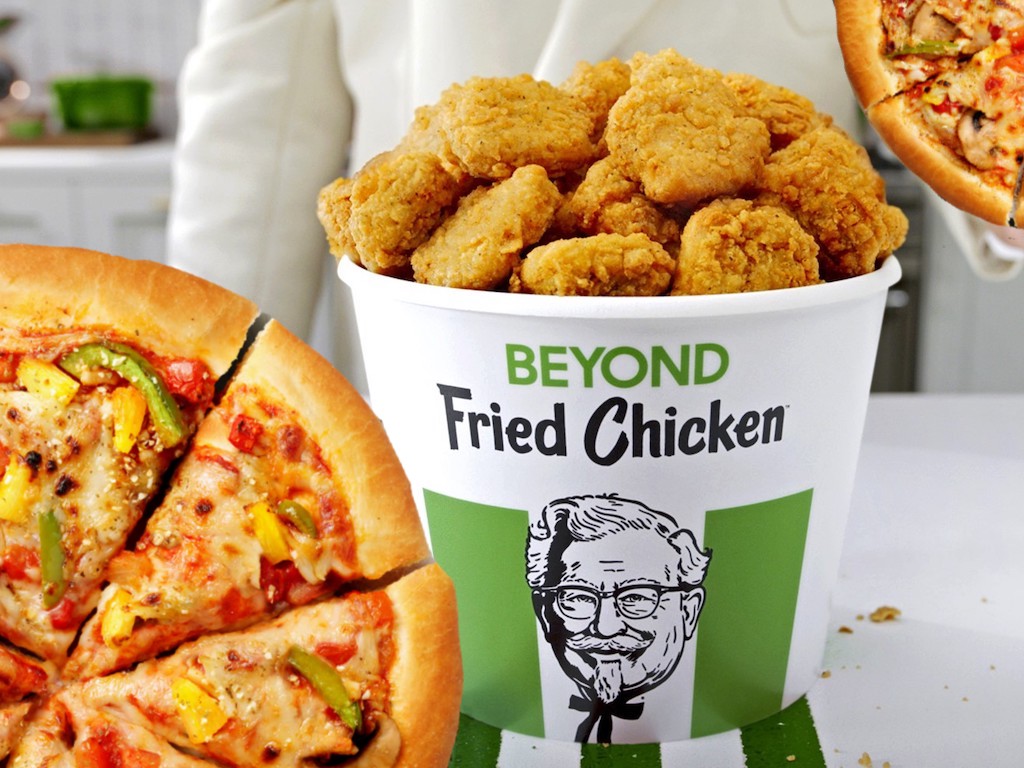
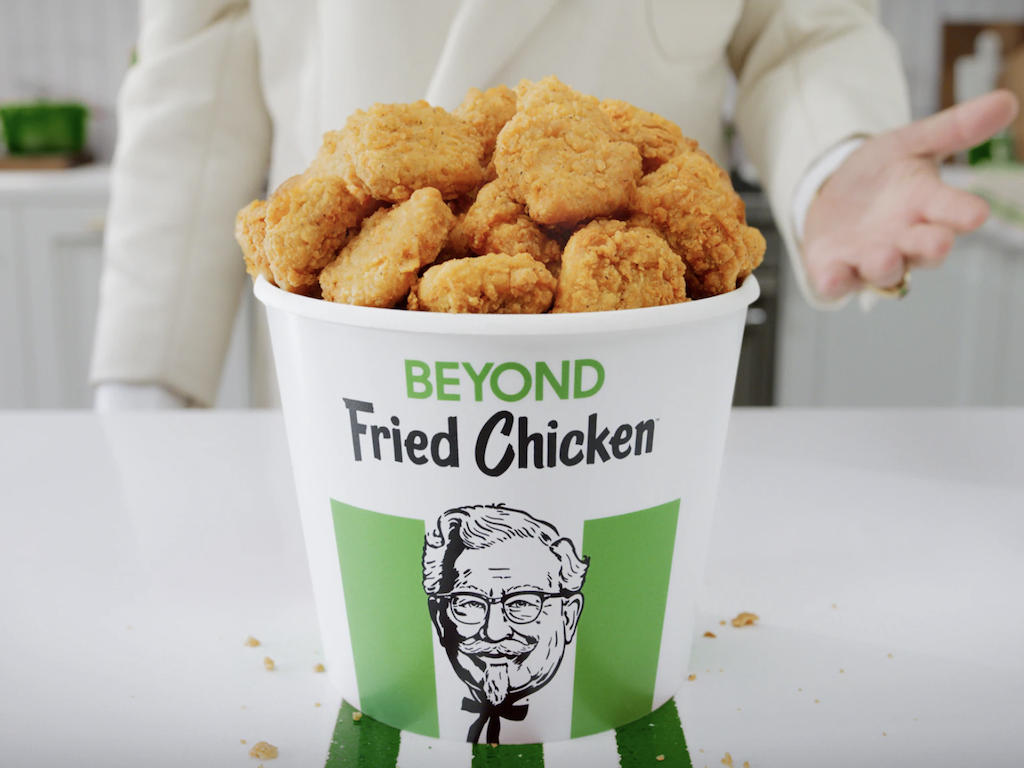
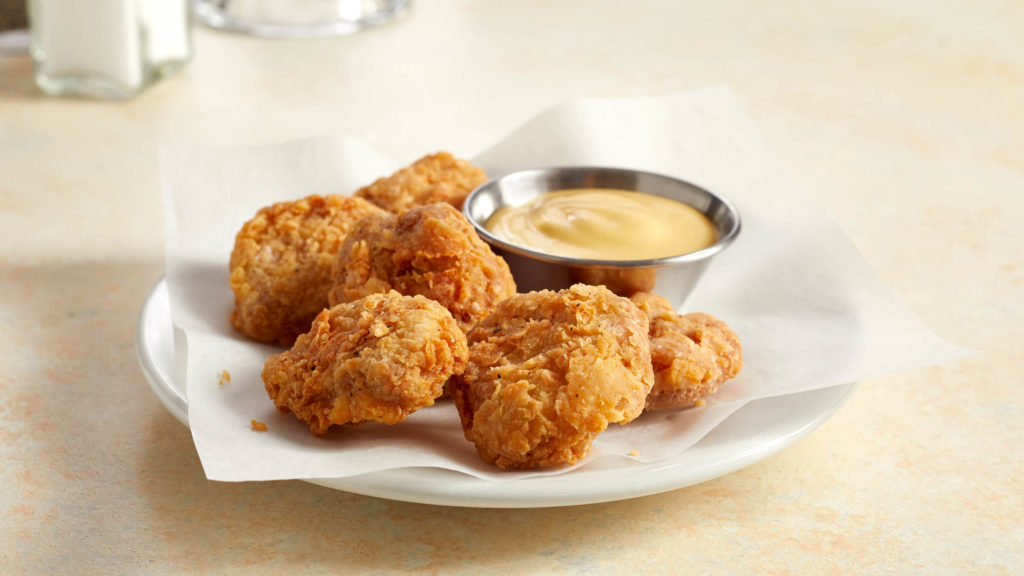
Chicken is now a top priority for vegan meat producers. And it all started in the most unlikely, but most fitting, of places: KFC.
In 2019, fast-food chicken giant KFC surprised Atlanta residents with a vegan shop pop-up. Its traditional red and white-coloured restaurant scheme made famous by its founder Colonel Sanders turned a forest green and white instead.
On this humid August day in Atlanta, customers lined up around the block, waiting for hours to get a taste of vegan chicken done the KFC way—with those secret herbs and spices. It was a hit. The chain sold out in hours, selling the equivalent of a week’s worth of popcorn chicken before the sun went down.
Beyond/KFC
KFC had already been trialling vegan chicken in the UK, hinting at bigger things to come. It partnered with popular vegan burger brand Beyond Meat in the chicken development. It has since toyed with more trials, most recently in Los Angeles at a handful of select locations. It launched vegan chicken in Canada to rave reviews. It even added meatless chicken options to menus in China, a country known for its love of meat.
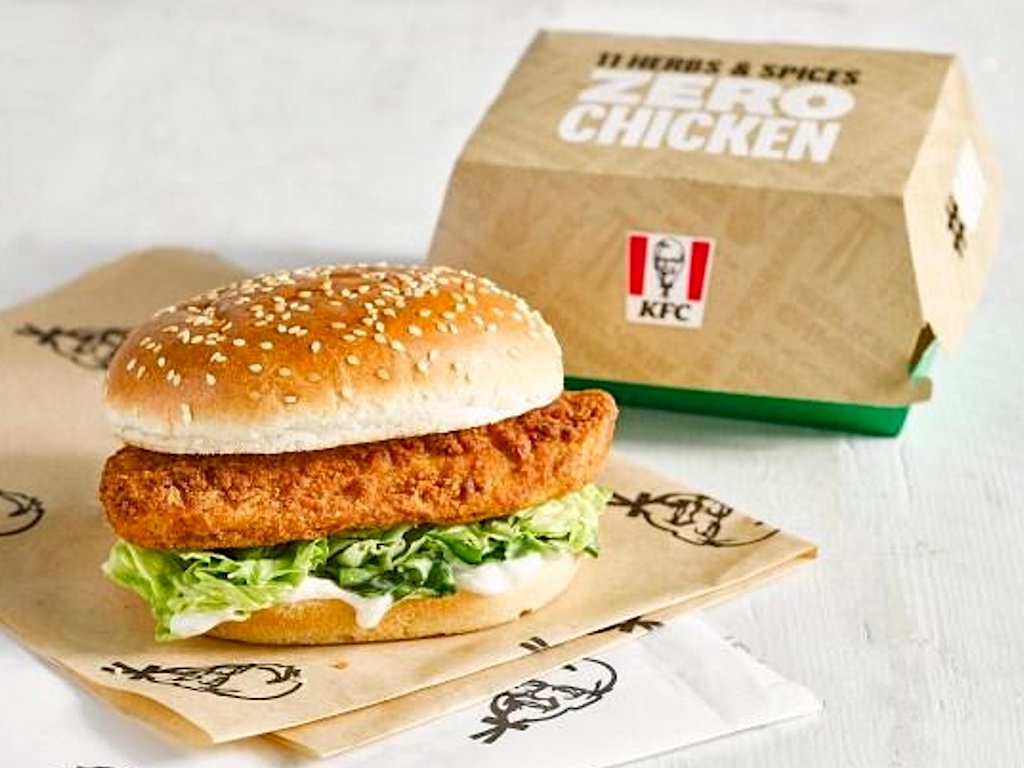
At the start of 2021, for the popular Veganuary campaign, UK KFC locations re-launched its vegan “Imposter” chicken burger. The burger was trialled in 2019, selling out completely in just four days.
“The Colonel was all about welcoming everyone to his table—now vegans, flexitarians, and our fried chicken fans can all enjoy the taste of our Original Recipe together,” Ira Dubinsky, innovation director at KFC UK and Ireland, said in a statement.
“We’ve worked hard to perfect the flavour and make a Vegan Burger the Colonel would be proud of. It’s the flavour of KFC, just with zero chicken.”
50 Billion Chickens
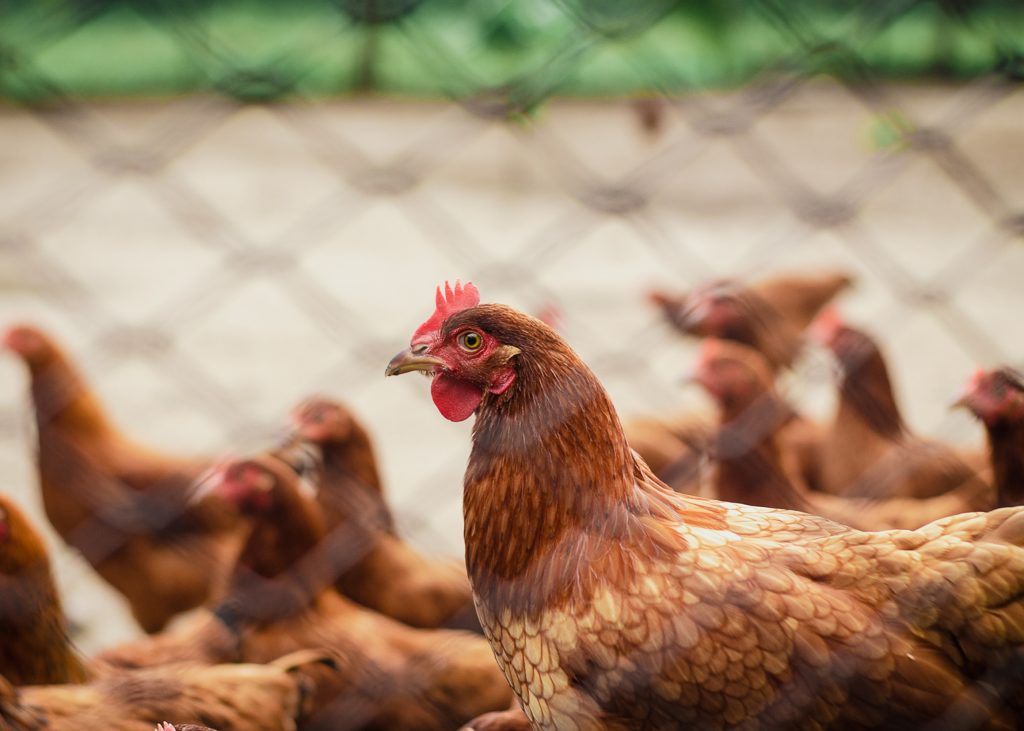
The chicken industry is big business—and in this day and age, that means big problems. More chickens are killed for meat than any other land animal—by a landslide. Of the more than 55 billion land animals raised and slaughtered for food annually, 50 billion of those are chickens.
It wasn’t always that way. Chicken was once one of the higher-priced meat options. Price parity with red meat came as industrial farming lent itself to economies of scale. Smaller birds take up less space. Farmers could, and did quite literally, cram more of them into cages stacked on top of more cages. Stacks of those piled into concentrated animal feeding operations (CAFOs), increasing production and decreasing prices. Now, chicken is one of the cheapest proteins on the planet.
But it’s also the dirtiest.
The poultry industry has scant and loosely defined regulations. Although we raise and slaughter significantly fewer cows than chickens, we protect them more stringently. And while some countries and cities are enacting more protection for chickens, they’re generally not in line with mammal protections.
“Chickens raised for their flesh, called ‘broilers’ by the chicken industry, spend their entire lives in filthy sheds with tens of thousands of other birds, where intense crowding and confinement lead to outbreaks of disease,” PETA (People for the Ethical Treatment of Animals) notes on its website.
Italo Melo via Pexels
According to PETA, they’re bred and drugged to grow so large so quickly “that their legs and organs can’t keep up, making heart attacks, organ failure, and crippling leg deformities common. Many become crippled under their own weight and eventually die because they can’t reach the water nozzles. When they are only 6 or 7 weeks old, they’re crammed into cages and trucked to slaughter.”
Chicken Health Risks
The chicken industry is problematic in other ways, too. According to federal data in the U.S., 25 percent of raw chicken is contaminated with salmonella. While not all strains cause severe illness, the increased presence compounds the risk.
While headlines are still dominated by the spread of the coronavirus, avian flu quietly took its toll in the last two years, too. Cases have been on the increase around the world. This has led to the culling of millions of birds in the last year; Japan alone has already slaughtered nearly 6 million chickens.
Antibiotics, which are routinely fed to livestock to prevent disease and speed animals to market weight, also pose major public health risks. We give more antibiotics to animals than to humans. This overuse in our food supply creates antibiotic resistance. According to the World Health Organization, this is moving us toward a “post-antibiotic era” where minor infections can become fatal.
Chicken farmers are seeing the writing on the wall, too. Industry-wide practices like the tournament pricing scheme leave many struggling to survive. Animal rights organization Mercy for Animals is just one group that has begun working with chicken farmers to move them toward vegan commodities instead.
For Tesco’s Head of Plant-Based Innovation, chef Derek Sarno, chicken farmers are optimal for converting into mushroom farmers. It’s his vegan meat of choice.
KFC
“One of our missions is the idea of transitioning chicken farming into mushroom farming," Sarno told Vegconomist in 2019.
“Having been in both mass production chicken grow houses (and slaughterhouses) enough and also working closely with mushroom grower facilities, we see a lot of similarities and growing and eating mushrooms is much better for the environment and our health,” Sarno said.
“This is part of the future of food and offers the opportunity to create a closed loop production method that will be much more sustainable than the current.”
There’s already a robust roster of plant-based chicken offerings, including the two biggest names in vegan burgers. Both Beyond Meat and Impossible Foods are now competing for your nuggets as are a host of other brands including Simulate, Daring Foods, Jack & Annie’s, Gardein, and others including VFC—the UK-based brand co-founded by Veganuary’s co-founder Mathew Glover.
Big (Vegan) Chicken
By 2030, there could be close to 1,000 vegan chicken restaurants in the U.S. That’s at least the plan for Matthew de Gruyter, CEO and co-founder of Next Level Clucker. De Gruyter is also the co-founder of Next Level Burger, a popular west-coast vegan burger chain he started with his wife in 2014.
While vegan burgers are now so common meat-eaters are gobbling them up at rates higher than vegans are, it’s the chicken industry, according to de Gruyter, that’s in need of major disrupting. Next Level Clucker opened its first vegan chicken restaurant in San Francisco at the beginning of 2021. It now operates more than half-a-dozen locations in cities including Brooklyn and Seattle.
“As America’s first all-vegan burger chain, it’s only fitting that Next Level Burger is also launching America’s first all-vegan chicken chain,” de Gruyter said in a statement last year. Who doesn’t love fried chik’n with all the epic sauces, organic slaw and fries with shakes to wash it all down?”
The chain’s menu features fast-food-style sandwiches including the Mother Clucker, a double-stack of vegan chicken, guacamole, tempeh bacon, pepper jack cheese, jalapenos, hot sauce, and eggless mayonnaise. The chain also serves vegan nuggets, salads, and a plethora of sides.
According to de Gruyter, the chain’s expansion plans include 1,000 locations over the next decade. But by then, it’s likely Clucker will be rivalling dozens, if not hundreds, of other fast-food vegan chicken shops.
Cultivated Chicken
But it’s not just chicken made from plants that are getting mainstream attention. Cell-based cultured chicken is the first “lab-grown” meat to hit the market. Singapore approved the chicken, made by San Francisco’s Eat Just, for sale more than a year ago.
The chicken is grown from real chicken cells—taken from a feather or other non-invasive cell samples. It’s then grown in a lab setting without the need for raising or slaughtering live animals. The chicken made its restaurant debut at Singapore’s 1880 just before Christmas in 2020.
Eat Just
Eat Just is best known for its vegan egg products. But it promised to be the first to market with lab-grown meat. And it kept its word.
“This historic step, the first-ever commercial sale of cultured meat, moves us closer to a world where the majority of meat we eat will not require tearing down a single forest, displacing a single animal’s habitat or using a single drop of antibiotics,” Josh Tetrick, co-founder and CEO of Eat Just, said in a statement.
“We’re thrilled to partner with 1880 to launch a product that will someday be served on the dinner tables of families living in the suburbs of Birmingham, Alabama, to the skyscrapers of Shanghai.”
Vegan chicken producers may have Impossible Foods and Beyond Meat to thank for destigmatizing vegan meat with meat-eaters. Both have seen widespread acceptance and interest in their popular burgers. It has led to line extensions and lofty goals, like the pursuit of tougher to mimic vegan versions of bacon and steak. Copycat “bleeding” burger products run the gamut now, too. And in Asia, brands like OmniPork are infiltrating a notoriously hard-to-crack market with plant-based versions of pork and Spam.
For vegan entrepreneurs like de Gruyter, though, while chicken may not be the tip of the iceberg, it’s not the full thing, either.
“My vision was never to open up one concept, one unit, and go about my merry way,” de Gruyter told QSR in 2017. “My goal from the beginning was hundreds, if not thousands, to be honest.”
Demand for vegan meat is certainly making that a possibility. Last September, in a blind taste test that included Impossible’s Chicken Nuggets, the company said seven out of ten consumers preferred the vegan nuggets, with the Impossible nuggets scoring higher in every category from flavour to texture to appearance.
“[T]his launch isn’t really about nuggets,” Pat Brown, founder and CEO of Impossible Foods said in a statement in September. “In the battle for the future of food, this is the first time David has categorically bested Goliat It’s about the historic inflection point we’ve reached.
“For the first time, consumers unquestionably prefer meat made from plants instead of meat from an iconic animal,” he said. “In the battle for the future of food, this is the first time David has categorically bested Goliath, but it won’t be the last.”
From London to San Francisco, haute cuisine is joining the food revolution. Michelin-starred chefs explain they’re going meat-free
Alexis Gauthier used to sell 20kg of foie gras a week. Now the chef, whose London-based restaurant became entirely vegan in 2021, only sells a plant-based version. Since becoming vegan, he admits, Gauthier Soho has “lost a lot of customers, sadly”. But he says he has gained even more new diners, all looking for something different and sustainable and prepared to pay the price.
Gauthier is not the only chef to abandon the animal produce traditionally associated with fine dining. While the number of meat-free menus has been burgeoning for some time in lower- and mid-priced restaurants, now a growing number of the world’s top chefs are starting to put plants centre stage.
Alexis Gauthier’s restaurant Gauthier Soho became entirely vegan in 2021.
Photograph: Tommy Ga-Ken Wan
Chef Daniel Humm has created headlines on both sides of the Atlantic twice in recent months. First when he announced that his three Michelin-starred New York restaurant, Eleven Madison Park, would be reopening after a pandemic hiatus in June minus meat or seafood on its $335 menu (but not completely free of animal products. “The current food system is simply not sustainable,” he said).
Claire Vallée won a Michelin star for ONA, her vegan eaterie, in in Arès – the first for a French meat-free restaurant. Photograph: Mehdi Fedouach/Getty
Then, in November, it was announced that he had parted ways with five-star hotel Claridge's after it rejected his “bold new vision” of a fully plant-based menu for its restaurant, Davies and Brook, which serves, amongst other things, foie gras and caviar. The hotel said it was “not the path we wish to follow”.
Advertisement
And in January, Geranium in Copenhagen, ranked number two by the World's 50 Best Restaurants, will unveil a new meat-free menu of vegetarian, plant-based and seafood dishes. Announcing the move, chef Rasmus Kofoed said that he hadn’t eaten meat for the last five years at home, “so to no longer use meat on the new menu was a logical decision and a natural progression for Geranium”.
Even the Michelin Guide, which rarely used to award stars to vegetarian and vegan restaurants, appears to be moving in a plant-based direction. Last year, Claire Vallee's restaurant ONA (which stands for origine non-animale) in Arès, near Bordeaux, became the first vegan restaurant in France to be awarded a star. They have also introduced green stars, a new award to recognise sustainability.
Gauthier – whose plant-based menu is 50% vegan versions of classic French dishes like soufflé or foie gras and the other half is more experimental – said many chefs, particularly French chefs, fear losing Michelin stars and remain bound by the “tyranny of classical French gastronomy”. The ongoing influence of Auguste Escoffier, author of the 1903 Le Guide Culinaire and former director of kitchens at the Savoy, is, he said, a “massive problem for French gastronomy to move forward”.
By contrast, Gauthier sees plant-based food as an opportunity to be truly creative. “We can write recipes that are totally out of the ordinary and nobody can come and say ‘well actually, it should not be done like that’ because it’s all new. That’s the beauty of it.”
Daniel Humm in his Michelin-starred restaurant Eleven Madison Park. He parted company with Claridge’s after the hotel wouldn’t adopt his vegan menu. Photograph: Lucas Jackson/Reuters
While animals are off the menu, he said everything else remains the same. “It’s remaining 100% French, the flavours, all the tralala you think about when you go to a French restaurant.” So far, he said, the move to veganism has been “a commercial success”. As chef patron of one ofthe few high-end vegan restaurants in London, Gauthier hopes more chefs will follow suit. “Not a lot of chefs are brave enough to embrace a fully vegan restaurant, but a lot are looking into it and testing the water,” he said.
French chef Dominique Crenn stopped serving meat at her three Michelin-starred San Francisco restaurant Atelier Crenn in 2018. Speaking from her farm in Sonoma, where she grows produce for her three restaurants, she said it is vital that restaurants and consumers know where their products come from and do not support factory farming.
But, unlike some, she is not averse to experimenting with lab-grown meat. She has partnered with Upside Foods to develop recipes for cultured chicken that, once it gets regulatory approval, she plans to serve at her restaurant. She said that when she first heard about the concept in 2015, “I thought that was genius because the bottom line is we’re not going to have the world eating just vegetables. There’s going to be people that are always going to want to eat meat or fish and all that, so I think it’s about finding ways of rebalancing this world.”
Dominique Crenn has won three Michelin stars for her restaurant Atelier Crenn, which hasn’t served meat since 2018. Photograph: Daniel Zuchnik/Getty
She is also looking at cutting cow’s milk from her establishments, which she hopes to do in 2022 and, when it comes to seafood, she works with small-scale fishers and mostly serves molluscs. “I’m just looking at what I can do and keep working on to become better and become more conscious.”
In the UK, younger people are leading the charge when it comes to switching to a vegan diet, while the availability of documentaries such as Cowspiracy, Seaspiracy and The Game Changers on Netflix has opened up conversations around the subject.
But, in many ways, UK institutions have been slow to catch up. The latest series of BBC One show MasterChef: The Professionals drew criticism after it featured just 10 vegetarian savoury dishes out of 100 and only two for vegans. Channel 4’s The Great British Bake Off also attracted ire after its first vegan contestant, Freya Cox, was required to use animal products in one of the rounds.
And while recent years have seen a proliferation of lower-budget or “grab and go” vegan eating-out options, top-end establishments have proven more reluctant. Peter Harden, co-founder of Harden’s restaurant guides, said Claridge’s “missed a trick” by not taking up Humm’s plant-based menu, but that perhaps it indicates that the market is not yet big enough. “They obviously did it because they thought it would be commercial suicide. And I think that highlights the problem, especially for top chefs, is that when people are eating out and spending a lot of money then a very large proportion of them do expect to be able to eat meat.”